
View full specs
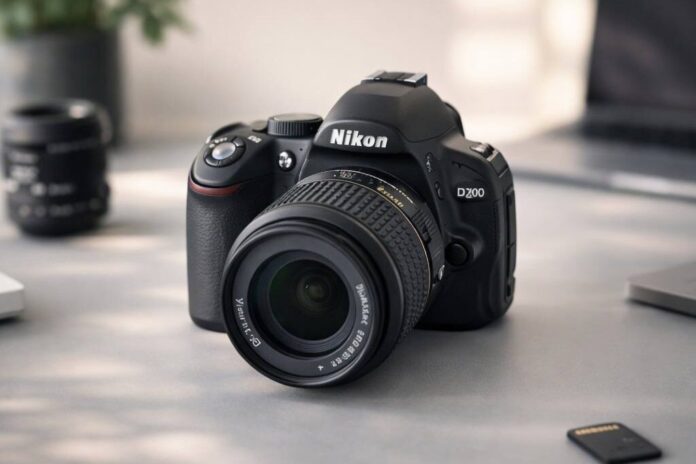
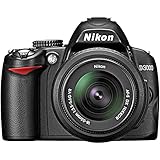
This Nikon D3000 review is best read as a used-camera reality check. The D3000 is old, basic, and missing features that even cheap cameras now take for granted. It is also a simple way to learn photography. You get a real optical viewfinder, a proper grip, and Nikon F-mount lenses.
I would only buy one at the right used price. If a clean D3000 kit with the AF-S 18-55mm VR lens is cheap, it can still work as a beginner DSLR. If the price gets close to a Nikon D3400, Nikon D3500, or a newer mirrorless body, I would move on. The D3000 is charming as a learning tool, not as a hidden modern bargain.
Who the Nikon D3000 is really for
The Nikon D3000 is for someone who wants a low-cost stills camera and is willing to keep expectations realistic. It makes sense for a student or a family member learning exposure. It also suits a parent buying a first DSLR for a teenager, or anyone who wants a cheap Nikon body for casual daylight shooting.
It is not for video. It is not for fast action. It is not for someone who wants silent shooting, eye detection, touchscreen controls, Wi-Fi, USB charging, or modern autofocus intelligence. There is no live view and no movie mode. That sounds severe in 2026. It also gives the D3000 a useful clarity: pick it up, look through the finder, make photographs.
The best version to buy is a complete, clean kit. Look for the charger, battery, strap, SD card, and the older AF-S DX 18-55mm VR lens. I would be cautious with incomplete kits. A missing charger, tired battery, dusty sensor, or incompatible lens can turn a cheap camera into a poor deal very quickly.
What changed since newer beginner Nikons
The D3000 sits near the start of Nikon’s four-digit beginner DSLR line. It uses a 10.2MP DX-format CCD sensor, an 11-point phase-detect autofocus system, and a simple 3 fps burst rate. Later cameras such as the D3400 and D3500 are much stronger. They bring higher resolution, cleaner high-ISO files, longer battery life, better kit lenses, and smoother everyday performance.
That does not make the D3000 useless. It means you should judge it by price and purpose. If your goal is to learn aperture, shutter speed, ISO, framing, and lens choice, the camera still teaches those lessons well. If your goal is to buy the best cheap Nikon DSLR today, the D3400 and D3500 are usually more sensible. That is especially true when the price gap is small.
The D3000’s biggest strength is that it keeps you honest. You compose through the optical viewfinder. You learn where the focus point is. You review the image afterward instead of using a live preview. That slower process can be frustrating, but it can also be a good teacher.
My practical setup for the D3000
If I were handing a Nikon D3000 to a beginner, I would not leave every setting untouched. I would start simple, but I would make a few choices that make the camera more predictable.
- Use the center autofocus point when the camera starts missing focus.
- Keep ISO 100-400 for best quality, and treat ISO 800 as the practical upper comfort zone.
- Turn on Active D-Lighting for high-contrast daylight scenes, but avoid heavy shadow lifting later.
- Shoot JPEG Fine if the user does not edit, or RAW+JPEG if they want to learn editing.
- Use aperture priority once Auto and Guide Mode start feeling too restrictive.
That setup matters because the D3000 is not a camera that fixes everything afterward. It rewards getting exposure and focus right in the moment. In that sense, it is a better teacher than many easier cameras. You see your mistakes, and the camera does not hide them behind computational processing.
Image quality: good light is where it still works
The 10.2MP CCD sensor is modest by modern standards, but it can still produce attractive files in good light. At ISO 100 and 200, colors look pleasant. Detail is enough for family prints and web use, and the files have a classic early-DSLR character. If you are mainly shooting travel, flowers, family moments, pets, school projects, or daylight street scenes, the D3000 is still capable.
The limits show up when the light falls. ISO 800 is usable if exposure is clean, but ISO 1600 and the expanded Hi setting are not where this camera shines. Shadows get rough, dynamic range is limited, and heavy editing can make files fall apart faster than on newer 24MP Nikon bodies. I would rather use a small flash, a tripod, or a faster lens than push this camera hard in dim rooms.
Resolution is another practical limit. Ten megapixels is enough if you frame carefully, but it leaves little room for aggressive cropping. For beginners, that is not necessarily bad. It pushes you to move your feet and think before pressing the shutter. For wildlife, sports, or distant subjects, it is a real limitation.
Handling and learning experience
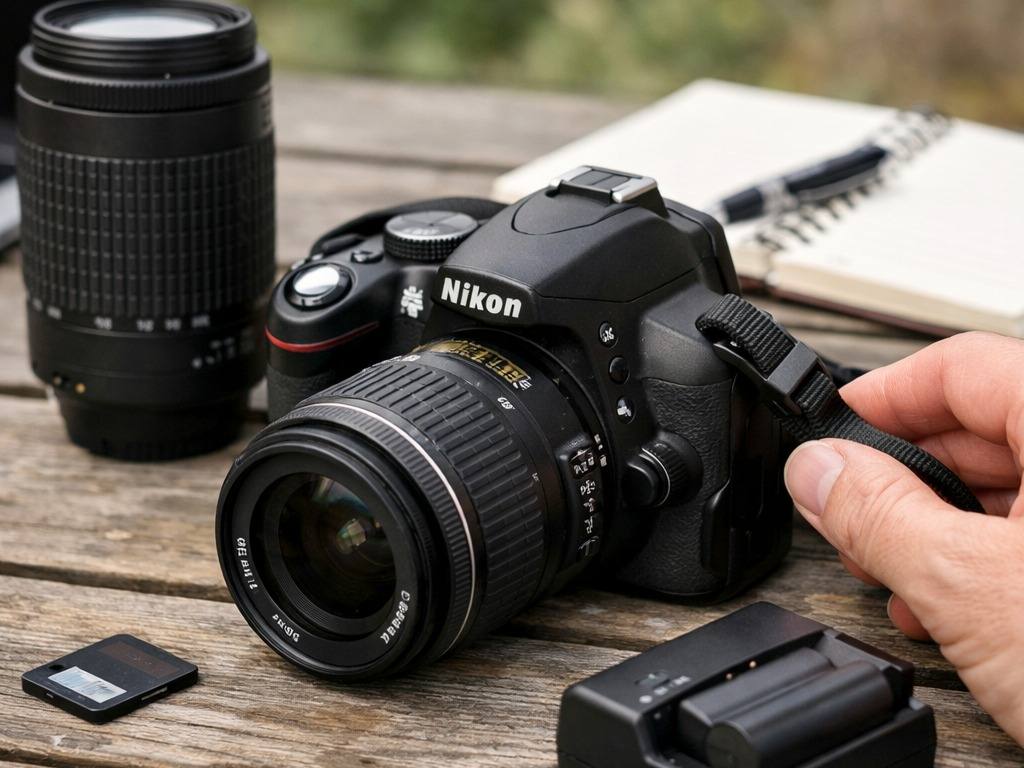
The D3000 feels like a proper Nikon DSLR in miniature. The grip is comfortable, the body is light, and the control layout is not intimidating. You get a mode dial, a rear command dial, clear buttons, and a 3.0-inch fixed LCD. The screen is low resolution by current standards, so do not trust it too much for judging critical sharpness. Use it for menus, exposure checks, and quick playback.
Guide Mode is one of the reasons this camera still makes sense for absolute beginners. It walks the user toward common goals instead of throwing every setting onto the screen at once. If someone is learning aperture, shutter speed, or flash, that guided approach helps. I would rather give a beginner that clarity than a more powerful camera with a confusing menu.
The optical viewfinder is basic, with about 95 percent coverage, but it is part of the appeal. You see the scene directly. There is no exposure preview and no electronic overlay doing the thinking for you. That makes the D3000 less convenient than a mirrorless camera, but it can make the learning process more deliberate.
Autofocus and shooting speed
The 11-point Multi-CAM 1000 autofocus module is simple, but not useless. For portraits, family photos, static subjects, daylight travel, and general learning, it works fine if you choose your focus point carefully. The center point is the safest choice, especially in low light or with slower kit lenses.
What I would not do is describe the D3000 as having modern subject recognition. It does not. In Auto and Auto Flash Off modes, the camera can choose focus points automatically. It is not reading the scene like a recent Nikon Z body. It is looking for contrast and focus information through an older phase-detect system. It is not tracking eyes or intelligently reading faces across the frame.
For moving kids, pets, and casual action, you can get good frames with patience. For sports, birds, unpredictable wildlife, or fast indoor events, the D3000 feels its age. The 3 fps burst rate is slow and the buffer is limited. Autofocus tracking also requires more skill from the photographer than modern cameras do.
Lens compatibility is the detail buyers miss
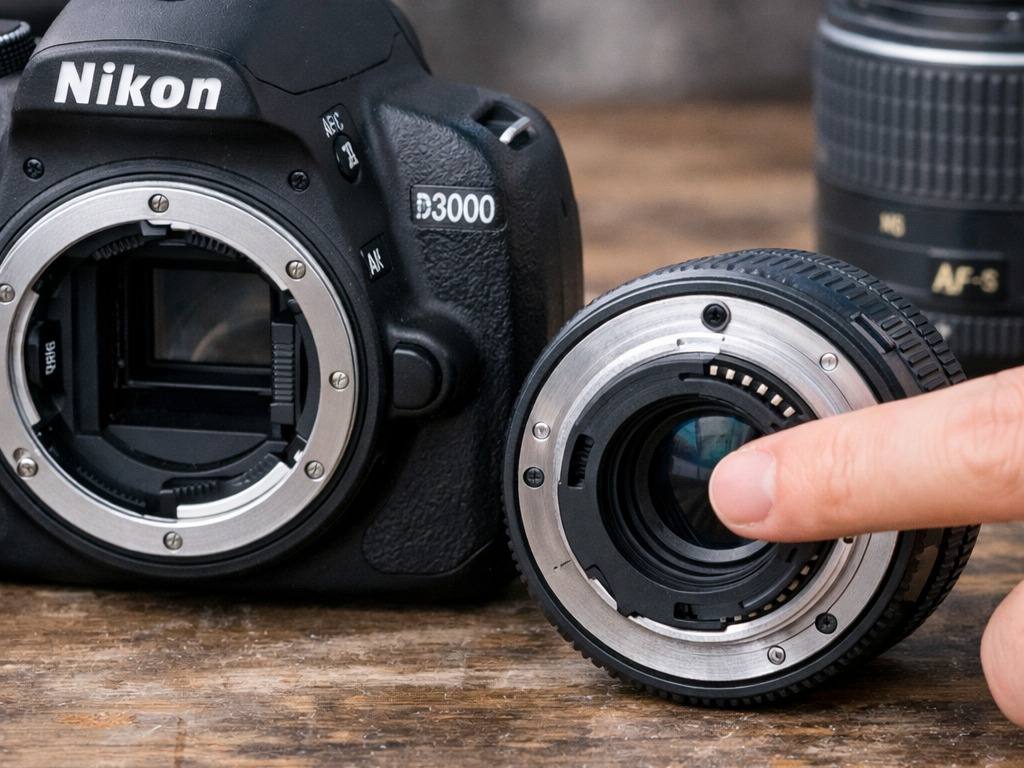
This is the most important buying point in the whole Nikon D3000 review: the camera body does not have its own autofocus motor. For autofocus, you want Nikon AF-S or AF-I lenses, or third-party lenses with their own built-in focus motor. Older Nikon AF and AF-D lenses can mount, but they will be manual-focus only on this body.
There is another trap: AF-P lenses. Nikon’s later AF-P kit lenses are excellent on compatible bodies, but the D3000 predates them. I would not buy a D3000 assuming an AF-P 18-55mm or AF-P 70-300mm will behave properly. For this camera, the safer beginner kit is the AF-S DX 18-55mm f/3.5-5.6G VR.
Manual focus with older Nikon glass can be fun if you already know what you are doing. For a beginner, it is usually the wrong starting point. The D3000 viewfinder is not large or bright enough to make manual focus effortless, and missed focus can become discouraging fast. Buy the right lens first, then experiment later.
The kit lens and real-world shooting
The common AF-S DX 18-55mm VR kit lens is exactly the sort of lens that suits the D3000. It is light, cheap, stabilized, and useful from wide family scenes to simple portraits. It is not fast in low light and it will not create dramatic background blur at every focal length. Still, it gives a beginner enough range to learn composition and focal length without spending more money immediately.
Vibration Reduction helps with camera shake when subjects are still. It will not freeze a moving child indoors, and it will not make ISO 1600 magically clean. It does make handheld daylight and evening shots more forgiving. If the lens has a VR switch, leave VR on for normal handheld shooting. Turn it off when the camera is locked on a tripod.
If I were building a tiny D3000 kit, I would start with the AF-S 18-55mm VR. Then I would add an AF-S DX 35mm f/1.8G for portraits, low light, and shallow depth of field. That 35mm prime is often the lens that makes old Nikon beginner DSLRs feel more serious.
Battery, memory cards, and used buying checks
The D3000 uses the EN-EL9a battery. Nikon rated it for roughly 550 shots under CIPA conditions. In real use, battery health matters more than the original rating because these cameras and batteries are now old. A tired battery may look fine in the listing and then collapse during a full day out.
The camera records to SD and SDHC cards, not the newer SDXC standard most people now buy by default. That means I would use a simple, known-good SDHC card rather than a large modern card. Format it in camera before serious use.
Before buying, check the body carefully. Make sure the shutter fires consistently and autofocus works with the included lens. Check that the flash pops up, the card slot reads reliably, and the battery door closes firmly. Shoot a small-aperture test frame to look for obvious sensor dust. Also check the rubber grip, lens mount, rear LCD, and charger. A cheap D3000 is only a good deal if it arrives complete and working.
D3000 vs D3100, D3400, and D3500
The hardest part of recommending the D3000 is that Nikon later made much better beginner DSLRs. The D3100 adds video and live view. The D3400 and D3500 jump to a much stronger 24MP sensor, cleaner high ISO, longer battery life, and a more modern used-camera experience.
That does not automatically kill the D3000. It changes the price logic. I would buy the D3000 when it is meaningfully cheaper, complete, and intended for still-photo learning. I would buy the D3400 or D3500 when the price gap is small. Those later bodies give a beginner more room to grow and produce files that hold up better in 2026.
The D3000 still has one subtle advantage for teaching: it is stripped back. No video temptation, no live-view habit, no endless connectivity setup. It pushes the photographer into the viewfinder. For some beginners, that is exactly the discipline they need. For others, it will feel unnecessarily old.
Alternatives I would compare first
If the D3000 costs very little, it can be a good learner camera. If the seller wants too much, I would look elsewhere. The Nikon D3400 is a much stronger used DSLR with a 24.2MP sensor, better battery life, and better image quality. The Nikon D3500 is even more refined if you can find it at a fair price.
For a broader beginner buying path, our beginner Nikon DSLR guide is more useful than treating the D3000 in isolation. The D3000 is one possible answer, but it is rarely the only answer. Used Canon Rebels, newer Nikon DSLRs, and older mirrorless cameras can all make sense depending on price.
Nikon’s own D3000 product page is still useful for checking the original specifications. The Nikon Download Center is worth bookmarking if you buy one without a printed manual.
What strong older reviews still remind us
The best older reviews of the D3000 spend a lot of time on image quality, speed, and operation. That is useful because the camera was not universally loved even when new. The files can look good, but the body is slow by modern standards. Menus, playback, autofocus tracking, and low-light work all feel dated.
That is why I would not romanticize it just because it is cheap. The D3000 is a good learning camera when bought correctly. It is not a secretly fast, flexible, do-everything DSLR. If you expect a slow, stills-only teacher, it makes sense. If you expect a bargain modern camera, it disappoints.
Final verdict
The Nikon D3000 is not a camera I would oversell. It is too old, too limited, and too basic to compete with newer beginner bodies on pure specification. But as a cheap stills-only DSLR for learning photography, it still has a place.
Buy it if the price is low, the kit is complete, and you understand the lens compatibility. Skip it if you need video, live view, modern autofocus, easy wireless sharing, or better low-light files. The D3000 is at its best when treated as a simple photography teacher, not as a bargain replacement for a modern camera.
Frequently asked questions
Is the Nikon D3000 still worth buying?
Yes, but only at a low used price. It is still useful for learning still photography. Newer used DSLRs like the Nikon D3400 and D3500 are better if they are only slightly more expensive.
Does the Nikon D3000 shoot video?
No. The Nikon D3000 does not have video recording or live view. It is a stills-only DSLR.
What lenses autofocus on the Nikon D3000?
Autofocus works with AF-S and AF-I lenses, plus compatible third-party lenses with built-in focus motors. Older Nikon AF and AF-D lenses mount but require manual focus on the D3000.
Should I use AF-P lenses on the Nikon D3000?
I would avoid buying AF-P lenses specifically for the D3000. The camera predates Nikon’s AF-P lens system, so the safer choice is an AF-S lens such as the AF-S DX 18-55mm VR.
What memory card does the Nikon D3000 use?
The Nikon D3000 uses SD and SDHC cards. For reliability, use a normal SDHC card and format it in the camera before shooting.
Is the Nikon D3000 better than the D3100?
No for most buyers. The D3100 adds live view and video, while the D3000 is simpler and cheaper. I would pick the D3000 only if the price is clearly lower and still photography is the only goal.
What ISO should I use on the Nikon D3000?
Use ISO 100-400 when possible. ISO 800 is still usable with careful exposure, but ISO 1600 and the expanded setting look rough compared with newer Nikon DSLRs.
Key points to remember
- The Nikon D3000 is a good learning camera only when the used price is genuinely low.
- It has a 10.2MP DX CCD sensor, optical viewfinder, 11-point AF, and no video or live view.
- Autofocus lens compatibility matters: choose AF-S or AF-I lenses, not older screw-drive AF lenses.
- The AF-S DX 18-55mm VR kit lens is the safest beginner lens for this body.
- If the price approaches a D3400 or D3500, buy the newer Nikon instead.
Beginners, students, and budget buyers who want a very cheap stills-only DSLR for learning fundamentals.
You need video, live view, Wi-Fi, modern tracking AF, strong low-light files, or broad autofocus compatibility with older Nikon lenses.
Medium; controls are simple, but lens compatibility and the lack of live view/video need explanation.
Nikon D3400 or D3500 for a better DSLR experience, or Nikon Z50 II/Z5 II for a modern mirrorless path.
There is no video mode. Buy this only if still photography is the goal.
Yes at a very low used price as a learning camera; no if it costs close to newer Nikon DSLRs.