
View full specs
The Kodak Charmera is worth considering as a pocket-money photo toy, provided you want a keychain camera more than clean pictures. This Kodak Charmera review recommends it for playful daylight snapshots and collecting, with a firm spending limit. I would keep the camera itself around $35 and use a phone for photographs that matter.
This is a buying assessment, not a hands-on test. We have no original Charmera sample files or measured battery results to offer. The recommendation rests on what this tiny camera can reasonably do, and whether that fits your photography.
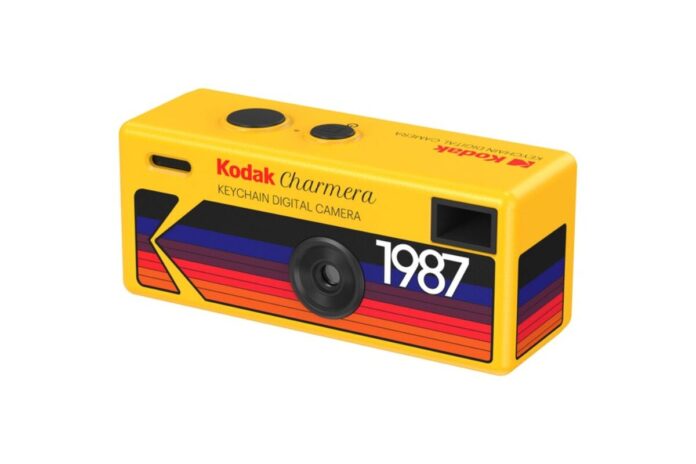
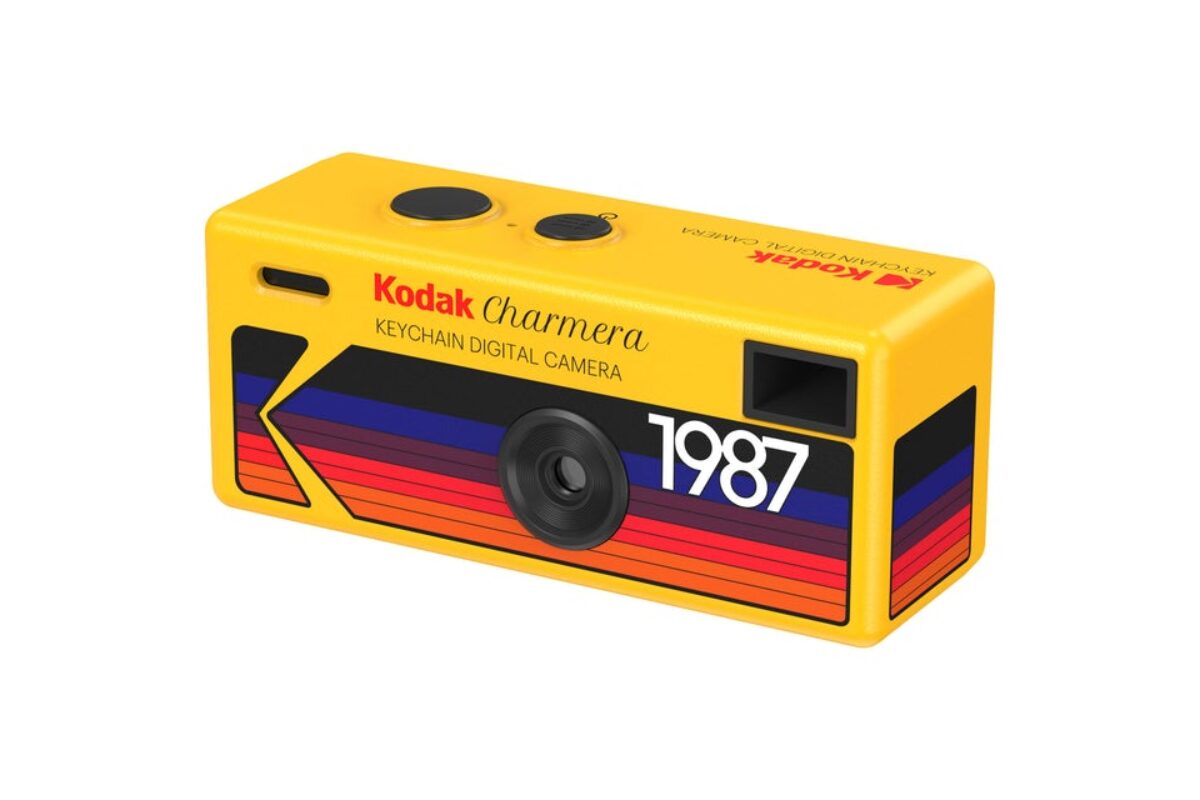
The linked product is one original 1987 Collection blind box, with a random design. A memory card costs extra; the pictured yellow finish is not guaranteed.
What you get for the money
The Charmera is a digital camera made by RETO under Kodak license. Its styling recalls the Kodak Fling, but there is no film to buy or develop. Inside is a 1/4-inch CMOS sensor producing 1440 × 1080 JPEGs, approximately 1.6 megapixels.
The fixed lens has a 35mm-equivalent field of view and an f/2.4 aperture. Think everyday scenes and small groups, rather than distant details or sweeping interiors. There is no interchangeable lens system to grow into. The original camera arrived in September 2025; this review covers that 1987 Collection, not the later Millennium styling.
At 58 × 24.5 × 20mm and 30g, it is small enough to earn its keychain description. The box includes a USB-C cable and keyring. That is the real selling point: carrying a separate camera with almost no weight penalty.
When I assess any toy camera, I ask whether its limitations create an enjoyable style or simply obstruct the picture. Here, the answer depends on how much you enjoy the object itself. If you only want a distressed image, a phone filter is cheaper and easier.
Handling: tiny size brings real compromises
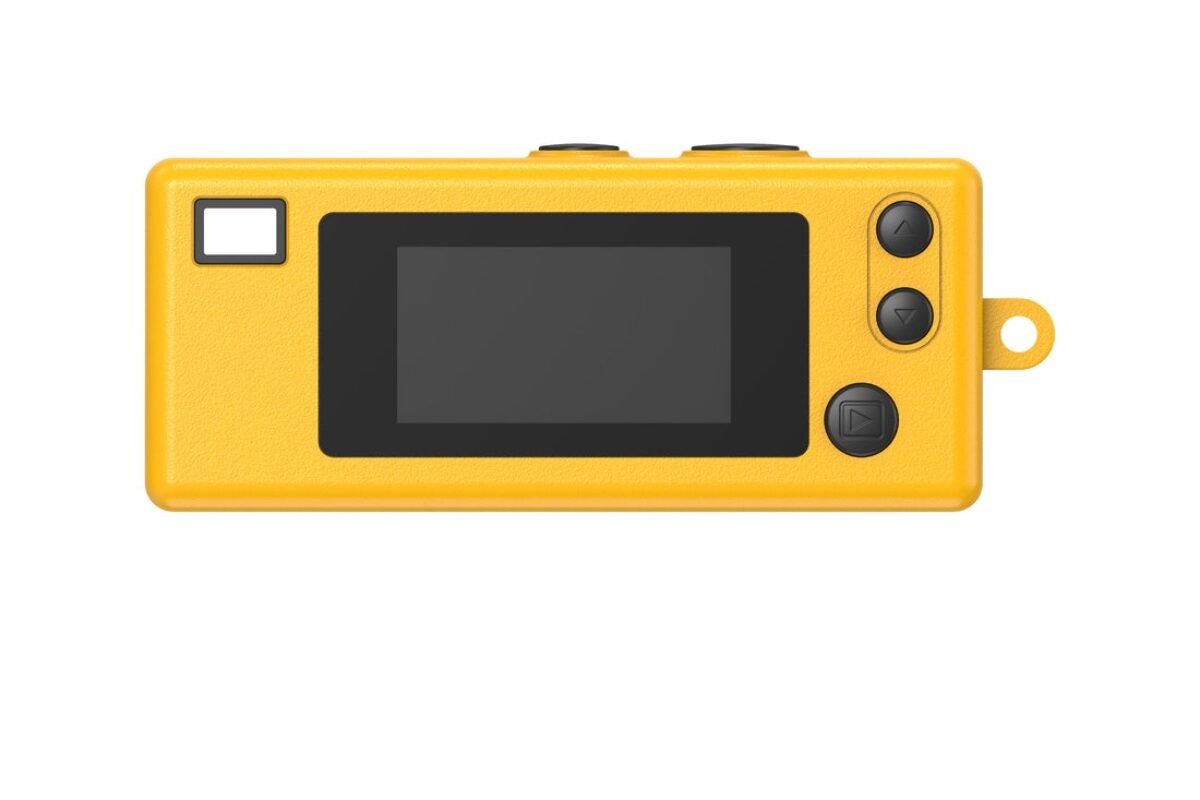
A rear display lets you compose and review pictures. The optical window offers a second way to aim, but I would use the screen for deliberate compositions. Independent reviews disagree about the camera’s charm, yet consistently identify the cramped viewing experience as a compromise.
Powering on requires a three-second button hold. You then select the photo or video mode. That matters more than the camera’s weight when a fleeting expression appears: have it ready before asking someone to pose.
Keep your fingers clear of the lens, hold the body with both hands, and frame with some breathing room. These are sensible precautions for a camera this small, not findings from a handling test. Do not assume keychain convenience means rugged construction. Keep it away from rain and from loose keys that could scratch the lens or screen.
RETO lists the intended user age as 15 and older. I would avoid treating it as an automatic gift choice for a young child. The tiny controls and removable card deserve consideration alongside the playful packaging.
Photo quality: choose subjects that survive low resolution
The 1.6MP output is the central limitation. There is little room to crop away distractions or rescue a distant face. A 1440-pixel edge produces 4.8 inches at 300 pixels per inch, before cropping. That arithmetic describes pixel count, not a promise of crisp prints.
I would use it for bold signs, window reflections, bright clothing and simple arrangements of friends outdoors. Put the subject clearly in the frame. A crowded landscape asks for detail that these files cannot provide. Small journal images and contact sheets are more sympathetic destinations than large wall prints.
Expect dim rooms and strong backlighting to be difficult. A small sensor and basic capture pipeline offer little latitude for recovering shadow detail or bright skies. Deliberate softness can support a picture; an unreadable face rarely does. Keep another camera available for birthdays, travel landmarks and anything you cannot repeat.
Filters are part of the photograph
Photo mode offers seven filters and four frames, including monochrome, warm and cool treatments and colored pixel effects. Try a single visual theme for an afternoon instead of cycling through everything after each shot.
Choose decorative borders and date stamps deliberately. These become part of the output, so keep important details away from their edges. Save an unadorned second photograph when you might want a cleaner version later. The result is a digital effect, not Kodak film color or a substitute for shooting film.
Battery, cards and getting pictures onto your phone
The internal rechargeable battery is rated at 200mAh. There is no named, user-swappable battery model to order as a spare. USB-C handles charging, but the camera cannot shoot while charging. A power bank can replenish it between outings; it cannot provide uninterrupted shooting.
Do not budget a full day around an unverified shot count. Charge before leaving, then learn how your own mix of review and video affects endurance. Battery condition is also why I prefer a new unit over a used one with little saving.
Buy the card before giving it as a gift
The single microSD slot accepts capacities from 1GB to 128GB. RETO does not specify a minimum speed class or a UHS bus rating. A modest-capacity card from a reputable maker is a sensible purchase; premium high-speed media brings no documented benefit here.
Without a card, you can take and replay two photos, but inserting a card afterward does not save those pictures. Video requires a card. This is a demonstration function, not useful internal storage.
For the supported transfer procedure, follow the Charmera quick-start guide: insert the card and connect to a computer by USB. A microSD reader is another practical route. RETO also describes direct transfer to Android phones. For phone importing, check that your reader, connector and phone support file access before buying accessories. Do not assume wireless sharing or universal direct phone compatibility.
Video is a bonus, not a reason to buy
The Charmera records 1440 × 1080 video at 30fps in AVI format. That is a 4:3 frame, not the 1920 × 1080 widescreen format many buyers associate with “Full HD.” It is useful to know the dimensions before planning a video project.
I would limit its role to short, static clips that accompany a visual diary. Brace your hands, avoid walking shots, and test playback in your intended editor. AVI support can vary between phone apps; conversion may add a step before sharing. Use a phone when clear speech, smooth movement or predictable editing matters.
Blind boxes, clear editions and better alternatives
The original collection has six regular designs and a transparent secret edition. RETO gives the clear version a 1-in-48 chance. A six-box set has no repeats, but a secret camera replaces one regular design if present. It does not guarantee every finish.
Check the official 1987 Collection listing before paying for a claimed rare variant. A sealed single box cannot promise yellow or clear. An opened, identified color is a different purchase. I would pay no photographic premium for the transparent shell.
My $35 ceiling is a value judgment for one camera, before tax, delivery and the separate card. Collector pricing can exceed that, but it does not buy better pictures. Check the seller’s return terms before opening a blind box; unwanted colors may not qualify for a return. Compare the total against a conventional compact before adding a case, reader and marked-up bundle.
- For selfies and a more conventional digicam: consider the Kodak PIXPRO C1. It is the more useful direction when composing yourself matters more than keychain size.
- For everyday reach: browse our Kodak PIXPRO buying guide. Choose around the shooting task, especially if you need optical zoom.
- For inexpensive experimentation: use your existing phone, or inspect a used compact locally. Check its battery, charger, card slot and sample files before paying nostalgia prices.
I would buy the Charmera for a deliberately small photo project, an adult photography enthusiast’s gift, or the pleasure of carrying a camera-shaped charm. Its limitations can encourage simpler compositions and a less precious approach to pictures.
I would skip it as a first serious camera, a family travel recorder or a video tool. Spending more on several blind boxes will not solve those limitations. One reasonably priced camera, a compatible card and realistic expectations make a defensible purchase. If the physical object does not delight you, keep the money and shoot with your phone.
Daylight photo diaries, collectors and adult gifts.
You need dependable family photos, cropping latitude or polished video.
Card sold separately; tiny controls; wired file transfers. RETO specifies age 15+.
Choose a conventional compact for more control and useful reach.
4:3 AVI clips; no shooting while charging. Test editor compatibility.
Yes, around $35 for a single camera if keychain size is the attraction. Skip collector premiums for image quality.