

View full specs
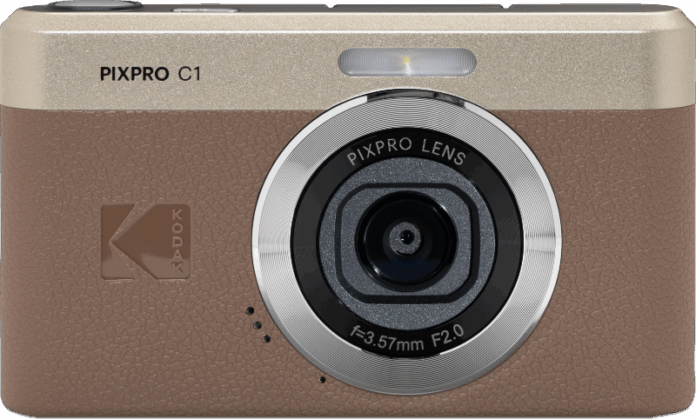
The Kodak PIXPRO C1 is a tiny 13MP camera built around a wide 26mm-equivalent lens, a selfie screen and simple controls. Its appeal is the experience: a pocketable camera that keeps your phone out of the moment and produces the imperfect digicam look many buyers want. In good daylight it can be fun. In dim light or around moving subjects, the slow response and small sensor become hard limits.
Kodak PIXPRO C1 verdict
| Best for | Daylight snapshots, selfies, trips, parties with flash and the retro digicam look |
|---|---|
| Main strengths | 115g body, 180-degree screen, 26mm wide view, USB-C charging, 1080p video |
| Main weaknesses | Slow focus and shutter response, no optical zoom, weak low-light detail, dim rear screen |
| Buy it over the FZ45 | If pocket size and a selfie screen matter more than optical zoom |
| Skip it | If you need reliable action photos, clean indoor images or a meaningful upgrade from a recent phone |
The C1 makes the most sense as a deliberate second camera, not as a technical upgrade. Its results can look colorful and nostalgic, but that character comes with missed focus, clipped highlights and visible processing. Buyers who simply want the strongest image quality should look elsewhere.
Kodak PIXPRO C1 specifications that matter
- Sensor: 13MP 1/3-inch BSI CMOS
- Lens: fixed 3.57mm f/2, equivalent to 26mm on full frame
- Zoom: no optical zoom; 4x digital zoom
- Focus: TTL single autofocus, from 60cm in normal mode or 8cm in macro mode
- Screen: 2.8-inch, 230,000-dot LCD that tilts upward 180 degrees
- Video: 1080p at 60 or 30 fps
- Files: JPEG photos and H.264 video; no RAW
- Storage: microSD or microSDHC up to 32GB, Class 10
- Battery: built-in 700mAh battery, rated for about 200 shots, charged by USB-C
- Size and weight: 103 x 60 x 20.3mm and about 115g
Kodak calls this a “fixed focus lens” in some marketing material, but that phrase describes the fixed focal length poorly. The official specification sheet lists TTL autofocus, the manual explains the focus frame and macro mode, and firmware 1.0.3 specifically improved AF focus time. The C1 does autofocus. It simply has one fixed 26mm-equivalent field of view and no optical zoom.
There is also a documentation conflict around stabilization. Kodak’s current V4 specification sheet lists optical image stabilization, while several independent hands-on reviews describe the C1 as unstabilized. Its lens does not visibly move or extend. Treat stabilization as unavailable in practice and hold the camera steady until capture finishes.
Kodak PIXPRO C1 sample photos
These full-resolution files show the C1 at its best and expose its limits. Bright daylight produces lively color and enough detail for phone viewing or small prints. Fine texture becomes rough when inspected closely, highlights clip easily, and edges are softer than the center. The shaded fountain shows how quickly detail turns waxy as the camera raises sensitivity. The railway image was made at 2x digital zoom and illustrates why cropping later is usually the better choice.




Image quality in daylight and low light
The 13MP sensor is much smaller than the main sensor in many current phones. In strong light, that matters less. The C1 can produce saturated skies, pleasant warm color and the hard-edged flash look associated with older compact cameras. Its fixed f/2 lens is wide enough for groups and arm’s-length selfies.
Low light is where expectations need to be reset. ISO only runs from 100 to 1600, and noise reduction smears fine detail well before the maximum. The camera may select a slow shutter speed, so both subject movement and hand shake can blur the result. The built-in flash is more useful for nearby people than trying to rescue a dim room without it.
Independent tests from Tom’s Guide, TechRadar and Amateur Photographer reach a similar conclusion: daylight color can be appealing, while low-light detail, focus consistency and hand-held sharpness are weak.
Autofocus and shutter lag
The C1 uses a single autofocus area rather than modern subject detection. Half-press the shutter and wait for the focus frame to confirm before pressing fully. In good light this is workable for people who are standing still. In lower light it can hesitate or fail to lock.
The more important limitation is shutter lag. After a full press, the screen blacks out and capture can feel roughly a second behind the moment. That makes children, pets and street action difficult to time. Pre-focus with a half-press, anticipate the moment and keep the camera still until the screen returns.
Best Kodak PIXPRO C1 settings
- Leave digital zoom off. It enlarges the same 13MP file and makes blur and processing more obvious. Crop afterward if needed.
- Use Auto in changing light. Program mode is useful when you want white-balance or ISO control, but it does not turn the C1 into a manual camera.
- Choose Macro for close subjects. Normal focus starts around 60cm; Macro can focus from about 8cm.
- Use the flash for nearby indoor portraits. Wait for focus confirmation first and keep the subject within a few feet.
- Turn on the shutter sound. It gives a useful cue for when capture has completed.
- Update the firmware. Install Kodak’s current 1.0.4 release. The earlier 1.0.3 update specifically improved autofocus time, shutter lag and auto white balance.
Flip screen and video quality
The flip-up screen is the C1’s clearest advantage over Kodak’s inexpensive FZ models. It lets you frame a selfie or a static piece to camera without guessing. The 26mm-equivalent view is wide enough for one person at arm’s length.
Video records at up to 1080p 60 fps, but the camera lacks face tracking and its focus can remain on the background. Walking footage is visibly shaky, and there is no microphone input. Use 1080p 30 fps for ordinary clips, keep the camera fixed or braced, and confirm focus before recording. The 60 fps option is useful for smoother movement in bright light, not as a cure for shake.
Kodak C1 vs FZ45 vs FZ55
| Camera | C1 | FZ45 | FZ55 |
|---|---|---|---|
| Lens | 26mm equivalent, no optical zoom | 27-108mm equivalent, 4x optical zoom | 28-140mm equivalent, 5x optical zoom |
| Screen | 2.8-inch, flips up 180 degrees | 2.7-inch, fixed | 2.7-inch, fixed |
| Battery | Built-in rechargeable | Two AA batteries | Removable rechargeable battery |
| Best reason to choose it | Selfies and pocketability | Low-cost optical zoom and replaceable AA power | Longer pocket-camera zoom |
Choose the C1 for its screen and slim body. Choose the PIXPRO FZ45 when optical zoom matters and AA batteries suit your trips. Choose the PIXPRO FZ55 for a slightly longer zoom and removable rechargeable battery. Our FZ45 versus FZ55 comparison goes deeper on those two models.
Who should buy the Kodak PIXPRO C1?
Buy it if you specifically want a simple digicam, enjoy imperfect direct-flash photos, value a flip screen, and accept that a modern phone will often deliver cleaner results. It is also a reasonable camera for school trips or occasions where you would rather not hand over an expensive phone.
Skip it if you need optical zoom, fast reactions, dependable indoor photos or polished vlogging footage. Browse our Kodak PIXPRO camera guide if the C1’s style appeals to you but its fixed wide lens does not.
Kodak PIXPRO C1 alternatives
The main alternatives to the Kodak PIXPRO C1 are Kodak FZ45/FZ55, AgfaPhoto DC8200, used Canon/Sony compacts. Compare autofocus, stabilization, video limits, lens choice and current price before deciding which camera fits you best.
Frequently asked questions
When was the Kodak PIXPRO C1 released?
The Kodak PIXPRO C1 launched in June 2025. It arrived in the United States as a current budget compact, not as a revived older Kodak model.
Is the Kodak PIXPRO C1 a good camera?
It is good for simple daylight snapshots, selfies and deliberately retro-looking photos. It is poor for action, low light, distant subjects and buyers expecting image quality beyond a current phone.
Does the Kodak PIXPRO C1 have autofocus?
Yes. It uses TTL single autofocus. Normal mode focuses from about 60cm, while Macro mode can focus from about 8cm. The lens has a fixed 26mm-equivalent focal length, which is not the same thing as having no autofocus.
Does the Kodak C1 have optical zoom?
No. It has a 4x digital zoom that enlarges and crops the image. For better quality, leave digital zoom off, shoot at the native 26mm-equivalent view and crop only if needed.
What memory card does the Kodak C1 use?
Use a Class 10 microSD or microSDHC card up to 32GB. The official specification does not list microSDXC support, so a 64GB card is not the safe choice.
Can the Kodak C1 record 1080p at 60 fps?
Yes. It records 1080p at 60 or 30 fps. The flip screen helps with framing, but the lack of face tracking, weak stabilization in practice and basic audio limit serious vlogging.
Casual buyers who want a very cheap pocket camera with a flip screen for daylight snapshots, selfies, and simple video.
You expect modern phone-quality processing, reliable low-light results, rugged build, RAW files, or real optical zoom.
Low for basic use, but image quality expectations need to stay modest.
Move to a Kodak FZ45/FZ55 for optical zoom, or a used Canon/Sony/Panasonic compact for better optics and controls.
1080p is useful for casual clips, but focus, stabilization, audio, and small-sensor quality limit serious video work.
Yes as a cheap fun camera near its normal price; no if a bundle pushes it close to better compact cameras.