
View full specs
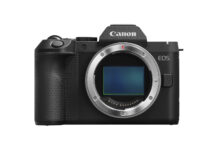
This Canon R1 review is for photographers who already understand why a flagship body exists. The EOS R1 is not the sensible Canon camera for everyone. It is a fast, heavy, expensive tool built for people who shoot under pressure: sports, wildlife, news, agency work, and events where missed focus is not just annoying, it costs the frame.
The short version: the Canon EOS R1 is a superb professional action camera if speed, autofocus reliability, integrated handling, and deadline workflow matter more than sheer resolution. I would not buy it as a general-purpose luxury body. I would buy it if I needed Canon’s toughest mirrorless camera for long lenses, difficult light, fast subjects, and immediate delivery.
Canon R1 review verdict in 2026
The Canon R1 makes most sense for working sports and wildlife photographers already invested in Canon RF or adapted EF glass. The 24.2MP back-illuminated stacked sensor is not trying to win a megapixel contest. It is there for speed, readout, autofocus, and clean files at the kind of ISO settings you end up using in stadiums, arenas, and bad weather.
Canon’s own EOS R1 specifications confirm the key numbers: 24.2MP full-frame stacked sensor, up to 40 fps electronic shooting, 12 fps mechanical shooting, 6K RAW up to 60p, 4K up to 120p, 2K/Full HD high-frame-rate options, and two CFexpress Type B card slots.
That fact sheet matters, but the more important question is whether the package makes sense. The answer is yes for a narrow group. If you shoot football, basketball, motorsport, birds, press events, or agencies where images need to leave the camera quickly, the R1’s handling and connectivity are part of the value. If you shoot portraits, landscapes, weddings, or commercial detail work, the Canon R5 Mark II review is probably the more relevant read.
| Best for | Professional sports, wildlife, news, events, and Canon shooters using big RF or adapted EF lenses. |
|---|---|
| Skip it if | You need high resolution, a smaller body, lower media costs, or better value for slower subjects. |
| Main strength | Autofocus, 40 fps speed, integrated grip, battery stamina, and field workflow. |
| Main weakness | 24MP resolution feels modest for the price if action is not your priority. |
| Best alternative | Canon R5 Mark II for resolution and hybrid flexibility; Canon R3 if used pricing is attractive. |
Who the Canon R1 is really for
The R1 is not a camera I would recommend to a casual enthusiast just because it sits at the top of Canon’s lineup. That is the trap with flagship bodies. They look like the best camera by default, but they are often the best camera only for a specific kind of work.
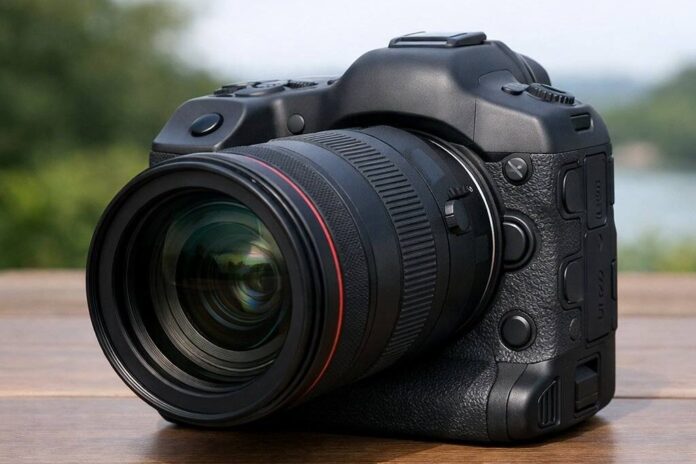
If you spend long days with a 300mm, 400mm, or 600mm lens, the integrated grip starts to make sense. Portrait orientation feels natural, the LP-E19 battery lasts well, and the larger body balances heavy glass better than a small mirrorless body with a bolt-on grip. After a few hours on a sideline, that matters more than it sounds.
The R1 also makes sense if your job includes fast delivery. Built-in 2.5G Ethernet, Wi-Fi 6E support where available, voice memo support, dual CFexpress Type B slots, and Canon’s pro workflow tools are not glamorous features. They are the boring things that help a working photographer send the frame before someone else does.
I would skip the R1 if you mostly photograph travel, portraits, landscapes, family work, or slow commercial subjects. It will obviously do those jobs, but you are paying for speed and robustness you may never use. A lighter full-frame Canon body can be more enjoyable and more financially rational.
Design, handling, and field usability
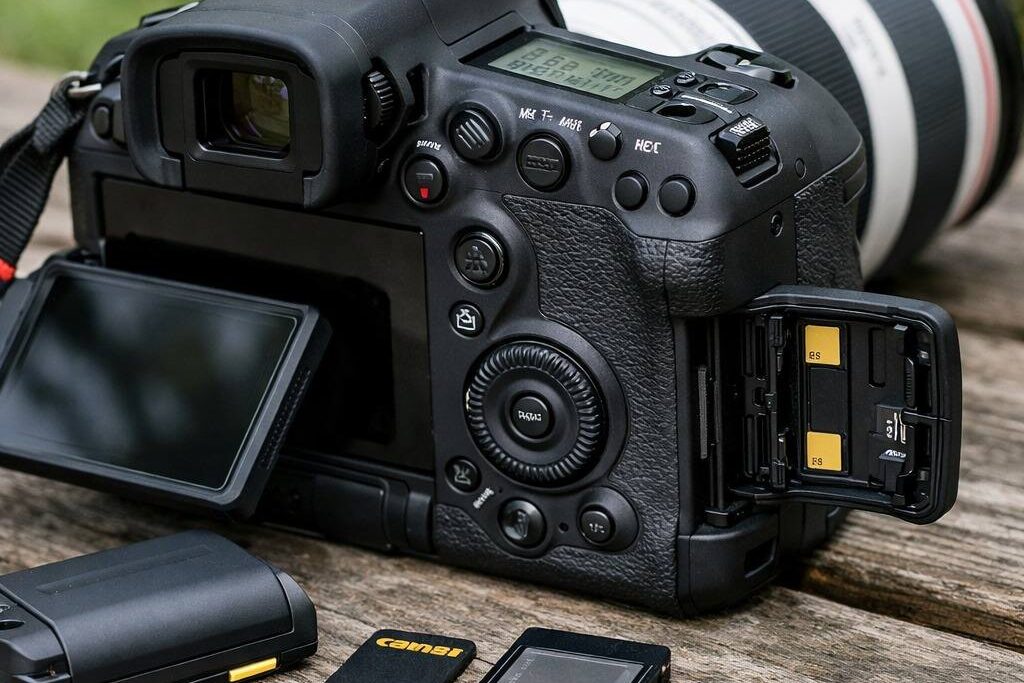
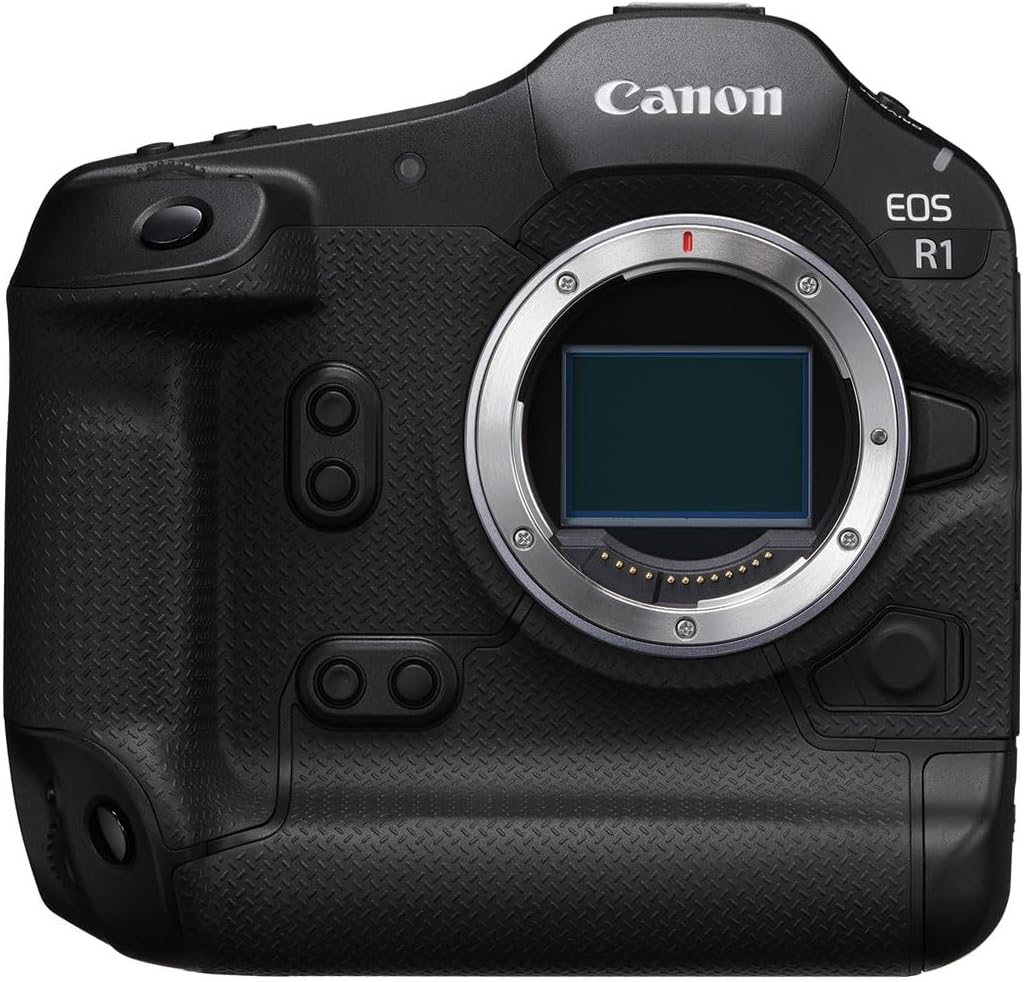
The R1 feels like a Canon 1-series camera translated into the mirrorless era. That is both the point and the limitation. The body is large, serious, and built around a vertical grip. If you want small-camera freedom, this is the wrong tool. If you want a camera that feels planted behind a big telephoto, it feels right very quickly.
The control layout is exactly the sort of thing Canon does well. Buttons fall under the hand, the grip is deep, the vertical controls are not an afterthought, and the body gives you enough physical interface that you are not constantly diving into the touchscreen. In cold weather or rain, that matters.
Canon lists the R1 at about 1115g with battery and card. That is heavy compared with a normal mirrorless body, but lighter than the old EOS-1D X Mark III DSLR. The real question is not whether the R1 is light. It is whether the weight earns its keep. With long RF lenses, it often does.
The 9.44M-dot EVF is another strength. For fast action, viewfinder comfort is not a luxury. You spend hours tracking small subjects, reading movement, and anticipating body language. A clear, high-resolution finder makes that work less tiring.
Autofocus and burst performance
Autofocus is the real reason to care about the Canon R1. Canon calls the system Dual Pixel Intelligent AF, and the R1 adds cross-type AF behavior with compatible lenses and conditions. In practical terms, the goal is better confidence when subjects are moving erratically, partially blocked, or surrounded by visual clutter.
The R1 can track people, animals, and vehicles, and Canon’s Action Priority mode is designed around specific sports situations. That sounds like marketing until you think about what a press photographer actually needs. You are often not photographing a clean subject against a clean background. You are photographing bodies crossing, helmets turning, arms blocking faces, and the important player appearing for half a second.
The 40 fps electronic shutter gives you a huge amount of timing freedom. You do not need 40 fps for every assignment, and I would not leave it there casually unless the moment requires it. But for peak action, it lets you choose between gestures that would be easy to miss at slower frame rates.
There is also a 12 fps mechanical option. That may sound ordinary next to the electronic speed, but it is still useful when you want a more conventional shutter behavior or when you are managing specific lighting and flash situations. The R1 is fast, but it is also flexible enough not to force one shooting style.
Image quality and the 24MP question
The biggest argument against the R1 is obvious: 24.2MP does not look exciting at this price. That criticism is fair if you are judging cameras by resolution alone. It is less fair if your priority is speed, readout, high ISO work, and dependable autofocus.
For sports and news, 24MP is often enough. It gives editors workable files, keeps transfer times reasonable, and avoids burying you under massive RAW files when you shoot thousands of frames. That last point is not theoretical. On a real assignment, high resolution can become a workflow tax.
For wildlife, the answer is more mixed. If you regularly crop hard, the R5 Mark II or another high-resolution body can be more forgiving. The R1 rewards getting closer, choosing the right lens, and keeping the subject framed tightly. It is not the Canon body I would pick just to crop tiny birds from far away.
Color is classic Canon: dependable skin tones, pleasing JPEGs, and RAW files that do not need a fight before delivery. Low-light performance should be strong for its class, and the moderate resolution helps keep noise manageable at the ISO settings common in indoor sports and evening events.
Video and hybrid work
The R1 is not a Cinema EOS body, but its video feature set is serious. The key correction is that this is not an 8K camera. The EOS R1 records 6K RAW up to 60p, 4K up to 120p, and 2K or Full HD at very high frame rates. That is a strong hybrid toolset for photojournalists, agencies, and event shooters who need motion clips alongside stills.
Canon Log 2 and Canon Log 3 support make the files more useful for grading. The full-size Type A HDMI port is also welcome. I have little patience for fragile HDMI connections on cameras that are supposed to work in the field. On a professional body, the port choice matters.
The R1’s best video use is probably not long-form cinema work. It is hybrid assignment work: a press conference, a sideline clip, a quick interview, a social video, or short documentary coverage where the same photographer is also responsible for stills. That is where the camera’s speed, autofocus, audio ports, and robust body fit together.
Battery, cards, and workflow
The R1 uses Canon’s LP-E19 battery. Canon rates it at roughly 700 shots through the viewfinder or 1330 with the LCD under CIPA-style conditions. In real use, burst shooting can stretch those numbers, while heavy video, networking, and long EVF sessions can pull them down. The important point is that this is a pro battery system, not a small mirrorless pack trying to survive a full day.
Storage is dual CFexpress Type B, not one CFexpress and one SD card. That is the right decision for a flagship action camera. It keeps both slots fast enough for high-speed RAW bursts and demanding video formats. The downside is cost. If you buy an R1, budget for serious cards and a fast reader.
Connectivity is one of the quiet reasons the R1 exists. USB-C, full-size HDMI, 2.5G Ethernet, Wi-Fi, Bluetooth, FTP options, voice memos, and metadata workflows all point toward working photographers. These features may not sell a camera to hobbyists, but they matter when your editor needs an image while the event is still happening.
Canon R1 vs R3, R5 Mark II, Sony a9 III, and Nikon Z9
The Canon R3 remains a very good pro body, and used pricing may make it tempting. The R1 is the newer flagship with faster 40 fps shooting, newer processing, cross-type Dual Pixel Intelligent AF, stronger video specs, and a more current professional workflow. If you already own an R3 and it pays the bills, the R1 is not an automatic upgrade. If you are buying a Canon flagship now, the R1 is the cleaner long-term choice.
The R5 Mark II is the better Canon body for many hybrid shooters because of its 45MP resolution and broader appeal. If you shoot wildlife and crop heavily, weddings with detail work, commercial stills, or landscape work, I would look at the R5 Mark II first. The R1 is the more specialized action tool.
Against the Sony a9 III, the Canon takes a different route. Sony’s global shutter is genuinely special for flash sync, LED lighting, and rolling-shutter-free action. Canon answers with integrated handling, RF lens continuity, cross-type AF, and a pro Canon workflow. Our Sony a9 III vs Canon EOS R3 comparison is useful background because the R1 is Canon’s next step in that same professional action conversation.
The Nikon Z9 is still the other obvious rival. It offers high resolution, serious video, and a no-mechanical-shutter design. The R1 is more conservative in resolution, but very focused in handling and action delivery. System loyalty will decide many of these purchases, and that is not irrational. At this level, lenses, support, and workflow matter as much as the body.
Best lenses to pair with the Canon R1
The R1 deserves fast RF glass. For indoor sports and events, the RF 70-200mm F2.8L IS USM and RF 24-70mm F2.8L IS USM are obvious work lenses. For field sports and wildlife, the RF 100-300mm F2.8L, RF 400mm F2.8L, RF 600mm F4L, and Canon’s long RF super-telephoto options are where the body really makes sense.
If you are building a Canon mirrorless kit around this body, our Canon RF lens guide is the better starting point than buying the body first and guessing later. The R1 is expensive, but the lens decisions are what determine whether it actually fits your work.
Final verdict
The Canon R1 is a professional action flagship, not a general-purpose trophy camera. Its value is in confidence: autofocus that can follow difficult subjects, a body that balances big lenses, fast dual-card storage, strong battery life, and workflow tools made for people who deliver images under pressure.
I would buy the Canon R1 if I were a Canon sports, wildlife, news, or event photographer who needed the toughest and fastest RF body available. I would not buy it if I simply wanted the most expensive Canon camera. For most photographers, the R5 Mark II, R6-series, or a used R3 will be more sensible. For the right professional, though, the R1 is exactly the kind of camera that makes hard jobs feel calmer.
Canon EOS R1 alternatives
The main alternatives to the Canon EOS R1 are Sony a9 III, Sony Alpha 1 II, Nikon Z9, Nikon Z8, Canon EOS R3, Canon R5 Mark II. Compare autofocus, stabilization, video limits, lens choice and current price before deciding which camera fits you best.
Frequently asked questions
Is the Canon R1 worth buying in 2026?
Yes, if you are a professional Canon shooter who needs flagship autofocus, 40 fps speed, integrated handling, and fast delivery tools. It is overkill for most casual photographers.
How many megapixels does the Canon R1 have?
The Canon EOS R1 has a 24.2MP full-frame back-illuminated stacked CMOS sensor. It can also use in-camera neural-network upscaling to create larger files, but the native capture resolution is 24.2MP.
Does the Canon R1 shoot 8K video?
No. The Canon R1 records 6K RAW up to 60p, 4K up to 120p, and high-frame-rate 2K or Full HD options. If you specifically need 8K in Canon’s mirrorless line, look at the R5-series instead.
What memory cards does the Canon R1 use?
The Canon R1 uses two CFexpress Type B card slots. That is good for high-speed bursts and demanding video, but the cards are more expensive than SD cards.
Is the Canon R1 better than the Canon R3?
The R1 is the newer and more advanced flagship, with faster electronic shooting, newer autofocus processing, stronger video specs, and dual CFexpress Type B storage. The R3 can still be a strong value if used prices are attractive.
Professional sports, wildlife, news, agency, and event photographers using Canon RF or adapted EF lenses.
You need high resolution, a compact body, lower card costs, or a better value camera for slower subjects.
Very high; expensive, large, and built around advanced autofocus and workflow setup.
Pair with professional RF telephoto and event lenses; consider R5 Mark II for more resolution.
Strong 6K RAW and 4K high-frame-rate tools, but not an 8K camera or Cinema EOS replacement.
Yes for the right professional action shooter; excessive for most photographers.