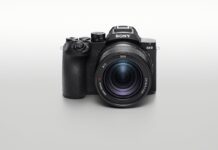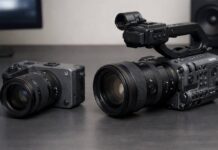

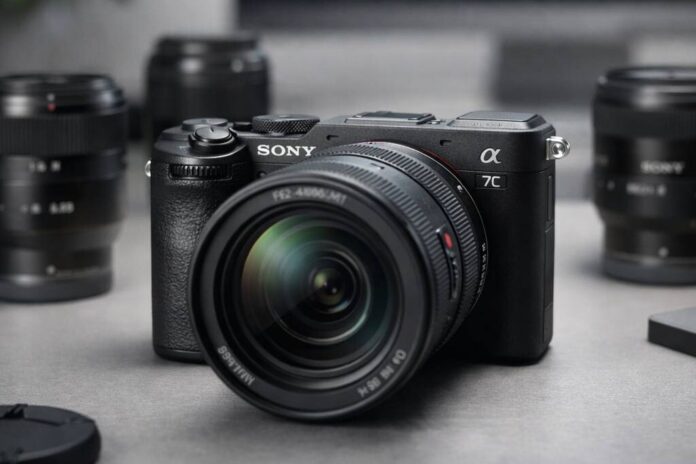
Choosing the right sony a7c ii lenses can completely change how this compact full-frame camera feels in the field. I’ll walk through the lens types that make the most sense for travel, portraits, everyday shooting, and video, with practical advice based on real-world use rather than spec-sheet hype.
For camera-body context, read the Sony a7C II review. For a wider full-frame lens shortlist, use the best Sony FE lenses guide alongside this compact-body kit.
What makes a lens a good match for the Sony a7C II
Why size and balance matter on a compact full-frame body
The Sony a7C II is famous for packing full-frame image quality into a surprisingly small and lightweight body. Because of this, lens choice becomes even more important than usual. If you put a massive pro zoom on the A7C II, the whole setup can feel front-heavy and awkward, completely defeating the purpose of going compact. This camera shines when paired with lenses that keep the kit nimble and easy to carry, especially for travel, street, or all-day shooting.
That balance-first approach is why it helps to compare compact primes and small zooms before buying, especially if you want the camera to stay comfortable on long walks. A practical roundup like Best Lenses for Sony a7C & a7C II – Camera Review can make it easier to narrow the field by shooting style.
Lens choice also makes more sense when you consider how the body itself handles day to day, especially if portability is your main reason for picking this camera. For a broader look at ergonomics, autofocus behavior, and real travel use, the Sony a7C II review adds helpful context before narrowing down the best lens options.
When I’m out for hours or exploring a new city, a large lens can quickly make me want to leave the camera behind. Compact sony a7c ii lenses maintain the balance and discretion that make the A7C II special. Pancake primes and slim zooms feel perfectly matched, making it easy to shoot one-handed, slip the camera into a jacket, or blend in when you want to be unobtrusive. For most users, the best lens for Sony a7C II is one that lets the camera stay light and responsive without sacrificing image quality.
How autofocus, stabilization, and handling affect real shooting
Good autofocus and solid stabilization are not just buzzwords; they directly affect real-world results. The A7C II’s autofocus is fast and reliable, but not every lens keeps up equally well. Native Sony FE lenses often offer the best compatibility, with accurate face and eye detection that helps with fast-moving subjects or candid portraits. Third-party lenses have improved, but some may lag in continuous tracking or produce more focus noise.
Optical stabilization in the lens (OSS) can also be a game-changer for handheld video or low-light photography. While the A7C II has in-body stabilization, pairing it with a stabilized lens gives you an even steadier image, especially at longer focal lengths. Handling matters too: focus rings that are smooth and well-damped, aperture rings with positive clicks, and lightweight builds all contribute to a better shooting experience. When choosing Sony a7C II lens compatibility, don’t just look at sharpness charts – think about how the lens will actually feel in your hand and how it responds to your shooting style.
Best everyday lenses for travel and walkaround photography
When to choose a compact prime over a standard zoom
For travel and everyday use, you want a lens that covers most situations with minimal fuss. The debate often comes down to a compact prime versus a standard zoom. Each has strengths, and I’ve used both extensively on the A7C II.
- Compact primes: Something like the Sony FE 35mm f/2.8 or the lighter 40mm or 50mm f/2.5 G lenses. These are tiny and practically disappear on the camera. They offer beautiful sharpness, wide apertures for low light, and classic rendering. If you enjoy moving your feet to frame a shot and love shooting at wide apertures for blurred backgrounds, these primes are hard to beat for creativity and stealth.
- Standard zooms: The Sony FE 28-60mm f/4-5.6 is the kit zoom for a reason. It’s not the brightest lens, but it’s extremely compact, feather-light, and surprisingly sharp in good light. For those who want flexibility without lens changes, it’s a great Sony a7C II travel lens. The slightly larger FE 24-70mm f/4 also pairs well, though it adds a bit more bulk.
On city walks or during travel, I usually take a small prime for low-light cafes or street photos, and the zoom for versatility at tourist sites or group shots. The best Sony a7C II walkaround lens is the one you’ll actually take everywhere. For some, that means the smallest prime they can find; for others, a lightweight zoom is more practical. If you want more info on the latest recommendations, you can check this detailed lens review.
Best portrait lenses for flattering depth and subject separation
The sweet spot between 50mm and 85mm for portraits
Portraits are about more than sharpness – they’re about rendering faces beautifully, with gentle background blur and natural perspective. On the Sony a7C II, the classic range for portraits is 50mm to 85mm. These focal lengths let you stand at a comfortable distance, avoid distortion, and get creamy separation between subject and background.
If you prefer environmental portraits or want a lighter kit, a 50mm f/1.8 or f/2.5 is a great starting point. The Sony FE 50mm f/1.8 is affordable and sharp, while the G-series 50mm f/2.5 offers higher build quality with minimal weight. For tighter headshots and even more background blur, the Sony FE 85mm f/1.8 is a favorite among portrait shooters. It’s fast to focus, not too heavy, and delivers stunning bokeh without breaking the bank.
In my experience, the 85mm f/1.8 is the best portrait lens for Sony a7C II if you want classic, flattering results. For more versatility, the 50mm is easier to use indoors or in tighter spaces. Both are native Sony FE portrait lenses, so you get reliable autofocus and excellent compatibility with the A7C II’s subject tracking.
Best wide and ultra-wide lenses for landscapes and interiors
Wide and ultra-wide lenses open up a whole new world for landscape, architecture, and interior photographers. On the Sony a7C II, a lens around 16-20mm gives you broad scenes without excessive distortion. The Sony FE 16-35mm f/4 is an excellent all-around wide zoom, providing sharpness edge-to-edge and a flexible range for everything from tight interiors to sweeping vistas. It’s not too large for the A7C II, especially compared to the heavier f/2.8 versions.
If you want the smallest setup possible, the Sony FE 20mm f/1.8 G is a standout. It’s light, fast, and delivers crisp images even in difficult light. For those who shoot a lot of nightscapes or want a dramatic perspective, the 14mm f/1.8 GM is pricier but remarkably compact for such a wide, bright lens. These options are ideal for anyone seeking the best Sony a7C II wide angle lens or an ultra wide lens for Sony a7C II that won’t overwhelm the camera’s compact feel.
For travel, I often pack the 20mm f/1.8 for its blend of speed and compactness. It’s wide enough for most landscape shots and great in low light, making it a top Sony a7C II landscape lens for photographers on the go.
Best lenses for video creators using the Sony a7C II
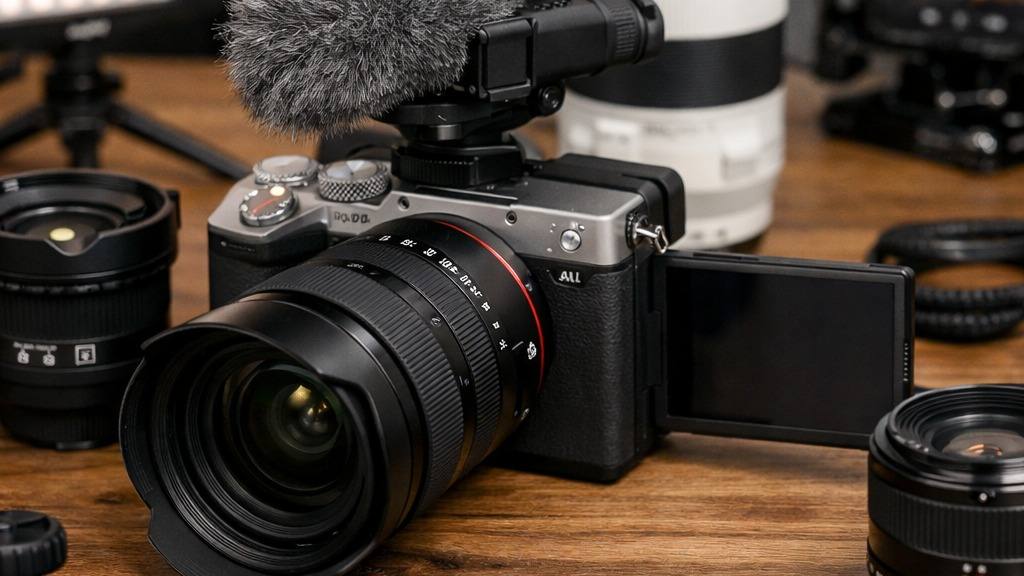
The Sony a7C II is a true hybrid camera, and its blend of portability and performance makes it a top choice for solo filmmakers, vloggers, and content creators. However, not every lens is equally suited to video work. Picking the right Sony a7C II video lens means thinking about autofocus smoothness, image stabilization, handling, and how the lens feels in the hand when mounted on a small camera.
Features that matter most for handheld video and vlogging
When shooting video, especially handheld or for vlogging, certain features stand out as essential. First, autofocus performance is crucial. The best lens for Sony a7C II video will focus quietly and smoothly, tracking faces or moving subjects without hunting or making distracting motor sounds. Sony’s own lenses using the latest linear motors (like the FE 20mm f/1.8 G, FE 24mm f/1.4 GM, and FE 35mm f/1.8) excel here. These are also lightweight, which matters for long handheld sessions.
Second, image stabilization can be a lifesaver. While the A7C II has in-body stabilization, pairing it with an optically stabilized lens (like the FE 24-105mm f/4 G OSS) gives an even steadier result, especially when walking or panning. For gimbal work, lighter primes shine, but for pure handheld, a stabilized zoom often wins.
Third, minimal focus breathing makes a big difference for video. Focus breathing refers to the slight change in angle of view when racking focus from near to far. Some Sony G and GM lenses, and the Sigma 24mm f/2 DG DN, control this well, making your footage look more cinematic and less distracting.
For vlogging or wide-angle talking head shots, the Sony a7C II vlogging lens sweet spot is in the 16-24mm range. The Sony FE 20mm f/1.8 G is nearly perfect: wide, sharp, bright, and compact. If you want even wider, the Tamron 17-28mm f/2.8 Di III RXD or Sony’s own FE PZ 16-35mm f/4 G bring power zoom functionality, which is excellent for smooth zoom transitions in video.
For sit-down interviews or cinematic b-roll, a fast 35mm or 50mm prime gives you gorgeous depth and background blur. The FE 35mm f/1.8 and FE 50mm f/1.8 are both affordable and lightweight, making them easy to keep in your kit.
If you need a single lens that does almost everything for video, the FE 24-70mm f/2.8 GM II is the pro choice, but it is large and expensive. For most creators, the FE 28-60mm f/4-5.6 kit lens is surprisingly good for casual vlogging and walk-and-talks, even if it is not the brightest or sharpest option.
- Top picks for video: Sony FE 20mm f/1.8 G, FE 35mm f/1.8, FE PZ 16-35mm f/4 G, Tamron 17-28mm f/2.8 Di III RXD, Sony FE 24-105mm f/4 G OSS
Prime vs zoom lenses on the Sony a7C II
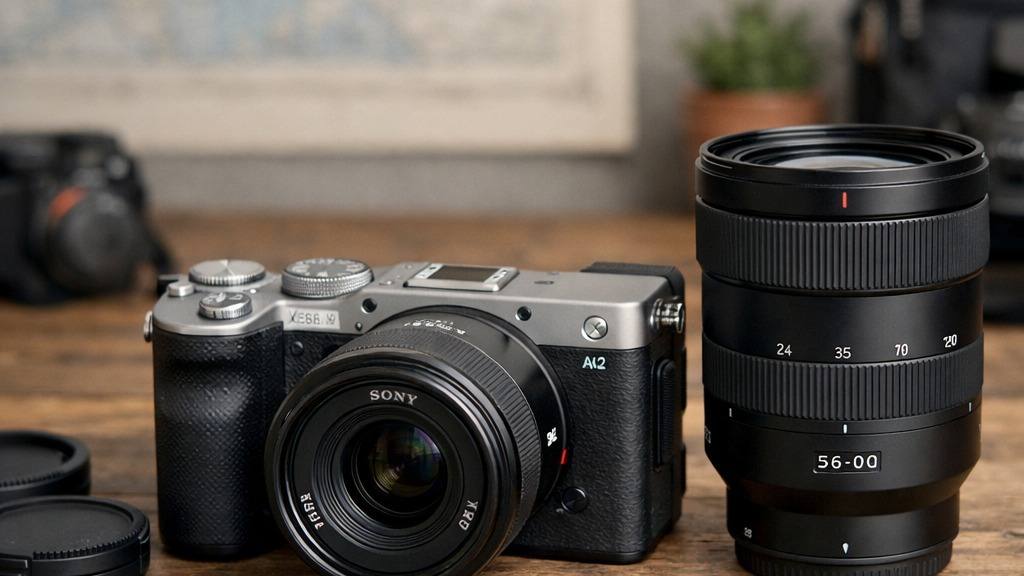
Many Sony a7C II shooters struggle with the choice between primes and zooms. There is no one-size-fits-all answer, and each approach has strengths for different shooting styles. Here is how I break it down after real-world use.
Prime lenses are typically smaller, lighter, and offer wider apertures for beautiful background blur and low-light performance. A prime like the FE 35mm f/1.8 or the Sigma 24mm f/2 DG DN makes the A7C II feel nimble, and encourages you to move your feet for composition. If you love shallow depth of field, shoot in dim interiors, or want maximum sharpness, primes deliver.
Zoom lenses are all about flexibility. A lens like the FE 24-105mm f/4 G OSS or Tamron 28-75mm f/2.8 G2 covers everything from wide landscapes to tight portraits in a single package. This is invaluable for travel, events, and unpredictable situations where you cannot or do not want to swap lenses. On the Sony a7C II, compact zooms like the FE 28-60mm f/4-5.6 or Tamron 20-40mm f/2.8 keep things portable.
The main tradeoff? Zooms are usually larger and heavier, and their maximum aperture is slower, making it harder to shoot in low light or get that dreamy background blur. Some pro zooms, like the FE 24-70mm f/2.8 GM II, narrow the gap but at a significant cost and size penalty.
- Best prime lenses for Sony a7C II: Sony FE 24mm f/1.4 GM, FE 35mm f/1.8, FE 50mm f/1.8, Sigma 24mm f/2 DG DN, Tamron 20mm f/2.8 Di III OSD
- Best zoom lenses for Sony a7C II: Sony FE 24-105mm f/4 G OSS, FE 28-60mm f/4-5.6, Tamron 28-75mm f/2.8 G2, Tamron 20-40mm f/2.8, Sony FE PZ 16-35mm f/4 G
For most photographers and hybrid shooters, starting with a small prime and adding a versatile zoom is the best way to get the most from your Sony a7C II. If you shoot a lot of video, the power zoom options or fast, quiet primes are hard to beat.
How to build the right lens kit for your budget and shooting style
Building your Sony a7C II lens kit should be about matching your real needs, not just collecting glass. Whether you are a beginner, a traveler, or a working creator, a thoughtful kit built for your budget and style will get you further, faster.
A simple one-lens, two-lens, and three-lens kit strategy
If you can only buy one lens, pick a compact zoom like the FE 28-60mm f/4-5.6 or a fast 35mm prime. These cover most subjects, travel easily, and keep the camera’s balance just right.
For a two-lens setup, combine a versatile zoom with a fast wide or normal prime. For example, pair the FE 24-105mm f/4 G OSS with the FE 35mm f/1.8, or the Tamron 20-40mm f/2.8 with the Sigma 65mm f/2 DG DN. This combo lets you shoot everything from landscapes to portraits and video interviews, all while staying travel-friendly.
A three-lens kit gives you true flexibility without weighing down your bag. Build around a wide zoom (like the FE PZ 16-35mm f/4 G), a standard zoom (Tamron 28-75mm f/2.8 G2 or FE 24-105mm f/4), and a fast prime for low light and shallow depth of field (FE 50mm f/1.8 or Sigma 24mm f/2 DG DN).
For strict budgets, there are excellent budget lenses for Sony a7C II like the Sony FE 50mm f/1.8, Tamron 20mm f/2.8, and the FE 28-60mm kit lens. You can build a powerful, light kit for less than the cost of a single pro zoom.
- One-lens kit: Sony FE 28-60mm f/4-5.6 or FE 35mm f/1.8
- Two-lens kit: Sony FE 24-105mm f/4 G OSS + FE 35mm f/1.8 or Sigma 24mm f/2 DG DN
- Three-lens kit: FE PZ 16-35mm f/4 G + Tamron 28-75mm f/2.8 G2 + FE 50mm f/1.8
Think about what you shoot most, how much you want to carry, and what tradeoffs matter to you. In 2026, with compact digital cameras coming back strong, a well-chosen set of sony a7c ii lenses will keep your setup nimble and creative wherever you go.
Frequently asked questions
What is the best all-around lens for the Sony a7C II?
The Sony FE 28-60mm f/4-5.6 is the best all-around lens for most users, thanks to its compact size, light weight, and versatile zoom range. If you want better low-light performance and can handle a bit more bulk, the FE 24-105mm f/4 G OSS is a superb step up.
Are full-size Sony FE lenses too big for the Sony a7C II?
Some full-size FE lenses, like the FE 24-70mm f/2.8 GM II or FE 135mm f/1.8 GM, can feel unbalanced on the A7C II’s small body. For travel and everyday shooting, smaller primes and compact zooms feel better. However, if image quality or a specific focal length is critical, using larger lenses is still possible, especially on a tripod.
Which focal length is best for portraits on the Sony a7C II?
For classic portraits, an 85mm prime like the Sony FE 85mm f/1.8 is ideal, offering natural perspective and beautiful background blur. A 50mm prime is also very popular for full-body or environmental portraits, especially in tighter spaces.
Should I buy a prime or zoom lens first for the Sony a7C II?
If you are just starting, a small zoom is often the best first lens for flexibility. If you mainly shoot portraits or want to focus on low light or background blur, a fast prime like a 35mm or 50mm is a smart first choice.
Key takeaways for choosing sony a7c ii lenses
- The best Sony a7c ii lenses balance image quality with compact size, not just maximum specs.
- A small standard zoom or fast prime is usually the smartest first lens for most A7C II owners.
- Portrait, travel, landscape, and video shooters benefit from very different lens priorities.
- Building a lens kit around how you actually shoot will save money and improve results faster.