
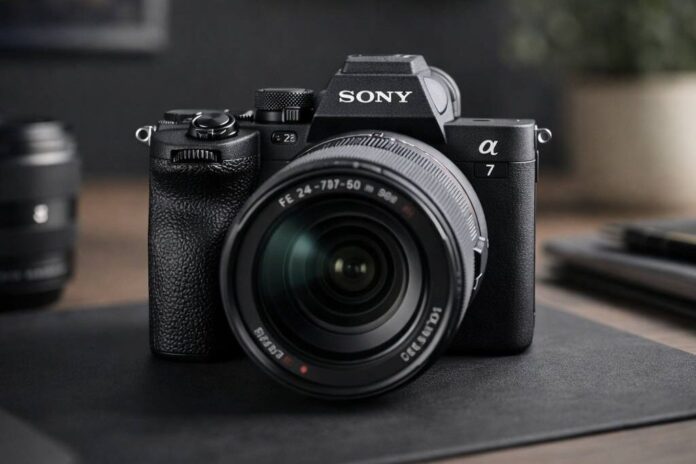
Choosing the right Sony a7 IV lenses changes the camera more than most body settings do. The a7 IV is demanding enough to show weak glass, but still compact enough that lens weight matters every time you carry it for a full day.
| Need | Best first pick | Why it fits the a7 IV |
|---|---|---|
| Best one-lens kit | Sony FE 24-105mm F4 G OSS | Versatile range, stabilization, strong sharpness, and easier travel handling than a pro f2.8 zoom. |
| Pro hybrid work | Sony FE 24-70mm F2.8 GM II | Sharp enough for the 33MP sensor, fast AF, and excellent video handling. |
| Portraits | Sony FE 85mm F1.8 | Flattering, light, affordable, and reliable for people photography. |
| Budget zoom | Tamron 28-75mm F2.8 G2 | Great value, bright aperture, and a practical everyday range. |
What makes a lens a great match for the Sony A7 IV
How the 33MP sensor changes lens choice
The Sony A7 IV’s 33-megapixel sensor is a sweet spot for detail and file size, but it can also expose the flaws in lower-quality lenses. This sensor is detailed enough to highlight softness at the edges, chromatic aberrations, and weak contrast in older or basic designs. Therefore, choosing the right Sony a7 IV lenses means picking optics that can match the resolving power of the sensor without adding weight or cost where you do not need it.
Beyond sharpness, the A7 IV also rewards lenses that balance fast autofocus, manageable weight, and comfortable handling during long shoots. Because it is a full-frame E-mount body, Sony’s official lens compatibility resource is worth checking before buying unusual adapted or crop-format options. If you want a wider system view before narrowing down your setup, this guide to Best Sony FE lenses can help compare practical options for portraits, travel, and everyday shooting.
A lens that looked great on a 24MP body may suddenly show its limits. For example, I noticed my favorite lightweight 35mm prime, which was flawless on my A7 III, started looking just a bit soft wide open on the A7 IV. This does not mean you need the most expensive glass, but it does mean you will appreciate a lens that is sharp, has good contrast, and controls flare well. Look for newer Sony, Sigma, and Tamron lenses labeled for “high resolution” or “mirrorless optimized.” These tend to handle the extra pixels with ease.
Why autofocus, weight and handling matter in real use
The Sony A7 IV is a hybrid workhorse, so you want lenses that keep up with its fast, accurate autofocus and help you stay nimble. Autofocus reliability is crucial, especially if you shoot people, events, or video. Older adapted DSLR lenses can be sharp, but their autofocus is often slower or less consistent on the A7 IV.
Weight and balance are just as important. A heavy lens paired with the A7 IV can feel front-heavy, making it tiring to shoot all day. For travel or street photography, smaller and lighter lenses mean you are more likely to keep your camera ready. Ergonomics also matter for long sessions, especially with zooms that extend or primes with awkward focus rings. Good handling lets you focus on shooting, not fighting your gear.
Best everyday lenses for most Sony A7 IV shooters
The best standard zoom for all-around photography
If you only buy one lens for your A7 IV, make it a high-quality standard zoom. The 24-70mm range covers everything from wide landscapes to tight portraits. For most people, the best everyday lens for Sony A7 IV is the Sony 24-70mm f/2.8 GM II. It is sharp across the frame, fast to focus, and surprisingly light for its class. The constant f/2.8 aperture delivers excellent subject separation and low-light performance.
If the G Master is out of your budget, the Tamron 28-75mm f/2.8 G2 is a top alternative. It is lighter, smaller, and nearly as sharp in the center. The trade-off is a slightly smaller zoom range (28mm instead of 24mm at the wide end), but for most shooters, this is barely noticeable. Both lenses nail autofocus on the A7 IV, track faces accurately, and feel great in the hand.
For those who want an even lighter setup, the Sony 28-60mm kit lens is a hidden gem. It is not as bright or sharp as the pro zooms, but for casual shooting, travel, and video, its compact design makes the A7 IV much easier to carry all day.
When a fast prime makes more sense than a zoom
While zooms offer unmatched flexibility, a fast prime lens brings a different level of image quality and creativity. The Sony 35mm f/1.8 and Sigma 35mm f/1.4 DG DN Art are the two Sony A7 IV prime lens options I would compare first. Both are sharp, focus confidently, and give enough background separation without forcing you into a huge zoom.
A prime is also lighter and smaller than a fast zoom, making it ideal for street photography, travel, or simply when you want a more discreet setup. The faster aperture lets you shoot in low light without raising your ISO too much and produces a more cinematic look for video. If you shoot a lot of portraits, the Sony 50mm f/1.8 or 85mm f/1.8 are both affordable and deliver beautiful results on the A7 IV.
Best Sony A7 IV lenses for portraits and weddings
Portrait focal lengths that flatter without feeling limiting
When shooting portraits or weddings, lens choice can make or break your images. For flattering portraits, the classic 85mm is hard to beat. The 85mm lens for Sony A7 IV delivers natural compression, shallow depth of field, and keeps your subject comfortable by not forcing you too close.
The Sony 85mm f/1.8 is my personal favorite – lightweight, sharp wide open, and affordable. If budget is not a concern, the 85mm f/1.4 GM gives you even dreamier bokeh and even better sharpness at the edges, but it is heavy. For wedding shooters, the 24-70mm f/2.8 GM II is also a favorite, letting you switch from environmental wide shots to tight candids without changing lenses. The 50mm f/1.2 GM is another magic option for portraits, giving you a unique look with the ability to shoot in near darkness.
If you like a little more variety, the 70-200mm f/2.8 GM OSS II is a wedding staple. It lets you shoot from a distance, capture candid moments, and compress backgrounds for a more dramatic look. Autofocus is fast and reliable, which is a must for unpredictable moments at events.
Best Sony A7 IV lenses for travel street and landscapes
How to balance image quality with a lighter kit
Travel, street, and landscape photography demand a lens that is sharp, light, and ready for anything. The Sony A7 IV travel lens that stands out for me is the Sony 24-105mm f/4 G OSS. It covers nearly every focal length you might need, from wide vistas to telephoto details, and includes optical stabilization for handheld shooting at slower shutter speeds.
If you prefer something more compact, the Tamron 28-200mm f/2.8-5.6 is surprisingly good. It is not quite as sharp at the edges as a prime, but the convenience of having such a huge range in one lens means you never miss a shot. For street shooters, the Sony 35mm f/1.8 or 40mm f/2.5 G make excellent walkaround lenses because they are small, discreet, and fast to focus.
Landscape photographers will love the Sony 16-35mm f/4 PZ for its sharpness, weather-sealing, and power zoom (which is also handy for video). It delivers stunning image quality without weighing down your kit. For ultralight travel, even a single compact prime like the Sony 24mm f/2.8 G can deliver serious image quality in a pocketable package.
Best Sony A7 IV lenses for video and hybrid creators
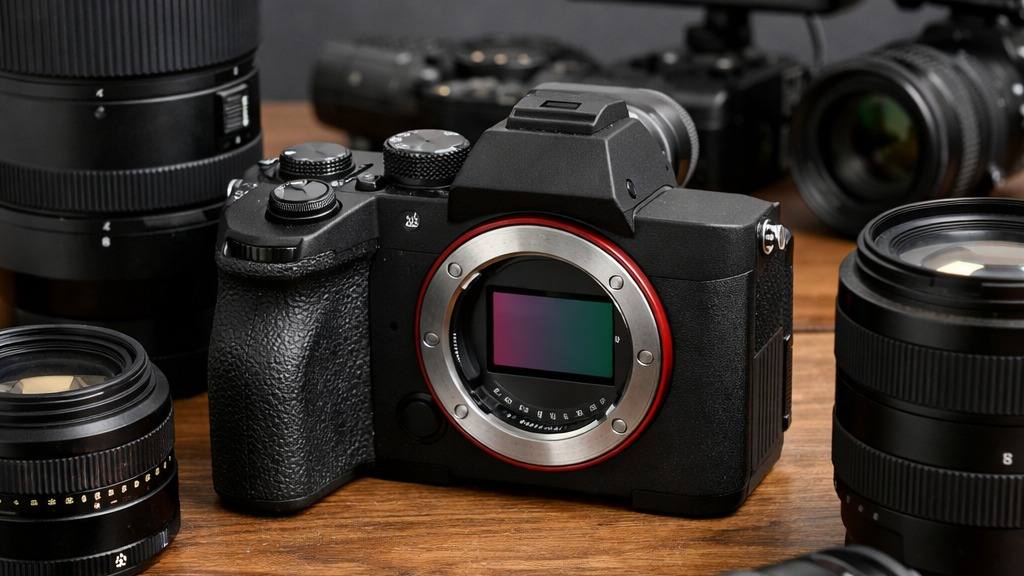
If you use the A7 IV for both photo and video, you know that not every lens works equally well for both. Autofocus, stabilization, and smooth manual control matter much more for video than for stills. For hybrid work, the practical differences show up quickly: a lens either tracks faces quietly, balances well, and handles exposure changes cleanly, or it gets in the way.
Features that matter most for handheld and talking-head video
For video, the most important lens traits are quiet, accurate autofocus, minimal focus breathing, and smooth aperture control. If you are comparing the body itself against the previous generation, our Sony a7 III vs a7 IV comparison explains why the newer body asks more from its lenses. The Sony A7 IV video lens you choose should move focus naturally and stay nearly silent when recording audio. Sony’s latest “G” and “GM” lenses often excel here, but Sigma and Tamron have closed the gap in the last two years.
Stabilization and gimbal balance matter
\nIf you do a lot of handheld shooting or walk-and-talks, look for optical stabilization when the focal length gets longer. The A7 IV’s IBIS is solid, and pairing it with a stabilized lens like the Sony FE 24-105mm f4 G OSS gives extra help. The Tamron 28-75mm f2.8 G2 is not stabilized, but it stays popular for video because it is light, sharp, bright, and easy to balance.
- Sony FE 24-70mm f2.8 GM II – The best lens for Sony A7 IV video if you want pro results, fast autofocus, and minimal focus breathing. Expensive but worth it for commercial work.
- Sigma 28-70mm f2.8 DG DN Contemporary – Lighter and more affordable, with good autofocus and sharpness. Small enough for gimbals or travel rigs.
- Tamron 35-150mm f2-2.8 Di III VXD – Extremely versatile for hybrid creators, covering everything from wide talking heads to tight b-roll. Focus is fast and reliable.
- Sony FE 20mm f1.8 G – Perfect for vlogging, group video calls, or run-and-gun documentary work. It’s wide, sharp, and very light.
For most hybrid creators, a stabilized standard zoom or a wide prime covers 90% of video needs. If you do a lot of talking-head or vlog content, prioritize wide lenses with minimal distortion and face-friendly rendering. For events or multi-camera shoots, zoom flexibility is essential.
Hybrid shooters also benefit from lenses with customizable function buttons, de-clickable apertures, and linear manual focus response. These features are now common on newer Sony and Sigma ART lenses and save real time on set.
Sony, Sigma and Tamron lenses compared
With the Sony A7 IV, you can use Sony, Sigma, or Tamron full-frame E-mount lenses with electronic autofocus support. Stabilization depends on the camera body and whether the lens itself includes optical stabilization. Each brand has its strengths, and the best choice depends on your priorities and budget. Let’s break down when each makes sense.
When first-party glass is worth the extra cost
Sony FE lenses generally offer the best autofocus performance, weather sealing, and compatibility with the latest camera features. If you shoot fast action, rely on real-time Eye AF, or want the most consistent results, Sony glass is the safest bet. The new GM II series (like the 24-70mm f2.8 GM II) is also lighter and optically better than earlier versions.
However, Sigma and Tamron have rapidly improved. Sigma’s ART and Contemporary lines can match Sony for sharpness in many real shooting situations, often at a lower price. Their 85mm f1.4 DG DN and 28-70mm f2.8 DG DN are especially strong for portrait and video shooters. Autofocus is almost as good as Sony’s in most light, though sometimes a hair behind for fast-moving subjects.
Tamron focuses on zooms with unique focal ranges and lighter designs. The 28-75mm f2.8 G2 and 35-150mm f2-2.8 offer great image quality at a friendlier price. Tamron lenses tend to be lighter, making them ideal for travel and hybrid shooting, though build quality is a bit more utilitarian.
- Choose Sony FE if you need best-in-class autofocus, pro build, or plan to resell later.
- Choose Sigma for excellent optics and lower cost, especially for primes and compact zooms.
- Choose Tamron for lightweight, budget-friendly zooms with unique focal lengths.
If you are on a tight budget, third-party lenses for Sony A7 IV are now so good you rarely sacrifice much. For most shooters, Sigma and Tamron offer 80-95% of the performance of Sony at 60-70% of the price.
How to choose the right lens for your budget and style
With so many sony a7 iv lenses out there, picking the right one can feel overwhelming. It helps to start by listing your priorities: do you want compact size for travel, sharpness for large prints, fast autofocus for action, or creamy bokeh for portraits?
The safest first purchase
\nFor most people, a high-quality standard zoom is the smartest first lens. The Sony FE 24-105mm f4 G OSS, Tamron 28-75mm f2.8 G2, or Sigma 28-70mm f2.8 DG DN cover everything from landscapes to portraits and video. Primes like the Sony 50mm f1.8 or Sigma 85mm f1.4 DG DN make great second lenses if you want more subject separation or shoot in low light.
- Budget Sony A7 IV lenses: Consider the Sony FE 50mm f1.8 or Tamron 28-75mm f2.8 G2 for high value without major compromises.
- Travel and street: Compact options like the Sony 24mm f2.8 G or Sigma 45mm f2.8 pack light and work well on the move.
- Portrait and events: Fast primes such as the Sony FE 85mm f1.8 or Sigma 85mm f1.4 DG DN create beautiful background blur and flattering subject separation.
- Video and hybrid: Look for smooth autofocus, minimal focus breathing, and, if possible, built-in stabilization. The Sony FE 24-105mm f4 G OSS is a strong all-purpose video lens.
When choosing which lens for Sony A7 IV, ask yourself how much weight you want to carry, how much you want to spend, and what you shoot most. If you earn a living with your camera, Sony’s first-party lenses often make sense for reliability and resale. For enthusiasts, Sigma and Tamron are nearly as good, especially with recent models.
If you are building a kit, mix and match: use a Sony zoom for events, a Sigma prime for portraits, and a Tamron zoom for travel. The A7 IV’s sensor is sharp enough that you’ll see the benefits of quality glass, but forgiving enough for affordable options to shine.
Frequently asked questions
What is the best all-around lens for the Sony A7 IV?
The Sony FE 24-105mm f4 G OSS is the most versatile all-purpose lens. It covers wide to medium telephoto, is sharp across the frame, and has optical stabilization for both stills and video.
Are Sigma and Tamron lenses good for the Sony A7 IV?
Yes, both Sigma and Tamron make excellent lenses for the A7 IV. Their latest models offer sharp optics, fast autofocus, and great value. For most users, third-party lenses for Sony A7 IV deliver 90% of the performance at a significantly lower price.
Which lens should I buy first for the Sony A7 IV?
Start with a standard zoom like the Sony FE 24-105mm f4 G OSS or Tamron 28-75mm f2.8 G2. These cover most shooting situations, from landscapes to portraits and video.
What focal length works best for portraits on the Sony A7 IV?
Portraits look best with lenses between 85mm and 135mm. The Sony FE 85mm f1.8, Sigma 85mm f1.4 DG DN, and Sony 135mm f1.8 GM are all excellent choices for flattering, sharp results.
Key takeaways
- The best Sony a7 IV lenses depend more on your shooting style than on brand alone.
- A strong standard zoom is the smartest first lens for most A7 IV owners.
- Fast primes shine for portraits, low light and subject separation, while zooms offer more flexibility.
- Sony, Sigma and Tamron all make excellent A7 IV options at different price points.