
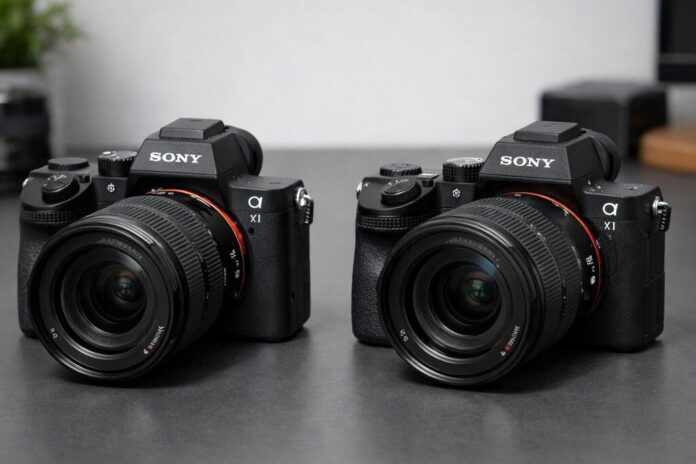
Choosing between the Sony a7 II vs a7 III is not just a question of old body versus newer body. The a7 II is still one of the cheapest ways into full-frame E-mount. The a7 III is the camera that fixed most of the things working photographers complained about.
My short answer is simple: buy the a7 II only if price is the whole point. Buy the a7 III if you want the camera to disappear in your hands and let you work with fewer excuses.
Quick Verdict
The Sony a7 III is the better camera for most people. It focuses faster, shoots faster, lasts far longer on one battery, records 4K video, and gives you dual card slots. Those are not small comfort upgrades. They change how much you trust the camera.
The Sony a7 II still makes sense for slow photography. Landscapes, adapted manual lenses, casual portraits, travel stills, and controlled light are all fair territory. If you shoot moving people, events, weddings, video, or low light, the a7 III is the more sensible buy.
| Feature | Sony a7 II | Sony a7 III |
|---|---|---|
| Sensor | 24.3MP full-frame CMOS | 24.2MP full-frame BSI CMOS |
| Autofocus | 117 phase-detect points | 693 phase-detect points |
| Burst speed | Up to 5 fps | Up to 10 fps |
| Video | Full HD up to 60p | 4K up to 30p, Full HD up to 120p |
| Battery | NP-FW50 | NP-FZ100 |
| Card slots | Single SD slot | Dual SD slots |
Sensor and Image Quality
Both cameras sit around 24 megapixels, so resolution is not the deciding factor. You can print well from either body. You can crop moderately. You can shoot professional-looking portraits with the right lens.
The difference is file flexibility. Sony lists the a7 II with a 24.3MP full-frame Exmor CMOS sensor, while the official Sony a7 II specifications make clear that it belongs to an older generation. The a7 III uses a 24.2MP backside-illuminated Exmor R sensor, listed in Sony’s official Sony a7 III specifications.
In practical terms, the a7 III gives you cleaner high ISO files and better shadow recovery. That matters when you underexpose a reception hall, shoot a city street at night, or try to save a backlit family photo. The a7 II can still make beautiful images, but its files become less forgiving sooner.
Autofocus Is the Real Split
The a7 II can focus accurately, but it does not feel eager. It is fine for static subjects and careful shooting. It becomes less convincing when a child runs toward you, a bride turns quickly, or a subject walks through uneven light.
The a7 III feels like a different class of camera. Its 693 phase-detect AF points cover a much larger part of the frame, and Eye AF is much more dependable. If you read our Sony a7 III review, this is one of the reasons that body still feels relevant years after launch.
This is the part I would not minimize. A cheaper body is only cheaper until it costs you missed pictures. For portraits, events, family photography, and hybrid work, the a7 III is far easier to trust.
Speed, Buffer and Everyday Responsiveness
The a7 II shoots up to 5 fps. That is enough for slow travel, posed portraits, still life, and landscapes. It is not enough if timing is part of the job.
The a7 III doubles that to 10 fps and feels more awake between shots. The buffer is better, the write behavior is less irritating, and the camera spends less time reminding you that it is an older electronic device.
For street photography, sports, pets, kids, and wedding moments, that responsiveness matters. It does not make the a7 III a dedicated sports flagship, but it makes it a much better all-round full-frame body.
Battery Life and Handling
Battery life is where the a7 II starts to feel genuinely dated. The NP-FW50 battery is small, and you feel it. With heavy EVF use, cold weather, or video clips mixed in, carrying spares becomes part of the routine.
The a7 III uses the larger NP-FZ100 battery. This is one of the best real-world upgrades Sony made. It changes a full day of shooting from battery management into normal camera use.
The grip is also better on the a7 III, especially with heavier lenses. The joystick helps focus-point control, the touchscreen is limited but useful, and the dual card slots give event shooters a basic level of backup the a7 II cannot provide.
Video and Hybrid Work
If video matters, the comparison is short. The a7 III wins. The a7 II records Full HD up to 60p. That can work for simple clips, but it is not a modern hybrid camera by current standards.
The a7 III records 4K up to 30p and Full HD up to 120p. It also gives you S-Log profiles, HLG, a headphone jack, better autofocus during video, and much better battery life. For creators who shoot stills and video on the same job, the upgrade is obvious.
If you are building a Sony kit for hybrid shooting, the a7 III also connects better with your lens choices. Our guide to the best Sony a7 III lenses is useful because that body still supports a serious modern setup.
Which One Should You Buy?
Buy the Sony a7 II if you mainly shoot still subjects, want full-frame depth of field for less money, and can accept slower autofocus. It is best for hobbyists, students, manual-lens shooters, and careful photographers who do not need fast response.
Buy the Sony a7 III if you photograph people, events, travel, movement, or video. It is the better long-term buy because it removes more friction. The camera is not just more capable on paper. It gives you more confidence while shooting.
If your budget allows, I would skip the a7 II and buy the a7 III. If you already own the a7 II and mostly shoot landscapes or static portraits, keep it and spend money on glass. If you keep fighting the autofocus or battery, the upgrade is worth it.
How It Fits the Sony Lineup
The a7 III remains a useful middle point in the used Sony market. It sits above the a7 II in reliability and below newer bodies in price. If you are comparing it with newer options, our Sony a7 III vs a7 IV comparison helps explain when the next jump is worth paying for.
The a7 II is now more of a budget door into full-frame. That is not a bad role. It just means you should buy it with realistic expectations, not because you expect a modern do-everything camera.
Frequently Asked Questions
Is the Sony a7 III worth the extra money over the a7 II?
Yes, for most photographers. The a7 III is much stronger for autofocus, battery life, burst shooting, dual-card reliability, and video. Those upgrades matter every time you shoot moving subjects or work for long hours.
Does the Sony a7 II still make sense in 2026?
It can still make sense as a low-cost full-frame stills camera. It is best for landscapes, portraits, adapted lenses, and careful shooting. It is less attractive for events, action, video, and low-light work.
Which camera has better image quality?
The a7 III has better high ISO performance and cleaner shadow recovery. Both have enough resolution for serious stills, but the a7 III files are more flexible when light gets difficult.
Which is better for video?
The a7 III is much better for video. It records 4K, offers stronger profiles, has better video autofocus, includes a headphone jack, and lasts longer on one battery. The a7 II is a basic Full HD camera by comparison.
Final Recommendation
The Sony a7 II is the bargain. The Sony a7 III is the camera I would rather carry. That is the cleanest way to think about this comparison.
If the a7 II lets you buy a better lens, it can be the right compromise. If you want the body to keep up with real people, mixed light, travel days, and video clips, choose the a7 III.