
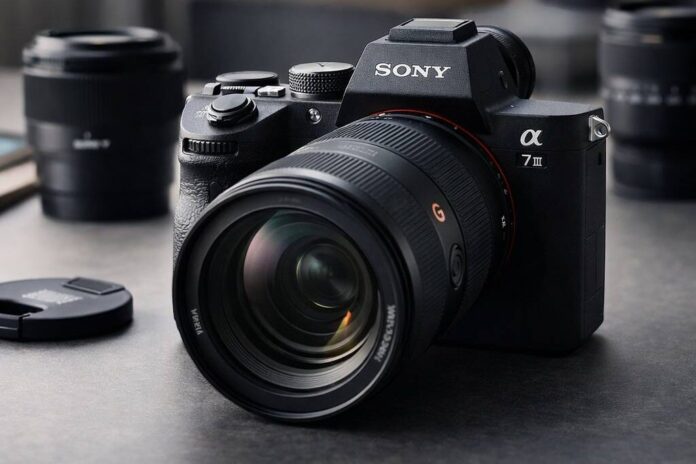
Choosing the right Sony a7 III lenses is what keeps this older full-frame body feeling current. The a7 III does not need the newest glass to make good images, but it does reward lenses that focus cleanly, balance well, and do not waste its full-frame sensor.
| Need | Best first pick | Why it fits the a7 III |
|---|---|---|
| One travel zoom | Sony FE 24-105mm F4 G OSS | Useful range, stabilization, good sharpness, and better balance than many pro zooms. |
| Best value f2.8 zoom | Tamron 28-75mm F2.8 G2 | Bright, light, sharp, and affordable for everyday photography and video. |
| Portraits | Sony FE 85mm F1.8 | Excellent subject separation, fast AF, compact size, and strong value. |
| Small low-light prime | Sony FE 55mm F1.8 ZA | Sharp, compact, and beautifully balanced on the a7 III body. |
What makes a lens a great match for the Sony A7 III
The Sony A7 III is a full-frame mirrorless camera that has earned a reputation for its excellent dynamic range, reliable autofocus, and robust build. However, the camera can only deliver its full potential when paired with compatible Sony a7 III lenses. Not every lens will showcase what makes the A7 III special. The best lens for Sony A7 III needs to complement the sensor’s resolution, autofocus system, and stabilization features, all while matching your shooting style.
For body-specific context, our Sony a7 III review explains why this camera still works well for travel, portraits, and hybrid shooting. If you want a wider starting point before narrowing choices for this body, browsing the best Sony FE lenses can help you compare practical options across portraits, travel, and everyday shooting while keeping your focus on native full-frame E-mount glass that suits the A7 III well.
Full-frame FE compatibility comes first
\nFirst, stick with Sony full-frame E-mount lenses, also called FE lenses. Sony’s official compatibility guidance is the best reference when you are unsure about a specific lens or adapter. FE lenses are designed to cover the full sensor, ensuring you get the image quality and wide angle you paid for. APS-C lenses (marked as E rather than FE) will force the camera into crop mode, reducing resolution and field of view. While you can adapt vintage or DSLR lenses, you’ll often miss out on fast autofocus and weather sealing, both of which are strong points for native Sony lenses.
Balance, autofocus and handling matter too
\nWeight and size matter, too. The A7 III feels balanced with mid-sized lenses, but heavy pro zooms or large telephotos can make it front-heavy. I recommend considering how you’ll carry your kit. If you travel, hike, or shoot long events, a lighter lens will keep the camera comfortable in your hand for hours. Autofocus performance is also crucial. This camera’s Real-time Eye AF shines with native Sony lenses, especially the newer ones with linear motors. Sigma and Tamron have closed the gap with some of their latest offerings, but not every third-party lens is equal in speed or reliability.
A great Sony a7 III lens is full-frame, offers fast and accurate autofocus, has optical quality that matches the sensor, and feels comfortable for your style of shooting. The perfect fit depends on whether you value portability, low-light ability, zoom range, or maximum sharpness.
Best everyday zoom lenses for versatility
Why a standard zoom is the safest first upgrade
If you’re buying your first lens for the A7 III or looking for a single do-it-all upgrade, a standard zoom is hard to beat. The classic range for a Sony A7 III standard zoom is 24-70mm, which covers group shots, street photography, landscapes, and even casual portraits. This range is wide enough for travel and tight spaces but offers enough reach for details and candid moments.
Among Sony a7 III lenses, the standard zoom category is where most buyers should start. The Sony 24-70 lens lineup offers a few options. The Sony FE 24-70mm f2.8 GM is the professional’s choice, with excellent sharpness, beautiful bokeh, and weather sealing. However, it is quite large and heavy, and comes with a premium price tag. For most travel and daily use, the Sony FE 24-105mm f4 G OSS is a favorite of mine. It extends the reach to 105mm, is lighter, and includes optical stabilization, making it a practical everyday lens for Sony A7 III users. The constant f4 aperture still offers good low-light performance, especially with the camera’s high ISO capabilities.
For those on a tighter budget, the Tamron 28-75mm f2.8 is a standout. It is lighter than the Sony G Master, delivers excellent sharpness, and autofocus is snappy. You lose a bit at the wide end compared to 24mm, but that trade-off is manageable for most city walks, quick trips, and everyday assignments.
When to choose a compact zoom over a faster f2.8 option
If you prioritize portability, a compact zoom like the Sony FE 28-60mm f4-5.6 deserves a look. It collapses down to nearly pancake size, making your A7 III almost pocketable with the right bag. While it doesn’t gather as much light as an f2.8 lens, the trade-off is a camera setup you can carry all day. For travel or street photography, this discreet profile is a real advantage.
However, if you plan to shoot a lot indoors or in low light, a faster f2.8 lens provides more creative control and better subject isolation. For most users, though, a compact zoom offers enough quality and versatility, especially with the A7 III’s strong high ISO performance.
Best prime lenses for portraits and low light
The sweet spot between 50mm and 85mm for portrait work
When it comes to portraiture and low light, a good prime lens is a must. This is where Sony a7 III lenses can give the older body a much newer feel. The best prime lens for Sony A7 III in this case falls between 50mm and 85mm. These focal lengths produce flattering results for headshots and environmental portraits, offering a natural perspective and background blur.
The Sony FE 85mm f1.8 is my top pick for a dedicated portrait lens. It’s sharp wide open, focuses quickly and quietly, and is compact enough for travel or event photography. It draws beautiful bokeh and separates subjects from the background even in busy scenes. If you need even more light, the Sony FE 50mm f1.2 GM is a stunning, if pricey, option, delivering razor-sharp images and dreamy defocus. For a more budget-friendly alternative, the Sigma 85mm f1.4 DG DN Art rivals the Sony GM glass at a lower price, with only a slight trade-off in autofocus speed for fast action.
For low light, the Sony FE 55mm f1.8 ZA is a classic. It’s tack-sharp, small, and balances perfectly on the A7 III for long handheld sessions. It is the kind of small prime I would take into dim museums, night markets, or candlelit interiors without feeling under-equipped. Its versatile focal length lets you shoot everything from portraits to details, making it a strong choice as your first prime.
Best wide and telephoto lenses for travel and landscapes
How to build a lightweight two-lens travel kit
Travel and landscape photography often demand both wide and telephoto perspectives. The best way to keep your kit light with the Sony A7 III is to combine a versatile wide-angle with a compact telephoto. For wide shots, the Sony FE 16-35mm f4 PZ is an excellent travel lens, offering sharpness across the frame and a useful zoom range for cityscapes and sweeping vistas.
On the telephoto side, the Sony FE 70-300mm f4.5-5.6 G OSS is a strong choice. It’s lighter than the 70-200mm f2.8 GM, offers extra reach, and includes optical stabilization – crucial for handheld shots at longer focal lengths. This lens lets you isolate distant details in landscapes, capture wildlife, and even shoot portraits with beautiful compression.
If you want to keep your kit even smaller, pair a fixed wide-angle prime, like the Sony FE 20mm f1.8 G, with a telephoto zoom. The 20mm is light, fast, and strong for low-light travel scenes or astrophotography. With just these two lenses, you can cover almost any situation without overloading your bag, which is exactly the point on hiking, backpacking, or long travel days.
No matter which combination of Sony a7 III lenses you choose, the key is balancing range, speed, and weight. The Sony A7 III’s sensor rewards sharp optics, so investing in a quality travel lens and a reliable telephoto lens for Sony A7 III pays off every time you look back at your images.
Best lenses for video autofocus stabilization and handling
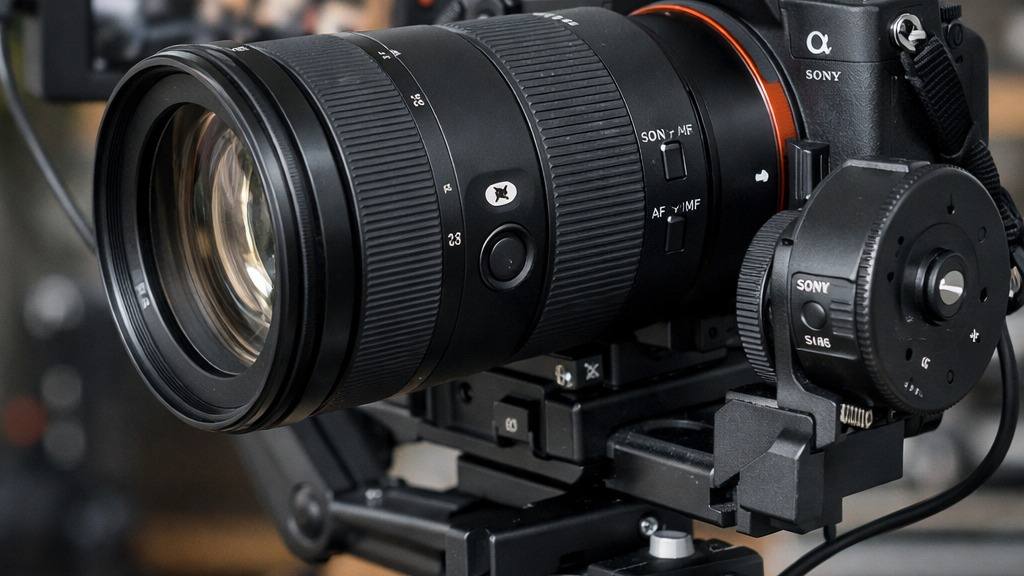
When recording video, the qualities you need from your Sony a7 III lenses often shift compared to stills work. While sharpness and character always matter, autofocus speed, smoothness, stabilization, and physical handling become even more critical. For run-and-gun video, gimbal work, and interviews, the same few lens traits keep showing up: quiet focus, stable handling, sensible weight, and predictable manual control.
Features that matter more for video than for stills
The best autofocus lens for Sony A7 III video will do more than just focus quickly. It should also focus quietly, with minimal “hunting” or pulsing. Lenses with linear motors, like many native Sony options, excel at this. They deliver smooth focus transitions, avoiding the distracting jitters that some older or third-party lenses can introduce. In my own experience, Sony’s native E-mount lenses almost always outperform others for pure autofocus reliability in video, though Sigma and Tamron have closed the gap in recent years.
Stabilization is useful, but weight still matters
\nStabilization is another key consideration, especially when shooting handheld. While the A7 III body has in-body stabilization, pairing it with a stabilized lens (marked OSS for Sony) can further reduce shake. This is especially noticeable at longer focal lengths or when filming while walking. For example, the Sony 24-105mm f/4 G OSS is a stabilized lens Sony A7 III users love for documentary or travel work where a tripod is not practical. The combination of optical and sensor stabilization makes a visible difference in footage smoothness.
Handling also matters more for video. Focus and zoom rings should be well-damped and easy to operate smoothly with one hand. Some Sony G and G Master lenses offer a de-clickable aperture ring, which is a bonus for video shooters who want to adjust exposure mid-shot without introducing clicks or bumps. In my kit, I’ve found that heavy, front-heavy zooms can throw off gimbal balance, so lighter lenses or primes are often better for mobile video work.
- Sony 24-70mm f/2.8 GM II: Excellent for video thanks to quiet linear motors, reduced focus breathing, and a compact build for its class.
- Sony 20mm f/1.8 G: Wide, light, and very sharp, with fast, silent autofocus. Great for vlogging or gimbal use.
- Tamron 28-75mm f/2.8 G2: A lighter, affordable zoom with reliable autofocus for video and improved handling over the older version.
My practical video shortlist
\nUltimately, the right Sony A7 III video lens for you will balance these factors. If you shoot a lot of handheld video, prioritize both lens and body stabilization. If you work with gimbals, lens weight and balance may matter more than having OSS. For interviews or talking head work, look for lenses that focus quietly and breathe minimally, so your focus pulls do not distract the viewer.
Sony vs Sigma vs Tamron lenses for the A7 III
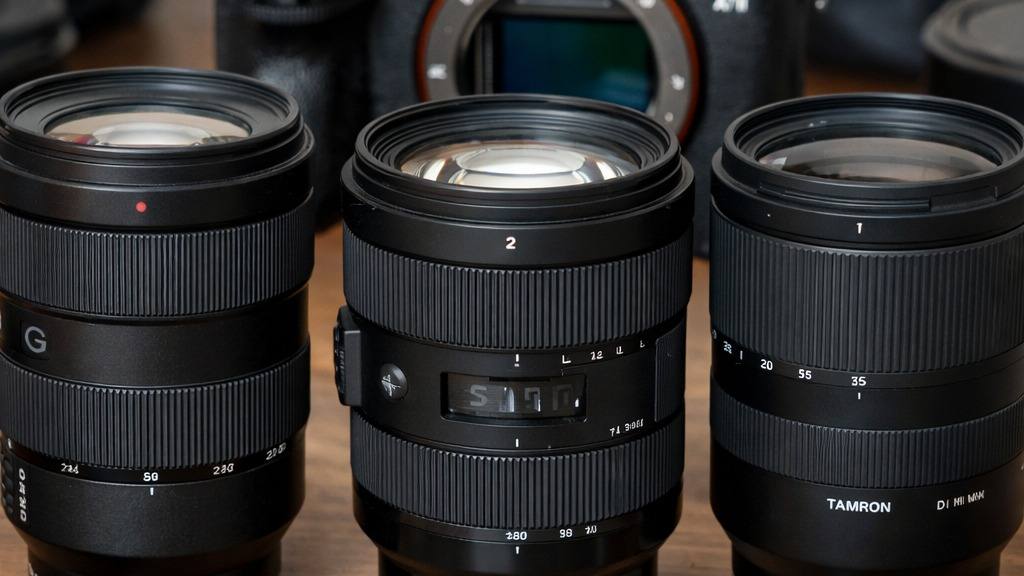
With third-party brands releasing more E-mount options each year, the choice between Sony, Sigma, and Tamron lenses for Sony A7 III can get messy. The useful way to compare them is not brand loyalty; it is autofocus trust, weight, build quality, and how much performance you get for the money.
Sony’s native lenses are the gold standard for autofocus speed, reliability, and integration with the A7 III’s advanced features. Their G Master line delivers beautiful bokeh, weather sealing, and the best compatibility with in-camera corrections. However, these benefits come at a premium price, and some models can be bulky.
Where Sigma and Tamron make sense
\nSigma’s Art and Contemporary series have earned a loyal following among Sony users for their sharpness and price-to-performance ratio. Sigma’s autofocus performance on the A7 III has steadily improved, especially with the newer DG DN designs made specifically for mirrorless. The Sigma 24-70mm f/2.8 DG DN Art, for example, is a favorite among videographers and portrait shooters due to its crisp rendering and reliable autofocus. However, Sigma lenses may show a bit more focus breathing and sometimes lack weather sealing.
Tamron lenses for Sony A7 III are known for being lightweight, affordable, and optically strong for their price. The Tamron 28-75mm f/2.8 G2 is a standout as an everyday zoom: it’s lighter than the Sony 24-70mm GM and offers fast, quiet autofocus with a minimum focus distance that’s great for close-ups. Tamron primes like the 20mm, 24mm, and 35mm f/2.8 are also surprisingly sharp and compact, making them a good choice for travel or street shooters.
When deciding between Sony vs Sigma lenses or Tamron, consider what matters most for your style:
- Autofocus and video: Sony leads, but Sigma DG DN and Tamron G2 lenses have become nearly as reliable.
- Price-to-performance: Sigma and Tamron often offer 80-90% of Sony’s quality at half the price.
- Build and weather sealing: Sony G Master lenses set the standard, but high-end Sigma lenses are catching up.
- Size and weight: Tamron generally makes the lightest and most compact options for travel.
Third-party Sony E-mount lenses have never been better. For many photographers and videographers, they offer the sweet spot between cost, quality, and features. Unless you absolutely need the very best autofocus or weather sealing, Sigma and Tamron should not be overlooked.
How to choose the right lens based on your shooting style
With so many options, it’s natural to ask: which Sony a7 III lens should I buy? My best advice is to start with your shooting style and typical subjects. The perfect lens for one photographer may be the wrong fit for another. Here are a few practical tips based on real-world use:
- If you shoot a mix of photos and video while traveling: A stabilized zoom like the Sony 24-105mm f/4 G OSS or Tamron 28-75mm f/2.8 G2 covers the most ground with one lens. Both offer good autofocus and work well for handheld video.
- If you love portraits and low light: A fast prime, such as the Sony 85mm f/1.8 or Sigma 35mm f/1.4 DG DN, brings beautiful background blur and excellent sharpness. These are also great for street and event work.
- If you prioritize compact gear for travel or hiking: Consider the Sony 28mm f/2 or Tamron 24mm f/2.8. These lenses are sharp, lightweight, and don’t add much bulk to your kit.
- If you’re a beginner or want a single lens to learn on: The best Sony A7 III lens for beginners is usually a standard zoom. The Sony 28-70mm f/3.5-5.6 kit lens is decent, but upgrading to a Tamron 28-75mm or Sigma 28-70mm f/2.8 will improve image quality and creative potential.
- If you often film handheld: Look for lenses with built-in stabilization (OSS) and smooth, fast autofocus.
A simple buying path
\nMy Sony a7 III lens guide for beginners is simple: start with a versatile zoom, then add a fast prime once you understand your favorite focal lengths. This approach lets you cover events, travel, and portraits with minimal weight and cost. As your style evolves, you can fill in gaps with wide or telephoto options, or specialized lenses like macros. Remember, the lens that feels natural in your hands and encourages you to shoot more is always the right choice.
Frequently asked questions
What is the best all-around lens for the Sony A7 III?
The Sony 24-105mm f/4 G OSS is widely considered the best all-around lens for the Sony A7 III. Its broad zoom range, fast and quiet autofocus, and built-in stabilization make it excellent for travel, portraits, and video. If you prefer something lighter and more affordable, the Tamron 28-75mm f/2.8 G2 is also a strong contender.
Are Sigma and Tamron lenses good for the Sony A7 III?
Yes, Sigma and Tamron lenses have become excellent choices for the Sony A7 III. Their latest models offer sharp optics, quick autofocus, and good build quality at a lower price than most Sony lenses. For many shooters, third-party Sony E-mount lenses provide the best value and performance for the money.
Which Sony A7 III lens is best for portraits?
For portraits, the Sony 85mm f/1.8 offers superb sharpness and creamy bokeh at a reasonable price. If you want even more background blur and detail, the Sony 85mm f/1.4 GM or Sigma 85mm f/1.4 DG DN Art are top-tier choices, though they are heavier and more expensive. Both are widely used by professionals for headshots and creative portraiture.
Do I need stabilized lenses for the Sony A7 III?
The Sony A7 III has in-body image stabilization, which helps with handheld shooting. However, using a stabilized lens (OSS) adds another layer of shake reduction, especially useful for video or telephoto work. For most wide or standard primes, stabilization is less critical, but for longer zooms or handheld video, it is a valuable feature.