
If you are looking for the best zoom camera in 2026, do not start by sorting cameras from longest lens to shortest lens. That is how people talk themselves into a Nikon P1100 when what they really needed was a smaller travel camera, or into a pocket compact when they actually wanted to photograph birds across a field.
A camera with good zoom is not automatically the camera with the longest lens. Zoom cameras split into three very different tools: premium bridge cameras with better files, small travel cameras that beat a phone at distance, and extreme superzooms built for reach above everything else. Once you separate those jobs, the recommendations become much clearer.
For the premium all-in-one slot, the Sony RX10 V is now the performance pick, while the Sony RX10 IV remains the value pick when it costs substantially less. Both use a 20.1MP 1-inch stacked sensor and a bright 24-600mm equivalent f/2.4-4 lens. The RX10 V earns its higher price through newer subject-recognition autofocus, 30fps shooting, stronger battery life and modern 4K video. The Panasonic Lumix ZS300/TZ300 is the pocket travel choice when image quality matters more than a giant zoom number. The Canon PowerShot SX740 HS is the small Canon to look at when you want reach first. The Canon PowerShot SX70 HS and Panasonic Lumix FZ80D are the sensible bridge-camera picks for most daylight zoom use. The Nikon P1100 is here for one reason: maximum reach.
August 2026 buying note: Sony announced the RX10 V on July 9, and it is now available to order from Sony and major US camera retailers. Our preliminary Sony RX10 V review explains what changed and why the RX10 IV can still be the smarter purchase. We have not yet completed a long-term production-camera test.
Market-status check: Current-model claims were checked against Sony’s official RX10 V product page on August 27, 2026. The RX10 V is available to order; the RX10 IV remains relevant where remaining-new or used stock is priced well below it.
Best Zoom Cameras in 2026: Quick Picks
| Camera | Best for | Zoom range | Best match |
|---|---|---|---|
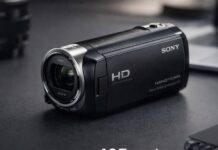
| Sony RX10 V / RX10 IV | Best premium performance / value | 24-600mm equivalent | RX10 V for autofocus, speed and video; RX10 IV when the lower price matters more. |
| Panasonic Lumix ZS300 / TZ300 | Best premium pocket travel zoom | 24-360mm equivalent | Best when the camera must stay small but still needs real optical reach. |
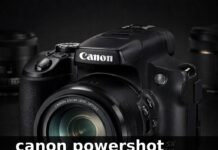
| Canon PowerShot SX740 HS | Best pocket long zoom | 24-960mm equivalent | Best when pocket size matters and Canon simplicity is part of the appeal. |
| Panasonic Lumix FZ1000 II | Best value 1-inch bridge option | 25-400mm equivalent | Best when 400mm is enough and cleaner files matter more than bragging rights. |
| Canon PowerShot SX70 HS | Best long-zoom bridge value | 21-1365mm equivalent | Best when you want long reach, a viewfinder and a lighter body than the Nikon extremes. |
| Panasonic Lumix FZ80D | Best current budget superzoom | 20-1200mm equivalent | Best when budget matters but you still want a real bridge camera, not a novelty compact. |
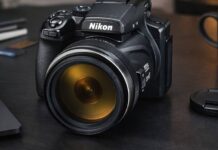
| Nikon Coolpix P1100 | Best extreme zoom | 24-3000mm equivalent | Best when the whole point is distant birds, aircraft, ships or moon shots. |
| Sony RX100 VII | Best pocket quality zoom | 24-200mm equivalent | Best when the camera has to live in a pocket and still focus quickly. |
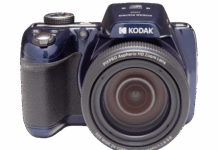
| Kodak PixPro AZ528 / AZ901 | Entry-level Astro Zoom outlier | 52x or 90x optical zoom | Best when low price and daylight reach matter more than polish. |
1. Sony RX10 V or RX10 IV: Best Premium All-in-One Zoom Camera
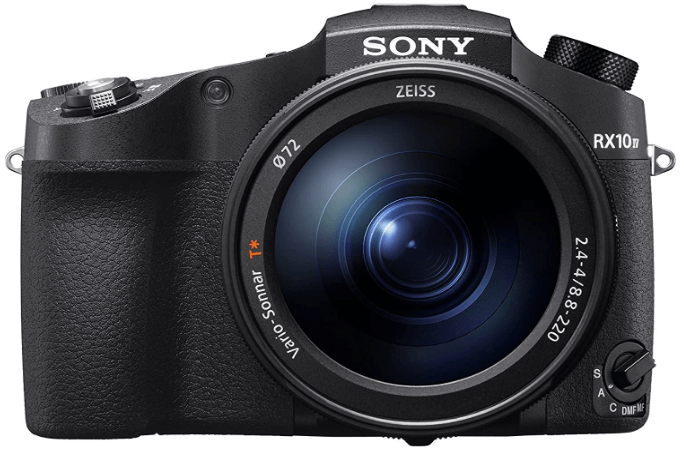
Performance pick: Sony RX10 V. Value pick: Sony RX10 IV. The RX10 V keeps the 20.1MP 1-inch stacked sensor and sharp 24-600mm equivalent Zeiss f/2.4-4 lens, then adds Sony’s newer subject recognition, up to 30fps shooting, a larger NP-FZ100 battery, UHS-II storage and 4K60/4K120 video. For wildlife walks, airshows, safaris, travel sports and family use, it is the strongest fixed-lens zoom camera here.
The RX10 IV still makes sense because the part that defines the system has not changed: the sensor and lens deliver the same basic reach and similar daylight image quality. It gives up the RX10 V’s autofocus, controls, battery and video improvements, but a clean RX10 IV at a substantial discount is easier to justify than paying $2,299.99 for performance you may not use. The quick facts and product card below remain specific to the RX10 IV because the RX10 V listing is not yet available through our product feed.
Most superzooms win the spec sheet by using small sensors and slower lenses. Both RX10 models give up the 1200mm and 3000mm numbers, but return cleaner files, a brighter telephoto aperture and better confidence with moving subjects. Read the Sony RX10 V preliminary review for the full comparison with the RX10 IV.
Photographer’s take: buy the RX10 V when missed focus, battery life or video limits your work. Buy the RX10 IV when you mainly want the same excellent 24-600mm lens and can find it far below the new model’s price. Pass on both if you only want the cheapest way to photograph the moon.
2. Panasonic Lumix ZS300 / TZ300: Best Premium Pocket Travel Zoom

The Panasonic Lumix ZS300, sold as the TZ300 in some markets, is the pocket zoom I would look at before buying another cheap 40x compact. Phones are excellent now, but they still do not replace a proper 24-360mm equivalent optical zoom. The useful part here is the pairing: a 15x lens with a 1-inch sensor.
This is the camera for city trips, museums, family travel, food, street scenes, concerts with camera restrictions and the occasional distant subject. It is also the sane answer for people who say they want a bridge camera but know they will leave a bulky one in the hotel room.
Photographer’s take: choose it for travel when the camera must stay small. Do not buy it expecting birding reach or a built-in viewfinder.
3. Canon PowerShot SX740 HS: Best Pocket Long-Zoom Canon
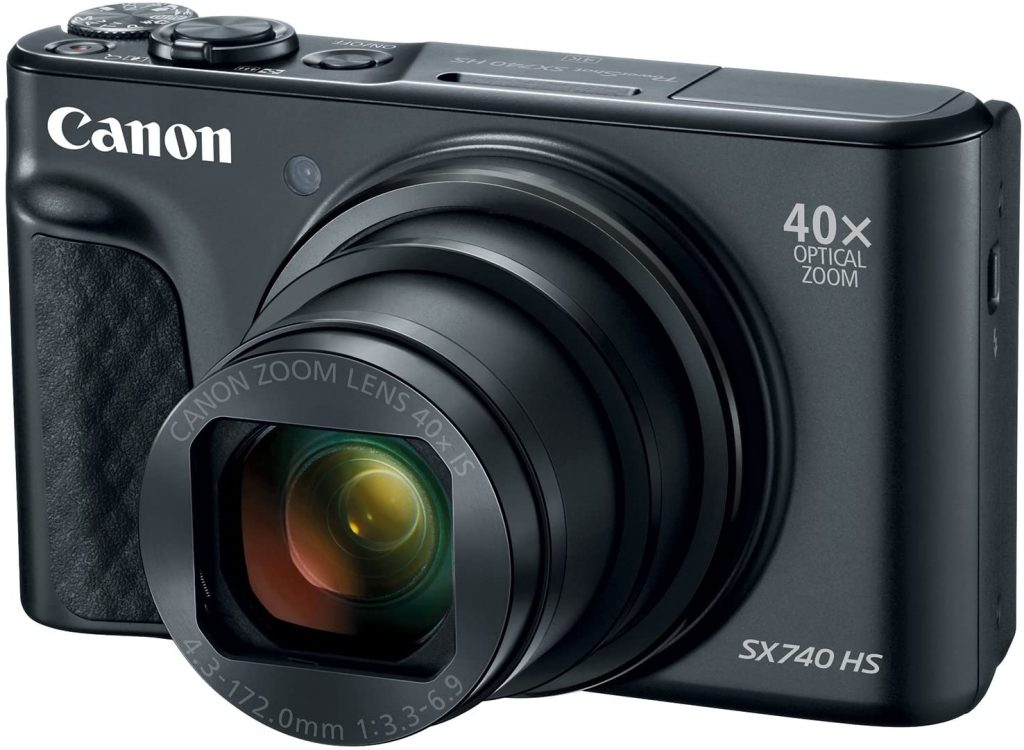
The Canon PowerShot SX740 HS is not trying to be the ZS300. The Panasonic is the cleaner-file pocket zoom; the Canon is the reach-first pocket zoom. A 24-960mm equivalent range in a genuinely small body is still useful for travel, kids, landmarks, boats, animals at the edge of a park and all the little things phones crop badly.
The weak spots are obvious once you have shot small-sensor compacts: low light is not its friend, and the lack of a viewfinder makes long-end framing harder in bright sun. Still, it belongs here because many buyers want a small Canon with real zoom, not a larger bridge camera. For the full Canon family context, use the Canon PowerShot comparison and the dedicated Canon SX740 HS review.
Photographer’s take: choose the SX740 HS for pocket reach and simple handling. Avoid it if you need a viewfinder or shoot a lot at dusk.
4. Panasonic Lumix FZ1000 II: Best Larger-Sensor Bridge Value
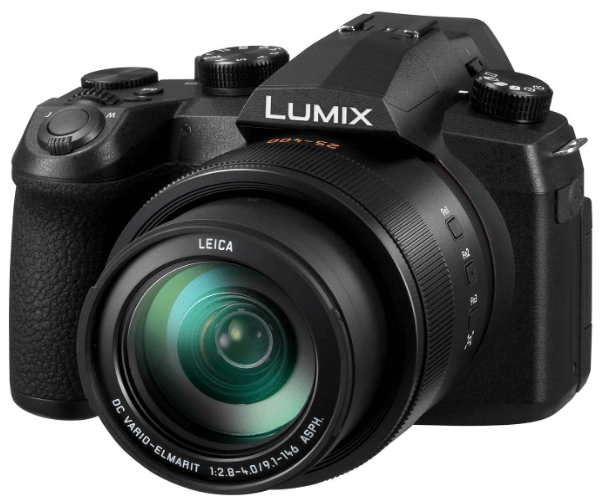
The Panasonic Lumix FZ1000 II is the bridge camera for people who have learned not to worship zoom numbers. A 25-400mm equivalent Leica zoom does not sound wild next to a P1100, but the 1-inch sensor gives the files more room to breathe. For travel, portraits, family events, video and general outdoor work, 400mm is often enough.
Against the 60x and 90x small-sensor cameras, the FZ1000 II trades reach for a better file. That trade is worth it when the photos need to hold up beyond bright-day snapshots. Check new, open-box and used prices because availability moves around.
Photographer’s take: pick it when image quality beats telescope reach. Skip it for distant birds where 400mm will feel short.
5. Canon PowerShot SX70 HS: Best Long-Zoom Bridge Value
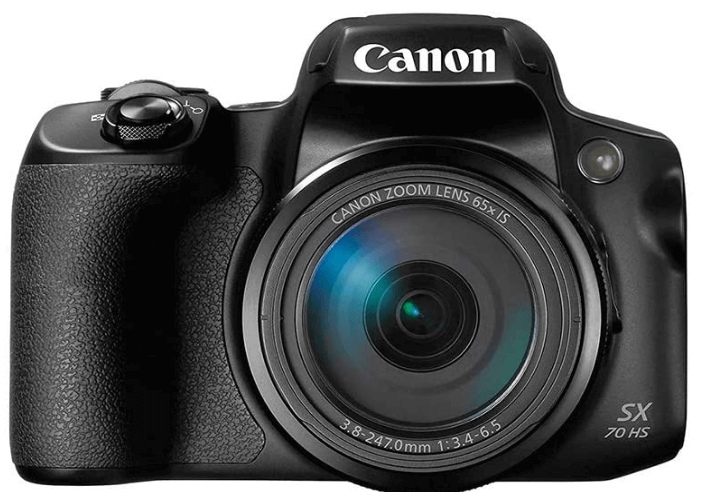
The Canon PowerShot SX70 HS still earns its keep with a 65x optical zoom, 21-1365mm equivalent reach, an electronic viewfinder, RAW support and a DSLR-style grip. It is not new, and low light will show the small sensor quickly, but it suits a very real shopper: someone who wants a lot of reach without carrying or paying for a Nikon P1100.
For backyard birds, daylight wildlife, ships, planes, travel landmarks and family sports from the stands, the SX70 HS can be the more practical camera. More zoom is not much help if the last third of the range is too shaky to use well. See the dedicated Canon PowerShot SX70 HS review for the trade-offs.
Photographer’s take: buy it for daylight reach, the viewfinder and a body that handles well. Do not expect mirrorless autofocus or clean indoor files.
6. Panasonic Lumix FZ80D: Best Current Budget Superzoom

The Panasonic Lumix FZ80D is the budget bridge camera I would consider before digging through a pile of older superzooms. The 20-1200mm equivalent 60x lens starts usefully wide, the 4K modes are handy, and the refresh keeps it easier to buy new than many discontinued alternatives.
It is still a small-sensor camera, so good light matters. Used well, it covers vacations, casual wildlife, kids’ sports and family video without feeling like a toy. The dedicated Panasonic FZ80/FZ80D review covers the battery, handling and real-world compromises in more detail.
Photographer’s take: choose it for a current superzoom at a fair price. Avoid it if most of your photos happen indoors or after sunset.
7. Nikon Coolpix P1100: Best Extreme-Zoom Specialist

The Nikon Coolpix P1100 gets one slot here, not half the list. Its 125x optical zoom and 24-3000mm equivalent range are the whole story. If your subjects are the moon, distant perched birds, ships, aircraft or record-shot wildlife, it reaches places normal travel cameras cannot.
That does not make it the default zoom camera. It is large, expensive for a small-sensor fixed-lens camera, and not every wildlife shooter needs 3000mm. A shorter, brighter, cleaner setup is often the better photographic tool. If you are comparing Nikon’s extreme models, read the Nikon P1100 vs P1000 comparison. If the P1100 feels too much, the Nikon P950 review covers the more manageable 83x option.
Photographer’s take: buy the P1100 because you truly need reach. Do not buy it as a general family or travel camera.
8. Sony RX100 VII: Best Pocket Zoom for Quality and Speed
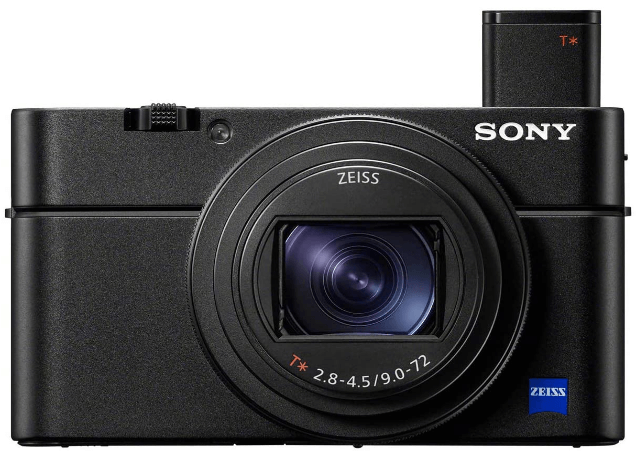
The Sony RX100 VII is not a bridge superzoom, and that is exactly why it stays interesting. The 24-200mm equivalent lens, 1-inch stacked sensor and quick autofocus make it a pocket camera that can handle travel, family, street shooting, kids and video better than many larger cameras people never carry.
No, 200mm does not replace a 600mm or 1200mm bridge camera. But the RX100 VII is fast, small and easy to keep with you. That counts. See the Sony RX100 VII review if you are comparing it with larger bridge cameras.
Photographer’s take: choose it when pocket size and autofocus matter more than reach. Skip it for distant wildlife.
9. Kodak PixPro AZ528 / AZ901: Entry-Level Astro Zoom Outlier

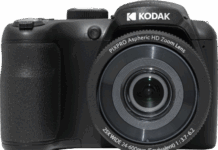
Kodak PixPro Astro Zoom cameras belong on the page, but only with the right expectations. The AZ528 gives 52x optical zoom for little money. The AZ901 pushes the headline to 90x. For some buyers, cheap reach is exactly the fun.
If the AZ653 is close in price, compare it too. The 65x lens, RAW support and USB-C charging make it the more interesting step-up Kodak when you want cheap reach but not the most basic body. Start with the Kodak PixPro AZ653 review if that model is available near the AZ528 price.
They are not premium image-quality picks. The small sensor, basic video specs, slower feel and budget build make them daylight cameras for casual use. If cheap reach is the goal, start with the Kodak PixPro AZ528 review. If the 90x number is what caught your eye, compare it with the Kodak PixPro AZ901 review.
Photographer’s take: buy one for low-cost daylight zoom and modest expectations. Do not expect premium sharpness or strong low-light performance.
Nikon P1100 vs P1000 vs P950: Which Extreme Zoom Makes Sense?
If you are shopping specifically for Nikon’s extreme-zoom Coolpix cameras, start with the P1100 as the current 125x option. The P1000 is the older 125x model and is mainly interesting when the used price is meaningfully lower. The P950 gives up some reach with its 83x lens, but it can be easier to carry and may be the better practical choice for some birding, travel and daylight wildlife shooters.
Do not buy the biggest number just because it is the biggest number. Choose the P1100 when maximum reach is the reason for the purchase. Consider a used P1000 only when the price gap is large enough. Look at the P950 when you want long reach in a less extreme body. For a deeper model-by-model breakdown, use the Nikon P1100 vs P1000 comparison and the broader Nikon Coolpix guide.
How to Choose the Right Zoom Camera
Do not buy only by optical zoom number
The best optical zoom camera is the one whose reach, sensor and handling fit what you photograph. A 125x camera is not better than a 25x camera for every photographer. Long lenses are harder to keep sharp, bright and stable. Extreme zoom is useful in daylight when the subject is truly far away. For family, travel, portraits, pets or mixed light, a larger sensor with less reach often gives the nicer photograph.
Sensor size matters more than many buyers expect
The real split is sensor size. A 1-inch sensor camera such as the Sony RX10 V, RX10 IV, Panasonic FZ1000 II, Panasonic ZS300 or Sony RX100 VII usually gives cleaner files, better dynamic range and more room to edit. Small-sensor cameras such as the Canon SX740 HS, FZ80D, SX70 HS, P1100 and Kodak Astro Zoom models give more reach for the money, but they need good light.
Bridge camera or pocket zoom?
A bridge camera is better when you want a grip, viewfinder, long reach and a more stable shooting stance. A pocket zoom is better when the camera must travel everywhere. If the camera stays at home because it is too bulky, the better specification sheet does not matter.
How much zoom do you actually need?
The useful range depends on the subject, not the largest number on the box. I think in equivalent focal length because it is easier to compare across camera types.
| Subject | Useful range | Camera type I would start with |
|---|---|---|
| Family travel, landmarks, kids outdoors | 200-600mm | Pocket zoom or small bridge camera |
| Backyard birds and casual wildlife | 600-1200mm | Bridge camera with a viewfinder |
| Moon, ships, distant aircraft, perched birds | 1200-3000mm | Extreme bridge camera such as the Nikon P1100 |
| Sports from the stands | 300-800mm | Bridge camera in good light, mirrorless for faster action |
| Indoor events and evening work | Less zoom, more sensor | 1-inch compact or mirrorless camera, not a small-sensor superzoom |
Stabilization and viewfinder matter more than another 20x
Long zoom magnifies shake. A camera with a useful viewfinder, a deeper grip and good optical stabilization is easier to shoot well than a smaller camera with a bigger zoom number but poor handling. At the long end, brace your elbows, let stabilization settle, and shoot short bursts rather than one hopeful frame.
When a superzoom is the wrong choice
A superzoom is the wrong tool when your real problem is low light. Restaurants, indoor sports, evening events, stage performances and fast-moving kids indoors usually need a larger sensor or a brighter lens more than they need 1000mm. It is also the wrong tool if you expect pro wildlife autofocus. These cameras can frame distant subjects beautifully, but they do not turn into a pro mirrorless body just because the subject fills the frame.
Think about what you actually photograph
For distant birds where reach beats everything else, start with the Nikon P1100, Canon SX70 HS or Panasonic FZ80D. For moving wildlife, family video and general use, the RX10 V is the strongest all-in-one performer; a discounted RX10 IV and the FZ1000 II are the value alternatives. For pocket travel reach, compare the Canon SX740 HS against the Panasonic ZS300: the Canon reaches farther, while the Panasonic has the better sensor. For cheap daylight zoom, Kodak’s Astro Zoom line is fine as long as expectations stay realistic.
FAQ
What camera has the best zoom in 2026?
The Nikon Coolpix P1100 has the longest optical reach here, with a 24-3000mm equivalent lens. That does not make it the best choice for everyone. The Sony RX10 V is the strongest premium all-in-one option when 600mm is enough, while the RX10 IV offers much of the same image quality for less. The Canon SX70 HS and Panasonic FZ80D are easier long-zoom choices for many daylight shooters.
What is the best optical zoom camera for wildlife?
For distant static subjects, the Nikon P1100 gives the most reach. For a lighter and less extreme wildlife bridge camera, the Canon SX70 HS or Nikon P950 can be easier to live with. For moving subjects where autofocus and image quality matter more than maximum reach, the Sony RX10 V is now the premium option. The RX10 IV remains the value choice if it is substantially cheaper.
Is a bridge camera better than a compact zoom camera?
A bridge camera is better when you want a grip, viewfinder, long focal length and a steadier shooting stance. A compact zoom camera is better when you need something that actually fits in a jacket pocket or small travel bag.
Should I buy a Sony RX10 IV now?
Yes, if the price is meaningfully below the RX10 V. Both cameras use a 20.1MP 1-inch stacked sensor and a 24-600mm equivalent f/2.4-4 lens, so the RX10 IV still delivers similar basic daylight image quality. Pay more for the RX10 V when you need its newer autofocus, 30fps shooting, larger battery, controls or video features.
Is the Canon SX740 HS better than the Panasonic ZS300?
The Canon SX740 HS is better if you want maximum pocket zoom reach because it offers a 40x 24-960mm equivalent lens. The Panasonic ZS300 is better if you value the larger 1-inch sensor and cleaner image quality more than maximum reach.
Final Recommendation
My shortlist is simple. For the strongest all-in-one zoom camera, start with the Sony RX10 V. For the same 24-600mm lens and similar basic daylight image quality at a lower price, compare a clean Sony RX10 IV. For a pocket travel camera with better files, start with the Panasonic ZS300/TZ300. For a small Canon with serious reach, compare the Canon SX740 HS. For a bridge camera at a moderate price, look at the Canon SX70 HS and Panasonic FZ80D. For extreme telephoto reach, buy the Nikon P1100. For cheap daylight fun, the Kodak PixPro AZ528 is the entry-level outlier.
For pure long-reach specialists, use the highest zoom cameras guide.