
View full specs
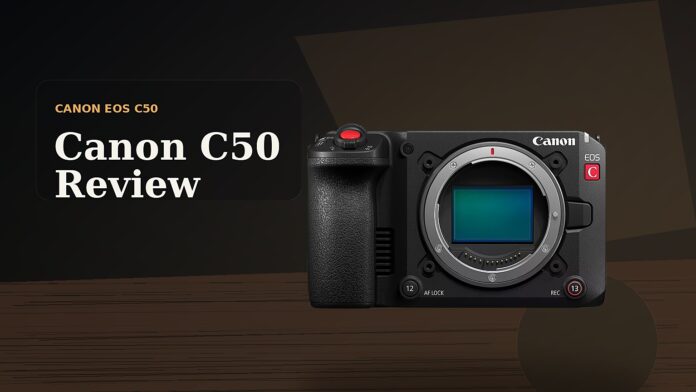
Canon C50 Review 2026: Who This Cinema Camera Is Really For
The Canon C50 is one of the most interesting cameras Canon has made for solo filmmakers in years. It is small enough to live on a gimbal, serious enough for paid production, and video-first in a way most hybrid mirrorless bodies are not.
This Canon C50 review is not about pretending every filmmaker needs one. At roughly the same price as a serious hybrid camera kit, the EOS C50 asks a very specific question: do you need a compact full-frame Cinema EOS body with internal RAW, open gate recording, strong autofocus, professional audio options, and active cooling more than you need IBIS, a viewfinder, or built-in ND filters?
For many stills-first photographers, the answer is no. For documentary shooters, branded-content creators, small crews, wedding filmmakers, interview shooters, and owner-operators who want Canon color and a proper video workflow, the answer may be yes.
Semrush search data shows most people are not just searching for “Canon C50 review.” They are searching for “canon c50,” “canon eos c50,” “canon c50 specs,” “canon c50 price,” and comparisons like “canon c50 vs fx3” or “canon c50 vs r5c.” That tells us the real intent: people already know this camera exists, and they want to know whether it is the right compact cinema body to buy.
Quick Verdict
The Canon C50 makes the most sense if you are a video-first shooter who wants a compact full-frame cinema camera with 7K internal RAW, 4K high frame rates, Canon Log, Dual Pixel CMOS AF II, professional audio through the detachable handle, and a body that can run long jobs without mirrorless overheating anxiety.
I would buy the C50 if my work is mostly interviews, documentary, commercial video, events, travel filmmaking, creator work, or small-crew production. I would not buy it mainly for photography, handheld walking shots without support, or shoots where built-in ND filters are non-negotiable.
The simple version: the C50 is a strong Canon answer to the Sony FX3-style compact cinema body, but with Canon’s own priorities. It leans into open gate, internal RAW, RF lenses, autofocus, audio, cooling, and modular rigging. It does not try to be an R5, R6, or C70 replacement for everyone.
Canon C50 Specs That Matter
- Sensor: newly developed 7K full-frame CMOS sensor
- Video: up to 7K 60p internal RAW and 4K 120p high frame rate recording
- Open gate: full-frame 3:2 recording for horizontal, vertical, and anamorphic delivery
- Autofocus: Dual Pixel CMOS AF II
- Still photos: 32MP still capture in photo mode
- Audio: detachable handle with built-in XLR inputs
- Connectivity: full-size HDMI, timecode, mic, headphone, USB-C, Wi-Fi, Frame.io Camera to Cloud integration
- Cooling: active cooling for long recording sessions
- Lens mount: Canon RF mount with EF and PL options through adapters
- Not included: no built-in ND filters, no EVF, and no mechanical IBIS
The missing ND filters are important. Some early summaries and AI-written drafts get this wrong. The C50 is not a tiny C70. If your shooting style depends on internal ND for fast exterior work, the C70 still has a real advantage.
Who Should Buy the Canon C50?
Solo filmmakers and owner-operators
The C50 is built for people who often work without a camera assistant. Reliable autofocus, a compact body, direct mounting points, professional audio through the top handle, and flexible recording formats all help when you are carrying the production yourself.
For interviews, short documentaries, corporate projects, wedding films, and creator work, that balance matters more than a spec-sheet victory. A camera that lets you move quickly, monitor audio properly, and trust focus can be more valuable than a camera with one extra headline feature.
Canon shooters moving up from mirrorless
If you already shoot Canon RF lenses and feel limited by a hybrid body, the C50 is a logical step up. It gives you a more video-centered workflow without forcing you into a large cinema body.
Compared with a Canon EOS R5 or R6-style body, the C50 is less attractive as an everyday stills camera. But for video, it brings stronger recording flexibility, better rigging logic, active cooling, and a cleaner production mindset.
If you are still deciding whether you need a smaller creator camera instead, our Canon EOS R50 V review is a useful contrast. The R50 V is a creator body. The C50 is a production camera.
Small crews that need a compact A-cam or B-cam
The C50 can work as an A-cam for lean productions or as a compact B-cam alongside larger Canon cinema cameras. Canon color and Dual Pixel autofocus make it easier to integrate into mixed Canon workflows than a spec-only comparison might suggest.
It also makes sense for travel jobs where a full-size cinema body is too much, but a mirrorless body feels too fragile or compromised for long takes, audio, and monitoring.
Who Should Skip It?
Skip the Canon C50 if you mostly shoot still photos. The 32MP photo mode is useful, but this is not the camera I would buy as a primary photography body. A Canon EOS R5-style camera is a better stills-first tool.
Skip it if IBIS is central to your handheld style. Digital and lens stabilization can help, but they do not replace the feel of strong in-body stabilization for walking shots and casual handheld work.
Skip it if you need internal ND filters. For documentary shooters moving constantly between indoor and outdoor light, built-in ND can be a daily workflow advantage. The C50 can use matte boxes, variable ND filters, or RF/EF adapter solutions depending on your lens setup, but that is not the same as internal ND.
Skip it if your budget barely reaches the body price. A cinema camera also needs media, batteries, lenses, audio, support, and maybe a cage or monitor. If buying the body leaves nothing for the working kit, step down.
Design and Handling
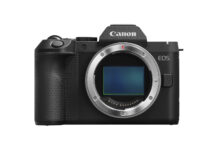
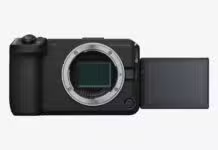
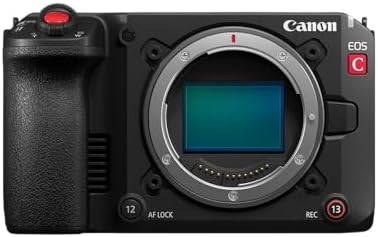
The C50’s strongest design decision is its size. It is a compact box-style cinema camera rather than a traditional mirrorless body with a viewfinder. That makes it easier to rig, balance, cage, mount, or fly on a gimbal.
The detachable handle is central to the camera’s identity. With it attached, the C50 becomes a more production-ready tool with XLR audio and better low-angle handling. Without it, the body becomes smaller for gimbals, drones, travel, and stripped-down rigs.
The lack of EVF is expected for this type of camera but still worth noting. If you love bracing a camera to your eye, the C50 will feel different. You will probably use the articulating screen, an external monitor, or a rigged setup.
The body also gives you mounting points and dedicated controls that make more sense for video than a stills-first mirrorless layout. That matters on long shoots. When you need waveform, audio, record controls, and monitoring quickly, physical access beats menu diving.
Image Quality and Color
The headline is the full-frame 7K sensor. That gives the C50 room for detailed oversampled 4K, open gate capture, reframing, and multiple delivery formats from one setup.
For working filmmakers, open gate may be the most important creative feature. You can shoot a taller frame and deliver horizontal, vertical, and square versions more easily. That is not just a social-media gimmick. It is a real commercial workflow advantage when clients want YouTube, Instagram, TikTok, paid ads, and website edits from the same shoot.
Canon color remains a major selling point. Skin tones are usually one of the reasons people stay in the Canon ecosystem, especially for interviews, weddings, documentary, and branded content. The C50’s value is not only the sensor; it is the combination of Canon Log, color response, autofocus, and workflow.
Dynamic range should be strong for this class, especially when shooting Log or RAW, but the practical result will still depend on exposure discipline. This is a camera that rewards proper monitoring. Use waveform, expose carefully, and give the files room to breathe in post.
Video Features and Recording Workflow
The Canon C50’s video feature set is the main reason to care about it. 7K 60p internal RAW is serious for a body this compact. 4K 120p gives useful slow motion. 2K high frame rates can be useful for specialty shots, though I would not buy the camera primarily for 2K slow motion.
The camera also supports professional formats beyond RAW, including XF-AVC and MP4-style workflows depending on delivery needs. That matters because not every job needs heavy RAW files. A corporate interview, quick event recap, or creator project may be better served by a more efficient codec.
Active cooling is another practical advantage. Hybrid cameras can be excellent, but long recording sessions and high frame rates can create heat management anxiety. The C50 is designed around sustained video work, which is exactly what paid shooters need.
The most important workflow question is not “Can it shoot the biggest file?” It is “Can I choose the right file for the job?” The C50’s strength is that it gives you options: high-end RAW when the grade matters, efficient codecs when turnaround matters, and proxy/crop workflows when production demands multiple deliverables.
Autofocus and Stabilization
Dual Pixel CMOS AF II is one of the C50’s major advantages. For solo operators, dependable autofocus can be the difference between a usable interview and a missed take. Face, eye, head, body, and animal tracking are especially useful for documentary, events, and creator work where subjects do not always hit marks.
That does not mean autofocus replaces skill. You still need to choose tracking modes intelligently, understand when to use manual focus, and avoid letting the camera make every creative decision. But Canon’s AF reliability is one of the best reasons to choose this camera over more manual cinema-style alternatives.
Stabilization is more complicated. The C50 does not have the kind of mechanical IBIS that makes some mirrorless cameras easy for casual handheld work. Lens IS and digital stabilization can help, but if your style involves walking handheld with minimal rigging, you may prefer a different body or a gimbal.
For interviews, tripod work, shoulder rigs, monopods, gimbals, and controlled handheld, this is not a deal breaker. For travel vloggers who want smooth footage with no support, it matters.
Audio, Monitoring, and Connectivity
This is where the C50 starts to separate itself from ordinary hybrid cameras. The detachable handle with XLR inputs gives you a cleaner audio path for shotgun mics, wireless lav systems, and interviews. For small crews, that can remove the need for a separate audio recorder on many jobs.
Full-size HDMI is also welcome. Fragile micro-HDMI ports are a pain on rigged cameras. Timecode, headphone monitoring, mic input, USB-C, Wi-Fi, and Frame.io Camera to Cloud integration all point toward a camera meant for real production workflows.
The C50 is also useful for multicam or connected production because Canon has been building more remote and network control into its ecosystem. That is less exciting than 7K RAW on a spec sheet, but it matters if you shoot events, education, streaming, corporate, or small studio work.
Photo Mode and Hybrid Use
The C50 can shoot 32MP stills, which is useful for thumbnails, production stills, social content, behind-the-scenes images, and hybrid jobs where you need some photography alongside video.
But I would not buy it as a true stills/video equal. The body shape, lack of EVF, and video-first control logic make it less natural for photography than Canon’s mirrorless cameras.
Think of the stills mode as a valuable bonus, not the main reason to buy. If you are 70% video and 30% stills, the C50 can make sense. If you are 50/50 or stills-first, compare it with the Canon EOS R5 or other Canon mirrorless bodies instead.
Canon C50 Price and Value
Canon lists the EOS C50 body at about $3,899. That puts it in a serious but not unreachable bracket for working solo filmmakers.
The price makes more sense when you compare it with the total cost of rigging a mirrorless camera for production. Once you add audio, cooling confidence, monitoring accessories, cages, power, and workflow compromises, a dedicated cinema body can become the cleaner buy.
That said, the real price is not just the body. Budget for fast media, spare batteries, RF or adapted EF lenses, audio, support, and maybe a cage or monitor. If you need ND, budget for that too.
Canon C50 vs Sony FX3
The Sony FX3 is the obvious comparison because it defined much of the compact full-frame cinema camera conversation. The FX3 has strong low-light performance, excellent ecosystem support, compact handling, and a massive user base.
The C50 fights back with open gate, internal RAW flexibility, Canon color, Canon autofocus, XLR handle integration, and the RF lens system. If you already own Canon glass or prefer Canon color, the C50 is the more natural choice.
If you are already deep in Sony and need IBIS, the FX3 remains hard to ignore. If open gate, Canon color, and internal RAW matter more, the C50 becomes very compelling.
Canon C50 vs Canon R5 C
The R5 C is a hybrid oddity: part high-resolution stills camera, part Cinema EOS video body. It can be brilliant, but it asks the user to live with a more complex split personality.
The C50 feels cleaner as a production camera. It is more obviously designed for video work, audio, rigging, and compact cinema use. The R5 C is better if you want high-end stills and cinema features in one body. The C50 is better if your work is mostly video and you do not need the R5 C’s stills-first strengths.
For many owner-operators, the choice comes down to identity. If you are a photographer who also shoots serious video, look at the R5 C. If you are a filmmaker who occasionally needs stills, look at the C50.
Canon C50 vs Canon C70
The C70 still has a big practical advantage: built-in ND filters. It also has a larger, more traditional cinema-style body with direct controls that many documentary shooters love.
The C50 is smaller, newer in concept, full-frame, and better suited to compact rigs, gimbals, and hybrid production where open gate and 7K RAW matter. The C70 feels like a rugged documentary tool. The C50 feels like a modern compact cinema hybrid.
If you shoot fast outdoor documentary work all day, the C70 may still be the easier camera. If you want full-frame open gate in a smaller body, the C50 is the more interesting option.
Canon C50 vs Sony FX30
The Sony FX30 is much cheaper and remains one of the best value cinema cameras for creators. It is APS-C/Super 35 rather than full-frame, but for many filmmakers that is not a problem.
Choose the FX30 if budget matters, you are already in Sony E-mount, or you want a smaller investment for serious video. Choose the C50 if you want full-frame, Canon color, RF glass, open gate, internal RAW, and a higher-end production tool.
The C50 is not trying to be the cheapest option. It is trying to be the compact Canon cinema body many people wanted between mirrorless and larger Cinema EOS cameras.
Best Lenses for the Canon C50
For solo documentary and branded work, an RF 24-70mm f/2.8-style zoom is the obvious workhorse. It covers interviews, b-roll, handheld details, and general production without constant lens swaps.
For travel and run-and-gun shooting, an RF 24-105mm can make more sense because the extra reach reduces lens changes. For interviews, a fast 35mm, 50mm, or 85mm prime gives more separation and a more polished look.
The RF mount is also a strong long-term advantage because Canon has been building both hybrid and cinema-oriented RF lenses. EF adapters keep older Canon glass useful, which matters for shooters who already own EF lenses.
If you are buying the C50, do not spend the whole budget on the body. Lenses, audio, media, and support will shape the final image as much as the camera.
Pros and Cons
Pros
- Compact full-frame Cinema EOS body
- 7K 60p internal RAW and strong 4K options
- Open gate recording for flexible horizontal and vertical delivery
- Dual Pixel CMOS AF II is valuable for solo operators
- Canon color and RF lens ecosystem
- Detachable XLR handle improves audio workflow
- Active cooling for serious video sessions
- Full-size HDMI, timecode, USB-C, Wi-Fi, and Frame.io integration
Cons
- No built-in ND filters
- No EVF
- No mechanical IBIS for casual handheld work
- Not the best choice for stills-first photographers
- Body price is only the start; media, lenses, audio, and support add up
- Overkill for simple YouTube or casual creator work
Canon EOS C50 alternatives
The main alternatives to the Canon EOS C50 are Sony FX3, Canon R5 C, Canon C70, Canon C80, Panasonic S5 IIX. Compare autofocus, stabilization, video limits, lens choice and current price before deciding which camera fits you best.
Frequently Asked Questions
Is the Canon C50 worth it?
The Canon C50 is worth it if you are a video-first Canon shooter, solo filmmaker, or small production team that needs a compact full-frame cinema body with internal RAW, strong autofocus, professional audio options, and active cooling. It is not worth it if you mainly shoot stills or casual video.
Is it called Canon C50 or Canon EOS C50?
The official product name is Canon EOS C50, but many buyers search for Canon C50. Both refer to the same Cinema EOS camera. The shorter Canon C50 wording is the natural search phrase, while EOS C50 is the official naming.
Does the Canon C50 have built-in ND filters?
No. This is one of the most important buying caveats. If built-in ND filters are essential to your shooting style, compare the C50 carefully with the Canon C70.
Does the Canon C50 have IBIS?
No, not in the way many mirrorless shooters mean it. You can use lens stabilization, digital stabilization, a gimbal, or a rig, but the C50 is not an IBIS-first handheld camera.
Can the Canon C50 shoot still photos?
Yes. It can capture 32MP stills in photo mode. That is useful for production stills and hybrid jobs, but the body is still video-first.
Is the Canon C50 better than the Sony FX3?
It depends on your system and workflow. The FX3 remains excellent, especially for Sony shooters and handheld work. The C50 is more attractive if you want Canon color, RF lenses, open gate, internal RAW, and Canon’s autofocus behavior.
Who is the Canon C50 best for?
It is best for solo filmmakers, documentary shooters, branded-content creators, wedding filmmakers, small crews, and Canon RF users who want a compact cinema camera rather than a stills-first hybrid body.
Final Verdict
The Canon C50 is not a casual upgrade. It is a focused production tool for people who know they need a compact cinema camera.
Its strengths are clear: full-frame 7K capture, open gate flexibility, internal RAW, Canon color, dependable autofocus, professional audio, active cooling, and a body that can be stripped down or rigged up. Its weaknesses are just as clear: no ND, no EVF, no mechanical IBIS, and less appeal for stills-first shooters.
That honesty is what makes the C50 interesting. It is not trying to be every Canon camera in one body. It is trying to be a small Cinema EOS camera for the way many filmmakers actually work in 2026: lean crews, mixed deliverables, vertical and horizontal edits, fast autofocus, and a kit that can move from interview to handheld b-roll without becoming a monster rig.
If that sounds like your work, the Canon C50 deserves serious consideration. If not, Canon and Sony both have cheaper or more specialized cameras that may fit better.
Solo filmmakers, documentary shooters, branded-content creators, and Canon RF users who want a compact full-frame cinema body.
You mainly shoot stills, need built-in ND filters, rely heavily on mechanical IBIS, or want the cheapest creator camera.
Medium-high; the camera is friendly for a cinema body but still assumes video workflow knowledge, media planning, audio, and rigging.
Strong if you are committed to Canon RF, with EF and PL adapter options for existing glass and higher Cinema EOS bodies above it.
Excellent video feature set, but no internal ND, no EVF, and stabilization depends on digital IS, lens IS, or support gear.
Yes for video-first Canon shooters who need compact cinema features; no for stills-first hybrid users or casual creators.