
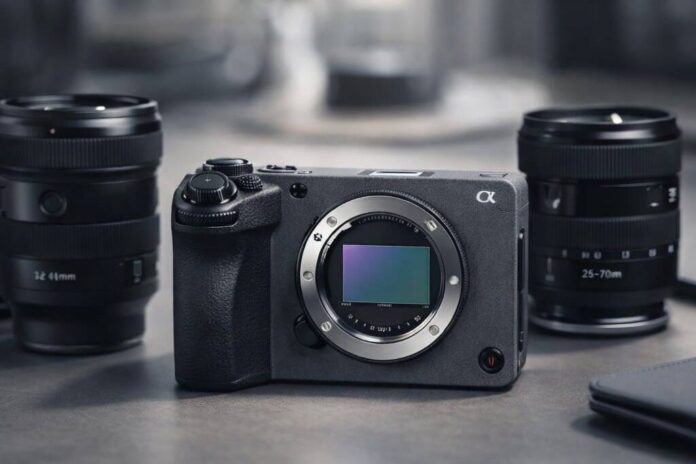
Choosing Sony FX3 lenses is less about chasing specs and more about matching glass to the way you actually shoot. From handheld documentary work to controlled commercial setups, the right lens can change your speed, look, and confidence on set.
| Need | Best first pick | Why it works on the FX3 |
|---|---|---|
| One pro zoom | Sony FE 24-70mm F2.8 GM II | Fast autofocus, strong optical quality, useful range, and manageable weight for gimbals. |
| Documentary travel kit | Sony FE 24-105mm F4 G OSS | More reach, optical stabilization, and fewer lens changes for solo shooting. |
| Low-light prime | Sony FE 35mm F1.4 GM | Natural perspective, bright aperture, quiet AF, and excellent subject separation. |
| Value zoom | Tamron 28-75mm F2.8 G2 | Light, sharp, affordable, and realistic for creators building a kit gradually. |
What makes a lens a good match for the Sony FX3
Why autofocus, breathing, and weight matter on real shoots
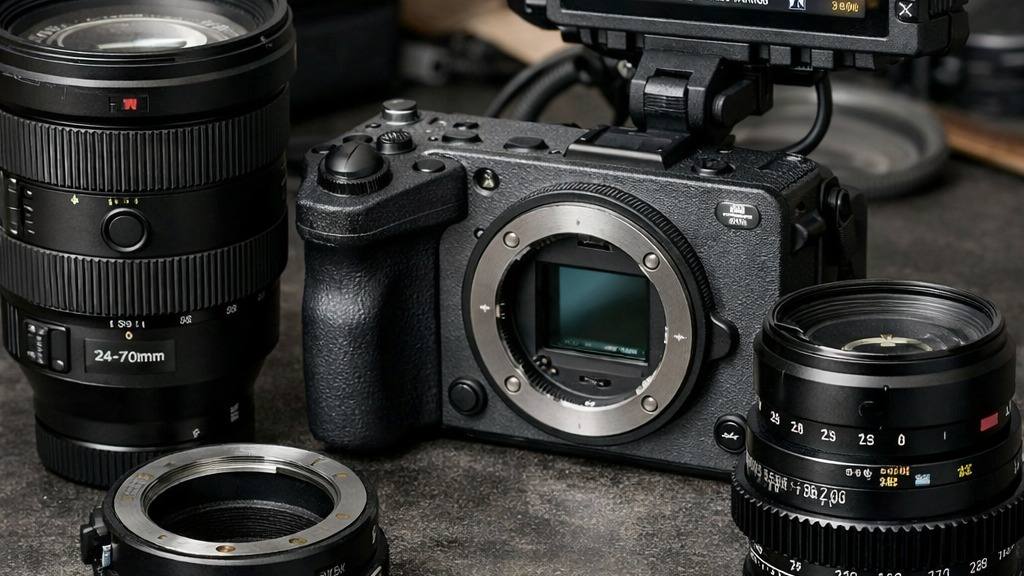
When selecting Sony FX3 lenses, it is easy to focus on sharpness or maximum aperture. However, the best lens for Sony FX3 work is one that helps you work faster, stay focused, and avoid common headaches on set. In video production, autofocus performance, focus breathing, and lens weight can make or break your experience.
Thinking about lenses also becomes easier when you compare them against the camera package and workflow you plan to use, not just isolated features. The FX3 is an E-mount full-frame Cinema Line camera, and Sony’s lens compatibility information is the safest place to confirm edge cases before buying or renting.
Lens choice also makes more sense when you consider how the camera body behaves in real production, especially if you are balancing autofocus reliability, handling, and low-light performance. For that broader context, a Sony FX3 review can help connect lens decisions to the way the camera actually works on set.
The FX3’s autofocus system is excellent, but it shines when paired with lenses that support Sony’s latest AF tech. A true Sony FX3 video lens should track faces smoothly and silently in unpredictable situations, such as documentary interviews or live events. Lenses with noisy or slow autofocus motors can cause missed moments and frustration.
\nFocus breathing is another key factor. When you rack focus on a typical stills lens, the frame can zoom in or out slightly, distracting your viewer. Some Sony lenses, especially recent G Master and G series models, are designed to minimize this effect. For narrative or interview setups, this small detail keeps your shots looking professional and consistent.
Finally, consider weight. The FX3 is often rigged for handheld or gimbal work. A heavy lens can throw off balance or fatigue your arms during long takes. Small lightweight lenses solve the handling problem, but they can give up aperture speed, manual focus feel, or weather sealing. I judge an FX3 lens by how quickly I can rebalance it, whether focus stays quiet, and whether I would still want it on the camera after an hour of handheld shooting.
The best Sony FX3 lenses are the ones that stop calling attention to themselves in use. They focus quickly, breathe minimally, and do not weigh you down. These traits matter more in real-world video work than in spec sheets or lens forums.
Best all around lenses for everyday FX3 shooting
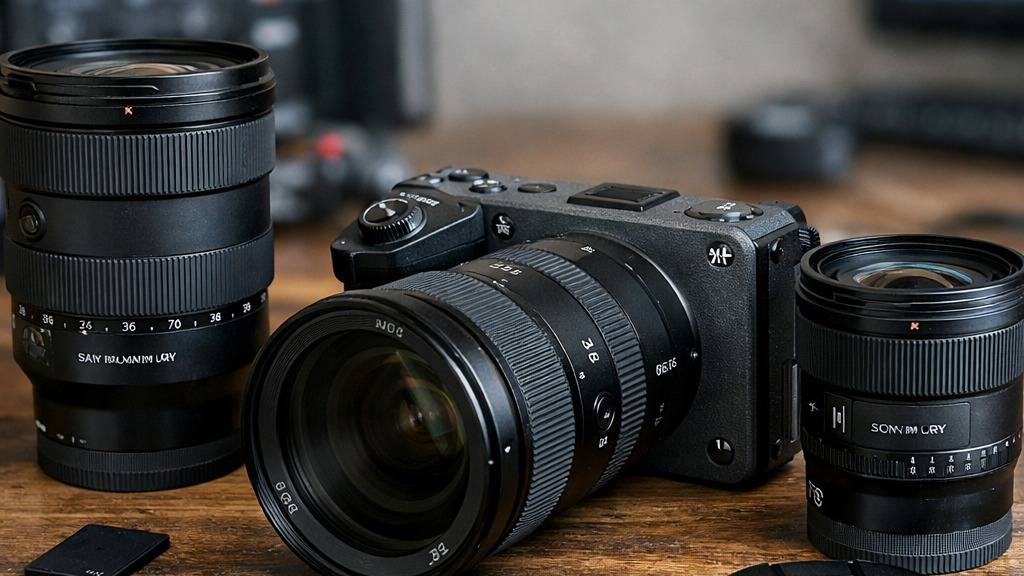
The zooms I would trust for fast moving jobs
For most shooters, the best Sony FX3 lens is a versatile zoom. Sony’s 24-70mm f/2.8 G Master II is a workhorse that delivers sharp images, fast autofocus, and reliable weather sealing. It covers wide shots, portraits, and detail work, which makes it easy to trust on hybrid jobs or run-and-gun video.
If you need more reach, the 70-200mm f/2.8 G Master II is a classic for events, ceremonies, or interviews where you cannot be close. It is heavier, but the internal zoom keeps balance on a gimbal. Both of these zooms are expensive, but they rarely let you down.
For those who want a smaller kit, the Sony 24-105mm f/4 G OSS offers a lighter, more affordable alternative. While you lose a stop of light, you gain image stabilization and still enjoy fast autofocus. For many documentary shooters, this is the only Sony FX3 zoom lens they need.
The primes that give the FX3 a more cinematic feel
Primes offer a different shooting experience. They are lighter, faster, and often sharper than zooms at the same focal length. The Sony 35mm f/1.4 GM and 50mm f/1.2 GM are the two primes I would compare first for a more cinematic FX3 look. They render beautiful bokeh and make subject isolation easy, even in tight spaces.
For handheld or gimbal work, the Sony 24mm f/1.4 GM is one of the cleanest fits in the system. It is sharp wide open, focuses quickly, and stays light enough for long sessions. The 85mm f/1.8 is a budget-friendly portrait lens for Sony FX3 shooters who want beautiful background blur without breaking the bank.
Selecting between zooms and primes comes down to your workflow. Zooms let you react quickly to changing scenes, while primes force you to think about composition and often reward you with better low-light performance and shallower depth of field.
Best Sony FX3 lenses by shooting style
Documentary, weddings, and event coverage
Shooting documentaries or weddings with the FX3 demands flexibility and reliability. The best Sony FX3 lenses for weddings are zooms that can handle everything from wide establishing shots to tight moments without a lens change. The 24-70mm f/2.8 GM II, paired with the 70-200mm f/2.8 GM II, covers nearly every scenario.
For solo shooters, the Sony 24-105mm f/4 G OSS is hard to beat. It is lighter than the G Master zooms but still provides sharp images and fast autofocus. If you need to work in low light, the 35mm f/1.4 GM or 50mm f/1.2 GM primes let you capture reception moments with beautiful bokeh and minimal noise.
Documentary shooters often work in unpredictable conditions. Dust, rain, or tight spaces can destroy fragile gear. Sony’s professional G series lenses are weather-sealed and tough. Autofocus must be silent and accurate, especially when filming subjects who are unaware of the camera.
Commercial, interviews, and narrative filmmaking
Commercial and narrative work gives you more control but also higher expectations for image quality. The best Sony FX3 filmmaking lens depends on the look you want. For interviews, a 50mm or 85mm prime creates flattering portraits with shallow depth of field. The Sony 85mm f/1.4 GM is a favorite for its creamy bokeh and sharpness.
For commercial work, especially product or food shots, macro lenses like the Sony 90mm f/2.8 G OSS can capture crisp detail. If you want a classic “cinema” look, vintage lenses adapted to the FX3 can create unique flares and softer contrast. However, autofocus will be manual only.
Narrative filmmakers often prefer a set of matched primes, such as the Sony 24mm, 35mm, and 85mm G Masters. These lenses keep color and contrast reasonably consistent, which makes grading less frustrating in post. For fast-paced productions, the 16-35mm f/2.8 GM or 24-70mm f/2.8 GM II are flexible enough to handle most scenes without a lens swap.
For documentary or wedding work, I would rather have a slightly less exotic lens that keeps me shooting than a spectacular lens that slows down every move.
How focal length changes the look of your footage
Understanding Sony FX3 focal length is the key to controlling the look and feel of your footage. Wide lenses, such as a 16mm or 24mm, exaggerate depth and make spaces feel larger. This is ideal for establishing shots, environmental portraits, or when you want to place your subject in context.
Mid-range focal lengths, like 35mm or 50mm, offer a natural perspective. They are perfect for interviews, street scenes, or times when you want the viewer to feel present with your subject. These are often the most natural-looking choices for the FX3 because they balance background separation with context.
Longer lenses, such as 85mm or 135mm, compress space and isolate subjects from their background. A portrait lens for Sony FX3 like the 85mm f/1.8 creates a classic dreamy look for headshots or detail shots. However, longer lenses require more working distance and careful focus.
Choosing a wide lens for Sony FX3 can make handheld footage feel immersive and energetic. Tight lenses, on the other hand, can add intimacy or drama. The right focal length is as much about storytelling as it is about technical requirements.
Whether you are shooting a documentary, a wedding, or a commercial, knowing how each lens changes your image will help you tell better stories with the FX3. Wide lenses make movement feel immediate, normal lenses feel observational, and longer lenses make scenes look more compressed and controlled.
The next sections will compare native Sony lenses with third party options, explore budget picks, and help you build a practical FX3 kit that matches your unique workflow.
Native Sony lenses versus third party options
When building a kit, every Sony FX3 shooter faces the question: should you invest in Sony FX3 native lenses or explore third party options? Each path has its strengths, and your decision will affect not just your budget, but also your results and workflow on set.
Sony’s native E-mount lens lineup is deep, with everything from compact primes to premium G Master zooms. These lenses are engineered specifically for Sony cameras, and that tight integration shows up in autofocus speed, reliability, and overall consistency. When you need face-detect AF to stick during a moving interview or a gimbal shot, it is often the native Sony lens that keeps up best. The difference is most obvious on newer Sony bodies like the FX3, where camera and lens communication affects tracking, breathing compensation support, and handling.
However, third party lens makers like Sigma, Tamron, and Samyang have changed the landscape for Sony FX3 shooters. Many of their recent E-mount releases offer strong optical quality, impressive autofocus, and sometimes even unique focal lengths Sony does not cover. For example, Sigma’s 24-70mm F2.8 DG DN Art is a favorite among indie filmmakers for its balance of sharpness, price, and reliable AF. Tamron’s 28-75mm F2.8 G2 is another workhorse, often chosen for its lighter weight and budget-friendly cost.
The real-world differences show up in little ways: native Sony lenses usually offer near-silent autofocus and less focus breathing, while some third party lenses might be a touch slower or louder. For hybrid shooters who rely on eye-AF, especially for quick portrait work or solo operation, these subtle differences can matter. But for scripted work, manual focus, or when budget is tight, third party glass can help you stretch your resources much further.
Sony’s G Master series sits at the top of their E-mount range. These lenses command a premium, but that price brings several tangible benefits, especially for demanding video work. The Sony G Master FX3 experience is about more than sharpness. You get minimized focus breathing, which keeps your framing steady when racking focus. Autofocus is both faster and quieter, making them ideal for gimbal shots or situations where on-camera mics could pick up lens noise.
In controlled commercial environments, or when you need maximum flexibility with autofocus, G Master glass is hard to beat. The 24-70mm F2.8 GM II and 16-35mm F2.8 GM II are both smaller and lighter than their predecessors, which makes a real difference when rigging the FX3 on a motorized gimbal or handheld rig. These lenses also offer de-clicked aperture rings and linear manual focus, helping bridge the gap between stills and cinema ergonomics.
That said, not every project requires G Master pricing. For run-and-gun shoots, web content, or lower-budget productions, you often get 80% of the performance with a third party alternative. Use G Master when autofocus reliability and flawless optical performance are absolutely critical, or when your clients expect nothing less. Otherwise, smart kit building can save you thousands while still delivering professional results.
Best budget friendly lens choices for the FX3
Building a kit on a budget does not mean you have to settle for poor quality. There are plenty of budget Sony FX3 lenses that deliver solid results for both video and hybrid use. The trick is knowing where to compromise and where to hold firm.
- Sony FE 28mm F2: A compact full-frame prime for gimbal work, documentary coverage, and lightweight everyday shooting.
- Sony FE 85mm F1.8: One of the best affordable portrait and interview lenses for the FX3, with quick autofocus and a practical size.
- Tamron 28-75mm F2.8 G2: A realistic workhorse zoom for narrative, documentary, and event shooters who cannot justify GM pricing yet.
- Sony FE 50mm F1.8: Cheap, light, and useful for interviews or product shots, though its autofocus is not as polished as Sony’s newer G and GM lenses.
- Samyang AF 35mm F1.8 FE: A compact full-frame option for creators who want a bright normal-wide prime without spending G Master money.
For those seeking a cheap lens for Sony FX3 that still performs, start with full-frame FE options before considering APS-C glass. APS-C E-mount lenses can work in Super 35 crop mode, but they reduce the field of view and resolution you bought the FX3 for. If you need fast autofocus and minimal focus breathing, prioritize recent native Sony releases. For controlled environments or manual focus, third-party full-frame glass can deliver excellent results at a fraction of the cost.
How to build a practical FX3 lens kit
Every shooter’s needs are unique, but a practical Sony FX3 lens kit usually covers three bases: wide, normal, and telephoto. The trick is balancing versatility, weight, and real-world usability. Here’s how I approach building an essential lenses for Sony FX3 package for most jobs.
- Wide angle (16-35mm or 20mm prime): For gimbal work, interiors, or establishing shots, a fast wide lens is essential. The Sony 20mm F1.8 G balances price and quality, while the Tamron 17-28mm F2.8 is a great lightweight zoom alternative.
- Standard zoom (24-70mm or similar): This is the workhorse of almost every FX3 setup. If you can afford it, the Sony 24-70mm F2.8 GM II is unmatched. Otherwise, the Tamron 28-75mm F2.8 G2 is almost as versatile and much lighter on your wallet.
- Portrait/telephoto (50mm, 85mm, or 70-200mm): For interviews, B-roll portraits, or compressing backgrounds, a fast 50mm or 85mm prime is hard to beat. The Sony FE 85mm F1.8 is compact and affordable, while the Sigma 85mm F1.4 DG DN Art gives you stunning bokeh and sharpness if you have the budget.
For documentary and event shooters, I also recommend at least one lens with optical stabilization, like the Sony 24-105mm F4 G OSS. It provides a safety net for handheld work, especially when the FX3 is not on a gimbal.
When building your Sony FX3 setup, avoid the temptation to overpack. Two or three carefully chosen lenses will almost always serve you better than hauling every focal length. Mastering a small kit helps you work faster, change lenses less, and spend more time making creative decisions instead of swapping gear.
Frequently asked questions
What is the best all around lens for the Sony FX3?
The Sony 24-70mm F2.8 GM II is the most versatile all around lens for the FX3. It handles everything from interviews to run-and-gun shooting with top-tier autofocus and minimal focus breathing. If budget is a concern, the Tamron 28-75mm F2.8 G2 offers similar range and performance at a lower price.
Are prime lenses or zoom lenses better for the Sony FX3?
Both have their place. Primes usually offer wider apertures and better low light performance, making them great for interviews and cinematic work. Zooms, on the other hand, provide flexibility and speed, especially for events or documentary shoots where you cannot change lenses often. For most hybrid shooters, a mix of one or two primes and a versatile zoom is ideal.
Do third party lenses work well with Sony FX3 autofocus?
Recent third party lenses from Sigma and Tamron perform very well with Sony FX3 autofocus, especially for basic tracking and single-point AF. However, native Sony lenses still have an edge in tricky situations like face or eye tracking during fast movement, or when absolute quietness is required. For most uses, third party options are more than good enough.
What focal length is best for cinematic video on the FX3?
Many shooters prefer 35mm or 50mm for cinematic video, as these focal lengths give a natural perspective and shallow depth of field. A 24-70mm zoom covers both and provides flexibility to adapt on the fly. For wide, immersive shots, 16mm or 20mm primes are popular choices.
Which budget lens should I buy first for the Sony FX3?
If you have to choose just one affordable lens, the Sony FE 50mm F1.8 is a great starting point. It is sharp, lightweight, and fast enough for most uses. For more flexibility, the Tamron 28-75mm F2.8 G2 is a strong option that covers a wide range of shooting situations.
Key takeaways for building your Sony FX3 lens kit
- The best Sony FX3 lenses depend on your shooting style, not just sharpness charts.
- Fast autofocus, controlled focus breathing, and manageable weight matter more on video jobs than many buyers expect.
- A small two or three lens kit usually serves FX3 shooters better than collecting too many overlapping focal lengths.
- Native Sony lenses often give the most reliable video autofocus, but strong third party options can offer excellent value.
The right Sony FX3 lenses should make the camera faster to use, easier to balance, and more dependable under pressure.