
View full specs
The Panasonic ZS300 is worth buying if you want a pocketable 24–360mm zoom and a 1-inch sensor, and can live without a viewfinder. My recommendation in this Panasonic ZS300 review is more selective than the travel-camera label suggests: buy it for daylight exploration and distant details. Skip it if fast action, indoor portraits, or filming yourself drives the purchase.
This is a buying assessment, not a hands-on test. The appeal is straightforward: one small camera covers scenes that would otherwise require changing lenses. The compromise is equally clear. Panasonic has kept the long zoom but removed the ZS200’s electronic viewfinder, without giving the ZS300 an articulated screen.
Quick verdict: buy the reach, accept the screen
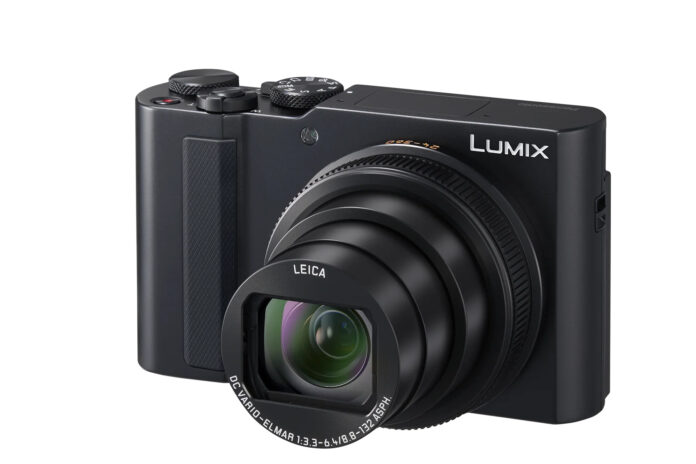
I would shortlist the ZS300 for sightseeing, gardens, architectural details, and family trips where a larger camera stays in the hotel. It weighs about 337g with battery and card. Its 20.1MP sensor records RAW as well as JPEG, so you have room to adjust color and exposure afterward.
At around $800 new, the proposition makes sense for a frequent zoom user. That is my value judgment, not a promise of today’s checkout price. Compare the current offer with Panasonic’s US store, including the seller’s warranty terms. Paying a premium over normal retail for an accessory bundle is hard to justify.

The black US model is DC-ZS300K. TZ300 is the regional name used in other markets. Matching hardware does not guarantee identical warranty coverage, so check the seller and regional model before ordering an import.
What the 15x lens changes in actual shooting
The lens covers 24–360mm equivalent in the full-resolution 3:2 still-photo mode. That means a broad street scene and a detail on a distant roof can belong to the same walk. This flexibility is the reason to carry the ZS300 alongside a phone. If you mostly photograph food and friends at arm’s length, much of that zoom goes unused.
The maximum aperture falls from f/3.3 to f/6.4 as you zoom. At the long end, subject movement becomes the practical limit when light fades. Optical stabilization reduces camera shake; it cannot freeze a walking person or a bird turning its head.
For distant moving subjects, I would start around 1/500 second and adjust for the movement. Accept a higher ISO before accepting obvious motion blur. For a still building, brace the camera and try a slower shutter instead. Those are shooting starting points, not measured stabilization guarantees.
Close focusing reaches 3cm at wide angle in AF Macro mode, but telephoto minimum distance is 1m. The close-up headline therefore does not mean you can fill the frame with a shy insect from any zoom setting. Keep the camera’s shadow off small subjects.
Image quality: useful RAW files, limited low-light freedom
The 1-inch sensor gives this camera a stronger starting point than small-sensor travel zooms. It does not turn a slow telephoto lens into an indoor sports lens. Expect the most flexibility when you can keep sensitivity low and expose carefully.
I would use RAW+JPEG for an important trip. JPEGs make quick sharing easy; RAW files give more control over white balance and tonal adjustments. Check that your preferred editor supports ZS300 files before leaving. In-camera RAW processing is another way to make a shareable version without opening a laptop.
For evening scenes, stay toward the wide end when the composition allows it. At a restaurant table, a phone may be the simpler tool. For a distant daylight detail, the ZS300’s optical reach is the more persuasive reason to unpack it.
Do not assume every photograph needs the smallest aperture. With this sensor size, chasing depth of field at f/8 can cost fine detail through diffraction. Choose the aperture for the scene, and avoid heavy cropping when the optical zoom can provide the framing you need.
Handling: the missing viewfinder is a real cost
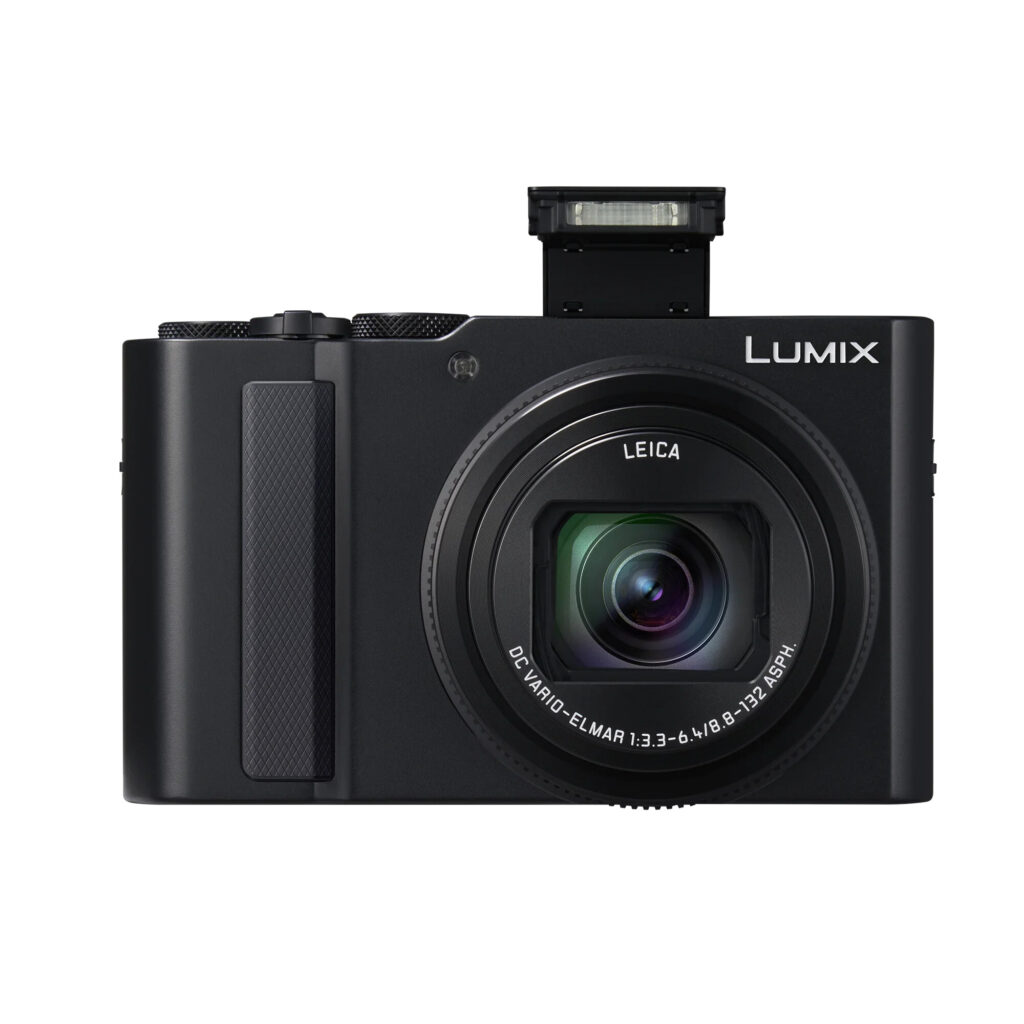
The 3-inch, 1.84-million-dot touchscreen is fixed. There is no electronic viewfinder. That matters on a sunny overlook, at waist level, or when holding the camera above a crowd. You cannot tilt the screen to improve the viewing angle.
The control ring, rear dial, and exposure modes give you useful manual control. Before buying, try changing exposure compensation and selecting a focus area without shifting your grip. A camera this small should earn its place through convenience, not just fit on a specification list.
The body measures approximately 4.38 × 2.61 × 1.78 inches, excluding protrusions. Think jacket pocket or small bag. Add a protective pouch when assessing how it fits your daily carry.
There is no dust, splash, or water resistance. Keep it away from blowing sand and rain, and avoid squeezing the extended lens into a bag. Travelers coming from the older Panasonic ZS70 should also weigh the loss of a viewfinder and flip-up screen against the larger sensor.
Autofocus and bursts: choose subjects carefully
The ZS300 uses contrast-detection autofocus, with face/eye detection and a 49-area option. It shoots up to 10 fps with single autofocus, or 6 fps with continuous autofocus. Those are different capabilities: a fast burst with fixed focus does not follow a subject approaching the camera.
For a building or posed portrait, I would start with a deliberate focus point. For someone moving toward you, use continuous autofocus and short bursts, then check the results. My buying judgment is that this camera suits patient framing better than unpredictable action. Choose an action-focused alternative if a missed expression is the main thing you want to avoid.
4K Photo captures a sequence at 30 fps from which you can save roughly 8MP images. It sacrifices resolution and RAW flexibility compared with ordinary still shooting. The electronic capture can also distort fast movement or produce banding under artificial lights. It is useful for timing a gesture, not a substitute for a dedicated sports camera.
Video: useful clips, awkward self-filming
US recording options include 4K at 30p or 24p, and Full HD at up to 60p. In 4K, the lens starts at a 36mm-equivalent view rather than the still-photo 24mm wide angle. That narrower framing is a significant drawback in a small room or at arm’s length.
4K recording stops at 15 minutes per clip. Full HD 60p has a 29-minute-59-second limit. Panasonic’s five-axis Hybrid O.I.S. compensation excludes 4K recording; do not buy on the assumption that every stabilization mode works at every resolution.
There is no external microphone input, and the fixed screen cannot face the presenter. I would use the ZS300 for short travel details and static scenes. For regular self-filming, choose a camera designed around framing yourself and recording clean audio.
Batteries, cards, and the cost of a travel kit
The removable battery is Panasonic’s DMW-BLG10. The rated endurance is approximately 360 photographs under CIPA conditions. Video, wireless transfers, and frequent reviewing change that figure, so a spare is sensible for a long day.
Charging uses USB-C with the camera switched off. Budget for a suitable cable and power adapter: the standard accessory list includes the battery and hand strap. Panasonic recommends a 5V/3A USB-C adapter and a cable rated for at least 15W. Its owner’s manual explains charging and phone pairing before your first trip.
There is one SD/SDHC/SDXC slot with UHS-I support. Use a U3-rated card for 4K video or 4K Photo. A 64GB or 128GB SDXC card is a practical starting choice; back it up each evening because there is no second slot.
Phone transfers use Panasonic Image App over Wi-Fi, with Bluetooth pairing. Set this up at home. A card reader offers a straightforward alternative for copying a full day’s files. Price the camera, genuine spare battery, card, pouch, and charging equipment together.
ZS300 alternatives: which compromise suits you?
Keep a ZS200 if its viewfinder matters
The ZS200 already offers a 20.1MP 1-inch sensor and 24–360mm-equivalent f/3.3–6.4 lens, plus an electronic viewfinder. I would not replace a healthy one merely to gain USB-C. For a used purchase, inspect lens extension, focus at both zoom extremes, the display, and battery condition. A return window matters more than an impressive accessory count.
Choose the ZS99 for longer daylight reach
The ZS99’s 24–720mm-equivalent lens reaches farther, but uses a smaller 1/2.3-inch sensor. Choose it when distant daylight subjects dominate. Choose the ZS300 when you want the larger sensor and can give up the extra reach. A longer focal-length number alone does not make the better travel camera.
Choose the RX100 VII for moving subjects and an EVF
Sony’s RX100 VII combines a 1-inch sensor with a shorter 24–200mm-equivalent f/2.8–4.5 lens, phase-detection autofocus, a viewfinder, and a tilting screen. I would favor that feature combination for family action and flexible framing. The Panasonic wins on maximum optical reach. Our compact camera buying guide covers other choices if zoom is only one of your priorities.
Final buying judgment
The ZS300 is a sensible purchase for someone who repeatedly wants more reach while traveling light. It is less convincing as an upgrade from a working ZS200, and a poor match for buyers who expect modern action tracking or effortless vlogging.
My choice would be a discounted new US model with clear warranty coverage. I would first confirm that screen-only composition works for me outdoors. If it does, this is a compact camera with a specific, useful job. If it does not, the long zoom will not compensate every time you raise it to make a photograph.
Daylight travel, architectural details, and photographers who want long optical reach in a small bag.
You need an electronic viewfinder, articulated screen, dependable fast-action tracking, or a camera for self-filming.
Screen-only framing and telephoto shutter speeds need attention. Set up phone transfers before travel.
Keep a healthy ZS200 if its viewfinder matters. Consider RX100 VII for action and flexible framing, or a larger camera for low light.
4K starts at 36mm equivalent and stops at 15 minutes; five-axis compensation excludes 4K. No microphone input.
Yes around $800 new if long reach matters more than a viewfinder. Include a spare battery, U3 SDXC card, pouch, and charging gear in the budget.