

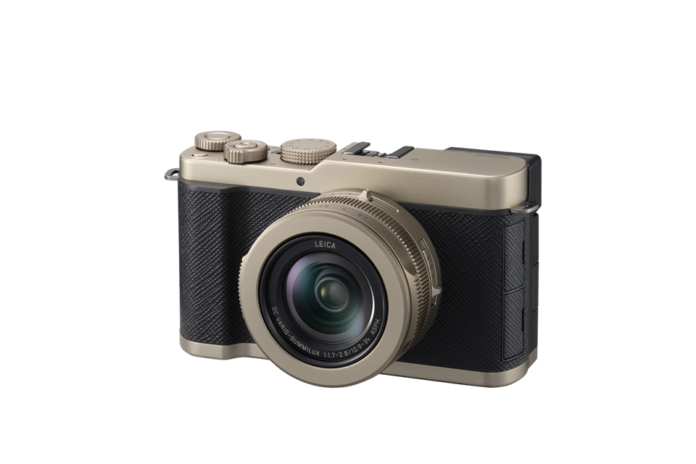
View full specs
This Panasonic Lumix L10 review is about the new 2026 fixed-lens camera, not the older Panasonic DMC-L10 DSLR from 2007. If you are here because the new L10 is trending, this is the right page: a premium everyday camera with a 4/3-type sensor, a Leica 24-75mm equivalent f/1.7-2.8 zoom, physical controls, and Panasonic’s current LUT-based color workflow.
Quick verdict: who the Panasonic Lumix L10 is really for
The Panasonic Lumix L10 is best understood as a serious photographer’s compact rather than a casual point-and-shoot. It is for people who like the idea of carrying one camera everywhere, but do not want to give up a proper grip, an aperture ring, a viewfinder, a fast lens, RAW files, and Panasonic’s modern color workflow.
On paper, the L10 lands in a very attractive space. The 4/3-type BSI CMOS sensor is much larger than the sensors in most pocket compacts, while the LEICA DC VARIO-SUMMILUX 24-75mm equivalent zoom gives you a genuinely useful everyday range. Wide enough for streets and travel, long enough for portraits and detail shots, and bright enough to keep the camera useful indoors.
The catch is that this is not a tiny cheap compact. At about 508g with battery, card, and hot shoe cover, it is portable but not jeans-pocket small. It is also clearly aimed at photographers who care about color, direct controls, and image quality more than the smallest possible body. If you want a simple family snapshot camera, the L10 may be more camera than you need. If you want a premium travel and street camera with a real zoom lens, it is one of Panasonic’s most interesting releases of 2026.
n
Availability is part of the story right now. Panasonic’s own store lists the L10 as a current product, but early demand appears to be outpacing supply and some regions are using waitlist-style availability rather than normal checkout. Because it is not reliably available on Amazon, I would not treat Amazon pricing or third-party listings as the main buying signal yet.
Panasonic Lumix L10 specs that matter
Specs do not tell the whole story, but they explain why the Lumix L10 is not just another retro-styled compact.
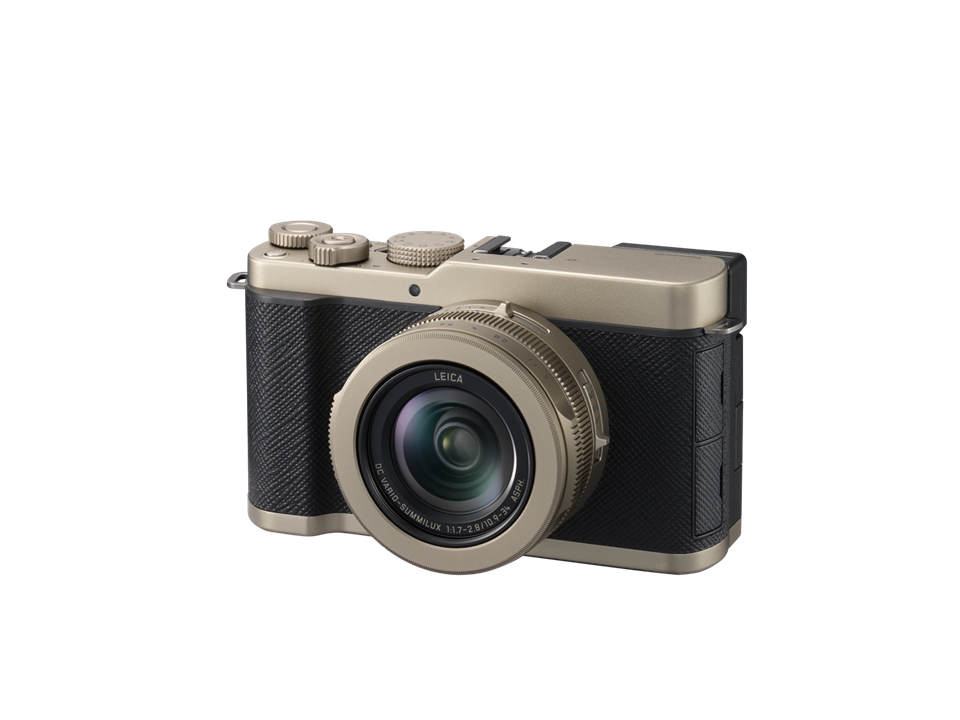
- Sensor: 4/3-type back-illuminated CMOS sensor
- Resolution: 20.4MP effective resolution, with 26.5MP total sensor pixels
- Lens: LEICA DC VARIO-SUMMILUX 24-75mm equivalent zoom
- Aperture: f/1.7-2.8
- Macro: autofocus macro down to 3cm at the wide end
- Aspect ratios: 4:3, 3:2, and 16:9 with a consistent angle of view
- Autofocus: Phase Hybrid AF with 779 focus points
- Subject recognition: eyes, faces, bodies, animals, vehicles, and urban sports
- Burst shooting: up to 30 fps electronic shutter, about 11 fps mechanical shutter
- Stabilization: optical image stabilization / POWER O.I.S.
- Viewfinder: 2.36-million-dot OLED EVF
- Rear screen: 1.84-million-dot free-angle monitor
- Weight: about 508g / 1.12 lb with battery, SD card, and hot shoe cover
- Color tools: Real Time LUT, L.Classic, L.ClassicGold, and LUMIX Lab support
The combination that matters most is the sensor and lens. A 4/3-type sensor behind a 24-75mm f/1.7-2.8 Leica zoom gives the L10 far more photographic flexibility than most fashion-driven compact cameras. That lens range is useful enough that you can leave interchangeable lenses at home and still cover a full day of travel, street, food, portraits, and everyday documentary work.
Design and handling: the L10 is built around control
The Lumix L10 follows the current premium-compact formula: classic shape, metal exterior, tactile controls, and enough modern electronics to keep it from becoming a nostalgia prop. Panasonic says the body uses a magnesium alloy front case with a saffiano leather-textured finish, and the design language clearly aims at photographers who want the camera to feel deliberate in the hand.
The most important handling detail is the manual aperture ring around the lens. That single control changes the personality of the camera. Instead of treating the L10 like a phone replacement, you are encouraged to work like a photographer: pick the aperture, frame through the EVF or rear screen, and use the zoom range intentionally.
The body weight is also telling. At roughly 508g, the L10 is not trying to be the smallest compact on the shelf. That is a good thing if you care about stability, grip, and lens quality. A camera this size can balance better, house a brighter zoom, and feel more planted at slower shutter speeds. The tradeoff is obvious: it is a daily-carry shoulder-strap camera, not a slim pocket camera.
Panasonic also offers Black and Silver versions, plus a Titanium Gold Special Edition tied to the 25th anniversary of Lumix. The special edition is more of a collector and design choice than an image-quality difference, but it does reinforce who Panasonic is targeting: people who want a camera they enjoy carrying and looking at, not only a spec sheet.
Lens and image quality expectations
The lens is the headline. A LEICA DC VARIO-SUMMILUX 24-75mm equivalent f/1.7-2.8 zoom is a strong answer to the biggest weakness of many compact cameras: either the lens is too slow, too short, or too limiting once the novelty wears off.
At 24mm equivalent, the L10 is wide enough for travel scenes, environmental portraits, street corners, interiors, and everyday documentary work. At 75mm equivalent, it reaches into short-telephoto territory for portraits, tighter details, food, and compression. The f/1.7-2.8 aperture range matters because it keeps ISO lower, gives more subject separation than small-sensor compacts, and makes the camera more usable in restaurants, museums, evening streets, and shaded outdoor scenes.
The 4/3-type BSI sensor should give the L10 a real image-quality advantage over most compact cameras with smaller sensors. I would expect the strongest results at base ISO through moderate ISO, with good tonal depth, cleaner shadows than older compact sensors, and enough dynamic range for travel and street work. It will not replace a full-frame camera for high ISO or shallow depth of field, but that is not the point. The point is carrying a camera that is good enough to take seriously when you do not want an interchangeable-lens kit.
The multi-aspect sensor design is another smart choice. Instead of simply cropping heavily when switching between 4:3, 3:2, and 16:9, Panasonic says the L10 maintains a consistent angle of view across those aspect ratios. For photographers who compose differently for prints, social media, travel stories, or video thumbnails, that is more useful than it sounds. It lets you choose the frame shape without feeling like the lens suddenly changed.
Autofocus, stabilization, and shooting speed
The L10 is not only a lifestyle compact. Panasonic gives it Phase Hybrid AF with 779 focus points and AI-based subject recognition for eyes, faces, bodies, animals, vehicles, and urban sports. That makes it much more credible for moving subjects than older contrast-detect Lumix compacts.
For street photography, family use, and travel, this should be a major practical advantage. A premium compact with a beautiful lens is frustrating if it misses focus when people move. The L10’s autofocus system suggests Panasonic wants this camera to handle real daily shooting, not just static coffee-shop scenes.
The burst numbers are also serious: up to 30 fps with the electronic shutter and around 11 fps with the mechanical shutter. That does not automatically make the L10 a sports camera, because buffer depth, rolling shutter behavior, and lens response all matter. But for quick gestures, kids, pets, street moments, and travel action, the spec is much stronger than expected for this type of fixed-lens camera.
Optical stabilization is another important piece. With a bright f/1.7-2.8 lens and POWER O.I.S., the L10 should be comfortable for handheld evening scenes, indoor details, and lower shutter speeds when the subject is not moving quickly. This is exactly where a premium compact needs to be strong.
Real Time LUT and Panasonic color
Panasonic is leaning hard into color workflow, and that makes sense. The L10 is the kind of camera people will want to use for JPEGs, quick edits, and direct sharing, not only RAW files on a desktop later.
Real Time LUT lets users load custom looks into the camera and preview them while shooting. Panasonic says two LUTs can be layered for added creative flexibility. The LUMIX Lab app can also generate LUTs from favorite images using AI-based color analysis. That is not just a gimmick if you like building a consistent look for travel, documentary, or social work.
The new L.Classic and L.ClassicGold Photo Styles are also a smart fit. The fixed-lens compact market is full of buyers who care about color character. Fujifilm proved how powerful in-camera color recipes can be. Panasonic’s answer is different, but the goal is similar: make the camera enjoyable before the files ever reach a computer.
For photographers who already shoot Lumix bodies, the L10 should slot naturally into an existing color workflow. For new buyers, the appeal is simple: shoot RAW when you need flexibility, but also have JPEG looks that feel more intentional than a basic Standard or Vivid profile.
Video and creator use
The Lumix L10 is clearly photo-first, but Panasonic is not ignoring short-form video. The official launch materials and current support pages point to MP4 Lite, USB-C charging and power options, webcam support, and modern monitoring tools, which makes this a more hybrid-friendly compact than its styling alone suggests.
I would not buy the L10 as a main video camera before deeper rolling-shutter, overheating, stabilization, autofocus, and audio tests settle. Panasonic makes excellent hybrid cameras, but this body is designed around compact everyday creativity rather than rigged production work. If video is your main priority, a dedicated hybrid body still makes more sense.
Where the L10 does make sense is casual creator use: short travel clips, vertical snippets, behind-the-scenes footage, quick family video, and social posts that benefit from Panasonic color without the complexity of a full interchangeable-lens kit.
Who should buy the Panasonic Lumix L10?
The L10 makes the most sense for photographers who want a premium all-in-one camera that still feels like a real camera. It is especially appealing if you shoot street, travel, family documentary, food, city details, and everyday stills where a 24-75mm equivalent lens covers most of the day.
You should consider the Lumix L10 if:
- You want better image quality than a small-sensor compact without carrying interchangeable lenses.
- You like physical controls, an aperture ring, and an EVF.
- You shoot travel, street, food, family, portraits, or everyday documentary work.
- You care about JPEG color, LUTs, and quick mobile workflow.
- You want a fast zoom rather than a fixed 28mm or 35mm lens.
You should skip it if:
- You need a truly pocketable camera.
- You want interchangeable lenses.
- You mainly shoot sports, wildlife, or long telephoto subjects.
- You need a video-first body with serious production ports and rigging options.
- You are shopping only on price and do not care about premium controls or color workflow.
Pros and cons
Pros
- Large 4/3-type BSI sensor for a fixed-lens compact.
- Useful LEICA 24-75mm equivalent zoom range.
- Bright f/1.7-2.8 aperture gives real low-light and depth-of-field advantages.
- Manual aperture ring and tactile controls make it feel photographer-focused.
- Phase Hybrid AF with subject recognition is promising for everyday movement.
- Real Time LUT and LUMIX Lab integration make color workflow a major strength.
- EVF, free-angle screen, stabilization, and macro focusing make it flexible.
Cons
- At about 508g, it is portable but not pocket-small.
- Fixed lens means no ultra-wide, long telephoto, or specialty lens options.
- Video performance still needs full real-world testing before calling it a serious hybrid tool.
- Premium design means it is not competing with budget compacts on price.
- Early availability may be uneven because demand appears stronger than supply.
Panasonic LUMIX DC-L10 alternatives
The main alternatives to the Panasonic LUMIX DC-L10 are Fujifilm X100VI, Leica D-Lux 8, other premium fixed-lens compacts. Compare autofocus, stabilization, video limits, lens choice and current price before deciding which camera fits you best.
Frequently asked questions
- Is the Panasonic Lumix L10 a new camera?
Yes. The current Lumix L10, full model name DC-L10, is a new fixed-lens camera announced in May 2026. - What sensor does the Lumix L10 use?
The new L10 uses a 4/3-type back-illuminated CMOS sensor with 20.4MP effective resolution. - What lens is on the Panasonic Lumix L10?
It has a LEICA DC VARIO-SUMMILUX 24-75mm equivalent zoom with an f/1.7-2.8 aperture. - Is the Lumix L10 good for travel photography?
Yes, travel is one of its strongest use cases. The lens range, bright aperture, stabilization, EVF, and compact body make it well suited to city, food, portrait, detail, and everyday travel scenes. - Is the Lumix L10 pocketable?
Not really. It is compact enough to carry all day, but at around 508g it is better treated as a small shoulder-strap or sling-bag camera than a jeans-pocket compact. - Does the Lumix L10 have interchangeable lenses?
No. It is a fixed-lens camera. That is part of the appeal if you want simplicity, but a limitation if you need ultra-wide, macro specialty, or telephoto options. - Does the Panasonic Lumix L10 shoot video?
Yes. Panasonic positions it as a stills-first compact with short-form video support, MP4 Lite, LUMIX Lab workflow, webcam support, and modern monitoring tools. - What kind of sample photos should buyers look for?
Look for portraits at the long end, indoor low-light scenes, street photos with mixed highlights and shadows, close-up macro images at the wide end, and JPEGs using L.Classic, L.ClassicGold, or custom LUTs. Those samples will reveal whether the L10’s lens and color tools match your style.
Final verdict
The Panasonic Lumix L10 is one of the most interesting premium compacts of 2026 because it does not chase only nostalgia or only specs. The appeal is the combination: a large 4/3-type sensor, a bright Leica zoom, tactile controls, useful autofocus, stabilization, an EVF, a free-angle screen, and Panasonic’s modern LUT-based color workflow.
Its biggest strength is balance. A fixed 28mm compact can be beautiful but limiting. An interchangeable-lens mirrorless kit can be powerful but bulky. The L10 sits between those worlds: flexible enough for real photography, simple enough to carry, and distinctive enough to make people want to shoot with it.
I would not call it the right camera for everyone. It is not tiny, not cheap, not lens-swappable, and still needs broader long-term field testing. But for photographers who want one premium compact for travel, street, family, food, and everyday image-making, the Panasonic Lumix L10 looks like a strong and genuinely useful camera.
Travel, street, family documentary, food, and photographers who want one serious everyday compact.
You need a pocket camera, interchangeable lenses, or a dedicated video-first body.
Low to medium; direct controls help, but this is still an enthusiast compact.
Move to a LUMIX interchangeable-lens body if you need more reach or system flexibility.
Useful hybrid features are present, but the camera is still best understood as stills-first.
Yes, if you want a premium compact with a fast zoom and current Panasonic workflow.