
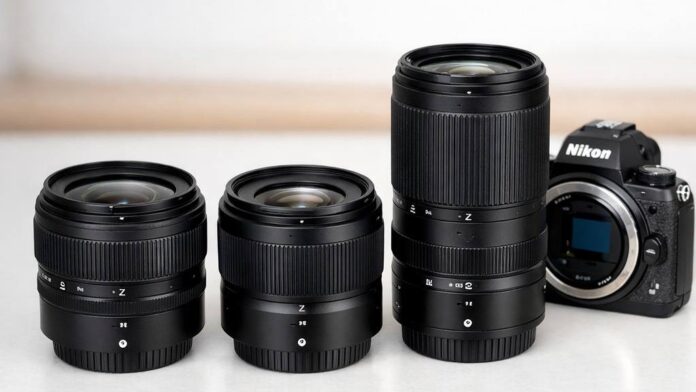
Choosing the best Nikon Z DX lenses is easier when you match each lens to how you actually shoot. From lightweight walkaround zooms to fast primes, I’ll break down the options that make the most sense for Nikon APS-C users on lensandshutter.com.
Best Nikon Z DX lenses by camera body
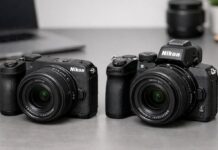
Nikon Z DX lens choices are easiest to understand by camera body. A Nikon Z30 owner usually cares about small video-friendly lenses. A Nikon Z50 or Z50 II owner may want one compact travel zoom and one brighter prime. A Nikon Z fc owner often cares about size and style as much as pure performance.
- Best first Z DX lens: a compact standard zoom if you want flexibility.
- Best low-light upgrade: a small bright prime that keeps the kit light.
- Best travel direction: pair a wide or standard zoom with one small prime.
- Best wildlife compromise: use a telephoto zoom, but keep expectations realistic on smaller DX bodies.
Why Nikon Z DX lenses are worth a close look
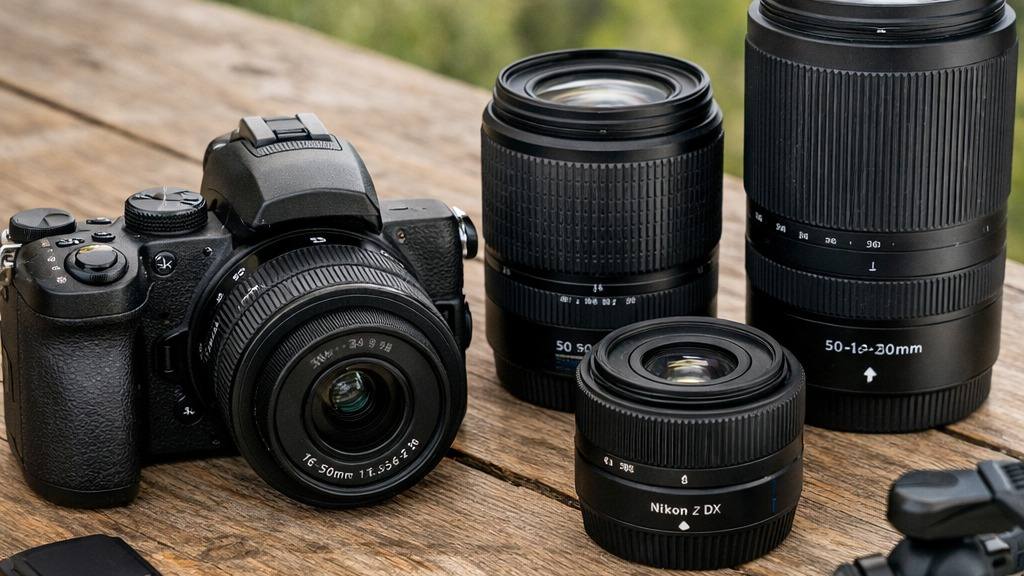
The Nikon Z DX lenses family has grown steadily, and it is finally earning the attention it deserves. When Nikon first launched its mirrorless Z mount, most of the focus was on full-frame glass. However, the dedicated DX (APS-C) lineup now offers real advantages for photographers who want a lightweight, affordable, and travel-friendly kit without sacrificing image quality.
That smaller, better-balanced setup is also why it helps to compare DX options against the broader Nikon Z lineup before buying. APS-C users can mount full-frame Z lenses, but the best choice is usually the lens that keeps the camera balanced and gives the field of view you actually need.
That body-and-lens balance matters just as much as sharpness on paper, especially if you want a kit that stays comfortable all day. If you are pairing lenses with Nikon’s APS-C system, this Nikon Z50 II review adds helpful context on how the camera fits real-world travel and everyday shooting.
One of the key strengths of Nikon Z DX lenses is how well they are matched to the compact size of Nikon’s APS-C mirrorless cameras, like the Z50, Z30, and Zfc. These lenses are typically smaller and lighter than their full-frame siblings, meaning your camera setup remains nimble – perfect for travel, street, or everyday shooting. Additionally, because the imaging circle only needs to cover the smaller DX sensor, the optical designs can be simpler and more efficient, often resulting in lower prices and less distortion at the wide end.
Another advantage comes from the close integration between Nikon Z mount DX lenses and the camera bodies. Autofocus is fast and quiet, and features like in-camera corrections for distortion and vignetting work seamlessly. This is especially noticeable with kit zooms and compact primes, where the out-of-camera JPEGs can look fantastic without much post-processing. While compact digital cameras are making a comeback in 2026, a Nikon Z DX body with the right lens can deliver both flexibility and image quality far beyond a typical point-and-shoot.
For those considering a Nikon APS-C camera, it is worth remembering that you can also mount any Z mount full-frame lens on your DX body. However, the dedicated DX lenses will usually feel better balanced and make your kit less of a burden on long walks or travel days.
How to choose the right lens for your shooting style
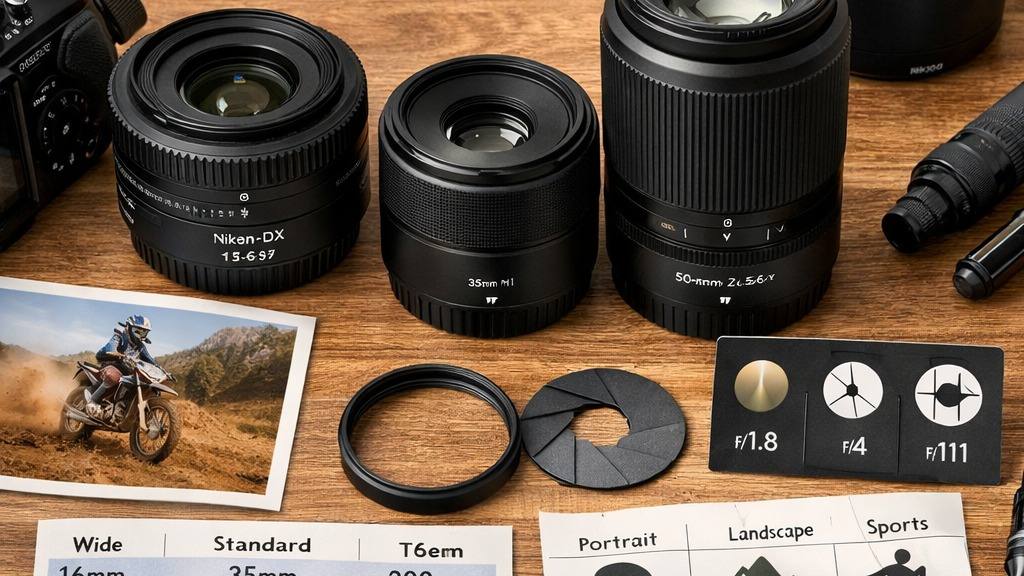
Picking the best Nikon Z DX lenses depends less on technical specs and more on how you actually use your camera. Your habits, subjects, and even your favorite bag play a role. Let’s break down the main considerations I use when helping friends and readers build out their Nikon DX kits.
When a zoom makes more sense than a prime
If you are not sure what you will encounter on a typical day out – or if you value convenience above all else – a zoom lens is usually the logical place to start. The standard walkaround zoom (often an 18-55mm or 16-50mm equivalent) gives you a flexible range for everything from landscapes to portraits, without needing to change lenses. For family outings, travel, or spontaneous street photography, the convenience of “framing with your feet” and the ability to zoom in for a candid moment cannot be overstated.
On the other hand, if you find yourself drawn to a specific subject – like portraits, food, or low-light street scenes – a prime lens can offer better image quality, a brighter aperture, and a more compact profile. The lack of zoom may seem like a limitation, but it forces you to think more about composition and can help your photography style develop faster. For many, a two-lens kit (one zoom and one fast prime) covers nearly every need.
What aperture, size, and stabilization really mean in use
It is easy to get caught up in numbers: f/1.8 vs f/2.8, 24mm vs 50mm, or image stabilization (VR) versus none. In practice, the most important factors are how the lens feels on your camera and whether it helps or hinders your shooting habits.
- Aperture: A wider maximum aperture (lower f-number) lets in more light, making it easier to shoot indoors or blur the background. For portraits, an f/1.8 or f/2 prime makes a big difference. However, most modern sensors handle higher ISOs well, so an f/3.5-6.3 kit zoom is usually fine for daytime and travel use.
- Size and weight: If your camera is always in your bag, a pancake or slim-line zoom will get used more than a big telephoto. Balance can affect how steady your shots are, especially with one hand.
- Stabilization: Many Nikon Z DX lenses include Vibration Reduction (VR), which is helpful for handheld shots in lower light or at longer focal lengths. However, some fast primes skip VR, relying on your technique or the camera’s in-body stabilization (if available).
In my experience, it pays to prioritize lenses that make you want to carry your camera everywhere. The best lens is the one you are willing to bring along, not the one left on a shelf at home.
Best Nikon Z DX lenses for everyday photography
Everyday photography means different things to different people, but most of us want a lens that is sharp, compact, and versatile enough for daily life. Here are the top picks based on real-world use.
Best walkaround zoom for most photographers
The standout everyday Nikon Z DX lens is the Nikon Z DX 16-50mm f/3.5-6.3 VR. This is the standard kit zoom for good reason: it covers wide-angle for landscapes and group shots, a natural perspective for street work, and enough reach for casual portraits. The stabilization is surprisingly effective, letting you shoot handheld even at dusk. Image quality is crisp in the center throughout the range, and modern in-camera corrections keep distortion well controlled. The best part is the size: when retracted, this lens adds almost nothing to the front of your camera, making it perfect for travel or a jacket pocket. If you only buy one lens, this is the smart first choice for most users. It is not flashy, but it gets the job done day in, day out.
Best compact prime for daily carry
For those who prefer a prime, the Nikon Z DX 24mm f/1.7 is a clear winner for daily use. This lens gives you a field of view similar to a classic 35mm lens on full-frame, which is ideal for street, family, and travel photos. The fast f/1.7 aperture allows for shallow depth of field when you want it, and it makes low-light shooting much easier than with a kit zoom. The lens is light, unobtrusive, and focuses quickly, making it a joy to use on the go. In my own shooting, this is the lens that turns my Zfc into a “bring everywhere” camera. If you love the idea of a simple, fast lens that disappears in your bag, the 24mm f/1.7 is tough to beat for everyday photography on Nikon DX.
Best Nikon Z DX lenses for portraits and subject separation
If you want to shoot portraits with beautiful background blur, or isolate your subject for a more professional look, choosing the right lens matters a lot. Here are my top recommendations for the best Nikon Z DX lens for portraits and subject separation.
Best portrait prime for flattering perspective
The Nikon Z 50mm f/1.8 S (full-frame, but fully compatible) is the gold standard for subject separation, but if you want a true DX option, the Nikon Z DX 24mm f/1.7 is surprisingly effective. On a DX sensor, 24mm gives a slightly wide-normal perspective, which works well for environmental portraits or candid people shots. The wide f/1.7 aperture produces enough background blur to make your subject pop, especially at closer distances. If you need more compression or a classic portrait look, adapting an older AF-S 50mm f/1.8G with the FTZ adapter is still a solid choice, but the native 24mm f/1.7 is lighter and handles better on DX bodies.
Best budget option for softer background blur
If you are looking for a more affordable way to try portrait photography with strong background separation, the Nikon Z DX 16-50mm f/3.5-6.3 VR can still deliver. Set the lens to 50mm, use the widest aperture available, and get as close to your subject as possible while keeping some distance between them and the background. The blur will not be as creamy as a dedicated fast prime, but for family portraits or casual headshots, it often looks better than you might expect. For those just starting out, this kit zoom lets you experiment with subject separation before committing to a faster, pricier lens.
For most Nikon DX shooters, the best upgrade path is simple: start with a compact zoom, add one fast prime for low light or portraits, then only consider full-frame Z lenses when you need a focal length that the DX lineup does not cover.
Best Nikon Z DX lenses for travel landscapes and street work
Nikon Z DX shooters who love travel, landscape, and street photography need lenses that balance portability with sharpness. The right lens will let you capture sweeping views, tight urban scenes, and candid moments without slowing you down. I have spent years shooting with Nikon’s mirrorless system, and the newest Z DX glass finally makes it easy to travel light and shoot wide or tight as the scene demands.
Best wide zoom for trips and city shooting
If you want a single travel lens for Nikon Z DX cameras that delivers both flexibility and image quality, the Nikon Z DX 12-28mm f/3.5-5.6 PZ VR is my top pick. This lens covers a 12-28mm range, which is equivalent to 18-42mm on a full-frame body. That means you get ultra-wide for landscapes, interiors, and dramatic street scenes, plus a moderate wide for environmental portraits or tighter city details.
The 12-28mm PZ VR stands out for several reasons:
- Power zoom: Smooth, silent zooming is perfect for video and precise framing, even one-handed.
- Surprisingly compact and lightweight: It weighs only about 205 grams, so it never feels front-heavy on a Z50 or Z30.
- Sharpness is excellent at all focal lengths, with minimal distortion for a zoom this wide.
- Vibration reduction (VR) is built-in, which is rare for a lens this compact, helping you shoot handheld in low light or at slow shutter speeds.
The main trade-off is the modest maximum aperture. At f/3.5-5.6, you will not get much subject separation or low-light speed. However, for most daylight travel and street work, this is not a major issue. I have shot city skylines at dusk and lively street markets with this lens and never felt limited. If you want one lens for landscapes, cityscapes, and spontaneous street moments, this is the strongest all-around landscape lens for Nikon Z DX users.
Best lightweight setup for all-day travel
If you want the absolute lightest kit for all-day walking, consider pairing the Nikon Z DX 16-50mm f/3.5-6.3 VR with a small prime. The 16-50mm collapses down tiny, barely adding any weight to your camera. This is my go-to street photography combo because it lets me blend in, and the zoom covers everything from wide street scenes to tighter portraits or details.
However, when light gets low or you want more creative control, adding the Nikon Z DX 24mm f/1.7 makes a huge difference. This prime is fast, sharp, and still very compact. It is ideal for evening city walks, indoor markets, or blurred backgrounds in travel portraits. The 24mm (equivalent to 36mm full-frame) is close to a classic street photography focal length, making it a versatile partner for the zoom.
To summarize this setup for street photography on Nikon Z DX:
- Carry the 16-50mm for daytime, walking, and flexibility.
- Switch to the 24mm f/1.7 for creative night shots, food, or environmental portraits.
- Both together weigh less than 300 grams, so you will never hesitate to bring both.
For travelers who care about weight and want to slip their camera into a jacket pocket, this is still one of the best choices in 2026, even as compact digital cameras make a comeback.
Using full-frame Z lenses on DX bodies
It is perfectly possible to use full-frame (FX) Z lenses on DX bodies like the Z50, Z30, or Zfc. Nikon Z mount is fully cross-compatible, so any Z lens will physically fit and function. This opens up more lens choices, especially for specialized needs such as ultra-wide landscapes or shallow depth of field portraits.
However, there are a few important points to consider:
- Crop factor: A DX body applies a 1.5x crop, so a 24mm FX lens acts like a 36mm equivalent.
- Size and balance: FX Z lenses tend to be larger and heavier, which can feel awkward on small DX bodies. For example, the Nikon Z 24-70mm f/2.8 S is outstanding optically but feels front-heavy on a Z30.
- Cost vs. benefit: Full-frame Z lenses are usually more expensive. Unless you need a specific focal length or optical quality, you may be carrying more weight and spending more than necessary.
- Image circle: The DX sensor only uses the center of the FX lens’s image circle. This can mean even sharper edges and less vignetting, but you never get the full wide-angle field of view.
For travel and landscape shooters, using an FX ultra-wide like the Z 14-30mm f/4 S on a DX body gives you about a 21-45mm range. This is not as wide as on full-frame, but it is a unique way to get a bit more width than the DX 16-50mm offers. For portraits, FX primes like the Z 50mm f/1.8 S become a short telephoto (75mm equivalent), which is excellent for subject isolation.
In short, FX lenses on Nikon Z DX bodies make sense when you need focal lengths or creative effects not available in the DX lineup. For most travel and everyday use, though, the DX-specific lenses are better balanced and a smarter value.
The trade-offs of each top pick at a glance
Choosing the best Nikon Z DX lenses means balancing weight, speed, cost, and versatility. Here is a quick comparison of the top choices from this guide, along with their main pros and cons:
-
Nikon Z DX 12-28mm f/3.5-5.6 PZ VR
- Pros: Ultra-wide coverage, power zoom, VR, compact, sharp, ideal for landscapes and cityscapes
- Cons: Modest aperture, not great for low light or heavy subject separation
-
Nikon Z DX 16-50mm f/3.5-6.3 VR
- Pros: Extremely compact, versatile zoom range, VR, affordable, featherweight for travel
- Cons: Not very bright, softer at the long end, limited shallow depth of field
-
Nikon Z DX 24mm f/1.7
- Pros: Fast aperture for low light, sharp, light, natural field of view for street and travel
- Cons: Fixed focal length, no VR, some distortion at edges wide open
-
Full-frame Z lenses on DX bodies
- Pros: Access to premium optics, unique focal lengths, more creative options
- Cons: Bulky, expensive, effective field of view changes, not always practical for travel
For most buyers, the key technical comparison is balance: DX lenses keep the kit light, while full-frame Z lenses add more speed, reach, or rendering options at the cost of size and price.
My final recommendations by budget and priority
Whether you are a beginner or a seasoned photographer, picking the right lens is about matching your needs to the lens’s strengths. Here is how I recommend prioritizing your next purchase:
- Best Nikon Z DX lens for beginners: Start with the Nikon Z DX 16-50mm f/3.5-6.3 VR. It is portable, flexible, and affordable, with quality that exceeds most kit zooms.
- Best value Nikon Z DX lens: The Nikon Z DX 24mm f/1.7 offers the most creative punch for the price. If you want to shoot after dark, blur backgrounds, or explore street and travel scenes, this prime makes a huge impact.
- Best upgrade for serious travel and landscape shooters: The Nikon Z DX 12-28mm f/3.5-5.6 PZ VR is the smartest wide zoom for city, landscape, and general travel work. If you shoot video, its power zoom is a real bonus.
- If your priority is creative flexibility: Consider one compact zoom (16-50mm or 12-28mm) paired with the 24mm f/1.7. This covers nearly all travel, street, and portrait needs in a tiny bag.
- If you want the absolute best image quality: Do not overlook using a full-frame Z prime, like the 50mm f/1.8 S, on your DX body for portraits or subject isolation. Just remember the crop factor and weight penalty.
For most users, the best Nikon Z DX lenses are the ones you are willing to bring everywhere. Lightweight zooms and fast primes are the secret to enjoying photography on the go, especially as compact cameras see renewed interest in 2026.
Frequently asked questions
What is the best Nikon Z DX lens for beginners?
The Nikon Z DX 16-50mm f/3.5-6.3 VR is the best starter lens. It is lightweight, affordable, and covers a useful range for travel, family, and daily photography.
Can I use full-frame Nikon Z lenses on a DX camera body?
Yes, all Nikon Z full-frame (FX) lenses work on DX bodies. Just remember the 1.5x crop factor, larger size, and higher price tag. They are best used when you need a special focal length or premium optics.
Which Nikon Z DX lens is best for portraits?
The Nikon Z DX 24mm f/1.7 is a great choice for environmental portraits and low light. For classic shallow depth of field, many use the Nikon Z 50mm f/1.8 S (FX) on DX bodies, which gives a flattering 75mm equivalent.
Is a prime or zoom better for everyday Nikon Z DX photography?
For most everyday use, a zoom like the 16-50mm is more versatile. If you love creative control or shoot in low light, adding a fast prime like the 24mm f/1.7 delivers better subject separation and image quality.