


The best camera under $400 depends on what you want your phone to do better. For distant subjects, I would start with the Kodak Pixpro AZ528. For a camera that fits in a pocket, the Canon PowerShot SX620 HS is a different proposition: less reach, much less bulk, and an older-camera buying decision. If your priority is portraits, indoor photographs or learning with interchangeable lenses, start with the Nikon D3400 and 18-55mm VR Renewed kit, subject to the complete-cost checks below.
This guide separates those choices instead of treating the biggest zoom as the answer for everyone. The budget is a ceiling, not a target you have to spend. A cheaper compact can be the right purchase when size and simplicity matter more than image quality or distant wildlife.
Before buying: Check the exact US listing, condition, seller and included accessories. New, used and Renewed offers can share a product page. Allow for a memory card, missing battery or charger, shipping and tax if $400 is your total checkout limit. The links identify the cameras discussed; they do not guarantee an under-$400 offer.
Quick Answer: Best Camera Under $400
My first choice under $400 for long-zoom photography is the Kodak Pixpro AZ528, provided the complete purchase fits your budget. It is not a premium camera, but its 52x optical zoom, BSI-CMOS sensor, Wi-Fi, burst shooting, and bridge-style handling make it a more serious under-$400 pick than a basic pocket compact.
For learning photography, my alternative is the Nikon D3400 with 18-55mm VR lens, bought Renewed. For a small camera and a smaller bill, consider the Kodak FZ55. The Canon PowerShot SX620 HS serves a different pocket-camera need with its longer zoom, provided its Renewed offer makes sense. The AZ405 remains an AA-powered bridge alternative when it offers a meaningful saving over the AZ528.
| Pick | Why It Belongs Here | Watch Out For |
|---|---|---|
| Kodak Pixpro AZ528 | Best current-style under-$400 bridge zoom pick | Small sensor, modest low-light performance |
| Nikon D3400 + 18-55mm VR, Renewed | Learning exposure, RAW editing and changing lenses | Check condition, power accessories and complete cost; not long zoom |
| Kodak Pixpro FZ55 | Spend less for a small, simple 5x compact | Check US offer; not a low-light upgrade over a good phone |
| Canon PowerShot SX620 HS | Pocketable 25x travel zoom | Linked listing is Renewed; check price, condition and accessories |
| Kodak Pixpro AZ405 | 40x zoom with AA batteries, if meaningfully cheaper | Include batteries/charger when comparing with AZ528 |
| Panasonic Lumix FZ80D | Excellent near-miss bridge camera | Usually above $400 new, so not a main pick here |
Pocket Camera, Bridge Camera or Used Kit?
Choose a pocket point-and-shoot if the camera has to come along without a bag. The SX620 HS measures 96.9 x 56.9 x 27.9mm and weighs about 182g with battery and card. That is a different carrying experience from the AZ528, which weighs about 508g before its battery and card. I would give up some zoom for a camera I would actually carry every day.
Choose a bridge camera if you want distant details, perched birds or sightseeing reach without changing lenses. You gain a deeper grip and longer lens, not a larger sensor. The AZ528 and AZ405 are bag-or-strap cameras. Neither gives you an electronic viewfinder, so consider whether you are comfortable composing on a rear screen in bright sunlight.
Choose a used interchangeable-lens kit if you want to learn exposure, change lenses or work toward better portraits. That route can make more photographic sense than a new bridge camera, but only after adding the lens and missing accessories to the price. A body-only bargain is not a usable beginner kit. The checks later in this guide explain what to compare.
Best Cameras Under $400 in 2026
1. Kodak Pixpro AZ528 - Best for Long Zoom

The Kodak Pixpro AZ528 is the cleanest fit for this page because it sits in the right price class and has a real reason to exist. A 52x optical zoom is something a phone cannot fake well. For travel, perched wildlife at a park, distant details, and casual sightseeing, that zoom range is the whole point. It can frame outdoor sports from a distance, but reach is not the same as dependable tracking of fast-moving children or birds in flight.
Compared with the cheaper Kodak bridge models, the AZ528 feels like the more complete buy. The BSI-CMOS sensor, Wi-Fi, longer zoom, and bridge-style body make it easier to justify as a camera someone might actually choose instead of just buying the cheapest option available. It is still a small-sensor camera, so I would not oversell image quality. In good light it can be fun and useful. In dim rooms, a modern phone may look cleaner.
My practical view: buy the AZ528 if you want reach more than pocketability. Do not buy it expecting mirrorless image quality. Buy it because you want a simple all-in-one zoom camera under $400 that does not need extra lenses.
Read the full Kodak Pixpro AZ528 review for the deeper handling and image-quality tradeoffs.
2. Nikon D3400 with 18-55mm VR - Best for Learning Photography, Bought Renewed
Offer condition: This is a Renewed D3400 with an AF-P DX 18-55mm f/3.5-5.6G VR lens, not a new camera or a body-only offer. The US listing checked for this update showed a Refurbished - Excellent option with 90-day refund/replacement terms. Seller, condition and price can change. Amazon Renewed describes compatible accessories rather than guaranteed original Nikon accessories; confirm a working battery and charger, then add a memory card and tax to your total.
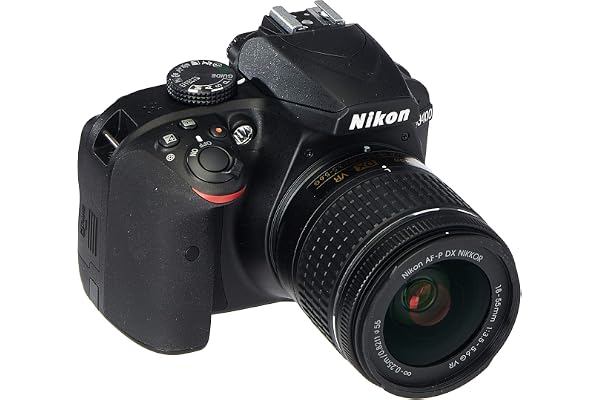
I would choose this kit over the AZ528 to learn aperture, shutter speed and RAW editing, not to photograph a distant bird without buying another lens. Its larger sensor, optical viewfinder and interchangeable lenses give it a different purpose from the small-sensor zooms. The supplied 18-55mm covers roughly 27-82.5mm equivalent: useful for a room, a landscape or a person nearby, but nowhere near a bridge camera's reach.
The lens has vibration reduction, which helps with camera shake; it cannot freeze a moving child. A slow kit zoom still needs enough light or a higher ISO indoors. Nor would I choose this DSLR for selfie video: its screen is fixed, video stops at Full HD, and screen-based autofocus is contrast-detect rather than modern mirrorless subject tracking.
The D3400 earns this place on complete-kit value, not simply because Nikon is a familiar name. Compare like-for-like condition before paying extra for a D3500, and do not assume a popular Rebel T7 kit leaves enough for essentials. Our Nikon D3400 review explains the compromises; the D3400 versus D3500 comparison helps when both kits fit your budget.
3. Kodak FZ55 - Spend Less for a Pocket Camera
Buying check: The linked product is the black FZ55. Check US availability and the selected seller before ordering; skip inflated marketplace offers rather than paying close to $400 for this basic compact.
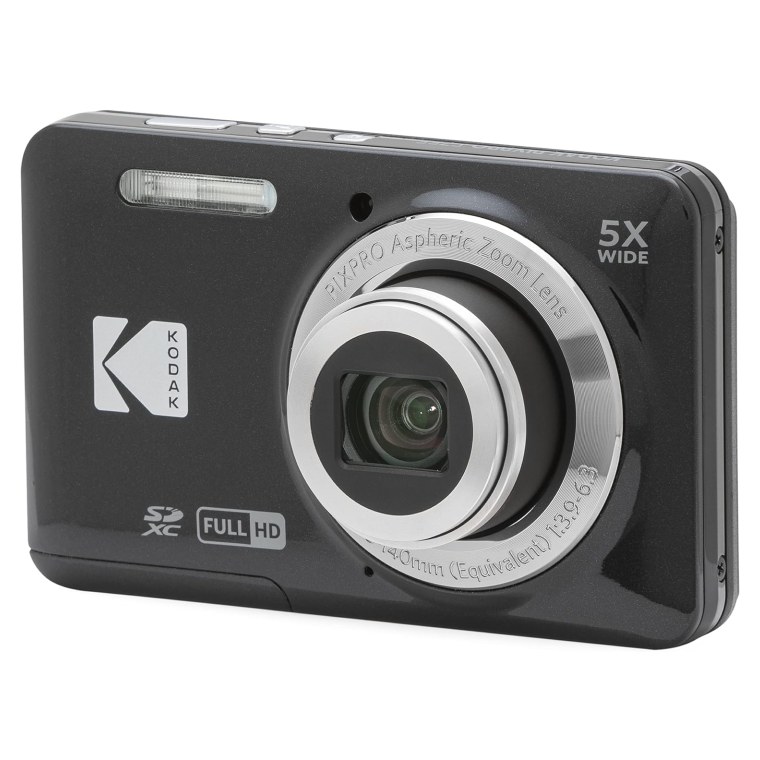
A lower price does not disqualify a camera from a $400 shortlist. The Kodak FZ55 makes sense when you want a small dedicated camera for daylight snapshots, not a long-zoom bridge or an interchangeable-lens system. Its 5x lens covers 28-140mm equivalent, and its body is about 22.9mm deep and 106g before the battery and card. It is the simpler carry-everywhere alternative, not an image-quality upgrade to the SX620 or a good recent phone.
The tradeoffs are straightforward: much less reach than the SX620, no Wi-Fi, and a small sensor that does its best work in good light. The built-in flash is useful nearby, but does not turn it into a low-light specialist. Transfers use USB or a card reader. Read our Kodak FZ55 review for the full buying advice.
I would buy it to enjoy a small, uncomplicated camera and keep the remaining money, not spend the balance on a bundle of generic accessories. Our camera guide under $200 covers the cheaper alternatives in more depth. Compare the actual offers; there is no reason to pay close to $400 for a basic compact just because it has become fashionable.
4. Canon PowerShot SX620 HS - Best Pocket Travel Zoom If the Price Is Right
Offer condition: The Amazon link below is for a Renewed SX620 HS, not a guaranteed new camera. Confirm the seller, return terms, battery and charger before ordering. If the complete offer exceeds $400, skip it; the fact that it is compact does not justify an inflated price.
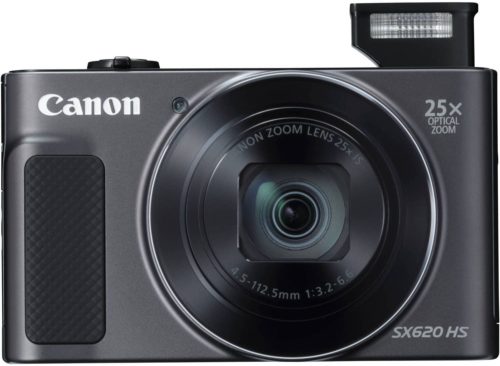
The Canon PowerShot SX620 HS stays here only with a clear warning: it is an older compact, and the price has to make sense. When it is reasonably priced, it gives you a useful 25x optical zoom in a body that can actually go in a pocket. That is a real advantage for travel.
The SX620 HS is not a modern premium compact and should not be priced like one. It has no 4K video, no viewfinder, and no large sensor. What it does have is a small body, Canon color, simple handling, and much more reach than most phones. That can still be enough for a family trip or casual travel camera.
I would choose it over a bridge camera only if size matters more than reach and grip. If you want the most zoom for the money, the AZ528 or AZ405 is more logical. If you want a pocketable camera, the SX620 HS is the more natural fit.
Read the full Canon PowerShot SX620 HS review for the current used and renewed buying caveats.
Best Point-and-Shoot Under $400: What Matters Beyond Zoom?
The SX620 is the pocket-zoom choice here, not a promise of better photographs in every situation. Its 25x lens is useful for a landmark across a harbor; at a nearby restaurant table, that reach does little for you. A modern phone may produce a cleaner handheld night shot. Think about the pictures you miss now, rather than the number on the lens.
For people, parties and family trips, check three things before buying an older compact. Does the flash work? Does the lens extend and retract smoothly? Can you get photographs onto your current phone or computer? The SX620 includes Wi-Fi and NFC, but check current app compatibility rather than assuming a ten-year-old wireless workflow will suit you. An appropriate SD-card reader is another transfer route.
If you do not need 25x reach, the smaller-zoom FZ55 is worth comparing before spending most of the budget on a Renewed Canon. If neither meets your needs, keep the money rather than buying a bridge camera you will leave at home.
5. Kodak Pixpro AZ405 - Alternative for AA Batteries or a Lower Price
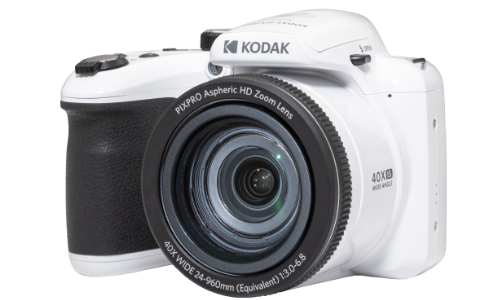
The Kodak Pixpro AZ405 is the pick for buyers who want a lot of zoom but do not want to spend the full $400. It is a 40x bridge camera, so it gives you the basic benefit of this category: reach, grip, and a dedicated camera body at a very accessible price.
This is not the camera I would choose for low light, fast action, or serious editing latitude. It is a daylight zoom camera. Used that way, it makes sense. It is also easier to understand than a random cheap Amazon camera promising absurd specs and professional results.
The useful distinction is how you power it and how much zoom you need. The AZ405 takes four AA batteries; the AZ528 uses a rechargeable lithium-ion pack. If you plan to use rechargeable AAs, include a suitable external charger in the total. I would choose the AZ405 when its saving is meaningful and 40x is enough, rather than simply because its 20MP figure is higher than the AZ528's 16MP.
Read the full Kodak Pixpro AZ405 review before deciding whether the AZ528 is worth the step up.
Near Miss: Panasonic Lumix FZ80D
The Panasonic Lumix FZ80D would be one of the strongest cameras in this whole conversation if it were reliably under $400 new. It has a 60x zoom, 4K video, a viewfinder, optical stabilization, and a more polished bridge-camera experience than the cheaper Kodak models.
The problem is price. Panasonic's FZ80D often sits above this guide's ceiling. When it drops under $400 from a trustworthy seller, it becomes a very strong buy. When it is $450-$550, it belongs in a different budget bracket. That is why I am not ranking it as the main under-$400 pick.
How to Choose Under $400 Without Getting Misled
Start With the Job
Under $400, the camera should solve a specific problem. For distant subjects, that problem is usually reach. A bridge camera or travel zoom compact gives you optical reach, which is still the clearest reason to buy a dedicated camera instead of using a phone.
Buying a Used DSLR or Mirrorless Camera Under $400
A once-expensive camera is not automatically a bargain, but being old does not make it unsuitable either. For portraits, deliberate indoor photography and learning manual exposure, I would compare a complete used APS-C kit with these small-sensor zooms. Lens choice and technique still matter: a slow kit zoom does not guarantee blur-free photographs of moving children in a dim room.
Our cheap DSLR buying guide covers established Canon and Nikon options. Treat any model you find there, or a used mirrorless alternative, as a candidate rather than a guaranteed $400 purchase. Do not assume a discounted Canon R100 body includes a lens.
- Count the complete kit: camera body, compatible lens, working battery, charger and memory card. Check shipping and tax before comparing totals.
- Check functions, not just cosmetics: ask for recent sample images, working autofocus, clean battery contacts and a demonstration of every control you need.
- Inspect the lens: haze, fungus, damaged mounts or unreliable autofocus can erase the saving. Confirm the exact lens model rather than accepting an unspecified kit.
- Value the return policy: a slightly cheaper untested listing can be the more expensive purchase if a fault appears. Shutter count alone is not a condition guarantee.
Choose this route for photographic control and a lens system, not to replicate a 52x bridge zoom cheaply. The D3400 kit above is the specific starting point here, but its recommendation depends on the selected offer staying within your complete budget. Use this checklist even when the camera model is right.
Do Not Spend $400 on a $150 Camera
Some cheap compacts get inflated because compact cameras are popular again. If a simple Kodak or Canon pocket camera is priced far above its normal class, walk away. The whole point of those cameras is low cost and convenience.
Be Careful With Bundle Value
A bundle with a generic tripod, weak filters, a tiny card, and a flimsy case is not automatically a better deal. The camera, battery, charger, return policy, and seller matter more than a pile of filler accessories.
Budget for the First Day, Not Just the Camera
Use this calculation before checking out: camera or body-and-lens price + required memory card + any missing power accessories + shipping + applicable tax. Subtract anything you already own and can actually use. A hypothetical $370 camera with $20 of essentials is already $390 before tax or shipping; it is not safely inside a hard $400 checkout limit.
On older compacts, check that the supplied charger matches the battery. On the AZ405, decide whether you are buying disposable AAs or a rechargeable set and charger. Match the memory card to the exact camera manual; do not assume every model accepts the same format or capacity.
Buying Mainly for Video or Vlogging?
The five cameras discussed here record Full HD video, but that alone does not make them the best creator setup. Framing yourself, recording clear speech and keeping walking footage steady are separate requirements. If video is the main reason for buying, use our vlogging camera guide to compare those compromises. Include any microphone, mount or support you need in the budget, and do not treat that broader guide as a list of guaranteed sub-$400 offers.
Which One Should You Buy?
| Buyer Type | Best Pick | Why |
|---|---|---|
| I want the strongest under-$400 zoom camera | Kodak Pixpro AZ528 | Longest and most complete Kodak bridge option here. |
| I want to save on long zoom | Kodak Pixpro AZ405, if meaningfully cheaper | Compare the current AZ528 price before choosing. |
| I want a pocket travel camera | Canon PowerShot SX620 HS | Small body with 25x optical zoom, if priced correctly. |
| I want to spend less on a tiny camera | Kodak FZ55 | Simple pocket photography without paying for long reach. |
| I want to learn with interchangeable lenses | Nikon D3400 + 18-55mm VR, Renewed | More control and RAW editing; verify accessories, condition and total cost. |
Frequently Asked Questions
What is the best camera under $400?
The Kodak Pixpro AZ528 is my starting point for under-$400 shoppers who want long optical zoom rather than pocket portability. Its 52x zoom is the main reason to buy it.
Is the Kodak Pixpro AZ405 better than the AZ528?
The AZ405 is the saving option when its actual offer is meaningfully cheaper. If prices are close, I would choose the AZ528 for its longer reach and Wi-Fi. Choose the AZ405 when the saving or AA power matters more to you.
Should I buy a used DSLR or mirrorless camera under $400?
You can, but that is a different buying strategy. Used DSLRs and mirrorless cameras can be excellent, but you need to check condition, lens inclusion, battery, charger, seller, and return policy. Use the complete-kit checklist above and compare the real offer with the fixed-lens alternatives. The D3400 with 18-55mm VR is my starting point for that job. A good used kit can be the better choice for learning photography; it is not the same solution as pocket portability or extreme zoom.
Is the Panasonic Lumix FZ80D worth it under $400?
Yes, if you find it genuinely under $400 from a reliable seller. It is often above this budget new, so I treat it as a near miss rather than a main pick.
What should I avoid under $400?
Avoid fake-spec no-name cameras, overpriced discontinued compacts, bundles packed with weak accessories, and used bodies that look cheap until you realize they do not include a lens.
Final Verdict
I would start with the Kodak Pixpro AZ528 for daylight reach, the AZ405 when its lower price and AA power suit you, and the Canon PowerShot SX620 HS when pocket size matters enough to accept a carefully checked Renewed purchase.
The FZ55 is the spend-less route for simple snapshots. The D3400 with 18-55mm VR, bought Renewed, is my learning-photography choice when the complete kit fits. None is the universal winner: choose the job first, then verify the actual offer. Spending the full $400 is worthwhile only when the extra capability matters to the photographs you want to take.