
rWhen it comes to action cameras, GoPro dominates mindshare. But after testing dozens of action cameras over fifteen years of adventure photography – from backcountry skiing to motorcycle racing to freediving – I can tell you that the gap between GoPro and capable alternatives has narrowed dramatically in 2026.
GoPro’s Hero 13 Black is the current reference point, delivering 5.3K60 video, strong stabilization, HB-Series lens support, and a larger 1900mAh Enduro battery. However, for many users pursuing mountain biking, surfing, climbing, or travel documentation, alternatives costing $80-250 provide 85-90% of GoPro’s capabilities. The question is not whether these cameras work – they do. The question is which specific compromises you are willing to accept.
This comprehensive guide breaks down the best GoPro alternatives in 2026, focusing on real-world performance in demanding conditions rather than spec sheet claims. If you are considering action cameras for serious use, understanding the nuanced trade-offs between models prevents costly mistakes.
Quick Comparison: Best GoPro Alternatives 2026
| Camera | Price | Max Video | Stabilization | Best For |
|---|---|---|---|---|
| DJI Osmo Action 5 Pro | Often around $319 | 4K 120fps | RockSteady / HorizonSteady | Overall best GoPro alternative |
| Insta360 Ace Pro 2 | Often around $399 | 8K 30fps | FlowState | 8K detail, low light, AI editing |
| Akaso Brave 8 | $150 | 4K 60fps | 6-axis EIS | Budget performance |
| DJI Osmo Action 4 | Often discounted | 4K 120fps | RockSteady / HorizonSteady | Discounted previous-gen value |
| Insta360 GO 3 | $280 | 2.7K 30fps | FlowState | Ultra-portable POV |
| Akaso Brave 7 LE | $120 | 4K 30fps | 6-axis EIS | Budget waterproof |
What Makes a Good GoPro Alternative in 2026
The action camera market has matured significantly since GoPro pioneered the category. Understanding what actually matters in real-world use prevents buying cameras that disappoint when you need them most.
Image Stabilization: The Make-or-Break Feature
This is where budget action cameras historically failed. Shaky footage from mountain biking or skiing is unwatchable. In 2026, even budget models offer serviceable electronic image stabilization (EIS), but the quality varies dramatically.
GoPro’s HyperSmooth 6.0 remains the stabilization gold standard. DJI’s RockSteady and HorizonSteady modes match it in many situations. Insta360’s FlowState AI stabilization sometimes exceeds GoPro for certain motion profiles. Budget cameras from Akaso, Dragon Touch, and Apeman offer 6-axis EIS that works adequately but shows limitations in high-vibration situations (motorcycle handlebars, rough mountain bike trails).
From extensive testing: DJI and Insta360 stabilization is professional-grade. Mid-tier brands (Akaso Brave 8, Campark X35) deliver good stabilization for recreational use. Bottom-tier models struggle with anything beyond walking or gentle cycling.
Video Quality: 4K is Baseline, 5.3K Adds Future-Proofing
In 2026, 4K 30fps is the minimum acceptable standard for action cameras. Most alternatives now offer 4K 60fps, with premium models reaching 4K 120fps for smooth slow-motion.
GoPro’s 5.3K resolution provides cropping flexibility and better stabilization performance. DJI matches this. Budget cameras max out at 4K, which is perfectly adequate for social media and YouTube but offers less flexibility in post-production.
Frame rate matters more than you think. 60fps produces noticeably smoother footage, especially for fast action. 120fps enables 4x slow-motion that transforms mundane footage into cinematic sequences.
For reference, we have a comprehensive guide to essential GoPro-type camera features that explores technical specifications in depth.
Audio Quality: Where Budget Cameras Struggle Most
This is the Achilles heel of GoPro alternatives. GoPro’s wind noise reduction and microphone placement are exceptional. Most alternatives produce muffled, wind-contaminated audio even with foam wind protection.
If audio matters for vlogging or narrative videos, prioritize cameras with external microphone inputs (rare under $200) or plan to record separate audio. For POV action footage where audio is secondary, budget cameras suffice.
Build Quality and Reliability
GoPro cameras survive abuse that destroys alternatives. I have crashed GoPros at speed, dropped them from significant heights, and submerged them beyond rated depths – they keep working.
DJI Action cameras approach GoPro’s durability. Budget alternatives use cheaper plastics and less robust waterproof seals. They work fine with reasonable care but do not survive harsh treatment as well.
For casual use, budget cameras are adequate. For professional use or extreme sports, investing in GoPro or DJI pays off through reliability.
Battery Life and Temperature Performance
Action cameras have notoriously short battery lives. GoPro Hero 13 Black uses a larger 1900mAh Enduro battery and GoPro rates it for over 1.5 hours at 4K30 or 5.3K30. Real 4K and 5.3K runtime still depends heavily on frame rate, stabilization, temperature, and screen use.
Cold weather decimates battery performance. I have tested cameras in -20°C conditions while skiing – GoPro and DJI cameras continue functioning (with reduced runtime). Budget alternatives often shut down or refuse to charge in extreme cold.
If you shoot in cold conditions, prioritize cameras with removable batteries and carry spares in an inside pocket to keep them warm.
Waterproofing: Native vs Housing
GoPro cameras are waterproof to 10m (33ft) without housing. With housing, they reach 60m. DJI Action cameras match this. Many budget alternatives require waterproof housing even for shallow water, adding bulk.
For surfing, snorkeling, or pool use, native waterproofing is essential. Our snorkeling camera guide compares the strongest current rugged compacts and action cameras for that specific job. For serious diving, all cameras need proper housings regardless of native rating.
Ecosystem and Accessories
GoPro’s massive accessory ecosystem is a significant advantage. Third-party mounts, grips, and accessories are everywhere and affordable. Most GoPro alternatives use GoPro-compatible mounting systems, so you can use the same accessories.
Exception: Insta360 cameras use proprietary mounting (though adapters exist). This is not a dealbreaker but adds expense.
Best GoPro Alternatives in 2026
After extensive real-world testing across multiple sports and environments, these are the action cameras that deliver genuine value in 2026. Rankings based on actual performance, not marketing claims.
1. DJI Osmo Action 5 Pro – Best Overall GoPro Alternative
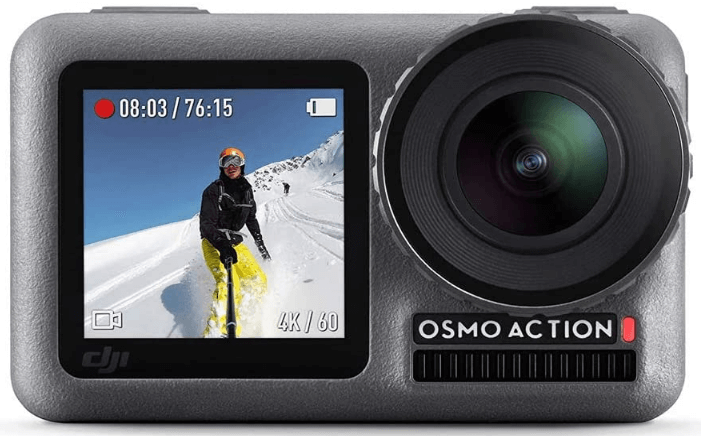
The DJI Osmo Action 5 Pro is the closest current competitor to GoPro Hero 13 Black, and in some ways surpasses it for value and low-light action footage. It uses a 1/1.3-inch sensor, giving DJI a real advantage over GoPro in low-light performance and dynamic range for many users.
Key Specifications:
- 4K 120fps video
- 1/1.3-inch sensor (155 minutes at 1080p 30fps)
- Dual OLED touchscreens (front and rear)
- RockSteady and HorizonSteady stabilization
- Native waterproofing to 20m without a case
- 10-bit color depth
- 155-minute battery life at 1080p 30fps
Real-World Performance: I have used DJI Action cameras extensively for mountain biking and motorcycle filming, and the Action 5 Pro keeps that practical advantage while improving the current spec sheet. DJI’s RockSteady and HorizonSteady stabilization remains close enough to GoPro’s HyperSmooth for most real action use. The larger sensor produces cleaner footage at dawn and dusk – situations where GoPro footage shows noise.
The dual screens are transformative for vlogging and selfie footage. The magnetic quick-release mounting system is faster than GoPro’s folding fingers. The 155-minute battery life exceeds GoPro significantly.
Limitations: DJI’s software ecosystem is less mature than GoPro’s. The Mimo app works well but lacks some of GoPro Quik’s features. No live streaming capability (GoPro offers this). Slightly larger and heavier than GoPro.
Best For: Serious action sports users who prioritize image quality and battery life over ecosystem, anyone shooting in low-light conditions, vloggers needing reliable front screen. For detailed comparisons with actual GoPro models, see our GoPro Hero 7 review for baseline performance metrics.
2. Insta360 Ace Pro 2 – Most Innovative Alternative
The Insta360 Ace Pro 2 at roughly $399 pushes into GoPro’s premium territory but offers unique capabilities. This camera features AI-powered features that genuinely enhance usability, not gimmicks.
Key Specifications:
- 8K 30fps / 4K 120fps video
- 1/1.3-inch sensor
- FlowState stabilization
- 2.5-inch flip touchscreen
- PureVideo low-light processing
- Clarity Zoom (AI-enhanced digital zoom)
- Native waterproof to 10m
Why This Stands Out: The AI features actually work. The Clarity Zoom uses computational photography to produce usable 2x zoom from a fixed lens – something no other action camera offers. The AI highlights detection automatically identifies best moments in long recordings.
The flip screen design is brilliant for vlogging. The image quality matches DJI and slightly exceeds GoPro in challenging lighting.
Trade-offs: Most expensive alternative. Battery life is shorter (approximately 100 minutes at 4K 60fps). The AI features require processing time – you cannot immediately preview edited clips.
Best For: Content creators prioritizing unique features and AI assistance, vloggers wanting advanced selfie capabilities, users who value innovation over ecosystem.
3. DJI Osmo Action 3 – Best Value Alternative
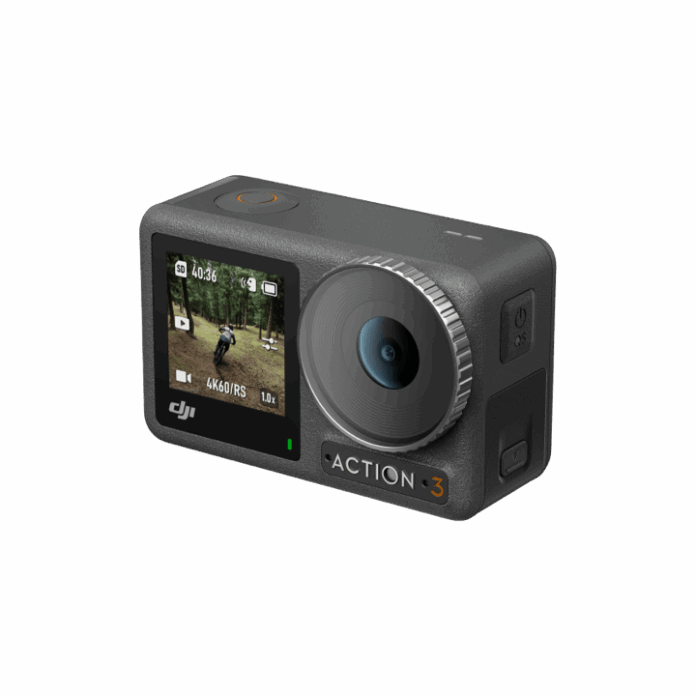
The Action 3 remains a persuasive budget alternative when its complete bundle costs meaningfully less than a comparable Action 4 kit. It records 4K/120, stabilizes action effectively, offers front and rear touchscreens, and is waterproof to 16 meters without a case.
Its 1/1.7-inch sensor is the tradeoff. Daylight footage is good, and current firmware adds 10-bit D-Cinelike, but the Action 4 and later DJI models retain more detail in low light. Bundle names and contents vary, so compare batteries and mounts rather than the headline package name. Our DJI Osmo Action 3 review explains when the older model is still the smarter buy.
4. Akaso Brave 8 – Best Budget Performance
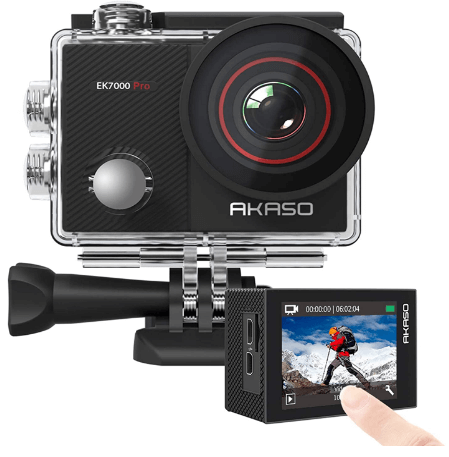
The Akaso Brave 8 at $150 delivers surprising performance for the price. This represents the best of the budget Chinese manufacturers – competent hardware at aggressive pricing.
Key Specifications:
- 4K 60fps video
- 6-axis EIS stabilization
- Dual screens (2-inch rear, 1.3-inch front)
- Native waterproof to 10m (33m with case)
- Remote control included
- Two batteries included
Real Testing Results: I have used multiple Akaso cameras for comparison testing. The Brave 8’s stabilization works adequately for mountain biking and hiking – not GoPro-level, but usable. Image quality in good lighting approaches premium cameras. Low-light performance and dynamic range trail significantly.
The dual screens are helpful. Build quality feels cheaper than DJI or GoPro but survives normal use. The included remote and second battery add value.
Limitations: Audio quality is poor with significant wind noise. Menu system is less intuitive than premium cameras. Image processing occasionally produces oversaturated colors. Stabilization shows limitations on high-vibration activities.
Best For: Budget-conscious recreational users, casual vloggers, anyone needing backup cameras for multi-angle shoots, situations where camera loss or damage is likely.
5. Insta360 GO 3 – Most Portable POV Camera
The Insta360 GO 3 at $280 is not a traditional action camera – it is a thumb-sized POV camera that magnetically mounts almost anywhere. For unique perspectives, nothing else compares.
Key Specifications:
- 2.7K 30fps video
- 1/2-inch sensor
- FlowState stabilization
- 35g weight (1.2 ounces)
- Magnetic mounting
- Action Pod provides screen and extended battery
Unique Use Case: I have mounted the GO 3 on helmets, handlebars, climbing harnesses, and even pets. The tiny size enables mounting locations impossible with traditional action cameras. The stabilization is exceptional considering the size.
The Action Pod provides a screen and charges the camera, extending total runtime to 170 minutes. You can also use the tiny camera independently for 45 minutes.
Limitations: Lower resolution than competitors. No zoom capability. Requires Action Pod for most features. Battery life of camera alone is short. Native waterproofing only to 5m (deeper requires separate housing).
Best For: Unique POV perspectives, ultra-lightweight mounting, situations where traditional action cameras are too bulky, creative filming techniques.
6. Akaso Brave 7 LE – Best Budget Waterproof
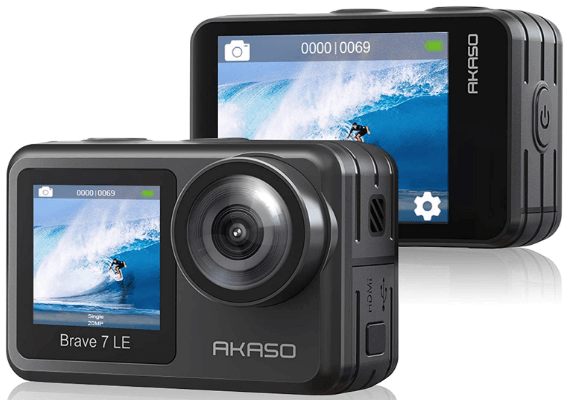
The Akaso Brave 7 LE at $120 prioritizes waterproofing and durability over cutting-edge specs. This is the action camera for users who need something that works in harsh conditions without breaking the bank.
Key Specifications:
- 4K 30fps video
- 6-axis EIS stabilization
- Native waterproof to 10m (40m with case)
- Dual screens
- Voice control
- Two batteries (4-6 hours total runtime)
Waterproof Testing: I have used the Brave 7 for snorkeling, bodyboarding, and kayaking. The waterproof seal works reliably. With the included case, I have used it to 20m depth without issues.
The battery life is exceptional – each battery provides 2-3 hours of 4K 30fps recording. The camera comes with two batteries and a dual-battery charger, providing all-day shooting capability.
Compromises: Only 4K 30fps (no 60fps option). Stabilization is basic – works for walking and moderate activity but shows shake on mountain biking or similar. Audio quality is mediocre. Build quality is plasticky.
Best For: Water sports enthusiasts on budgets, family vacation documentation, situations requiring long battery life, users wanting affordable dual-screen capability.
7. Dragon Touch Vision 5 Lite – Best Ultra-Budget Option
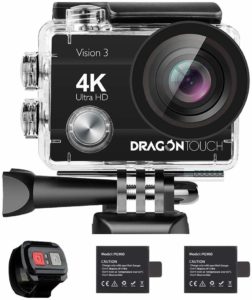
The Dragon Touch Vision 5 Lite at $70 represents the absolute minimum you should spend on an action camera. Below this price point, quality deteriorates unacceptably.
Key Specifications:
– 4K 30fps video
– 20MP photos
– 170-degree wide-angle lens
– Waterproof to 40m with case
– Two batteries included
– Wi-Fi connectivity
What You Get: Basic 4K video quality in good lighting. Adequate stabilization for stationary or slow-moving shots. Waterproof housing for swimming and snorkeling. The included mounts work with GoPro accessories.
What You Do Not Get: Good stabilization (footage is shaky). Low-light capability (videos are noisy). Quality audio (wind noise is severe). Reliability (higher failure rates than premium brands).
Use Cases That Make Sense: Giving kids cameras for pool use. Mounting on RC cars, drones, or other situations where camera loss is likely. Testing mount positions before committing expensive cameras. Backup cameras for multi-angle shoots.
Best For: Absolute budget constraints, situations with high damage/loss risk, kids learning action photography, experimental mounting positions.
8. Campark X35 – Best Mid-Tier Touchscreen
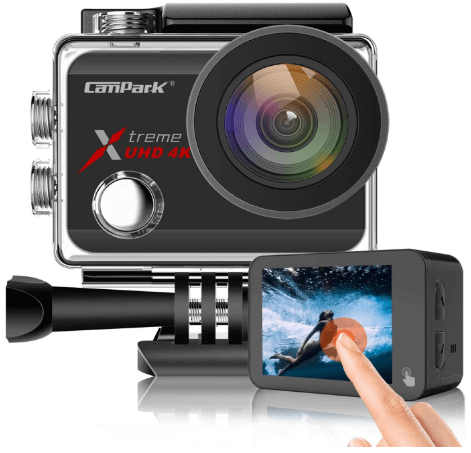
The Campark X35 at $90 sits in the middle ground – better than ultra-budget options, cheaper than premium alternatives. The standout feature is the responsive touchscreen interface.
Key Specifications:
– 4K 60fps video
– 6-axis EIS stabilization
– 2.0-inch touchscreen
– Adjustable field of view (170°/140°/110°)
– Waterproof to 40m with case
– Remote control included
Practical Testing: The touchscreen responsiveness exceeds other budget cameras, making menu navigation less frustrating. The adjustable FOV is genuinely useful – 170° for immersive action, 110° for removing fisheye distortion on talking-head vlogging.
The 4K 60fps capability enables smooth slow-motion at 2x speed. The stabilization works adequately for hiking, cycling at moderate speeds, and water sports.
Shortcomings: Low-light image quality trails premium cameras significantly. Build quality feels budget. Audio quality is below average. The remote control is useful but has limited range (approximately 10m).
Best For: Users wanting touchscreen convenience at budget prices, vloggers needing adjustable field of view, recreational mountain bikers and trail runners.
GoPro vs Alternatives: When Does GoPro Make Sense?
After testing dozens of alternatives, there are specific scenarios where spending extra for actual GoPro is justified:
Professional Use: If action camera footage generates income (YouTube monetization, client work, sponsored content), GoPro’s reliability and color consistency justify the premium. Client expectations often include GoPro quality.
Extreme Sports: For serious downhill mountain biking, motocross, big mountain skiing, or surfing in powerful waves, GoPro’s stabilization and durability provide peace of mind worth the cost.
Live Streaming: GoPro supports live streaming directly to platforms. Some DJI models also support live workflows, but check exact app and platform support before buying if live streaming is central to your work.
Ecosystem Integration: If you already own GoPro accessories, batteries, and mounts, staying in the ecosystem makes financial sense.
Conversely, Alternatives Make Sense When:
– You shoot recreationally and do not monetize footage
– Budget is a significant constraint
– You need multiple camera angles (buying 3x $150 alternatives beats 1x $400 GoPro)
– You want to test action cameras before committing to premium models
– Camera loss or damage is likely (learning new sports, lending to others)
Essential Features Checklist for GoPro Alternatives
When evaluating action cameras, prioritize features that impact real-world usability:
Must-Have Features:
– 4K video at minimum (preferably 4K 60fps)
– Electronic image stabilization (verify reviews confirm it works adequately)
– Waterproofing to at least 10m native or with included case
– Touchscreen (physical buttons-only interfaces are frustrating)
– Wi-Fi or Bluetooth connectivity for transferring files
– Battery runtime of at least 90 minutes at 1080p
Nice-to-Have Features:
– Dual screens (front screen transforms vlogging)
– 4K 120fps for smooth slow-motion
– External microphone input (rare but valuable)
– Voice control for hands-free operation
– Quick-release mounting system
– RAW photo capability for serious stills
Features to Ignore:
– Marketing claims of “20MP photos” (sensor size and lens quality matter more)
– “Ultra HD 4K+” or similar meaningless terminology
– Included accessories of dubious quality (prioritize camera performance)
– Maximum zoom claims (digital zoom degrades quality)
For deeper understanding of what features genuinely matter in action cameras, our guide to essential GoPro-type camera features explores the technical aspects in detail.
Mounting and Accessories for GoPro Alternatives
Most GoPro alternatives use GoPro-compatible mounting systems. This means the vast ecosystem of third-party GoPro mounts, grips, and accessories work with alternatives.
Essential Mounts for Different Sports:
Helmet Mounting: Curved adhesive mounts for rounded helmets, flat mounts for flat surfaces. For mountain biking and skiing, chin mounts provide better stabilized footage than top mounts.
Chest Mounting: Chest harnesses capture immersive POV for skiing, mountain biking, and trail running. They stabilize better than helmet mounts for head-intensive activities.
Handlebar Mounting: For cycling and motorcycles, use RAM mounts or similar with vibration dampening. Direct bar mounts transmit excessive vibration.
Suction Cup Mounts: For car exterior shots, use high-quality suction mounts rated for highway speeds. Budget suction cups fail dangerously.
Hand Grips and Poles: Floating hand grips are essential for water sports – when you drop the camera (you will), it floats. Telescoping poles enable unique angles.
Accessory Budget: Plan to spend $50-100 on quality mounts and accessories beyond the camera itself. Cheap mounts lead to dropped cameras and lost footage.
Software and Editing for Action Camera Footage
The camera is only half the equation. Action camera footage requires editing to transform raw clips into engaging content.
Mobile Editing Apps:
– GoPro Quik (works with any camera) – automatic editing with music
– DJI Mimo – powerful editing for DJI cameras
– Insta360 app – AI-powered editing and reframing
– CapCut – versatile free editor for any camera
Desktop Editing:
For serious editing, import footage into DaVinci Resolve (free), Adobe Premiere Pro, or Final Cut Pro. Action camera footage benefits from:
– Speed ramping (slow-motion on key moments)
– Color grading to enhance flat footage
– Warp stabilizer for additional smoothing
– Audio replacement or enhancement
Storage Considerations:
4K 60fps footage consumes approximately 8GB per 10 minutes. Budget for:
– High-speed microSD cards (U3 or V30 rating minimum, preferably V60)
– External hard drives for archiving (1-2TB minimum)
– Cloud backup for irreplaceable footage
Common Problems and Solutions
After years of using action cameras, these are recurring issues and practical solutions:
Problem: Overheating and Shutdown
Solution: All action cameras overheat in prolonged 4K recording, especially in hot weather. For long recordings, shoot 1080p or enable auto-shutoff at temperature limits. Remove waterproof cases when not needed – they trap heat.
Problem: Foggy Lens in Humid Conditions
Solution: Insert anti-fog inserts in waterproof housings. Store camera and housing in climate-controlled space before shooting. Crack the housing open periodically to exchange air.
Problem: Audio Wind Noise
Solution: Use foam windscreens on microphone ports. For extreme wind (skiing, motorcycles), record separate audio or accept degraded sound. No action camera handles extreme wind perfectly.
Problem: Battery Dies Quickly in Cold
Solution: Carry spare batteries in inside pockets (body heat keeps them warm). Remove battery between takes. Use USB power banks with cables run under jacket.
Problem: Shaky Footage Despite Stabilization
Solution: No EIS handles all vibration. For motorcycles and rough terrain, use gimbal stabilizers or chest mounts (more stable than helmet mounts). Additional stabilization in post-processing helps.
Sport-Specific Recommendations
Different action sports have different camera requirements based on my extensive testing:
Mountain Biking: Prioritize stabilization and mounting security. DJI Osmo Action 5 Pro or Akaso Brave 8 mounted on full-face helmet chin or chest harness. Helmet cameras capture head movement (less stable); chest captures bike movement (smoother).
Surfing and Water Sports: Native waterproofing is essential. Floaty backdoor or floating grip prevents loss. DJI Osmo Action 5 Pro or Brave 7 LE. Mouth mount captures unique perspective. Rinse thoroughly with fresh water after each session.
Skiing and Snowboarding: Cold weather performance and battery life matter. GoPro Hero 13 Black or DJI Osmo Action 5 Pro. Helmet chin mount or chest mount. Carry batteries in inside pockets. Avoid cheap alternatives – they fail in cold.
Climbing: Lightweight matters. Insta360 GO 3 for unique perspectives. Helmet mount or chest harness. Consider camera loss on falls – do not use expensive cameras on lead climbs.
Motorcycle and Track Days: Vibration dampening and secure mounting are critical. Helmet chin mount with a secure mounting system. DJI Osmo Action 5 Pro is the stronger current DJI pick. Consider dedicated motorcycle camera systems for regular use.
Diving: Verify actual depth rating and test in shallow water first. GoPro with dive housing for serious depths. Budget alternatives work for snorkeling. Red filters improve underwater color.
Buying Used: Worth It?
The used action camera market offers significant savings, but requires caution:
Good Used Options:
– Previous-generation DJI Action cameras (Action 2, Action 3)
– GoPro Hero 10 and 11 (now discounted)
– Insta360 One RS (modular, easy to verify condition)
Where to Buy Used:
– KEH Camera – grades condition accurately, warranty included
– MPB – good selection with quality ratings
– Local camera shops – can inspect before buying
– Facebook Marketplace/Craigslist – lowest prices but verify everything
What to Check:
– Test waterproof seal (submerge in bowl of water for 30 minutes)
– Verify battery holds charge (run 30-minute recording test)
– Check for lens scratches (impossible to fix, degrades image)
– Confirm all mounts and accessories work
– Verify software updates to latest version
Avoid:
– Cameras with foggy lenses (indicates moisture damage)
– Missing waterproof seals or case doors
– Unknown battery health (batteries degrade, replacements are expensive)
– Heavily discounted “like new” – probably damaged
Expected Savings: 30-50% off current new prices for cameras in excellent condition. Used GoPro Hero 11 sells for $250-280 vs $400 new.
Future-Proofing: Action Camera Trends 2026-2027
Understanding emerging trends helps make smarter buying decisions:
AI-Powered Features: Computational photography is coming to action cameras. Insta360’s AI features preview this – automatic highlight detection, subject tracking, and enhanced stabilization through AI.
Larger Sensors: The trend toward 1-inch sensors (like DJI Action 4’s 1/1.3-inch) continues. Larger sensors mean better low-light and dynamic range.
Modular Systems: Insta360’s modular approach (swappable lens modules) offers flexibility. Expect more cameras adopting this.
Higher Frame Rates: 4K 240fps for extreme slow-motion is coming in premium models. Currently limited to expensive GoPros.
Better Audio: Action camera audio remains terrible. Improvements are coming but will arrive in premium models first.
Recommendation: If buying now, DJI Osmo Action 5 Pro is the stronger current DJI alternative, while Akaso Brave 8 remains the value pick. Avoid bottom-tier cameras – they will feel outdated quickly.
Frequently Asked Questions
Q: Are GoPro alternatives as good as real GoPros?
A: DJI Action cameras match or exceed GoPro in image quality and stabilization. Budget alternatives (Akaso, Dragon Touch) deliver 70-80% of GoPro performance at 30-40% of the cost. For recreational use, good alternatives work excellently. For professional use or extreme conditions, GoPro’s reliability advantage justifies the premium.
Q: Which is better – GoPro or DJI Action camera?
A: DJI Osmo Action 5 Pro competes directly with GoPro Hero 13 Black, with particularly strong low-light performance, front/rear OLED screens, and aggressive value compared with GoPro bundles. GoPro offers better software ecosystem, live streaming, and slightly better reliability. For most users, DJI provides better value. For professionals embedded in GoPro workflow, stick with GoPro.
Q: Can budget action cameras shoot professional quality footage?
A: In good lighting with minimal stabilization demands, yes. Akaso Brave 8 or Campark X35 footage in daylight is difficult to distinguish from GoPro. In low light, high-vibration situations, or challenging conditions, the gap widens significantly. Budget cameras work for recreational YouTube content but fall short of professional standards.
Q: What is the minimum I should spend on an action camera?
A: $70-90 for functional capability (Dragon Touch Vision 5, Akaso EK7000). Below this, quality deteriorates unacceptably. For reliable performance, budget $120-150 (Akaso Brave 7 LE). For approaching GoPro quality, budget $200-300 (DJI Action 3 or 4).
Q: Do I need 4K video or is 1080p enough?
A: In 2026, shoot 4K minimum. Storage is cheap, and 4K provides cropping flexibility and future-proofing. 1080p is acceptable only for social media posts that will be viewed on phones. For YouTube or any long-term archival, shoot 4K.
Q: How important is image stabilization?
A: Critical. Unstabilized action camera footage is unwatchable. Prioritize cameras with proven stabilization (verified in reviews, not marketing claims). Good stabilization transforms mediocre footage into usable content. Without it, even 4K 120fps footage is unusable.
Q: Can I use my phone as an action camera?
A: Phones take excellent video but lack waterproofing, mounting options, and stabilization for serious action. Phones are fragile and expensive to damage. For hiking or casual use, phones work. For water sports, skiing, or mounting on vehicles, dedicated action cameras are essential.
Final Verdict: Best GoPro Alternative for Different Users
After extensive testing across multiple sports and conditions, these are my definitive recommendations for 2026:
Best Overall Alternative: DJI Osmo Action 5 Pro – DJI’s current flagship is the stronger 2026 GoPro alternative for most serious action-camera buyers, especially if battery life, stabilization, and low-light handling matter.
Best Value Alternative: DJI Osmo Action 3 ($199) – Older technology, still excellent performance for recreational users in good light when price matters more than the newest sensor and battery improvements.
Best Budget Pick: Akaso Brave 8 ($150) – Best of the budget options. Adequate stabilization, decent image quality, useful dual screens. Acceptable for recreational use.
Most Innovative: Insta360 Ace Pro ($380) – AI features genuinely enhance usability. Premium price but unique capabilities.
Most Portable: Insta360 GO 3 ($280) – Not a GoPro replacement but enables unique perspectives impossible with traditional action cameras.
Best Ultra-Budget: Dragon Touch Vision 5 Lite ($70) – Minimum acceptable quality. Only for situations where camera loss/damage is likely.
The gap between GoPro and capable alternatives has narrowed dramatically. For most recreational users pursuing mountain biking, surfing, skiing, climbing, or adventure travel, DJI Action cameras provide GoPro-level performance at lower cost. Budget alternatives from Akaso and others work adequately for casual use but show limitations in challenging conditions.
Choose based on your specific use case, budget, and quality requirements. For professional work or extreme sports, GoPro remains the safe choice. Recreational users looking for best value might find the DJI Action cameras offer the best combination of quality and cost in 2026.
For additional insights on action cameras and related gear, explore our guides to the best vlogging cameras and landscape photography cameras for different shooting scenarios.