

Choosing the best camera for beginners in 2026 is less about buying the most impressive spec sheet and more about choosing a camera you will actually carry, understand, and grow with. A good beginner camera should make autofocus easy, explain enough without treating you like a child, connect cleanly to your phone, and give you a lens system that will not punish you later.
My short answer: the Canon EOS R50 is still the best camera for most beginners. It is small, modern, approachable, and capable enough that you will not outgrow it after one photography course. But it is not the right answer for everyone. Nikon, Sony, and Fujifilm all have better choices for specific kinds of beginners.
This guide has been refreshed for 2026. I removed several older or mismatched picks, including DSLR-heavy choices that no longer make sense as default recommendations for new buyers. DSLRs can still be bargains used, but if you are starting from zero today, mirrorless is the safer long-term system.
Quick picks: best beginner cameras in 2026


| Camera | Best for | Why it makes sense |
|---|---|---|
| Canon EOS R50 | Most beginners | Easy interface, strong autofocus, viewfinder, good stills and video balance. |
| Nikon Z50 II | Learning photography seriously | Excellent handling, EVF, Nikon color, newer autofocus, strong hybrid features. |
| Canon EOS R100 | Tight budgets | Cheap entry into Canon RF, good image quality, simple operation. |
| Sony ZV-E10 II | Creators and YouTube | Modern Sony APS-C sensor, strong video tools, excellent E-mount lens options. |
| Fujifilm X-M5 | Creative hybrid shooters | Great color, compact body, strong video, fun JPEG looks. |
| Nikon Z30 | Simple video-first learning | Friendly vlogging body, good Nikon files, no viewfinder to overcomplicate things. |
| Fujifilm X-T30 II | Hands-on photography | Physical controls and film simulations make learning exposure enjoyable. |
| Canon PowerShot SX70 HS | One-camera zoom range | 65x zoom without buying lenses, useful for wildlife, travel, and family events. |
How to choose a beginner camera without wasting money
The first mistake beginners make is asking which camera is “best” before asking what they want to photograph. A beginner who wants family portraits needs something different from a beginner who wants birds, YouTube videos, travel photography, or street photos. The second mistake is spending the whole budget on the body and leaving nothing for lenses, memory cards, a spare battery, or learning time.
Here is the practical way to choose:
- Choose mirrorless unless you have a specific used-DSLR reason. New lens development and autofocus improvements are happening in mirrorless systems.
- Prioritize autofocus and handling over megapixels. Any current APS-C camera has enough resolution for large prints and social media.
- Buy into a lens system, not just a body. Canon RF, Nikon Z, Sony E, and Fujifilm X all have different strengths and costs.
- Do not overbuy for your first camera. A camera that feels inviting teaches you more than a pro body that stays in a drawer.
- Leave room in the budget for one useful second lens. A fast prime or compact telephoto often changes your photography more than a higher-end body.
Beginner camera settings and skills to learn first
The best beginner camera still works better when you learn a few simple controls early. You do not need to shoot fully manual on day one, but you should know what the camera is doing so you can fix bad results quickly.
- Exposure triangle: learn how aperture, shutter speed, and ISO trade off against each other. Aperture affects depth of field, shutter speed controls motion blur, and ISO raises brightness at the cost of noise.
- Autofocus modes: use single AF for still subjects and continuous AF for people, pets, sports, and anything moving toward or away from you.
- Composition: practice clean backgrounds, subject placement, leading lines, and getting physically closer before blaming the camera.
- RAW vs JPEG: JPEG is fine while learning, but RAW gives more room to recover exposure and color once you start editing seriously.
- Simple kit: start with the kit zoom and one useful second lens. A lightweight setup that you carry often beats a complicated bag that stays home.
If you are new to photography, prioritize a camera that makes practice easy: comfortable grip, clear menus, reliable autofocus, and a lens system you can grow into. Those qualities matter more than chasing the highest megapixel count.
1. Canon EOS R50: best camera for beginners overall

The Canon EOS R50 is still the easiest camera to recommend to most new photographers. It has a 24.2MP APS-C sensor, Canon’s modern DIGIC X processing, Dual Pixel CMOS AF II, a vari-angle touchscreen, an electronic viewfinder, and 4K video that looks much better than beginner-camera video used to look.
What makes the R50 special is not one headline spec. It is the way the whole camera gets out of your way. The autofocus recognizes people quickly, the screen is friendly, the menus are more approachable than Sony’s older cameras, and the JPEG colors look good without much editing. If you are coming from a phone, that matters. You want early wins, not three months of fighting menus.
The R50 is also a good first step into Canon’s RF system. The RF-S lens lineup is still not as deep as Sony E or Fujifilm X, but Canon now has enough beginner-friendly lenses for travel, portraits, and general family photography. If you later upgrade to a better Canon body, your lenses can come with you.
Buy it if: you want the safest first interchangeable-lens camera for photography, family, travel, and casual video.
Skip it if: you are primarily making video content and do not care about a viewfinder. In that case, the Canon EOS R50 V or Sony ZV-E10 II may fit better.
2. Nikon Z50 II: best beginner camera for learning photography seriously
The Nikon Z50 II is the camera I would hand to a beginner who wants to learn photography as a craft, not just take nicer vacation photos. It keeps the approachable size of Nikon’s DX mirrorless line, but adds a much more modern brain: EXPEED 7 processing, improved subject detection, 4K/60p video with a crop, a vari-angle monitor, and Nikon’s new Imaging Recipes workflow.
The handling is the reason I like it so much. Nikon bodies tend to feel logical in the hand, and the Z50 II gives you enough physical control to learn exposure without drowning in buttons. The viewfinder makes it feel more like a real camera than screen-only creator bodies, and the color output is pleasing for portraits, travel, and everyday stills.
The weak point is the DX Z lens ecosystem. It is improving, and you can use full-frame Z lenses, but Canon and Sony still give beginners more obvious low-cost lens paths. If Nikon’s ergonomics click with you, though, the Z50 II is a very strong first camera.
If you are leaning Nikon, also read our Nikon Z50 II review and our broader guide to Nikon cameras for beginners.
3. Canon EOS R100: best budget camera for beginners

The Canon EOS R100 is not the most exciting camera here, and that is partly the point. It is Canon’s budget RF-mount body: a 24.1MP APS-C sensor, compact body, simple controls, and access to the same RF lens mount as more expensive Canon cameras.
Its limitations are real. The screen is fixed, the interface feels less modern than the R50, and video is not the reason to buy it. But if your goal is to stop using a phone and start learning aperture, shutter speed, focal length, and composition, the R100 does the job for less money.
The R100 makes the most sense when the price gap to the R50 is substantial. If the two are close, buy the R50. If the R100 is meaningfully cheaper, it becomes a sensible beginner photography camera, especially for stills, travel, family photos, and school projects.
4. Sony ZV-E10 II: best beginner camera for creators
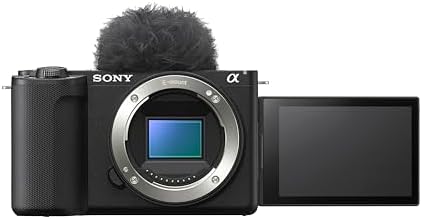
The Sony ZV-E10 II is the beginner camera for people who already know video is part of the plan. It uses a modern 26MP APS-C Exmor R sensor, Sony E-mount lenses, strong autofocus, 4K/60p video, vertical-friendly operation, and creator-focused controls that make sense for YouTube, TikTok, product clips, and talking-head work.
For still photography, it is also very capable. The catch is the missing electronic viewfinder. If you enjoy composing through a viewfinder, this will bother you. If you mostly shoot from the screen, it will feel natural. That is why I do not rank it above the Canon R50 for general beginners, but I do rank it highly for creators.
The biggest advantage is the Sony E-mount ecosystem. There are excellent affordable lenses from Sony, Sigma, Tamron, Viltrox, and others. A beginner can start with the kit lens, then add a small fast prime or a wider vlogging lens without being trapped in a tiny lens catalog.
Canon users should also consider the Canon EOS R50 V, which is more video-focused than the regular R50 and has a creator-first body design.

5. Fujifilm X-M5: best compact creative camera for beginners
The Fujifilm X-M5 is one of the most interesting beginner cameras because it feels less like a training tool and more like a small creative camera. It has a 26.1MP APS-C X-Trans CMOS 4 sensor, X-Processor 5, Fujifilm film simulations, strong subject detection, and serious video features for its size.
The reason to buy Fujifilm is the shooting experience. The JPEGs have character, the film simulations encourage experimentation, and the camera makes casual photography feel enjoyable. If you hate editing, Fujifilm’s in-camera looks are a real advantage.
The tradeoff is that the X-M5 has no electronic viewfinder. For some beginners, that is fine. For others, especially those learning still photography in bright daylight, it is a real compromise. If you want the Fujifilm look with a more traditional camera feel, the X-T30 II below is still appealing.
6. Nikon Z30: best simple beginner camera for video and family use
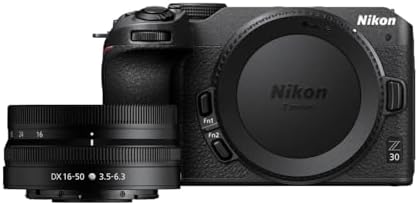
The Nikon Z30 is not Nikon’s most advanced beginner body, but it remains easy to like. It is small, friendly, and built around a screen-first experience. You get Nikon’s 20.9MP DX sensor, 4K/30p video, a vari-angle display, good color, and a compact body that is not intimidating.
I would choose the Z50 II over the Z30 for photography-first beginners because the viewfinder matters. But for family video, casual travel clips, online content, and a camera that feels simple from day one, the Z30 is still a sensible buy if the price is right.
The Z30 is also a better choice than many cheap compact cameras because it gives you a real APS-C sensor and interchangeable lenses. You can keep it simple with the kit zoom, then add a small prime later when you want better portraits or low-light performance.
For more detail, see our Nikon Z 30 review.
7. Fujifilm X-T30 II: best beginner camera for hands-on photography
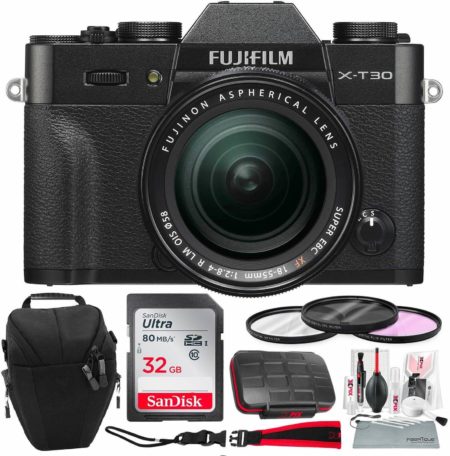
The Fujifilm X-T30 II is not the newest beginner camera, but it remains one of the best for learning photography with your hands. The physical dials help exposure make sense. Instead of hiding everything behind a touchscreen, the camera invites you to notice shutter speed, aperture, ISO, and exposure compensation.
Image quality is excellent thanks to Fujifilm’s 26.1MP APS-C sensor and color science. The film simulations are not just gimmicks; they help beginners think about mood and style before editing. That can be more educational than shooting flat files and fixing everything later.
The drawbacks are video handling and autofocus compared with newer creator cameras. It can shoot good video, but I would not buy it mainly for vlogging. Buy it if you want a compact camera that makes photography feel tactile, deliberate, and fun.
8. Canon PowerShot SX70 HS: best bridge camera for beginners who do not want lenses
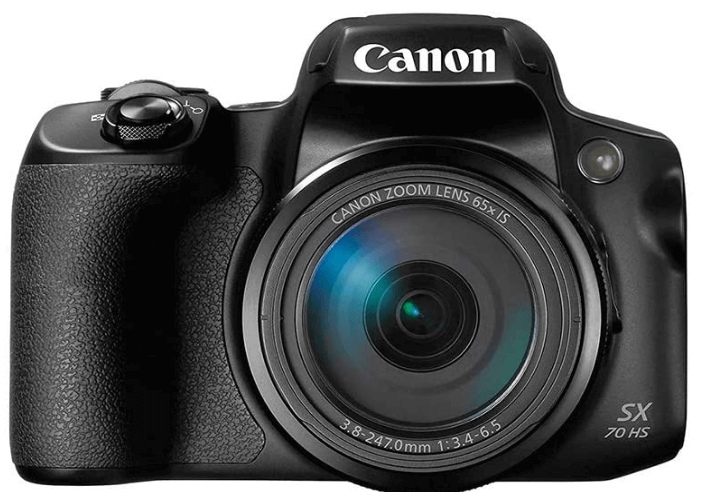

The Canon PowerShot SX70 HS is the odd camera on this list because it is not mirrorless and you cannot change lenses. That is exactly why some beginners should consider it. Its 65x optical zoom covers an enormous 21-1365mm equivalent range, which means landscapes, family events, moon photos, backyard birds, and distant subjects are all possible without buying extra lenses.
Image quality is not equal to the APS-C cameras above, especially in low light. The small sensor has limits. But for a beginner who wants one camera with huge reach and no lens decisions, the SX70 HS is still useful. It is especially good for people who know they want birds, wildlife, travel zoom, or casual sports from a safe distance.
If this type of camera interests you, read our Canon PowerShot SX70 HS review before buying, because bridge cameras are fantastic for the right user and frustrating for the wrong one.
Cameras I would not make default beginner picks anymore
The old version of this guide included several cameras that were reasonable years ago but are no longer the best default recommendations. That does not mean they are bad cameras. It means they require more explanation now.
- Nikon D5600: still capable, but it is a DSLR from a system that is no longer Nikon’s development priority. Buy only if you get a clean used deal and want DSLR battery life.
- Sony a6100: still has excellent autofocus and can be a smart used buy, but Sony’s newer creator bodies and the broader a6x00 lineup need comparison. Start with our Sony a6100 review if you are considering it.
- Panasonic G100: compact and likable, but Micro Four Thirds beginner buyers should compare current OM System and Panasonic options carefully.
- Older Canon EOS M bodies: avoid as a new system buy. Canon’s current beginner path is RF/RF-S, not EOS M.
What is the easiest camera for absolute beginners?
The Canon EOS R50 is the easiest all-around choice because it combines a beginner-friendly interface with a proper viewfinder, good autofocus, and enough manual control to grow. The Nikon Z50 II is slightly more serious-feeling and better if you want to learn photography controls deeply. The Canon R100 is simpler and cheaper, but less flexible.
If you are mainly creating video, the Sony ZV-E10 II or Canon EOS R50 V may feel easier because they are designed around screen-first shooting. If you do not want interchangeable lenses at all, the Canon SX70 HS is easiest because the lens decision disappears.
Should beginners buy mirrorless or DSLR in 2026?
Most beginners should buy mirrorless in 2026. Mirrorless cameras give you better live exposure preview, better face and eye detection, stronger video, smaller bodies, and a clearer upgrade path. DSLR cameras can still be excellent used bargains, but they are no longer where Canon, Nikon, and Sony are putting their main development energy.
The only beginner who should seriously consider a DSLR today is someone buying used on a strict budget, someone who already owns DSLR lenses, or someone who specifically wants an optical viewfinder and long battery life. Everyone else should start with Canon RF, Nikon Z, Sony E, Fujifilm X, or another current mirrorless system.
Do beginners need extra lenses right away?
No. Start with the kit lens for at least a few months. A kit zoom teaches you which focal lengths you actually use. If you constantly zoom in, you may need a telephoto. If you love portraits, buy a fast prime. If you shoot indoors, you may need a brighter lens. Let your real photos tell you what to buy next.
The first extra lens I usually recommend is a small fast prime: something like a 35mm-equivalent or 50mm-equivalent lens depending on the system. It teaches depth of field, low-light shooting, and composition better than buying a giant bag of lenses you barely understand.
Final recommendation
If you want the best camera for beginners in 2026 and do not want to overthink it, buy the Canon EOS R50. It is the best balance of usability, autofocus, image quality, video, portability, and long-term system value.
If you want to learn photography more deliberately, choose the Nikon Z50 II. If your budget is tight, choose the Canon EOS R100. If video and content creation matter most, choose the Sony ZV-E10 II or Canon EOS R50 V. If you want creative JPEG color and a small fun camera, look at the Fujifilm X-M5.
The best beginner camera is not the one with the longest spec sheet. It is the one that makes you want to go outside, notice light, make mistakes, and come back with photos you actually care about.
Frequently asked questions
What is the best camera for beginners overall?
The Canon EOS R50 is the best overall beginner camera for most people because it is easy to use, has strong autofocus, includes a viewfinder, shoots good 4K video, and gives access to Canon’s current RF lens system.
What is the best beginner camera for photography, not video?
The Nikon Z50 II and Fujifilm X-T30 II are especially good for learning photography. The Nikon is more modern and practical, while the Fujifilm offers a more tactile, creative shooting experience.
What is the best cheap camera for beginners?
The Canon EOS R100 is the best budget mirrorless pick when it is substantially cheaper than the Canon R50. It lacks some convenience features, but the image quality is strong for the price.
Is a phone better than a beginner camera?
A phone is easier and often better for instant sharing. A beginner camera is better when you want larger sensor image quality, real optical lenses, stronger subject separation, better handling, and room to learn photography skills.
Is the Sony ZV-E10 II good for beginner photography?
Yes, but it is strongest for creators and screen-first shooters. It can take excellent still photos, but photographers who want an electronic viewfinder may prefer the Canon R50, Nikon Z50 II, or Fujifilm X-T30 II.