


If you are new to photography, traveling on a budget, or looking for a reliable backup camera, the best digital camera under $200 is the one that solves a problem your phone does not. While this price point won't get you professional-grade equipment, I've been consistently impressed by how much imaging technology has trickled down to budget cameras over the past few years.
After testing dozens of cameras in this price range over the last decade, I can tell you that a $200 camera can be worth carrying for optical zoom, physical controls, or waterproof shooting with the right housing. It is not an automatic low-light upgrade over your phone. This comprehensive guide breaks down exactly which cameras deliver genuine value versus which make frustrating compromises.
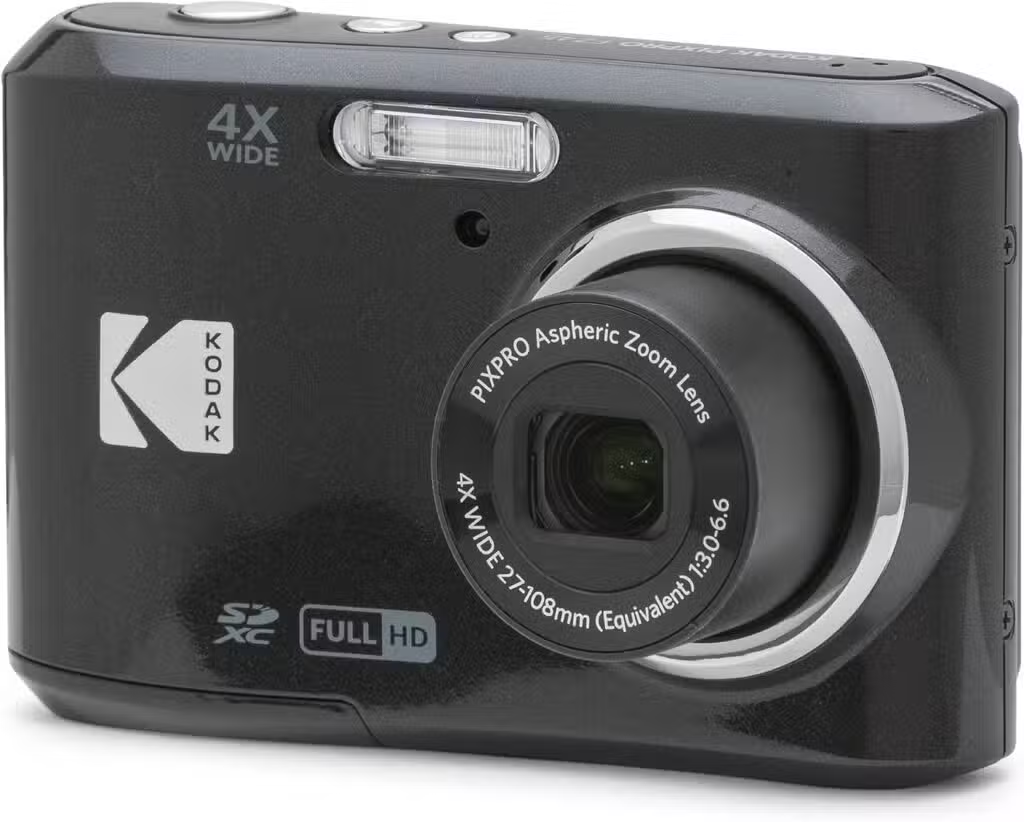
My starting point: Start with the Kodak FZ45 for simple daylight photos. Kodak lists a $129.99 US MSRP, or $159.99 for the rechargeable FZ55; those are manufacturer reference prices, not live Amazon offers. Then look at the SX620 HS or B500 if long optical zoom is the reason you want a camera. Those older zoom models only make sense here when the exact new, used or Renewed offer, required accessories and shipping fit your $200 budget. The EK7000 is the action-video branch; the Instax Mini 12 is a film-camera alternative, not a digital camera.
Buying check: The links below identify models, not a promise of current stock or an under-$200 checkout price. Check the selected model, condition, seller, returns and delivery to your US address. Include a memory card and any missing charger or batteries; for Instax, include film. If the complete purchase exceeds your limit, skip that offer rather than treating an old price as a deal.
As an Amazon Associate, we earn from qualifying purchases.
Quick Comparison: Best Digital Cameras Under $200
| Camera | Type | Purchase check | Key feature | Best for |
|---|---|---|---|---|
| Kodak Pixpro FZ45 | Digital compact | Check current total including memory card | 4x zoom, AA batteries | Simple daylight snapshots |
| Kodak Pixpro FZ55 | Digital compact | Compare complete cost with FZ45 | 5x zoom, rechargeable battery | Simple rechargeable alternative |
| Canon PowerShot SX620 HS | Older compact zoom | Renewed route; verify condition and total | 25x optical zoom | Pocket travel zoom |
| Sony DSC-W800 | Older compact | Check charger, condition and total | Easy Mode, 5x zoom | Simple point and shoot |
| Nikon Coolpix A10 | Older compact | Conditional used option; check batteries | Easy mode | Complete beginners |
| Akaso EK7000 | Action camera | Check exact version, housing and memory card | Wide-angle mounted video | Action sports |
| Fujifilm Instax Mini 12 | Instant film, not digital | Add film to initial and ongoing costs | Physical prints | Fun, nostalgia |
Considerations Choosing Digital Cameras Under $200
When choosing cameras on a $200 budget, understanding the trade-offs is critical. Budget cameras make specific compromises to hit lower price points. Here is what actually matters based on years of testing affordable models.
Sensor Size and Image Quality
The compact and bridge models discussed here use small 1/2.3-inch sensors, significantly smaller than APS-C sensors in mirrorless cameras or full-frame DSLRs. That is not a rule for every used camera under $200, and the Instax uses film rather than a digital sensor. This limits low-light performance and dynamic range. In good lighting (outdoors, bright interiors), these cameras produce excellent results. In dim conditions, expect visible noise above ISO 800.
The megapixel count (16MP-24MP range) matters less than you think. A 16MP sensor with good optics outperforms a 24MP sensor with cheap glass. Focus on overall image quality in reviews rather than chasing megapixels.
Optical Zoom vs Digital Zoom
This is critical: only optical zoom matters. Digital zoom is just cropping, which you can do in post-processing. The compact and bridge choices here range from 4x to 40x optical zoom; action and instant cameras serve different purposes.
Most cameras in this price bracket are point and shoot models, so it's not possible to change lenses. Check the optical zoom level of the chosen model carefully; you won't be able to fit a different lens to get closer to distant subjects. For travel photography, I recommend at least 10x optical zoom for versatility.
Video Quality
Video varies substantially across these cameras: several older compacts stop at 720p, the FZ45 records 1080p, and the EK7000 line offers 4K. If mounted outdoor video is your priority, an action camera can be more useful than a traditional point-and-shoot. Check the exact version's stabilization and supplied waterproof housing rather than assuming every model has the same features.
This is a big factor to consider, although keep in mind that video quality will be lower on cheaper cameras, especially compared to dedicated video cameras or higher-end models. However, some cheap action cams can record 4K video, and the footage quality from budget cameras has improved dramatically.
Battery Life
This is always an important consideration, but even more so if you are looking for a travel camera. Most cameras come with rechargeable batteries, but check roughly how many shots can be taken before a recharge will be needed. Several small compacts are rated around 200-300 shots, but battery type and model make a large difference; the B500's AA ratings are substantially higher.
Some models use AA batteries (Nikon Coolpix A10, various Kodak models), which is a mixed blessing. AA batteries are available worldwide (great for travel), but endurance varies with the model and battery chemistry. I always travel with rechargeable AA batteries and a charger when using these cameras.
Build Quality and Durability
Budget cameras use plastic construction. They are not weather-sealed and will not survive drops well. For kids or rough use, consider an action camera with a suitable protective case. An instant camera is fun, but that does not make it drop-proof.
Ease of Use
When it comes to a $200 camera, there usually is not a wide range of complicated features. Most are point and shoot models, so they are easy to use and do not require deep photography knowledge. However, it's always worth checking user reviews about the menu system and button layout; some budget cameras have frustrating interfaces.
For complete beginners or as gifts for older relatives, prioritize cameras with dedicated "Easy" or "Auto" modes that handle all settings automatically.
10 Best Digital Cameras Under $200 in 2026
These are ten camera options worth understanding for this budget, including older models to buy only at a sensible total price. The condition and buying notes matter as much as the specifications: not every listing for every camera below qualifies under $200.
1. Canon PowerShot SX620 HS: Pocket Zoom if the Price Fits
Buying condition: The linked SX620 HS is a Renewed listing, not a new-camera promise. Check the current selected condition, included battery/charger, seller, returns and complete price.
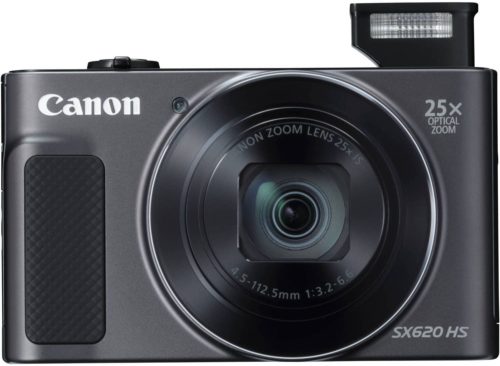
The Canon PowerShot SX620 HS remains one of my favorite pocket-zoom options if you find a complete, working example within your $200 budget. Do not assume a new or Renewed listing meets that limit. The 25x optical zoom (25-625mm equivalent) provides excellent versatility for travel, events, and family photography. For an in-depth analysis, see our complete Canon PowerShot SX620 HS review.
Key Specifications:
- 20.2MP CMOS sensor
- 25x optical zoom (25-625mm equivalent)
- 1080p Full HD video
- 3-inch LCD screen
- Built-in Wi-Fi and NFC
- Optical image stabilization
Why This Wins: I have recommended the SX620 to three family members over the past two years, and all remain happy with it. The 25x zoom is genuinely useful; I have captured wildlife shots and sporting events where my phone could not frame the subject as tightly. The image stabilization works well up to about 15x zoom handheld.
Canon's color science produces pleasing images straight from camera with minimal editing. The Wi-Fi connectivity actually works reliably (not a given on budget cameras), making it easy to transfer images to your phone for social media.
Limitations: Low-light performance drops off significantly above ISO 800. No 4K video. The screen does not articulate. Battery life is adequate but not exceptional (around 295 shots).
Best For: Travel photographers needing versatile zoom range, families wanting more optical reach than a phone, anyone upgrading from an older point-and-shoot camera.
2. Sony Cyber-shot DSC-W800: Best Point and Shoot Value
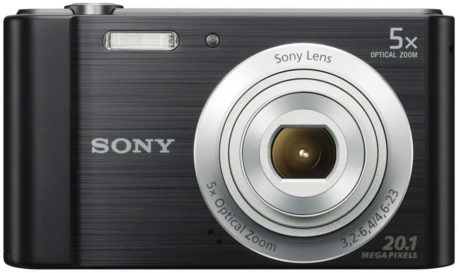
If you are looking for a cheap beginner camera with simple operation, the Sony DSC-W800 is worth considering when its condition and complete price make sense. It can take full 360-degree panoramas and has a 5x optical zoom lens. The video resolution is 720p HD, and you can capture images at 20.1 megapixels.
Key Features:
- 20.1MP Super HAD CCD sensor
- 5x optical zoom (26-130mm equivalent)
- 720p HD video
- SteadyShot image stabilization
- Sweep Panorama mode
- Easy Mode for beginners
Image stabilization is included to reduce blur, and there is an Easy Mode in the menu, so this is a great camera for new photographers. This camera is equipped with Smile Shutter Technology, so it automatically captures the subject when they are smiling. There are different effects that can be added to photographs for creative results.
Why I Recommend It: The W800 represents Sony's philosophy of making technology accessible. The Easy Mode genuinely simplifies operation for non-technical users. I gave one to my mother for travel, and she captures excellent vacation photos without understanding any technical aspects.
Trade-offs: Only 5x zoom limits versatility. The 720p video is outdated by 2026 standards. No Wi-Fi (must use cable or card reader to transfer images).
Best For: Complete beginners who want simple operation, budget-conscious shoppers prioritizing value, anyone needing basic point and shoot capability.
3. Nikon Coolpix B500: Best Zoom Under $200
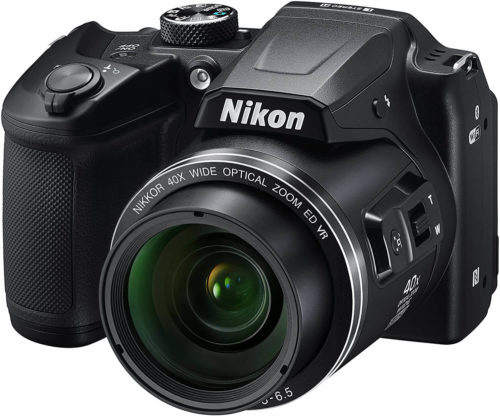
The Nikon Coolpix B500 is a used-market option to check if you need 40x optical zoom. Buy only when a working camera, batteries and memory card fit your budget; the linked model is not a guaranteed under-$200 offer. This 16-megapixel camera records 1080p Full HD videos and features excellent connectivity.
Key Specifications:
- 16MP CMOS sensor
- 40x optical zoom (22.5-900mm equivalent)
- 1080p Full HD video
- 3-inch tilting LCD
- Bluetooth, Wi-Fi, and NFC
- ISO up to 6400
The LCD tilts for shooting at different angles, and the ISO can be adjusted up to 6400 for shooting in dimly-lit situations. Connectivity is not a problem for this camera; it has Bluetooth, Wi-Fi, and NFC for sharing photographs.
Real-World Performance: The 40x zoom is genuinely impressive. I have used this camera for wildlife photography and youth sports, capturing usable images at distances where my phone is useless. The tilting screen is rare at this price point and extremely helpful for high-angle or low-angle shots.
Downsides: It uses four AA batteries, which add bulk. Nikon rates it at approximately 600 shots with alkaline batteries, 1,240 with lithium or 750 with its EN-MH2 rechargeables; actual use varies. Image quality at maximum zoom is soft. The camera is bulkier than true compact models.
Best For: Wildlife and bird photography on a budget, sports and events requiring telephoto reach, travelers who need extreme zoom versatility. For even more advanced options, see our guide to the best point and shoot cameras.
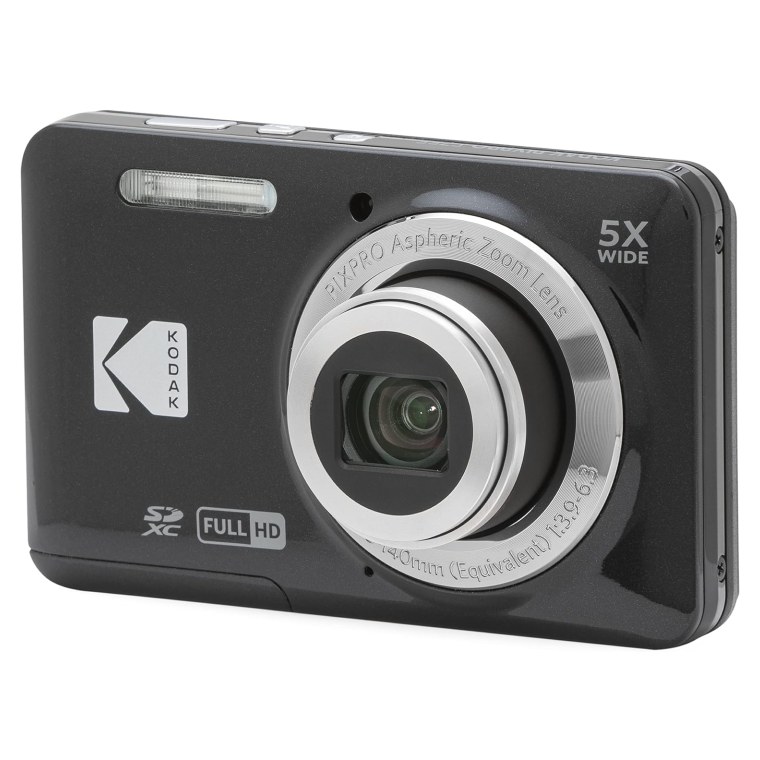
4. Kodak Pixpro FZ45: Best Budget Value
This digital camera is fairly basic in terms of features, but it is a sensible starting point for low-cost daylight snapshots. Compare the complete price rather than assuming it costs under $100. It uses two AA batteries, which are included, and it also comes with a wrist strap.
Specifications:
- 16MP CMOS sensor
- 4x optical zoom (27-108mm equivalent)
- 1080p Full HD video
- 2.7-inch LCD
- Shutter range: 1/2000 to 4 seconds (up to 30 seconds in Manual mode)
- Available in black or red
The 16MP camera has 4x optical zoom and an LCD screen measuring 2.7 inches. It records 1080p video. For a long exposure, support the camera and use its Manual mode; do not mistake a slow shutter for better handheld low-light performance.
Why It Works: The FZ45 makes sense when you want a simple dedicated camera for good light without paying extra for a long zoom. Its AA batteries are convenient to replace, although a compatible rechargeable set adds to the starter cost. This is one of the first models I would compare for a strict budget, not a claim that it is always the cheapest.
Limitations: Uses batteries quickly. Not excellent in low-light situations. Only 4x zoom. Build quality feels cheap (because it is).
Best For: Extreme budget constraints, kids learning photography basics, situations where camera loss or damage is likely.
Prefer a rechargeable compact? The Kodak FZ55 adds a rechargeable lithium-ion battery and 5x zoom rather than the FZ45's AA batteries and 4x zoom. It is still a small-sensor daylight camera, not a low-light upgrade. Compare its complete price against the FZ45 plus any rechargeables you would buy. Our Kodak FZ55 review covers the trade-offs.
5. Fujifilm Instax Mini 12: Best Instant Camera
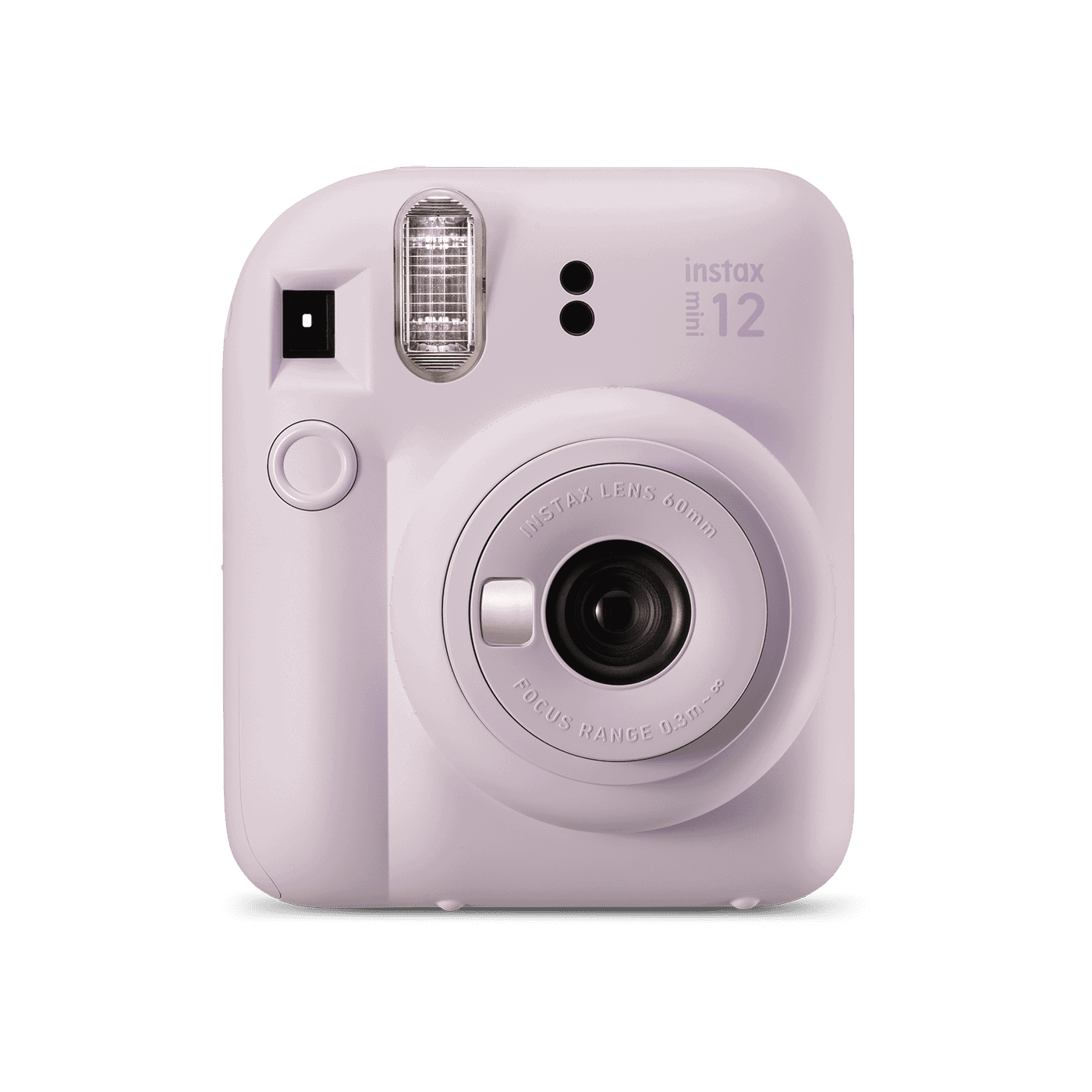
If you want something fun and different, the Fujifilm Instax Mini 12 is my instant-film alternative to a digital camera. Check the price with enough film to start; it does not save digital files. It instantly prints photos and comes in loads of fun colors. The buying card selects the lilac-purple camera; check whether film is included in the selected offer. Clear photos result from the improved automatic exposure, and there is a built-in flash.
Features:
- Instant credit-card sized prints
- Automatic exposure adjustment
- Close-up mode (down to 30cm)
- Built-in flash
- Available in 5 colors
- Simple operation (one button)
The Instant Experience: Instant cameras are not about image quality; they are about the experience and physical prints. The Instax Mini 12 is the most user-friendly instant camera Fujifilm has made. The automatic exposure makes operation simpler, although it cannot guarantee correctly exposed pictures in every situation.
I use an Instax at family gatherings and parties. The physical prints create immediate joy and connection that digital images do not match. Kids especially love the instant gratification.
Ongoing Costs: Divide the current film-pack price by its number of exposures to find your cost per picture. For example, a hypothetical $20 pack with 20 exposures costs $1 per shot. Film is an ongoing expense, including for pictures you do not keep.
Best For: Parties and events, scrapbooking and journaling, gifts for teenagers, anyone wanting physical prints immediately.
6. Akaso EK7000: Best Action Camera Under $200
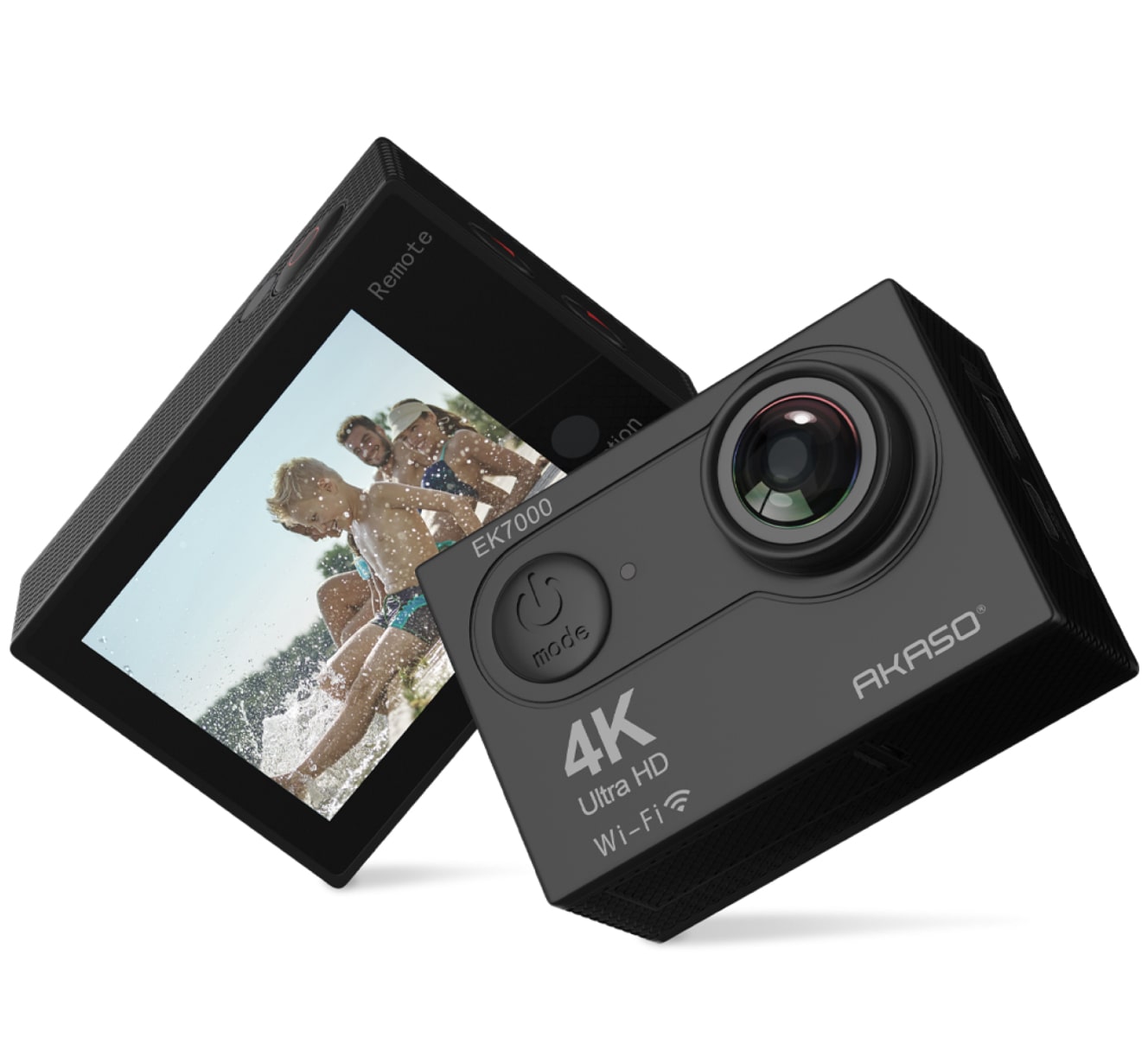
When it comes to finding the best travel cameras under $200, an action camera is often a good choice. The Akaso EK7000 is a budget action-camera option with a wide-angle view. There have been different EK7000 versions, so match the listing and included manual before comparing frame rates, photo resolution or waterproof depth.
Specifications and version checks:
- 4K video; exact frame-rate options depend on version
- Photo resolution and electronic stabilization depend on version
- Wide-angle lens, not a telephoto zoom
- Underwater use requires the correct sealed waterproof case
- Built-in Wi-Fi
- 2-inch LCD screen
- Includes mounting accessories
The camera has built-in Wi-Fi for easily sharing pictures and videos. For underwater use, check the depth rating printed for the supplied housing and inspect its seal first. The bare camera is not the waterproof part of the setup.
Action Camera Advantages: An action camera's advantage is how easily it mounts where a compact camera is awkward to use. A properly sealed housing protects it in water, but sand around the seal needs care. The wide-angle lens captures immersive point-of-view footage rather than distant detail.
I mounted one on my bike helmet for cycling videos and used another for snorkeling, situations where a traditional camera would fail.
Limitations: There is no optical telephoto zoom. Photo quality is not the main attraction. The small screen makes framing difficult. Recording endurance depends on version, resolution, Wi-Fi use and temperature; carry a charged spare for a long outing.
Best For: Action sports (skiing, mountain biking, surfing), snorkeling and beach activities, vlogging on a tight budget, anyone needing waterproof video capability. For more advanced options, see our best vlogging cameras guide.
7. Canon PowerShot ELPH 180: Most Compact
Buying condition: This ELPH 180 listing is a Renewed silver camera bundle described with a 32GB card and case. Confirm included charger/battery, selected condition and total price before buying.

The Canon PowerShot ELPH 180 is a small older compact to consider only when the price and condition are right. It features an 8x optical zoom lens and 20MP CCD sensor in a body that fits in a shirt pocket.
Key Features:
- 20MP CCD sensor
- 8x optical zoom (28-224mm equivalent)
- 720p HD video
- 2.7-inch LCD
- Smart AUTO with 32 scene modes
- Digital IS, not optical stabilization
Portability Champion: This camera measures just 3.75 x 2.14 x 0.87 inches and weighs 4.4 ounces. It genuinely disappears in a pocket, making it ideal for situations where carrying a larger camera is impractical.
The Smart AUTO mode with 32 predefined scenes works surprisingly well, automatically selecting appropriate settings for portraits, landscapes, night scenes, and more.
Compromises: Only 720p video. Small screen can be hard to see in bright sunlight. Limited manual controls.
Best For: Everyday carry camera, concerts and events with no-bag policies, travel situations requiring minimal gear.
8. Nikon Coolpix A10: Best for Complete Beginners
Buying note: Treat the A10 as an older-model option to inspect for condition, battery corrosion and complete price. Compare it with the FZ45 above rather than paying a premium simply for the Nikon name.
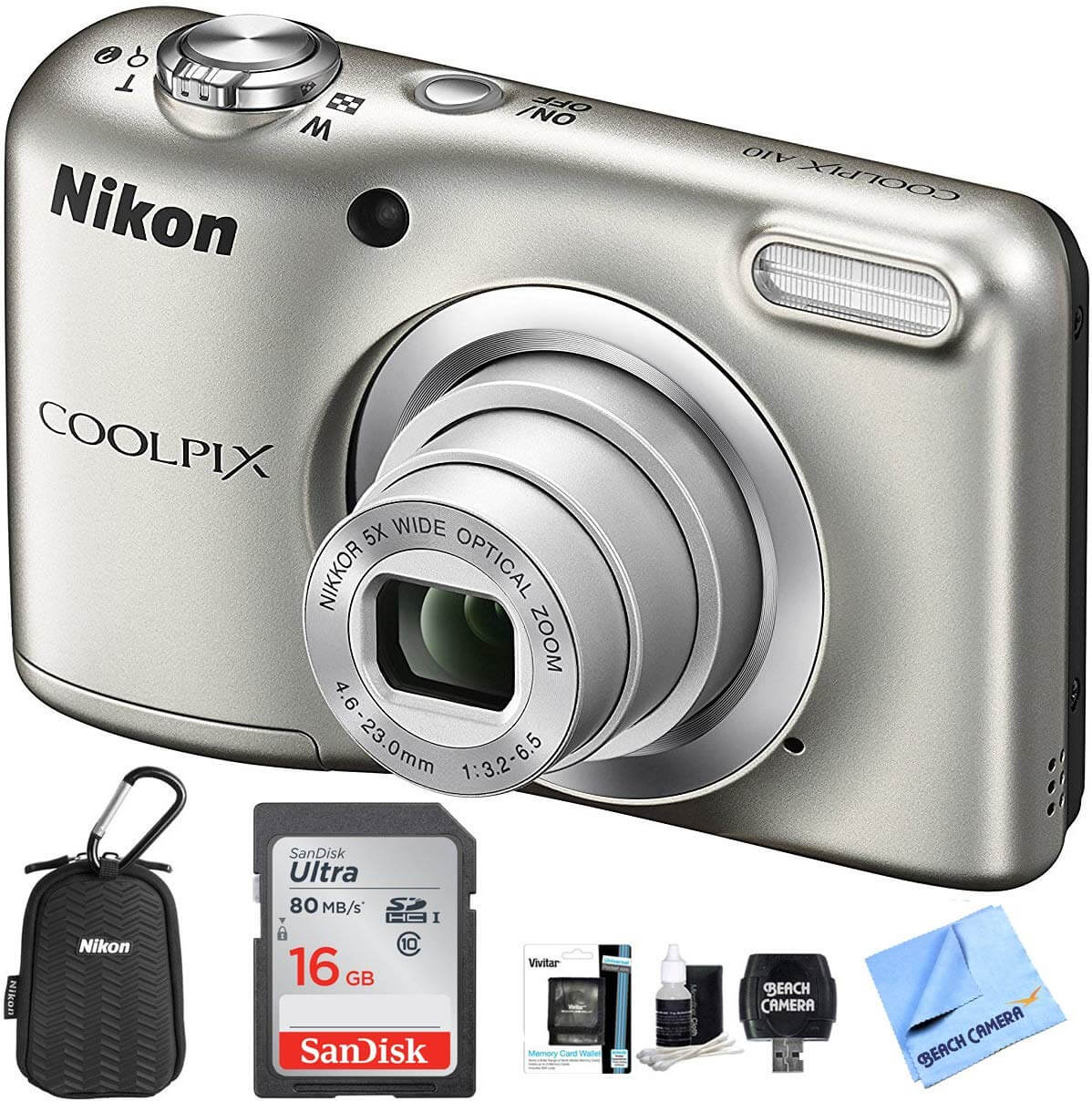
The Nikon Coolpix A10 is an older model designed for people who know nothing about photography and want a camera that just works. It features a 16.1MP CCD sensor and 5x optical zoom.
Beginner-Friendly Features:
- 16.1MP CCD sensor
- 5x optical zoom (26-130mm equivalent)
- 720p HD video
- 2.7-inch LCD
- Easy Auto Mode (no manual controls needed)
- Uses AA batteries
- Red-eye reduction
The Easy Auto Mode handles all settings automatically. There are no confusing menu options or technical jargon. You point, press the button, and get a properly exposed photo in most situations.
Why This Works: Some people do not want to learn photography; they just want pictures of their grandkids or vacation. The A10 serves this audience perfectly. I bought one for my father-in-law who refused to use his smartphone camera, and he takes hundreds of photos at family events.
Limitations: Very basic image quality. No Wi-Fi. Burns through AA batteries. Limited zoom range.
Best For: Older users who find smartphones confusing, kids getting their first real camera, gifts for non-technical people.
9. Sony Cyber-shot DSC-W830: Simple 8x Pocket Zoom
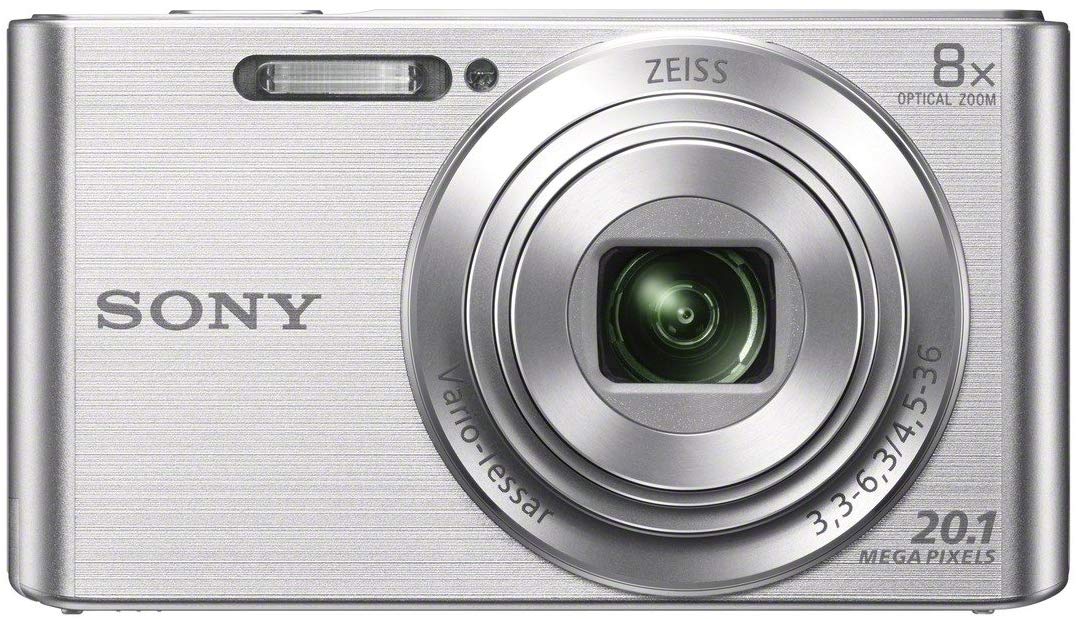
Buying note: The W830 is not the W800 or a Sony 18.2MP/10x model. Match the exact model on the body and listing, and compare a working camera plus battery and charger with the newer budget options above.
The Sony Cyber-shot DSC-W830 offers a useful middle ground between the W800's short zoom and a larger bridge camera, provided its complete price is competitive. It features a 20.1MP sensor and 8x optical zoom in a compact body.
Key Specifications:
- 20.1MP Super HAD CCD sensor
- 8x optical zoom (25-200mm equivalent)
- 720p HD video
- 2.7-inch LCD
- SteadyShot image stabilization
- Approximately 210 shots per charge
Reliable Performer: The W830 does not excel in any particular area, but it does everything competently. Image quality is good in decent lighting. The 8x zoom provides useful versatility. Its approximately 210-shot battery rating is not a class-leading advantage; check the condition of the battery in an older example.
Sony's SteadyShot image stabilization works well for handheld shooting up to about 5x zoom. Beyond that, you need steady hands or a support.
Best For: Users wanting reliable point-and-shoot operation, travel photographers on a budget, anyone wanting an easy-to-carry 8x zoom.
10. Kodak Pixpro AZ252: Best Budget Bridge Camera
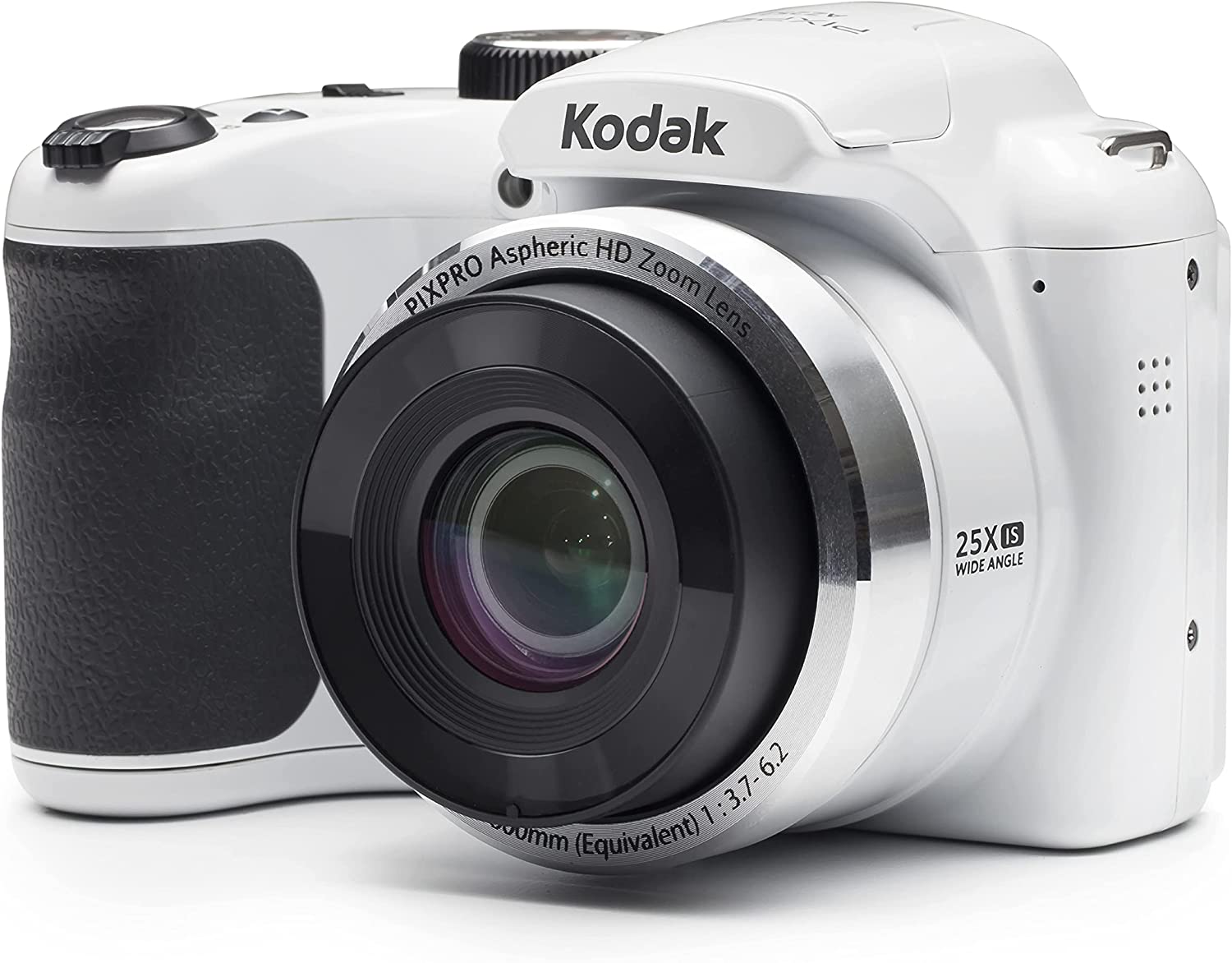
Buying note: Match the exact AZ252 model, not a different 42x Kodak bridge camera. Check battery-compartment condition and total cost. If a suitable example is unavailable, compare the B500 above or follow the buying-guide link below.
The Kodak Pixpro AZ252 is another bridge camera to compare when its condition and complete price fit under $200. Bridge cameras offer DSLR-like handling with fixed lenses. This model features 25x optical zoom and a 16MP sensor.
Specifications:
- 16MP CCD sensor
- 25x optical zoom (24-600mm equivalent)
- 720p HD video
- 3-inch LCD
- Optical image stabilization
- Manual exposure controls
- ISO up to 1600 at full resolution; ISO 3200 limited to 4MP
Bridge Camera Benefits: The larger grip and DSLR-style body make this camera comfortable for extended shooting. Unlike many basic point-and-shoots, the AZ252 offers manual exposure controls (aperture, shutter speed, ISO), allowing you to learn photography fundamentals without investing in an interchangeable lens system.
The 25x zoom range covers wide-angle to telephoto, making this a one-camera solution for most situations.
Trade-offs: Much bulkier than compact cameras. Image quality is similar to cheaper compacts (the larger body does not mean a larger sensor). Build quality is plasticky.
Best For: Beginners wanting to learn manual photography, anyone needing DSLR-style ergonomics on a budget, travelers wanting all-in-one versatility. For those ready to upgrade, see our best budget mirrorless cameras guide.
Best Camera Overall Under $200
Choose how you want to power it: Keep the FZ45 on your shortlist if replaceable AA batteries suit your travel. Compare the FZ55 if you prefer a rechargeable lithium-ion battery and a little more reach from its 5x zoom. Neither choice needs an expensive accessory bundle; check the actual included items and complete price.
For a straightforward dedicated camera, I would start by comparing the FZ45's complete price and limited 4x zoom with what you actually need. If pocketable long zoom is the priority, the Canon PowerShot SX620 HS is still an appealing conditional choice: it balances reach, ease of use and connectivity, but only belongs in this budget when the specific offer fits.
The SX620's 25x optical zoom provides genuine reach beyond typical phone telephoto lenses. The image quality is good in typical shooting conditions, and Wi-Fi can make sharing convenient. If the seller is asking more than your complete budget, do not stretch it simply because an older guide quoted a lower price.
Best Zoom Camera Under $200
Not all cameras under $200 have good zooming capabilities. The Nikon Coolpix B500 is worth checking for its 40x optical zoom (22.5-900mm equivalent), subject to finding a suitable offer. This telephoto reach enables wildlife photography, sports shooting, and distant subjects that compact cameras cannot handle.
The tilting LCD and extensive connectivity options (Wi-Fi, Bluetooth, NFC) add functionality rarely seen at this price point. If zoom is your priority, compare a working used B500 with the smaller SX620 and AZ252. Check the lens at both ends of the zoom, battery compartment and return terms before choosing.
Cheapest Camera Worth Buying
The Kodak Pixpro FZ45 is one of my first checks for a low-cost dedicated camera. It takes decent photographs in good lighting, but the reason to buy it is its simple camera experience and optical zoom, not an assumption that it beats your phone's image quality.
Is it amazing? No. Will it win photography competitions? Absolutely not. But if the complete price fits, its job is to capture memories without making photography complicated.
Best Camera to Buy for a Beginner Photographer
Budget ladder: $200 is still a strict budget. It can work for simple compact cameras, but beginners who want room to grow should compare the best cameras under $400 and, if the budget allows it, the best cameras under $700. That higher range is where interchangeable-lens systems and better long-term value start to make more sense.
If you are new to photography and want straightforward operation, the Sony Cyber-shot DSC-W800 is ideal. The Easy Mode simplifies operation, while Smile Shutter and face detection can help with portraits. Check the condition, battery and charger before buying; an inflated old-stock price would undermine the value.
For beginners interested in learning manual photography controls and potentially upgrading to mirrorless cameras later, the Kodak Pixpro AZ252 bridge camera offers manual modes, if you find it at a sensible price.
Best Action Camera Under $200
The Akaso EK7000 is worth comparing for mounted outdoor video when the complete package fits your budget. Check the exact version, waterproof housing and supported stabilization modes. A low price alone does not establish how it compares with a particular GoPro.
I have used Akaso cameras for mountain biking, snorkeling, and mounting on my car dashboard. With the appropriate protective housing and secure mount, they suit situations where I would not expose an unprotected compact and produce usable footage for YouTube, social media, and personal memories.
Best Instant Camera Under $200
The Fujifilm Instax Mini 12 is my pick here for simple instant-film fun, not digital photography. Automatic exposure and close-up mode reduce the setup effort, but bright backgrounds and challenging lighting still require care.
Remember that film costs add up: check the price per exposure, and include your first pack in the $200 total. Despite ongoing costs, the joy of physical prints and the social experience of instant photography justify the expense for many users.
Digital Cameras vs Smartphones: When Does a Dedicated Camera Make Sense?
Modern smartphones take excellent photos in good lighting conditions. The iPhone 15, Pixel 8, and Samsung Galaxy S24 produce images that rival budget cameras for social media and web use. So when does buying a separate camera under $200 make sense?
Optical Zoom: This is the primary advantage. Many phones have optical telephoto cameras, but their reach is much shorter than a 25x or 40x compact/bridge zoom. Beyond a phone's optical range, cropping and processing become more important. Long zoom is a reason to carry a separate camera, especially in good light.
Waterproof Video: An action camera in the correct waterproof housing is easier to mount for swimming and snorkeling. Check the housing's depth limit; a phone's water-resistance rating is not a substitute for the intended underwater setup.
Battery Life for Extended Shooting: A separate camera leaves your phone battery and storage free. Compare the exact camera's endurance and carry the right spare batteries rather than assuming a universal shot count.
Physical Instant Prints: Instant cameras provide tangible photos that smartphones cannot deliver without separate printers.
Simplicity for Non-Technical Users: Some people find smartphones confusing but easily operate dedicated cameras with physical buttons and simple menus.
What You Should NOT Expect from a $200 Camera
Setting realistic expectations prevents disappointment:
Professional Image Quality: These small-sensor compacts are not automatic image-quality upgrades over a good phone. Larger-sensor cameras can offer more latitude, but a used interchangeable-lens body also needs a suitable lens within the budget.
Fast Autofocus: Budget cameras are slow to focus compared to modern smartphones or interchangeable lens cameras. They struggle with moving subjects.
4K Video Quality: A 4K label does not tell you about detail, low-light quality, cropping or stabilization. Check the exact model and mode rather than judging video quality by resolution alone.
Durability: Plastic construction means these cameras do not survive drops well. They are not weather-sealed.
Manual Controls: Most budget point-and-shoots offer limited manual control. If you want to learn photography seriously, save for a budget mirrorless camera instead.
Accessories Worth Buying
Build the complete setup into your $200 limit. These are planning allowances, not current quoted offers; check what is actually included before buying:
Memory Card: $10-15 for a 32GB SD card (essential: most cameras include no card or tiny capacity)
Camera Case: $10-20 for basic protection during travel
Spare Battery: $15-25 (check compatibility, supplier and whether a charger is included)
Screen Protector: Optional; prioritize a working battery and memory card first
For Action Cameras: Additional mounts and accessories ($20-40)
For Instant Cameras: Film packs; compare cost per exposure, not just the pack price
Total accessory budget: $30-50 for basic setup, more for action cameras or instant cameras with film.
Should You Buy Used?
Used cameras can be the most realistic route to the older zoom models in this guide. Do not assume that new old stock is better value, or that every used camera is a bargain. These are models to investigate, not verified under-$200 offers:
Good Used Options:
- Canon PowerShot SX series (SX620, SX720)
- Sony Cyber-shot models (W800, W830)
- Nikon Coolpix cameras (A10, A100, B500)
Where to Buy Used:
- KEH Camera and MPB: compare the actual stock, grading, included items and current warranty/return terms
- Local camera shops: inspect and try the camera before buying when possible
- eBay and Amazon sellers: check seller history, exact condition, included items and return terms
Avoid: Listings with unclear condition, a different model in the photographs, missing chargers, corrosion or "for parts" descriptions unless you specifically want a repair project. Shutter count is not a complete condition test and may not be available for a compact.
Test Before Keeping: Run the lens through its zoom range, take photos of a plain bright surface, test flash and video, check buttons and battery contacts, and confirm the memory card works. For a used interchangeable-lens camera, inspect both body and lens.
Choose new when warranty and straightforward ownership matter most and a suitable model fits. Choose used when it buys a capability you need, with acceptable condition and returns. Compare complete setups rather than assuming a fixed percentage saving.
Frequently Asked Questions
Q: Are cameras under $200 better than smartphones?
A: Not automatically. Long optical zoom, a housing for underwater use and physical camera controls can justify a separate camera. For ordinary snapshots or low-light pictures, your phone may be the better option. Match the camera to the job rather than expecting an upgrade in every situation.
Q: Can I learn photography with a $200 camera?
A: Yes, but with limitations. Point-and-shoot cameras teach composition and framing. For learning exposure control (aperture, shutter speed, ISO), consider bridge cameras like the Kodak AZ252 with manual modes, or save for a budget mirrorless camera that offers complete creative control.
Q: How long do budget cameras last?
A: There is no dependable lifespan for every budget camera. Battery condition, moisture, drops and lens-mechanism wear matter more than a fixed age. With an older compact, check that replacement batteries are obtainable and that the seller allows enough time to test it.
Q: Should I buy a used older flagship camera or a new budget camera?
A: Compare condition and capabilities rather than the original price. A sound used larger-sensor camera may offer more control and image quality, while a new budget compact can offer simpler ownership. Include its lens, battery, charger and memory card. Do not assume an SX620 is available new for $180.
Q: Can these cameras shoot in RAW format?
A: The compact and bridge models listed here record JPEG stills, and the Instax Mini 12 records directly to film. A $200 price ceiling does not itself rule out RAW: some used cameras support it. Check the exact model's manual rather than assuming all cameras at a given price have the same file formats.
Final Verdict: Which Digital Camera Under $200 Should You Buy?
The best digital camera under $200 depends on your specific needs:
First Compact to Compare: Kodak Pixpro FZ45: Simple daylight snapshots, provided the complete purchase fits your limit.
Pocket Zoom: Canon PowerShot SX620 HS: Useful 25x reach, only at a sensible price and condition.
Simple Older Compact: Sony Cyber-shot DSC-W800: Easy operation; compare condition and total cost with the FZ45.
Long Zoom: Nikon Coolpix B500: Check used options for 40x reach, with realistic expectations for moving subjects.
Manual-Control Alternative: Kodak Pixpro AZ252: 25x zoom and exposure modes, but only 720p video; check offer and condition.
For Action: Akaso EK7000: Mounted wide-angle video; match the exact version and waterproof case.
Most Fun: Fujifilm Instax Mini 12: Instant film prints for parties and memories; budget for film.
In 2026, the $200 camera market has shrunk as smartphones dominate casual photography. The cameras that remain offer specific advantages (primarily optical zoom and specialized capabilities) that smartphones cannot replicate. If you need those specific features, these cameras deliver genuine value. If you primarily share photos on social media and rarely zoom, your smartphone is probably sufficient.
For photographers ready to move beyond budget compacts, compare a complete interchangeable-lens setup for more control and a future lens upgrade path. The useful question is what the body and suitable lens cost together.
Specifications and buying guidance reviewed: November 2026. This update checks manufacturer information and purchase-route clarity; it is not a new hands-on test of every camera or a guarantee of current stock and price.