
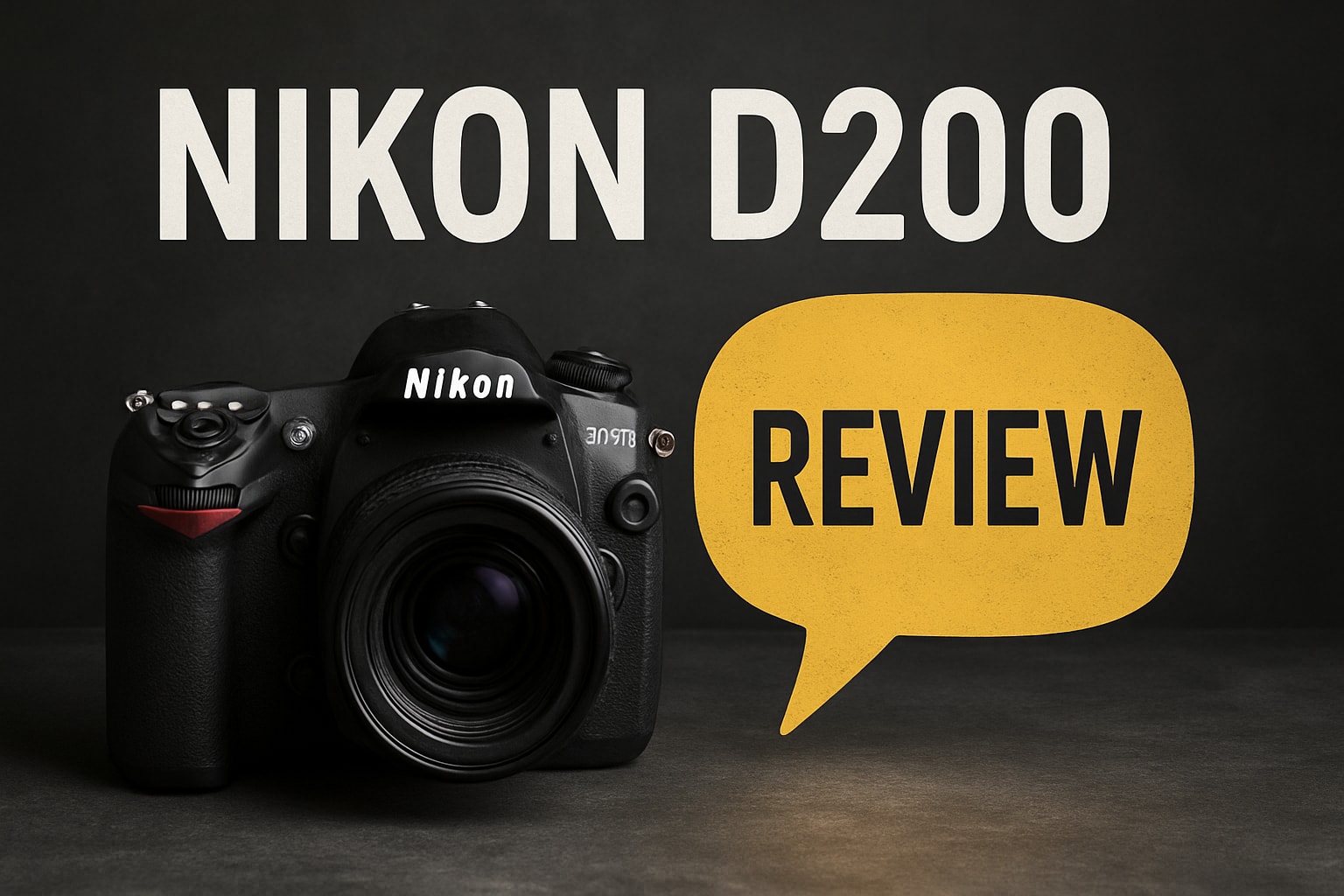
In a world where new camera tech arrives every season, the classic DSLR still holds a special place for many photographers. The Nikon D200, with its robust build and distinct image character, continues to inspire both nostalgia and confidence among enthusiasts. If you are searching for a nikon d200 review that goes beyond specs, you are in the right place.
This guide delivers an expert-driven look at the D200’s strengths and quirks in 2026. You will discover insights into its design, image quality, everyday usability, modern compatibility, and whether it truly stands the test of time.
Let this review help you decide if the D200 deserves a spot in your kit, or simply to appreciate what makes it a lasting classic.
Contents
Design and build quality: A timeless classic
The nikon d200 review always brings me back to what many photographers value most: a camera that feels like a true tool, not just a gadget. Even in 2026, the D200’s design still commands respect among professionals and enthusiasts who appreciate reliability and tactile feedback in the field.
Durable construction and ergonomics
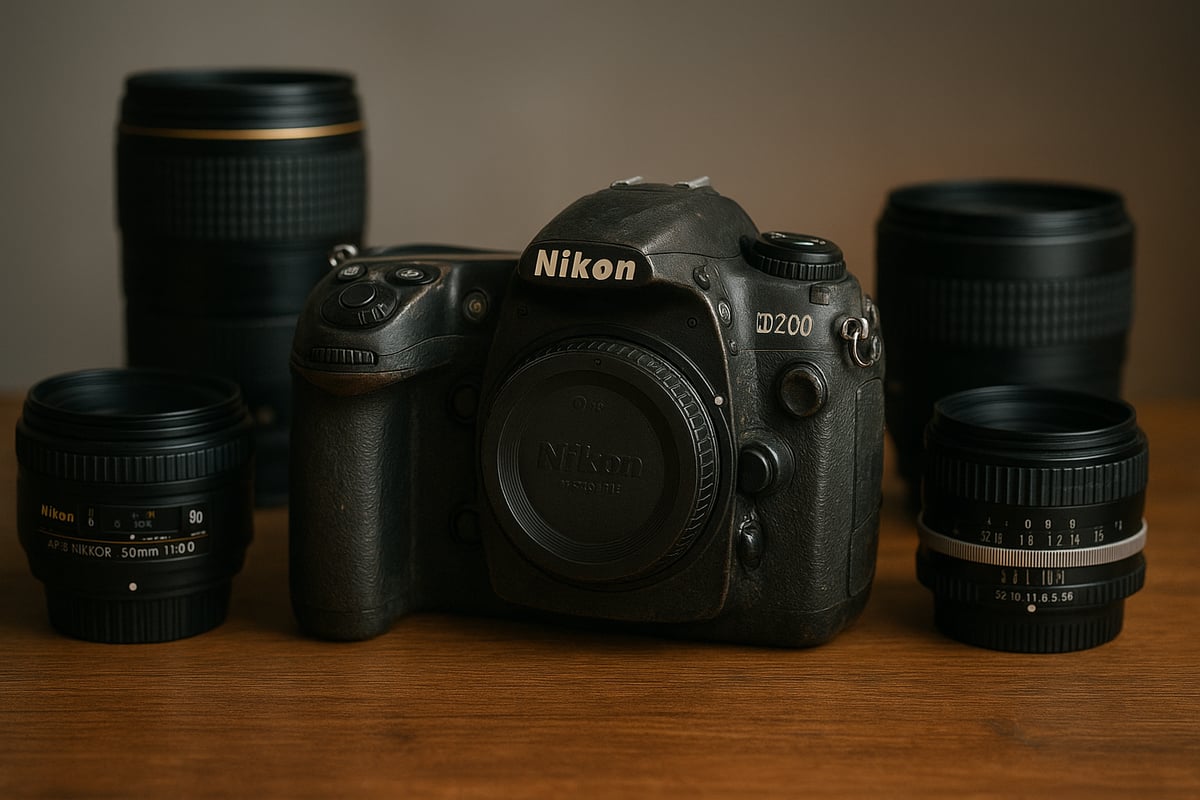
Pick up a D200 and you immediately notice the difference: the magnesium alloy chassis is solid, with weather sealing that still rivals many modern mid-range bodies. The grip fits naturally in your hand, and the button layout remains intuitive, even compared to recent releases. I have used the D200 in rain, dust, and even snow, and it never failed me. That sense of confidence is a recurring theme in every nikon d200 review I have read or written.
Compared to today’s entry-level DSLRs, the D200 feels more substantial. While newer cameras may be lighter, the weight distribution of the D200, especially with classic Nikon lenses, offers balance that many shooters still prefer. It is not just nostalgia talking. The camera’s physical resilience has been proven in the field by photographers who continue to trust their D200 in harsh environments.
Here is a quick comparison table:
| Feature | Nikon D200 | 2020s Entry DSLR |
|---|---|---|
| Body Material | Magnesium Alloy | Polycarbonate |
| Weather Sealing | Yes | Sometimes |
| Weight | 830g (body only) | ~500-600g |
| Ergonomics | Pro-level Grip | Consumer Grip |
Stories abound of D200s surviving drops, mud, and years of heavy use. For me, that is why build quality still matters in 2026. A camera should be an extension of your hand, not something you worry about breaking. For those who want deeper technical and real-world insights, the Nikon D200 review by Imaging Resource is a great resource.
LCD, viewfinder, and controls in 2026
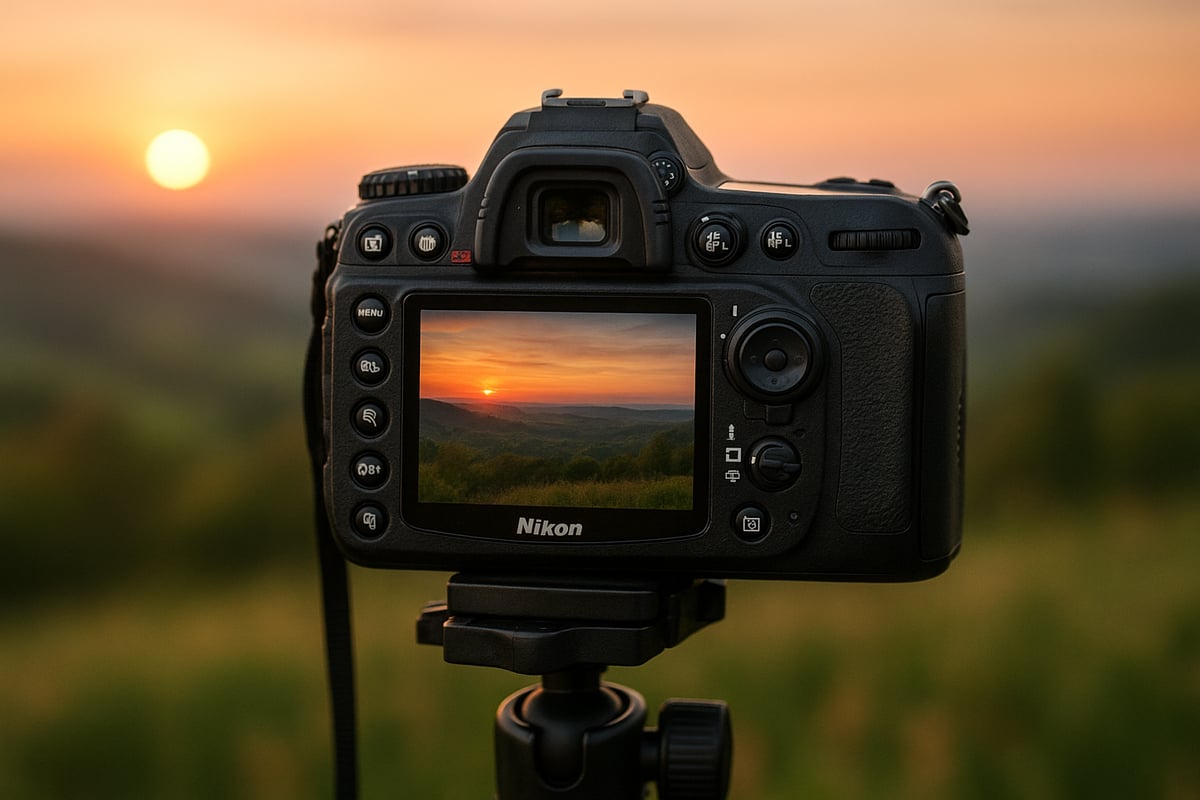
The D200’s 2.5-inch LCD might seem tiny now, but with careful exposure and histogram checks, it is still usable for quick reviews. Many photographers carry a loupe or rely on the excellent optical pentaprism viewfinder, which offers bright, 95 percent coverage and clarity that holds up even by modern standards. This is a detail that comes up repeatedly in every honest nikon d200 review from experienced users.
Physical dials and tactile controls set the D200 apart from today’s touchscreen-dominated cameras. Adjusting settings by feel, without looking away from the viewfinder, streamlines the shooting process. Recent surveys show that a significant portion of photography enthusiasts still prefer physical controls for their speed and reliability.
Why do some of us gravitate back to the D200’s control scheme? It is muscle memory, plain and simple. The camera’s logic and layout make it a joy for those who learned photography on DSLRs, and even new users appreciate the directness once they acclimate. If you are reading a nikon d200 review in 2026, chances are you are looking for that classic, responsive shooting experience that only a camera like this can deliver.
Image quality and sensor performance
There is something special about the files you get from the Nikon D200, even when stacking it up against today’s latest cameras. In this nikon d200 review, I want to share why so many photographers still rave about the D200’s sensor and overall image output.
CCD sensor characteristics and output
The heart of the nikon d200 review lies in its 10.2MP APS-C CCD sensor. This chip is known for its exceptional color reproduction and the distinctive tonal transitions you rarely see in today’s CMOS sensors. There is a richness to the colors, especially in landscapes and portraits, that feels almost film-like.
Unlike the high-resolution sensors of modern DSLRs, the D200’s CCD produces files with a unique “pop” and smooth gradation. The dynamic range is respectable, especially in the lower ISO settings. However, highlight recovery is more limited compared to current sensors, so careful exposure is key.
Let’s compare some core sensor traits:
| Feature | D200 CCD Sensor | Modern CMOS (2026) |
|---|---|---|
| Resolution | 10.2MP | 24-40MP |
| Color Depth | Very high, subtle | High, more clinical |
| Dynamic Range | Good, lower ISO | Excellent, all ISO |
| High ISO Performance | Limited above 800 | Usable up to 12800+ |
| Tonal Quality | Smooth, organic | Crisp, detailed |
Practical shooting with the D200 means keeping ISO at 100-400 for best results. Noise becomes noticeable past ISO 800, but with careful post-processing, files remain usable. I often use noise reduction software for night or low light work, and the results can be surprisingly clean when handled with finesse.
Many portrait and landscape photographers still seek out the D200 for its “CCD look.” There is a warmth and smoothness to skin tones, and skies often display subtle hues that are hard to replicate with newer sensors. Side-by-side comparisons with cameras like the D5600 show the D200 rendering colors with a bit more soul, even if the resolution is lower.
Competitor reviews consistently note the D200’s sensor longevity. Even after 20 years, it holds its own for genres where color and tonality matter more than sheer megapixels. For those interested in the evolution of Nikon’s sensor technology and how the D200 compares to other models, you can check out the Nikon DSLR camera models page for more context.
If you are after that classic, organic rendering, the D200 continues to deliver. In my nikon d200 review experience, this sensor is a gem for those who appreciate timeless image quality.
Autofocus, metering, and shooting speed
The nikon d200 review would not be complete without a close look at its autofocus and metering performance. The Multi-CAM 1000 module offers 11 focus points, which may sound modest today, but they are well-placed for most compositions. Focus speed is snappy in good light, and accuracy is impressive with both AF-S and older AF-D lenses.
For sports and wildlife, the D200’s burst rate of 5 frames per second is decent, though the buffer fills quickly when shooting RAW. This means you need to time your shots more carefully, a discipline that can actually make you a better photographer. Tracking moving subjects is reliable in daylight, though the system can lag in low contrast or dim settings.
The metering system provides consistent exposures in varied lighting. Spot, center-weighted, and matrix modes all perform predictably, so you can trust your exposure decisions. In challenging light, I sometimes bracket exposures or use manual mode for full control, which the D200 makes easy with its dedicated dials.
Here are some practical tips from my field tests:
- Use single-point AF for portraits and static subjects.
- For action, stick to dynamic or group-area AF and pre-focus when possible.
- Plan for shorter bursts with RAW files, or switch to JPEG for longer sequences.
Many experienced users find adapting to the D200’s AF system rewarding. It encourages careful technique and a deeper connection with your subject. In this nikon d200 review, I find that the D200’s focus and metering systems, while not as advanced as the latest cameras, remain reliable for everyday and creative shooting.
If you value a camera that rewards skill and deliberate shooting, the D200’s autofocus and metering will not disappoint. Its performance is a testament to Nikon’s commitment to making tools that last.
Usability and handling in a modern workflow
Photographers in 2026 often ask how a camera from two decades ago fits into a modern workflow. In my experience, the nikon d200 review remains relevant because of its unique blend of tactile control, customization, and adaptability. The D200 may not match the instant connectivity of newer models, but it offers a shooting experience that still resonates with those who value hands-on interaction with their gear.
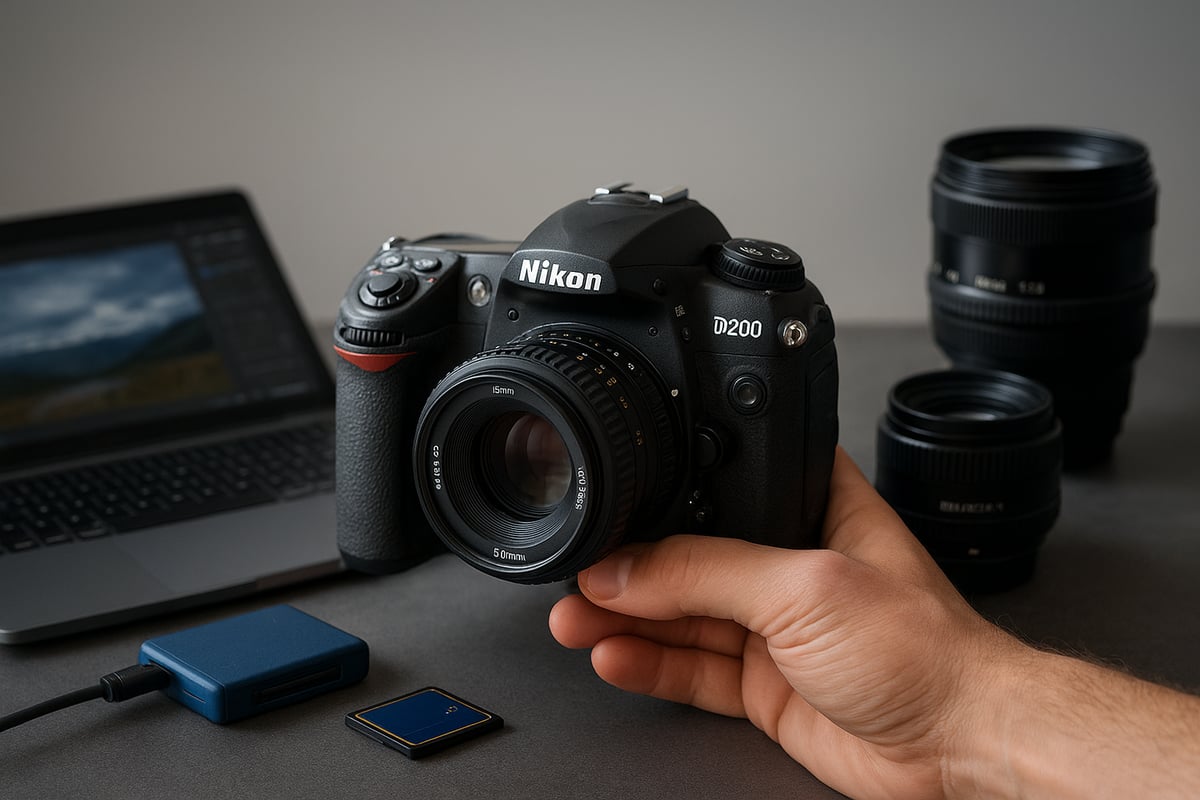
Shooting experience and customization
Operating the nikon d200 review is a tactile journey. The menu system is straightforward, though it may feel unfamiliar to users raised on touchscreen interfaces. Still, many enthusiasts appreciate the physical buttons and dials for quick adjustments without diving into digital menus. This hands-on control is a big draw, especially for those who want to stay focused on composition rather than settings.
Customization is a strong suit of the D200. Settings banks allow you to save different profiles for landscape, portrait, or action shooting. This feature, often overlooked in newer entry-level cameras, brings efficiency to fieldwork. For me, switching between styles is as easy as a few clicks, which is rare in many modern bodies.
Battery life is respectable by 2026 standards, especially with genuine EN-EL3e batteries. While not as long-lasting as the latest mirrorless models, the D200 can still power through a full day if you carry a spare. Power management is predictable, and the camera’s sleep mode helps conserve energy during long sessions.
CF card compatibility might sound dated, but reliable card readers are still available. The D200’s files transfer quickly, and with modern adapters, integrating images into your workflow is straightforward. Many photographers, including myself, keep a small stash of CF cards specifically for legacy bodies like this.
Is the nikon d200 review a good choice as a main camera in 2026? For some, yes. It excels as a backup or a dedicated tool for genres like portraiture, where its CCD sensor shines. Recent online polls suggest user satisfaction remains high among those who appreciate its build quality and output. However, if you rely on rapid connectivity or need ultra-fast burst rates, a newer DSLR or mirrorless might be a better fit.
Connecting with modern accessories and software
One question I often hear in any nikon d200 review is about integrating the D200 with current accessories and software. The answer is encouraging. Nikon’s Creative Lighting System is fully supported, making off-camera flash work reliable and predictable. Modern remote triggers and intervalometers connect easily through the 10-pin port, opening up options for studio, landscape, and time-lapse photography.
RAW files from the D200 are still compatible with popular editing software in 2026. I regularly import NEFs into Lightroom and Capture One without issue. The classic CCD color rendering is a favorite for portrait and landscape work, and modern noise reduction tools help stretch ISO performance further than you might expect.
Tethering, while not as seamless as with Wi-Fi enabled cameras, is entirely possible. For those interested in direct-to-computer shooting, resources like Nikon D200 tethering options detail compatible cables and software solutions. This makes the D200 surprisingly viable for studio sessions or controlled environments.
Wireless workflows are limited, but there are workarounds. Some photographers use Wi-Fi enabled CF card adapters, though reliability varies. Personally, I prefer a direct cable connection for speed and stability.
Integrating the nikon d200 review into a contemporary editing pipeline is straightforward if you plan ahead. With a few modern accessories and the right software, the D200 can still slot into a professional or enthusiast’s toolkit, offering a shooting experience that feels more intentional and connected than many newer models.
Lens compatibility and system flexibility
Photographers in 2026 still find the Nikon D200’s lens compatibility to be one of its greatest strengths. In a world where rapid innovation can make gear feel outdated overnight, the D200 offers a bridge between classic glass and modern creative ambitions. This section of the nikon d200 review explores how its F-mount unlocks decades of lens possibilities, and how system flexibility keeps the D200 relevant for specialty shooters and experimenters alike.
Nikon F-mount options in 2026
One thing that stands out in every nikon d200 review is the camera’s enduring compatibility with a wide array of Nikon F-mount lenses. The D200 accepts AF, AF-D, and AF-S lenses natively, providing full autofocus and metering support. This means you can pair it with everything from classic Nikkor primes to the latest AF-S zooms, opening doors for both nostalgia and technical excellence.
For those who enjoy experimenting, vintage manual focus lenses are a treat on the D200. The tactile feel and unique rendering of older glass give portraits and landscapes a signature look. I know photographers who keep a selection of classic AI and AI-S lenses just for their character. Third-party lenses, from Sigma or Tamron, also work well in most cases, though it is wise to check for firmware compatibility with newer optics.
When it comes to Vibration Reduction (VR), the D200 supports this feature on compatible lenses, though it lacks in-body stabilization. That said, image stabilization is still accessible for many shooting scenarios, especially with recent AF-S VR lenses.
Recent data from online user polls and communities shows that the most popular lens pairings for the D200 include the Nikon 50mm f/1.8D, 18-70mm f/3.5-4.5G, and classic 35mm primes. Many shooters also use specialty lenses, like macro or tilt-shift, for creative projects.
If you are looking for inspiration or want to explore the best lens options for your setup, check out Best Nikon lens options for practical recommendations. The D200 truly serves as a gateway into Nikon’s vast lens ecosystem, making it a flexible tool for both beginners and seasoned artists.
System adaptability for video and specialty uses
While the D200 is not a video powerhouse compared to modern hybrid cameras, it remains a favorite for creative still photography projects. In almost every nikon d200 review, you will notice that video functionality is limited to none. However, this pushes photographers to explore the D200’s strengths in other directions.
Many users modify their D200 for infrared photography, taking advantage of the sensor’s unique response to IR wavelengths. Astrophotographers also appreciate the D200’s robust build and low thermal noise at base ISO, especially when paired with fast, manual focus primes. In the studio, the D200’s compatibility with remote triggers and flash systems allows for reliable, repeatable results.
For those curious about technical details, Nikon D200 compatibility with modern lenses provides an in-depth look at how the D200 handles the latest lens releases, including AF-G and third-party options.
Professionals I have spoken with often emphasize the D200’s adaptability as a platform for creative experimentation. Whether you are shooting with legacy glass, adapting specialty lenses, or building a backup kit for demanding conditions, the nikon d200 review consistently highlights its system flexibility as a distinguishing feature.
Value proposition and expert recommendations for 2026
The appeal of the Nikon D200 remains strong even in 2026. For photographers looking beyond the latest trends, this camera offers a blend of reliability and character that newer models sometimes lack. In this nikon d200 review, I want to help you decide if the D200 fits your needs, budget, and creative ambitions.
Who should consider the Nikon D200 today?
The nikon d200 review is especially relevant for enthusiasts, students, collectors, and photographers who value the unique rendering of a CCD sensor. If you shoot portraits, landscapes, or want to experiment with classic gear, the D200 still holds its own.
Cost is a major factor. The D200 is available on the used market at a fraction of the price of modern entry-level DSLRs or mirrorless cameras. For example, a well-maintained D200 often costs less than a new lens, making it attractive for those on a budget or seeking a reliable backup body.
Resale value for the D200 has remained surprisingly stable. Data from recent online marketplaces shows a steady demand, particularly from those interested in the “CCD look” or vintage Nikon ergonomics. In real-world terms, I have met photographers who switched to the D200 after years with newer cameras, finding its output and handling more satisfying for certain genres. If you want a more direct comparison with a newer model, check out the Nikon D5600 in-depth review for perspective on how the D200 stacks up today.
The key argument here is simple. Sometimes, a classic camera like the D200 can outperform newer models for specific creative needs, especially where color depth and tactile control matter more than megapixels or connectivity.
Lens and Shutter: Your expert resource for camera reviews
When researching a nikon d200 review, having access to trusted expertise makes a real difference. At Lens and Shutter, our team has spent years testing legacy and modern cameras in real-world situations. We evaluate not only technical performance but also handling, reliability, and the intangible qualities that make a camera enjoyable to use.
Our resources include in-depth reviews, side-by-side comparisons, and buying guides aimed at photographers of all levels. Whether you are considering the D200 as your first camera or adding it to a growing collection, you will find practical advice and honest opinions. We regularly update our data on resale trends, user satisfaction, and reliability, ensuring our insights remain relevant in 2026.
If you want to dig deeper into the world of classic cameras or get advice on mixing old and new gear, our community discussions and expert articles are a great place to start. We believe every nikon d200 review should empower photographers to make informed decisions, not just follow the latest trends.
Future-proofing your D200 setup
Owning a D200 in 2026 is about more than nostalgia. With basic care, this camera can remain a reliable part of your kit for years. Regular cleaning, careful storage, and using genuine batteries all help extend its lifespan.
Finding replacement parts and accessories is still possible, thanks to active online communities and third-party suppliers. Firmware updates are rare, but most bugs and quirks have long been addressed. For those who enjoy tinkering, adapting the D200 for infrared or studio work can breathe new life into an already robust tool.
I have seen D200 bodies surpass a decade of regular use, still delivering excellent results. The nikon d200 review is not just about specs, but about investing in a camera that rewards care and creativity. If you value longevity and a unique shooting experience, the D200 remains a compelling choice.
Last update on 2026-04-12 / Affiliate links / Images from Amazon Product Advertising API