
Contents
- Sony a6400 vs a6500: the short answer
- The main difference: autofocus versus stabilization
- Who should buy the Sony a6400?
- Who should buy the Sony a6500?
- Autofocus and real-world shooting
- Image quality and low light
- Video: stabilization or autofocus?
- Handling, battery life, and lenses
- Price and value in 2026
- Frequently asked questions
- Final verdict
- Key takeaways
Sony a6400 vs a6500: the short answer
| If you care most about… | Pick this camera | Why it makes sense |
|---|---|---|
| Best overall buy | Sony a6400 | Newer autofocus, better tracking, flip-up screen, and a fresher shooting experience. |
| In-body stabilization | Sony a6500 | It has 5-axis IBIS, which the a6400 lacks. |
| People, pets, kids, events | Sony a6400 | The newer Real-time Tracking and Eye AF are more useful for moving subjects. |
| Manual or adapted lenses | Sony a6500 | IBIS helps every lens, including old manual glass and unstabilized primes. |
| Vlogging and self-recording | Sony a6400 | The flip-up screen is more practical than the a6500’s older tilting screen. |
| Used-market value | Usually Sony a6400 | Unless the a6500 is much cheaper, the a6400 is normally the safer used buy. |
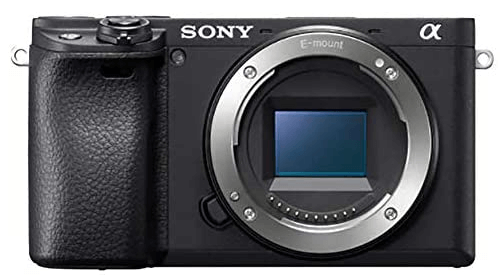
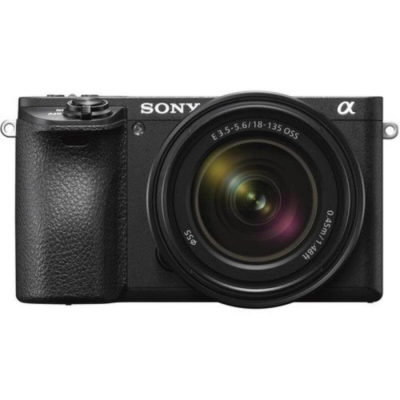
For deeper individual notes, read the dedicated Sony a6400 review and Sony a6500 review. If you are comparing the whole APS-C family, the Sony a6000 series guide is the better starting point.
The main difference: autofocus versus stabilization
The Sony a6400 and a6500 can look confusing because the model numbers do not tell the whole story. The a6500 launched earlier as a higher-end APS-C body with in-body image stabilization. The a6400 arrived later with no IBIS, but with newer autofocus, newer processing, and a more practical screen for modern hybrid shooting.
That creates a very clear buying split. Choose the a6400 if you want the camera to track people, eyes, pets, and unpredictable subjects with less effort. Choose the a6500 if you often shoot handheld with unstabilized lenses and care more about steady framing than the latest autofocus behavior.
| Feature | Sony a6400 | Sony a6500 |
|---|---|---|
| Sensor | 24.2MP APS-C CMOS | 24.2MP APS-C CMOS |
| Autofocus | 425 phase-detection / 425 contrast-detection points, newer Real-time Tracking | 425 phase-detection points, older tracking system |
| Stabilization | No in-body stabilization | 5-axis in-body stabilization |
| Video | 4K up to 30p, 8-bit | 4K up to 30p, 8-bit |
| Screen | Tilts up 180 degrees for self-recording | Older tilting screen, not as useful for vlogging |
| Best use | Travel, family, street, events, casual video | Handheld shooting, adapted lenses, stabilized stills/video |
Sony’s official specifications list both cameras as 24.2MP APS-C bodies with 4K recording up to 30p. The a6400’s advantage is its newer AF system, while the a6500’s defining feature is its 5-axis in-body stabilization.
Who should buy the Sony a6400?
Buy the Sony a6400 if you want the more dependable everyday camera. It is the body I would choose for travel, street photography, family photos, beginner-to-intermediate video, and most people-focused work. The autofocus is the reason: the a6400 feels less like an older mirrorless camera and more like a modern Sony body.
The a6400 is especially strong if you photograph moving subjects. Kids running around a room, friends walking toward the camera, pets turning sideways, or candid street scenes are all situations where the newer tracking system matters. The a6500 can still focus well, but the a6400 gives you more confidence and fewer missed frames.
The flip-up screen is also more useful than it sounds. It is not perfect if you mount a microphone on top, but it is still better for self-recording than the a6500’s older screen design. For casual YouTube, travel clips, and checking framing from in front of the camera, the a6400 is easier to live with.
Who should buy the Sony a6500?
Buy the Sony a6500 if you know you need stabilization and the price is right. Its 5-axis IBIS is the reason to choose it over the a6400. That matters most with unstabilized primes, adapted manual lenses, low-light stills, and casual handheld video where you do not want to carry a tripod or gimbal.
The a6500 also feels a little more substantial in the hand. If you pair it with larger lenses, the deeper grip can be pleasant. But I would not buy the a6500 just because it used to sit higher in the lineup. In 2026, its appeal depends heavily on price and stabilization. If the a6400 costs less or the same, most buyers should choose the newer autofocus camera.
Autofocus and real-world shooting
This is where the a6400 wins clearly. Sony’s Real-time Tracking and improved Eye AF make the a6400 much better for people, movement, and unpredictable scenes. It is not only faster on paper; it is easier to trust. You spend less time moving focus points around and more time composing.
The a6500 autofocus is not bad. It was strong for its generation and still works well for static subjects, landscapes, travel scenes, and slower portraits. But once subjects start moving, the age gap becomes obvious. If your camera is often pointed at people, pets, children, or events, I would pick the a6400.
Image quality and low light
Image quality should not be the deciding factor. Both cameras use a 24.2MP APS-C sensor, and the files are very close in normal shooting. With the same lens and same exposure, daylight photos from the a6400 and a6500 can look nearly identical.
The bigger low-light question is how you shoot. The a6500’s IBIS can help you use slower shutter speeds for still subjects, which is useful with primes or adapted lenses. It will not freeze subject movement, though. If someone is walking, dancing, or playing with a pet, stabilization will not replace a faster shutter speed or better autofocus. For people in low light, the a6400’s focus advantage can matter more than IBIS.
Video: stabilization or autofocus?
Both cameras can record good-looking 4K up to 30p, but neither is a modern 10-bit video body like the Sony a6700. The choice here is practical. The a6500 gives you IBIS, which helps handheld clips look steadier, especially with unstabilized lenses. The a6400 gives you better autofocus and a screen that works better for self-recording.
If you film yourself, interviews, family clips, or moving subjects, I would rather have the a6400. If you shoot slow handheld b-roll with manual lenses, the a6500 still has a real advantage. For serious video work in 2026, though, I would also compare both against the newer Sony a6700.
Handling, battery life, and lenses
Both cameras use Sony’s smaller NP-FW50 battery, so neither has the all-day stamina of the a6600 or a6700. Carry at least one spare battery, especially if you use the rear screen often or record video. The a6400 tends to feel a little more efficient in casual use, but the difference is not enough to drive the buying decision.
Lens choice matters more. For the a6400, stabilized OSS lenses are helpful because the body has no IBIS. The Sony 18-135mm OSS, Sony 35mm f/1.8 OSS, and Sony 50mm f/1.8 OSS all pair well. For the a6500, unstabilized lenses become easier to recommend because the body adds stabilization. Sigma’s 18-50mm f/2.8 and 56mm f/1.4 are especially attractive APS-C options.
Price and value in 2026
The a6400 is usually the better-value camera because it is newer, easier to recommend, and better for the way most people shoot. I would buy the a6500 only if the stabilization advantage matches your shooting style or if the used price is clearly better.
Be careful with old bundles. A cheap-looking a6500 kit is not automatically a good deal if the lens is not useful or the body condition is poor. For both cameras, shutter count, battery health, screen condition, port condition, and return policy matter more than saving a small amount upfront.
Frequently asked questions
Is the Sony a6400 better than the a6500?
For most buyers, yes. The a6400 has newer autofocus, better subject tracking, a more useful screen for self-recording, and usually better value. The a6500 is better only if in-body stabilization is your top priority.
Does the Sony a6400 have in-body stabilization?
No. The Sony a6400 does not have IBIS. You need stabilized OSS lenses, higher shutter speeds, a tripod, or a gimbal if stabilization is important.
Does the Sony a6500 still make sense in 2026?
Yes, but only for the right buyer. The a6500 still makes sense if you want Sony APS-C image quality with in-body stabilization at a fair used price. It is less attractive if it costs close to an a6400, a6600, or a6700.
Which is better for video, the Sony a6400 or a6500?
The a6400 is better for autofocus and self-recording. The a6500 is better for handheld video with unstabilized lenses. Both are limited compared with newer 10-bit Sony bodies.
Which camera is better for beginners?
The Sony a6400 is better for most beginners because the autofocus is easier to trust and the camera feels more modern. The a6500 is better only if the beginner specifically needs stabilization for unstabilized lenses.
Final verdict
I would buy the Sony a6400 over the a6500 in most cases. It is the more useful camera for people, travel, street photography, family work, and casual hybrid shooting. The autofocus advantage is something you feel every time a subject moves.
The Sony a6500 is still worth considering if you know you need IBIS and find one at a good price. It can be a smart used buy for manual lenses, handheld stills, and simple stabilized video. But if you are unsure, choose the a6400. It is the safer camera for most photographers.
Key takeaways
- The Sony a6400 is the better choice for most buyers.
- The Sony a6500’s main advantage is 5-axis in-body stabilization.
- Image quality is very similar, so autofocus, stabilization, screen design, and price should decide it.
- The a6400 is better for people, pets, events, travel, and self-recording.
- The a6500 still makes sense for adapted lenses and handheld shooting if the price is right.
Official spec references: Sony a6400 specifications and Sony a6500 specifications.
Last update on 2026-06-15 / Affiliate links / Images from Amazon Product Advertising API