
When Nikon released the Z5 in 2020, many photographers saw it as a more accessible entry point into the company’s full frame mirrorless system. But that raises an important question for anyone considering these cameras today in 2026: how does it stack up against the Z6, and which one actually makes sense for your needs? Both cameras share the same Z mount and offer compelling features, but the differences between them matter more than you might think. I’ve spent considerable time with both systems, and the choice isn’t always as straightforward as the price tags suggest.
Contents
- Understanding what sets these cameras apart
- Speed and performance where it counts
- Autofocus capabilities and tracking
- Video capabilities and recording features
- Card slots and storage options
- Build quality and weather sealing
- Battery life and power management
- LCD screens and interface
- Price positioning and value proposition
- Who should choose the Z5
- Who should choose the Z6
- Lens ecosystem and future considerations
- Firmware updates and current state
- Making your decision
Understanding what sets these cameras apart
The nikon z5 vs z6 conversation starts with recognizing that these cameras were designed for different market positions, even though they share DNA. The Z6 arrived first as Nikon’s enthusiast-level offering, while the Z5 came later as a more budget-conscious option that still delivers full frame performance.
At first glance, both cameras look remarkably similar. They share the same 24 megapixel resolution, the same Z mount that opens up access to Nikon’s growing lens ecosystem, and similar body designs that feel natural in your hands. But dig deeper and you’ll find meaningful differences that affect real-world shooting.
Sensor technology and image processing
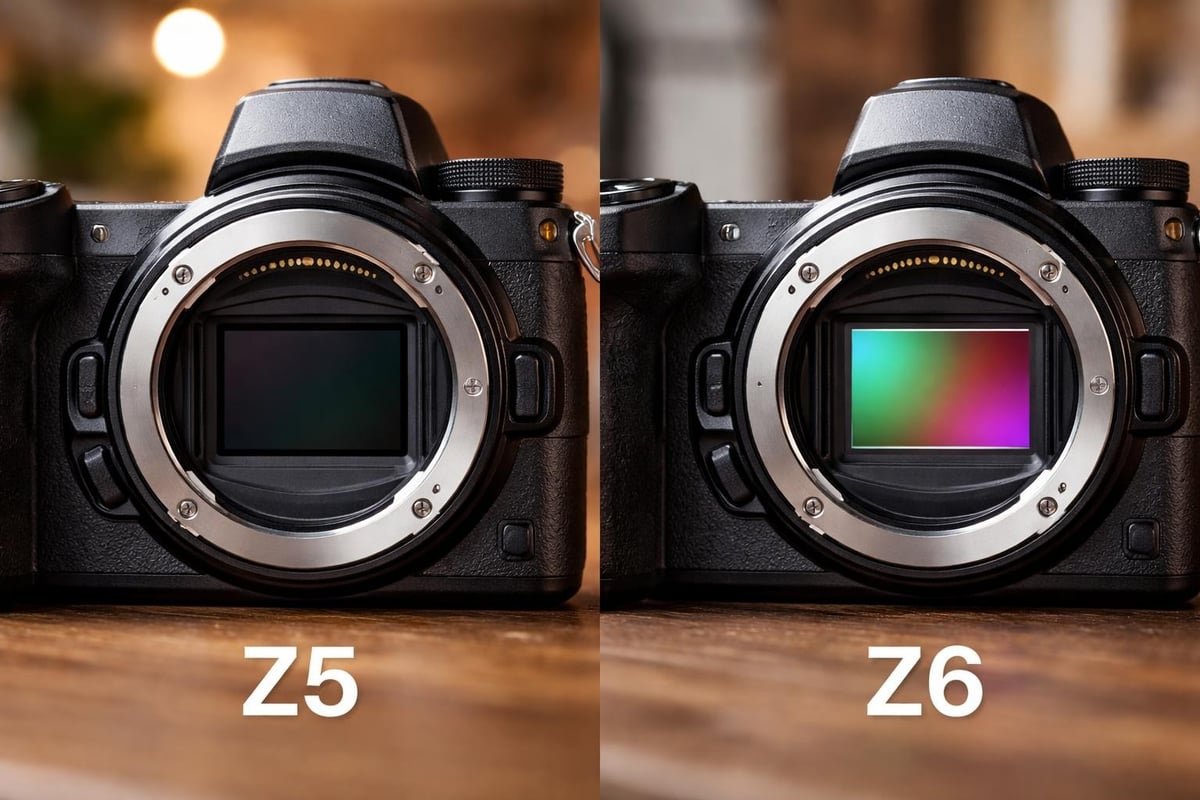
Both cameras use 24 megapixel full frame sensors, but they’re not identical. The Z6 features a back-illuminated (BSI) sensor design, which improves light gathering efficiency and typically delivers better high ISO performance. The Z5 uses a more traditional sensor design without back-illumination.
In practice, both cameras produce excellent image quality that stands up well even in 2026. You’ll get clean files with good dynamic range from either body. However, the Z6 does have a slight edge when you push into higher ISO territory, something worth considering if you regularly shoot in challenging lighting conditions.
The processing engines differ too. The Z6 uses the EXPEED 6 processor, while the Z5 uses a slightly less powerful iteration. This impacts several performance characteristics beyond just image quality.
Speed and performance where it counts
This is where the Nikon z5 vs z6 comparison gets interesting for action photographers. The continuous shooting capabilities differ significantly between these two bodies.
The Nikon Z6 can shoot at 12 frames per second with full autofocus and auto exposure. That’s genuinely fast, putting it in competitive territory with other enthusiast cameras. The Z5, on the other hand, maxes out at 4.5 frames per second. That’s a massive difference if you shoot sports, wildlife, or any fast-moving subjects.
Buffer depth and real-world shooting
Beyond the raw frame rate numbers, buffer depth matters for sustained shooting. The Z6 can maintain its 12 fps burst for longer sequences before slowing down. The Z5’s smaller buffer fills up faster, even at its slower shooting speed.
For event photography, wedding work, or sports, this difference becomes crucial. Missing a critical moment because your camera can’t keep up is frustrating. I’ve found the Z6’s faster burst rate invaluable for capturing peak action, while the Z5 requires more patience and timing.
However, if you primarily shoot landscapes, portraits, or other genres where rapid fire shooting isn’t essential, the Z5’s slower speed becomes less of a limitation. It’s all about matching the tool to your actual needs rather than chasing specifications.
Autofocus capabilities and tracking
Both cameras use hybrid autofocus systems with 273 points covering approximately 90% of the frame. The AF performance is solid on both bodies, with good subject tracking and reliable face and eye detection.
The Z6 has a slight advantage in AF speed and low-light sensitivity, focusing down to -6 EV compared to the Z5’s -4.5 EV. In practical terms, the Z6 can grab focus in darker conditions. This ties back to the BSI sensor design and more powerful processor.
For most shooting situations, you won’t notice a dramatic difference. Both cameras lock onto subjects quickly and track reasonably well. The continuous shooting speeds matter more than the AF systems themselves when comparing these two models.
Video capabilities and recording features
Video is another area where clear differences emerge in the nikon z5 vs z6 discussion. The Z6 offers more robust video features that appeal to hybrid shooters who need serious video capabilities.
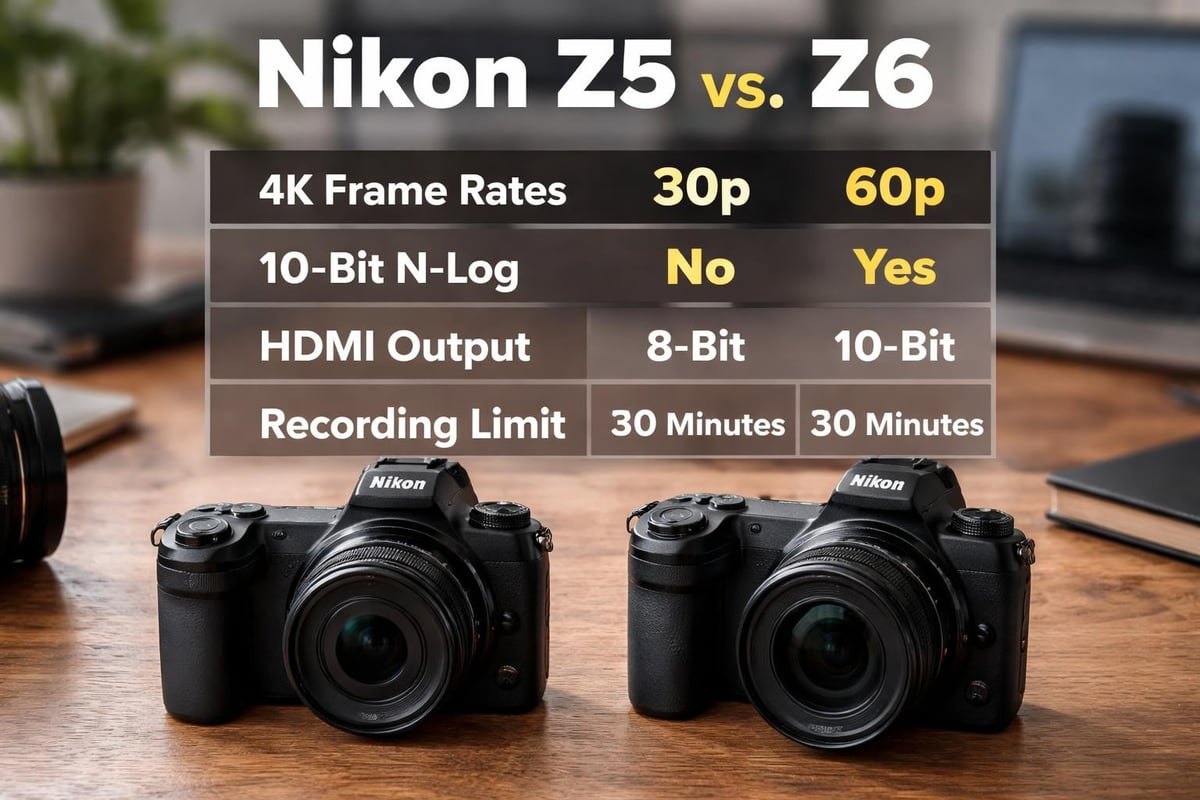
Both cameras can record 4K video at up to 30 frames per second. However, the Z6 adds 4K at 60p in a future firmware update (which has been available for years now), giving you slow-motion options that the Z5 simply can’t match. The Z6 also offers 10-bit N-Log output over HDMI, which provides substantially more grading flexibility for serious video work.
Recording limits and overheating
The Z5 has a 30-minute recording limit per clip, which is standard for many cameras in this class. The Z6 initially had similar limitations but firmware updates have improved this. Neither camera is prone to overheating in normal use, though extended 4K recording sessions in hot environments can push any camera.
For photographers who occasionally shoot video, the Z5 handles basic needs perfectly well. But if you’re serious about video production or run a hybrid workflow, the Z6’s additional capabilities justify the price difference. The design and video performance differences become more significant when you factor in professional video requirements.
| Feature | Nikon Z5 | Nikon Z6 |
|---|---|---|
| 4K 60p | No | Yes |
| 10-bit N-Log | No | Yes (via HDMI) |
| Recording limit | 30 minutes | 30 minutes (extended via firmware) |
| Full frame 4K | Yes (with crop) | Yes (with crop) |
Card slots and storage options
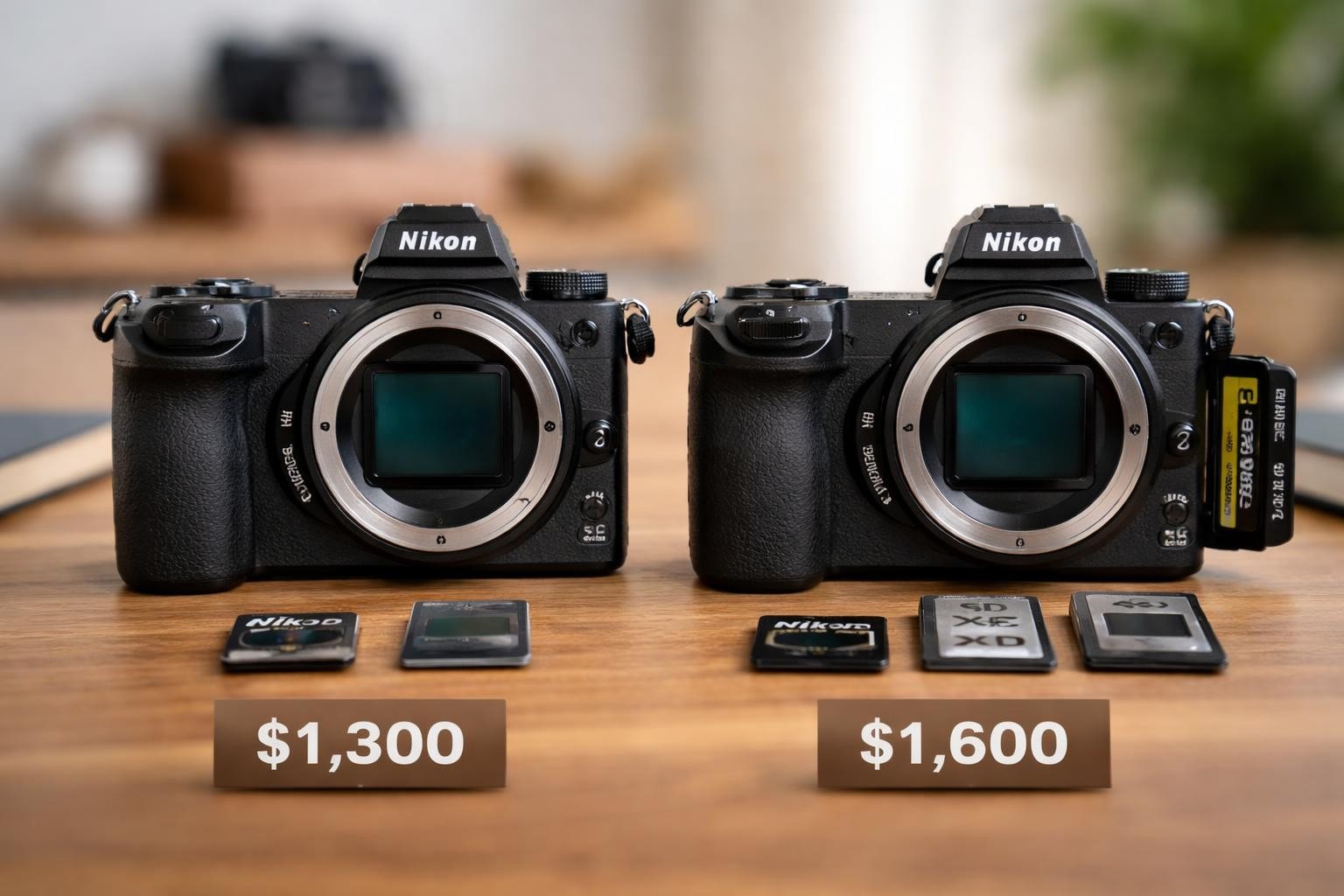
Here’s a practical difference that impacts workflow significantly. The Z6 features dual card slots (one XQD/CFexpress and one SD UHS-II), while the Z5 has dual SD card slots (both UHS-II).
At first, you might think the Z5’s dual SD setup is more convenient since SD cards are cheaper and more widely available. And you’d be partially right. However, the Z6’s XQD/CFexpress slot offers significantly faster write speeds, which matters when shooting 12 fps bursts or high-bitrate video.
Backup and workflow considerations
Having dual card slots on both cameras is excellent for backup purposes. You can set either camera to write files to both cards simultaneously, giving you instant redundancy that’s crucial for professional work.
The memory card slot differences affect more than just speed. CFexpress cards, while more expensive, are more durable and offer better sustained write speeds. SD cards are cheaper and more universally compatible. Your choice might depend on whether you already own cards or prefer one format over the other.
Build quality and weather sealing
Both cameras feature solid magnesium alloy construction with weather sealing, making them suitable for professional use in various conditions. The build quality feels comparable between the two, with no obvious cost-cutting on the Z5’s body construction.
The grip design, button layout, and overall ergonomics are nearly identical. Both cameras feel balanced with most Z mount lenses, and the controls fall naturally under your fingers. The electronic viewfinder is the same 3.69 million dot OLED panel in both cameras, providing a clear, lag-free view.
One minor difference: the Z6 is slightly heavier at 675 grams versus the Z5’s 675 grams. Actually, they’re essentially the same weight, which makes sense given the similar construction.
Battery life and power management
Both cameras use the EN-EL15c battery, and both deliver similar battery life ratings. The Z5 actually edges out the Z6 slightly in CIPA-rated shots per charge, likely due to its less power-hungry processor and slower continuous shooting speeds.
In real-world use, you’ll get a full day of shooting from either camera with moderate use. Heavy video recording drains batteries faster on both bodies. I recommend keeping at least one spare battery regardless of which camera you choose.
The USB-C port on both cameras allows in-camera charging, which is convenient for travel. You can also power the cameras via USB during long video shoots or time-lapse sequences.
LCD screens and interface
Both cameras feature tilting 3.2-inch touchscreen LCDs with 1.04 million dots. The screens tilt for high and low angle shooting but don’t fully articulate like some competing models. This might frustrate vloggers but works fine for most photography applications.
The menu system is identical across both cameras, using Nikon’s improved Z series interface. If you’re familiar with one, you’ll feel at home with the other. The touchscreen functionality is responsive and useful for quick menu navigation or focus point selection.
Price positioning and value proposition
This is where the nikon z5 vs z6 conversation gets practical. As of 2026, you can often find the Z5 as a body-only option or with a kit lens for considerably less than the Z6. The Z6, being older, sometimes appears in sales or used markets at attractive prices.
The Z5 typically positions itself as an entry point into full frame mirrorless, and it delivers on that promise. You get genuine full frame image quality, solid build, and access to the Z mount system without breaking the bank. For photographers stepping up from crop sensor cameras or exploring full frame for the first time, it makes sense.
The Z6 costs more but delivers tangible performance benefits that matter for certain shooting styles. The faster shooting speed, better video features, and slightly superior sensor justify the premium if those capabilities align with your needs.
Kit lens considerations
The Z5 often comes bundled with the 24-50mm f/4-6.3 lens, which is compact but limited in aperture. The Z6 has been offered with the 24-70mm f/4 S lens, which is optically superior and more versatile. Factor lens costs into your decision, as the right glass matters as much as the body itself.
Who should choose the Z5
The Z5 makes perfect sense for several photographer profiles. If you’re moving from a crop sensor camera and want full frame quality without spending enthusiast-level money, the Z5 delivers. The image quality rivals much more expensive cameras, and the dual SD card slots provide professional reliability.
Portrait photographers will appreciate the excellent image quality and find the 4.5 fps burst adequate for their work. Landscape shooters get everything they need: a sharp EVF, good dynamic range, and reliable weather sealing. The slower continuous shooting doesn’t matter when your subjects don’t move.
For wedding photographers on a budget or those looking for a backup body, the Z5 offers professional features at a reasonable price point. Just be aware of its limitations in fast-paced reception environments where you might want faster burst speeds.
If you’re exploring full frame mirrorless and considering options in the budget-friendly camera market, the Z5 deserves serious consideration alongside other entry-level full frame bodies.
Who should choose the Z6
The Z6 targets enthusiast photographers who need performance alongside image quality. Sports and wildlife shooters benefit significantly from the 12 fps burst rate and deeper buffer. That speed advantage alone can justify the price difference if you regularly shoot action.
Hybrid shooters who balance photography and video work will appreciate the Z6’s enhanced video features. The 10-bit output and faster frame rates open up creative possibilities that the Z5 can’t match. If video represents a significant portion of your work, the Z6 makes more sense.
Event photographers working in challenging lighting will value the Z6’s better low-light autofocus and superior high ISO performance. These differences, while not huge, can matter when you’re shooting a dimly lit reception or concert.
Lens ecosystem and future considerations
Both cameras use the Nikon Z mount, giving you access to the same growing lens ecosystem. Nikon has expanded the Z mount lineup significantly since these cameras launched, offering everything from fast primes to versatile zooms.
The build quality and compatibility factors ensure both cameras work excellently with all Z mount glass. You can also adapt F mount lenses via the FTZ adapter with good results, though native Z lenses generally perform better.
When choosing between these bodies, consider your long-term lens investment. The money you save on a Z5 body could fund better glass, which often matters more than camera body specifications for final image quality.
Firmware updates and current state
Both cameras have received multiple firmware updates since launch, adding features and improving performance. Nikon has shown good long-term support for these models, which matters when making an investment you’ll use for years.
The comprehensive comparisons available from when these cameras launched remain relevant, though firmware has addressed some early limitations. Check the current firmware versions and features before making your decision, as updates can change the value proposition.
Making your decision
The nikon z5 vs z6 choice ultimately comes down to matching capabilities to your actual shooting needs and budget. Neither camera is objectively better; they serve different purposes within Nikon’s lineup.
Ask yourself honest questions about your photography. Do you shoot fast action regularly? Do you need professional video features? Can you work within the Z5’s slower burst rate limitations? Your answers will guide you to the right choice.
| Consideration | Choose Z5 | Choose Z6 |
|---|---|---|
| Budget priority | Yes | No |
| Action/sports shooting | No | Yes |
| Serious video work | No | Yes |
| Portrait/landscape focus | Yes | Either |
| Entry to full frame | Yes | Either |
| Professional backup body | Yes | Yes |
Both cameras represent solid entries in the full frame mirrorless market, even in 2026. The Z5 delivers exceptional value, while the Z6 provides performance that justifies its higher price for photographers who need it.
Your choice should reflect your actual workflow rather than chasing specifications or trying to future-proof beyond reason. A Z5 in your hands today beats a Z6 you’re still saving for next year. Similarly, if you know you need the Z6’s capabilities, compromising with a Z5 will only lead to frustration.
The good news is that both cameras produce excellent images, handle well, and open up the impressive Z mount ecosystem. Whichever you choose, you’re getting a capable tool that can grow with your skills.
The decision between these two cameras depends on honest assessment of your photography needs and budget constraints. Both models offer excellent full frame performance with different strengths that serve different shooting styles. Whether you’re exploring mirrorless systems for the first time or upgrading your kit, Lens and Shutter provides detailed reviews and expert guidance to help you make informed decisions about cameras, lenses, and accessories that match your creative vision.