


If you are stepping into the world of photography in 2026, you are in for an inspiring adventure. The energy around picking up a camera for the first time is unmatched, and this year brings more opportunities than ever.
Choosing your first great starter digital camera can feel overwhelming, but the right guidance makes all the difference. This article is here to walk you through practical, actionable tips that make the process simple and enjoyable.
You will discover seven essential tips to help you avoid common pitfalls, get the most from your camera, and build real confidence behind the lens. Ready to start capturing memories and creating images you are proud of? Let us dive in.
Contents
- Understanding the basics of digital cameras
- 7 essential great starter digital camera tips for 2026 beginners
- 1. Tip: Choose a camera that fits your learning style and goals
- 2. Tip: Master the basics of exposure—aperture, shutter speed, ISO
- 3. Tip: Focus on composition before chasing gear upgrades
- 4. Tip: Understand and utilize your camera’s automatic and manual modes
- 5. Tip: Invest in essential accessories for a better experience
- 6. Tip: Learn to edit and organize your photos effectively
- 7. Tip: Practice regularly and join photography communities
- Overcoming common beginner challenges
- Resources for further learning and growth
Understanding the basics of digital cameras
Starting your photography journey means understanding the fundamentals of how digital cameras work. If you are looking for a great starter digital camera, a little knowledge goes a long way. Let us break down the essentials so you can make confident choices and start capturing with ease.
The evolution of digital cameras up to 2026
Digital cameras have changed dramatically in recent years. Gone are the days when beginners struggled with slow autofocus or grainy images. In 2026, improved sensors deliver sharp, vibrant results even in low light. Processors inside cameras now handle complex tasks instantly, like recognizing faces or tracking fast-moving subjects.
Autofocus systems have become smarter and more reliable, making it easier for anyone to capture clear shots. These advancements mean that a great starter digital camera is more accessible and enjoyable to use than ever. 2026 is a fantastic time to dive into photography, as modern cameras are built to help you learn faster and get better results right out of the box.
Core features every beginner should know
Before choosing your first great starter digital camera, get familiar with the basics:
- Megapixels: Think of megapixels like the number of tiles in a mosaic. More tiles mean more detail, but after a certain point, extra tiles do not always improve the picture.
- Sensor size: The sensor is the heart of your camera. Larger sensors capture more light, offering better quality, especially in dim settings.
- ISO: ISO controls how sensitive your camera is to light. Higher ISO can help in darker scenes, but too much can add noise, like static in a radio signal.
- Autofocus: Fast, accurate autofocus keeps your subject sharp, whether you are taking portraits or action shots.
Entry-level cameras often simplify these features, making them easy to understand. As you grow, you will notice how advanced models add more control and flexibility, but the essentials remain the same.
Types of digital cameras suitable for beginners
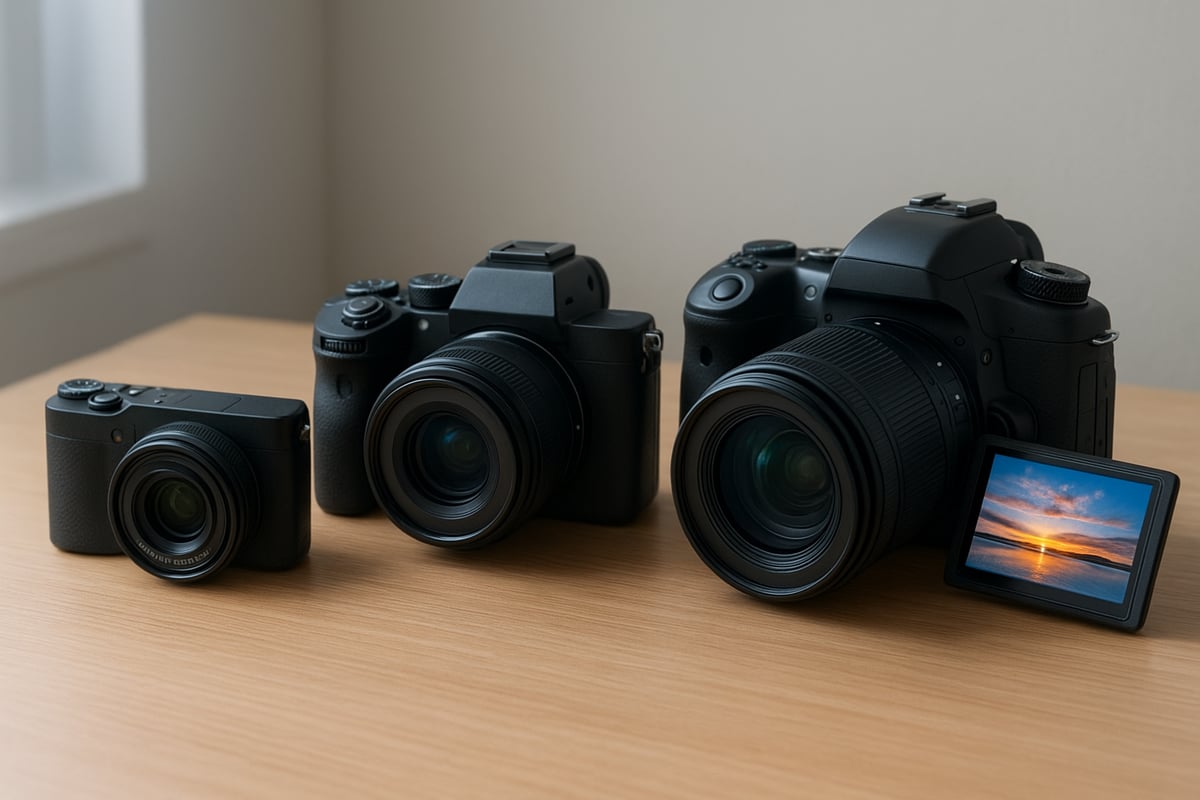
There are three main types you will encounter when searching for a great starter digital camera:
| Type | Pros | Cons | Best For |
|---|---|---|---|
| Compact | Lightweight, pocket-sized | Limited manual control | Everyday snapshots |
| Mirrorless | Great image quality, small | Lenses can be pricey | Travel, portraits, video |
| DSLR | Robust, optical viewfinder | Bulkier, learning curve | Landscapes, sports |
Matching your camera type to your interests is key. For instance, travelers might love a lightweight mirrorless, while someone passionate about wildlife might prefer a DSLR’s versatility. For more details on which type fits your needs, explore this digital cameras for photography overview.
Common myths about starter cameras
There are plenty of myths floating around when choosing a great starter digital camera:
- Myth: More megapixels always mean better photos.
- Reality: Image quality depends on sensor size, lens, and technique.
- Myth: Expensive gear guarantees great results.
- Reality: Skill, creativity, and practice matter much more than price tags.
- Myth: Starter cameras are just for learning.
- Reality: Many professionals use entry-level models for certain shoots.
Focus on learning and enjoying the process. Your camera is a tool, but your vision and technique are what truly make your photos stand out.
7 essential great starter digital camera tips for 2026 beginners
Embarking on photography in 2026 is an adventure filled with endless creative potential. With so many options and features, finding the right path can seem overwhelming. Here are seven essential tips, each designed to help you choose and make the most of your great starter digital camera, no matter your background or ambitions.

1. Tip: Choose a camera that fits your learning style and goals
Selecting your first great starter digital camera is not just about specs and numbers. The best camera complements your interests, whether you are passionate about travel, portraiture, or landscapes. Begin by thinking about what you want to capture most. For example, a compact camera might suit street photographers, while a mirrorless model is great for those who love versatility.
Comfort is crucial. Hold different cameras in your hands before deciding. A camera that feels right will encourage you to shoot more often. Pay attention to the menu system and on-screen guides. Intuitive controls help you learn quickly and minimize frustration.
Connectivity is another consideration. Many great starter digital camera models in 2026 offer seamless sharing to smartphones and cloud platforms. This feature is ideal for instant learning and feedback. Ergonomics, button placement, and touchscreen responsiveness all play a part in building confidence as a beginner.
Consider how your personality matches your camera choice. If you enjoy tinkering and manual control, a simple DSLR or mirrorless camera might be right. If you prefer point-and-shoot convenience, a compact model could be perfect.
To avoid overwhelm, focus on what matters most to you. Do not get lost in a sea of features. Instead, prioritize usability and hands-on experience.
For a deeper dive into selecting the perfect beginner camera, check out the Best camera for beginners guide. It offers clear recommendations and breaks down choices for every type of new photographer.
2. Tip: Master the basics of exposure—aperture, shutter speed, ISO
Understanding exposure is the foundation of every great starter digital camera journey. The exposure triangle—aperture, shutter speed, and ISO—controls how much light hits your camera sensor.
Aperture is like the pupil of your eye, controlling how much light enters. A wide aperture (low f-number) lets in more light and creates a blurry background, perfect for portraits. Shutter speed is how long your camera’s sensor is exposed to light. Fast shutter speeds freeze motion, while slow speeds can create motion blur for creative effects. ISO determines your camera’s sensitivity to light. Low ISO keeps images crisp, while high ISO helps in darker settings but can add grain.
Try these simple exercises: photograph the same subject with different apertures, experiment with long exposures at night, or adjust ISO in changing light. Use your camera’s Aperture Priority and Shutter Priority modes. These semi-automatic modes give you control over one setting while the camera handles the rest. It is a great way to learn without feeling overwhelmed.
Common beginner mistakes like blurry or dark photos usually trace back to exposure settings. Reviewing your photos and their settings helps you spot what went wrong and what worked.
Remember, every great starter digital camera gives you the tools to experiment. Embrace trial and error. The more you practice, the better your intuition for exposure will become.
3. Tip: Focus on composition before chasing gear upgrades
Many beginners believe that upgrading to the latest camera will instantly improve their photos. In reality, composition is what truly sets great images apart. Even with a basic great starter digital camera, you can create captivating photos by mastering a few simple rules.
Start with the rule of thirds: imagine your frame divided into nine equal sections and place your subject along these lines or at intersections. Leading lines, such as roads or fences, guide the viewer’s eye through your photo. Framing your subject with natural elements, like windows or branches, adds depth.
Practice composition daily. Photograph everyday objects from different angles, or use your phone’s grid overlay to help train your eye. Over time, you will notice your photos becoming more dynamic and engaging.
The most celebrated images are not always the sharpest or most expensive—they are the ones that tell a story or evoke emotion. Study your own work critically. Ask yourself what draws your attention and what could be improved.
Experienced photographers often say that vision matters more than gear. Invest your energy in developing your eye. Your great starter digital camera will become a powerful tool as your composition skills grow.
4. Tip: Understand and utilize your camera’s automatic and manual modes
Every great starter digital camera in 2026 offers a range of shooting modes, from fully automatic to fully manual. For beginners, starting with Auto mode is perfectly fine. It lets the camera handle all settings, so you can focus on capturing the moment.
As you gain confidence, try Program, Aperture Priority, and Shutter Priority modes. These give you more creative control without overwhelming you. Scene modes, like Portrait or Landscape, are designed for specific situations and can help you learn what settings work best in different environments.
The key is to experiment. Take the same shot using different modes, and compare the results. You will quickly see how each mode influences the final image.
Do not hesitate to step outside your comfort zone. Many beginners find that Manual mode, once intimidating, becomes second nature after some practice. It unlocks your camera’s full creative potential.
Stories from other photographers show that learning camera modes builds confidence and skill. Your great starter digital camera is designed to help you grow, so take advantage of all it offers.
5. Tip: Invest in essential accessories for a better experience
Accessories can make a significant difference in your experience with a great starter digital camera. Start with the essentials: a reliable memory card, an extra battery, and a basic tripod. These items ensure you are always ready to shoot and never miss a moment.
A comfortable camera strap and a protective case are small investments that pay off in usability and peace of mind. They help you carry your camera safely and prevent accidental drops.
Lens cleaning kits are often overlooked but vital. Dust or smudges on your lens can ruin otherwise perfect shots. Cleaning your gear regularly keeps image quality high.
A tripod is a game changer for low-light photography, long exposures, and group portraits. Even a budget tripod can stabilize your camera and open up creative possibilities.
When choosing accessories, prioritize items that solve real frustrations. For example, if you often travel, a lightweight camera bag is invaluable. Start simple and expand as your needs grow. Your great starter digital camera will serve you better with the right accessories in your kit.
6. Tip: Learn to edit and organize your photos effectively
Taking photos is only part of the journey. Editing and organization turn snapshots into polished works and memories that last. Every great starter digital camera produces images that can be elevated with a few simple adjustments.
Begin with basic editing: crop to improve composition, fine-tune exposure, and adjust colors for balance. User-friendly platforms like Lightroom, Snapseed, or even built-in phone apps make the process approachable.
Organizing your photo library from day one is crucial. Create folders by date or event, and use tags to find your favorite shots later. Regularly back up your images to cloud storage or an external drive to protect your memories.
Before-and-after edits reveal how small tweaks can make a big difference. Treat editing as an extension of your creative process, not a chore. It allows you to refine your vision and share your best work.
A well-organized collection makes reviewing your growth easy. Your great starter digital camera is just the beginning—editing helps your images reach their full potential.
7. Tip: Practice regularly and join photography communities
Consistent practice is the secret ingredient to mastering your great starter digital camera. The more you shoot, the more comfortable and creative you become.
Joining online or local photography communities accelerates your learning. Sharing your work and receiving feedback from others helps you see your strengths and areas to improve. Look for beginner-friendly groups, forums, or clubs that foster a supportive environment.
Participate in challenges or themed projects to stay motivated. These activities push you to try new techniques and subjects you might not explore otherwise.
Many beginners find that personal projects—like a photo-a-day challenge or documenting a favorite place—keep their passion alive. Community involvement often leads to friendships and collaborations that enrich your photography journey.
Set goals for yourself. Whether it is mastering a new camera mode or completing a creative project, milestones keep you moving forward. Your great starter digital camera will become an extension of your vision as you practice and connect with others.
Overcoming common beginner challenges
Starting out with a great starter digital camera can be both thrilling and a bit daunting. As a fellow photographer, I have seen many beginners face similar hurdles. The journey is filled with learning curves, but with the right mindset and practical strategies, you can turn these challenges into stepping stones for growth.

Dealing with information overload in 2026
The sheer volume of advice, reviews, and technical jargon about every new great starter digital camera can quickly overwhelm even the most eager beginner. Camera specs, menu options, and endless online opinions can cloud your judgment and stall your progress.
To cut through the noise, focus on the fundamentals. Identify a few trusted sources and stick with them. Create a checklist of essential camera features and skills you want to master first. I suggest limiting your reading to one or two comprehensive guides rather than jumping between dozens of forums.
Remember, learning photography is a journey, not a sprint. Take one topic at a time, apply what you learn, and gradually build your confidence. This approach will help you make the most of your great starter digital camera without feeling lost.
Managing expectations and avoiding frustration
It is easy to expect rapid progress when you first unbox your great starter digital camera, but real improvement takes patience. Many beginners struggle with early mistakes such as blurry images or exposure issues. These are not failures; they are vital learning experiences.
Set realistic goals for your first year. For example, aim to consistently shoot in good lighting or master the basic camera modes before tackling more advanced techniques. Celebrate small wins, like nailing focus or composing a more interesting shot.
If you ever feel stuck, remind yourself that every photographer started somewhere. The key is to keep experimenting and enjoy the learning process with your great starter digital camera. Progress will come with consistent effort.
Staying inspired and motivated
Inspiration can wane, especially when you hit plateaus or compare your work to seasoned photographers. One of the best ways to stay motivated is to connect with others who share your passion. Share your photos online, join local clubs, or participate in themed challenges.
For practical ideas and encouragement, check out these beginner photography tips. Learning from others’ journeys can spark new ideas and push you to try something different with your great starter digital camera.
Document your progress, revisit older shots, and notice how far you have come. Surround yourself with positive influences, and remember that every photo is a step forward.
Building a sustainable photography habit
Turning photography into a lasting hobby requires intention. Start by weaving camera time into your daily or weekly routine. Maybe it is a quick photo walk after work or capturing moments during family outings. Consistency is key to getting comfortable with your great starter digital camera.
Avoid burnout by mixing up your subjects and locations. Set personal projects—like a 30-day photo challenge or documenting a favorite place throughout the seasons. These small goals keep the process fun and engaging.
Above all, let curiosity drive you. The more you explore and experiment, the more rewarding your photography journey will become.
Resources for further learning and growth
Exploring the world of photography does not end with buying a great starter digital camera. The real growth comes from seeking out the right resources and dedicating yourself to continuous learning. Here, I will share practical paths, inspiration sources, and ways to stay up to date so you can get the most out of your journey.
Recommended learning paths for beginners
Starting with a great starter digital camera, the first step is building a solid foundation. I always recommend a step-by-step approach:
- Begin with your camera’s built-in guide modes and tutorials.
- Move to basic online courses focused on exposure, composition, and camera operation.
- Practice each concept with your own images, reviewing and learning from mistakes.
For structured advice on selecting and using your first camera, the Beginner camera for photography tips guide is a fantastic place to start. It breaks down key features and learning steps that matter for anyone starting out.
Remember, progress is faster when you balance practice with learning, and never hesitate to revisit the basics as you grow.
Effective ways to find inspiration and stay updated
One of the best ways to grow with your great starter digital camera is by immersing yourself in the vibrant photography community. Photo-sharing platforms like Flickr and Instagram offer endless inspiration and let you see how others use similar gear.
- Follow photographers whose style you admire.
- Join photography forums or social groups where beginners are welcome.
- Participate in online challenges to push your creativity.
Photography blogs and forums are a goldmine for tips and trends, and many offer regular updates on new techniques that you can try with your own camera. Staying active in these spaces keeps your motivation high and your skills evolving.
Keeping up with future camera trends and technology
The pace of change in camera technology is only accelerating, especially for anyone using a great starter digital camera. To stay informed, subscribe to trusted photography news sites, sign up for webinars, and watch for announcements about new features and updates.
Balance your curiosity about new gear with continued practice of essential skills. While technology opens new doors, creativity and technique remain the heart of great photography.
Document your progress, set personal projects, and remember that every new skill learned makes your great starter digital camera even more rewarding.