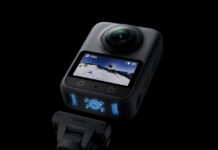

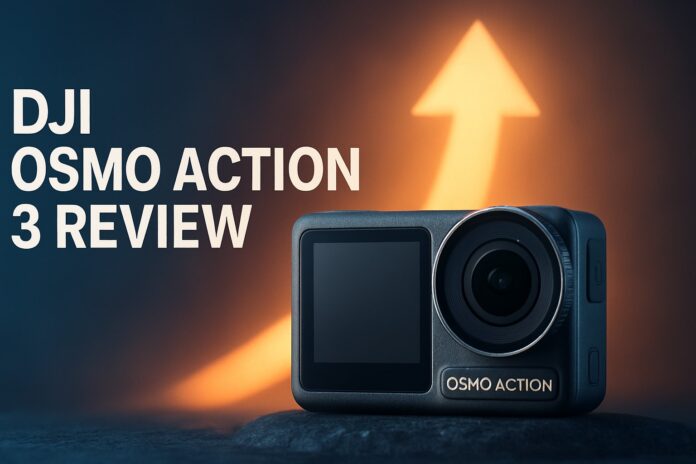
The DJI Osmo Action 3 is still worth buying in 2026 only when it is meaningfully cheaper than the Action 4 or Action 5 Pro. It remains a rugged, easy-to-mount 4K action camera with excellent stabilization, two usable touchscreens, strong cold-weather endurance, and 16-meter waterproofing without a case. Its weakness is the older 1/1.7-inch sensor: low-light footage, highlight recovery, and fine detail cannot match DJI’s newer models.
For daylight cycling, skiing, kayaking, travel, and a camera you can put in harm’s way, the Action 3 can be the sensible value choice. For night rides, indoor footage, demanding color work, or the best image quality, buy a newer model. Compare the live prices rather than assuming the older camera is automatically the bargain.
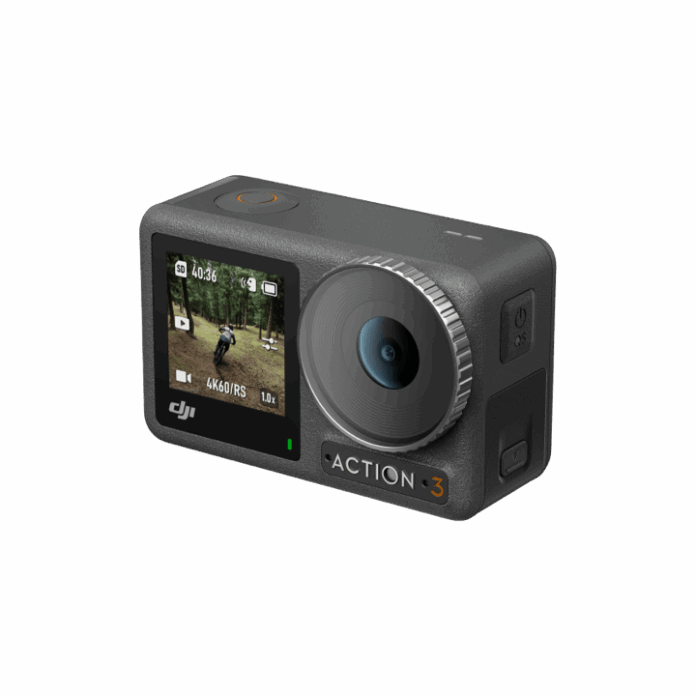
The Amazon listing above is for an Outdoor Combo. Bundle contents and names can change, so confirm the included batteries and mounts before ordering.
DJI Osmo Action 3 review: pros and cons
Pros
- Sharp, well-stabilized 4K footage in good light
- 4K at up to 120 fps for detailed slow motion
- Front and rear touchscreens make settings easier in any orientation
- Quick-release magnetic mount is fast and secure when fully seated
- Waterproof to 16 meters without a housing
- Strong cold-weather rating and fast charging
- 10-bit D-Cinelike recording is available with current firmware
Cons
- Small 1/1.7-inch sensor is visibly behind newer DJI cameras in low light
- No internal storage, GPS, subject tracking, or variable aperture
- Maximum resolution is 4K rather than the higher-resolution modes of newer rivals
- Activation and firmware updates require the DJI Mimo app
- Older stock can be poor value when discounted Action 4 bundles are close in price
Key specifications
| Specification | DJI Osmo Action 3 |
|---|---|
| Sensor | 1/1.7-inch CMOS |
| Photo resolution | 12MP |
| Maximum video | 4K at 120 fps |
| Field of view | Up to 155° |
| Color modes | Normal and 10-bit D-Cinelike with current firmware |
| Stabilization | RockSteady 3.0, HorizonBalancing, and HorizonSteady with mode-dependent limits |
| Displays | 2.25-inch rear touchscreen and 1.4-inch front touchscreen |
| Waterproofing | 16 m without a case; 60 m with DJI’s waterproof case |
| Battery | 1,770mAh Extreme Battery; up to 160 minutes under DJI’s laboratory conditions |
| Operating temperature | -20° to 45°C (-4° to 113°F) |
| Storage | microSD card required |
| Weight | 145 g |
DJI’s runtime figure uses 1080p/30 with stabilization and screens off in a controlled environment. Recording 4K, using both screens, wireless connections, or working in extreme temperatures will shorten it. The official downloads page has the current manual and firmware information.
Image quality: good in daylight, clearly dated after dark
The Action 3’s 4K footage remains useful when there is enough light. Colors are lively in Normal mode, and the wide lens captures an immersive perspective for handlebars, helmets, chest mounts, and handheld travel clips. At 4K/120, it can slow fast action to one-quarter speed on a 30p timeline, although that mode needs strong light and consumes battery and card space quickly.
The sensor is the limiting factor. A 1/1.7-inch chip has less light-gathering area than the 1/1.3-inch sensors in the Action 4 and Action 5 Pro. As light falls, noise reduction removes texture and moving subjects can look smeared. Bright skies and deep shadows also leave less room for correction. Night cycling, dim interiors, and underwater footage at depth are therefore better reasons to step up than headline resolution alone.
Ten-bit D-Cinelike is useful for editors who want more flexibility than the standard profile. It does not turn the camera into a large-sensor cinema camera, and it requires grading. Use Normal color when speed and consistency matter more than post-production latitude.
Stabilization and horizon control
RockSteady 3.0 is still one of the Action 3’s strongest features. It makes running, cycling, skiing, and handheld walking footage easier to watch without a gimbal. HorizonBalancing corrects moderate camera tilt while preserving more resolution and frame-rate flexibility than full HorizonSteady. HorizonSteady keeps the horizon level through a complete rotation, but it uses a stronger crop and is unavailable in the camera’s most demanding modes.
Choose the least aggressive mode that solves the movement. RockSteady is the sensible default for most action. HorizonBalancing suits mounts that lean noticeably. Full HorizonSteady is valuable for unpredictable rotation, but its crop can make an already close point-of-view shot feel cramped.
Handling, mounting, and durability
The dual touchscreens are more useful than a front status display. You can change exposure, frame rate, stabilization, and framing from either side, which helps when the camera faces you or sits in a tight mount. Voice control and the Quick Switch button provide alternatives when gloves or water make touch controls inconvenient.
DJI’s magnetic quick-release system is faster than repeatedly turning a thumb screw. The camera can mount horizontally or vertically, and the cage makes portrait footage straightforward. Always press until both clips visibly lock and check the mount before high-impact use; magnetic alignment assists the connection, but the mechanical clips secure it.
The body is waterproof to 16 meters without a housing, provided the battery and USB-C doors are correctly closed and their seals are clean. Rinse it with fresh water after saltwater use. DJI rates operation down to -20°C, which makes the camera attractive for winter sports, but cold still reduces real-world runtime and makes carrying a warm spare battery worthwhile.
Battery life and charging
The Extreme Battery was a major Action 3 upgrade and remains competitive. DJI’s 160-minute claim is a best-case benchmark, not a 4K expectation. A realistic kit for a long outing needs spare batteries, especially with 4K/60 or 4K/120, stabilization, high screen brightness, and frequent standby use.
With DJI’s compatible 30W charger, the battery can reach about 80% in roughly 18 minutes under the company’s test conditions. The optional multifunctional battery case stores and charges three batteries and can act as a power bank. That convenience is a genuine reason to prefer a multi-battery bundle, but only if the current bundle price makes sense.
Standard, Adventure, and Outdoor Combos
The camera body is the same across the bundles; the difference is the accessories. DJI originally sold Standard and Adventure Combos, while retailer listings now also use names such as Outdoor Combo. Contents vary over time, so compare the itemized list rather than the label.
- One-battery bundle: enough for short sessions or buyers who already own compatible accessories.
- Multi-battery bundle: better for travel, skiing, cycling, and full days away from power.
- Mount-focused bundle: worthwhile only when the included chest, handlebar, selfie-stick, or backpack mounts match your planned use.
Do not pay for a large accessory package simply because the camera is old. Compare its live total with an Action 4 bundle that includes the batteries and mounts you actually need.
Action 3 vs Action 4, Action 5 Pro, and Action 6
| Model | Main advantage | Best reason to choose it |
|---|---|---|
| Osmo Action 3 | Lowest sensible entry cost | Daylight action and rough-use value |
| Osmo Action 4 | Larger 1/1.3-inch sensor and better low light | The balanced upgrade when its price is close |
| Osmo Action 5 Pro | Longer rated runtime, OLED screens, built-in storage, and subject tracking | Frequent creators who value convenience and low-light gains |
| Osmo Action 6 | Newer 1/1.1-inch square sensor and variable aperture | Maximum current DJI capability, subject to US seller and warranty availability |
The DJI Osmo Action 4 is the most important comparison. It preserves the familiar shape and workflow while improving low-light image quality. If the difference after matching batteries and mounts is small, the Action 4 is the safer purchase. The Action 5 Pro adds workflow advantages such as internal storage, OLED displays, and direct compatibility with supported DJI microphones. The Action 6 moves further ahead technically, but US buyers should verify the seller, warranty coverage, and app availability before importing or buying marketplace stock.
Who should buy the DJI Action 3?
Buy it if:
- You mainly record in daylight and publish in 4K or 1080p.
- You need a waterproof camera for sports, travel, or risky mounting positions.
- You find a complete bundle substantially below a comparable Action 4 kit.
- You value quick mounting, dual touchscreens, and cold-weather operation.
Skip it if:
- You often shoot at night, indoors, or in high-contrast scenes.
- You want internal storage, subject tracking, or the newest microphone workflow.
- The Action 4 costs only slightly more after matching accessories.
- You need resolution above 4K for reframing.
Setup choices that improve the result
- Update the firmware through DJI Mimo before relying on 10-bit modes or judging stability.
- Use 4K/30 for general footage, 4K/60 for smoother action, and 4K/120 only when slow motion justifies the light and storage cost.
- Start with RockSteady rather than maximum horizon correction to retain a wider view.
- Use a fast, supported microSD card and format it in the camera before an important session.
- Clean the lens protector and door seals after water, dust, or fingerprints.
- For cleaner speech, use a protected external microphone adapter or a compatible wireless audio setup instead of relying on exposed onboard microphones in strong wind.
Final verdict
The Osmo Action 3 has aged into a conditional recommendation, not a universal bargain. Its stabilization, mounting system, waterproof body, dual touchscreens, and cold-resistant battery still make it a capable daylight action camera. The small sensor is the compromise you cannot upgrade later.
Choose it when a verified Action 3 bundle is clearly cheaper and its included accessories save you money. Otherwise, the Action 4 is usually the smarter minimum, while the Action 5 Pro and Action 6 serve buyers who shoot often enough to benefit from their image-quality and workflow improvements. Our guide to the best GoPro alternatives places those options in the wider action-camera market.
Frequently asked questions
Does DJI Osmo Action 3 record 10-bit video?
Yes. Current firmware supports 10-bit D-Cinelike in selected video modes. It provides more grading flexibility than Normal color but requires an editing workflow that handles 10-bit footage.
Is DJI Action 3 good in low light?
It is usable under strong artificial lighting, but its 1/1.7-inch sensor is not a strong low-light performer. The Action 4 and later models are better choices for night, indoor, and deep underwater footage.
Is the DJI Action 3 waterproof?
DJI rates it to 16 meters without a case and 60 meters with its waterproof case. The battery and USB-C doors must be fully closed, and their seals need to be clean and undamaged.
Do you need the DJI Mimo app?
Yes. The app is required for activation and is used for firmware updates, remote control, and transferring footage. US buyers should confirm current app installation instructions directly with DJI.