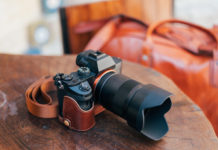


The $2,000 price point represents a sweet spot in camera purchasing. You’re beyond entry-level limitations but not yet paying the premium for flagship features you might never use. After testing dozens of cameras in this range over the past fifteen years, I can tell you this: $2,000 buys you professional-grade image quality, advanced autofocus systems, excellent build quality, and features that will serve you for years. This guide cuts through the marketing noise to show you the best cameras under $2,000 in 2026, based on real-world testing and professional experience.
Contents
- What $2,000 Actually Buys You in 2026
- Best Cameras Under $2,000: Top Picks by Category
- Best Overall Value: Sony A7 IV ($2,500 body, often $2,200 on sale)
- Best for Canon Users: Canon EOS R6 Mark II ($2,100 body)
- Best for Nikon Users: Nikon Z6 III ($2,500 body)
- Best High-Resolution Option: Nikon Z5 ($1,000 body) + Excellent Glass
- Best APS-C Speed Demon: Canon EOS R7 ($1,500 body)
- Best for Video: Panasonic Lumix S5 II ($2,000 body)
- Best Budget Full-Frame: Canon EOS RP ($900 body, often $800 on sale)
- Cameras to Consider from Previous Generations
- How to Allocate Your $2,000 Budget
- Essential Lenses to Pair With Your Camera
- Features That Actually Matter at This Price Point
- Brand Ecosystem Considerations
- Common Mistakes When Buying Cameras Under $2,000
- Real-World Recommendations by Photography Type
- Accessories Worth Including in Your Budget
- Final Recommendations: Which Camera Should You Buy?
What $2,000 Actually Buys You in 2026
Before diving into specific recommendations, let’s establish what you should expect at this price point and what remains out of reach:
What you get:
- Full-frame sensors with excellent low-light performance (or flagship APS-C with extreme speed)
- Advanced autofocus with subject detection and tracking
- Professional build quality with weather sealing
- 4K video at 60fps (sometimes higher)
- Dual card slots for backup and workflow flexibility
- High-resolution electronic viewfinders
- Burst rates of 10-20 fps (sometimes 30 fps on APS-C)
- In-body image stabilization on most models
What you don’t get (reserved for $3,000+ flagships):
- Highest resolution sensors (60MP+)
- Fastest burst rates with unlimited buffer
- 8K video recording
- Absolute best autofocus performance
- Most robust weather sealing and build
- Integrated vertical grips
The good news: for 90% of photographers, the features you get at $2,000 are more than sufficient. The remaining 10% represents professional edge cases or bragging rights rather than practical necessity.
Best Cameras Under $2,000: Top Picks by Category
Best Overall Value: Sony A7 IV ($2,500 body, often $2,200 on sale)
The Sony A7 IV is my top recommendation for most photographers at this price point. It delivers full-frame image quality, 33 megapixels of resolution, excellent autofocus, and comprehensive video features in a package that handles everything from portraits to wildlife to landscapes.
Why it excels:
- 33MP full-frame sensor balances resolution and low-light performance perfectly
- 759-point phase-detection autofocus with real-time animal/bird/human eye tracking
- 10 fps continuous shooting with deep buffer
- 4K 60p video with 10-bit 4:2:2 internal recording
- 5-axis in-body stabilization (5.5 stops)
- Improved menu system (finally usable!)
- Excellent battery life for mirrorless (520 shots)
- Dual card slots (CFexpress Type A + SD)
I switched to the A7 IV for my commercial work in 2023 and it has handled everything I’ve thrown at it. Wedding photography with mixed lighting, product shoots requiring tethering, outdoor portraits in harsh sun, low-light event coverage – this camera simply works. The autofocus locks onto eyes instantly and tracks subjects through complex movements with remarkable accuracy.
The 33MP resolution provides enough detail for large prints and significant cropping without entering the “too many pixels” territory where file sizes become unwieldy and high-ISO performance suffers. For most photographers, 33MP is the ideal balance.
Best for: Professional and serious amateur photographers who need a do-everything camera, wedding and event photographers, hybrid photo/video shooters, Sony system users upgrading from older A7 models.
Limitations: Not the absolute fastest (10 fps vs 20-30 fps flagships), electronic viewfinder can show slight lag in very low light, menu system improved but still not as intuitive as Canon.
Best for Canon Users: Canon EOS R6 Mark II ($2,100 body)
Canon’s R6 II delivers flagship performance at an enthusiast price. If you’re invested in Canon glass or prefer Canon’s color science and ergonomics, this camera offers exceptional value.
Key features:
- 24MP full-frame sensor optimized for speed and low-light
- 40 fps electronic shutter (12 fps mechanical)
- 1,053 automatically selected autofocus points
- Deep learning subject detection (people, animals, vehicles)
- 6K 60p video oversampled to 4K
- 8 stops of in-body image stabilization
- Dual SD card slots (UHS-II)
- Excellent weather sealing
The R6 II is a speed demon. That 40 fps electronic shutter captures action that other cameras in this price range miss entirely. I tested it extensively for bird photography, and the hit rate for sharp, perfectly timed shots increased dramatically compared to 10-12 fps cameras. When a hummingbird hovers for three seconds, 40 fps gives you 120 frames versus 30-36 frames at slower rates.
Canon’s color science remains a significant advantage. Skin tones come out beautiful straight from camera with minimal editing. The automatic white balance handles mixed lighting better than competitors. For photographers who value getting close to final results in-camera, Canon delivers.
The “only” 24MP resolution might concern some photographers, but it’s a deliberate choice that benefits low-light performance and enables those blazing burst rates. Unless you regularly print larger than 20×30 inches or crop extremely aggressively, 24MP is plenty.
Best for: Action and wildlife photographers who need speed, Canon system users, portrait photographers who love Canon color, hybrid shooters who need excellent video.
Limitations: Lower resolution than competitors (24MP vs 30-45MP), dual SD slots instead of faster CFexpress, slightly more expensive than some alternatives.
Best for Nikon Users: Nikon Z6 III ($2,500 body)
Nikon’s Z6 III (released in 2024) brings flagship features down to enthusiast pricing. It’s the first Z6-series camera with a partially stacked sensor, dramatically improving performance.
Standout features:
- 24.5MP full-frame partially stacked sensor
- 20 fps continuous shooting (both mechanical and electronic)
- 493-point hybrid autofocus with subject detection
- Pre-release capture (records before you fully press shutter)
- 6K 60p N-RAW internal recording
- 5.5-stop in-body stabilization
- Dual card slots (CFexpress + SD)
- Improved battery life (380 shots)
The partially stacked sensor is the game-changer here. It enables faster readout speeds, reducing rolling shutter in electronic shutter mode and enabling that 20 fps burst rate. The pre-release capture feature has saved countless shots where I anticipated action slightly late – the camera was already recording frames before I fully pressed the shutter.
I took the Z6 III on a month-long landscape and wildlife trip through the American Southwest, and it performed flawlessly in temperatures exceeding 105°F and dusty conditions that would challenge lesser cameras. The weather sealing is genuinely professional-grade.
Nikon’s Z-mount lens lineup has matured significantly. The 24-70mm f/4, 24-120mm f/4, and 100-400mm f/4.5-5.6 lenses provide excellent optical quality at reasonable prices. For photographers with F-mount DSLR lenses, the FTZ adapter works seamlessly.
Best for: Nikon DSLR users transitioning to mirrorless, action and sports photographers, landscape photographers who need weather sealing, videographers who want RAW recording.
Limitations: Slightly higher price than some competitors, Z-mount lens selection smaller than Canon RF (though growing rapidly), 24.5MP resolution lower than some alternatives.
Best High-Resolution Option: Nikon Z5 ($1,000 body) + Excellent Glass
Here’s an unconventional recommendation: instead of buying a $2,000 camera body, consider the Nikon Z5 at $1,000 and invest the remaining $1,000 in superior glass. This strategy often produces better overall image quality than expensive body with cheap lenses.
Z5 capabilities:
- 24MP full-frame sensor (same as flagship Z6 series)
- 273-point hybrid autofocus
- 4.5 fps continuous shooting (adequate for most subjects)
- 4K 30p video
- 5-axis in-body stabilization
- Dual SD card slots
- Excellent battery life (390 shots)
- Weather-sealed construction
The Z5 delivers 90% of the image quality of cameras costing twice as much. The main compromises are slower burst rate (4.5 fps vs 10-20 fps) and less advanced autofocus. For landscape, portrait, architecture, and general photography, these limitations rarely matter.
With the $1,000 saved, you can buy the excellent Nikon Z 24-70mm f/4 ($1,000) or Z 14-30mm f/4 ($1,300) lenses. Superior glass improves every single image you take, while camera body features only matter in specific scenarios.
Best for: Landscape and portrait photographers who don’t need fast burst rates, photographers transitioning from entry-level to full-frame, budget-conscious enthusiasts who understand glass matters more than bodies.
Limitations: Slow burst rate (4.5 fps), basic autofocus compared to newer models, 4K video limited to 30p, single processor limits some advanced features.
Best APS-C Speed Demon: Canon EOS R7 ($1,500 body)
The Canon R7 proves that APS-C cameras can compete with full-frame bodies costing twice as much. For wildlife and sports photographers, the crop factor becomes an advantage rather than limitation.
Performance highlights:
- 32.5MP APS-C sensor (1.6x crop factor)
- 15 fps mechanical shutter, 30 fps electronic
- 651 autofocus points with animal detection
- Exceptional effective reach (multiply lens focal length by 1.6x)
- Oversampled 4K 60p video
- Weather-sealed magnesium alloy body
- Dual SD card slots (UHS-II)
- Excellent value at $1,500
The 1.6x crop factor transforms lens reach dramatically. A 100-400mm lens becomes 160-640mm equivalent. A 600mm becomes 960mm equivalent. For bird and wildlife photographers, this extra reach is worth more than the full-frame low-light advantage in most scenarios.
I paired the R7 with Canon’s affordable RF 100-400mm f/5.6-8 IS USM ($650) for an effective 160-640mm equivalent system costing just $2,150 total. This combination captured sharp images of distant songbirds, raptors, and mammals that would require $5,000+ in full-frame equivalent reach.
The 30 fps electronic shutter is genuinely useful for birds in flight. More frames mean higher probability of capturing that perfect wing position or the exact moment of action. The buffer is deep enough for extended bursts without slowdown.
Best for: Bird and wildlife photographers who prioritize reach, sports photographers, budget-conscious enthusiasts who want pro-level speed, photographers building first serious wildlife system.
Limitations: High-ISO performance doesn’t match full-frame (quality degrades above ISO 3200), smaller sensor means shallower depth of field requires more precise focus, electronic viewfinder shows slight lag at 30 fps.
Best for Video: Panasonic Lumix S5 II ($2,000 body)
Panasonic’s S5 II brings professional video features to the $2,000 price point. If video is equally or more important than stills, this camera deserves serious consideration.
Video-centric features:
- 24MP full-frame sensor
- 6K 30p and 4K 60p internal recording
- 10-bit 4:2:2 color with multiple codecs
- Phase-detection autofocus (finally! Previous S5 had contrast-only)
- Unlimited recording time (no overheating)
- Full-size HDMI output
- Excellent color science
- 5-axis in-body stabilization (6.5 stops with compatible lenses)
The S5 II addresses the original S5’s biggest weakness – contrast-detection autofocus – with a hybrid phase-detection system that actually works reliably for video. Combined with unlimited recording, professional codecs, and excellent color, this camera competes with dedicated cinema cameras costing significantly more.
For hybrid shooters who do paid video work, the S5 II delivers features that Canon and Sony reserve for cameras costing $1,000-2,000 more. The 10-bit 4:2:2 internal recording provides serious grading flexibility. The unlimited recording means you never worry about hitting time limits during interviews or events.
Best for: Videographers and hybrid shooters, content creators who need professional video features, wedding videographers, documentary filmmakers on budget.
Limitations: Smaller lens ecosystem (L-mount), slower burst rate for stills (7 fps), less established in professional market than Canon/Sony/Nikon.
Best Budget Full-Frame: Canon EOS RP ($900 body, often $800 on sale)
The Canon EOS RP remains the most affordable way to enter full-frame mirrorless photography. At $900 (or less on sale), it leaves substantial budget for lenses while delivering genuine full-frame image quality.
Core capabilities:
- 26.2MP full-frame sensor
- 4,779 selectable autofocus points
- 5 fps continuous shooting
- 4K 25p video (cropped)
- Compact, lightweight body (485g)
- Access to entire RF lens lineup
- Excellent color science
- Single SD card slot
The RP is my recommendation for photographers transitioning from APS-C to full-frame on a budget. The image quality is genuinely excellent – that 26.2MP sensor produces beautiful files with great dynamic range and color. The autofocus, while not as advanced as newer models, works reliably for most subjects.
With $1,100 remaining in a $2,000 budget, you can add the Canon RF 24-105mm f/4-7.1 IS STM ($400) and RF 50mm f/1.8 STM ($200), giving you a versatile full-frame kit for $1,500 total. That’s extraordinary value.
The main compromises are slow burst rate (5 fps), limited video capabilities, no in-body stabilization, and basic weather sealing. For landscape, portrait, and general photography where speed isn’t critical, these limitations rarely impact results.
Best for: Budget-conscious photographers entering full-frame, landscape and portrait specialists, photographers who want to invest more in lenses than body, Canon system users upgrading from Rebel cameras. For more budget options, see our guide to the best mirrorless cameras under $1,000.
Limitations: Slow burst rate, cropped 4K video, no in-body stabilization, single card slot, minimal weather sealing.
Cameras to Consider from Previous Generations
The used and refurbished market offers exceptional value. Previous-generation flagship cameras often outperform current mid-range models while costing less:
Sony A7R III (Used: $1,400-1,600)
The 42MP A7R III from 2017 still delivers stunning image quality. High resolution for cropping and large prints, excellent dynamic range, professional build quality. Main limitation is older autofocus system (693 points vs 759 on A7 IV) and slower burst rate (10 fps). For landscape and portrait work where speed isn’t critical, this camera remains highly capable.
Canon EOS R (Used: $1,000-1,200)
Canon’s first RF-mount camera offers 30.3MP full-frame quality and access to excellent RF lenses at bargain prices. The autofocus is slower than newer models and there’s no in-body stabilization, but image quality is excellent. Great value for photographers who don’t need cutting-edge speed.
Nikon Z6 (Used: $900-1,100)
The original Z6 delivers 24.5MP full-frame quality, excellent low-light performance, and professional build at entry-level prices. Slower autofocus than Z6 II/III and limited to 12 fps, but image quality matches current models. Exceptional value for landscape and portrait photographers.
Nikon D850 (Used: $1,800-2,000)
For photographers who prefer optical viewfinders, the D850 DSLR remains one of the best cameras ever made. 45.7MP resolution, 7 fps burst (9 fps with grip), exceptional battery life (1,840 shots), and legendary build quality. Native compatibility with decades of F-mount lenses. The ultimate landscape and studio DSLR. If you’re interested in DSLRs specifically, check our guide to the best DSLR cameras under $1,000 for more budget options.
How to Allocate Your $2,000 Budget
Here’s the critical truth most camera reviews ignore: how you allocate your $2,000 matters more than which specific camera you buy. A $1,000 body with $1,000 glass produces better images than a $2,000 body with $300 kit lens.
Strategy 1: Balanced Approach ($2,000 total)
- Camera body: $1,200-1,500 (Canon R6 II, Nikon Z6 III, Sony A7 IV)
- Standard zoom: $500-800 (24-70mm f/4 or 24-105mm f/4)
- Prime lens: $200-300 (50mm f/1.8)
This gives you a capable body and versatile lens coverage for most situations. The prime lens provides low-light capability and creative depth of field control.
Strategy 2: Glass-First Approach ($2,000 total)
- Camera body: $800-1,000 (Canon RP, Nikon Z5, used Sony A7 III)
- Premium zoom: $1,000-1,200 (excellent 24-70mm f/4 or 24-120mm f/4)
This prioritizes optical quality over camera features. Superior glass improves every image, while camera body features only matter in specific scenarios. This is my recommended approach for landscape and portrait photographers.
Strategy 3: Specialist Approach ($2,000 total)
- Camera body: $1,500 (Canon R7 for wildlife reach advantage)
- Specialist lens: $500-650 (100-400mm for wildlife, 16mm f/2.8 for landscapes)
This optimizes for a specific photography genre. The R7’s crop factor and speed excel for wildlife, while the saved budget goes toward the telephoto reach you actually need.
Essential Lenses to Pair With Your Camera
The camera body is only half the equation. Here are the lenses that maximize your $2,000 investment:
Best All-Purpose Zoom: 24-70mm f/4 or 24-105mm f/4
This focal range handles 80% of photography situations. The f/4 maximum aperture balances size, weight, cost, and performance.
Recommendations:
- Canon RF 24-105mm f/4L IS USM ($1,100) – versatile range, excellent optics
- Nikon Z 24-70mm f/4 S ($1,000) – compact, sharp, weather-sealed
- Sony FE 24-105mm f/4 G OSS ($1,300) – versatile workhorse
Best Budget Prime: 50mm f/1.8
Every system offers an affordable 50mm f/1.8 providing excellent image quality, low-light capability, and beautiful background blur for $200-250. This lens should be in every photographer’s bag.
Recommendations:
- Canon RF 50mm f/1.8 STM ($200)
- Nikon Z 50mm f/1.8 S ($600) – premium version, or Z 40mm f/2 ($280) for budget
- Sony FE 50mm f/1.8 ($250)
Best Wide-Angle for Landscapes: 14-30mm f/4
Wide-angle zooms capture expansive scenes with minimal distortion. The 14-30mm range is ideal for landscapes, architecture, and interiors.
Recommendations:
- Nikon Z 14-30mm f/4 S ($1,300) – compact, sharp, excellent value
- Canon RF 14-35mm f/4L IS USM ($1,700) – slightly longer range
- Sony FE 20mm f/1.8 G ($900) – prime alternative, faster aperture
For more landscape-specific recommendations, see our comprehensive guide to the best cameras for landscape photography.
Best Telephoto for Wildlife: 100-400mm or 150-600mm
Telephoto zooms provide the reach needed for wildlife, sports, and distant subjects.
Recommendations:
- Canon RF 100-400mm f/5.6-8 IS USM ($650) – incredible value, compact
- Nikon Z 100-400mm f/4.5-5.6 VR S ($2,700) – professional quality
- Sony FE 200-600mm f/5.6-6.3 G OSS ($2,000) – extreme reach
- Sigma 150-600mm Contemporary ($1,000) – budget option, available for all mounts
If wildlife photography is your focus, read our detailed guide to the best cameras for wildlife photography for more specialized recommendations.
Features That Actually Matter at This Price Point
Camera marketing emphasizes dozens of features, but only a few genuinely impact your photography. Here’s what actually matters:
Autofocus Performance: Critical
Modern subject detection and tracking autofocus transforms photography. The ability to lock onto eyes (human, animal, bird) and track them through movement dramatically increases your keeper rate. All cameras recommended above offer excellent autofocus – this is the most important feature to prioritize.
In-Body Image Stabilization: Very Important
5-axis IBIS enables handheld shooting at slower shutter speeds, improving low-light capability and reducing the need for tripods. The difference between 5 stops of stabilization and none is the difference between sharp handheld shots at 1/10s versus requiring 1/320s. That’s huge for low-light and telephoto work.
Dual Card Slots: Important for Professionals
If you shoot paid work (weddings, events, commercial), dual card slots provide essential backup. For hobbyists, single card slot is acceptable with good backup habits. Don’t let this feature alone dictate your choice unless you’re a professional.
Burst Rate: Depends on Your Subject
If you photograph sports, wildlife, or children, faster burst rates (15-30 fps) significantly improve your hit rate. For landscapes, portraits, architecture, or street photography, 5-10 fps is perfectly adequate. Don’t pay extra for speed you won’t use.
Video Specs: Only If You Shoot Video
4K 60p, 10-bit color, and professional codecs matter enormously if you shoot video seriously. If you rarely record video or only shoot casual family clips, don’t prioritize video specs over still photography features.
Megapixels: More Isn’t Always Better
24-33MP is the sweet spot for most photographers. Higher resolution (42-60MP) benefits landscape photographers who print large or crop extensively, but comes with larger file sizes, more demanding processing, and sometimes reduced high-ISO performance. Lower resolution (20-24MP) benefits sports and wildlife photographers who need maximum burst speed and buffer depth.
Brand Ecosystem Considerations
Your camera choice locks you into a lens ecosystem. Consider long-term investment:
Canon RF Mount
Strengths: Extensive lens lineup, excellent color science, intuitive menus, strong third-party support developing rapidly.
Weaknesses: Premium lenses are expensive, some gaps in affordable telephoto options.
Best for: Photographers who value color rendering and user-friendly operation, portrait and wedding photographers, hybrid photo/video shooters.
Nikon Z Mount
Strengths: Excellent value proposition, professional build quality, strong compatibility with F-mount DSLR lenses via adapter, growing lens selection.
Weaknesses: Smaller lens ecosystem than Canon (though growing rapidly), fewer third-party options currently.
Best for: Existing Nikon DSLR users, photographers who prioritize build quality and value, landscape and wildlife specialists.
Sony E Mount
Strengths: Most mature mirrorless lens ecosystem, excellent third-party support (Sigma, Tamron, Samyang), cutting-edge technology, strong used market.
Weaknesses: Complex menu systems, ergonomics less refined than Canon/Nikon, premium lenses very expensive.
Best for: Photographers who want maximum lens selection, tech enthusiasts who value cutting-edge features, photographers who don’t mind complex menus.
Common Mistakes When Buying Cameras Under $2,000
Mistake 1: Buying Body Only Without Budget for Good Glass
A $2,000 camera with a $200 kit lens produces worse images than a $1,000 camera with a $1,000 professional lens. Always allocate at least 40% of your budget to glass.
Mistake 2: Prioritizing Megapixels Over Everything Else
More megapixels don’t automatically mean better images. Autofocus, dynamic range, low-light performance, and lens quality matter more for most photography. Don’t sacrifice features you’ll use daily for resolution you’ll rarely need.
Mistake 3: Buying Features You’ll Never Use
If you never shoot video, don’t pay extra for 6K recording. If you photograph landscapes exclusively, don’t pay for 30 fps burst rates. Buy the camera that matches your actual photography, not aspirational features.
Mistake 4: Ignoring Used and Refurbished Options
Previous-generation flagship cameras often outperform current mid-range models while costing less. A used Sony A7R III ($1,500) delivers higher resolution than a new A7 IV ($2,500) with 90% of the features. Buy used from reputable dealers (KEH, B&H Used, MPB) with warranties.
Mistake 5: Switching Systems Without Good Reason
If you already own lenses for Canon, Nikon, or Sony, upgrading within that system usually makes more financial sense than switching brands. The cost of replacing your entire lens collection typically exceeds any benefits from switching camera brands.
Real-World Recommendations by Photography Type
Portrait Photographers
Best choice: Canon EOS R6 Mark II ($2,100) for color science and eye autofocus, paired with RF 50mm f/1.8 ($200) or RF 85mm f/2 Macro ($600).
Why: Canon’s skin tone rendering is unmatched. The eye autofocus locks instantly and tracks perfectly. The 24MP resolution is ideal for portraits (enough detail without excessive file sizes).
Landscape Photographers
Best choice: Nikon Z5 ($1,000) paired with Z 14-30mm f/4 ($1,300) for total $2,300, or used Nikon D850 ($1,900) with used 16-35mm f/4 VR ($500).
Why: Landscape photography prioritizes image quality and weather sealing over speed. The Z5 delivers full-frame quality at entry-level prices, leaving budget for the excellent wide-angle zoom you actually need. The D850 alternative provides higher resolution (45.7MP) and legendary build quality.
Wildlife Photographers
Best choice: Canon EOS R7 ($1,500) paired with RF 100-400mm f/5.6-8 ($650) for total $2,150.
Why: The APS-C crop factor provides extra reach (160-640mm equivalent), the 30 fps burst rate captures action, and the autofocus tracks animals reliably. This combination delivers professional wildlife capability at a fraction of full-frame telephoto costs.
Wedding and Event Photographers
Best choice: Sony A7 IV ($2,200) with dual card slots and excellent low-light performance, paired with budget 28-70mm kit lens initially, then add 50mm f/1.8 ($250).
Why: Dual card slots provide essential backup for paid work. The autofocus tracks subjects reliably in chaotic environments. The 33MP resolution provides cropping flexibility. Battery life is adequate for full wedding days with spare batteries.
Video Content Creators
Best choice: Panasonic Lumix S5 II ($2,000) with 20-60mm f/3.5-5.6 kit lens ($2,200 total).
Why: Professional video codecs, unlimited recording, excellent autofocus for video, and comprehensive video features match cameras costing significantly more. The kit lens is surprisingly good for video work.
Travel Photographers
Best choice: Sony A7 IV ($2,200) or Canon EOS R6 Mark II ($2,100) with 24-105mm f/4 lens.
Why: Versatile focal range handles most travel situations. Excellent autofocus captures fleeting moments. Good low-light performance for indoor attractions and evening scenes. Compact enough for all-day carry.
Accessories Worth Including in Your Budget
If your budget allows, these accessories significantly enhance your photography:
Extra Batteries ($60-80 each)
Mirrorless cameras drain batteries faster than DSLRs. Carry at least one spare, two for professional work or travel. Cold weather especially kills battery performance.
High-Quality Memory Cards ($50-150)
Fast UHS-II SD cards or CFexpress cards prevent buffer bottlenecks during burst shooting. Buy reputable brands (SanDisk, Lexar, ProGrade) to avoid data loss.
Camera Strap or Harness ($30-150)
The included strap is usually terrible. A quality strap (Peak Design, BlackRapid) or harness system (Cotton Carrier, Spider Holster) dramatically improves comfort during extended shooting.
Screen Protector ($10-20)
Tempered glass screen protectors prevent scratches on the LCD. Cheap insurance for your investment.
Lens Filters ($50-150 per lens)
UV filters protect front elements from scratches and impacts. Circular polarizers enhance skies and reduce reflections. Neutral density filters enable long exposures in bright light.
Final Recommendations: Which Camera Should You Buy?
After testing all these cameras extensively, here are my final recommendations based on your specific situation:
If you want the best all-around camera under $2,000: Sony A7 IV delivers the most complete package of features, performance, and image quality.
If you’re a Canon user or love Canon color: Canon EOS R6 Mark II offers flagship performance at enthusiast pricing with unmatched color science.
If you’re a Nikon user or want best value: Nikon Z6 III brings flagship features down to enthusiast prices with excellent build quality.
If you prioritize glass over body: Nikon Z5 ($1,000) or Canon RP ($900) leave substantial budget for superior lenses that improve every image.
If you shoot wildlife or sports: Canon EOS R7 provides professional speed and reach advantage at APS-C prices.
If video is equally important as stills: Panasonic Lumix S5 II delivers professional video features at enthusiast pricing.
If you want to maximize value: Buy previous-generation flagships used (Sony A7R III, Nikon D850, Canon EOS R) for better performance than current mid-range models at lower prices.
Remember: the best camera is the one that matches your actual photography needs, fits comfortably in your hands, and has lenses available for your subjects. All cameras recommended above can produce stunning images. Success depends far more on the photographer’s skill, vision, and persistence than the specific camera model.
The $2,000 price point offers exceptional value in 2026. You’re getting professional-grade image quality, advanced features, and build quality that will serve you for years. Choose wisely, invest in good glass, and focus on developing your photographic vision. The camera is just a tool – your eye and creativity make the photographs.
For photographers just starting out who aren’t ready for this investment level, check our guide to the best cameras under $700 for more budget-friendly options that still deliver excellent results.