

If you want the best budget digital compact camera, do not start with megapixels. Start with the job: a pocket camera for travel, a cheap camera for kids, a simple camera for seniors, or a zoom camera that a phone cannot replace. The budget compact market is uneven in 2026, so the win is avoiding fake value.
My short answer: buy a cheap fixed-lens compact only when it solves a real handling problem. If you want better image quality and can stretch the budget, a discounted mirrorless kit is usually stronger. If you want convenience, optical zoom, battery life, and a camera you are not afraid to carry, the picks below are the ones that still make sense.
Quick Verdict
| Buyer | Best fit | Why it wins | Watch out for |
|---|---|---|---|
| Lowest-cost everyday photos | Kodak Pixpro FZ55 | Simple, pocketable, cheap, real optical zoom | Small sensor limits low light |
| Kids or glovebox camera | Kodak Pixpro FZ45 | Very cheap and AA-battery friendly | Buy for convenience, not image quality miracles |
| Travel zoom on a budget | Canon PowerShot SX620 HS | Longer zoom reach in a compact body | Often overpriced used |
| Small Canon point-and-shoot | Canon ELPH 360 HS | Easy pocket camera with useful zoom | Do not overpay because it is discontinued |
| Cheap bridge-style zoom | Kodak Pixpro AZ255 | More grip and zoom than a pocket compact | Bigger body, basic autofocus |
Budget Compact Picks
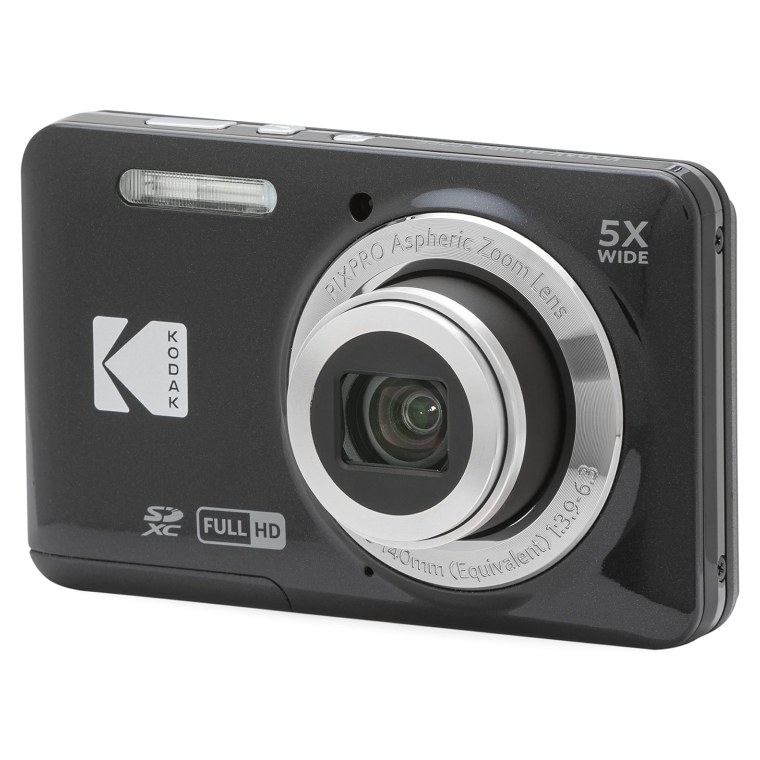
Kodak Pixpro FZ55: best cheap pocket compact
The FZ55 is the camera I would check first for a basic family, travel, or backup compact. It is not a premium compact, but it gives you a real lens, real flash, easy handling, and a low enough price that the tradeoffs make sense.
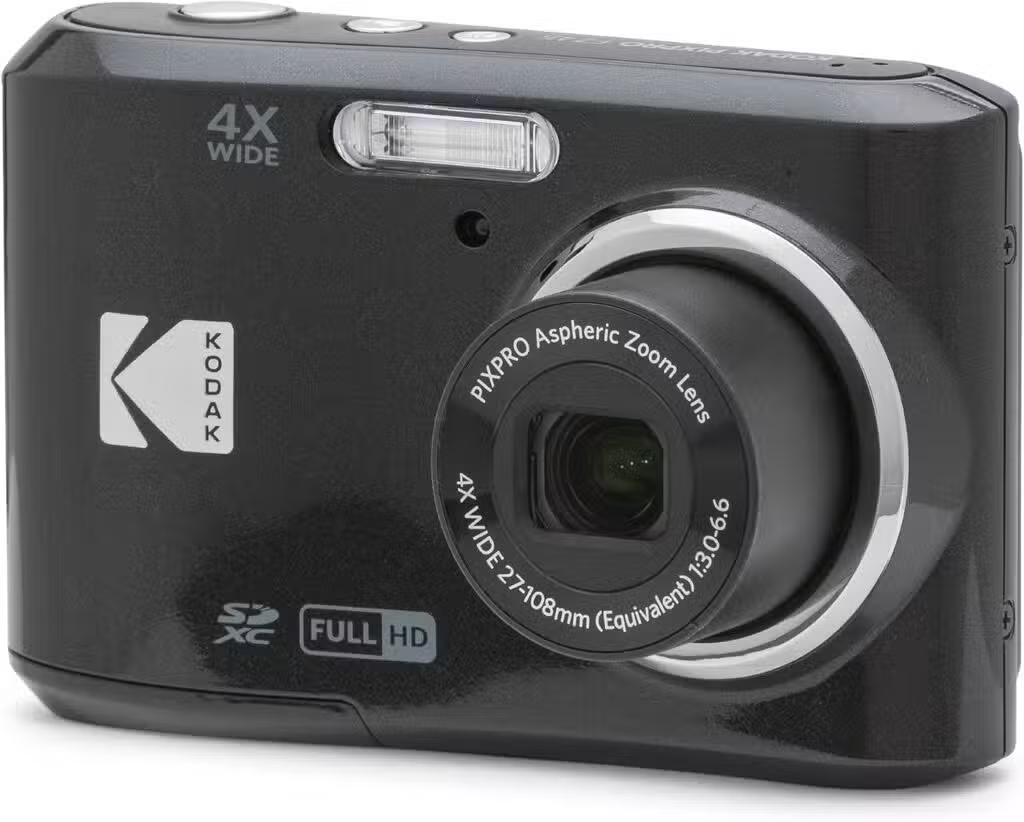
Kodak Pixpro FZ45: best ultra-cheap compact
The FZ45 is the lowest-friction option when price matters more than features. It is a practical choice for kids, schools, trips, and anyone who wants a dedicated camera without learning a camera system.
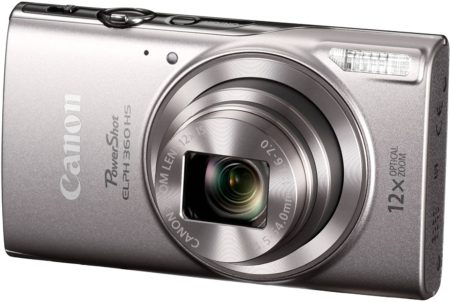
Canon PowerShot ELPH 360 HS: best tiny Canon compact
The original ELPH 360 HS remains useful because it is genuinely pocketable and simple. The trap is price: it is worth considering only when the used or renewed price stays sane. The Amazon button below opens the newer ELPH 360 HS A listing, not a used 2016 ELPH 360 HS; compare the exact model, condition, and total price before buying.
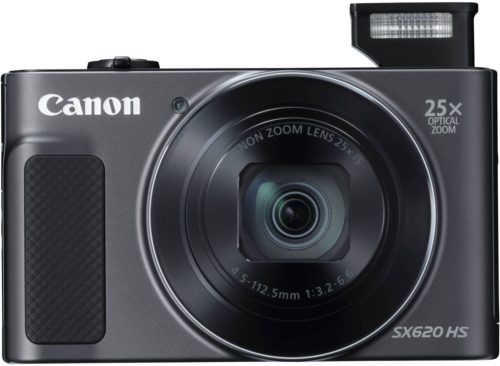
Canon PowerShot SX620 HS: best cheap compact zoom
If you need more reach for travel details, school events, or casual wildlife, the SX620 HS is more useful than a basic 4x or 5x compact. It is not a low-light camera, but the zoom range is the point.
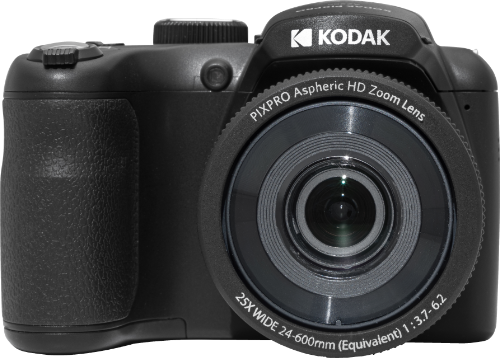
Kodak Pixpro AZ255: best cheap bridge alternative
The AZ255 is not pocketable, but it gives beginners a real grip and a much longer lens. It is for daylight zoom work, not for sports in dim gyms.

How To Avoid A Bad Budget Compact Buy
A good budget compact should be cheap enough that its limitations are acceptable. Avoid old premium compacts sold at collector prices, fake 4K no-name cameras, and discontinued Canon/Sony compacts priced like current mirrorless bodies. If the price gets close to a Canon R100, Nikon Z30, or used Sony a6100 kit, move up to mirrorless instead.
For tighter budgets, compare this with the best digital camera under $100. If you can spend more, the best digital cameras under $400 guide gives better long-term options.
Detailed Buying Notes
Understanding the 2026 budget digital compact camera landscape
Capturing life’s moments doesn’t have to come with a hefty price tag. The best budget digital compact camera market has evolved rapidly, especially as we move into 2026. New features and tech once reserved for high-end models are now making their way into affordable cameras, changing the way we approach casual and creative photography.
Trends and advancements in 2026
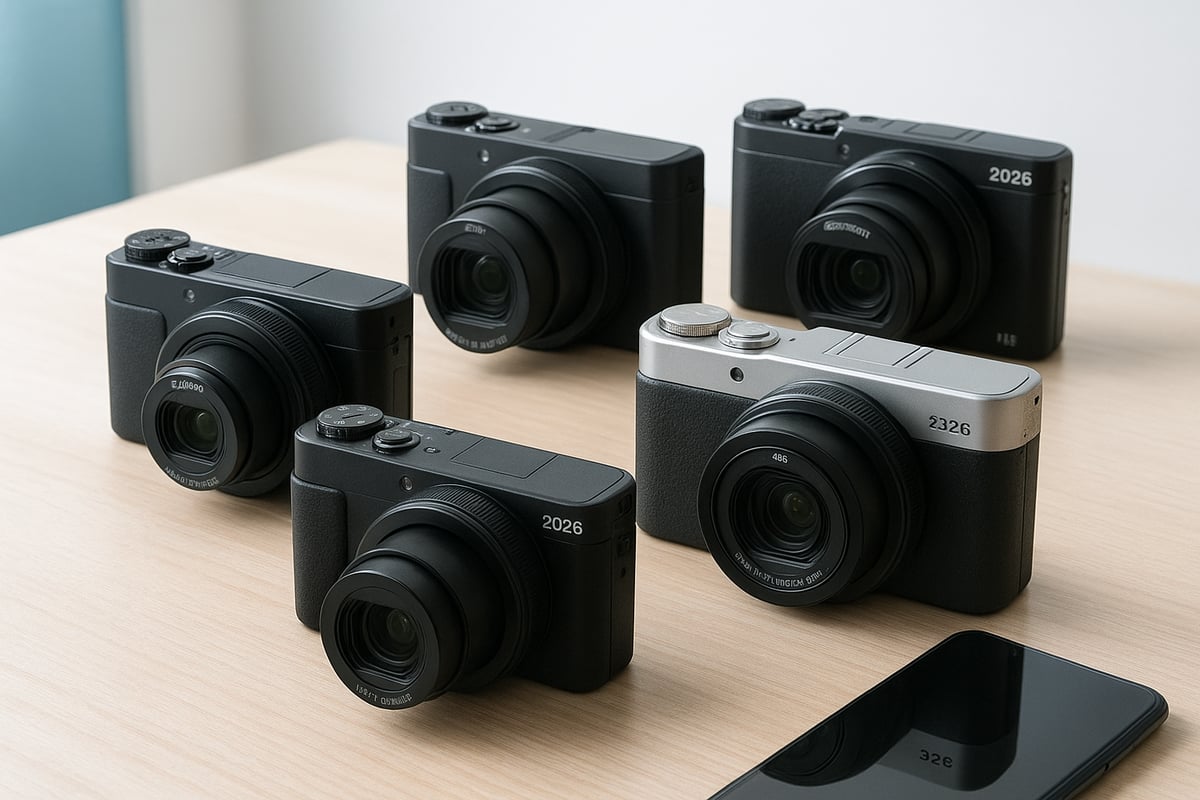
The budget compact cameras recommended here use small 1/2.3-inch sensors. They are best suited to daylight snapshots; buying one does not automatically improve low-light image quality over a modern phone. Larger 1-inch sensors generally belong to more expensive premium compacts.
Connectivity varies by model. The Kodak FZ45, FZ55, and AZ255 do not have built-in Wi-Fi or Bluetooth, so plan on a card reader or USB transfer. Some Canon compacts offer wireless transfer, but check the exact model and app compatibility. If you’re interested in a deeper dive into recent trends and popular models, Advancements in budget compact cameras provides some fascinating insights into what’s driving this evolution.
Essential features to expect in affordable models
For the shortlist above, expect 16 to 20.2-megapixel sensors, JPEG photos, and Full HD video rather than 4K. Optical zoom, simple handling, and a separate camera battery are the main reasons to buy; advanced autofocus and premium image quality are not included at these prices.
Manufacturers have also focused on user-friendly interfaces, making it simpler for beginners and hobbyists to get started. Buttons are more intuitive, menus are streamlined, and scene modes help you capture specific scenarios with minimal effort.
| Feature | Typical 2026 Budget Model | Benefit |
|---|---|---|
| Sensor Size | 1/2.3-inch in this shortlist | Compact size; limited low-light performance |
| Video Capabilities | Full HD in this shortlist | Basic everyday video |
| Autofocus | Basic autofocus; face detection varies | Best with still subjects in good light |
| Connectivity | USB or memory card; wireless on some Canon models | Check the exact transfer method before buying |
The rise of AI and computational photography
Automatic scene modes and face detection can make snapshots easier, but they are not the same as the multi-frame processing in a modern smartphone. These inexpensive compacts do not offer premium-camera subject recognition or professional-looking results automatically. Good light and a steady camera still matter most.
Balancing quality, cost, and user needs
Manufacturers face a constant challenge: delivering high-quality results without inflating costs. The best budget digital compact camera models often make strategic compromises. You might notice less robust build quality, simpler lenses, or slower burst shooting speeds compared to pricier options.
However, by focusing on the features that matter most to you – like sensor size, autofocus, or connectivity – you can choose a camera that meets your specific needs. Always consider what you value most in your photography before committing to a purchase.
Budget cameras vs smartphones, market data, and shifting preferences
A budget compact can be useful for optical zoom in daylight and for a separate, simple shooting experience. Do not assume it will beat a modern smartphone in low light or action: small sensors, slow lenses, and basic autofocus can be limiting.
Recent market data shows a renewed interest in compact cameras among hobbyists and travelers. As smartphones become more advanced, some users are rediscovering the joy and quality that a dedicated camera provides, especially when it comes to creative control and image clarity.
The bottom line is that the “budget” label in 2026 does not mean you have to sacrifice essential features. With the right research and priorities, you can find a camera that delivers outstanding value and performance.
9 essential best budget digital compact camera tips for 2026
Unlocking the full potential of your best budget digital compact camera in 2026 is a journey every photographer can enjoy. Whether you are just starting out or looking to upgrade your skills, these nine tips will help you capture memorable moments, make smart gear choices, and get the most satisfaction from your investment.
Let us dive into practical advice that will make your best budget digital compact camera a true creative companion.
1. Tip: Prioritize sensor size and image quality
When choosing a best budget digital compact camera, always pay close attention to the sensor size. Many people get caught up in megapixel counts, but a larger sensor usually delivers better results, especially in low light situations.
Every camera in the shortlist above has a 1/2.3-inch sensor. A 1-inch premium compact can offer better image quality, but it is a different price class, not a standard feature of these entry-level picks.
To compare image quality, look at sample shots from real users and trusted reviewers. Notice how the camera handles shadows, bright highlights, and subtle colors. If you are shopping online, search for side-by-side images taken on different models.
Here is a quick table to help you visualize sensor size differences:
| Sensor Size | Typical Use | Image Quality |
|---|---|---|
| 1/2.3 inch | Entry compacts | Basic, good light |
| 1 inch | Advanced compacts | Better, low light |
Remember, your best budget digital compact camera should balance sensor size with features like zoom range and connectivity. If you want a deep dive into why sensor size matters more than megapixels, check out this Sensor size vs. megapixel count guide. It is a must-read for anyone serious about image quality.
A smart choice here will set the stage for sharp, vibrant photos every time you press the shutter.
2. Tip: Master manual controls for creative flexibility
Learn the exposure controls your exact camera provides. On the FZ45 and FZ55, ISO, exposure compensation, and white balance are more useful starting points than assuming you have aperture-priority or shutter-priority modes. A mode named Manual does not necessarily provide full independent aperture and shutter control.
Practice taking the same scene with different exposure compensation and ISO settings. For full aperture and shutter control, check the manual first; a bridge camera such as the AZ255 offers more scope than the simplest pocket compacts.
3. Tip: Use advanced autofocus and tracking features
Use face detection or tracking only if your model supports it; do not expect modern mirrorless-style eye autofocus or a touchscreen on these picks. In good light, half-press the shutter to focus before taking the shot. Give the camera time to confirm focus, especially at the long end of the zoom.
For moving subjects, try the supported continuous-shooting mode, but remember that burst shooting does not guarantee continuous focus tracking. If focus struggles, clean the outside of the lens, move to better light, and aim at a high-contrast part of the subject.
4. Tip: Optimize in-camera settings for best results
Getting great photos from your best budget digital compact camera often comes down to smart use of in-camera settings. Start by setting sharpness, color, and white balance to your preferences. Many cameras offer vibrant or natural color modes – choose one that matches your style.
Scene modes can be helpful, especially for beginners. Explore Program mode, exposure compensation, ISO, and white balance where available. Aperture-priority and shutter-priority modes are not standard on these budget pocket cameras.
If your camera supports a customizable button, assign a setting you use often. Otherwise, learn where exposure compensation and ISO sit in its menu.
For daylight travel photos, start with Auto ISO or a low ISO and auto white balance. Raise ISO only when needed to avoid blur; small sensors lose detail as ISO rises. Do not assume these cameras offer a silent-shutter mode.
A little time spent exploring your menu and settings can make your best budget digital compact camera feel like a tool designed just for you.
5. Tip: Leverage built-in connectivity for instant sharing
The FZ45, FZ55, and AZ255 have no built-in Wi-Fi or Bluetooth. Use a compatible card reader or the camera’s USB connection to copy photos, and keep a backup before deleting or formatting the card.
For Canon models with wireless transfer, check whether the current app supports your exact camera and phone. Wireless image transfer does not automatically mean remote shutter control or cloud backup is supported.
6. Tip: Choose the right memory cards and accessories
Start with a reliable SD card that matches the exact camera manual: check card type, capacity, and speed class. A supported Class 10 or UHS-I card is generally sufficient for these Full HD compacts; a costly UHS-II card will not make a camera with a slower interface faster.
Here is a quick comparison table:
| Accessory | Why It Matters | Budget-Friendly Options |
|---|---|---|
| Memory card | Speed, reliability | Supported SD card capacity and speed class |
| Extra battery | Longer shooting sessions | OEM or trusted third-party |
| Mini tripod | Stable shots, low-light | Compact, flexible designs |
| Camera case | Protection on the go | Padded, water-resistant |
Avoid cheap, generic cards or untested accessories, as they can cause errors or data loss. Look for bundles that include batteries, cases, and straps – they often offer better value than buying separately.
A little investment in quality accessories ensures that your best budget digital compact camera is always ready when inspiration strikes.
7. Tip: Maintain your camera for longevity and performance
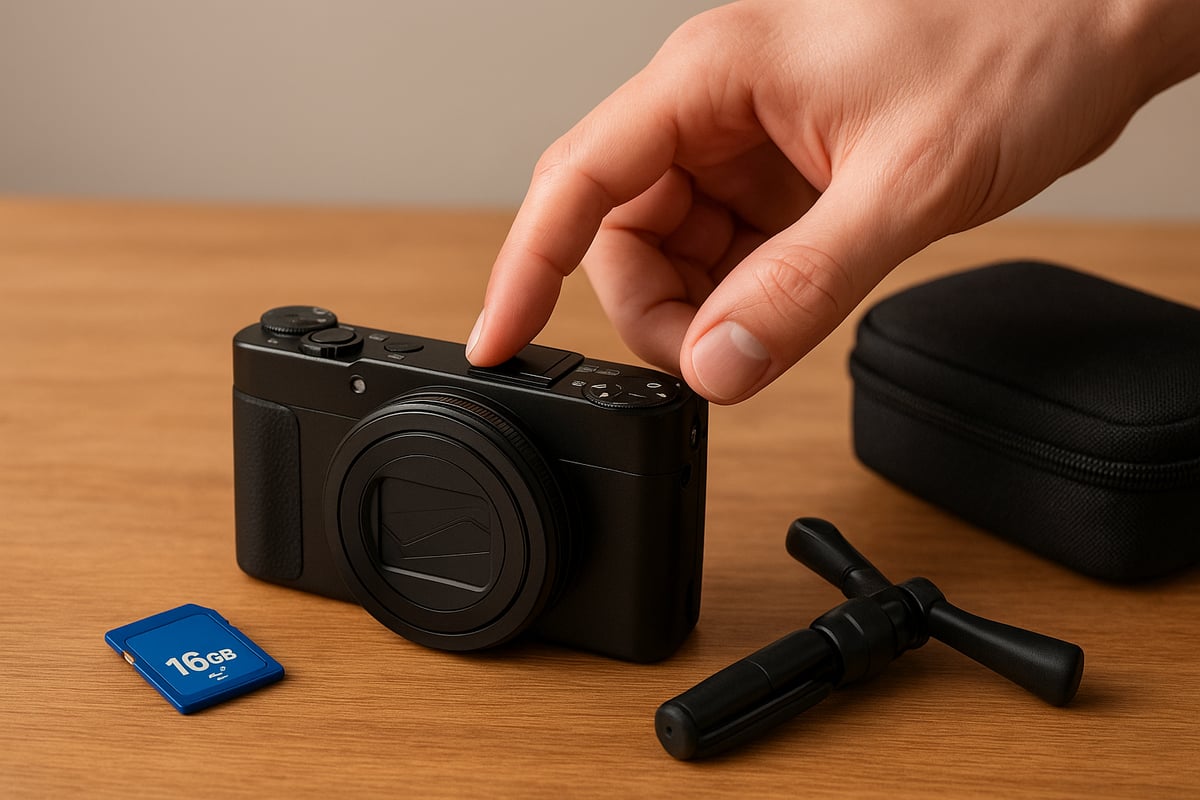
Start by removing loose dust from the outside of the lens with a hand blower, then gently use a clean lens cloth if needed. A fixed-lens compact does not give you user access to its sensor: do not open the camera or attempt sensor cleaning. Persistent internal dust needs professional service.
Protect your camera from dust, moisture, and accidental drops. Use a padded case and keep silica gel packets inside to absorb humidity. If your camera is weather-sealed, do not get complacent – wipe it down after exposure to rain or sand.
Check the official support page for your exact model if a firmware update is available. Do not install firmware for a similar-looking camera, and follow the manufacturer’s instructions.
Back up photos before formatting memory cards in-camera. Follow the manual for battery storage, and remove AA batteries for long storage to reduce the risk of leakage.
8. Tip: Get creative with composition and lighting
A great photo is not just about the camera, it is about how you see the world. Use classic composition techniques like the rule of thirds, leading lines, and natural framing to guide the viewer’s eye. Your best budget digital compact camera can produce striking images when you pay attention to these details.
Lighting is key. Even basic built-in flashes can help in a pinch, but try to use available light whenever possible. Position your subject near a window or shoot during golden hour for soft, flattering results.
Do not be afraid to experiment with angles and perspectives. Shoot from low to the ground, or find a higher vantage point for a fresh take. Set yourself creative challenges, like capturing reflections or silhouettes.
Here are a few project ideas to get you started:
- Document a day in your neighborhood.
- Try a photo-a-day challenge.
- Explore black-and-white photography.
Creativity knows no budget. Use your best budget digital compact camera as a tool for self-expression and discovery.
9. Tip: Practice regularly and review your progress
Consistency is the secret to mastering your best budget digital compact camera. Set personal challenges, like shooting a new theme each week or focusing on a specific technique, such as low-light photography or portraits.
Share your photos with friends or online communities, and welcome constructive feedback. Honest critique helps you spot areas for improvement and develop your own style.
Keep a digital photo log or portfolio. Over time, you will see patterns, strengths, and growth in your work. This record is not just motivating – it is a roadmap for future learning.
Remember, the best budget digital compact camera in the world will not lead to great photos without practice. Make shooting a regular part of your routine, reflect on your results, and keep pushing your creative boundaries.
Comparing budget compact cameras to smartphones in 2026
The lines between the best budget digital compact camera and modern smartphones are blurrier than ever in 2026. Many people wonder if a dedicated camera is still worth it, especially with the latest phones boasting impressive computational photography. Still, there are clear distinctions that can make all the difference for anyone who values reliable image quality, creative control, and versatility.
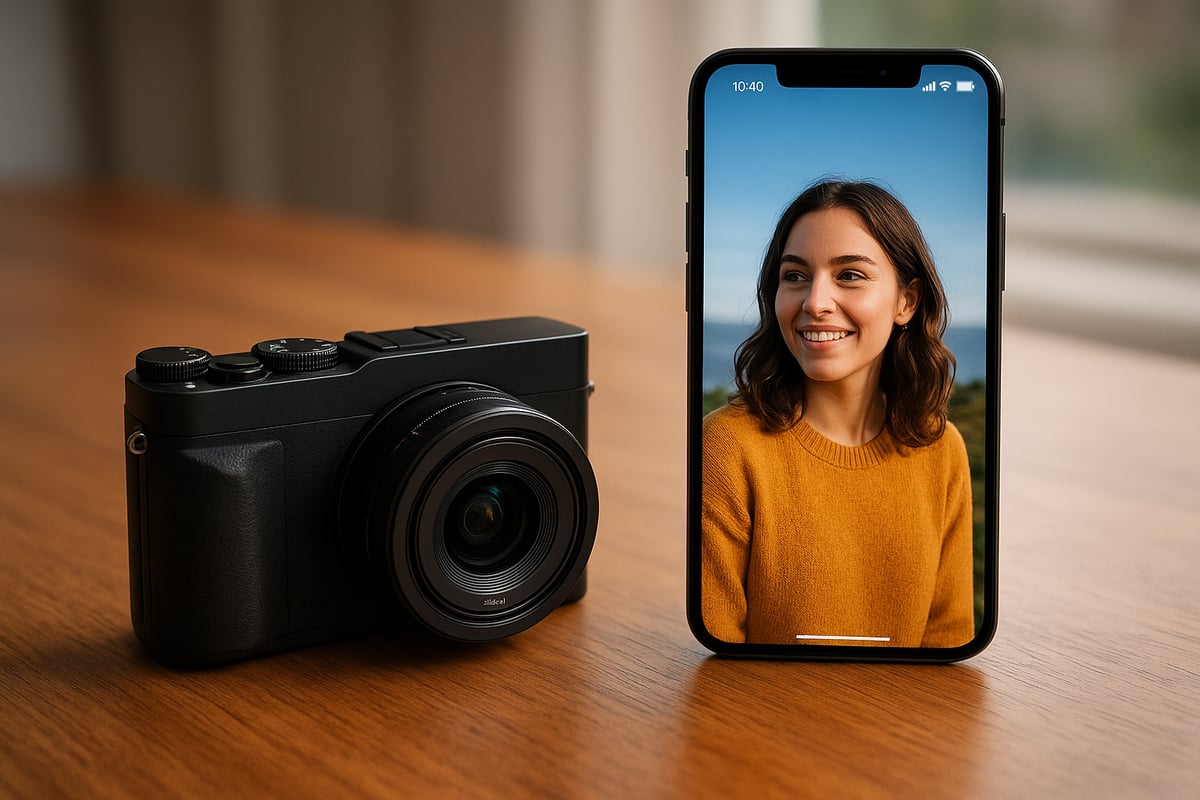
Key differences: Image quality, zoom, and manual controls
The budget compacts listed here have 1/2.3-inch sensors, not 1-inch sensors. Some modern phones have larger main-camera sensors and stronger computational processing, so the compact is not an automatic low-light upgrade. Its advantages are optical zoom, physical handling, and a separate device for photography.
Here is a quick comparison:
| Feature | Budget Compact Camera | Smartphone (2026) |
|---|---|---|
| Sensor Size | 1/2.3-inch in this shortlist | Varies; some main cameras use larger sensors |
| Optical Zoom | 4x to 25x optical zoom in this shortlist | Model-dependent; some have dedicated telephoto cameras |
| Manual Controls | Physical buttons; exposure controls vary by model | Touchscreen; manual controls depend on the app |
| RAW Shooting | JPEG only on these shortlisted models | RAW available on some phones or camera apps |
| Battery Life | Separate battery; capacity varies by model | Shooting uses the battery shared with other phone tasks |
| Ergonomics | Designed for photography | Optimized for general use |
If you want to explore which models offer the most value and quality, check out this guide to the best rated compact cameras.
When a camera outperforms a phone – and vice versa
A budget compact is most useful for daylight subjects where its optical zoom reaches farther than your phone. A concert, dim gym, or fast sporting event is a much harder test: small sensors, slow lenses at the long end, and basic autofocus can produce noisy or blurred photos.
Smartphones usually win for spontaneous snapshots, quick sharing, and convenience, and a good phone may also produce cleaner low-light photos. Choose a budget compact for a specific benefit such as optical zoom or camera handling, not because a separate camera must always take better pictures.
Trends: Usage data, satisfaction, and combining both devices
Recent data shows a renewed interest in the best budget digital compact camera, especially among enthusiasts and travelers. Many users report higher satisfaction with the tactile experience and image consistency of compact cameras. At the same time, the convenience of smartphones keeps them in everyone’s pocket.
Some photographers use both devices together – shooting key moments with a compact camera and capturing everyday memories with a phone. This hybrid approach maximizes flexibility and ensures you are always ready for any scenario.
If you are looking for affordable options to complement your smartphone, the best digital cameras under $300 roundup is a good starting point.
Why some users return to compact cameras
Despite phone cameras’ impressive evolution, many people return to the best budget digital compact camera for its reliability, creative potential, and tactile satisfaction. Real optical zoom, a physical shutter button, and a battery separate from your phone remain compelling advantages. Full manual exposure and longer shooting endurance are not guaranteed. For anyone passionate about capturing memories with intent and quality, the dedicated camera continues to hold its ground in 2026.
Maximizing value: How to choose the best budget digital compact camera for your needs
Selecting the best budget digital compact camera starts with understanding exactly what you want to capture. Are you aiming to document family milestones, travel adventures, or creative projects? Each scenario has unique demands, so take time to reflect on your priorities. Matching your camera choice to your goals ensures you get technology that truly supports your vision.
If you are not sure which camera features matter most for your style, consider checking out digital cameras for photography for insights on different use cases. This can help you focus on the functions that will make the biggest difference for you.
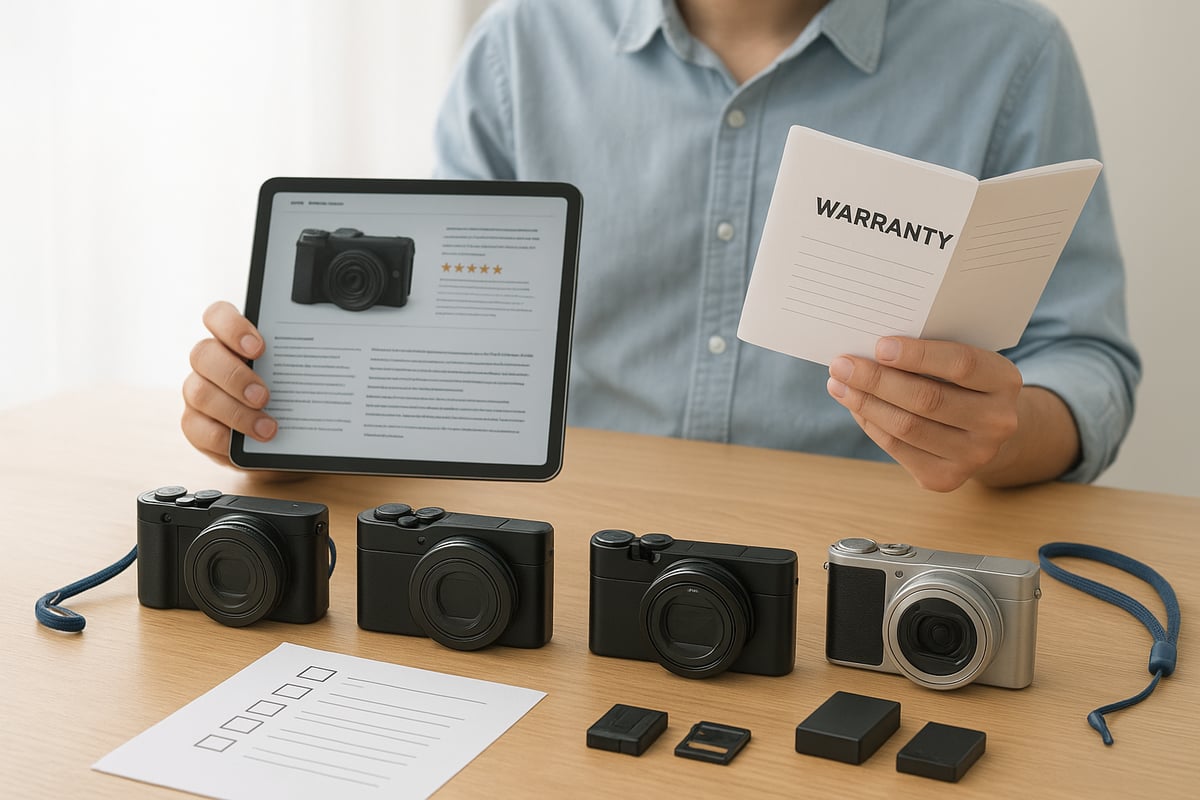
Feature checklist: Must-haves versus nice-to-haves
It is easy to get distracted by flashy specs, but focus on what counts. Here is a practical checklist to guide your decision:
| Must-Have Features | Nice-to-Have Features |
|---|---|
| Acceptable daylight sample photos | Larger sensor or 4K video, usually at a higher price |
| Autofocus suitable for your subjects | Touchscreen controls |
| Optical zoom range you will actually use | Weather sealing |
| A transfer method that works with your devices | Built-in Wi-Fi or creative modes |
| Battery supply and endurance that fit your trips | High frame rate burst shooting |
Evaluate how each camera measures up against these essentials. For many photographers, the best budget digital compact camera balances core performance with just a few appealing extras.
Warranty, support, and making sense of reviews
Do not overlook after-purchase support. A solid warranty adds peace of mind, especially when investing in a device you will use often. Check what kind of customer service the brand offers and how easy it is to get repairs or firmware updates.
User reviews are a goldmine for real-world feedback. Focus on trends in comments about durability, ease of use, and image quality. Expert recommendations can also provide clarity, especially when comparing similar models. Combine both sources to avoid surprises.
Final tips for a confident choice
Before you buy, revisit your checklist and ensure your chosen camera meets your top needs. Compare a few contenders side by side, either in-store or using detailed online reviews. Pay attention to return policies and upgrade programs, which can add value over time.
Ultimately, the best budget digital compact camera is the one that fits your lifestyle and helps you grow as a photographer. Trust your instincts, do your homework, and you will capture memories with confidence.