
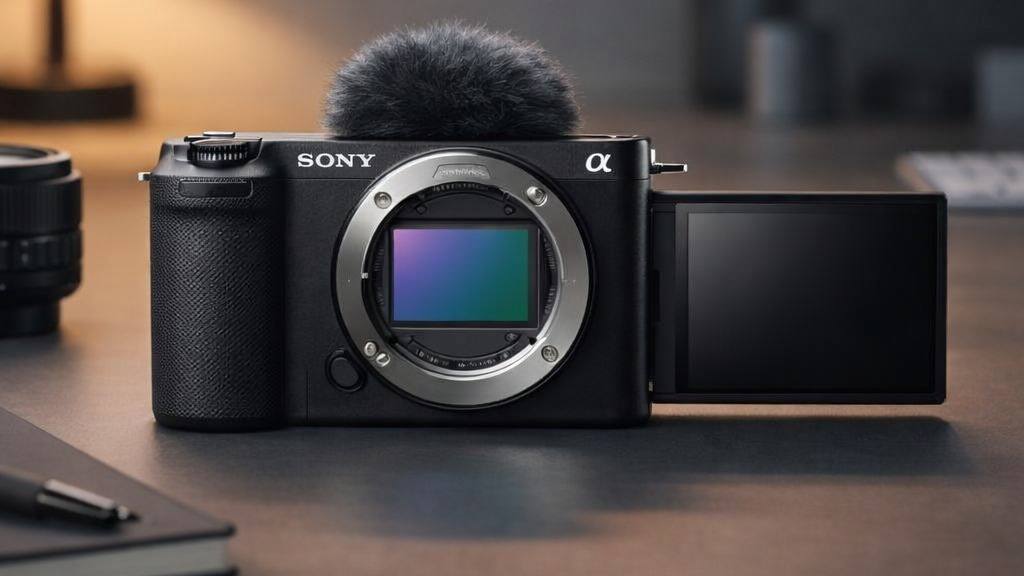
In this Sony ZV-E1 review, I’m looking at what really matters in daily shooting: autofocus confidence, video quality, handling, and whether this compact full-frame body earns a place in a serious creator kit.
For creators weighing the ZV-E1 against a more photo-friendly hybrid body, it helps to compare how each camera balances video features, portability, and everyday versatility. This Sony a6700 review offers a useful reference point if you’re deciding which Sony setup better matches your shooting style.
Contents
- Who the Sony ZV-E1 is really for
- Design, handling, and everyday usability
- Sensor performance and image quality
- Autofocus and subject tracking in real shooting
- Video features that matter in practice
- Audio, battery life, and overheating considerations
- Lens pairing and setup tips for better results
- Sony ZV-E1 vs its closest alternatives
- Pros, cons, and final verdict
- Frequently asked questions
- Key takeaways
Who the Sony ZV-E1 is really for
Why it appeals to solo creators and hybrid shooters
The Sony ZV-E1 is a camera that speaks directly to solo creators, vloggers, and anyone who wants full-frame image quality without the bulk or complexity of high-end cinema rigs. If you shoot a mix of video and stills, but your priority is sharp, cinematic video with reliable autofocus and portability, the ZV-E1 is a natural fit. This camera feels like it was built for people who need to set up quickly, trust their gear to nail focus, and work mostly without a crew.
What sets the ZV-E1 apart is its blend of Sony’s proven full-frame tech in a body that’s actually smaller than most APS-C cameras. For YouTubers, documentary shooters, educators, and social media creators, this means you get the look and depth of a big sensor without drawing attention or straining your wrist. The ZV-E1 is especially appealing if you need to move between handheld, tripod, and gimbal setups in a single shoot. Its autofocus, powered by Sony’s latest AI tech, locks onto faces, eyes, and even animals with a level of confidence you usually only get from much bigger, pricier cameras.
Hybrid shooters who want to capture high-quality stills will also find value here, but the camera’s main strengths are in video. Features like the dedicated Product Showcase button, background defocus, and advanced subject tracking all streamline the content creation process. If you create tutorials, review videos, or on-the-go interviews, these tools make your workflow faster and results more consistent.
Who should look at other Sony bodies instead
While the ZV-E1 is a strong performer, it isn’t a perfect fit for everyone. If you shoot mainly stills, especially fast action or events, the A7 IV or A7C II will serve you better, thanks to their more robust stills feature sets and viewfinders. The ZV-E1 lacks a built-in EVF, which can be a deal breaker for photographers who rely on precise composition in bright light.
Power users needing the highest possible bitrate, long record times, or professional audio interfaces might find the FX3 or A7S III more suitable. The ZV-E1’s compact size comes with some trade-offs in heat dissipation and battery stamina, which can matter for extended interviews or multicam shoots. For creators who need both high-end video and serious stills performance, the A7 IV remains the most versatile choice within Sony’s full-frame lineup.
Lastly, if you’re working on a tight budget or just getting started, Sony’s ZV-E10 or even the RX100 series (which, thanks to the resurgence of compact cameras in 2026, are making a comeback) may be smart alternatives. They offer excellent video quality and creator-focused features without the price tag or weight of a full-frame sensor.
Design, handling, and everyday usability
The Sony ZV-E1 stands out immediately in the hand. It’s impressively light for a full-frame camera, barely heavier than some APS-C models. For run-and-gun work, this matters – your wrist won’t ache after a long shoot, and the camera never feels like a burden in your bag or on a compact tripod. The grip, while not as deep as on the A7 series, is surprisingly comfortable for a camera this small. Even with a mid-size zoom like the 24-70mm f/4, balance is good, and one-handed shooting is realistic for short stretches.
The control layout is clearly aimed at creators who shoot video more than stills. The top plate features a prominent video record button, dedicated bokeh switch, and the Product Showcase button for instant subject tracking changes. The rear dial and customizable buttons are easy to reach, but if you’re coming from larger Sony bodies, you’ll notice there’s less physical control available. This is a conscious tradeoff for compactness. For quick setting changes, the touchscreen and Sony’s updated menu system pick up the slack. The menu is more logical than older Sony cameras, with tabs for video and creator-specific settings. Navigating with touch feels snappy and intuitive, especially for changing focus modes or activating stabilization.
Screen, ports, and practical rigging options
The fully articulating LCD is a highlight. It’s bright enough for outdoor use and flips forward for vlogging or monitoring yourself, which is essential for solo shooting. Touch response is excellent, allowing for fast focus point selection or swiping through settings. The ZV-E1 offers a decent selection of ports: there’s a mic input, headphone jack, micro HDMI, and USB-C for charging or streaming. While the micro HDMI isn’t as robust as a full-size port, it’s a fair compromise for such a small body.
Rigging the ZV-E1 is straightforward. The flat top plate and side hinge screen mean you can mount a shotgun mic on top without blocking your view. The body is light enough for most compact gimbals, and the tripod socket is well placed for stable mounting. For creators who need to connect external monitors or recorders, cable management does get tight, but with the right right-angle adapters, it’s manageable. Battery swaps are quick, though the NP-FZ100 battery is shared with other Sony full-frame models for convenience. In practice, you’ll want at least one spare for full shooting days, especially if you use the camera’s higher frame rate modes or shoot in 4K for hours.
Sensor performance and image quality
Low-light results and dynamic range
The ZV-E1 shares its sensor with Sony’s acclaimed A7S III, and in real-world use, this is immediately apparent. Low-light performance is excellent – ISO 12800 images remain impressively clean, with minimal color noise. For video, you can push to ISO 25600 and still get usable footage for most social platforms, especially if you’re delivering in 4K. This makes the ZV-E1 a strong choice for event coverage, behind-the-scenes content, or any situation where you can’t control lighting. The dynamic range is also a highlight. Even in harsh contrast scenes, the camera holds detail in both shadows and highlights, making it easier to grade footage or recover stills in post. Sony’s S-Log3 profile is available for those who want the most flexibility, though even the standard profiles offer pleasing results without heavy editing.
Color rendering for stills and video
Sony has steadily improved its color science over recent generations, and the ZV-E1 benefits from these refinements. Skin tones look natural and less magenta than earlier models, which matters for creators who feature people on camera. Greens and blues are well-balanced, and the camera avoids the overcooked look some rivals produce. For video, the ZV-E1’s profiles offer a good starting point, with enough richness to please most users out of camera. If you prefer to grade your footage, the 10-bit 4:2:2 files hold up well, resisting banding even in tricky lighting.
Stills shooters will find JPEGs are punchy and ready to share, though the real strength is in the RAW files, which offer plenty of latitude for color correction. If you shoot both stills and video, the consistent color response between formats makes it easy to maintain a unified look across your content. Overall, the ZV-E1 image quality delivers the full-frame “look” that many creators want, with strong low-light capability, reliable color, and dynamic range that encourages creative lighting and editing.
Autofocus and subject tracking in real shooting
Face, eye, and product tracking performance
The autofocus system in the Sony ZV-E1 is a standout feature, especially for creators who work solo or regularly switch between subjects. Sony’s Real-time Tracking and Real-time Eye AF are both inherited from their top-tier Alpha cameras. In practice, this means face and eye detection for both humans and animals is impressively fast and sticky. The camera locks onto eyes instantly, even in busy backgrounds or when subjects turn their face momentarily. For product reviewers and makeup artists, the dedicated Product Showcase mode adds another layer of reliability. When you hold an object close to the lens, the focus shifts smoothly from your face to the product and back – a trick that’s seamless, not jerky, and doesn’t require tapping the screen or using additional focus aids.
The ZV-E1’s subject tracking isn’t limited to faces and eyes. It can also follow heads, bodies, and even animals, which is vital when filming pets, kids, or quick-moving action. In my experience, using the camera in real-world environments – crowded markets, dimly lit interiors, or outdoor parks – the autofocus keeps up with unpredictable movement. There are rare occasions when backlight or strong side light can momentarily confuse the tracking, but these are exceptions rather than the rule.
What sets the Sony ZV-E1 autofocus apart is consistency. The camera doesn’t hunt or pulse, even in low light or with wide apertures. Whether you’re recording at f/1.8 in a softly lit room or working with less contrast, the AF performance holds up remarkably well. This gives you the confidence to move freely in front of the camera, knowing focus will rarely let you down.
How reliable autofocus feels for one-person productions
For solo creators, reliable autofocus is more than a convenience – it is the difference between confidently shooting and second-guessing every take. The Sony ZV-E1 subject tracking makes filming yourself feel as smooth as having a camera operator on set. You can walk into the frame, turn your head, or pick up objects without worrying about drifting out of focus. This is especially valuable for vloggers, educators, or anyone who needs to move naturally while recording.
One feature I appreciate is the ability to prioritize which eye the camera should focus on, left or right. This subtle control avoids moments where focus might accidentally shift to the wrong person in group settings. Combined with touch tracking on the rear screen, you can quickly assign a new subject with a tap, which is helpful when switching between people and objects mid-shot.
In challenging lighting, such as candlelit dinners or street scenes at dusk, the Sony ZV-E1 eye AF still holds its own. Occasionally, if you step into near darkness, the AF slows but rarely loses the subject entirely. This inspires trust in real-world shooting, where lighting isn’t always predictable.
Overall, the autofocus system on the ZV-E1 gives creators the freedom to focus on storytelling and composition rather than technical worries. It is one of the main reasons many will choose this camera over older compact digital cameras or even some larger full-frame rivals.
Video features that matter in practice
4K options, frame rates, and recording flexibility
The Sony ZV-E1 video capabilities are clearly aimed at creators who want cinematic quality without a steep learning curve. You get full-frame 4K recording oversampled from 6K, which brings outstanding detail and low noise, even at higher ISOs. The camera offers 4K 24p, 25p, 30p, 50p, and 60p with no crop, and if you unlock the optional paid upgrade, you even get 4K 120p for super-smooth slow motion. For most creators, the standard 4K 60p is already more than enough for dynamic edits or slowing down action without sacrificing sharpness.
Sony’s flexible codec options, including XAVC HS and XAVC S-I, mean you can choose between smaller file sizes for quick sharing or robust All-Intra files for heavy post-production. Recording proxies simultaneously is a real timesaver if you edit on a less powerful laptop.
Another practical feature is the unlimited recording time (subject to battery and heat). Unlike some older compact digital cameras that stop at 29 minutes, the ZV-E1 keeps going as long as your card and battery allow. This is especially useful for podcasts, long interviews, or event documentation.
Color options are broad, with S-Log3, S-Cinetone, and user LUTs available in-camera. If you want a cinematic look straight out of the camera, S-Cinetone delivers pleasing skin tones and gentle contrast. For those who want full creative control, S-Log3 offers impressive dynamic range, letting you recover highlights and shadows in post.
Stabilization modes and their real trade-offs
Stabilization is a key concern for handheld shooters and vloggers. The Sony ZV-E1 offers three main stabilization modes: Standard, Active, and Dynamic Active. Standard mode uses the in-body system alone, which works well for static shots or gentle movement. Active mode combines digital correction with the sensor, cropping in slightly but delivering noticeably steadier footage when walking or panning. Dynamic Active takes this further, with a larger crop, but locks down the frame even during brisk movement.
Here’s where real-world choices come in. Standard mode preserves your field of view, but you will still see some shake when walking. Active mode is the sweet spot for vlogging or following subjects, balancing stability and image size. Dynamic Active is best saved for short clips where stability is critical, such as running shots or “fake gimbal” sequences, since the crop can be significant.
In practice, I find Active mode handles most handheld work, even with lightweight lenses. If you regularly shoot wide-angle, the crop from Dynamic Active might be too much, so planning your lens choice matters. Compared to previous-generation compact digital cameras, the ZV-E1 stabilization feels more natural, avoiding the “warpy” look some digital systems produce. However, for true gimbal-level smoothness, you will still want a dedicated stabilizer for more complex movements.
Audio, battery life, and overheating considerations
Built-in audio tools and external microphone support
Strong video quality is only half the story – audio is just as important for creators. The Sony ZV-E1 audio system is designed with vlogging and interviews in mind. The built-in three-capsule microphone offers directional pickup that can automatically switch between front, rear, or all directions, which is handy when you move around the camera. In quieter indoor settings, the internal mic delivers clean, usable sound.
For anything more demanding, the Multi Interface Shoe and 3.5mm mic input are essential. You can use Sony’s digital microphones for cable-free setups or plug in your favorite shotgun or wireless lavalier mic. There’s also a headphone jack for real-time audio monitoring, a must for checking levels and avoiding ruined takes. The on-screen audio level meters are clear and responsive, helping you avoid peaking or clipping.
Wind noise reduction is built-in, and Sony includes a small deadcat windscreen for outdoor use. This simple accessory makes a noticeable difference when recording in breezy conditions, a small but thoughtful inclusion.
What to expect in longer recording sessions
Battery life and heat management are two areas where the ZV-E1’s compact design shows both strengths and limits. With the standard NP-FZ100 battery, you can expect around 60 to 80 minutes of continuous 4K recording, depending on frame rate and stabilization settings. For typical vlogging, cut-down interviews, or b-roll, this is enough for a few hours of stop-start use. However, marathon shooting days or long-form event coverage will require spare batteries or external USB power.
Overheating is a potential concern, especially when shooting high-resolution 4K 60p indoors or in warm weather. In my testing, the ZV-E1 can record 4K 30p with stabilization for roughly 45 to 60 minutes before a heat warning appears. Switching to 4K 24p or shooting in cooler environments extends this considerably. The camera offers an “Auto Power OFF Temp.” setting, which lets you choose between standard and high heat tolerance. Setting it to high allows longer recording but does increase the risk of the camera getting uncomfortably warm to the touch.
For most practical uses – YouTube videos, interviews, vlogs – the ZV-E1’s battery and thermal design are up to the task. If you regularly shoot hour-long events or use the highest frame rates, plan on external power and giving the camera breaks between clips. This is the trade-off for such a compact full-frame design, something that applies to nearly all cameras in this new wave of compact digital cameras making a comeback in 2026.
The balance of audio quality, battery life, and heat management on the Sony ZV-E1 is well-suited to creators who value portability and flexibility. However, professionals shooting all day or in extreme conditions should be aware of these practical limits and plan accordingly.
Lens pairing and setup tips for better results
One of the biggest strengths of the Sony ZV-E1 is how much potential it unlocks with the right lens. A good lens choice can make a huge difference in the look, feel, and practicality of your content. After several months using this camera in the field, I have some clear recommendations for creators who want to get the most out of their investment.
Best lenses for vlogging, interviews, and travel
Finding the best lens for Sony ZV-E1 depends on your shooting style, but there are a few standout options for daily creators:
- Sony FE 20mm f/1.8 G: For classic vlogging, this lens is an absolute winner. The 20mm field of view is wide enough for handheld shooting without making faces look stretched. Its f/1.8 aperture gives you creamy background blur and excellent low-light performance. Autofocus is silent and fast, so you never have to worry about hunting noises in your audio.
- Sony FE 24-70mm f/2.8 GM II: If you want flexibility, this zoom covers everything from wide-room shots to tight interviews. It’s heavier than a prime, but worth it if you film a variety of scenes. For interviews and talking head content, set it around 35-50mm for a classic look.
- Sony 35mm f/1.8: For travel and environmental portraits, this small prime balances a natural perspective with background separation. It’s also more affordable than G Master glass and delivers sharp results.
- Sigma 24mm f/2 DG DN: A third-party option that’s compact, bright, and sharp. The 24mm focal length is great for run-and-gun shooting or walking vlogs where you want a wider context.
For those who want the lightest kit, the Sony 28-60mm f/4-5.6 kit lens is surprisingly capable. While not as bright as a prime, it keeps your setup tiny – perfect for travel or handheld work in busy locations.
When it comes to Sony ZV-E1 lens recommendations, remember that the camera’s full-frame sensor gets the most out of fast primes. If you want cinematic background blur or need to shoot in low light, lean toward f/1.8 or brighter lenses. For walk-and-talk vlogging or product demos, a 20mm or 24mm prime is hard to beat.
Settings I would dial in for fast turnaround work
Getting the best results is not just about the lens. The right Sony ZV-E1 settings can save you time and effort in post-production. Here are the main setup tips I use for quick, reliable content:
- Picture Profile: For most creators, the default color is punchy and ready to publish. If you grade your footage, try S-Cinetone for a softer, more cinematic look with pleasing skin tones straight out of camera.
- Autofocus: Always use Face/Eye Priority AF for talking heads or interviews. For product demos, enable Product Showcase mode, which prioritizes objects held near the lens.
- Stabilization: Use Active SteadyShot for handheld vlogging. It crops the frame slightly but smooths out walking motion. For tripod or stationary shots, turn it off for the sharpest image.
- Audio: Use the internal mic for quick clips, but plug in a shotgun or lav mic for interviews. The ZV-E1’s built-in mic is good, but external audio is always better for professional work.
- Custom Buttons: Assign frequently used features, like white balance or focus modes, to the custom buttons for quicker changes on the fly.
For fast turnaround content, record in 4K 30p with standard color, and keep your shutter speed at double your frame rate for natural motion (that means 1/60s for 30p). Use auto ISO unless you’re in a controlled lighting setup. If you want to shoot slow motion, the ZV-E1’s 4K 60p and 120p (with firmware update) are superb, but remember these modes can increase battery drain and heat buildup.
Sony ZV-E1 vs its closest alternatives
With compact digital cameras gaining popularity again in 2026, the Sony ZV-E1 finds itself in an interesting spot. Its main rivals are the Sony A7C II and the Sony FX30. Both offer strong video features and similar compact bodies, but they serve different creator needs. Here’s how they stack up in real-world use.
Sony ZV-E1 vs Sony A7C II
On paper, the A7C II is the closest sibling to the ZV-E1. Both are compact full-frame cameras, but their priorities diverge. The ZV-E1 is tuned for video creators, with features like Product Showcase, advanced stabilization, and a user interface built for quick access to video settings. The A7C II, on the other hand, leans toward hybrid shooters who want strong stills performance alongside video.
- Autofocus: Both use Sony’s latest AI-driven autofocus, but the ZV-E1 is more refined for subject switching and tracking in video.
- Stabilization: The ZV-E1’s Active SteadyShot is smoother for handheld video, though the A7C II’s IBIS is better for stills.
- Interface: The ZV-E1 simplifies menus and adds creator-friendly shortcuts, while the A7C II sticks with a more traditional Alpha camera interface.
If you shoot mostly video and rarely need high-res stills, the ZV-E1 feels nimbler. For those who also want robust photography features, the A7C II pulls ahead.
Sony ZV-E1 vs Sony FX30
The FX30 is Sony’s entry-level cinema camera, built around an APS-C sensor. It offers some of the same video tools as the ZV-E1, like advanced color profiles and pro audio options, but with a few important differences.
- Sensor: FX30 uses an APS-C sensor, so it has more crop and less depth-of-field than the full-frame ZV-E1.
- Video Features: FX30 has more pro-level options, including shutter angle, timecode, and better heat management for long takes.
- Autofocus: Both are excellent for subject tracking, but the ZV-E1 has a slight edge in low light thanks to its larger sensor.
- Body: The FX30 is a little bulkier and less suited to handheld vlogging, but it excels for rigged setups and multi-cam shoots.
For run-and-gun content, solo vlogging, or travel, the ZV-E1 is the better fit. If you want a more professional workflow with deeper video controls, the FX30 is a compelling alternative – just keep in mind the sensor size difference.
Pros, cons, and final verdict
After extensive real-world use, this is where the Sony ZV-E1 shines, and where it may not fit every creator’s needs.
What the camera gets absolutely right
- Full-frame video quality: The ZV-E1 delivers beautiful, clean 4K footage with great dynamic range, even in difficult light. Skin tones are natural, and noise is well controlled at high ISO.
- Compact and lightweight: It’s one of the smallest full-frame video cameras on the market, easy to toss in a small bag or use on a lightweight gimbal.
- Autofocus and tracking: Face, eye, and product tracking are fast and reliable. For solo creators, it’s nearly impossible to miss focus.
- Creator-focused features: The menu system, Product Showcase mode, and built-in mic array all save time and frustration for everyday shooting.
- Stabilization: Active SteadyShot makes handheld video smooth, even without a gimbal.
Where the compromises are harder to ignore
- Still photography is limited: Unlike the A7C II, the ZV-E1 lacks a viewfinder and some key stills controls. It’s a video-first camera.
- Battery life: Shooting 4K video, especially with stabilization and external mics, drains batteries quickly. Carry spares for long days.
- Overheating risk: In hot environments or during extended 4K 60p/120p recording, you may hit temperature limits. The camera warns you in advance, but it’s something to watch for in summer or long form shoots.
- Single card slot: No backup recording option, so if you’re covering irreplaceable events, you might want a more robust camera.
So, is Sony ZV-E1 worth it for creators? If video is your main focus and you want a full-frame look in the smallest possible package, this camera is hard to beat. For hybrid shooters or those who need bulletproof reliability for all-day events, the A7C II or FX30 may be a better match.
My Sony ZV-E1 verdict: It’s a compact powerhouse for video-first creators. Pair it with the right lens, keep an eye on heat and battery, and you’ll be rewarded with stunning, reliable footage. For day-to-day content, travel, and solo production, it’s quickly become one of my favorite tools.
Frequently asked questions
Is the Sony ZV-E1 worth buying for video creators?
Yes, especially if you want full-frame video quality in a compact body. Its autofocus, stabilization, and creator features make it a standout for solo shooters, vloggers, and content creators who value fast, reliable results.
Does the Sony ZV-E1 overheat during long recordings?
The ZV-E1 can overheat during long 4K 60p/120p recording or in hot weather. For typical short-form content, it’s rarely an issue, but for extended interviews or event coverage in warm conditions, plan for breaks or use an external fan.
How good is the Sony ZV-E1 autofocus in low light?
The autofocus is excellent, even in dim interiors or at night. The camera’s full-frame sensor and advanced AF algorithms keep faces and eyes sharp with little hunting, outperforming many rivals in its class.
What lenses work best with the Sony ZV-E1?
Fast primes like the Sony 20mm f/1.8 G or 35mm f/1.8 are ideal for vlogging and interviews. Compact zooms like the 28-60mm are great for travel. Choose lenses with fast, quiet autofocus for the best video experience.
Key takeaways
- The Sony ZV-E1 stands out for full-frame video quality, strong autofocus, and a creator-friendly feature set.
- Its compact body is easy to carry, but heat management, battery life, and limited stills focus may matter to some buyers.
- For lensandshutter.com readers, the best value comes when the ZV-E1 is paired with the right compact Sony lens for your shooting style.