
Contents
- What the Nikon P1100 is and who it’s for
- Design, handling, and everyday shooting experience
- Zoom range and lens performance in the field
- Image quality from wide angle to full zoom
- Autofocus, stabilization, and speed
- Video features and practical limitations
- Pros, cons, and value for the right photographer
- Key takeaways
- Frequently asked questions
What the Nikon P1100 is and who it’s for
Where the Nikon Coolpix P1100 fits in today’s camera market
The Nikon Coolpix P1100 sits at a fascinating intersection in the camera world, especially as compact digital cameras are making a comeback in 2026. It’s a bridge camera, which means it aims to bring together the convenience and portability of a point-and-shoot with the versatility and reach of a DSLR-style zoom lens. Nikon’s P-series has always been about pushing zoom boundaries, and the P1100 continues this tradition with a jaw-dropping telephoto range that makes it stand out among travel and wildlife photography options.
This camera is designed for people who crave reach above all else. If you are a birder, a wildlife enthusiast, or someone who wants to photograph distant subjects without hauling heavy gear, you’re the target user. The P1100 is also a strong fit for travelers who want one camera that covers everything from wide scenic shots to extreme close-ups of faraway details, all in a package that fits in a small bag. While it lacks the large sensor of a mirrorless or DSLR, its strength is flexibility and convenience, not ultimate image quality.
For hobbyists, families, and even some advanced photographers, the P1100 offers a practical solution for situations where changing lenses isn’t possible or practical. It’s not meant to replace a professional kit, but it fills a gap that neither smartphones nor interchangeable lens cameras can address easily. If you want a camera that can shoot the moon one moment and a landscape the next, this is the type of tool you’ll appreciate.
In my experience, the Nikon Coolpix P1100 is best for those who want an all-in-one camera for wildlife, travel, or vacation – especially if you value zoom reach and portability over low-light performance or shallow depth of field. It’s also appealing for parents capturing school events, sports, or distant performances where getting physically closer isn’t an option.
Design, handling, and everyday shooting experience
How the body, controls, and viewfinder feel in real use
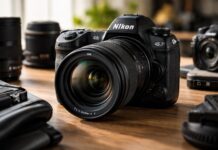
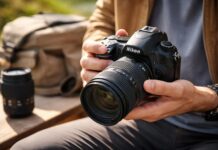
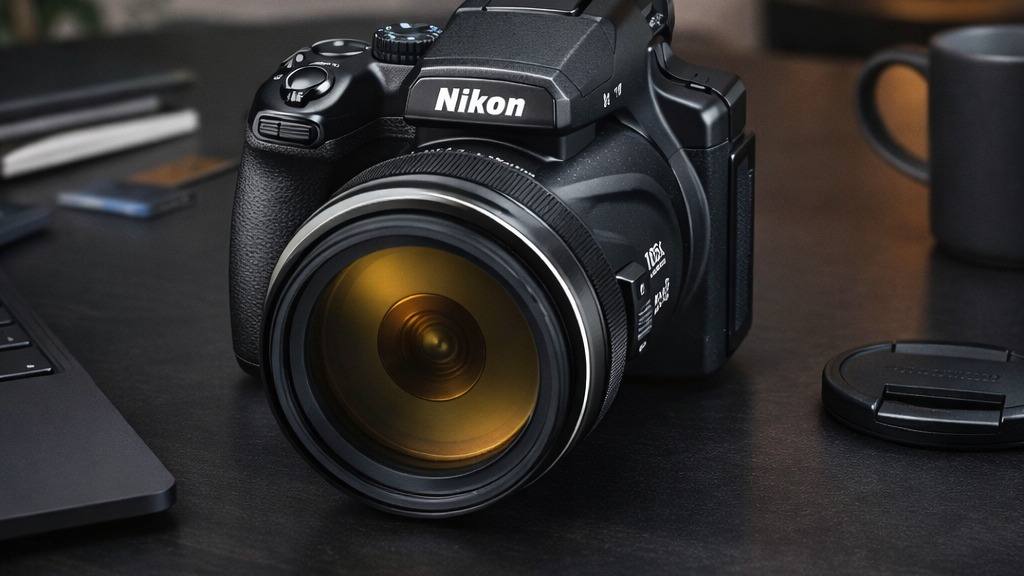
The design of the Nikon Coolpix P1100 strikes a careful balance between compactness and usability. The camera borrows its silhouette from small DSLRs, giving it a substantial grip that feels reassuring, even during long shooting sessions. The grip is deep enough for a secure hold, which is crucial when you extend that massive lens to its full telephoto reach. I found the camera comfortable in the hand, even after a few hours of shooting birds at a local park.
Button layout is intuitive, with all essential controls easily accessible for quick adjustments. The mode dial offers dedicated settings for scene modes, full manual, and various auto options, making it approachable for beginners but not limiting for more advanced users. The zoom toggle surrounds the shutter button, and it’s responsive enough to allow precise composition, even at high magnifications. I appreciated the customizable function button and the quick access to ISO, exposure compensation, and drive modes. These small touches can make a big difference in fast-paced situations.
The electronic viewfinder (EVF) is a welcome feature for a camera in this class. It isn’t as crisp or large as those on high-end mirrorless bodies, but it’s clear enough for framing at full zoom, which is where LCD screens often struggle in bright light. The rear LCD is tiltable, adding flexibility for shooting from low or high angles – an underrated benefit when trying to photograph shy animals or shoot over crowds.
In everyday use, the Coolpix P1100 feels robust and thoughtfully designed. It’s not a pocket camera, but it’s far lighter and less cumbersome than carrying a DSLR with a super-telephoto lens. The menu system is straightforward, and the camera starts up quickly enough to catch spontaneous moments. Battery life is respectable, though heavy zooming and EVF use will reduce it somewhat. For day trips and casual outings, one battery usually suffices, but for extended shoots, I recommend carrying a spare.
Handling is a real strength of the P1100. It’s a camera you can use one-handed if needed, and the stabilization system (covered in detail in chunk 2) lets you get surprisingly sharp shots even at long focal lengths. For travel, events, or family outings, it’s a practical companion that won’t leave you fumbling with lens changes or settings. If you want to compare how it stacks up against other bridge cameras, check out our best bridge cameras comparison.
Zoom range and lens performance in the field
How useful the extreme telephoto reach really is
The main headline feature of the Nikon P1100 is its extreme zoom range. With a lens that covers everything from wide angle to an astonishing super-telephoto, the possibilities open up dramatically compared to ordinary compacts or phones. The zoom action is smooth, controlled by a responsive rocker switch, and transitions quickly from wide to full telephoto with minimal lag. In my field testing, I was able to go from photographing a landscape to isolating a distant bird in seconds, which is simply not possible with most camera systems without changing lenses.
But how practical is that max reach? In real-world use, it’s both impressive and a little challenging. At moderate to high zoom, the lens lets you capture subjects far beyond what the naked eye can see, which is a thrill for wildlife and sports shooters. Picking out a perched hawk or catching the expression of a soccer player across the field becomes straightforward. However, at the very longest zoom settings, stability and atmospheric haze become limiting factors. Even with solid in-body stabilization, handholding at full telephoto can be tricky. For best results, I found bracing my elbows or using a monopod helped tremendously.
Lens performance is surprisingly good given the range covered. At the wide end, sharpness holds up well, and distortion is controlled. Moving through the mid-range, the lens maintains decent clarity, and color rendering is quite natural. At full extension, some softness and minor chromatic aberration appear, but images remain usable for web, social media, or moderate-size prints. The ability to photograph distant wildlife or details on a cityscape without a bag full of lenses is a huge advantage.
- Bird and wildlife photography: The zoom lets you get close without disturbing animals.
- Travel and sightseeing: Capture details on buildings, mountain peaks, or far-off events.
- Astronomy: Photograph the moon or distant planets, though results depend on atmospheric conditions.
For anyone who values versatility, the P1100’s lens is a powerful creative tool. Just remember, the more you zoom, the more you’ll want to pay attention to technique and stabilization.
Image quality from wide angle to full zoom
What to expect in good light and low light
Image quality is always a key question in any Nikon P1100 review, especially with a camera that covers such a broad focal range. In good light, the P1100 delivers pleasing images. At wide angle, photos are crisp, colors are vibrant without being overdone, and dynamic range is decent for a sensor of this size. Details in shadows and highlights are preserved well enough for everyday shooting, and JPEGs come out looking punchy and ready to share.
As you zoom in, sharpness remains surprisingly consistent through most of the range. At the very longest reach, some softness and noise creep in, but careful technique can still yield impressive results for web or small prints. The lens does a good job minimizing chromatic aberration and distortion up to about 80 percent of the zoom range. Beyond that, you may notice some purple fringing or edge softness, especially with strong backlighting or high-contrast scenes. For most users, these are minor trade-offs for the convenience of such a long lens.
Low light is where the compromises of a small sensor and slow lens become more apparent. The P1100’s sensor is physically larger than a phone’s but much smaller than a DSLR’s, which means noise becomes visible at higher ISOs. In dim conditions or indoors, expect some grain and softer detail, especially at full zoom where the lens aperture narrows. The built-in stabilization helps you keep shutter speeds lower, but moving subjects or very dark scenes will challenge the camera’s limits.
That said, with thoughtful use – selecting lower ISO, making use of natural light, and relying on stabilization – you can still bring home pleasing results. For travel, wildlife, or daytime sports, the image quality is more than adequate. If you want to squeeze out the best possible quality, consider shooting in good light and sticking to the middle of the zoom range when possible.
In summary, the Nikon Coolpix P1100 delivers solid image quality from wide angle to full zoom in favorable conditions. In low light, you’ll need to manage expectations, but for most users, the results are a fair trade for the camera’s incredible reach and convenience.
Autofocus, stabilization, and speed
How the camera performs for wildlife, sports, and distant subjects
When testing the autofocus on the Nikon Coolpix P1100, I found the experience to be much as expected for a long-zoom compact. The camera uses a contrast-detect autofocus system, which is fairly typical in this class. At the wide end of the zoom, focus acquisition is reasonably fast and accurate, even in moderate light. However, once you extend the lens to mid-telephoto or beyond, things change.
If you try to photograph birds, distant wildlife, or fast-moving subjects at full zoom, the autofocus sometimes hunts for a moment before locking on. This is not surprising, as the extreme focal length challenges the sensor. In bright, contrasty situations, such as a perched bird against the sky, it usually finds focus within a second. For smaller, camouflaged animals, or in lower light, you may need patience and a steady hand. Tracking moving subjects is possible, but don’t expect pro-level performance. The P1100 can follow slow-moving animals or people, but rapid sports or erratic wildlife may result in a higher miss rate.
Stabilization, on the other hand, is one of the camera’s quiet strengths. The lens includes optical image stabilization, which is absolutely essential at the maximum zoom (over 2000mm equivalent). In real-world use, I could handhold the camera at full extension and still get sharp shots at 1/100 sec if I was careful with my grip and breathing. For best results, I sometimes braced my elbows against my chest or used a tree for support. This stabilization keeps the P1100 practical for handheld wildlife photography, though it does not replace a tripod for the sharpest results at dusk or in dense forests.
As for shooting speed, the P1100 is not a speed demon. Single-shot mode is responsive, but the buffer fills quickly in burst mode, especially at full resolution. If you want to catch a sequence of action, you’ll get a handful of frames before the camera pauses to write data. This is adequate for casual wildlife or travel photography, but may frustrate action sports shooters or birders wanting to track a bird in flight. The camera’s startup and shot-to-shot times are respectable for a superzoom, but not in the same league as midrange DSLRs or mirrorless cameras.
In summary, the autofocus and stabilization systems are well-matched to the P1100’s intended use. For casual wildlife photography, distant travel scenes, and everyday snapshots, they work as promised. If your main goal is fast-paced action or professional-level tracking, you’ll want to manage your expectations or look to higher-end gear.
Video features and practical limitations
Is the Nikon Coolpix P1100 a good choice for casual video
The P1100 offers a set of video features that will satisfy most casual users. It records 4K UHD at 30 frames per second and full HD at up to 60 fps. The video quality at wide and mid zoom is crisp, with pleasing colors and enough dynamic range for family trips or nature walks. The built-in stereo microphone captures decent audio, though it’s naturally susceptible to wind and ambient noise.
However, when you push the camera to its telephoto limits for video, practical challenges emerge. Autofocus during video is slower than in stills, and you may see the camera hunting, especially if the subject moves or is in low contrast. The optical stabilization helps smooth handheld footage, but at extreme zoom, even minor hand movements translate into pronounced shakes. For best results, use a tripod or stabilize the camera on a solid surface when filming distant wildlife or events.
Another limitation is the lack of advanced video controls. You have basic exposure adjustment, but no headphone jack for monitoring audio, and only limited manual focus options. Rolling shutter (the “jello effect”) is noticeable if you pan quickly, which is common with long-zoom compacts.
Battery life during video is decent for a compact camera, but extended shooting drains it quickly, especially at 4K. Spare batteries are a wise investment for travel or longer sessions.
In short, the Nikon Coolpix P1100 is a good choice for casual video shooters who want the flexibility of a powerful zoom in a single package. It’s not a replacement for a dedicated video rig or hybrid mirrorless camera, but it will deliver pleasing results for travel vlogs, family events, and simple wildlife clips. If video is your top priority, you may want to consider alternatives with more robust controls and faster autofocus.
Pros, cons, and value for the right photographer
When this superzoom makes more sense than an interchangeable lens setup
The Nikon P1100 occupies a unique space in the camera world, especially as compact digital cameras are making a comeback in 2026. Its biggest advantage is convenience. With a single, lightweight camera, you gain access to a zoom range that would require a suitcase of lenses and a much heavier system if you chose a DSLR or mirrorless kit.
Pros:
- Unmatched zoom reach in a single compact body
- Lightweight and easy to travel with
- Optical stabilization keeps handheld shots sharp
- Simple controls, great for beginners and enthusiasts alike
- No need to swap lenses or carry extra gear
Cons:
- Image quality decreases at the longest zoom settings, especially in low light
- Autofocus and burst speed lag behind interchangeable lens cameras
- Limited manual controls and customization for advanced users
- Video features adequate but not professional-grade
- Small sensor means less background blur and lower dynamic range than larger cameras
For photographers who value reach, simplicity, and portability over absolute image quality, the P1100 makes a lot of sense. It’s a dream tool for birders, travel shooters, or anyone who wants to photograph distant wildlife or landmarks without the hassle of heavy gear. Those who shoot mostly in good light, or who prefer sharing images on social media rather than making large prints, will appreciate the convenience and flexibility.
On the other hand, if your priorities are low-light performance, fast action, or maximum creative control, an interchangeable lens camera (mirrorless or DSLR) is still the better investment. A superzoom like the P1100 is about capturing moments you otherwise could not reach, not about replacing a full-frame setup for professional work.
Key takeaways
- The Nikon P1100 is best suited to photographers who want extreme zoom reach in a single all-in-one camera.
- Its biggest strengths are convenience, telephoto flexibility, and ease of use rather than pure image quality.
- For wildlife, travel, and distant subjects, the Nikon Coolpix P1100 can be a practical choice if you understand its limits.
Frequently asked questions
Is the Nikon P1100 good for bird and wildlife photography?
Yes, the Nikon P1100 is a strong option for bird and wildlife photography, especially for beginners or travelers who want to avoid bulky gear. The extreme zoom lets you get close to distant subjects. However, autofocus is slower at full zoom, and image quality drops slightly, so patience and good light help a lot.
How is the image quality of the Nikon Coolpix P1100 at full zoom?
Image quality at full zoom is respectable for a compact superzoom, but not on par with larger sensor cameras or pro telephoto lenses. Expect some softness, especially at the edges, and more visible noise in low light. For sharing online or making small prints, results are usually very pleasing.
Is the Nikon P1100 better than carrying a DSLR or mirrorless camera with telephoto lenses?
For convenience and portability, absolutely. You get massive zoom in one lightweight body. However, a DSLR or mirrorless with a quality telephoto lens will deliver better autofocus and image quality, especially in challenging conditions. The P1100 is ideal when you want reach without the weight.
Is the Nikon P1100 worth buying for travel and everyday use?
If you value versatility, want to travel light, and enjoy photographing distant scenes or wildlife, the P1100 is a smart buy. For everyday snapshots and travel memories, it’s much easier to carry than a full kit. If you need top-tier image quality or advanced controls, consider other options in the Nikon lineup or look at models listed in our best compact travel cameras for 2026 guide.