
View full specs
Contents
- What the Kodak PIXPRO C1 is in 2026
- Kodak PIXPRO C1 specs at a glance
- Kodak PIXPRO C1 digital camera with 180 degree flip screen review
- Design and everyday handling
- Image quality expectations
- Main limitations you should know before buying
- Kodak PIXPRO C1 alternatives compared
- Final verdict on the Kodak PIXPRO C1
- FAQ
What the Kodak PIXPRO C1 is in 2026
A compact camera, not an action camera
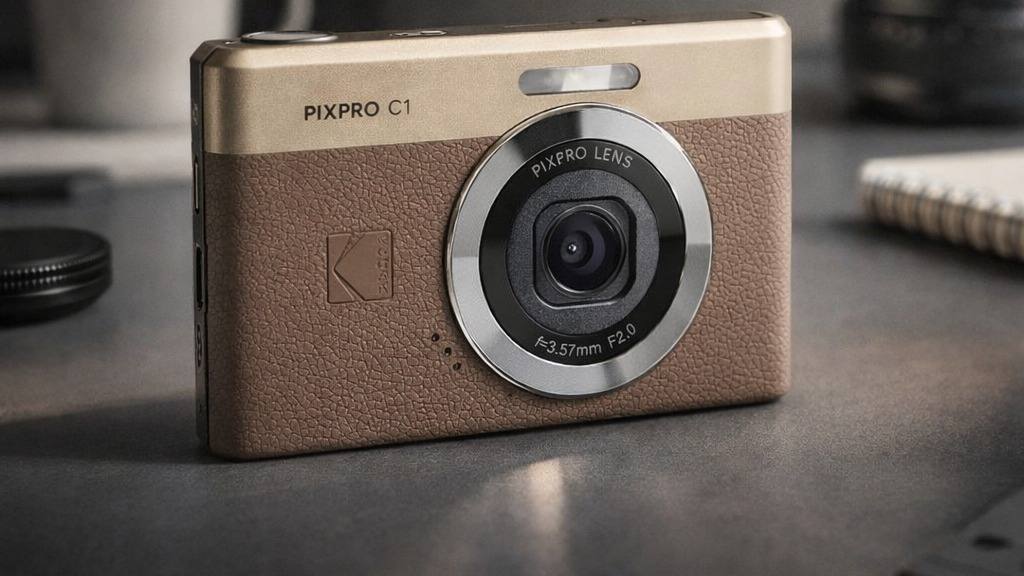
The Kodak PIXPRO C1 is a small everyday camera built for casual photos and simple video. Just as importantly, it is not an action camera. That distinction matters because some buyers see the compact body and assume rugged use, but the C1 is really a Friendly Zoom style compact digital camera aimed at easy carry and quick snapshots.
Where it sits in Kodak’s PIXPRO lineup
In Kodak’s broader PIXPRO family, the C1 sits near the entry level. For the broader buying context, see my Kodak Pixpro cameras guide. It focuses on ease, low cost, and a familiar point-and-shoot experience rather than zoom range or advanced manual control. Therefore, this is the kind of camera you buy for simplicity first, not for technical flexibility.
Why buyers still look at simple point-and-shoots today
Interest in simple compact digital cameras has increased again in 2026, especially among buyers who want a device separate from their phone. Many people want a device that feels separate from their phone, starts quickly, and keeps shooting simple. For kids, travel, casual social content, and gift buyers, a basic camera still has appeal, especially when the controls do not get in the way.
What this review covers and what it does not claim
This kodak pixpro c1 review looks at the camera as a current buying option using verified product facts and real-world expectations. It does not claim direct hands-on testing, and it does not invent features that are not clearly listed by Kodak. If you are asking, is the kodak pixpro c1 worth it in 2026, the answer depends heavily on your expectations.
Kodak PIXPRO C1 specs at a glance
Source note: core specifications in this section are based on the official Kodak PIXPRO C1 product page and Kodak spec sheet, checked on May 8, 2026.
13MP CMOS sensor and what that means for casual shooting
At the core of the camera is a 13MP CMOS sensor. In practical terms, that is enough for social sharing, small prints, and everyday memories. It is not a high-end imaging platform, but for a low-cost compact, the resolution is serviceable if you shoot in decent light and keep your expectations realistic.
26mm equivalent F2.0 fixed-focus lens
One of the more interesting points in the kodak pixpro c1 specs is the 26mm equivalent F2.0 fixed-focus lens. That wide view works well for selfies, travel scenes, and group shots. However, fixed focus means the camera favors simplicity over precision, so it is best suited to casual framing rather than demanding close-up or fast-moving subjects.
2.8-inch 180-degree tilt LCD for selfies and framing
The 2.8-inch screen flips up 180 degrees, which immediately makes the C1 more useful for self-portraits and solo clips. That single feature gives it a clearer identity than many cheap compacts. If your main use is easy framing at arm’s length, the screen matters more than an extra spec on a product page.
1080p video, battery life, and storage support
According to Kodak’s current listing, the camera records 1080p video, uses a built-in Li-ion battery, and supports microSD or microSDHC cards up to 32GB. Kodak also states around 200 shots per charge and about 1 hour 30 minutes of video at 1080/30. Those numbers are modest, but they fit the camera’s casual role.
- 13MP CMOS sensor
- 26mm equivalent F2.0 fixed-focus lens
- 2.8-inch 180-degree tilt LCD
- 1080p video recording
- Built-in Li-ion battery
- microSD and microSDHC support up to 32GB
Kodak PIXPRO C1 digital camera with 180 degree flip screen review
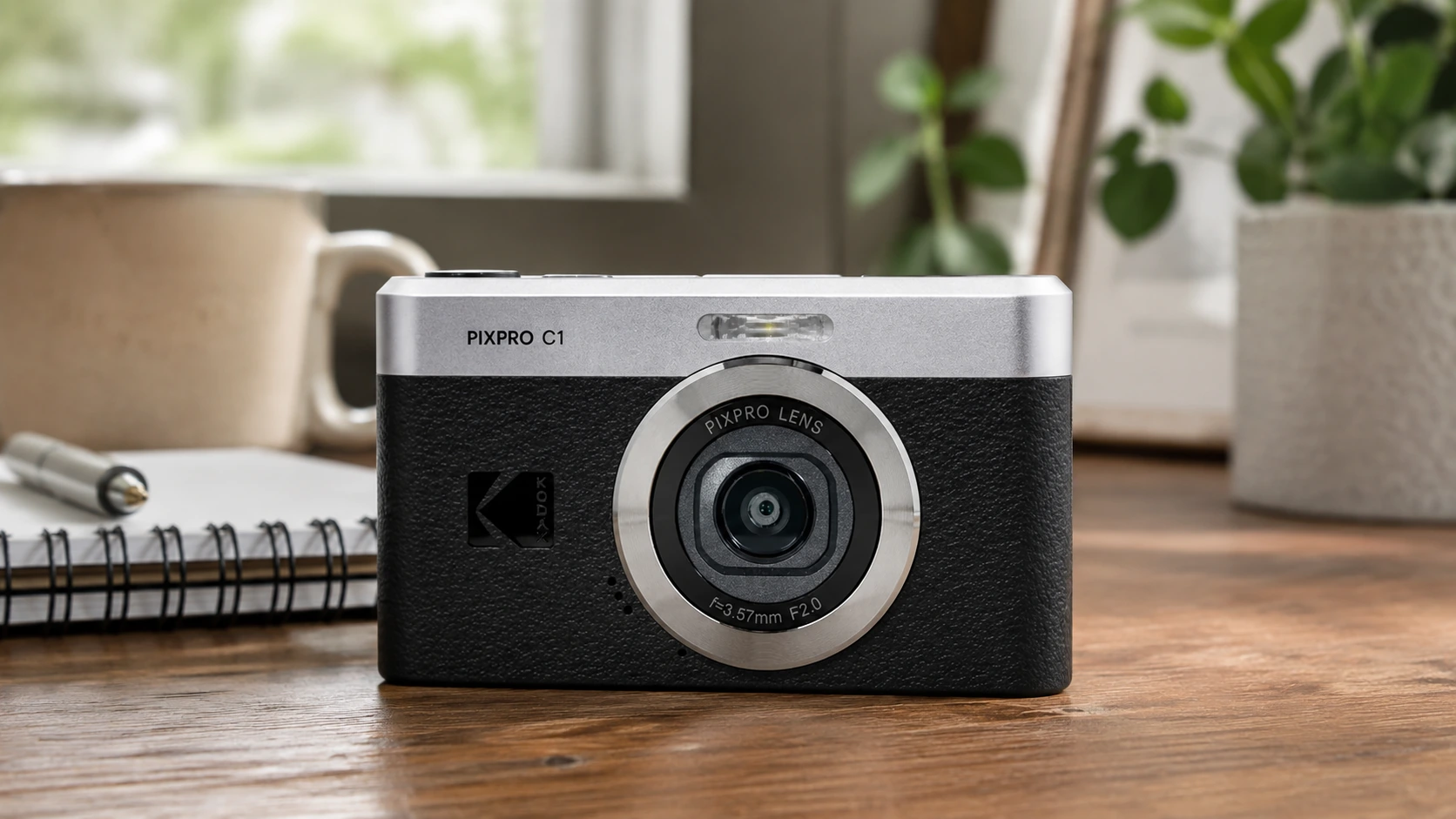
The most important feature for many C1 buyers is the 180 degree flip screen. It makes the camera more useful for selfies, simple vlogs, group photos, and travel clips where you want to frame yourself without guessing. That does not turn the C1 into a serious creator camera, but it does make it more practical than many basic compacts at this price.
If you mainly want optical zoom, compare this against the Kodak Pixpro FZ45 review and the Kodak Pixpro FZ45 vs FZ55 comparison. If you want the broader lineup view, start with the Kodak Pixpro cameras guide.
Design and everyday handling
Pocketable size and simple control layout
The Kodak PIXPRO C1 keeps things simple, and that is a real part of its appeal in 2026. It is a small compact digital camera meant for casual use, quick trips, and everyday snapshots. If you want a device that slips into a jacket pocket and does not ask much from you, the C1 makes immediate sense.
Its controls also match that goal. You are not dealing with a deep menu system or advanced shooting logic. Instead, the camera feels built for buyers who want to turn it on, frame a shot, and press the shutter. For beginners, that low-friction design matters more than many spec-sheet extras.
How the flip screen changes the shooting experience
The 2.8-inch 180-degree tilt LCD is one of the most important reasons this camera still gets attention. A flip-up screen makes selfies, group shots, and casual video framing much easier than on many older low-cost compacts. Therefore, the C1 feels more current than its price suggests.
That screen also changes how approachable the camera feels. If you are moving over from a phone, being able to see yourself while framing removes a lot of guesswork. It will not give you the polish of a modern flagship phone display, but for simple composition, it adds real everyday value.
Fixed-focus shooting and ease of use for beginners
The fixed-focus lens is both a strength and a limitation. On one hand, it keeps operation easy. There is no autofocus hunting, no focus point selection, and less waiting before a shot. For kids, first-time users, or anyone who wants a no-fuss camera, that simplicity can be refreshing.
However, fixed focus also means you need realistic expectations. This is not the camera for close-up detail work or for precise subject isolation. In a practical sense, it works best when you stay within the kind of casual distances that suit travel snaps, street scenes, and social photos.
What the built-in Li-ion battery means for travel
The built-in Li-ion battery helps keep the body compact, but it also asks for a little planning. You cannot simply swap in fresh AAs from a shop. For light sightseeing or a short day out, that is fine. For longer outings, though, charging access becomes part of ownership.
If you often carry a power bank for your phone, this may not feel like a major issue. Still, compared with a smartphone, the C1 is a second device to remember, charge, and pack. That trade-off is common with budget compacts, and it is worth keeping in mind before you buy.
Image quality expectations
How far a 13MP compact sensor goes in 2026
Looking at the kodak pixpro c1 review from a 2026 buyer’s perspective, the 13MP CMOS sensor is enough for basic sharing, small prints, and everyday memories. It is not a headline-grabbing spec now, but megapixels alone were never the full story. Good light matters far more here.
In bright conditions, the camera should produce usable files for social media, messaging, and casual albums. That said, many current phones use stronger processing, better HDR, and cleaner noise control. So while the C1 can still deliver pleasant results, it should not be judged as a phone killer.
What to expect from the 26mm equivalent lens
The 26mm equivalent F2.0 fixed-focus lens is a smart match for general use. It gives you a wide view that suits travel scenes, selfies, and indoor snapshots better than a tighter lens would. Moreover, the bright aperture helps on paper, especially when light starts to drop.
Still, lens brightness does not erase the limits of a small sensor and simple processing. You should expect decent casual images, not premium compact quality. If you want a broader perspective on budget compacts, our best compact digital cameras guide gives helpful context.
Best-case shooting scenarios for cleaner results
The C1 should look best in these situations:
- Daylight street and travel photos
- Selfies with the flip screen
- Outdoor family snapshots
- Simple social content with stable framing
Where image quality will feel limited next to a phone
Low light, high contrast scenes, and demanding detail are where the camera will feel older. Phones often recover highlights and shadows more effectively, and they usually sharpen faces and textures more aggressively. If image quality is your top priority, that is where kodak pixpro c1 alternatives start to make more sense.
Main limitations you should know before buying
Fixed-focus limits versus autofocus compacts
The biggest catch with the C1 is simple, it uses a fixed-focus lens. That keeps operation easy, but it also limits flexibility. For quick daylight snaps, group shots, and casual selfies, that can work well. However, if you expect reliable close-ups, subject tracking, or sharper results at varying distances, an autofocus compact will feel much more capable.
In practical terms, this matters most for food photos, pets, kids in motion, and detail shots. A modern phone often handles those scenes better because its processing and autofocus systems are far more advanced. Therefore, any honest kodak pixpro c1 review has to say that simplicity is both its strength and its compromise.
Sensor and processing limits in low light
The 13MP CMOS sensor is fine for bright conditions, but 2026 buyers should keep expectations grounded after sunset. Indoor shots under weak bulbs, evening street scenes, and mixed lighting will usually show softer detail, more noise, and less dynamic range than many recent smartphones. The bright F2.0 lens helps a bit, yet it cannot fully overcome the sensor’s limits.
Kodak’s own published specs tell you the basics, but not the full real-world story. Small-sensor cameras live and die by light. If you mostly shoot outdoors by day, the C1 makes more sense. If your camera life happens in restaurants, concerts, or dim hotel rooms, this is one of the clearest Kodak PIXPRO C1 limitations.
Storage and battery constraints for heavier use
The built-in battery is rated for about 200 shots, and video runtime is listed at about 1 hour 30 minutes at 1080/30. That is acceptable for light use, but it is not generous. A long sightseeing day, lots of selfies, and repeated screen use can drain it faster than casual buyers expect.
Storage is also basic. The camera supports microSD and microSDHC cards up to 32GB. That is enough for everyday shooting, but heavier users may find it restrictive compared with devices that support larger cards. If you shoot often, plan ahead with charging and card management.
Why expectations matter more than nostalgia
Compact digital cameras are making a comeback in 2026, but nostalgia can cloud judgment. The Kodak PIXPRO C1 is appealing because it is separate from your phone, easy to carry, and visually fun. Still, buyers should not mistake charm for performance. It is a simple camera with simple output.
If that sounds exactly right, the C1 may satisfy you. If you secretly want phone-beating image quality in every condition, you will likely be disappointed. That is why expectations matter more than retro appeal.
Kodak PIXPRO C1 alternatives compared
Kodak PIXPRO C1 vs your smartphone camera
For many people, the first and best alternative is already in their pocket. A newer smartphone usually offers better low-light results, smarter HDR, faster focusing, and easier sharing. On pure convenience, the phone wins. On the other hand, the C1 gives you a separate shooting experience, a flip screen, and fewer distractions.
If image quality matters more than novelty, a used premium compact can be the smarter route. Older Canon G, Sony RX, or Panasonic LX models often deliver better lenses, stronger autofocus, and more control. Condition and battery health vary, of course, so buy carefully from reputable sellers.
Other entry-level compact camera paths to consider
If you are comparing kodak pixpro c1 alternatives, think in three lanes:
- Your current smartphone, best for convenience and processing.
- A used premium compact, best for image quality per dollar.
- A simple new compact like the C1, best for ease and a phone-free feel.
Pros and cons summary for each alternative
The C1 works best when you value simplicity, low upfront cost, and casual social shooting. A smartphone is better for most people who want dependable results. A used premium compact suits enthusiasts willing to accept more risk and complexity. If you want more buying context, our best compact cameras for beginners guide may help.
Final verdict on the Kodak PIXPRO C1
The short answer for most buyers
So, is the kodak pixpro c1 worth it in 2026? Yes, for the right buyer. No, for anyone expecting it to outperform a good modern phone.
Where it delivers genuine value
At a Kodak Pixpro C1 price around $99, it offers a clear, simple package. You get approachable controls, a 26mm equivalent F2.0 fixed-focus lens, a 2.8-inch 180-degree tilt LCD, and 1080p video. For beginners, kids, and casual travel shooters, that can be enough.
Where it feels dated in 2026
The dated parts are just as clear, fixed focus, modest battery life, 32GB card support, and image quality that struggles in low light. Those limits do not make it bad. They simply define what kind of camera it is.
My recommendation for Lens and Shutter readers
My view is straightforward. This kodak pixpro c1 review points to a camera that makes sense only if you want a basic, cheerful compact and understand its limits before buying. If that sounds like you, it is a fair entry-level option. If not, start with your phone or look at stronger alternatives.
FAQ
What are the Kodak PIXPRO C1 specs?
The main Kodak PIXPRO C1 specs include a 13MP CMOS sensor, 26mm equivalent F2.0 fixed-focus lens, 2.8-inch 180-degree tilt LCD, 1080p video, built-in Li-ion battery, and microSD or microSDHC support up to 32GB.
What is the Kodak PIXPRO C1 price in 2026?
Current US retail is around $99, based on retailer pricing checked in June 2026.
Is the Kodak PIXPRO C1 worth it in 2026?
It is worth it for beginners and casual users who want a simple compact digital camera separate from their phone. It is less compelling for buyers who care most about low-light quality or autofocus performance.
Does the Kodak PIXPRO C1 shoot 1080p video?
Yes. The camera records 1080p video, with an approximate runtime of 1 hour 30 minutes at 1080/30 on a full charge.
What are the best Kodak PIXPRO C1 alternatives?
The best alternatives are usually your smartphone, a used premium compact, or another beginner-friendly compact camera, depending on whether you prioritize convenience, image quality, or simplicity.
Casual buyers who want a very cheap pocket camera with a flip screen for daylight snapshots, selfies, and simple video.
You expect modern phone-quality processing, reliable low-light results, rugged build, RAW files, or real optical zoom.
Low for basic use, but image quality expectations need to stay modest.
Move to a Kodak FZ45/FZ55 for optical zoom, or a used Canon/Sony/Panasonic compact for better optics and controls.
1080p is useful for casual clips, but focus, stabilization, audio, and small-sensor quality limit serious video work.
Yes as a cheap fun camera near its normal price; no if a bundle pushes it close to better compact cameras.
Last update on 2026-06-27 / Affiliate links / Images from Amazon Product Advertising API