
Canon’s full frame lineup has become surprisingly accessible over the past few years, breaking down the traditional barriers that once kept enthusiasts locked into crop sensor systems. When you’re hunting for the cheapest full frame camera Canon manufactures, you’re not settling for second-rate equipment. You’re making a strategic decision that opens the door to exceptional image quality, superior low-light performance, and access to Canon’s extensive RF and EF lens ecosystems without draining your savings account. The landscape has shifted dramatically, and understanding your options means knowing exactly what compromises you’re making and which features remain intact at these lower price points.
Contents
- Understanding Canon’s full frame budget strategy
- Canon EOS RP: the original budget champion
- Canon EOS R8: the modern contender
- Comparing the cheapest full frame camera Canon options
- Building a complete system around budget bodies
- What you sacrifice at this price point
- Long-term value and upgrade paths
- Making the purchase decision
- Realistic expectations and photographic growth
- Alternative considerations beyond Canon
Understanding Canon’s full frame budget strategy
Canon restructured its approach to entry-level full frame cameras when it launched the mirrorless RF mount system. The traditional thinking held that full frame sensors belonged exclusively in professional-grade bodies with matching price tags. That changed rapidly as competition intensified and manufacturing processes improved.
The company’s strategy focuses on creating accessible bodies that maintain sensor quality while trimming features from video specifications, build materials, and advanced autofocus capabilities. This isn’t a random cost-cutting exercise. Canon deliberately segments its market by identifying which photographers need specific features and which can thrive without them.
Key areas where budget models differ:
- Weather sealing reduced or eliminated
- Single card slot instead of dual slots
- Electronic viewfinder resolution decreased
- Maximum continuous shooting speed limited
- Video recording time restrictions
- In-body image stabilization absent
The sensor itself remains remarkably capable across Canon’s full frame range. You’re getting the same fundamental advantage of that larger imaging area regardless of whether you spend fifteen hundred or five thousand dollars on a body.

Canon EOS RP: the original budget champion
The Canon EOS RP arrived in 2019 and immediately redefined expectations for affordable full frame photography. This camera represented Canon’s first serious attempt at making the RF mount accessible to photographers transitioning from crop sensors or upgrading from older DSLRs.
At its core sits a 26.2-megapixel full frame CMOS sensor paired with Canon’s DIGIC 8 processor. The resolution hits that sweet spot where file sizes remain manageable while providing enough detail for substantial cropping and large prints. The camera weighs just 485 grams, making it one of the lightest full frame bodies available from any manufacturer.
Performance characteristics
The EOS RP delivers respectable autofocus performance with 4,779 manually selectable AF positions covering approximately 88% of the frame horizontally and vertically. The Dual Pixel CMOS AF system works reliably in most shooting situations, though it struggles compared to newer bodies when tracking fast-moving subjects in challenging light.
Continuous shooting maxes out at 5 frames per second, adequate for casual sports and wildlife work but limiting for serious action photography. The burst depth before buffer fills depends on your card speed and file format, but you can expect around 50 JPEGs or 20 RAW files in a single sequence.
Battery life stands as the RP’s most significant weakness. The LP-E17 battery provides approximately 250 shots per charge using the viewfinder, forcing you to carry multiple spares for full-day shoots. Many photographers end up buying four or five batteries to maintain confidence in the field.
| Specification | Canon EOS RP |
|---|---|
| Sensor Resolution | 26.2 MP |
| Autofocus Points | 4,779 |
| Continuous Shooting | 5 fps |
| Battery Life | 250 shots |
| Weight | 485g |
| Video Capability | 4K 24p (cropped) |
Real-world applications
The EOS RP excels in controlled environments where you’re working deliberately rather than reacting to split-second moments. Portrait photographers find it handles beautifully with prime lenses, delivering gorgeous background separation and excellent skin tones. Landscape shooters appreciate the light weight during long hikes, though the lack of weather sealing demands caution in marginal conditions.
Wedding photographers sometimes use the RP as a backup body or for getting alternative angles during ceremonies. The silent shutter mode proves invaluable when discretion matters. However, the single SD card slot creates risk during critical paid work where redundancy protects your business.
Recent price drops have made the Canon EOS RP incredibly attractive for budget-conscious photographers looking to enter the full frame market without compromise on sensor quality.
Canon EOS R8: the modern contender
Canon introduced the EOS R8 in early 2023, bringing significantly updated technology to the budget full frame segment. This camera shares its sensor with the flagship EOS R6 Mark II, immediately positioning it as a serious performance option despite the lower price point.
The 24.2-megapixel sensor might seem like a step backward in resolution compared to the RP, but the newer technology delivers superior dynamic range and improved high ISO performance. Canon intentionally chose a lower pixel count to enhance low-light capability and reduce processing demands on the DIGIC X processor.
Advanced features at entry prices
What distinguishes the R8 from its predecessor extends far beyond the sensor. The autofocus system represents a generational leap, incorporating deep learning technology that recognizes and tracks people, animals, and vehicles with remarkable accuracy. The camera can identify human eyes, faces, heads, and bodies, maintaining focus even when subjects turn away from the lens.
Continuous shooting reaches 6 fps with the mechanical shutter or 40 fps using the electronic shutter, though the faster speed comes with a 1.6x crop and reduced image quality. For most practical purposes, the 6 fps mechanical option provides better results with full resolution and wider dynamic range.
The electronic viewfinder jumps to 2.36 million dots compared to the RP’s basic display, making manual focusing easier and composition more enjoyable. The refresh rate supports smoother tracking of moving subjects, reducing the lag that plagued earlier budget models.
Video capabilities include:
- Uncropped 4K at 60fps
- Full HD at 180fps for slow motion
- Canon Log 3 for advanced color grading
- Oversampled 4K from 6K capture
- Unlimited recording time in most modes
Battery life remains modest at approximately 220 shots per charge with the LP-E17, actually slightly worse than the RP despite the newer processor. The R8 supports USB-C power delivery, allowing you to extend shooting time with external battery banks.
Comparing the cheapest full frame camera Canon options
Choosing between these two bodies depends entirely on your specific needs and shooting style. Neither camera objectively beats the other across all categories, and the decision often comes down to which compromises align with your priorities.
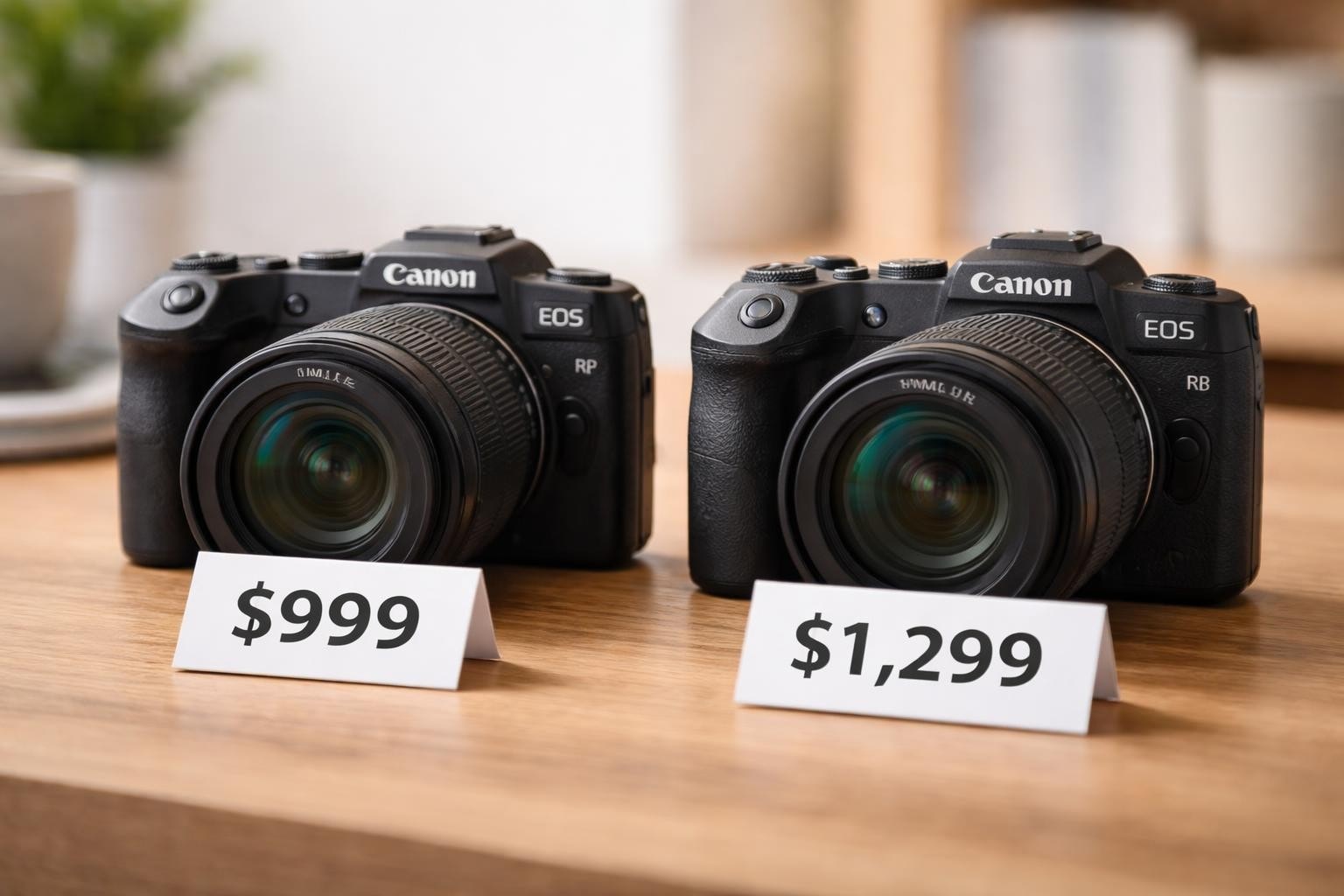
The price difference typically runs between 300 and 500 dollars depending on current promotions and market conditions. That gap narrows during sales events, sometimes making the decision easier when the newer technology costs only slightly more.
When the EOS RP makes sense
Select the RP if you primarily shoot static subjects in good light and prioritize absolute minimum cost. The sensor delivers excellent image quality for portraits, products, and landscapes where you’re working from a tripod. The lighter weight matters during extended handheld sessions or travel photography where every gram counts.
Photographers building a lens collection benefit from putting saved money toward better glass rather than incremental body improvements. A 500-dollar difference buys a quality prime lens that transforms image quality more than newer autofocus algorithms ever could.
The RP also suits photographers transitioning from older EF-mount DSLRs who own quality lenses. Using the EF-to-RF adapter maintains full functionality with proven optics while gaining mirrorless advantages like focus peaking and real-time exposure preview.
Choose the R8 if you shoot any moving subjects, work in challenging light, or need reliable video capability. The autofocus upgrade alone justifies the cost difference for photographers capturing children, pets, or events where missed focus means lost moments.
Low-light photographers benefit from the cleaner high ISO performance and superior dynamic range. The difference becomes obvious above ISO 3200, where the R8 maintains detail and color accuracy while the RP starts showing noticeable noise and reduced shadow recovery.
Recent coverage highlights how the R8’s improved sensor makes it particularly suitable for astrophotography and other specialized low-light applications.
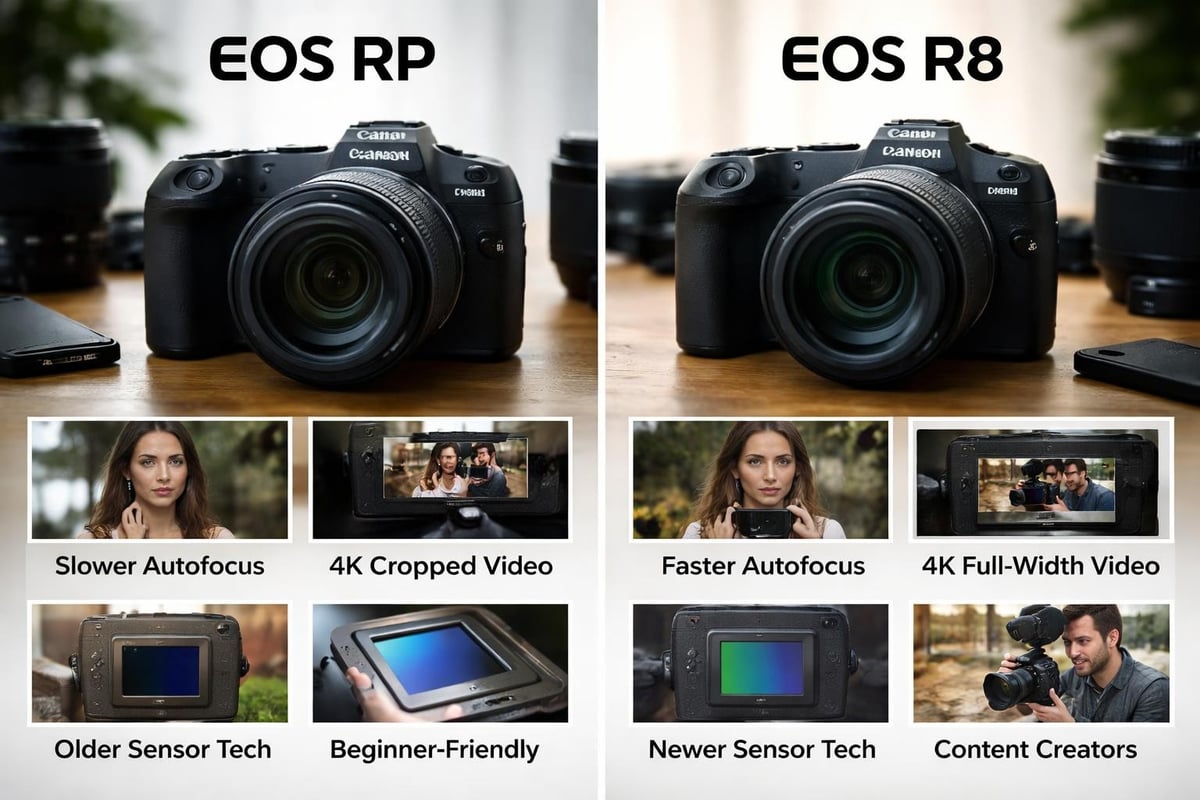
Content creators need the R8’s video specifications. The uncropped 4K at 60fps opens creative possibilities that the RP’s cropped 24fps simply cannot match. Professional clients increasingly expect 4K deliverables, making the RP’s video limitations a potential business constraint.
| Feature | EOS RP | EOS R8 |
|---|---|---|
| Launch Year | 2019 | 2023 |
| Sensor Tech | Older generation | Current generation |
| AF Points | 4,779 | Dual Pixel II (100% coverage) |
| Subject Tracking | Basic | AI-powered deep learning |
| 4K Video | 24p (cropped) | 60p (uncropped) |
| Burst Speed (Mech) | 5 fps | 6 fps |
| Burst Speed (Elec) | 5 fps | 40 fps |
| High ISO Performance | Good | Excellent |
| Typical Street Price | Lower | Moderate |
Building a complete system around budget bodies
Owning the cheapest full frame camera Canon makes means nothing without appropriate lenses and accessories. Your total investment extends well beyond the body, and smart choices at this stage determine whether you maximize the sensor’s potential or handicap it with inadequate optics.
Lens selection strategy
Start with a versatile zoom that covers your most common focal lengths. The RF 24-105mm f/4-7.1 IS STM provides excellent value as a walkaround lens, though the variable aperture limits low-light performance. The compact size and light weight match these budget bodies perfectly.
For photographers prioritizing image quality over convenience, prime lenses deliver superior results at lower costs. The RF 50mm f/1.8 STM offers exceptional sharpness and beautiful background blur for around 200 dollars. That fast aperture transforms your camera’s low-light capability and enables the shallow depth of field that justifies owning full frame sensors.
Canon recently launched an affordable RF 45mm f/1.2 lens that brings professional-grade optics to budget-conscious photographers, expanding the native RF options beyond basic kit zooms.
If you’re coming from Canon’s EF system, the EF-to-RF adapter unlocks your existing lens investment. Autofocus works flawlessly with quality EF lenses, and many photographers find their old 24-70mm f/2.8 or 70-200mm zooms perform better on mirrorless bodies thanks to improved focusing systems.
Essential accessories
Extra batteries rank as the highest priority purchase. Neither the RP nor R8 provides adequate battery life for full-day shooting. Budget for at least three additional batteries, whether genuine Canon units or quality third-party alternatives.
Fast SD cards matter more on these cameras than on crop sensor bodies. Larger file sizes from the full frame sensor fill cheap cards quickly and slow down write speeds. Invest in UHS-II rated cards with minimum 90MB/s write speeds to avoid frustrating buffer delays.
A quality strap improves comfort during extended shooting sessions. The light weight of these bodies might seem to eliminate the need for proper support, but neck strain accumulates during long events or travel days. Padded straps with anti-slip materials distribute weight better than basic Canon-provided options.
Consider a basic LED light panel for video work with the R8. The camera lacks a built-in flash, and while that reduces weight and complexity, it leaves you helpless in truly dark environments without external lighting. Small battery-powered panels cost under 50 dollars and expand creative possibilities dramatically.
What you sacrifice at this price point
Understanding the limitations of these budget bodies prevents disappointment and helps set realistic expectations. You’re not buying a professional camera that happens to cost less. You’re buying a capable enthusiast camera that uses a full frame sensor.
Build quality represents the most obvious compromise. Both cameras use polycarbonate construction rather than the magnesium alloy found in higher-end bodies. They feel solid enough during normal use but lack the tank-like durability that justifies rough handling. Neither model includes comprehensive weather sealing, demanding extra caution during light rain or dusty conditions.
Operational limitations
The single card slot creates potential problems for professional work. Memory cards fail occasionally, and losing an entire wedding or event because of hardware failure damages your reputation permanently. Serious professionals either use these cameras strictly as backup bodies or implement immediate backup workflows transferring files to secondary storage throughout shoots.
Neither camera includes in-body image stabilization, placing the burden entirely on lens-based stabilization systems. This matters less with native RF lenses that incorporate IS, but adapted lenses without stabilization offer no compensation for camera shake. The limitation becomes obvious when shooting video handheld or working with telephoto lenses in low light.
The modest buffer depth restricts extended burst sequences. Sports photographers quickly hit the limit when tracking continuous action, forcing periodic pauses while the buffer clears. This makes timing crucial and demands anticipation rather than spray-and-pray shooting techniques.
Professional features absent from budget models:
- Top LCD display for quick settings review
- Dual card slots for backup recording
- Hardened weather sealing throughout body
- Illuminated buttons for dark environments
- Headphone jack for audio monitoring (R8 only)
- Built-in flash (both models)
Long-term value and upgrade paths
Purchasing the cheapest full frame camera Canon manufactures represents either a starting point or a destination depending on your photographic journey. Some photographers use these bodies for years without feeling constrained. Others quickly recognize limitations and start planning upgrades.
The key question asks whether your photography will outgrow the camera’s capabilities or whether the camera exceeds your actual needs. Honest self-assessment prevents both overspending on unused features and underinvesting in tools that hamper your creative vision.
When to upgrade
Serious action photographers eventually need faster burst rates, deeper buffers, and superior autofocus tracking. If you find yourself consistently missing critical moments because of camera limitations rather than technique deficiencies, the upgrade becomes justified. The EOS R6 Mark II addresses these shortcomings while maintaining reasonable pricing compared to flagship bodies.
Professional photographers requiring absolute reliability need weather sealing and dual card slots. These aren’t luxury features for working photographers who face liability when equipment fails during paid assignments. The business risk outweighs any cost savings from budget bodies.
Video creators pushing beyond basic recording benefit from features like Canon Log 3, unlimited recording time, and better heat management in higher-end bodies. The R8 handles casual video work beautifully, but sustained professional production demands more robust video specifications.
When budget cameras remain sufficient
Hobby photographers rarely exhaust these cameras’ capabilities. If you shoot primarily for personal satisfaction, social media sharing, and occasional prints, the image quality exceeds display requirements by comfortable margins. The sensor captures more resolution and dynamic range than typical viewing methods can reveal.
Photographers focusing on specific niches like portraiture or product photography find these bodies entirely adequate for professional work. The controlled environments and deliberate pace suit the cameras’ strengths while avoiding their weaknesses. Many successful portrait studios use the RP or R8 alongside more expensive bodies without clients noticing quality differences in final deliverables.
Travel photographers appreciate the weight savings and compact size that larger bodies cannot match. The improved hiking experience and reduced airline luggage concerns provide tangible benefits that specification sheets cannot quantify. If you’ve explored options for your next adventure, our comprehensive guide on the best travel cameras covers various options beyond just full frame bodies.
Making the purchase decision
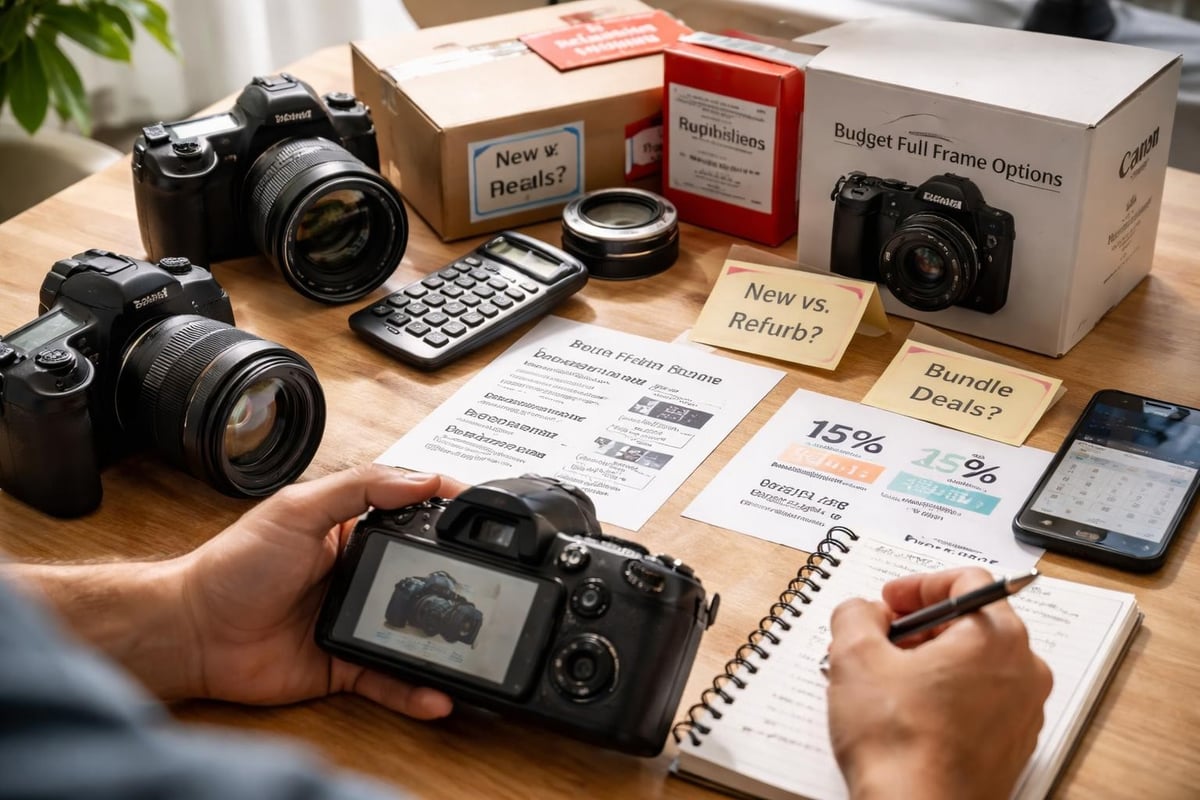
Current pricing determines which model represents the cheapest full frame camera Canon offers at any given moment. Sales, rebates, and promotional bundles shift the equation constantly. Monitor prices across multiple retailers and watch for seasonal patterns around Black Friday, holidays, and new product announcements.
Refurbished units from Canon’s official program deliver significant savings while maintaining factory warranty coverage. These cameras undergo thorough inspection and testing, often arriving in like-new condition at hundreds below retail pricing. The one-year warranty matches new units, eliminating the primary risk of buying used equipment.
Used market options expand your possibilities but demand careful inspection. Purchase from reputable dealers offering return periods and some form of guarantee. Check shutter counts, test all functions thoroughly, and examine the sensor for dust or damage before committing. Private sales offer lower prices but zero recourse if problems emerge after purchase.
Bundle deals sometimes provide better overall value than body-only packages. Compare the included lens quality against your actual needs. If you plan to buy that specific lens anyway, bundles save money. If you’d prefer different glass, the bundle creates unnecessary expense and complicates reselling unwanted items.
Realistic expectations and photographic growth
The cheapest full frame camera Canon produces will not transform mediocre photography into brilliant work. Technical image quality improves measurably compared to crop sensors, but composition, lighting, and subject matter determine whether images resonate with viewers. The upgrade provides tools that enhance your existing skills rather than replacing the need for those skills.
New full frame owners often experience initial disappointment when their photographs don’t immediately look dramatically different. The sensor’s advantages emerge gradually as you learn to exploit superior low-light performance, shallower depth of field control, and improved dynamic range. Give yourself time to adapt techniques and develop an eye for situations where full frame capabilities make meaningful differences.
The learning curve includes understanding how depth of field changes at equivalent fields of view. Your familiar crop sensor techniques with specific apertures produce different results on full frame. What looked sharp throughout on a crop sensor now shows narrower focus planes, requiring adjusted shooting approaches and potentially different aperture selections.
Dynamic range improvements mean your raw files contain more recoverable information in shadows and highlights. Learning to expose protectively for post-processing rather than achieving perfect in-camera JPEGs unlocks the sensor’s full potential. This demands developing raw processing skills and establishing efficient editing workflows.
Building sustainable workflows
These cameras lack features that enable lazy shooting habits. Limited buffer capacity forces disciplined burst technique rather than holding the shutter continuously. Modest battery life demands planning and preparation rather than shooting carelessly until the battery dies. Single card slots require immediate backup procedures rather than depending on redundant recording.
These constraints actually benefit developing photographers by enforcing professional discipline at the beginning of their full frame journey. You learn sustainable practices that scale up when you eventually upgrade to more capable bodies rather than developing dependencies on features that won’t always be available.
The modest specifications also keep you focused on fundamental photography rather than getting lost in technical features. When you can’t depend on incredible autofocus or unlimited burst speed to save poorly timed shots, you develop better anticipation and decisive moment recognition. These skills transfer across all future equipment and separate competent photographers from those who rely entirely on technology.
Alternative considerations beyond Canon
Before committing to the cheapest full frame camera Canon makes, briefly consider competing options from other manufacturers. Canon’s RF mount ecosystem offers certain advantages, but Sony, Nikon, and Panasonic provide compelling alternatives at similar price points.
Sony’s a7 series often appears in the same price range with comparable specifications. The lens selection differs, third-party support varies, and ergonomics suit different hand sizes and shooting styles. Some photographers find Sony bodies more intuitive while others prefer Canon’s menu systems and control layouts.
Nikon’s Z5 and Z6 compete directly with Canon’s budget full frame offerings. The choice often depends on existing lens investments and brand familiarity rather than objective superiority. Both systems deliver excellent image quality, and the differences matter less than developing skill with whichever system you choose.
However, Canon’s RF mount shows strong momentum with consistent lens releases and technology updates. The ecosystem maturity provides confidence that support will continue long-term. For photographers exploring budget options under specific price thresholds, checking our roundup of the best cameras under 700 dollars reveals how Canon’s offerings compare across various price points and sensor sizes.
Finding the cheapest full frame camera Canon produces opens professional-grade imaging quality to photographers at nearly every budget level. Whether you choose the compact EOS RP or the more advanced EOS R8, you’re accessing the fundamental advantages that make full frame sensors desirable without the traditional premium pricing. At Lens and Shutter, we provide detailed reviews and expert guidance across Canon’s entire lineup, helping you make informed decisions that match your specific photography needs and budget constraints. Explore our comprehensive camera reviews to discover which full frame option delivers the best value for your unique shooting style.