

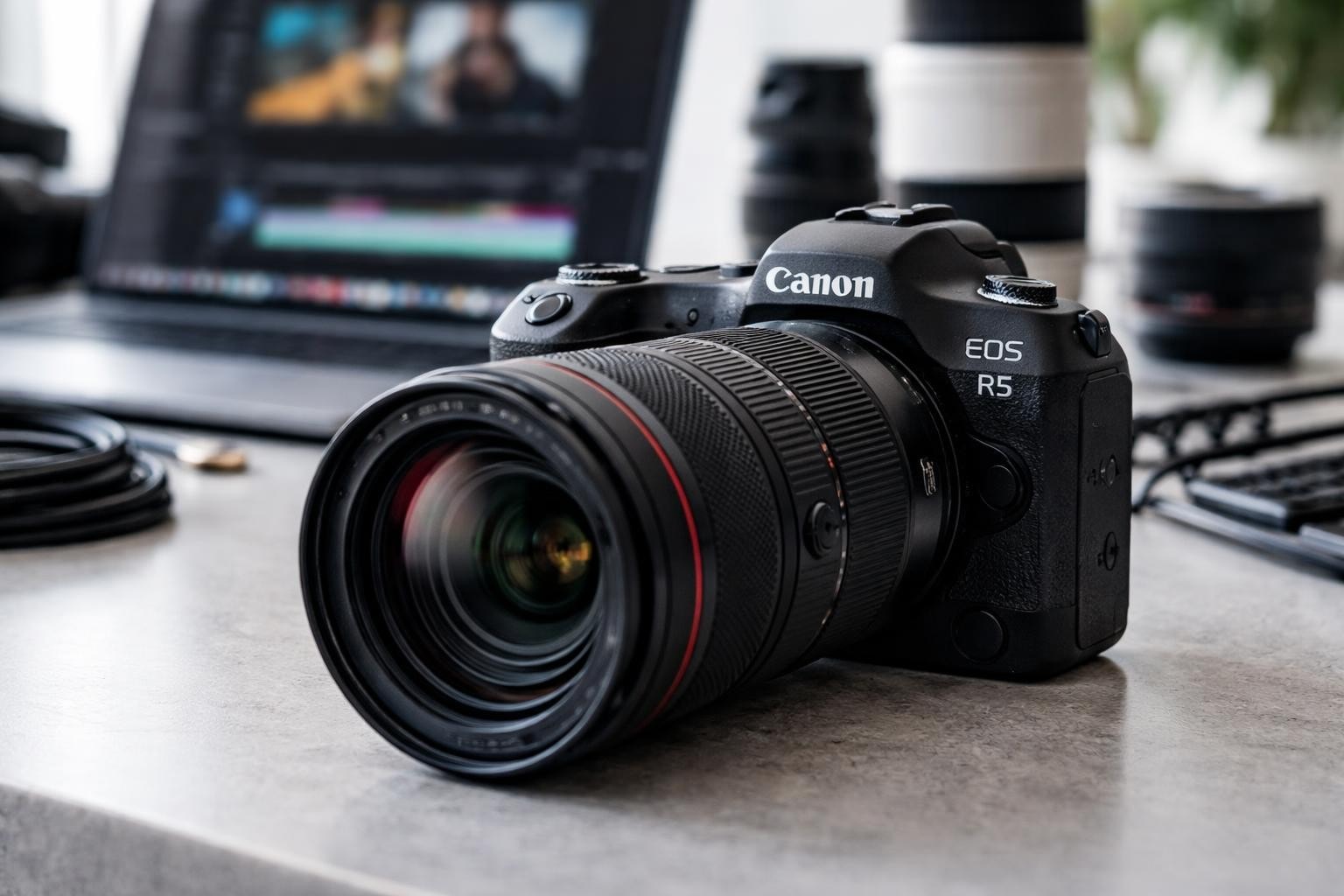
When Canon launched the EOS R5 back in 2020, it felt like the company was finally ready to challenge Sony’s mirrorless dominance. Fast forward to 2026, and despite newer models arriving on the scene, this camera still holds its ground in ways that surprise many photographers. I’ve spent considerable time with this body across different shooting scenarios, and what strikes me most is how it balances cutting-edge features with practical usability. The Canon EOS R5 represents a turning point for Canon’s mirrorless lineup, and understanding where it excels versus where it compromises helps you decide if it’s the right tool for your work.
Contents
- Understanding what makes this camera special
- Image quality across different scenarios
- Autofocus system that actually works
- Video capabilities that started conversations
- Comparing value in the current market
- Real-world applications and workflows
- Lens ecosystem considerations
- Battery performance and power management
- Firmware updates and long-term support
- Who should seriously consider this camera
- Memory card strategy and storage
- Handling criticisms and known limitations
- Accessories worth considering
- Future-proofing considerations
Understanding what makes this camera special
The canon eos r5 builds on Canon’s decades of camera expertise while embracing the mirrorless future. At its core sits a 45-megapixel full-frame sensor that delivers exceptional detail without drowning you in unmanageable file sizes. This resolution sweet spot works beautifully for both landscape work requiring fine detail and portrait sessions where you might crop tighter in post-production.
Key specifications that matter:
- 45-megapixel CMOS sensor with impressive dynamic range
- Up to 8K RAW video recording at 30fps
- In-body image stabilization rated at 8 stops
- Dual card slots with CFexpress and SD compatibility
- Electronic viewfinder with 5.76 million dots
- Weather-sealed magnesium alloy construction
What separates this camera from its predecessors is the comprehensive approach Canon took. Previous EOS R models felt like stepping stones, but the R5 arrived as a complete package ready for professional deployment. The integration of technologies like Dual Pixel CMOS AF II and that remarkably effective image stabilization system transforms how you approach different shooting situations.
Build quality and handling experience
Pick up the canon eos r5 and you immediately recognize Canon’s commitment to professional-grade construction. The magnesium alloy body feels substantial without becoming burdensome during extended shoots. Weather sealing throughout the chassis means you can work confidently in challenging conditions, though I still recommend basic protection in heavy rain.
The grip design accommodates larger hands comfortably, and all major controls fall naturally under your fingers. Canon wisely maintained familiar button layouts from their DSLR era, making transitions smoother for photographers upgrading from 5D series bodies. The top LCD panel provides quick access to settings without diving into menus, a feature I appreciate more than touchscreen-only implementations.

Image quality across different scenarios
Testing the canon eos r5 across various lighting conditions reveals a sensor that punches above its megapixel count suggests. Dynamic range holds up remarkably well, giving you latitude to recover shadows and control highlights during post-processing. Colors straight out of camera lean slightly warm with Canon’s characteristic color science, which generally requires minimal adjustment for pleasing skin tones.
At base ISO, the images display exceptional sharpness and detail retention. Landscape photographers will appreciate how foliage renders with distinct separation between elements. Portrait work benefits from smooth tonal transitions across skin, especially when paired with quality glass like Canon’s RF 85mm f/1.2 or 50mm f/1.2 lenses.
High ISO performance
Low-light capability matters tremendously for event work, astrophotography, and indoor shooting without flash. The R5 handles high ISO situations with composure, maintaining usable images well into four-digit ISO values. Noise characteristics remain fine-grained and respond well to noise reduction algorithms without turning images into watercolor paintings.
| ISO Range | Image Quality | Best Use Cases |
|---|---|---|
| 100-800 | Exceptional detail, minimal noise | Studio, landscape, controlled lighting |
| 1600-6400 | Very good, slight texture | Events, indoor available light, golden hour |
| 12800-25600 | Good with processing | Low-light events, astrophotography with fast lenses |
| 32000+ | Acceptable for documentation | Emergency situations, artistic grain effects |
I regularly shoot at ISO 3200 during wedding receptions without worry. The files clean up nicely in post, and the detail retention remains strong enough for client deliverables. Pushing beyond ISO 12800 requires accepting more compromise, but the results still surpass what older cameras produced at half those values.
Autofocus system that actually works
Canon’s Dual Pixel CMOS AF II technology in the canon eos r5 delivers focus performance that changes how you approach tracking subjects. The system covers approximately 100% of the frame with 1,053 AF areas, meaning you can place focus points practically anywhere in your composition without reframing.
Subject detection modes include:
- People (eye, face, head, body)
- Animals (eye, face, body)
- Vehicles (entire vehicle tracking)
Eye detection works remarkably well, even with subjects wearing glasses or turned at oblique angles. I’ve photographed performers on stage with dramatic side lighting, and the camera maintained focus lock on eyes that I could barely see through the viewfinder. This reliability extends to animal photography, where tracking birds in flight or pets playing becomes significantly more successful.
The tracking algorithms predict movement patterns intelligently. When photographing sports or wildlife, the camera anticipates where subjects will move and adjusts focus proactively. Hit rates for sharp images during continuous shooting sequences improved noticeably compared to my previous DSLR work.
Continuous shooting capabilities
Mechanical shutter operation provides up to 12 frames per second with full autofocus and autoexposure tracking. Switch to electronic shutter mode, and you gain 20 frames per second. For most applications, the mechanical shutter speed suffices and avoids rolling shutter issues that electronic shutters can introduce with fast-moving subjects.
Buffer depth handles extended bursts competently, though shooting 45-megapixel RAW files at maximum speed eventually fills the buffer. Using a fast CFexpress card significantly reduces wait times, making the investment worthwhile for action photography. If you primarily shoot slower-paced subjects, standard SD cards work adequately and cost considerably less.

Video capabilities that started conversations
When Canon announced 8K video recording in the canon eos r5, the photography world divided into camps. Some called it revolutionary, others questioned its practicality. Having used the feature extensively, I land somewhere in the middle with nuanced perspectives worth exploring.
Recording 8K RAW internally pushes immense amounts of data through the camera. The files are massive, workflow demands increase substantially, and heat management becomes a legitimate concern. Canon faced criticism at launch for thermal limitations that restricted continuous recording times. Firmware updates improved the situation, but physics remains physics when cramming this much processing into a compact body.
Video recording options:
- 8K RAW at 30fps or 24fps
- 4K at 120fps for slow motion
- 4K oversampled from 8K at 30fps
- Full HD at various frame rates
For practical production work, the 4K modes deliver outstanding quality with manageable file sizes and unlimited recording time. The oversampled 4K looks exceptionally sharp and clean, rivaling cameras costing significantly more. Color grading flexibility in Canon Log formats gives videographers serious creative control.
The inclusion of Canon’s 10-bit internal recording and strong codec options positions this camera competitively among dedicated 8K and 6K video cameras. While professional cinema cameras still offer advantages in certain areas, the R5 brings high-end video capabilities to hybrid shooters who need one body for multiple purposes.
Stabilization system advantages
In-body image stabilization rated at 8 stops combines with lens-based stabilization for what Canon calls coordinated control. This dual-system approach delivers incredibly smooth handheld footage and allows slower shutter speeds for stills than physics should reasonably permit.
I’ve successfully shot sharp images handheld at half-second exposures with stabilized lenses. For video work, the stabilization reduces reliance on gimbals for smoother footage, though serious video production still benefits from additional stabilization tools. The system works particularly well when combined with electronic stabilization in 4K modes, creating remarkably steady results.
Comparing value in the current market
Here’s where things get interesting in 2026. Canon officially discontinued the EOS R5, making way for the R5 Mark II and other newer models. This transition creates opportunities for photographers willing to buy previous-generation technology at reduced prices.
Recent price reductions bring the canon eos r5 into territory that makes it genuinely competitive with mid-range bodies offering fewer capabilities. If your budget constrains you to cameras around or under specific price points, exploring options like our best cameras under 700$ might make sense, though you’ll sacrifice the professional features the R5 provides.
| Feature | Canon EOS R5 | Entry-Level Alternatives | Professional Competitors |
|---|---|---|---|
| Sensor Resolution | 45MP | 24-32MP | 45-60MP |
| Video Capability | 8K RAW | 4K standard | 8K or higher |
| Autofocus Points | 1,053 areas | 400-600 areas | 1,000+ areas |
| Stabilization | 8-stop IBIS | Often lens-only | 7-8 stop IBIS |
| Build Quality | Professional weather-sealed | Consumer grade | Professional weather-sealed |
| Current Price Range | Mid-tier professional | Budget friendly | Premium professional |
The R5 Mark II brings improvements in certain areas, particularly processing power and refined video features. However, the original R5 remains highly capable for the vast majority of photography and video work. Unless you specifically need the latest autofocus algorithms or extended video recording times, the original model delivers professional results at a better value proposition.
When positioned against other full-frame camera options available in 2026, the canon eos r5 competes admirably despite its age. The key question becomes whether you prioritize having the absolute newest technology or prefer proven performance at a lower investment.
Real-world applications and workflows
Understanding specifications matters less than knowing how a camera performs during actual work. I’ve used the canon eos r5 across wedding coverage, commercial product photography, landscape expeditions, and documentary projects. Each application reveals different strengths and occasional limitations worth discussing.
Wedding and event photography
The dual card slots provide essential redundancy for professional work where missing shots isn’t acceptable. I configure the camera to write RAW files to the CFexpress card and JPEGs to the SD card, creating instant backups with quick-access previews.
Battery life during wedding days requires carrying spares. Plan on 3-4 batteries for full-day coverage shooting a mix of stills and video. The LP-E6NH batteries charge relatively quickly via USB-C, allowing you to top them off during breaks.
Face and eye detection transforms group photography and candid moments. The camera locks onto subjects reliably, freeing you to focus on composition and timing rather than wrestling with focus points. During ceremonies in challenging light, the R5 maintains focus accuracy where my previous 5D Mark IV sometimes hunted.
Landscape and travel work
Resolution and dynamic range serve landscape photography exceptionally well. The 45-megapixel files provide ample room for large prints or aggressive cropping to refine compositions. Combined with quality RF lenses, sharpness across the frame impresses even when pixel-peeping.
The camera’s size and weight position it between compact travel options and larger professional bodies. It’s definitely not the smallest choice for travel photography, but the performance justifies carrying the extra bulk for serious work. Weather sealing proved valuable during a recent Iceland trip where mist and light rain accompanied most shooting sessions.
Image stabilization enables handheld shooting in situations that traditionally required tripods. Golden hour and blue hour landscapes become feasible handheld with slower shutter speeds, adding flexibility when working quickly or in locations where tripods aren’t practical.
Lens ecosystem considerations
The RF mount system that the canon eos r5 uses continues expanding with impressive glass options. Canon invested heavily in developing RF lenses that maximize the mirrorless mount’s potential, and the results show in optical performance.
Notable RF lenses to consider:
- RF 15-35mm f/2.8L IS USM for wide-angle work
- RF 24-70mm f/2.8L IS USM as a versatile standard zoom
- RF 70-200mm f/2.8L IS USM for telephoto needs
- RF 50mm f/1.2L USM for portraits and low light
- RF 100-500mm f/4.5-7.1L IS USM for wildlife
Adapting EF lenses works flawlessly through Canon’s official adapters. I regularly use my collection of EF glass without noticeable performance compromises. The adapters maintain full communication between lens and body, including autofocus and image stabilization coordination.
Third-party manufacturers like Sigma and Tamron now offer RF mount options, expanding choices beyond Canon’s own lineup. This growing ecosystem means you’re not locked into a single manufacturer’s pricing or design philosophy.
Battery performance and power management
The LP-E6NH batteries power the canon eos r5 adequately but not exceptionally. Official ratings suggest approximately 320 shots per charge when using the viewfinder, though real-world usage varies dramatically based on shooting style.
Heavy video recording drains batteries faster, particularly when shooting 8K or high-frame-rate 4K. For video-focused work, external power solutions or battery grips make sense. The USB-C port supports power delivery, allowing you to run the camera from external batteries or charge while shooting in certain scenarios.
Cold weather impacts battery performance noticeably. During winter shoots, keeping spare batteries warm in interior pockets maintains their capacity. The camera’s battery management system accurately reports remaining charge, helping you plan battery swaps before running empty at critical moments.
Firmware updates and long-term support
Canon deserves credit for continuing firmware support after launch. Multiple updates addressed early thermal management concerns, improved autofocus performance, and added features like enhanced video recording options. This ongoing refinement improved the camera substantially from its initial release state.
As the camera transitions from current to previous generation status, firmware updates will likely slow or cease. However, the camera reached a mature, stable state that handles professional work reliably. You’re buying into proven technology rather than betting on future improvements.
Who should seriously consider this camera
The canon eos r5 makes most sense for photographers and hybrid shooters needing professional capabilities without paying absolute top-tier prices. If you primarily shoot stills with occasional video needs, this camera delivers everything most professionals require.
Ideal users include:
- Wedding and event photographers wanting reliable autofocus and dual card slots
- Commercial photographers needing high resolution and excellent color accuracy
- Hybrid shooters balancing photography and video production
- Wildlife and sports photographers requiring fast autofocus and burst rates
- Landscape photographers valuing resolution and dynamic range
The camera works less well for photographers on tight budgets who don’t need professional features. Entry-level and mid-range models provide excellent image quality at lower price points without the R5’s advanced capabilities. Similarly, specialized video producers might find dedicated cinema cameras better suited to their specific needs.
Recent wins like the landscape photography award captured with the canon eos r5 demonstrate that camera age matters less than photographer skill and vision. The technology in this body remains current enough to produce award-winning images in professional contexts.
Memory card strategy and storage
The dual card slot configuration accepts CFexpress Type B and SD cards simultaneously. This flexibility allows you to choose between maximum performance and cost-effective storage based on your needs.
CFexpress cards deliver significantly faster read and write speeds, reducing buffer clearing times and enabling smooth 8K video recording. However, they cost considerably more per gigabyte than SD cards. For stills-focused shooting, fast UHS-II SD cards perform adequately and represent better value.
I recommend keeping at least one quality CFexpress card for video work and situations requiring maximum burst shooting. Pair it with reliable SD cards for overflow or backup purposes. The 45-megapixel files consume approximately 50-60MB each in RAW format, so plan storage capacity accordingly for extended shoots.
Handling criticisms and known limitations
No camera excels at everything, and the canon eos r5 has legitimate drawbacks worth acknowledging. Understanding these limitations helps you work around them or decide if they’re deal-breakers for your specific needs.
The early thermal management issues received extensive coverage when the camera launched. While firmware updates helped, shooting 8K video in warm environments still triggers overheat warnings after extended recording times. If you need unlimited 8K recording, purpose-built cinema cameras handle thermal management better.
Battery life falls short compared to DSLR equivalents. Mirrorless cameras inherently consume more power running electronic viewfinders and sensors continuously. Budget for additional batteries and factor their cost into your total investment.
The camera’s menu system retains Canon’s traditional complexity. New users face a learning curve navigating multiple pages of options. Custom function assignments help streamline access to frequently used settings, but initial setup requires patience and manual consultation.
Rolling shutter in electronic shutter mode can create distortion with fast-moving subjects or rapid camera movements. The mechanical shutter avoids this issue but introduces shutter count wear and limits maximum burst speed. Understanding when to use each mode prevents disappointing results.
Accessories worth considering
Several accessories enhance the canon eos r5 experience beyond essential items like extra batteries and memory cards. The BG-R10 battery grip extends shooting time and improves handling when using larger telephoto lenses. Its vertical controls match the camera body layout, making portrait orientation shooting more comfortable.
External recorders unlock additional video capabilities if you push beyond internal recording options. Atomos Ninja V units provide monitoring, recording, and additional codec choices for professional video production.
Quality camera straps matter more than many photographers realize. The camera’s weight deserves proper support during extended carrying periods. Peak Design, BlackRapid, and similar manufacturers offer secure, comfortable options that distribute weight effectively.
Screen protectors preserve the rear LCD from scratches during daily use. The touchscreen functionality works fine through quality protectors, and replacing a protector beats repairing or living with a damaged screen.
Future-proofing considerations
Buying previous-generation cameras always involves weighing current capabilities against future needs. The canon eos r5 delivers professional results today, but will it remain relevant as technology advances?
The 45-megapixel resolution provides headroom for cropping and large prints well into the future. Unless your work specifically requires 60+ megapixel files, this resolution serves professional needs adequately. The RF lens ecosystem continues expanding, protecting your investment in glass as camera bodies eventually upgrade.
Video capabilities exceed what most hybrid shooters currently need. While 8K adoption increases gradually, 4K remains the delivery standard for most applications. The camera’s 4K options will stay relevant for years.
The question becomes whether newer autofocus algorithms and processing improvements justify paying premium prices for the latest models. For many photographers, the R5’s current capabilities handle their work excellently, making it a sensible value choice over higher-priced alternatives.
The canon eos r5 remains a remarkably capable camera in 2026, delivering professional performance at increasingly attractive prices as newer models command premium positioning. Its combination of resolution, autofocus capability, and video features serves diverse photography needs effectively. Whether you’re upgrading from older equipment or building a professional kit, Lens and Shutter provides comprehensive reviews and expert guidance to help you make informed decisions about cameras and accessories that match your specific requirements and budget.