
Contents
- Who the Sony a6400 is really for
- Design, build quality, and everyday handling
- Autofocus performance and shooting speed
- Image quality in photo and low light
- Video features and creator-friendly tools
- Best lenses to pair with the Sony a6400
- Sony a6400 pros, cons, and final verdict
- Key takeaways
- Frequently asked questions
Who the Sony a6400 is really for
When thinking about who should buy the Sony a6400, it helps to consider what you need from a camera in 2026. The a6400 sits in a unique spot in Sony’s APS-C lineup. It is not aimed at those who want the absolute latest features or the highest-end build, but it is still an excellent choice for photographers who value fast autofocus, responsive performance, and reliable image quality in a portable body.
In my experience, the Sony a6400 is a perfect fit for:
- Travel photographers who want to keep gear light without sacrificing speed or image quality
- Street photographers who need fast, accurate autofocus and a discreet camera body
- Enthusiasts and hobbyists looking to step up from a smartphone or older DSLR, but who do not want the complexity or weight of full-frame systems
- Beginner photographers who want a camera that is easy to learn on, with plenty of room to grow into manual controls
For those just starting, the a6400’s automatic modes, reliable metering, and real-time Eye AF mean you can focus on composition instead of worrying about missed shots. Yet, as skills develop, the camera’s manual controls and customizable buttons offer deeper control. This versatility is why the Sony a6400 for beginners is still a smart choice, even with newer models available.
If you shoot fast action, portraits, or travel, the a6400’s focus speed and compact size are a winning combination. However, if you need in-body stabilization or want a fully articulating screen for vlogging, you might want to consider other options in Sony’s lineup. For most still photographers, though, the a6400 covers the essentials with confidence.
Design, build quality, and everyday handling
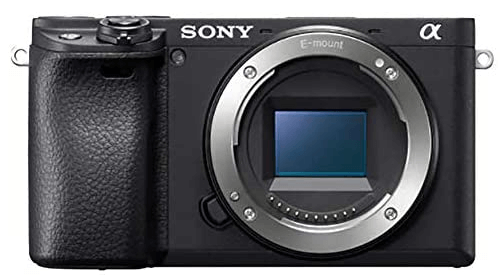
The Sony a6400 design is distinctly compact and purposeful. At first glance, it looks similar to earlier a6000 series bodies, but subtle improvements make a difference in real-world use. Its magnesium alloy chassis provides a reassuring sense of solidity, while the weight (403g with battery and card) keeps it comfortable for all-day shooting. Although not fully weather sealed, the camera can handle light rain and dust if paired with care.
The grip on the Sony a6400 is deeper and more secure than some other compact digital cameras, which helps when using larger lenses. The controls are logically placed, though longtime Sony shooters will recognize the familiar quirks in the button layout. The prominent mode dial, dedicated exposure compensation dial, and rear control wheel make it easy to adjust settings on the fly.
Menus are a double-edged sword. Sony’s menu system is vast and sometimes overwhelming, especially for those new to their ecosystem. However, the My Menu feature lets you bookmark frequently used settings, which greatly speeds up access with some initial setup. Custom function buttons further streamline daily use, and the quick Fn menu covers most common adjustments without a deep dive into the main menu tree.
The 3-inch tilting touchscreen is a welcome feature for overhead or low-angle shots, though it only flips upward 180 degrees. This makes it suitable for selfies and basic vlogging, but less so if you want a side-flip screen. The touchscreen itself is responsive for touch focus and playback navigation, but you will still rely on physical controls for most shooting operations. The EVF is a sharp 2.36M-dot OLED, which remains one of the best in its class for clarity and color, even in bright sunlight.
For daily handling, the a6400 balances portability with usability. With a small prime like the Sony 35mm f/1.8, it feels almost pocketable, making it a true companion for travel or street shooting. Paired with longer zooms, the grip still gives enough purchase to keep things balanced, though you might want a thumb rest or optional grip for all-day comfort.
Autofocus performance and shooting speed
The Sony a6400 autofocus system is the star of the show. Borrowed from Sony’s higher-end cameras, it offers 425 phase detection and 425 contrast detection points, covering nearly the entire frame. In practice, this means lock-on focus is both fast and sticky, even with erratic subjects.
Real-time tracking and Eye AF in practice
Real-time tracking is a genuine asset for action and candid photography. Once you lock onto a subject, the camera intelligently follows them as they move across the frame. Eye AF, available for both humans and animals, is impressively reliable. In my tests with fast-moving kids and pets, the camera consistently delivered sharp focus on the eyes, even at wide apertures.
Sony a6400 burst shooting reaches up to 11 frames per second with continuous autofocus. The buffer is generous for JPEGs, allowing for long bursts, though it fills faster with RAW files. For most real-world situations – street, events, family moments – you will rarely miss a shot due to focus or speed. The silent shooting mode is also a discreet option for quiet environments, though rolling shutter can appear with fast movement.
In summary, if you need your camera to nail focus quickly and repeatedly, few models at this price match the a6400’s performance. It is a clear reason why this camera remains popular with hobbyists and working photographers alike.
Image quality in photo and low light
The Sony a6400 image quality is anchored by its 24.2-megapixel APS-C sensor, which produces detailed, vibrant images with plenty of flexibility for editing. Colors are natural and punchy, especially in Sony’s Neutral or Standard picture profiles, and skin tones look pleasing straight out of camera. Noise performance is competitive, with usable results up to ISO 6400 for most situations.
Dynamic range, color, and high ISO results
Dynamic range is another strength. The sensor captures a broad spectrum of highlights and shadows, allowing you to recover details in post-processing without introducing excessive noise. For landscape and travel shooters, this means more latitude when dealing with tricky lighting. If you shoot RAW, files hold up well for both heavy contrast edits and subtle adjustments.
In low light, the a6400 shines for its class. With a fast prime lens, you can shoot handheld in dim interiors or at night with confidence. High ISO results are clean up to ISO 3200, with some visible grain at ISO 6400 but still very usable for web or small prints. Above that, detail starts to break down, but the files remain workable with basic noise reduction applied.
It is important to note that the a6400 lacks in-body image stabilization, so pairing it with stabilized lenses is wise for handheld low-light work. However, the sensor’s performance means you will rarely feel limited for everyday shooting or travel scenarios. For a more detailed look at low-light techniques, check out our guide to low light photography with mirrorless cameras.
Overall, the Sony a6400 review confirms this camera still delivers lively, professional-quality images suitable for everything from family portraits to serious travel portfolios. Its combination of fast autofocus, solid handling, and dependable image quality is why it continues to earn a spot in my camera bag, and why compact digital cameras are making a comeback in 2026.
Video features and creator-friendly tools
4K quality, flip screen, and recording limits
If you are considering the Sony a6400 for video, there is a lot to like, especially given its age and price bracket. The camera shoots Sony a6400 4K video at up to 30 frames per second, using the full width of the sensor at 24 and 25p. This means you get detailed, sharp footage with a pleasing look straight out of camera. There is no significant crop with 24p or 25p, which is ideal for wide-angle work or handheld vlogging. However, at 30p, a slight crop is applied, which can be limiting if you rely on ultra-wide lenses.
The a6400’s autofocus in video mode is a true highlight. Real-time Eye AF and subject tracking work reliably while recording, making the Sony a6400 for vlogging a popular choice. You can trust the camera to keep faces sharp, even when moving or reaching toward the lens. Touch-to-focus on the flip screen is responsive, which helps when you need to change focus quickly or film yourself.
One feature that sets the a6400 apart from many rivals is the lack of a 30-minute recording limit. You can record clips as long as your card and battery allow, which is especially useful for interviews, events, or longer YouTube segments.
The flip-up LCD is another creator-friendly touch. It tilts a full 180 degrees upward, letting you see yourself during solo shoots. While this design blocks the hot shoe (where you might want to mount a microphone), there are affordable cold shoe adapters that move the mic to the side. If you plan to vlog or film yourself often, this is a small but manageable inconvenience.
Audio options are basic but sufficient for most solo creators. You get a 3.5mm microphone jack for external mics, but no headphone output for real-time monitoring. If audio quality is critical, you may want to use an external recorder or choose one of Sony’s more advanced bodies.
The a6400 does lack in-body image stabilization (IBIS). This means handheld video will show more shake, especially with non-stabilized lenses. For casual vlogging, the digital “SteadyShot” in post-processing can help, but for walking shots or dynamic movement, you’ll want a stabilized lens or a gimbal.
In practical use, heat buildup is rarely an issue unless shooting long 4K clips in hot environments. I have managed to record 25-30 minute 4K segments indoors without overheating. Outdoors in summer, shorter clips are safer.
Overall, the Sony a6400 video feature set remains very competitive for hybrid shooters and creators who value autofocus, compact size, and reliable 4K. It does not offer the highest bitrates, 10-bit internal recording, or advanced log profiles, but it covers the basics with confidence. For many YouTubers, streamers, and travel filmmakers, these trade-offs are easy to accept.
Best lenses to pair with the Sony a6400
Lens choice can transform your experience with the a6400. The compact body balances well with smaller Sony E-mount lenses, but the system is versatile enough for everything from street shooting to wildlife. Here are my top best lenses for Sony a6400 recommendations based on real-world use:
- Sony 16-50mm f/3.5-5.6 OSS (kit lens): This collapsible zoom is a good starter for travel and everyday shooting. It is sharp enough in the center, offers optical stabilization, and covers a useful range. However, for best sharpness and low-light work, you may want to upgrade.
- Sony 18-135mm f/3.5-5.6 OSS: My favorite all-in-one zoom for the a6400. It is sharp, lightweight, and covers everything from wide landscapes to moderate telephoto. The stabilization is helpful for both stills and video.
- Sigma 16mm f/1.4 DC DN: A superb prime for low light, landscapes, and vlogging. It is sharp wide open and gives beautiful background blur. If you shoot a lot of video or environmental portraits, this lens is a top pick.
- Sony 35mm f/1.8 OSS: A classic for street photography, portraits, and general use. The 35mm focal length (about 52mm equivalent) is versatile, and the built-in stabilization helps with handheld video.
- Sony 50mm f/1.8 OSS: For portraits or detail shots, this lens delivers excellent subject isolation and works well in low light. Stabilization is a bonus for video.
- Sigma 30mm f/1.4 DC DN: Another strong choice for those who want a little more reach and beautiful bokeh for portraits or food photography.
- Sony 10-18mm f/4 OSS: If you shoot interiors, landscapes, or need a true ultra-wide for vlogging, this is the best native option. It is compact, stabilized, and sharp enough for most uses.
If you need more reach for sports or wildlife, the Sony 70-350mm f/4.5-6.3 G OSS is very good, though it is much larger than the camera body. For maximum portability, the Sony 20mm f/2.8 pancake is a fun, affordable walkaround lens.
The E-mount system continues to expand, with excellent third-party options from Sigma, Tamron, and Viltrox. If you want to keep your Sony a6400 lens recommendations light and affordable, explore these brands, especially for fast primes. For more detailed lens guides, see our best Sony E-mount lenses roundup.
Sony a6400 pros, cons, and final verdict
After years of field use, the a6400 still earns its place among the best compact mirrorless cameras, especially for speed-focused photographers. Here is a balanced look at its strengths and weaknesses:
Pros:
- Class-leading autofocus with real-time Eye AF in both photo and video
- Fast, reliable burst shooting for sports or street action
- Very good image quality for an APS-C sensor, with plenty of detail and dynamic range
- Compact, lightweight body ideal for travel and everyday carry
- Flip-up screen, no 30-minute video limit, and solid video AF make it creator-friendly
- Wide lens selection, including affordable third-party primes
- Menu system is deep but improved compared to earlier Sony models
Cons:
- No in-body image stabilization, which limits handheld video and low-light stills with unstabilized lenses
- Small grip and limited ergonomics may not suit those with larger hands or big lenses
- Battery life is average for the class, especially when using the LCD for video
- No headphone jack or dual card slots
- Touchscreen is limited to focus selection, not full menu navigation
- 4K video is limited to 8-bit, lacks advanced profiles found in newer models
How it compares with newer alternatives
Since its release, Sony has launched several new APS-C models, including the a6600, a6700, and ZV-E10. These offer upgrades such as in-body stabilization, better battery life, or enhanced video specs. However, the core shooting experience on the a6400 remains competitive for most users.
If you prioritize IBIS, a deeper grip, or advanced color profiles, you might prefer the a6700. For pure vlogging, the ZV-E10 is smaller and has a built-in directional mic. Still, the a6400’s robust autofocus, no recording limit, and wide lens support keep it relevant, especially as prices drop in the used market.
Compact digital cameras are making a comeback in 2026, and the a6400’s balance of speed, quality, and portability means it continues to win fans among both hobbyists and working photographers.
Key takeaways
- The Sony a6400 still stands out for fast, reliable autofocus and strong overall value in a compact APS-C body.
- Image quality is very good for stills, with enough dynamic range and low-light performance for travel, street, and everyday work.
- Video features remain useful, but ergonomics, battery life, and the lack of in-body stabilization are worth considering before you buy.
Frequently asked questions
Is the Sony a6400 still worth buying today?
Yes, especially if you value fast autofocus, solid image quality, and a light, travel-friendly design. While newer models offer extra features, the a6400 remains a strong choice, especially as prices fall in 2026.
Is the Sony a6400 good for beginners and hobbyists?
Absolutely. The a6400’s autofocus makes capturing sharp images easy, while the controls and menu system are approachable. Its small size and wide lens selection make it fun for learning and creative exploration.
How good is the Sony a6400 autofocus for action and portraits?
Autofocus is a real strength. Eye AF and subject tracking work quickly and accurately, even with moving subjects. For sports, kids, pets, and portraits, the a6400 consistently delivers sharp results.
Does the Sony a6400 shoot good 4K video?
Yes. The a6400 produces crisp, detailed 4K footage with reliable autofocus. The lack of a recording time limit, plus a flip-up screen, makes it excellent for vlogging and solo creators, though it lacks advanced profiles and IBIS.
What are the best lenses for the Sony a6400?
Top choices include the Sigma 16mm f/1.4 for wide and low-light work, the Sony 18-135mm for all-in-one versatility, and compact primes like the Sony 35mm f/1.8 OSS. Third-party E-mount lenses from Sigma and Tamron also offer excellent performance and value.
If you want to see how the a6400 compares to other models, visit our Sony a6700 vs a6400 comparison, or check out best compact digital cameras for more 2026 options.
Last update on 2026-05-29 / Affiliate links / Images from Amazon Product Advertising API