
Contents
- What the Sony a6300 offers at a glance
- Design, handling, and everyday usability
- Image quality in real shooting conditions
- Autofocus and burst performance
- Video features and recording limitations
- Battery life, lenses, and system value
- Who should buy it and who should skip it
- Key takeaways
- Frequently asked questions
What the Sony a6300 offers at a glance
The Sony a6300 stands as a compact APS-C mirrorless camera that found its audience with both enthusiasts and professionals since its introduction. Even in 2026, it remains a favorite for those who value portability without giving up core photographic features. The camera sports a 24.2-megapixel CMOS sensor, which is paired with Sony’s BIONZ X processor. This combination delivers crisp stills and competitive high-ISO performance for its class.
What sets the a6300 apart, especially for its generation, is its autofocus system. Sporting 425 phase-detection points that cover a broad area of the frame, it can track moving subjects better than many entry-level DSLRs and mirrorless rivals from its era. It also offers 11 frames per second burst shooting, which is still respectable years later. For those interested in video, the a6300 was among the first Sony APS-C models to offer internal 4K video recording with full pixel readout and no pixel binning, making it a popular hybrid camera for both photo and video work.
Compact digital cameras like the a6300 are having a resurgence in 2026, as many photographers look for high-quality tools that don’t take up half a backpack. The camera’s E-mount system gives access to a huge variety of Sony and third-party lenses, from budget-friendly primes to professional zooms. This flexibility is a big reason the a6300 still sees use today, despite newer models like the a6500 or a6700.
Key Sony a6300 specs include:
- 24.2MP APS-C Exmor CMOS sensor
- 425-point phase-detection autofocus system
- 11 fps burst shooting with continuous AF
- 4K video recording (up to 30p, full pixel readout)
- 2.36M-dot electronic viewfinder
- Weather-resistant magnesium alloy body
- Tilting LCD screen
For anyone looking for a travel-friendly, high-performance camera at a reasonable price, the a6300 is still a compelling choice. It’s not perfect, but it gets many fundamentals right, especially for photographers who know what to expect from a slightly older model.
Design, handling, and everyday usability
Build quality and weather resistance
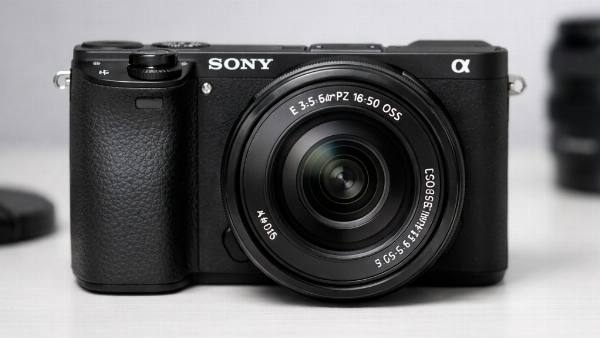
The Sony a6300’s magnesium alloy body feels solid in hand, and it’s a clear step up from the plastic builds of many entry-level models. The camera is both compact and light, weighing about 404 grams with battery and card. This makes it easy to carry all day, whether you’re exploring city streets or hiking. Despite its size, the a6300 is robust enough for moderate outdoor use, with some sealing against dust and moisture. While it’s not fully weatherproof like high-end professional bodies, it handles light rain or dusty conditions without trouble. I’ve personally used the a6300 in drizzly urban environments and on dusty trails without issues, though I always recommend a bit of care when changing lenses outdoors.
Grip design is a common concern with compact cameras, but the a6300 gets the basics right. The grip is deep enough for most hands, and the rubberized texture helps with security. Photographers with larger hands may wish for more space, but for such a compact body, the ergonomics are still workable. When paired with lightweight E-mount lenses, the camera feels well balanced. Heavier lenses do make it a bit front-heavy, but that’s a trade-off for portability.
Menu system, controls, and viewfinder experience
Sony’s menu system on the a6300 does show its age, especially compared to the streamlined interface of newer models. There are many options nested in tabs, so finding settings quickly requires some practice. However, the camera offers enough customizable buttons and a function menu to keep key controls close at hand. I set the C1 button for ISO and use the Fn menu for white balance and drive mode, which speeds up my shooting in the field.
The electronic viewfinder (EVF) is a 2.36-million-dot OLED unit. It’s sharp and bright enough for most shooting situations, including daylight. The refresh rate and blackout time during burst shooting are quite good for a camera in this class, making it easier to follow action. The tilting rear LCD is not a touchscreen, which can be limiting for some, especially those used to touch-to-focus or menu navigation. However, the tilt feature is useful for low-angle street shots or candid portraits.
Overall, the Sony a6300 handling is straightforward once you customize it a bit. It won’t win awards for ergonomics compared to larger DSLR-style bodies or even some rival mirrorless cameras, but for everyday photography, it’s quick to adapt to. The compact size means you’ll actually take it places, and that’s often what matters most for capturing spontaneous moments.
Image quality in real shooting conditions
Dynamic range, color, and high ISO performance
When it comes to image quality, the a6300’s 24.2MP sensor delivers results that still satisfy in 2026. The camera produces crisp, detailed images with good color right out of camera, especially when shooting RAW. Dynamic range is a highlight, allowing for recovery of shadows and highlights in post-processing. I’ve pushed RAW files two stops or more in Lightroom without banding or color shifts, which is impressive for a camera of this age.
Color rendering is natural, with Sony’s more neutral color science of this era. Skintones are generally accurate, and landscape colors are lifelike without being overly saturated. The standard JPEG profiles are usable, but for maximum quality, shooting RAW gives you more flexibility. Some photographers may prefer to tweak color settings or use custom profiles for punchier results, but the files give you plenty of latitude.
In low light, the Sony a6300 performs well for an APS-C camera. ISO 3200 is usable for most scenes, and even ISO 6400 can yield good results with some noise reduction. Above ISO 8000, noise becomes more pronounced, but the files remain workable for social media or small prints. For travel, events, and street photography, this level of performance means you can shoot confidently in a wide range of lighting conditions. The camera’s dynamic range also helps preserve detail in tricky mixed-light scenes, such as cityscapes at dusk or night markets.
Compared to newer models, the a6300 may lag slightly in noise handling, but the difference is minor for most practical uses. For real-world examples of how the a6300 stacks up against its sibling, see the Sony a6300 vs a6500 comparison at Light And Matter.
Autofocus and burst performance
Tracking for action, street, and portraits
The Sony a6300 autofocus system is where this camera truly shines. With 425 phase-detection points covering over 80% of the frame, the camera locks onto subjects quickly and reliably. In my experience, it tracks moving people, cyclists, and pets with surprising accuracy for a model of its generation. The continuous autofocus (AF-C) mode is fast enough for most action, and the camera rarely hunts in good light. For street photography, this means you can react to fleeting moments with confidence.
Burst shooting is another strength. The a6300 can shoot up to 11 frames per second with continuous autofocus. In practice, the buffer handles about 22 RAW files or 44 JPEGs before slowing down, which is enough for most action sequences or candid moments. The blackout time between frames is minimal, so you can keep your subject in the viewfinder. For sports or wildlife, the autofocus tracking is not quite as advanced as the latest models with real-time tracking and AI subject detection, but it still punches above its weight for an older APS-C body.
Face detection works well for portraits, and eye autofocus is present, although it’s not as fast or sticky as on Sony’s newer models. In good light, it can nail sharp focus on the eyes, making it easier to shoot wide open with fast primes. In low light, autofocus slows a bit, but it remains usable for static or slow-moving subjects.
For photographers who shoot a mix of action, street, or family moments, the Sony a6300 tracking and burst performance remain competitive in 2026. It’s a camera that keeps up with everyday life, offering a level of speed and reliability that still surprises me, even after years of use.
Video features and recording limitations
4K quality, rolling shutter, and overheating concerns
When it comes to video, the Sony a6300 made quite a splash at its launch. It was one of the first compact APS-C cameras to offer internal 4K recording, and its video quality still holds up fairly well in 2026. The camera oversamples from a 6K sensor readout to produce crisp, detailed 4K footage with impressive dynamic range for its class. Colors are natural, and image sharpness is strong enough for most creative projects or casual filmmaking.
However, there are some important caveats. The a6300’s 4K video comes with a pronounced rolling shutter effect, especially when panning or capturing fast-moving subjects. This effect can make vertical lines appear to lean or bend, which is distracting in action scenes or handheld shooting. While this isn’t unique to the a6300, it is more noticeable than on some newer models, such as the a6400 or a6500, both of which improved sensor readout speeds.
Another issue that continues to come up in real-world use is Sony a6300 overheating during extended 4K recording. Users will find that after about 15 to 20 minutes of continuous 4K video, the camera’s body can become quite warm. In hotter environments or direct sunlight, the overheat warning may appear sooner, and the camera will shut down to prevent damage. For casual clips or interviews, this is rarely a problem, but for longer-form events or outdoor shoots, it’s a significant limitation. The a6500, for reference, addressed this somewhat with a new heat-dissipation structure.
On the positive side, the a6300 includes useful video features like S-Log2 and S-Log3 picture profiles for greater dynamic range in post-production. It also offers zebra exposure warnings, focus peaking, and clean HDMI output for external recording. The microphone input allows for much higher-quality audio capture, though there’s no headphone jack for live monitoring. For hybrid shooters who want a capable stills camera that can also shoot sharp 4K video in short bursts, the a6300 still delivers. Just be prepared for its limitations, especially if you plan to use it for long takes or in demanding environments.
Battery life, lenses, and system value
Best lens pairings for travel, portraits, and everyday use
Battery life has always been a known trade-off with the Sony a6300, especially for anyone coming from DSLRs. Expect about 350 shots per charge in typical use, and fewer if you shoot lots of video or use the EVF extensively. For a day of travel or street photography, it’s wise to carry at least one spare battery. The NP-FW50 battery is small and light, but it drains quickly, a trait it shares with other Sony cameras from this era.
Where the a6300 shines is system flexibility. The Sony E-mount lens ecosystem has matured dramatically since the camera’s release. There are now dozens of high-quality options at every price point, from both Sony and third-party manufacturers like Sigma, Tamron, and Samyang.
For travel and everyday walk-around use, the compact 16-50mm f/3.5-5.6 OSS kit zoom is lightweight and surprisingly sharp at the wide end, though it’s not the brightest lens in low light. If you want better image quality and more control over depth of field, the Sigma 16mm f/1.4 DC DN and Sony 35mm f/1.8 OSS are two of my favorite primes. They both offer fast autofocus, excellent sharpness, and a versatile field of view for street, environmental portraits, and food photography.
Portrait shooters will appreciate options like the Sony 50mm f/1.8 OSS or the Sigma 56mm f/1.4 DC DN, both of which deliver creamy background blur and reliable focus. For landscapes, the Sony 10-18mm f/4 OSS is a top pick, providing ultra-wide coverage in a compact package. Wildlife and sports photographers can take advantage of the well-priced 70-350mm f/4.5-6.3 G OSS telephoto, which pairs nicely with the a6300’s fast autofocus.
The value proposition of the a6300 today is stronger than ever, as you can find the body used or refurbished for a fraction of its launch price. When paired with the right lens, it outperforms many newer “budget” cameras in both image quality and autofocus. While features like in-body stabilization (IBIS) are missing compared to the a6500, careful lens selection can compensate for this in most shooting situations.
If you want to dig deeper into how the a6300 compares with its sibling, the a6500, you can find a detailed breakdown at Light And Matter’s Sony a6300 vs a6500: A Quick Comparison.
Who should buy it and who should skip it
Sony a6300 vs newer alternatives
The question on many photographers’ minds in 2026 is: is Sony a6300 worth it compared to newer models? If your main focus is still photography, especially travel, street, or portraiture, and you want a compact, affordable camera with fast autofocus and excellent image quality, the a6300 is still a solid choice. Its combination of speed, compactness, and access to the broad Sony E-mount lens lineup makes it one of the best budget Sony cameras around.
However, if you regularly shoot long video clips, need in-body stabilization, or want the latest autofocus and touchscreen features, the a6400 or even the newer a6700 may be better fits. The a6400, for example, offers improved color science, a flip-up screen for vlogging, and almost no recording time limits for 4K video. The a6500 adds in-body stabilization and better heat management, but costs a bit more on the used market.
For action, sports, and wildlife, the a6300’s autofocus is still fast enough for most situations, but the latest models offer more reliable subject tracking and better high-ISO performance. If you’re a beginner, the a6300 is approachable, but the menu system and lack of a touchscreen may feel dated compared to rivals in 2026. That said, the image quality and lens options are miles ahead of most smartphone cameras or entry-level compacts.
Those who value the best possible battery life, advanced video features, or the latest computational tricks may want to look elsewhere. But for photographers who want a proven, reliable, and very portable APS-C system, the Sony a6300 remains a practical and rewarding choice.
Related reading: Sony a6400 review, Sony a6600 review and Sony a6000 series guide.
Key takeaways
- The Sony a6300 continues to deliver impressive image quality and fast autofocus, especially for photographers looking for an affordable, compact system.
- Its main drawbacks are limited battery life, a less refined menu system, and certain video limitations like noticeable rolling shutter and potential overheating during extended 4K recording.
- With the right Sony E-mount lens, the a6300 is still a reliable option for travel, street, portrait, and everyday shooting, especially as used prices drop.
Frequently asked questions
- Is the Sony a6300 still worth buying in 2026?
Yes, especially if you want strong image quality, fast autofocus, and access to great E-mount lenses on a budget. It’s best for photographers who prioritize stills or short video clips, and can accept some trade-offs like battery life and older menu design. - Does the Sony a6300 overheat when shooting 4K video?
The a6300 can overheat during extended 4K recording, particularly in hot environments or if shooting longer than about 20 minutes. For short clips or controlled indoor use, most users will not encounter major issues. - How good is the Sony a6300 autofocus for sports and wildlife?
Autofocus is quick and accurate for most action, thanks to its 425-point phase-detect AF. However, newer models like the a6400 and a6700 offer even better subject tracking for fast or erratic movement. - What are the best lenses for the Sony a6300?
Top choices include the Sigma 16mm f/1.4 for wide-angle, Sony 35mm f/1.8 OSS for street and portraits, and the Sony 70-350mm f/4.5-6.3 G OSS for wildlife or sports. The E-mount system covers nearly every need. - Is the Sony a6300 good for beginners?
It’s user-friendly with plenty of auto modes, though the menu system feels dated. Beginners will enjoy its compact size and image quality, but may miss newer features like a touchscreen or longer battery life.