


Selecting a blog camera has evolved into something far more nuanced than it was just a few years ago. The landscape of photography gear in 2026 presents content creators with an overwhelming array of choices, each promising to be the perfect tool for visual storytelling. Whether you’re launching a travel blog, building a food photography portfolio, or documenting your daily adventures, the camera you choose becomes an extension of your creative voice. Understanding what truly matters for blog content creation versus traditional photography can save you thousands of dollars and countless hours of frustration.
Contents
- What makes a camera suitable for blogging
- Sensor size and image quality for web publishing
- Autofocus capabilities that actually matter
- Connectivity and workflow integration
- Battery life and power management
- Lens ecosystem and long-term investment
- Budget considerations and value retention
- Point and shoot alternatives worth considering
- Video capabilities for modern blog content
- Weather sealing and durability factors
- Learning curve and user interface design
- Making your final blog camera decision
What makes a camera suitable for blogging
The traditional metrics photographers obsess over don’t always translate directly to blog work. Sure, megapixels matter, but not in the way camera manufacturers want you to believe. For web publishing, even a 16MP sensor provides more than enough resolution for stunning blog images that load quickly and look crisp on any screen. What actually separates a great blog camera from a merely adequate one comes down to versatility, speed, and workflow integration.
Consider how you’ll actually use the camera in real-world blogging scenarios. You need something that transitions seamlessly between video and stills, handles various lighting conditions without extensive setup, and connects effortlessly to your editing devices. The best cameras in 2026 reflect these priorities, balancing technical capability with practical usability.
Weight and portability considerations
Carrying a camera everywhere becomes part of your lifestyle as a blogger. That stunning full-frame DSLR with the professional zoom lens might produce incredible images, but if it stays home because you don’t want to lug it around, it’s worthless. I’ve learned this lesson the hard way over years of photography work.
Modern mirrorless systems have changed this equation completely. Bodies that weigh under 500 grams paired with compact primes give you professional image quality without the shoulder pain. The mental barrier of grabbing your camera drops significantly when your entire kit fits in a small shoulder bag.
Think about your typical shooting scenarios. Restaurant interiors demand different portability than landscape photography. Street photography requires a different presence than studio setups. Your blog camera needs to match your actual life, not an idealized version of it.
Sensor size and image quality for web publishing
The sensor size debate rages endlessly in photography circles, but for blog work, the practical differences narrow considerably. Full-frame sensors offer superior low-light performance and shallower depth of field control, but APS-C and Micro Four Thirds sensors have closed the gap dramatically in recent years. More importantly, web compression and screen viewing distances eliminate many of the subtle advantages you’d see in large prints.
What you gain with smaller sensors often outweighs what you lose. Lighter bodies, more affordable lenses, and greater depth of field for product photography all benefit bloggers directly. A Micro Four Thirds system gives you twice the reach with telephoto lenses at half the weight and cost. For wildlife or event blogging, that matters tremendously.
| Sensor Type | Advantages for Blogging | Considerations |
|---|---|---|
| Full-frame | Superior low-light, shallow DOF control | Heavier, more expensive lenses |
| APS-C | Balanced size/quality, affordable | 1.5x crop factor affects wide angles |
| Micro Four Thirds | Compact, extensive lens selection | Smaller sensor may struggle in extreme low-light |
| 1-inch | Ultra-portable, all-in-one solutions | Limited creative control |
The Sony A7C II has become a top seller for good reason, offering full-frame quality in a remarkably compact body that actually feels portable enough for daily blog use. Its 33MP sensor provides plenty of resolution for cropping flexibility while maintaining excellent file sizes for quick editing.
Autofocus capabilities that actually matter
Fancy autofocus systems with eye detection and subject tracking sound impressive in spec sheets, but their real value for bloggers comes down to consistent focus in unpredictable situations. You’re not always shooting from a tripod with perfect lighting and cooperative subjects. Restaurant meals don’t wait for you to nail manual focus. Pets and children move constantly. Your blog camera needs to handle these realities without constant adjustment.
Modern AI-driven autofocus has genuinely transformed content creation. Systems that recognize faces, animals, vehicles, and other subjects take the technical burden off your shoulders, letting you focus on composition and storytelling. This technology has trickled down from flagship models to entry-level cameras faster than any previous advancement.
Video autofocus requirements
Video compounds autofocus challenges exponentially. Smooth focus transitions matter more than absolute speed. Hunting back and forth destroys otherwise perfect footage. The best blog cameras for video maintain focus confidence across the frame, track moving subjects predictably, and allow manual override when needed.
Test autofocus performance in conditions matching your actual blog content before committing to a camera system. Marketing materials show perfect scenarios with ideal lighting and contrast. Your reality involves mixed lighting, busy backgrounds, and constant movement.
Connectivity and workflow integration
This aspect separates hobby cameras from serious blog tools more than any other factor. How quickly can you move images from camera to published post? Every extra step, every cable connection, every file conversion adds friction to your creative process. That friction accumulates into resistance that makes you shoot less and publish slower.
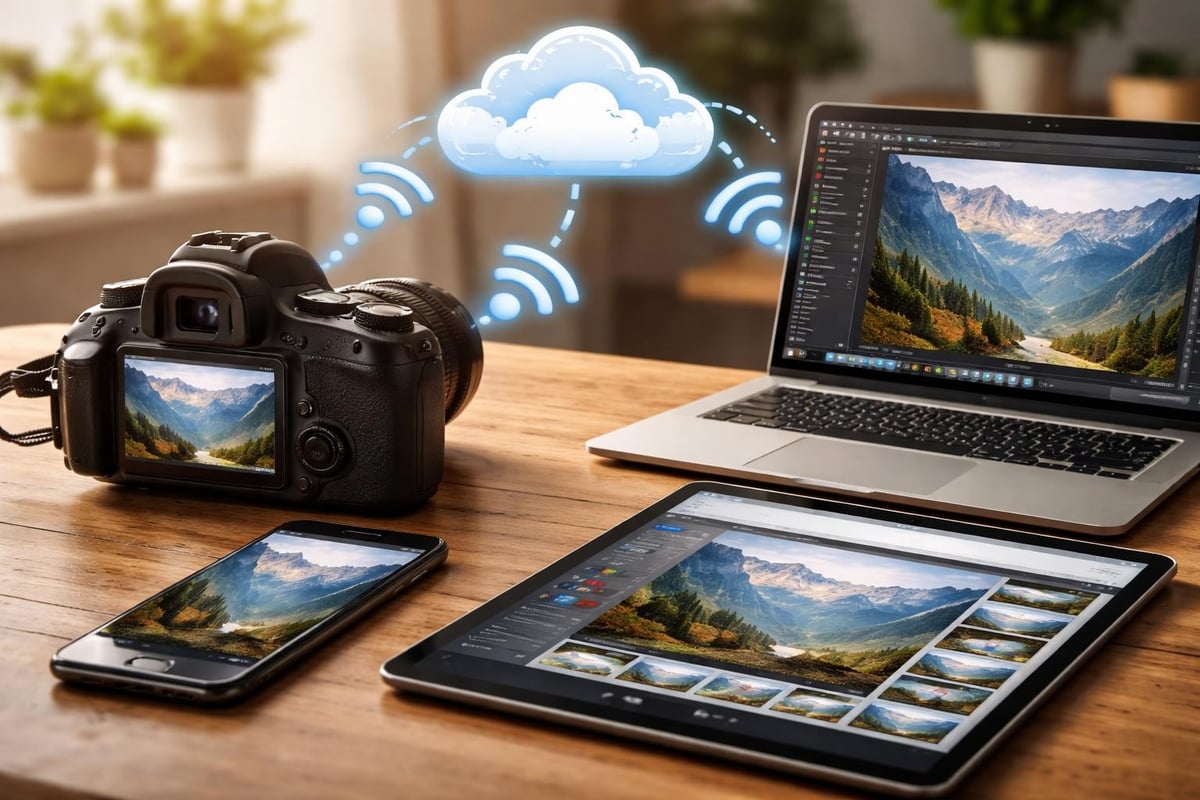
Built-in WiFi and Bluetooth have become standard features, but implementation quality varies wildly. Some cameras transfer full-resolution JPEGs in seconds. Others struggle with compressed previews over minutes. Cloud integration, automatic backup, and direct social media posting capabilities transform your workflow from tedious to effortless.
Essential connectivity features for bloggers:
- Wireless transfer to smartphones and tablets
- USB-C for fast file transfer and in-camera charging
- Remote shooting capability via mobile apps
- Cloud storage integration
- HDMI output for live streaming
- Tethered shooting support for studio work
The Canon EOS R50 exemplifies this connectivity-first approach, making it Japan’s best-selling camera despite launching back in 2023. Its dual-channel audio recording and strong wireless capabilities address real blogger needs rather than chasing spec sheet numbers.
Battery life and power management
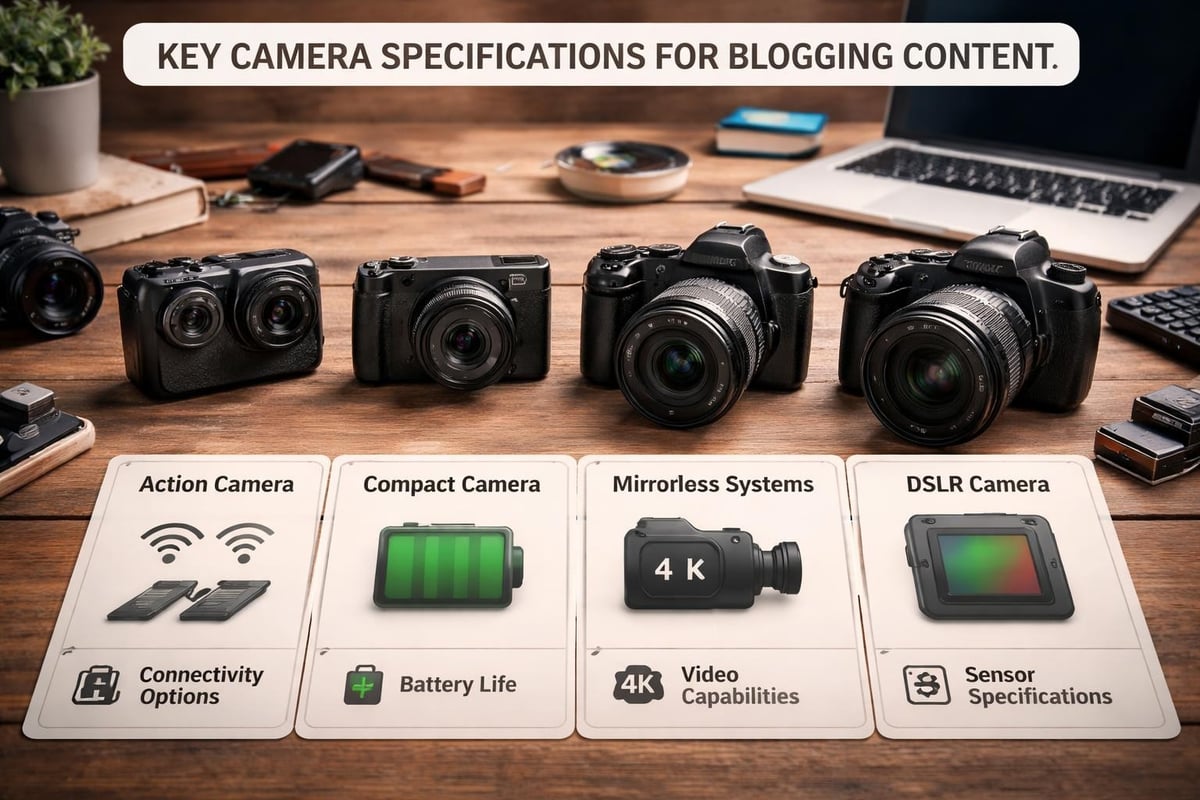
Nothing kills creative momentum faster than a dead battery. Professional photographers carry multiple batteries as standard practice, but bloggers often shoot more sporadically throughout longer periods. You need a camera that lasts through a full day of intermittent shooting without anxiety about the next charge.
Mirrorless cameras consume more power than DSLRs due to electronic viewfinders and constant sensor activation. Real-world battery life rarely matches manufacturer claims, especially when using wireless features heavily. Budget for at least two extra batteries with any camera system, and look for USB-C charging that lets you top up from portable power banks during extended sessions.
Power solutions for travel bloggers
Travel blogging presents unique power challenges. Different countries mean different outlets. Long days exploring mean no access to wall charging. Solar chargers, dual-battery chargers, and high-capacity power banks become essential kit alongside your blog camera.
Consider cameras that charge via USB-C, allowing you to use the same cables and chargers as your phone and laptop. This consolidation reduces the gear you carry and increases your charging options in the field.
Lens ecosystem and long-term investment
Your blog camera choice locks you into a lens ecosystem that extends far beyond the initial body purchase. This decision impacts your capabilities and budget for years to come. Some systems offer hundreds of native lenses plus extensive third-party support. Others limit you to a handful of proprietary options at premium prices.
Research the complete lens lineup before committing to any camera system. The camera body you buy today might last three years before upgrading. The lenses you invest in could serve you for decades. Missing focal lengths force expensive compromises or system switches down the road.
Critical lens focal lengths for bloggers:
- Wide-angle (16-35mm equivalent) for interiors and landscapes
- Standard zoom (24-70mm equivalent) for versatility
- Portrait length (50-85mm equivalent) for people and products
- Macro capability for detailed shots and food photography
Exploring lens options across different systems helps identify which ecosystem best supports your specific blogging niche. Food bloggers need different tools than adventure bloggers. Fashion bloggers have different requirements than tech reviewers.
Budget considerations and value retention
Setting a realistic budget for your blog camera involves more than the body price. Factor in essential accessories, memory cards, extra batteries, a quality strap, and at least one or two lenses beyond the kit option. A camera body listed at fifteen hundred dollars easily becomes a three thousand dollar initial investment.
Think about value retention and upgrade paths too. Some camera systems hold resale value remarkably well, making upgrades more affordable through selling previous gear. Others depreciate rapidly, leaving you stuck with equipment you’ve outgrown but can’t reasonably replace.
| Budget Level | Recommended Approach | Example Systems |
|---|---|---|
| Under $1000 | Entry mirrorless or advanced compact | Canon EOS R50, Sony RX100 series |
| $1000-2500 | Mid-range mirrorless with quality kit lens | Sony A6700, Fujifilm X-S20 |
| $2500-4000 | Full-frame body with versatile zoom | Sony A7C II, Canon EOS R6 Mark II |
| Above $4000 | Professional system with multiple lenses | Sony A7R V, Canon EOS R5 |
Don’t automatically dismiss used or refurbished equipment from reputable dealers. Camera technology evolves quickly, but a three-year-old flagship often outperforms a brand-new entry model while costing significantly less. The blog camera that serves your needs today matters more than having the absolute latest release.
Point and shoot alternatives worth considering
Dedicated cameras face stiff competition from smartphones, but modern point-and-shoot cameras still offer compelling advantages for serious bloggers. Larger sensors, optical zoom capabilities, and manual controls provide creative options no phone can match, while maintaining pocketable convenience.
The Sony RX100 series has dominated this category for years by packing APS-C level image quality into a body smaller than most wallets. These cameras excel as secondary options for bloggers who need professional quality without announcing their presence. Street photography, candid event coverage, and situations where a large camera creates unwanted attention all benefit from this approach.
Video capabilities for modern blog content
Static images no longer suffice for competitive blogging. Your blog camera needs competent video capabilities to create the mixed media content audiences expect in 2026. This doesn’t mean you need Hollywood-level cinema cameras, but certain baseline features separate usable from frustrating video performance.
Look for cameras offering at least 4K resolution at 30fps, preferably 60fps for slow-motion flexibility. Internal stabilization saves you from needing gimbals for simple handheld clips. Clean HDMI output enables external recorders for extended recording times. Microphone inputs let you capture decent audio instead of relying on inadequate built-in mics.
Essential video specs for blog cameras:
- 4K/60p recording capability
- In-body or lens stabilization
- Log profiles for color grading flexibility
- Headphone and microphone jacks
- Unlimited recording time or at least 30 minutes
- Flip-out screen for self-recording
The Canon EOS R50 V demonstrates how manufacturers now design cameras specifically for content creators rather than adapting photography tools for video work. Its dual-channel audio recording and vlogger-friendly features acknowledge the reality of modern blog content production.
Weather sealing and durability factors
Your blog camera faces more environmental challenges than studio equipment. Rain at outdoor events, dust at desert locations, humidity in tropical climates, and the general wear of constant travel test build quality relentlessly. Weather sealing protects your investment and ensures reliability when you need it most.
Not all weather sealing offers equal protection. Some cameras handle light moisture and dust. Others withstand sustained rain and harsh conditions. Match the protection level to your blogging environment honestly. A lifestyle blogger in California needs less protection than an adventure blogger in Iceland.
Beyond weather resistance, consider overall build quality and ergonomics. Cheap plastics crack under stress. Flimsy doors and covers break with regular battery changes. Button placement affects shooting efficiency. These factors matter more over years of daily use than they do in store testing.
Learning curve and user interface design
The best blog camera is the one you actually master and use confidently. Complex menu systems and counterintuitive controls create barriers between your creative vision and captured images. Some manufacturers prioritize professional photographers with deep technical knowledge. Others design for accessibility and quick learning.
Evaluate cameras based on your actual photography background, not aspirational skill levels. A camera that assumes extensive technical knowledge frustrates beginners regardless of its capabilities. Conversely, oversimplified interfaces limit experienced photographers who need quick access to advanced controls.
Modern touchscreen interfaces, customizable buttons, and intelligent auto modes help flatten the learning curve without sacrificing capability. The camera should adapt to your skill level rather than forcing you to adapt to its limitations.
Making your final blog camera decision
Choosing your blog camera ultimately comes down to honest self-assessment and clear priorities. What content do you actually create versus what you imagine creating? Where do you really shoot versus ideal scenarios? What’s your genuine budget including necessary accessories?
Test cameras physically before buying when possible. Rent systems for a weekend to experience real-world handling. Read reviews from actual bloggers in your niche rather than just technical specifications. Join online communities to learn from others’ experiences with specific models.
Remember that the blog camera market evolves constantly. Today’s flagship becomes tomorrow’s mid-range option. Waiting for the perfect camera means never starting. Choose something that serves your current needs well, learn it thoroughly, and upgrade strategically when genuine limitations emerge rather than chasing incremental improvements.
Your blog camera should enhance your storytelling, not become the story itself. The best images come from photographers who understand their tools instinctively, allowing technique to serve creativity rather than constraining it. That mastery takes time with any system, making the choice of which camera matters less than the commitment to learning it completely.
Finding the right blog camera requires balancing technical capabilities with practical workflow needs, a decision that impacts your content quality and creative process for years to come. At Lens and Shutter, we provide comprehensive reviews and expert guidance on cameras and accessories specifically for content creators at every level, helping you make informed choices that match your unique blogging requirements and budget realities.