

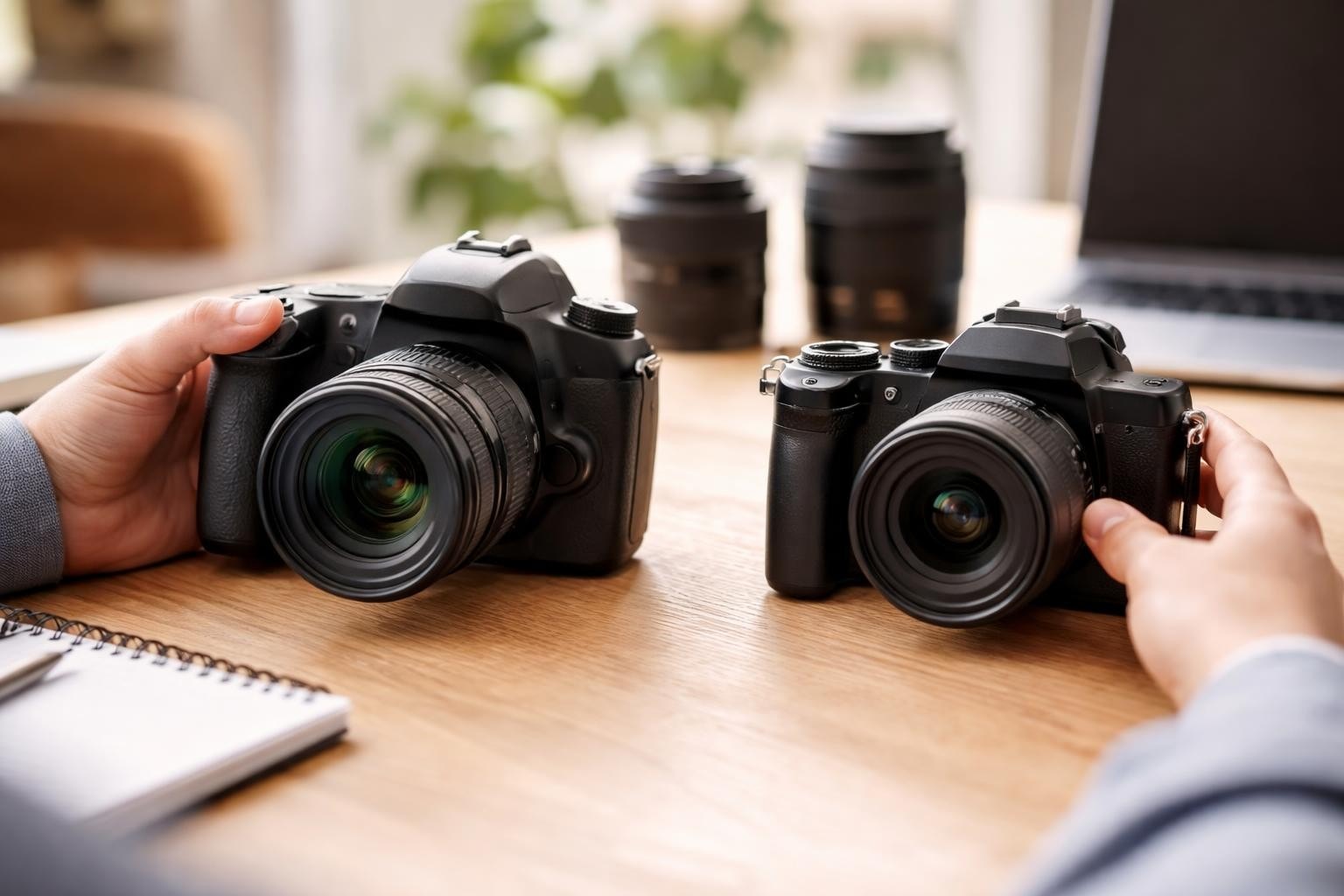
Choosing your first camera feels like standing at the edge of something vast and exciting. You know the images you want to create, but the technical landscape between intention and execution seems overwhelming. Every photographer remembers that moment of holding their first real camera, the weight of possibility balanced in their hands. This guide cuts through the noise to help you find the right tool for your photographic journey, based on real-world experience rather than specification sheets alone.
Contents
- Understanding what makes the best first cameras
- Camera types for different learning styles
- Budget considerations beyond the initial purchase
- Brand ecosystems and future flexibility
- Feature priorities for genuine growth
- Real-world recommendations by photographic interest
- Common beginner misconceptions debunked
- Making your final decision
- Learning resources that complement hardware
- Avoiding feature bloat and staying focused
- The importance of printing your work
- Building community and seeking feedback
Understanding what makes the best first cameras
The market floods beginners with options, each claiming superiority. But the best first cameras share specific characteristics that have nothing to do with megapixel counts or burst speeds. They balance capability with approachability, offering room to grow without punishing inexperience.
The intuitive interface paradox
Camera manufacturers spend millions developing interfaces, yet many create systems that confuse newcomers. A great first camera feels natural after a few hours of exploration. Menu systems should make sense, physical controls should fall under your fingers logically, and the most important settings should be accessible without diving three layers deep into digital menus.
Key interface elements that matter:
- Physical exposure compensation dial
- Customizable function buttons
- Clear viewfinder information display
- Touchscreen navigation for quick settings adjustments
- Logical menu grouping by shooting scenarios
The Canon EOS R50 exemplifies this philosophy. This beginner-friendly mirrorless has become Japan’s best-selling camera, not through revolutionary specs but through thoughtful design that respects the learning curve.
Sensor size considerations beyond the marketing
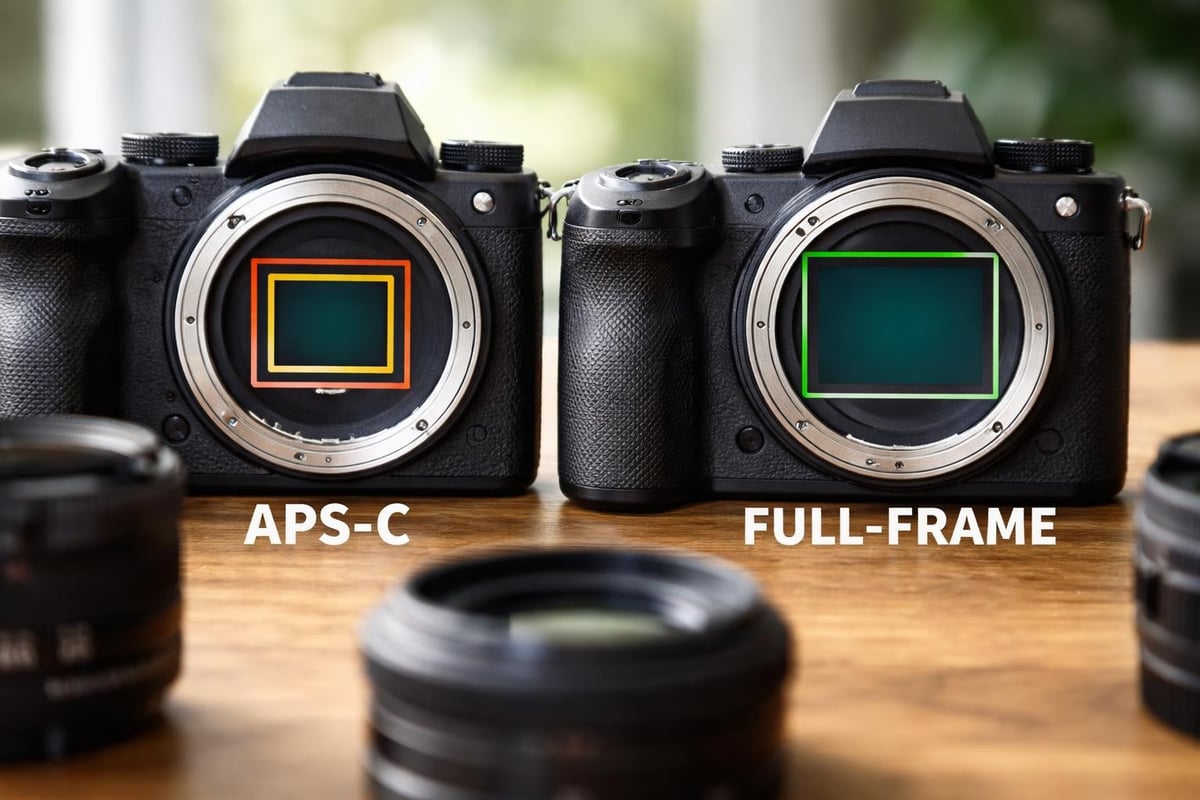
Full-frame sensors dominate professional conversations, but they create unique challenges for first cameras. The depth of field behaves differently, lenses cost significantly more, and the files demand more powerful computers for editing. APS-C sensors offer the sweet spot for learning: forgiving depth of field, affordable glass, and image quality that exceeds anything from five years ago.
Camera types for different learning styles
Photography attracts diverse personalities, and the best first cameras match individual learning approaches. Some people thrive with immediate feedback and automation, while others prefer mechanical understanding from the start.
Mirrorless cameras for visual learners
Mirrorless systems revolutionized how beginners learn photography. The electronic viewfinder shows your exposure before you press the shutter, eliminating the guess-and-check cycle that frustrated film shooters for generations. You see your histogram in real time, watch how aperture affects depth of field, and preview white balance adjustments instantly.
Modern mirrorless cameras also tend to be lighter and more compact than their DSLR counterparts. This matters more than spec sheets suggest. A camera you actually carry produces better photographs than a superior model gathering dust at home.
| Camera Type | Learning Curve | Size/Weight | Battery Life | Lens Selection |
|---|---|---|---|---|
| Mirrorless | Moderate | Compact | 300-500 shots | Growing rapidly |
| DSLR | Steeper initially | Larger/Heavier | 600-1000 shots | Extensive legacy options |
| Point-and-shoot | Easiest | Very compact | 200-400 shots | Fixed lens |
DSLR systems for tactile learners
Despite industry momentum toward mirrorless, DSLRs remain excellent teaching tools. The optical viewfinder shows reality without electronic interpretation, forcing you to understand exposure relationships conceptually. Battery life extends to full-day shoots without worry. The used market overflows with exceptional lenses at bargain prices.
DSLR advantages for beginners:
- Immediate optical feedback without lag
- Extensive used lens marketplace
- Longer battery life for extended shooting sessions
- Familiar ergonomics across decades of development
- Lower total system cost when buying used
The mechanical nature of DSLRs creates a different relationship with photography. You hear the mirror slap, feel the shutter release, and engage with the camera as a precision instrument rather than a computer with a lens.
Budget considerations beyond the initial purchase
First-time buyers often fixate on camera body prices while ignoring total system costs. This myopia creates frustration when accessories and lenses consume budgets faster than anticipated. The best first cameras exist within ecosystems that support gradual investment rather than demanding immediate financial commitment.
Building a sustainable kit
Your first camera purchase initiates a relationship with a lens mount system that might last decades. This decision carries more weight than any individual camera specification. Consider where you might take your photography in three years, not just what interests you today.
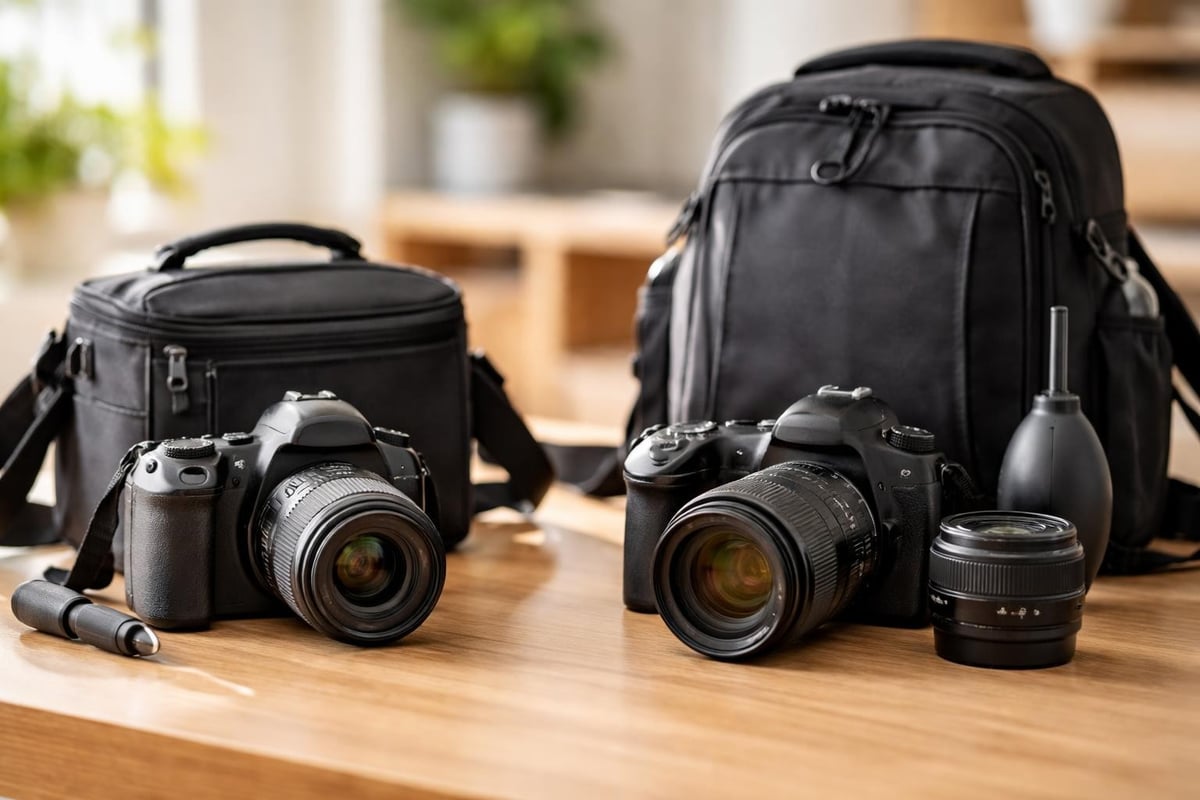
A camera body under $700 leaves budget for essential additions. You need at least one additional battery, multiple memory cards for backup, a simple bag for protection, and ideally a versatile lens beyond the kit option. Many photographers find value in exploring cameras under $700 that balance capability with budget flexibility.
Essential first-year purchases:
- Second battery and charger
- Two quality memory cards (32GB minimum each)
- Camera bag with weather protection
- Lens cleaning supplies
- Basic tripod for low-light and long exposures
- One prime lens for learning composition
The kit lens question
Kit lenses earn unfair reputations as inferior optics. Modern kit zooms deliver remarkable quality, and their versatility helps beginners discover which focal lengths match their vision. The typical 18-55mm range covers street photography, environmental portraits, and general documentation beautifully.
However, adding a fast prime lens transforms learning. A 35mm or 50mm f/1.8 costs $100-200 and teaches exposure control through necessity. The shallow depth of field demands focus precision, the fixed focal length encourages compositional movement, and the low-light capability expands shooting opportunities.
Brand ecosystems and future flexibility
Choosing the best first cameras means evaluating manufacturer philosophies and long-term viability. Each major brand approaches photography differently, and these distinctions matter more as skills develop.
Canon’s accessibility advantage
Canon built its reputation on user-friendly cameras that don’t compromise capability. Their color science produces pleasing skin tones straight from camera, their autofocus systems prioritize reliability over bleeding-edge speed, and their lens lineup covers every conceivable need. The RF mount system represents their future, while EF compatibility maintains connection to decades of optical heritage.
Entry-level Canon bodies like the EOS R50 and R100 offer genuine RF mount access at accessible prices. These cameras share sensors and processors with more expensive siblings, delivering performance that was professional-grade just years ago.
Sony’s innovation trajectory
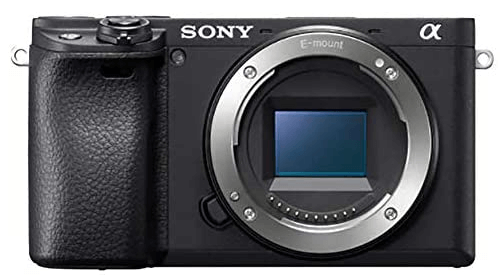
Sony disrupted photography by treating cameras as technology products first, image-making tools second. This approach yields exceptional autofocus performance, industry-leading video capabilities, and feature sets that exceed price points. Sony cameras consistently push boundaries, though sometimes at the expense of user interface elegance.
The a6400 remains a stellar first mirrorless camera despite its 2019 release. Real-time Eye AF, 11fps burst shooting, and a 24-megapixel sensor that handles low light gracefully make it competitive with newer models. The E-mount ecosystem offers everything from affordable primes to exotic professional glass, and compatibility with adapted lenses expands creative possibilities infinitely.
Nikon’s traditional strengths
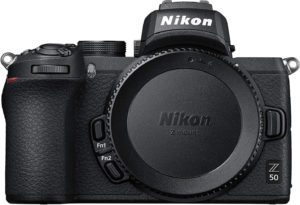

Nikon cameras teach photography through deliberate design. Their ergonomics feel purposeful, controls respond with mechanical precision, and the shooting experience emphasizes craft over automation. The Z mount system balances innovation with respect for photographic fundamentals.
The Z50 and Zfc offer different approaches to the same capable core. The Z50 follows conventional mirrorless design, while the Zfc wraps identical internals in retro styling that delights aesthetically-minded shooters. Both deliver Nikon’s legendary color science and intuitive controls.
Feature priorities for genuine growth
Specification sheets overwhelm beginners with numbers that sound important but prove irrelevant in practice. The best first cameras excel at features that support skill development rather than impressive technical achievements that sit unused.
Autofocus capabilities that actually help
Modern autofocus systems track subjects with computational precision that seems magical. Eye detection, animal recognition, and subject tracking work brilliantly, but they can also delay learning to see photographically. A first camera needs reliable autofocus that doesn’t miss focus but doesn’t eliminate all challenge either.
Single-point AF selection teaches composition more effectively than letting algorithms choose. Face detection helps when starting with portraits but shouldn’t become a permanent crutch. The sweet spot combines helpful assistance with manual override that feels natural.
| Autofocus Feature | Learning Value | Practical Benefit | Priority Level |
|---|---|---|---|
| Single-point selection | High | Compositional control | Essential |
| Face/Eye detection | Medium | Portrait reliability | Very useful |
| Continuous tracking | Low initially | Sports/action capability | Nice to have |
| Manual focus peaking | Very high | Precise control learning | Essential |
Video capabilities worth considering
Photography and videography converge increasingly, and most photographers eventually explore motion. The best first cameras handle both competently without forcing specialization. Look for 4K recording at 30fps minimum, external microphone inputs for better audio, and stabilization that reduces handheld shake.
Professional video features like 10-bit color, log profiles, and high frame rate slow-motion matter less than learning fundamentals. Clean 4K footage with reliable autofocus serves beginners better than compressed 6K with complex color workflows.
Connectivity that matches modern workflows
Photography exists within digital ecosystems now. Cameras should transfer images wirelessly to phones for immediate sharing, offer remote control through apps for self-portraits or wildlife shots, and integrate with editing software seamlessly. These conveniences don’t improve image quality directly, but they reduce friction in the creative process.
Bluetooth connectivity enables constant low-power connection between camera and phone, while Wi-Fi handles high-speed file transfers. The combination makes backing up images in the field practical and sharing selects on social media effortless.
Real-world recommendations by photographic interest
The best first cameras align with what you actually photograph rather than theoretical versatility. Honest self-assessment about interests produces better purchasing decisions than trying to cover every possibility.
For portrait enthusiasts
Portrait photography demands excellent skin tone rendering, accurate autofocus on eyes, and lenses that create beautiful background separation. Cameras with articulating screens simplify low and high angle compositions, while good high-ISO performance enables natural light shooting indoors.
Top picks for portrait-focused beginners:
- Canon EOS R50 with 50mm f/1.8 RF lens
- Sony a6400 with 50mm f/1.8 OSS lens
- Nikon Z50 with 35mm f/1.8 Z lens
These combinations balance body capability with portrait-appropriate glass. The fast primes teach depth of field control while producing professional-quality background blur. Starting with a prime lens rather than a kit zoom accelerates learning by eliminating focal length variables.
For landscape and nature photography
Landscape work prioritizes dynamic range, color accuracy, and compatibility with wide-angle lenses. Weather sealing matters when hiking into remote locations, though entry-level bodies rarely offer this protection. Battery life becomes critical when shooting all day away from power sources.
Wide-angle kit lenses (starting at 18mm or wider) serve landscapes better than telephoto options. Investing early in a quality ultrawide zoom creates more dramatic perspectives than sensor resolution alone. Many landscape photographers also appreciate a camera’s compatibility with high-quality lenses, such as exploring options for versatile camera systems.
For street and documentary work
Street photography values discretion, fast operation, and adaptability to changing light. Smaller cameras attract less attention and feel less intimidating to subjects. Silent shooting modes enable capturing candid moments without disruptive shutter noise. Fast burst rates help catch peak expressions in fleeting interactions.
Prime lenses in the 23-35mm range (35-50mm equivalent) match natural perspective and encourage working close to subjects. The optical simplicity of primes also delivers superior image quality at lower prices than zoom alternatives.
Common beginner misconceptions debunked
Photography forums and YouTube comments perpetuate advice that sounds reasonable but misleads newcomers. Understanding these misconceptions prevents expensive mistakes and unnecessary frustration.
The megapixel myth
Twenty-four megapixels captures more resolution than most photographers ever use. Images displayed on websites compress to tiny fractions of original file sizes. Prints up to 16×20 inches look stunning from 16-megapixel files. Yet beginners obsess over megapixel counts as if they determine image quality.
Lens quality, technique, and light matter infinitely more than sensor resolution. A sharp 20-megapixel file beats a soft 45-megapixel image every time. The best first cameras provide enough resolution for any reasonable need without the file size bloat that slows computers and fills hard drives.
The weather sealing imperative
Professional photographers need weather-sealed cameras because their livelihoods depend on shooting regardless of conditions. Beginners typically have the luxury of waiting for better weather or protecting gear more carefully. Weather sealing adds cost and bulk that entry-level budgets absorb better through better lenses or accessories.
This doesn’t mean treating cameras carelessly in rain. But it means a camera bag with rain cover and common sense protects equipment adequately for most photography. Investing in weather sealing before developing skills that demand it wastes resources.
The used camera trap
Buying used equipment saves money and often provides better value than new entry-level options. But beginners lack knowledge to assess condition accurately. A camera body showing cosmetic wear might function flawlessly, while a pristine-looking camera could hide electronic faults or sensor damage.
If buying used, purchase from reputable dealers offering warranties rather than individual sellers. KEH, MPB, and manufacturer refurbished programs provide tested equipment with return policies. The slight premium over private sales buys peace of mind worth having when learning.
Making your final decision
Research paralysis afflicts camera buyers at all levels. Forums, reviews, and YouTube comparisons create the illusion that one perfect choice exists if you just research enough. This mindset delays the actual learning that only happens through shooting.
The hands-on evaluation process
Specifications tell incomplete stories. Cameras are physical tools that should feel natural in your hands. Visit stores and handle models on your shortlist. Notice which controls fall naturally under your fingers, which menu systems make intuitive sense, and which viewfinder presentations feel clearest.
Questions to ask during hands-on testing:
- Does the grip feel secure and comfortable?
- Can I reach important controls without shifting hand position?
- Does the menu system make logical sense?
- Is the viewfinder bright and clear?
- Do buttons provide tactile feedback?
These subjective factors influence whether you enjoy using a camera enough to carry it consistently. The best beginner cameras balance specifications with ergonomic thoughtfulness that makes photography inviting rather than technical.
System commitment versus flexibility
Your first camera probably won’t be your last, but your lens mount choice carries forward. Lenses outlast bodies, retain value better, and define image characteristics more than sensors. Consider the lens ecosystem as carefully as the camera body.
Canon, Nikon, and Sony all offer complete systems from budget to exotic. Fujifilm provides exceptional APS-C options with beautiful color science and compact primes. Micro Four Thirds systems from OM System and Panasonic deliver the smallest overall packages with deep lens catalogs.
Learning resources that complement hardware
The best first cameras become better tools when paired with quality education. Technical capability means nothing without understanding how to apply it creatively.
Structured learning paths
YouTube tutorials offer overwhelming quantity but inconsistent quality. Starting with structured courses from established educators builds foundational knowledge more efficiently than random video consumption. Look for instructors who emphasize principles over specific camera models.
Free resources from camera manufacturers often provide surprisingly good introductions to photography basics. Canon, Nikon, and Sony all maintain learning centers with tutorials covering exposure, composition, and post-processing fundamentals.
Practice projects with purpose
Random shooting develops technical skills slowly. Deliberate practice through self-assigned projects accelerates learning dramatically. Challenge yourself to shoot only in manual mode for a week, create a series of portraits with natural light exclusively, or document a single location across different times of day.
Effective beginner projects:
- Photograph one subject with every lens you own
- Create a week-long photo essay about your daily routine
- Shoot the same scene at different apertures to understand depth of field
- Practice manual focus on moving subjects
- Explore your neighborhood at different times of day
These constraints force creative problem-solving and technical mastery simultaneously. They also generate portfolio pieces that demonstrate growth over time.
Avoiding feature bloat and staying focused
Modern cameras pack capabilities that even professionals rarely use. The best first cameras may include these features, but success comes from mastering fundamentals rather than exploring every menu option.
The 80/20 principle applied to photography
Eighty percent of compelling photographs come from twenty percent of camera features. Aperture, shutter speed, ISO, focus point selection, and white balance constitute this critical twenty percent. Master these completely before worrying about custom functions, picture styles, or advanced autofocus modes.
This doesn’t mean ignoring other features permanently. It means building competence methodically rather than superficially engaging with everything simultaneously. Depth beats breadth when developing photographic vision.
When to upgrade versus when to grow
New camera announcements trigger upgrade urges, but gear rarely limits beginners as much as skill gaps do. Before considering upgrades, honestly assess whether you’ve mastered your current equipment. Can you shoot confidently in manual mode? Do you understand how ISO affects image quality beyond just brightening scenes? Have you explored your camera’s full dynamic range?
Upgrading lenses typically improves image quality more dramatically than upgrading bodies. A better lens on a three-year-old body produces better results than a kit lens on the latest camera. The exception involves changing systems entirely, which should happen rarely and deliberately.
The importance of printing your work
Digital photography creates distance between capture and final output. Viewing images on screens provides instant feedback but doesn’t complete the photographic process. Printing reveals tonal subtleties, color accuracy issues, and compositional strengths that monitors hide.
The best first cameras capture files with sufficient quality for beautiful prints. Even basic photo prints from online services teach valuable lessons about exposure, color balance, and composition. Seeing your work physically displayed motivates improvement and validates progress in ways that screen viewing never quite achieves.
Start printing early and often. Display your best work, even imperfect images that captured meaningful moments. Photography exists to be seen, and prints make images permanent in ways that digital files struggle to match.
Building community and seeking feedback
Photography thrives in community. Learning accelerates through constructive criticism, shared experiences, and collective problem-solving. The best first cameras become better tools when used within supportive photography communities.
Finding your photographic peers
Local camera clubs, online forums, and social media groups all offer community connection. Choose environments that emphasize growth over gear worship. Communities that share images for critique, discuss technique over equipment, and celebrate artistic vision rather than technical specs provide the most value.
Portfolio reviews from experienced photographers identify blind spots and suggest areas for development. These conversations often prove more valuable than any camera upgrade or workshop.
Sharing work intentionally
Social media posting differs from deliberate sharing with purpose. Instagram likes feel validating but rarely improve photographs. Instead, create small portfolios of related work and share them specifically requesting feedback on particular aspects. Ask about composition, light quality, or color choices rather than general impressions.
This focused approach to sharing develops critical thinking about your own work while building relationships with photographers whose opinions you value.
Getting your first camera right matters less than getting out and using it. The best first cameras share characteristics that support learning without overwhelming capability, but they all become excellent tools in hands willing to experiment, fail, and improve. These choices grow with you from complete beginner to confident photographer when paired with curiosity and consistent practice. Whether you need detailed reviews, buying guides, or ongoing photography advice as your skills develop, Lens and Shutter offers comprehensive resources that help photographers at every stage make informed decisions and capture better images.
Last update on 2026-03-26 / Affiliate links / Images from Amazon Product Advertising API