


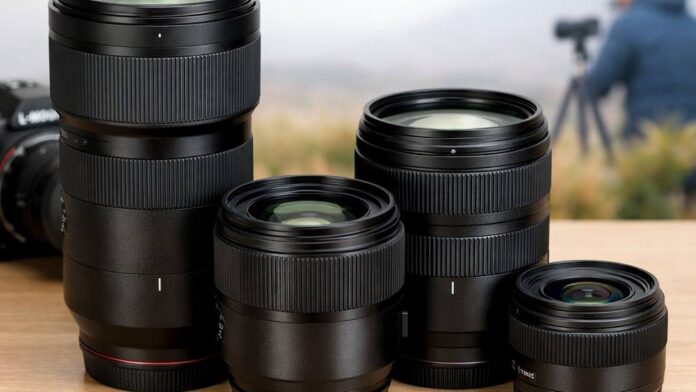
Choosing the best L-Mount lenses is easier when you match focal length, size, and rendering to the way you actually shoot. I’ve put this guide together from a photographer’s perspective, focusing on real-world handling, image character, and the lenses that make the most sense for Lens and Shutter readers.
Why L-Mount is worth considering today
The L-Mount system has quietly become one of the most flexible and forward-thinking platforms for mirrorless shooters. When Leica, Panasonic, and Sigma joined forces to create the L-Mount Alliance, they opened up a lens ecosystem that offers both breadth and depth. This means you can mix and match cameras and lenses from these three brands with full compatibility, giving you a much wider range of options than most single-brand systems.
That broader lens choice is exactly why it helps to compare options by shooting style rather than brand alone. If you want a Leica-focused perspective before narrowing down your shortlist, 9 Best Leica L Mount Lenses in 2024 offers a useful companion view of where Leica glass fits within the wider L-Mount system.
That flexibility matters even more when you pair the right lenses with a body that suits your shooting style, especially if you want a compact setup for travel, portraits, and casual video. For a practical example of how the system comes together in use, see this Panasonic Lumix S9 review.
One of the biggest strengths of L-Mount cameras is this shared ecosystem. If you start with a Panasonic body, you are not limited to Panasonic glass. You can choose a Leica prime for its unique character, or a Sigma zoom for its excellent value. This cross-compatibility makes L-Mount a smart investment, since it allows you to build a kit that fits your style without being boxed in by one brand’s lens roadmap.
The L-Mount system also stands out because it bridges the gap between professional needs and enthusiast budgets. Leica’s legendary optics are available for those who want top-tier rendering, while Sigma’s Art and Contemporary series provide advanced performance without the premium price tag. Panasonic, meanwhile, fills the middle ground with great autofocus and weather-sealed builds. As a working photographer, this means you can tailor your kit with exactly the right mix of features, size, and cost.
Another reason to consider L-Mount is its future-proof design. The mount itself is physically robust, with a wide diameter and short flange distance, supporting both full-frame and APS-C formats. This allows for innovative lens designs and compact camera bodies. With compact digital cameras making a comeback in 2026, the L-Mount’s flexibility will only become more valuable.
How to choose the right lens for your shooting style
Building your lens kit is about more than just picking the sharpest or fastest glass. It’s about matching tools to the way you actually shoot. The L-Mount lens lineup is broad, but making smart choices comes down to a few core principles.
Pick focal lengths that match your subjects
Start by thinking about what you shoot most often. If you love street and travel photography, a versatile zoom or a compact 35mm prime might be ideal. For portraits, a short telephoto like an 85mm or 90mm will give you flattering compression and subject separation. Landscape shooters might prefer an ultra-wide or a lightweight 24-70mm for all-around use.
- Everyday and travel: 24-70mm zoom, 35mm or 50mm prime
- Portraits: 85mm, 90mm, or even 105mm prime
- Low light or creative work: fast primes (f/1.4-f/1.8)
Remember, focal length is about perspective as much as framing. A 35mm lens encourages you to get closer and interact with your subject, while an 85mm lets you keep some distance for candid moments. By picking focal lengths that match your approach, you naturally get better, more consistent results.
Balance aperture, size, and stabilization
Once you know your preferred focal lengths, weigh the trade-offs between lens speed, size, and features. Wide-aperture lenses (like f/1.4 or f/1.2) are great for shallow depth of field and low light, but they tend to be larger and heavier. For travel and street work, a smaller f/2 or f/2.8 lens may be more practical, especially if you value portability.
Stabilization is another key factor. Many L-Mount bodies offer excellent in-body stabilization, but pairing them with an optical IS lens can give you a real edge for handheld shooting. This is especially useful for video or slower shutter speeds in low light. If you shoot mostly static scenes on a tripod, you might prioritize optical quality over stabilization.
Finally, do not overlook autofocus performance. Some Sigma Art lenses are sharper than their Panasonic or Leica counterparts, but may not match their speed or smoothness for video or fast action. Choose lenses that feel intuitive and reliable for your style of shooting.
Best L-Mount lenses for everyday photography
For most photographers, a versatile everyday lens is the foundation of the kit. The best everyday L-Mount lenses combine sharpness, fast autofocus, and a manageable size, making them easy to carry and quick to deploy in any situation. Here are the top options from my own experience and what I recommend to friends and clients.
Best standard zoom options
Standard zooms like the 24-70mm f/2.8 are the workhorses of many systems, and L-Mount is no exception. The Sigma 24-70mm f/2.8 DG DN Art is a standout, offering prime-like sharpness and strong build quality at a price that undercuts most competitors. It balances well even on smaller bodies and has fast, silent autofocus, making it a favorite for both stills and video.
The Panasonic Lumix S Pro 24-70mm f/2.8 is another strong contender, especially if you value weather sealing and robust construction. Its autofocus is extremely fast and accurate, with excellent rendering for portraits and events. If you prefer something more compact, the Panasonic Lumix S 20-60mm f/3.5-5.6 is surprisingly sharp, lightweight, and perfect for travel or street photography. It covers everything from wide landscapes to tight portraits, all in a lens that barely adds weight to your bag.
Best prime lenses for daily use
If you are a fan of primes, the Sigma 35mm f/2 DG DN Contemporary is one of the best everyday L-Mount lenses for its compact size, fast aperture, and pleasing bokeh. It’s sharp, discreet, and a joy to use for street, travel, and environmental portraits. The Panasonic Lumix S 50mm f/1.8 is another excellent all-purpose prime, offering solid autofocus and weather resistance at a friendly price.
For those who want a bit more speed and character, the Leica Summicron-SL 50mm f/2 ASPH stands out for its signature rendering and tactile feel. While it comes at a premium, the image quality and build are truly special. For most users, though, the Sigma and Panasonic primes offer better value and a lighter carry for daily shooting.
Best L-Mount lenses for portraits and low light
Portrait and low light work demand lenses with fast apertures, smooth bokeh, and reliable autofocus. The best L-Mount portrait lens is often the one that helps your subject relax and lets you work quickly, rather than just the sharpest option on a chart.
The Sigma 85mm f/1.4 DG DN Art is my top pick for most L-Mount users. It is tack-sharp wide open, with creamy background blur and fast, accurate autofocus. The size is reasonable for an f/1.4 lens, and the price is far more accessible than Leica’s equivalents. If you want something smaller, the Panasonic Lumix S 85mm f/1.8 offers excellent sharpness and pleasing rendering, all in a lightweight, weather-sealed body that won’t slow you down.
For those seeking the ultimate in low light performance or subject separation, the Leica APO-Summicron-SL 90mm f/2 ASPH delivers stunning color, contrast, and microcontrast. The autofocus is subtle and accurate, making it ideal for both stills and video work in challenging conditions. However, the price and size make it a specialty tool rather than an everyday lens.
Lastly, do not overlook the value of fast 50mm and 35mm primes for portraits in tight spaces or low light. The Panasonic S 50mm f/1.8 and Sigma 35mm f/1.4 DG DN Art are both excellent in these roles, giving you flexibility without breaking the bank or your back.
Best L-Mount lenses for landscape, travel, and street work
Wide-angle choices for scenery and architecture
For many photographers, the best L-Mount landscape lens is a wide-angle zoom or prime with sharp corners, minimal distortion, and weather sealing. The Sigma 14-24mm f2.8 DG DN Art is a top choice if you want edge-to-edge sharpness and a dramatic field of view for mountains, cityscapes, or interiors. Its autofocus is quick, and the lens is built to handle rough conditions, making it a reliable companion for outdoor work.
If you prefer something even lighter, the Panasonic Lumix S 16-35mm f4 is an excellent all-purpose wide zoom. It’s not as bright as the Sigma, but it’s smaller, balances better on L-Mount bodies, and is still sharp throughout its range. For those who like to travel with minimal weight, a prime like the Sigma 20mm f2 DG DN Contemporary is another great option. It’s surprisingly compact, sharp enough for high-resolution sensors, and excellent for both sweeping landscapes and tight city streets.
Compact lenses for travel and street photography
The ideal L-Mount travel lens is versatile, compact, and discreet. Many photographers gravitate toward the Sigma 28-70mm f2.8 DG DN Contemporary. This lens is notably light for a fast zoom, making it an excellent walkaround choice for both travel and casual street photography.
For street work, a fast prime with a natural perspective is hard to beat. The Panasonic Lumix S 35mm f1.8 is a favorite of mine for its balance of portability and low-light performance. Autofocus is responsive, and the images have a crisp yet subtle rendering that flatters both people and urban scenes. If you want something even smaller, the Sigma 45mm f2.8 DG DN Contemporary is beautifully compact and delivers pleasing, film-like rendering – a perfect match for those who want to blend in and shoot candidly.
The L-Mount street photography lens I recommend most often is the Sigma 35mm f2 DG DN Contemporary. It’s small, fast, and delivers excellent sharpness wide open. The handling is tactile, with a satisfying aperture ring and a metal build that feels premium without the weight.
Best L-Mount lenses for video creators
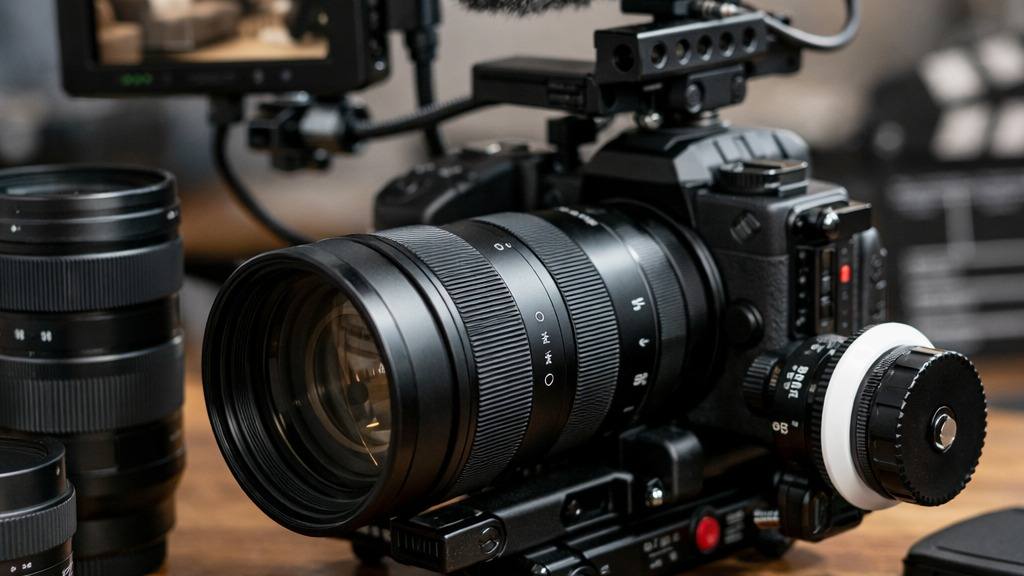
Video shooters need more than just sharpness – they need reliable autofocus, quiet operation, and controlled focus breathing. The best L-Mount lenses for video tend to be those that combine smooth manual focus rings with fast, silent autofocus motors.
The Panasonic Lumix S Pro 24-70mm f2.8 stands out for hybrid creators. Its focus clutch allows easy switching between autofocus and manual, and the lens shows minimal focus breathing, which is crucial for rack focus shots. The optical quality is high enough that you can use it for both talking-head interviews and cinematic B-roll.
For solo shooters or vloggers, the Sigma 18-50mm f2.8 DC DN Contemporary is a fantastic value. It’s light, versatile, and focuses almost silently, making it ideal for handheld work or gimbal use with APS-C L-Mount bodies. Its range covers most everyday vlogging or documentary needs.
If you need a wide prime with minimal distortion for landscape or architectural video, the Sigma 24mm f2 DG DN Contemporary is a strong pick. Its autofocus is fast for video, and the manual focus ring is smooth for precise pulls. For those who want bokeh-rich backgrounds, the Panasonic Lumix S 50mm f1.8 is a sleeper hit – affordable, sharp, and with lovely out-of-focus rendering.
When choosing an L-Mount video lens, consider whether you prioritize autofocus reliability or manual focus feel. Sigma’s DG DN Contemporary primes are consistent performers, while Panasonic’s S-series lenses offer weather sealing and better manual focus experience. Both are excellent, but your workflow and camera body may sway your decision.
Third-party vs native options and what you gain
When Sigma offers the best value
The L-Mount Alliance has transformed the ecosystem by welcoming Sigma as a full partner. As a result, Sigma L-Mount lenses often set the standard for value. For example, their DG DN Art primes and zooms give you professional-grade optics at prices far below Leica or even Panasonic Pro glass. Build quality is robust, autofocus is reliable, and the optical performance is consistently excellent.
Sigma also fills gaps in the lineup – offering compact f2 and f2.8 primes, unique focal lengths, and fast zooms that native Panasonic or Leica lines do not always provide. For budget-conscious shooters or those building a lightweight travel kit, Sigma is usually the first brand I recommend.
For a Sigma-only shortlist, our best Sigma mirrorless lenses guide separates the full-frame and APS-C ranges and flags the meaningful handling compromises.
nn
When Panasonic or Leica makes more sense
Despite Sigma’s strengths, Panasonic Leica L-Mount lenses have their own compelling advantages. Panasonic’s S Pro line, for instance, often provides superior weather sealing, dual focus motors for smoother video pulls, and sometimes a more natural color rendering out of camera. If you shoot a lot of video or demand the best manual focus experience, Panasonic is hard to beat.
Leica’s native lenses are in a class of their own for build and rendering. The Leica 35mm f2 APO-Summicron-SL ASPH, for instance, delivers an image character and microcontrast that are hard to match. If budget is less of a concern and you want the most tactile, rewarding shooting experience, Leica primes can be worth the investment.
In short, native vs third-party L-Mount lenses comes down to priorities. Sigma gives you affordable access to excellent optics and a wide range of choices. Panasonic offers the best hybrid handling and weather resistance, while Leica is about the ultimate in build and image finesse. Mixing and matching is common among experienced L-Mount shooters, allowing you to tailor your kit to how you work.
My final recommendations by budget and priority
If you are just starting out or want the best value, begin with a Sigma Contemporary zoom like the 28-70mm f2.8 DG DN. Pair it with a bright prime, such as the Sigma 35mm f2 DG DN or Panasonic S 50mm f1.8, for low light and creative depth of field.
For landscape and travel shooters who prioritize weight, the Panasonic S 16-35mm f4 and Sigma 20mm f2 DG DN are both excellent. Street photographers often love the Sigma 45mm f2.8 DG DN for its size and unique rendering.
If budget is less of an issue, Panasonic’s S Pro 24-70mm f2.8 is an outstanding all-arounder for both stills and video. Leica’s primes, such as the 35mm f2 APO-Summicron-SL, are ideal for those who want the best possible image quality and build.
For video-focused creators, the Sigma 18-50mm f2.8 DC DN for APS-C or the Panasonic S Pro 24-70mm f2.8 for full-frame deliver reliable autofocus, sharpness, and minimal focus breathing.
Ultimately, the best L-Mount lenses for you depend on your subjects, shooting style, and priorities. The L-Mount ecosystem is now broad enough that you can build a kit that fits your needs, whether you want lightweight travel tools, street photography stealth, or the absolute best image quality for commercial work.
Frequently asked questions
What are the best L-Mount lenses for beginners?
For beginners, the Sigma 28-70mm f2.8 DG DN Contemporary is versatile and affordable. Pair it with a fast prime like the Panasonic S 50mm f1.8 for portraits and low light. These lenses are easy to use, lightweight, and produce excellent results on any L-Mount body.
Are Sigma L-Mount lenses as good as Panasonic or Leica options?
Sigma L-Mount lenses often match or even surpass Panasonic and Leica for sharpness and value. They are usually more affordable and lighter. However, Panasonic and Leica may offer better weather sealing, unique color rendering, or a more tactile manual focus experience. Your choice depends on what matters most to you.
Which L-Mount lens is best for portraits?
The Panasonic S 85mm f1.8 is a top portrait choice. It’s sharp, has beautiful bokeh, and focuses quickly. For even more subject isolation and a classic look, the Sigma 85mm f1.4 DG DN Art is a step up, while Leica’s 90mm f2 APO-Summicron-SL ASPH is the ultimate option for those who want the best.
What is the best all-around L-Mount lens for travel?
The Sigma 28-70mm f2.8 DG DN is the best all-around travel lens for most photographers due to its compact size, fast aperture, and flexible range. It handles everything from landscapes to portraits. For those who want something even smaller, the Sigma 24mm f2 DG DN Contemporary is a great prime for lightweight travel kits.
Key takeaways
- The best L-Mount lenses depend more on your subjects and shooting habits than on brand alone.
- A strong kit usually starts with one versatile zoom and one fast prime.
- Sigma often delivers the best value, while Panasonic and Leica can offer handling or rendering advantages for specific needs.
- For most photographers, compact size, autofocus behavior, and focal length matter just as much as maximum aperture.