
The Sony Alpha series has transformed professional and enthusiast photography over the past decade, and sorting through these cameras can feel overwhelming. When you’re standing at that crossroads trying to decide between an A7 IV, A7R V, or maybe even the brand new A7 V, you need more than just spec sheets. This sony a camera comparison draws from real-world shooting experience across different bodies, cutting through the marketing noise to help you understand which camera actually suits your specific photography style and budget constraints.
Contents
- Understanding Sony’s full-frame naming system
- Entry-level full-frame options
- High-resolution specialists
- Video-centric models
- Making your sony a camera comparison decision
- Autofocus performance across models
- Low-light capabilities
- Build quality and weather sealing
- Lens ecosystem considerations
- Future-proofing your investment
- Practical shooting comparisons
- Video capabilities breakdown
- The A9 series wild card
- Software and connectivity features
- Making the final choice
Understanding Sony’s full-frame naming system
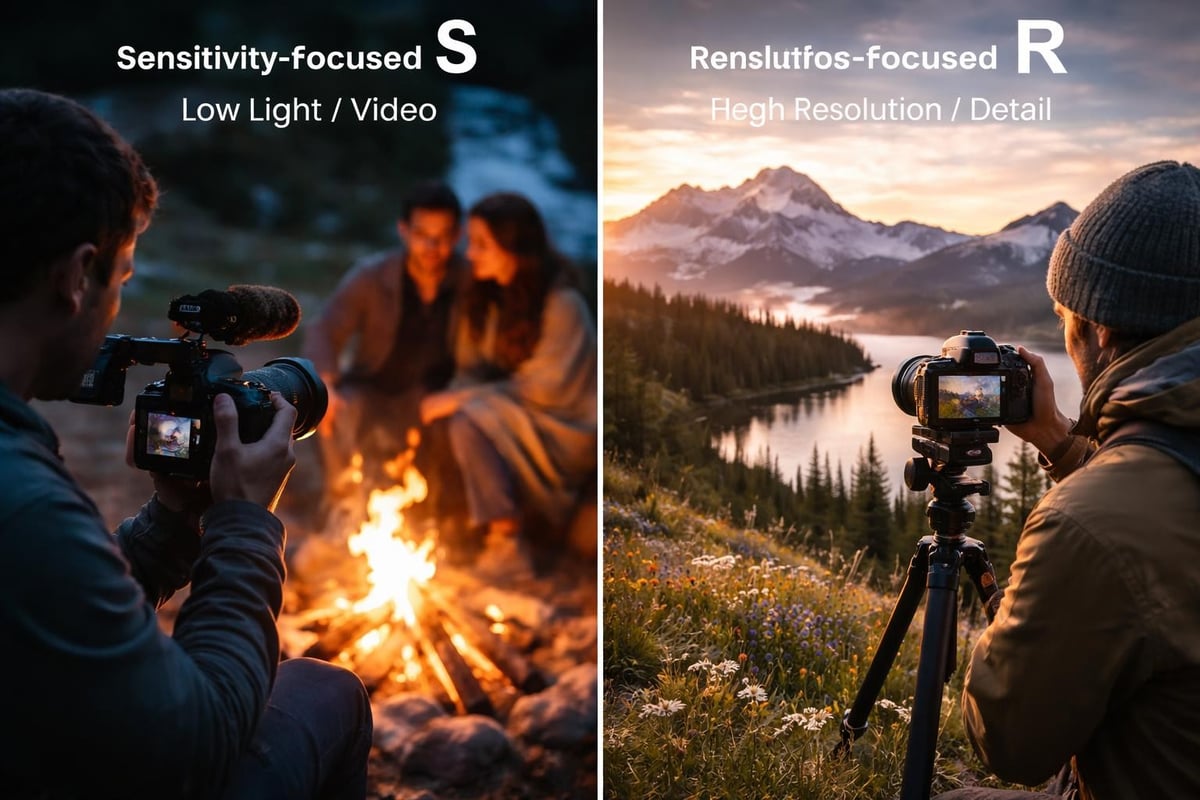
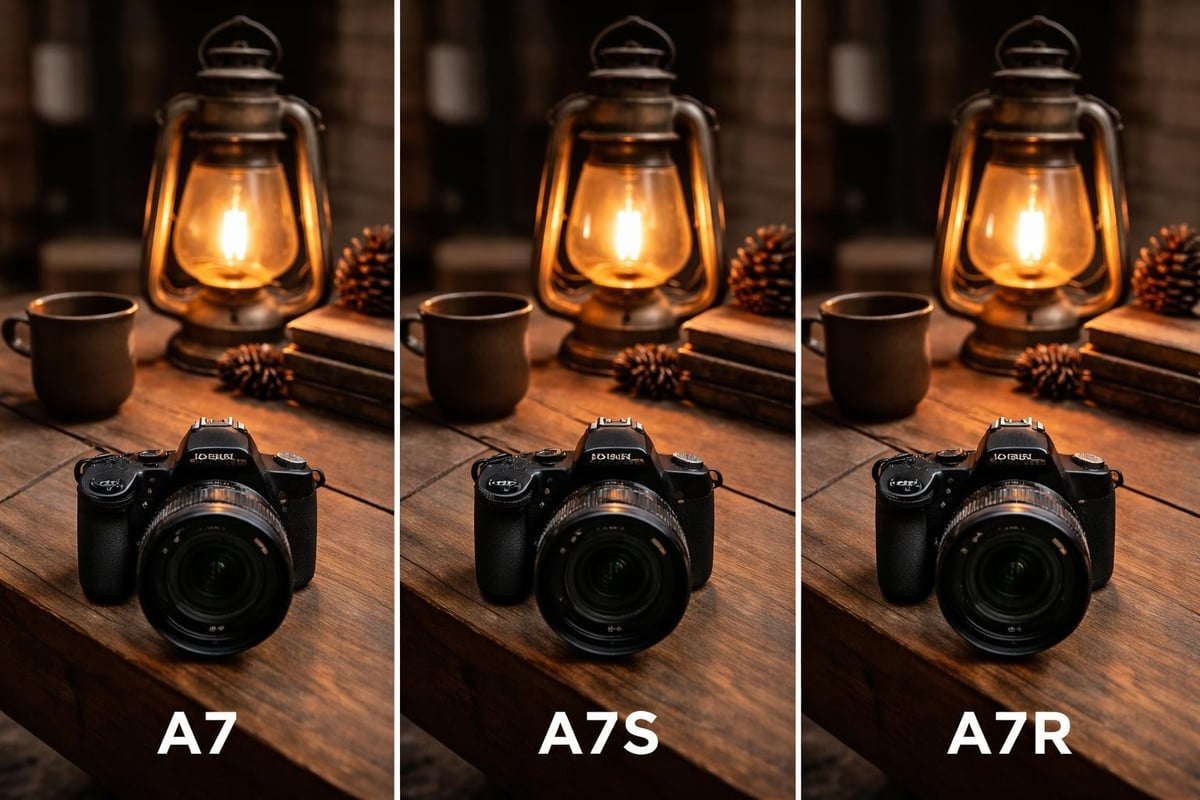
Sony’s naming convention makes sense once you crack the code. The number after “A7” indicates the generation, while the letter tells you the camera’s specialty. No letter means balanced performance for general use. The R stands for resolution, prioritizing megapixel count for landscape and studio photographers. The S focuses on sensitivity, targeting videographers and low-light specialists. The C designation points toward cinema-focused features.
This system helps narrow your choices quickly. If you shoot wildlife and need continuous autofocus with decent resolution, you skip the S models entirely. Wedding photographers balancing low-light reception work with video probably ignore the high-resolution R variants. The logic becomes intuitive after you map your needs against these categories.
Generation gaps matter more than you think
Each generation brings meaningful improvements beyond megapixel bumps. The jump from third to fourth generation introduced better battery life, improved menu systems, and significantly enhanced autofocus tracking. Fifth-generation models like the A7R V added AI-based subject recognition that actually works on motorcycles, trains, and insects.
Processing speed separates generations even within the same letter category. An A7R V handles 61-megapixel files noticeably faster than the A7R IV managed, making the difference between smooth operation and frustrating buffer delays during burst shooting.
Entry-level full-frame options
The A7 III remains relevant in 2026 despite being several years old. Its 24-megapixel sensor delivers excellent image quality for most applications, and used bodies sell for reasonable prices that compete well with some of the best cameras under 700$ when you shop carefully.
Battery performance on the A7 III deserves mention. Sony rated it for 610 shots per charge, and real-world usage typically exceeds that number. Compare this to earlier Sony bodies that barely managed 300 frames, and you understand why the third generation marked a turning point for wedding and event photographers considering the system.
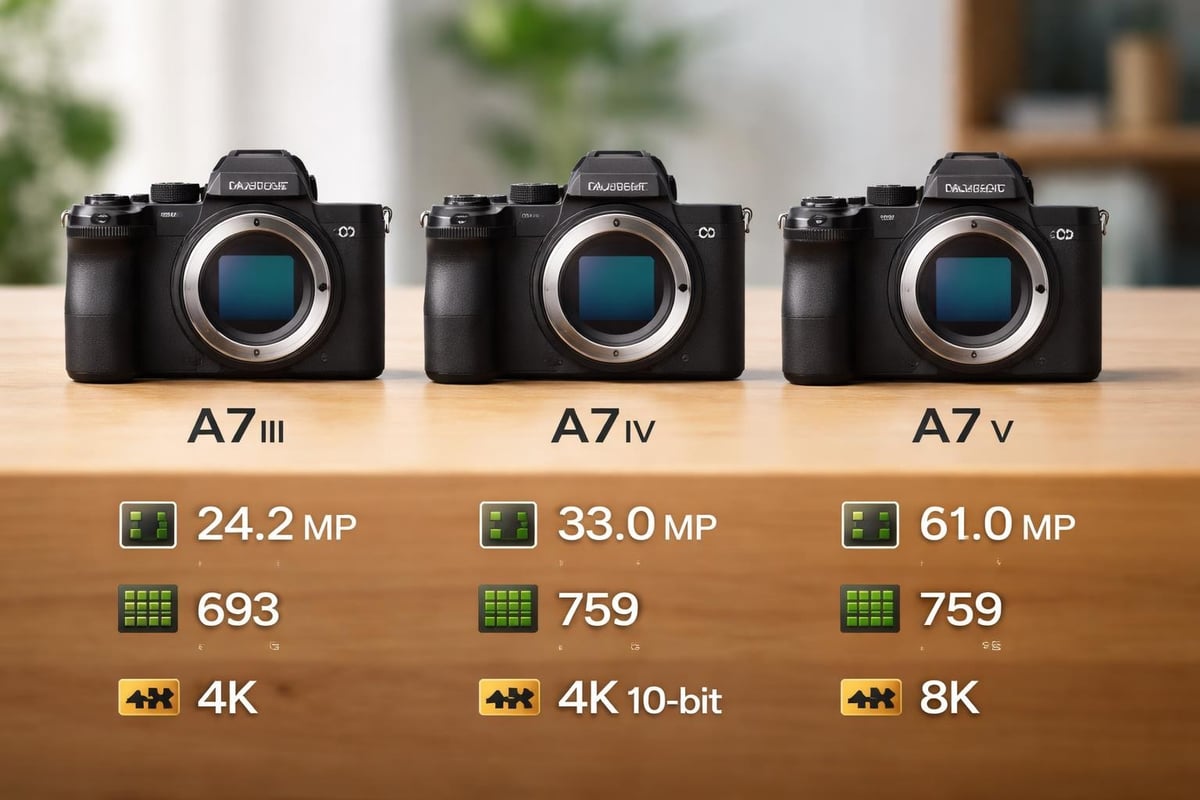
The A7 IV stepped up as the natural successor with a 33-megapixel sensor and better video specifications. According to Wikipedia, this model bridged the gap between enthusiast and professional needs with 4K 60p recording and enhanced autofocus capabilities. Price-to-performance ratio positions this camera as the sweet spot for many photographers upgrading from crop sensors.
The new A7 V enters the conversation
Sony dropped the A7 V in early 2026, and it immediately complicated buying decisions in the best possible way. The camera features a 33-megapixel stacked sensor that addresses read-out speed issues photographers complained about in previous models. Electronic shutter performance now rivals mechanical shutters for most subjects, reducing rolling shutter artifacts that plagued fast-moving subjects.
This model topped Japan’s best-selling camera lists within weeks of launch, demonstrating its appeal across different photography markets. The autofocus system inherited technology from Sony’s flagship sports cameras, giving enthusiast photographers access to tracking capabilities that previously required professional-tier bodies.
For hybrid shooters splitting time between photos and video, the A7 V makes sense. Internal 4K recording at higher bitrates means less need for external recorders on smaller productions. The flip-out screen finally addresses vlogger complaints about Sony’s previous articulating designs.
High-resolution specialists
The R series targets photographers who need maximum detail. Landscape photographers printing large formats, commercial shooters delivering files for billboard campaigns, and studio photographers requiring extensive cropping flexibility all benefit from these sensors.
The A7R IV introduced 61 megapixels in a body that remained relatively compact. Image quality from this sensor still competes with anything available in 2026, though newer models bring operational improvements worth considering.
| Model | Megapixels | Burst Rate | Buffer Depth | Autofocus Points | Price Range |
|---|---|---|---|---|---|
| A7R IV | 61 | 10 fps | 68 RAW | 567 | $2,500-$2,800 |
| A7R V | 61 | 10 fps | 583 RAW | 693 | $3,800-$4,000 |
| A7 IV | 33 | 10 fps | 828 RAW | 759 | $2,300-$2,500 |
| A7 V | 33 | 10 fps | 1000+ RAW | 759 | $2,800-$3,000 |
The A7R V added a tilting LCD that moves in multiple directions, solving composition challenges for macro and architectural photographers. This seemingly small feature dramatically improves shooting experience when working at odd angles. The AI autofocus system recognizes specific subjects like vehicles and animals, maintaining focus even when partial occlusion occurs.
Processing these massive files requires serious computing power. Your editing workflow needs consideration before committing to 61-megapixel files. A standard wedding delivery of 500 edited images balloons to over 180GB of storage before client delivery, compared to roughly 60GB from a 24-megapixel camera.
When resolution becomes overkill
Most photographers overestimate their resolution needs. Web delivery maxes out around 2-3 megapixels for full-screen display. Social media compresses everything regardless of source quality. Even magazine spreads rarely require more than 20-megapixel source files when shot properly.
The resolution advantage appears during heavy cropping or large print production. If you regularly produce prints above 24×36 inches, need significant cropping flexibility for wildlife or sports, or deliver files to clients who handle their own post-processing at commercial scale, then R models make sense. Otherwise, standard A7 models provide more balanced performance.
Video-centric models
The S line prioritizes video features and low-light performance. The A7S III remains the king of sensitivity, with usable footage at ISO levels that turn other cameras into grainy messes. Its 12-megapixel sensor might seem limiting, but this resolution suits 4K production perfectly while enabling exceptional per-pixel quality.
Video shooters appreciate the S series for different reasons than photographers value R models. Full-pixel readout without line skipping, 10-bit 4.2.2 internal recording, and exceptional rolling shutter performance matter more than megapixel counts for cinema work. Heat management allows extended recording sessions that would shut down other mirrorless bodies.
The autofocus performance during video recording separates Sony from competitors. Face and eye detection works reliably even in challenging lighting, reducing focus pulling demands during solo productions. Real-time tracking maintains sharp focus on moving subjects without the hunting behavior that ruins takes.
Making your sony a camera comparison decision
Start by defining your actual needs rather than aspirational shooting styles. Many photographers buy high-resolution cameras for landscape work they do twice yearly, then carry extra weight and manage larger files for daily shooting that doesn’t benefit from 61 megapixels.
Your existing glass matters significantly. Sony’s G Master lenses maximize camera performance but cost serious money. Third-party options from Sigma and Tamron deliver excellent results at lower prices, though autofocus performance sometimes varies across different camera bodies. If you’re starting fresh, factor lens costs into your total system budget before committing to a body.
Consider where photography fits in your life. Weekend enthusiasts shooting family events and travel benefit from different features than working professionals shooting client projects weekly. The A7 III or A7 IV handles enthusiast needs beautifully while leaving budget for better lenses, which improve image quality more than megapixel increases.
Budget considerations beyond the body
Memory cards for these cameras aren’t cheap. High-resolution models need fast cards to handle burst shooting, and video work demands even faster write speeds. Budget $100-$300 for proper cards depending on your capacity needs.
Extra batteries become essential rather than optional. Sony’s battery performance improved dramatically from early models, but any serious shooting day benefits from spares. Figure another $150-$200 for two additional batteries and a charging solution.
The ecosystem costs add up. When comparing current Sony camera offerings, remember that the body represents just the starting point. A complete working kit typically costs 1.5 to 2 times the body price when you include necessary accessories and at least one quality lens.
Autofocus performance across models
Sony’s autofocus represents their strongest competitive advantage. Even entry-level A7 models track subjects better than flagship cameras from some competitors. The system recognizes humans, animals, birds, vehicles, and insects with remarkable accuracy.
Real-time Eye AF works brilliantly for portrait and wedding photography. The camera maintains focus on the subject’s eye even during rapid movement and changing compositions. This feature alone saves countless slightly-soft images that would result from manual focus or less sophisticated systems.
Bird photographers particularly benefit from newer models. The A7R V and A7 V identify bird eyes specifically, maintaining focus even when the bird occupies a small portion of the frame. This capability transforms wildlife photography, especially for smaller subjects where traditional autofocus systems struggled.
Customization options matter
Sony allows extensive autofocus customization through custom buttons and menu settings. You can assign different AF modes to custom buttons, switching instantly between wide-area tracking and single-point precision. This flexibility speeds up shooting across varying situations.
The learning curve frustrates some photographers initially. Sony’s menu system earned its reputation for complexity, though recent models improved organization. Spend time with your camera before critical shoots, programming custom buttons to match your workflow rather than fighting default settings.
Low-light capabilities
Full-frame sensors inherently handle low light better than crop sensors, but differences exist across Sony’s lineup. The A7S III dominates this category with usable footage at ISO 102,400 and acceptable results even higher. For event photographers working in dim venues, this capability matters tremendously.
The base A7 models perform well in low light despite smaller photosites than the S series. Modern processing reduces noise effectively, and shooting RAW provides latitude for recovering shadow detail. Most photographers find the A7 IV or A7 V handles reception lighting, concert venues, and indoor sports adequately.
Comparing high-ISO performance requires understanding your output. Images viewed at 100% magnification always show more noise than prints or screen displays at normal sizes. Our comparison of Sony’s full-frame mirrorless cameras demonstrates how different models handle challenging lighting across practical shooting scenarios.
Build quality and weather sealing
Professional photographers need cameras that survive challenging conditions. Sony improved weather sealing progressively through each generation, with current models handling rain and dust better than early A7 bodies.
The A7R V and A7 V feature magnesium alloy construction that feels substantial without excessive weight. Button placement improved over previous generations, with controls falling naturally under fingers during shooting. The grip depth accommodates larger lenses better than compact mirrorless competitors.
Shutter durability ratings vary across models. Professional bodies like the A7R V rate for 500,000 actuations, while enthusiast models typically rate around 200,000 cycles. For most photographers, even the lower rating represents years of shooting before mechanical concerns arise.
Ergonomics and handling
Camera feel remains subjective, but certain observations hold across users. The A7 series balances well with mid-range zooms but feels front-heavy with large telephoto lenses. Adding a battery grip improves balance and provides better purchase for vertical shooting.
The electronic viewfinder quality jumped significantly in recent generations. The A7R V’s 9.44-million-dot OLED viewfinder displays crisp, lag-free images that rival optical viewfinders for shooting experience. Older models still work fine but show their age when you compare them directly to current EVF technology.
Menu navigation improved but remains Sony’s weakness compared to Canon and Nikon interfaces. The good news is that you configure the camera once, save settings to memory card, and rarely dig deep into menus during actual shooting. Custom buttons handle most operational needs once properly programmed.
Lens ecosystem considerations
Sony’s native lens selection matured significantly since the A7 series launched. G Master lenses deliver exceptional optical quality but command premium prices. G lenses offer excellent performance at lower costs, while third-party options from Sigma, Tamron, and others fill gaps in focal lengths and budget ranges.
Adapting older A-mount lenses works through Sony’s LA-EA adapters, though autofocus performance varies. Manual focus lenses from virtually any system adapt easily, and focus peaking plus magnification make manual focusing practical for static subjects. Exploring quality lens options helps maximize your camera investment regardless of which body you choose.
The system benefits from computational photography features that optimize lens performance. In-camera corrections for distortion, vignetting, and chromatic aberration work seamlessly with native lenses, improving image quality straight from camera. These corrections work especially well with Sony’s own lenses, where correction profiles integrate fully.
Future-proofing your investment
Photography technology evolves constantly, but certain cameras age better than others. The A7 IV launched in late 2021 and remains highly relevant in 2026, suggesting a lifespan of five years or more for current models before they feel outdated.
Consider your upgrade cycle realistically. Professional photographers working daily might upgrade every 2-3 years to maintain competitive advantages. Enthusiasts typically keep cameras 5-7 years before meaningful improvements justify replacement costs. Your shooting frequency and income generation from photography should guide this decision.
Firmware updates extend camera life significantly. Sony supports cameras well after launch, adding features and improving autofocus performance through software updates. The A7 IV received multiple firmware improvements enhancing its capabilities beyond launch specifications.
Resale value considerations
Sony Alpha cameras hold value reasonably well, though R models depreciate slower than base versions due to sustained demand from resolution-focused photographers. Expect to recover 50-60% of original cost after three years for well-maintained bodies with moderate shutter counts.
The used market offers excellent value for budget-conscious photographers. An A7 III purchased used delivers 90% of the performance newer cameras provide at roughly 40% of current retail prices. This approach makes sense for photographers learning the system or working with tight budgets.
Practical shooting comparisons
Theory matters less than field performance. The sony a camera comparison becomes clearer when you consider actual shooting scenarios rather than specification sheets.
For wedding photography, the A7 IV or A7 V provide ideal balance between resolution, autofocus performance, and dual card slots for backup security. The 33-megapixel files deliver plenty of detail for album printing while keeping file sizes manageable across 3,000+ frames from a full wedding day.
Landscape photographers benefit most from R models, where maximum resolution enables large prints and extensive cropping during post-processing. The slower shooting pace doesn’t stress buffer depth, and autofocus speed matters less than precision and image quality.
Sports and wildlife shooters should consider the A9 series despite higher costs, though the A7 V’s improved burst rate and buffer make it viable for amateur sports work. The key factor becomes sustained shooting performance rather than peak specifications.
Real-world battery life
Official ratings never match field performance perfectly. The A7 IV typically delivers 600-700 shots per charge during normal shooting, dropping to 300-400 during extensive video recording or cold weather operation. The A7 V performs similarly, though its stacked sensor draws slightly more power during continuous operation.
Cold weather hammers battery performance across all models. Winter landscape photographers need multiple batteries and pocket storage to keep spares warm. Summer wedding photographers easily shoot full days on two batteries with conservative LCD review habits.
USB-C charging in newer models adds convenience for travel photographers. You can charge the camera directly from power banks or laptop chargers, reducing accessory weight in your bag. Older models require dedicated battery chargers, adding bulk to travel kits.
Video capabilities breakdown
Hybrid shooters need cameras handling both stills and motion effectively. The A7S III excels for video-primary work but limits still photography with its 12-megapixel sensor. The A7 IV and A7 V offer better balance for photographers adding video to their services.
Internal recording capabilities matter for solo creators and small productions. The ability to capture 10-bit 4.2.2 footage internally eliminates external recorders for most projects, simplifying rigs and reducing failure points. Both the A7 IV and the recently launched A7 V handle this well.
Heat management during extended recording separates professional from consumer video cameras. Sony’s newer models include better heat dissipation, though shooting 4K 60p in warm environments still triggers overheating warnings eventually. The S series handles extended takes better than other variants.
| Video Feature | A7 IV | A7 V | A7S III | A7R V |
|---|---|---|---|---|
| Max Resolution | 4K 60p | 4K 60p | 4K 120p | 8K 24p |
| Internal Bit Depth | 10-bit | 10-bit | 10-bit | 10-bit |
| Color Sampling | 4.2.2 | 4.2.2 | 4.2.2 | 4.2.0 |
| Recording Limit | 1 hour | 1 hour | No limit | 30 min |
| Overheating Issues | Moderate | Low | Minimal | High |
The A9 series wild card
The A9 III deserves mention in any comprehensive sony a camera comparison, though its $6,000 price tag places it beyond most enthusiast budgets. This camera features a global shutter sensor eliminating rolling shutter artifacts entirely, making it exceptional for fast action photography.
Professional sports photographers and photojournalists find value in the A9 series that justifies premium pricing. The blackout-free shooting at 120 fps, combined with perfect flash sync at any shutter speed, creates capabilities no other camera matches. For specialized professional work, these features represent competitive advantages worth the investment.
Most photographers don’t need A9-level performance. The autofocus and burst rates in the A7 V handle amateur sports, wildlife, and action photography effectively at half the cost. Reserve A9 consideration for situations where you’re losing paid work due to camera limitations rather than technique issues.
Software and connectivity features
Modern cameras function as connected devices beyond pure image capture. Sony improved their smartphone connectivity significantly, though it still lags behind some competitors. The Imaging Edge Mobile app allows remote shooting and image transfer, useful for product photography and social media posting.
Tethered shooting works well across the A7 lineup using Sony’s software or third-party applications like Capture One. Studio photographers benefit from live view on large screens and immediate file backup to computer during sessions. USB-C connections on newer models provide faster transfer speeds than older micro-USB implementations.
Built-in interval shooting eliminates external intervalometers for timelapse work. The feature works reliably once configured properly, though Sony’s menu complexity makes initial setup less intuitive than dedicated timelapse cameras. Time-lapse photographers still prefer external controllers for complex sequences despite built-in capabilities.
Making the final choice
Your sony a camera comparison ultimately depends on shooting priorities and budget reality. The A7 IV represents the best value for most photographers in 2026, balancing resolution, autofocus performance, and video capabilities at a mid-range price point that leaves budget for quality glass.
Photographers prioritizing resolution above all else should invest in the A7R V despite higher costs. The 61-megapixel sensor, improved autofocus, and operational refinements justify the premium for landscape, studio, and commercial work requiring maximum detail.
Video-focused creators working in low light situations benefit most from the A7S III, accepting the low megapixel count as a reasonable tradeoff for superior sensitivity and video specifications. Hybrid shooters splitting work evenly between stills and motion find better balance in the A7 V or A7 IV.
Budget-conscious photographers shouldn’t overlook used A7 III bodies, which deliver excellent image quality and reliable performance for significantly less investment than current models. The savings enable better lens purchases, which improve results more dramatically than newer camera bodies in most situations.
Test before committing
Rental services let you test cameras before purchase. Spending $100-$200 renting your top two choices for a weekend provides invaluable hands-on experience. Menu navigation, ergonomics, and real-world performance become clear through actual shooting rather than specification comparison.
Local camera stores sometimes offer rental programs or at minimum allow extended handling of floor models. Spending an hour with different bodies helps identify deal-breakers before committing thousands of dollars to a system. Weight, grip feel, and button placement matter more than you’d expect for daily shooting comfort.
The right camera balances your current needs with reasonable future capabilities without breaking your budget or buying features you’ll never use. Most photographers overthink this decision, when any current Sony A7 model produces excellent images in capable hands. Your skill development matters more than megapixel differences between models.
Understanding how different Sony Alpha cameras compare helps you choose equipment matching your photography goals and budget constraints. Whether you need maximum resolution, balanced performance, or video capabilities, the A7 series offers strong options across price points. Lens and Shutter provides detailed reviews and expert guidance to help you navigate camera decisions confidently, ensuring your investment supports your creative vision rather than adding unnecessary complexity to your workflow.