


The Nikon D850 remains one of the most capable full-frame DSLRs available in 2026, offering 45.7 megapixels of resolution combined with exceptional dynamic range and autofocus performance. Pairing this camera with the right glass makes all the difference between good shots and truly exceptional photographs. Whether you shoot portraits, landscapes, wildlife, or events, selecting the best lens for Nikon D850 requires understanding your specific needs and how different focal lengths and apertures complement this powerful sensor.
Contents
- Understanding what makes a lens perfect for the D850
- Prime lenses that maximize image quality
- Zoom lenses that cover multiple focal lengths
- Specialty lenses worth considering
- Building your lens collection strategically
- Budget considerations and value picks
- Adapting to changing technology
- Real world performance insights
- Understanding optical performance metrics
Understanding what makes a lens perfect for the D850
The D850’s high-resolution sensor demands sharp optics that can resolve fine details across the entire frame. Not every lens performs equally when you push pixel density this high. Some older designs show softness at the corners or struggle with chromatic aberration when paired with such a demanding sensor.
Key factors to consider:
- Resolution capability to match 45.7 megapixels
- Edge-to-edge sharpness across the frame
- Minimal distortion and aberration control
- Build quality for professional use
- Autofocus speed and accuracy
The D850 works beautifully with both F-mount lenses and modern Z-mount glass through the FTZ adapter. This gives you tremendous flexibility in building your lens collection. I’ve tested dozens of lenses on this body over the years, and some combinations simply sing while others fall short of what this camera can deliver.
Prime lenses that maximize image quality
Prime lenses offer superior optical quality compared to zooms at similar price points. The simpler optical design allows manufacturers to correct aberrations more effectively and achieve wider maximum apertures.
The 85mm f/1.4 for portraits
An 85mm lens represents the classic portrait focal length on full-frame bodies. The combination of flattering compression and shallow depth of field potential makes this focal length indispensable for people photography.
The Nikon 85mm f/1.4G has served as the benchmark for years. At f/1.4, you get creamy bokeh that melts backgrounds into beautiful separation from your subject. Sharpness at f/2.8 reaches exceptional levels on the D850 sensor. Third-party options like the Sigma 85mm f/1.4 DG HSM Art deliver comparable performance at lower prices.
For those exploring newer options, the Viltrox AF 85mm f/1.4 Pro offers compelling performance for portrait work, though it’s designed for mirrorless systems. If you use the FTZ adapter with Z-mount lenses, this represents excellent value.

The versatile 50mm standard lens
A fast 50mm belongs in every D850 kit. This focal length matches how we naturally see the world, making it perfect for documentary work, environmental portraits, and general photography.
The Nikon 50mm f/1.4G offers solid performance at a reasonable price. For even better optical quality, the 50mm f/1.8G delivers remarkable sharpness wide open at a fraction of the cost. If budget allows, the 50mm f/1.4E represents the pinnacle of 50mm performance in the F-mount lineup.
Recent developments in third-party glass have created interesting alternatives. The Viltrox AF 50mm f/1.4 Pro has gained attention for exceptional value in the mirrorless market, and Viltrox recently brought this professional-grade lens to Nikon shooters with Z-mount compatibility.
Wide angle excellence with 24mm and 35mm
Wide angle primes excel for landscape photography, architecture, and photojournalism. The Nikon 24mm f/1.4G and 35mm f/1.4G both deliver stunning results on the D850. These lenses control distortion beautifully while maintaining corner-to-corner sharpness.
For tighter budgets, the 24mm f/1.8G and 35mm f/1.8G offer 95% of the performance at half the price. I’ve printed 40×60 inch landscape photographs shot with these more affordable options, and the results consistently impress viewers.
Zoom lenses that cover multiple focal lengths
Zoom lenses sacrifice some optical perfection compared to primes but gain tremendous versatility. The best lens for Nikon D850 in the zoom category depends entirely on what subjects you photograph most frequently.
The holy trinity of professional zooms
Professional photographers often build their kit around three focal ranges: 14-24mm, 24-70mm, and 70-200mm. This combination covers virtually every shooting situation.
| Lens | Strengths | Ideal Uses |
|---|---|---|
| 14-24mm f/2.8 | Ultra-wide perspective, minimal distortion | Landscapes, architecture, interiors |
| 24-70mm f/2.8 | Versatile range, consistent aperture | Events, portraits, documentary |
| 70-200mm f/2.8 | Compression, subject isolation | Sports, wildlife, portraits |
The Nikon 24-70mm f/2.8E VR stands out as perhaps the most useful single lens you can own for the D850. This focal range handles everything from group shots to tight headshots. The Vibration Reduction helps in lower light when you need to drop shutter speeds.
Telephoto zooms for distance work
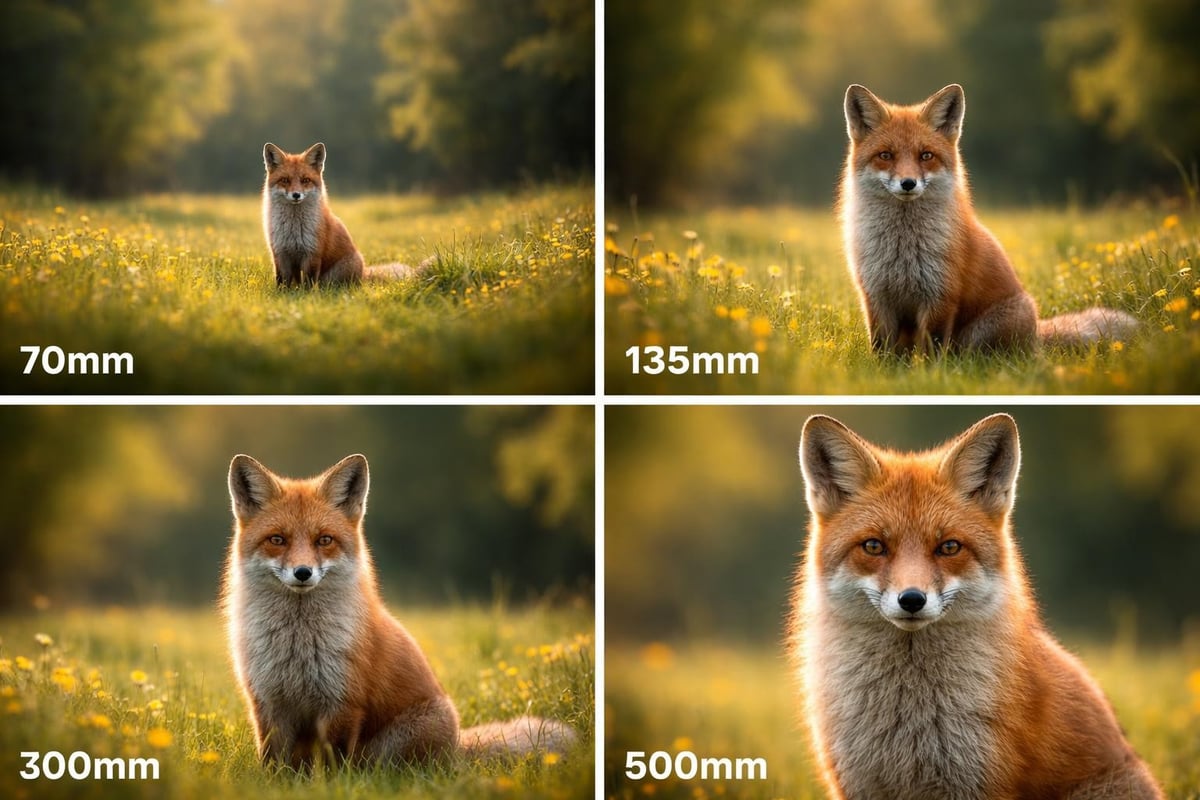
Wildlife and sports photographers need reach. The 70-200mm f/2.8E FL ED VR represents the gold standard in this category. This lens produces razor-sharp images even at 200mm, with autofocus that locks onto moving subjects instantly.
For even more reach, the 200-500mm f/5.6E VR delivers remarkable value. While not as fast as f/2.8 telephotos costing three times as much, this lens resolves incredible detail on the D850 sensor. I’ve captured stunning bird photography with this combination, and the results rival much more expensive setups.
The D850’s 1.2x and 1.5x crop modes extend your effective focal length while maintaining excellent image quality. A 200mm lens becomes 240mm or 300mm respectively, though you sacrifice some megapixels.
Specialty lenses worth considering
Beyond standard focal lengths, certain specialty lenses unlock creative possibilities unique to the D850’s capabilities.
Macro photography at high resolution
The D850 excels at macro work thanks to its high megapixel count and excellent live view implementation. The Nikon 105mm f/2.8G VR Micro remains the top choice for serious macro shooters. This lens achieves 1:1 magnification with exceptional sharpness and effective vibration reduction for handheld shooting.
The 60mm f/2.8G Micro offers a more compact alternative with slightly less working distance. For those interested in exploring current macro options across different systems, this comprehensive guide to the best macro lenses provides valuable perspectives on features and performance.
Ultra-wide options for landscapes
Landscape photographers often want wider than 24mm. The 14-24mm f/2.8G captures expansive scenes with minimal distortion. This lens cannot accept standard filters due to its bulbous front element, but third-party filter holders solve this limitation.
The newer 14-30mm f/4S (Z-mount) works brilliantly on the D850 through the FTZ adapter if you want a more compact option with front filter threads. The slight aperture trade-off rarely matters for landscape work where you typically shoot at f/8 or f/11 anyway.
Building your lens collection strategically
Nobody buys every lens at once. Smart photographers build their kits gradually, prioritizing lenses that match their actual shooting needs.
Recommended purchase order for most photographers:
- Start with a versatile zoom like the 24-70mm f/2.8 or 24-120mm f/4
- Add a fast prime in your preferred focal length (35mm, 50mm, or 85mm)
- Expand range with either wide angle or telephoto depending on your subjects
- Acquire specialty glass (macro, ultra-wide, super-telephoto) as specific needs arise
Nikon publishes official recommendations for D850 lenses covering 40 different options across various categories. This extensive list, also covered by Camera Jabber’s discussion of recommended lenses, demonstrates the incredible versatility of the F-mount system.
Budget considerations and value picks
Professional-grade glass commands premium prices, but excellent alternatives exist for photographers working with tighter budgets.
Best value lenses under $500
The 50mm f/1.8G delivers professional image quality for around $200. This lens should be in every D850 kit regardless of budget. Similarly, the 35mm f/1.8G ED offers remarkable performance at approximately $500.
For zoom options, the 24-120mm f/4G VR provides tremendous versatility as a walk-around lens. While not quite matching the 24-70mm f/2.8 in sharpness, it covers a broader range and costs significantly less.
Certain situations justify spending more on top-tier lenses. Professional portraiture benefits from the Nikon 85mm f/1.4G’s superior bokeh quality compared to the f/1.8 version. Wedding photographers need the reliability and low-light performance of f/2.8 zooms.
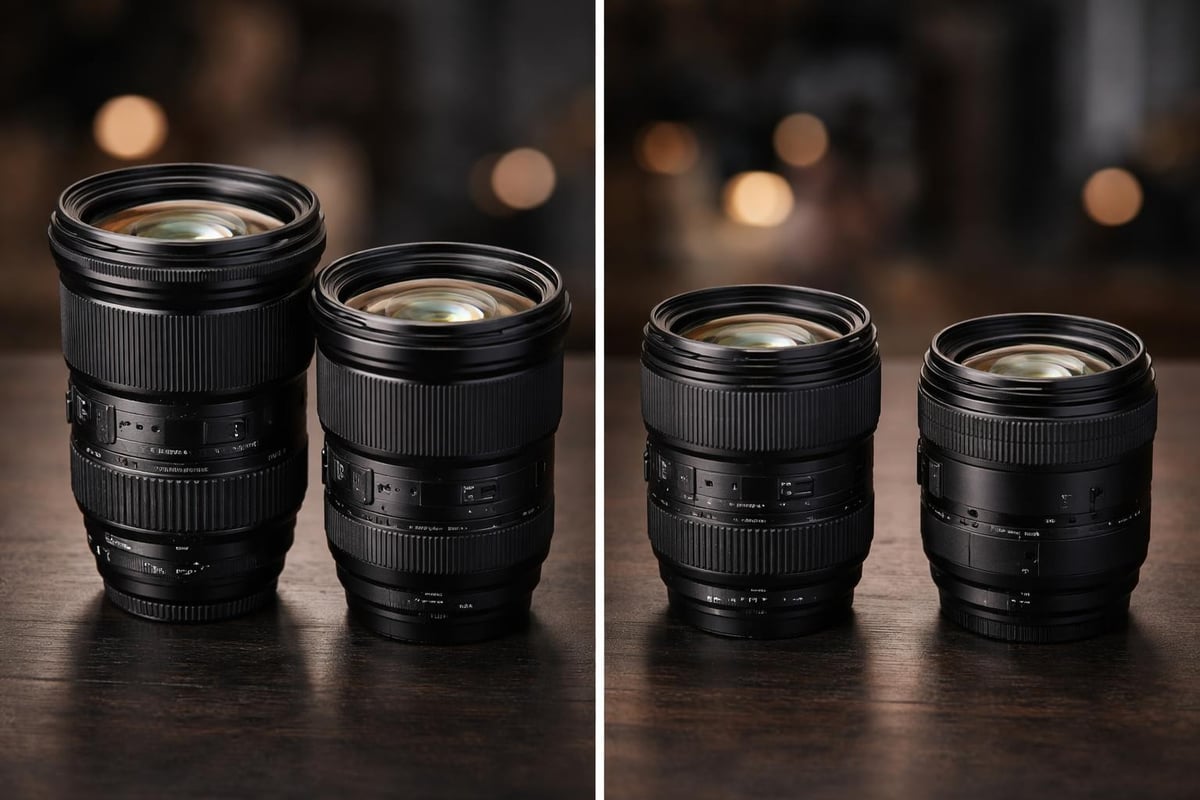
Sports and wildlife shooters require fast, accurate autofocus that budget telephotos cannot match. The difference between capturing the decisive moment and missing it often comes down to lens performance.
Adapting to changing technology
The photography industry continues evolving toward mirrorless systems. Nikon’s Z-mount cameras offer advantages in size, weight, and optical design possibilities. However, the D850 remains incredibly relevant in 2026.
F-mount lenses work perfectly on Z cameras through the FTZ adapter with minimal performance compromise. This protects your investment as you potentially transition between systems. Conversely, newer Z-mount lenses can be used on your D850, though you sacrifice some of the size and weight advantages.
When selecting the best lens for Nikon D850 today, consider your long-term plans. If you might move to mirrorless within a few years, newer Z-mount glass could make sense even for current D850 use. If you plan to shoot the D850 for many years, native F-mount lenses often provide better value.
Real world performance insights
After shooting extensively with the D850 since its release, certain lens combinations consistently deliver outstanding results. For landscape work, the 14-24mm f/2.8 or 16-35mm f/4 VR paired with the D850’s dynamic range creates files with incredible detail and tonal range.
Portrait photographers find magic in the combination of 85mm f/1.4 glass and the D850’s accurate skin tones. The resolution allows cropping freedom while maintaining excellent quality. Wedding shooters appreciate having both the 24-70mm f/2.8 and 70-200mm f/2.8 mounted on dual bodies for complete coverage without lens changes.
For travel photography, where you can’t carry multiple lenses, the 24-120mm f/4 VR represents the best compromise between range, quality, and weight. While not perfect at any focal length, it performs well across the entire zoom range. Those seeking even more compact travel options might explore how pancake lenses offer portability in mirrorless systems, though F-mount options remain limited.
Understanding optical performance metrics
Sharpness represents just one aspect of lens quality. The best lens for Nikon D850 balances multiple factors including contrast, color rendition, and aberration control.
Critical optical characteristics:
- Chromatic aberration: Color fringing at high-contrast edges
- Vignetting: Light falloff toward frame corners
- Distortion: Barrel or pincushion warping of straight lines
- Coma: Star-like distortion of point light sources
- Flare resistance: Performance when shooting toward light sources
Modern Nikon lenses control these issues remarkably well, but differences exist between budget and premium options. The D850’s sensor reveals these differences more clearly than lower-resolution bodies.
Testing lenses at various apertures shows how performance changes. Most lenses achieve peak sharpness around f/5.6 to f/8, with some degradation wide open and at small apertures due to diffraction. Understanding these characteristics helps you select appropriate settings for each situation.
Selecting the best lens for Nikon D850 ultimately depends on matching optical quality to your photographic priorities while balancing budget constraints. The D850’s exceptional sensor rewards investment in quality glass across whatever focal lengths your work demands most.
For more guidance on camera gear and comprehensive reviews that help you make informed decisions about lenses and accessories, Lens and Shutter provides expert analysis from photographers who actually use this equipment in real-world conditions. Our detailed reviews cut through marketing language to help you build the perfect kit for your creative vision.