


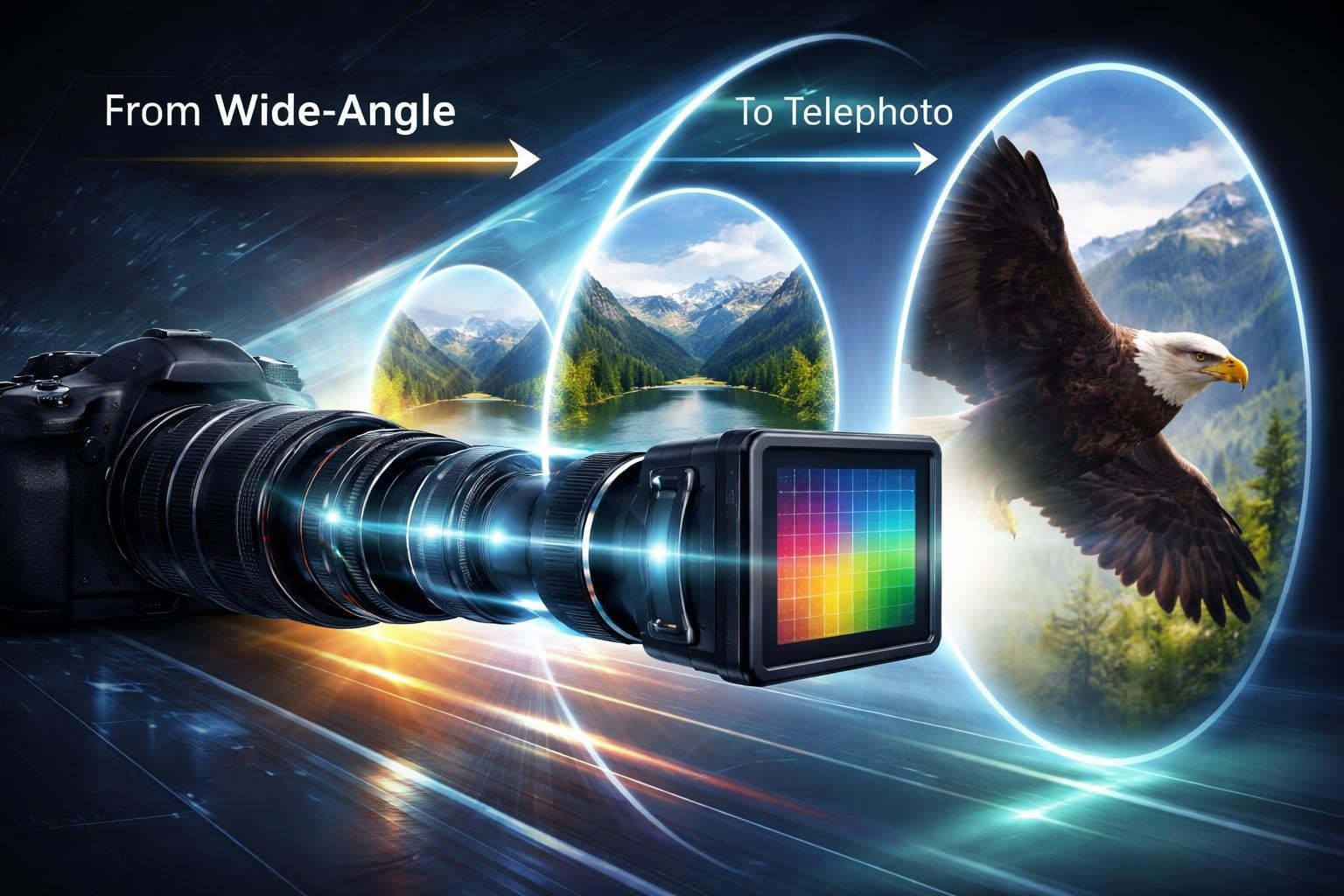
Finding the right camera with exceptional zoom capabilities has become more complex in 2026 than ever before. The market offers everything from pocket-sized superzooms to bridge cameras that rival professional telephoto lenses in reach. When photographers talk about digital cameras with good zoom, they’re usually looking for versatility without the expense and bulk of interchangeable lens systems. The technology has advanced dramatically, and understanding what separates excellent zoom performance from merely adequate specifications will save you both money and frustration.
Contents
- Understanding zoom specifications and what they actually mean
- Bridge cameras deliver the most zoom for your money
- Compact superzoom cameras prioritize portability
- Mirrorless and DSLR cameras with telephoto zoom lenses
- Image stabilization technology makes or breaks handheld telephoto shooting
- Autofocus performance separates good zoom cameras from great ones
- Evaluating zoom cameras in 2026
- Real-world features that matter more than specs suggest
- The smartphone factor you can’t ignore
- Practical tips for getting the most from your zoom camera
- Why certain cameras dominate specific niches
- Alternatives worth considering beyond traditional cameras
- Making your final decision
- Final perspective on zoom capability and photography
Understanding zoom specifications and what they actually mean
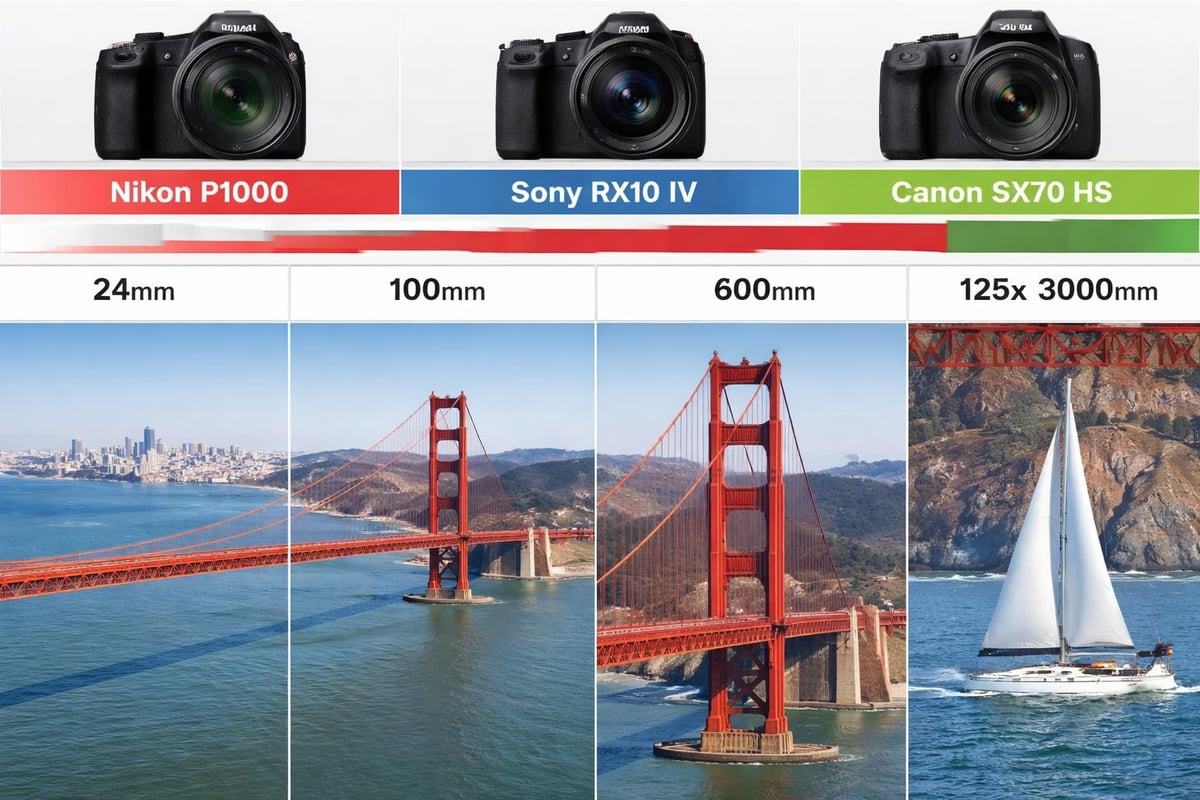
Optical zoom remains the gold standard for image quality. When manufacturers advertise 50x, 80x, or even 125x zoom, they’re describing the ratio between the widest and longest focal lengths the lens can achieve. A camera that goes from 24mm to 1200mm offers 50x optical zoom, while one reaching from 24mm to 3000mm delivers 125x.
Digital zoom is essentially cropping. The camera takes the center portion of the image and enlarges it, which degrades quality noticeably. I always recommend turning digital zoom off in your camera settings. You can crop images later on your computer with far better control over the final result.
The relationship between zoom range and image quality matters more than most people realize. Designing a lens that maintains sharpness, minimal distortion, and good light transmission across a massive zoom range presents serious engineering challenges. Companies make compromises, and understanding these tradeoffs helps you choose wisely.
Sensor size impacts everything
Larger sensors generally produce better image quality, but they require larger, heavier lenses to cover the same zoom range. This explains why compact cameras with 1/2.3-inch sensors can pack incredible zoom ranges into small bodies, while full-frame cameras need separate telephoto lenses that cost thousands and weigh several pounds.
The physics don’t lie. A one-inch sensor offers significantly better low-light performance and dynamic range compared to smaller sensors, but you’ll sacrifice some zoom range or camera portability. Budget-friendly options typically use smaller sensors to keep costs down and zoom ranges up.
Bridge cameras deliver the most zoom for your money
Bridge cameras represent the sweet spot for photographers who want maximum zoom without the complexity of interchangeable lenses. These cameras feature fixed lenses with extraordinary reach, DSLR-style bodies with comfortable grips, and enough manual controls to satisfy enthusiasts.
The Nikon Coolpix P1000 stands as the current champion of zoom range, offering a staggering 24-3000mm equivalent focal length. That’s 125x optical zoom, enough to photograph details on the moon. However, this extreme capability comes with compromises in low-light performance and overall image quality compared to cameras with more modest zoom ranges.
Practical zoom ranges for different photography styles
Wildlife photographers typically need at least 400mm equivalent focal length, preferably 600mm or longer. Birds, in particular, require serious reach since you can’t get close without disturbing your subjects. Sports photography from the sidelines demands similar ranges.
Travel photographers benefit from versatile zoom ranges starting around 24-28mm for landscapes and architecture, extending to 300-600mm for distant subjects and wildlife encounters. Bridge cameras excel here because you’re not juggling multiple lenses while exploring.
| Photography Type | Recommended Minimum Zoom | Ideal Range | Priority Features |
|---|---|---|---|
| Wildlife | 400mm equivalent | 600-1000mm | Fast autofocus, image stabilization |
| Sports | 300mm equivalent | 400-600mm | Continuous shooting speed, tracking AF |
| Travel | 200mm equivalent | 300-600mm | Compact size, wide starting focal length |
| Astronomy | 1000mm equivalent | 1500mm+ | Manual focus, tripod mount, RAW support |
Current options worth considering include models reviewed in Digital Camera World’s best bridge cameras guide, which highlights cameras that balance extreme zoom with practical handling and image quality. These cameras typically fall between $400 and $1,500, making them accessible for most budgets.
Compact superzoom cameras prioritize portability
If you need serious zoom in a pocket-friendly package, compact superzoom cameras deliver surprising capability. These cameras sacrifice some image quality and manual controls compared to bridge cameras, but you can actually carry them everywhere without thinking twice.
The Canon PowerShot SX740 HS and similar models pack 40x zoom into bodies small enough for a jacket pocket. Image stabilization has improved dramatically in recent years, making handheld shooting possible even at maximum telephoto. I’ve gotten sharp images at 960mm equivalent while standing on a moving boat, something that would have been impossible five years ago.
The compromise zone
Compact superzooms work best in good lighting conditions. Once the sun sets or you’re shooting indoors, the small sensors and variable apertures (typically f/3.3-6.9 at the telephoto end) struggle. Expect increased noise and slower autofocus compared to larger cameras.
Battery life also tends to be limited. Bring spare batteries if you’re planning a full day of shooting. The small size means small battery capacity, and running that zoom motor drains power quickly.
For photographers on tighter budgets, exploring cameras under $700 can reveal excellent options that balance zoom capabilities with overall value and features that matter for real-world shooting scenarios.
Mirrorless and DSLR cameras with telephoto zoom lenses
Interchangeable lens cameras offer the highest image quality and most flexibility, but zoom capability comes at a premium price. A quality 100-400mm or 150-600mm telephoto zoom lens often costs more than an entire bridge camera system.
The advantage lies in performance. Larger sensors, faster autofocus, better low-light capability, and superior build quality justify the investment for serious photographers. You’re also buying into a system that grows with your skills and changing needs.
Choosing between crop and full-frame sensors
Crop sensor cameras (APS-C and Micro Four Thirds) multiply your effective focal length. A 100-400mm lens on an APS-C camera (1.5x crop factor) becomes 150-600mm equivalent. On Micro Four Thirds (2x crop factor), that same lens delivers 200-800mm equivalent reach.
This multiplication factor makes crop sensors attractive for wildlife and sports photography. You get more reach from less expensive, lighter lenses. The tradeoff is reduced low-light performance and shallower depth of field control compared to full-frame sensors.
Full-frame cameras require longer, heavier, more expensive lenses to achieve the same reach. A 200-600mm telephoto zoom for full-frame systems represents a significant investment, though the image quality and professional features justify the cost for working photographers. Articles about super-telephoto lenses highlight the specialized nature and investment required for maximum zoom on full-frame systems.
Image stabilization technology makes or breaks handheld telephoto shooting
Digital cameras with good zoom need effective image stabilization. Camera shake becomes exponentially more visible as focal length increases. The old rule suggests using shutter speeds faster than 1 over your focal length, meaning 1/400 second at 400mm. Without stabilization, you’ll need even faster speeds.
Modern stabilization systems compensate for 5-7 stops of camera shake. This means you can shoot handheld at 1/50 second instead of 1/1600 second at 400mm equivalent, opening up photography possibilities in lower light and reducing the need for tripods.
Optical versus electronic stabilization
Optical stabilization (lens or sensor-based) physically compensates for movement before the image is captured. This provides real-time stabilization visible through the viewfinder and produces the best results for still photography.
Electronic stabilization crops into the image and uses software to smooth out movement. This approach works better for video than stills and reduces your effective resolution slightly. Many cameras combine both methods for maximum effectiveness.
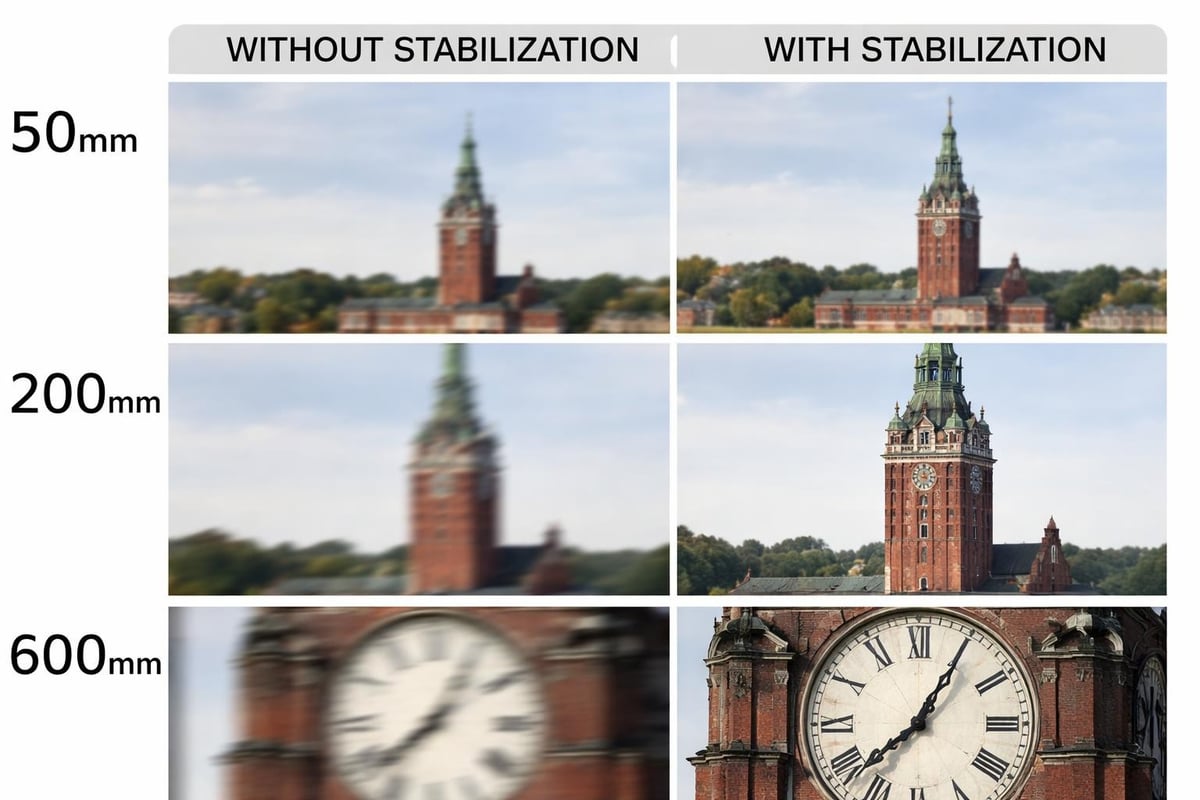
Some cameras advertise stabilization ratings that seem too good to be true. Real-world performance varies based on shooting conditions, technique, and subject matter. I’ve found that actual usable stabilization typically runs about 1-2 stops less than manufacturer claims, so factor that into your expectations.
Autofocus performance separates good zoom cameras from great ones
Having tremendous zoom means nothing if your camera can’t focus accurately and quickly. The best digital cameras with good zoom pair their optical reach with advanced autofocus systems featuring hundreds of focus points, subject tracking, and eye detection.
Contrast-detect autofocus works well in good light but slows down as light levels drop or when shooting at maximum telephoto. Phase-detect autofocus, particularly hybrid systems combining both technologies, delivers faster, more reliable focusing across varied conditions.
Continuous autofocus and subject tracking
Wildlife and sports photographers need cameras that lock onto subjects and maintain focus as they move. Modern subject tracking algorithms use artificial intelligence to recognize and follow animals, vehicles, and people through the frame.
Budget cameras typically offer basic center-point focusing with limited tracking. Mid-range and professional models provide sophisticated tracking that dramatically improves your keeper rate when photographing action. The difference in results justifies the price difference for photographers who regularly shoot moving subjects.
Bird photography especially benefits from advanced autofocus. Small, fast-moving subjects against complex backgrounds challenge even the best systems. Cameras with dedicated bird detection modes appeared in 2024-2025 and have revolutionized this genre.
Evaluating zoom cameras in 2026
The market has consolidated around several key price points and feature sets. Understanding where cameras position themselves helps narrow your choices quickly.
Entry-level compact superzooms ($200-$400)
- 30-50x optical zoom
- Small sensors (1/2.3 inch)
- Basic autofocus
- Limited manual controls
- Good for casual use and learning
Mid-range bridge cameras ($400-$800)
- 40-80x optical zoom
- Larger sensors (1/2.3 to 1-inch)
- Advanced autofocus with tracking
- Extensive manual controls
- Electronic viewfinders
- Best value for enthusiasts
Premium bridge and superzoom compacts ($800-$1,500)
- 25-125x optical zoom
- One-inch or larger sensors
- Professional-grade autofocus
- Weather sealing on some models
- High-speed shooting
- Serious alternative to interchangeable lens systems
Interchangeable lens systems with telephoto zooms ($1,500+)
- Maximum image quality
- Professional autofocus and tracking
- Best low-light performance
- Most expensive but most capable
- Growing ecosystem of lenses and accessories
Reviews from established publications like our best zoom cameras provide hands-on testing results that reveal real-world performance beyond manufacturer specifications.
Real-world features that matter more than specs suggest
Marketing focuses on headline numbers like maximum zoom and megapixels. Practical photography depends on features that don’t make compelling advertisements but significantly impact your experience and results.
Viewfinder quality and type
Electronic viewfinders (EVFs) on better zoom cameras show exposure preview and focus confirmation in real-time. Resolution matters here. A 2.36 million dot EVF provides a clear, detailed view, while 920k dot viewfinders look pixelated and make precise focusing difficult.
Some compact superzooms omit viewfinders entirely, relying solely on rear LCD screens. This saves cost and size but makes shooting in bright sunlight challenging. I always prefer cameras with viewfinders, even if I have to accept a slightly larger body.
Lens quality and coatings
Not all zoom lenses perform equally. Premium optics include specialized glass elements, aspherical elements to reduce distortion, and advanced coatings to minimize flare and ghosting. Cheaper lenses show more chromatic aberration, softness at the edges, and reduced contrast.
Reading detailed reviews that include sample images at various focal lengths reveals these differences. Pay attention to corner sharpness, purple fringing around high-contrast edges, and overall image clarity.
Buffer depth and shooting speed
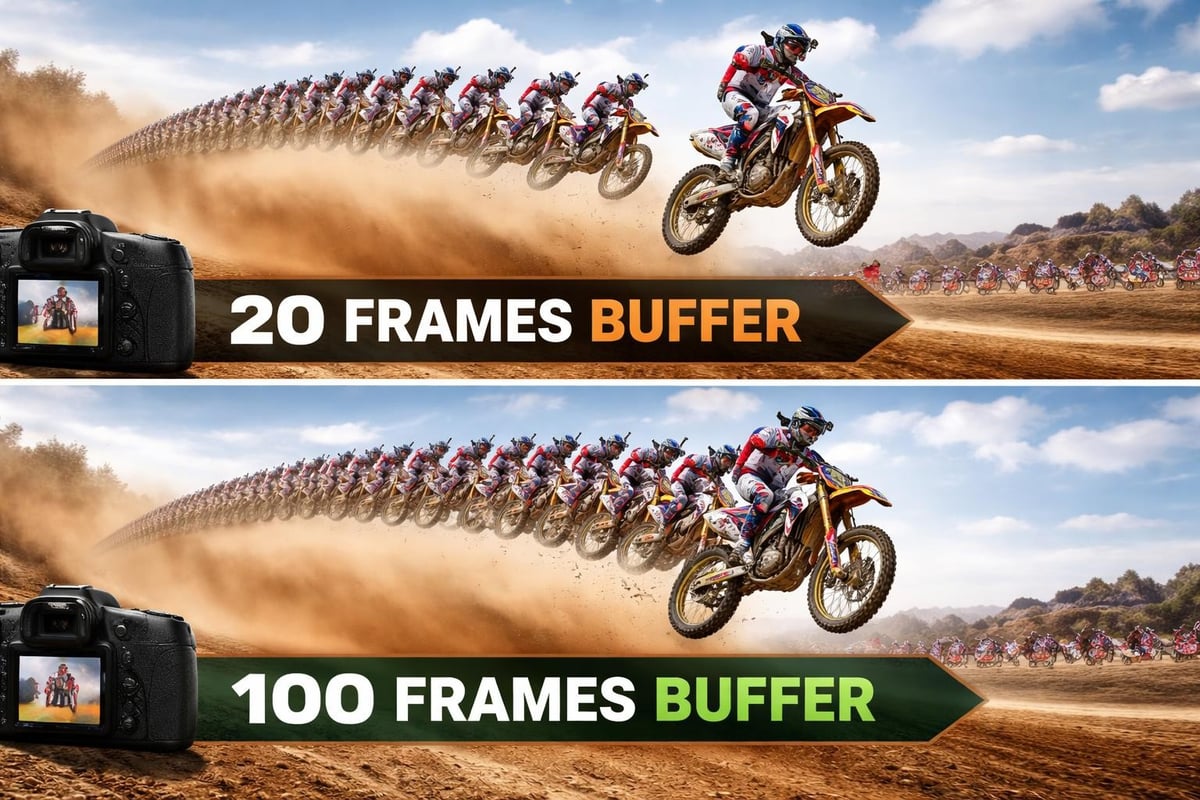
Continuous shooting speed matters less than buffer depth for most photographers. A camera might shoot 10 frames per second, but if it can only capture 15 shots before slowing down, you’ll miss critical moments while it writes files to the memory card.
Better cameras buffer 50-100 RAW images or several hundred JPEGs, letting you shoot through entire action sequences without interruption. This capability becomes crucial for sports, wildlife, and any situation where moments happen quickly.
| Feature | Entry-Level Impact | Professional Impact | Priority Ranking |
|---|---|---|---|
| Viewfinder quality | Medium | High | Essential for serious shooting |
| Buffer depth | Low | Critical | Matters for action photography |
| Lens coatings | Low | High | Affects overall image quality |
| Weather sealing | Low | High | Critical for outdoor reliability |
| Manual focus ring | Low | Medium | Important for video and precise work |
The smartphone factor you can’t ignore
Smartphone cameras continue improving, and some flagship phones now include periscope telephoto lenses reaching 5x or even 10x optical zoom. Computational photography adds simulated zoom that produces surprisingly good results up to 30x or 50x.
For casual photography and social media sharing, smartphones handle many situations that previously required dedicated cameras. The Vivo V70’s telephoto capabilities demonstrate how phone cameras are pushing into territory once dominated by compact cameras.
However, dedicated cameras still dominate for serious telephoto work. Larger sensors, real optical zoom beyond 10x, better ergonomics, and superior image quality justify carrying separate devices for photography-focused trips and projects.
When smartphones make sense versus dedicated zoom cameras
Smartphones excel at convenience, connectivity, and computational features like night mode and portrait effects. They’re always with you and make sharing images instantaneous. For everyday moments and moderate zoom needs, they’re hard to beat.
Dedicated zoom cameras shine when you need maximum reach, shooting in challenging conditions, extended battery life, or the best possible image quality. The physical controls, comfortable grip, and viewfinder make them vastly superior for serious photography sessions.
I carry both and choose based on the situation. Casual day around town? Phone. Dedicated wildlife outing or travel photography? Zoom camera every time.
Practical tips for getting the most from your zoom camera
Buying the right camera is half the battle. Technique and understanding how to maximize your equipment’s capabilities determines your actual results.
Proper handholding technique at telephoto focal lengths
Tuck your elbows against your body. Hold the camera with both hands, right hand on the grip and left supporting the lens barrel. Press the camera against your face when using the viewfinder. This three-point contact stabilizes the system significantly.
Breathe out gently and squeeze the shutter between heartbeats. Jabbing the shutter button introduces shake that ruins otherwise sharp images. Many cameras offer touch shutter or self-timer options that eliminate this variable entirely.
A monopod provides tremendous stability while maintaining mobility. Full tripods work better for static subjects but slow you down when conditions change quickly or you need to reposition frequently.
Understanding focal length compression and perspective
Telephoto focal lengths compress perspective, making distant objects appear closer together. This effect creates dramatic images of mountains, cityscapes, and wildlife but can also make scenes look flatter and less three-dimensional than they appear to your eye.
Wide-angle focal lengths exaggerate distance and create a sense of depth. The ability to zoom from wide to telephoto lets you control these perspective effects creatively. Shoot the same scene at different focal lengths and you’ll be surprised how different the images feel.
Learning to previsualize how different focal lengths render scenes comes with experience. Digital cameras let you experiment freely, so try various focal lengths and study the results. This develops your eye faster than any book or tutorial.
Exposure considerations for telephoto shooting
Longer focal lengths magnify camera shake but also reduce the amount of light reaching the sensor, especially with variable aperture zooms. At maximum telephoto, you might be working with f/6.3 or f/6.9, requiring higher ISO settings or slower shutter speeds.
Watch your shutter speed as you zoom. What worked at 50mm will produce blurry images at 400mm. Enable auto ISO to maintain adequate shutter speeds, or manually increase ISO as you zoom in. Image quality suffers less from moderate ISO increases than from blur caused by camera shake.
Why certain cameras dominate specific niches
The camera market has matured to the point where specific models own particular use cases. Understanding these niches helps you choose the right tool for your primary needs.
Bird photographers overwhelmingly favor cameras with extreme reach and fast autofocus. The Nikon P1000 appears at birding hotspots worldwide despite its limitations because that 3000mm equivalent focal length opens up opportunities impossible with other systems at comparable prices.
Travel photographers often prefer compact superzooms that balance capability with portability. Lugging a bridge camera through airports and cities all day gets tiresome. Compact models from Canon, Sony, and others provide enough zoom for most situations while fitting in a small bag.
Sports photographers shooting from fixed positions typically choose interchangeable lens systems with professional telephoto zooms. The image quality, autofocus performance, and durability justify the investment when photography is your business or serious passion.
The rise of all-in-one solutions
Bridge cameras represent the ultimate compromise, and for many photographers, that’s exactly what they need. One camera, one lens, massive zoom range, and enough image quality for most purposes. You sacrifice the ultimate performance of interchangeable lens systems but gain simplicity and value.
The best bridge cameras cost less than a single professional telephoto lens while covering wider zoom ranges. For photographers who want to travel light, avoid lens changes in dusty or wet conditions, or simply prefer the simplicity of an all-in-one solution, bridge cameras make tremendous sense.
Alternatives worth considering beyond traditional cameras
Innovation continues in unexpected directions. Some manufacturers experiment with modular designs, while others push boundaries with specialized features.
Action cameras and drones now include zoom lenses. While the zoom ranges remain modest compared to dedicated cameras, they open up creative possibilities for unique perspectives and situations where traditional cameras can’t go.
Long-range photography attachments for smartphones essentially turn your phone into a spotting scope. These adapters magnify the phone’s camera view, creating a hybrid system that splits the difference between phone convenience and dedicated camera capability.
Digiscoping, which involves attaching cameras to spotting scopes or telescopes, provides extreme magnification for specialized applications like bird photography and astronomy. The setup complexity and cost limit this approach to dedicated enthusiasts, but the results can be spectacular.
Making your final decision
Choosing among digital cameras with good zoom starts with honest assessment of your needs, budget, and shooting style. Don’t buy more camera than you’ll actually use, but avoid severely limiting yourself with inadequate capabilities.
Consider these questions:
- What subjects will you photograph most often?
- How important is portability versus image quality?
- Do you need weather sealing for outdoor shooting?
- Will you shoot primarily in good light or varied conditions?
- Is video capability important for your purposes?
- What’s your realistic budget including accessories?
Reading reviews helps, but handling cameras in person reveals ergonomic differences that dramatically affect your shooting experience. Visit camera stores, attend photography shows, or rent equipment before committing to expensive purchases.
The best camera is the one you’ll actually carry and use. A lighter, more portable camera you bring everywhere produces more photographs than a technically superior model that stays home because it’s too bulky or complicated.
Don’t forget the accessories
Memory cards, spare batteries, camera bags, lens cleaning supplies, and potentially tripods or monopods add to your total investment. Budget for these necessities from the start. Running out of battery or storage during critical shooting moments is frustrating and entirely preventable.
Quality camera bags protect your investment and make carrying equipment comfortable. Cheap bags fall apart quickly and lack proper padding. A good bag lasts years and adapts to different gear configurations as your system evolves.
Final perspective on zoom capability and photography
The technology behind digital cameras with good zoom continues advancing rapidly. What seemed impossible a decade ago, like 125x optical zoom in a handheld camera, is now readily available and relatively affordable. Image stabilization, autofocus, and low-light performance improve with each generation.
However, gear represents only part of the equation. Understanding composition, light, timing, and storytelling matters far more than owning the latest camera with the longest zoom. I’ve seen stunning photographs made with basic compact cameras and mediocre images from professional equipment.
Master your current camera before upgrading. Learn its limitations and capabilities thoroughly. This knowledge guides better upgrade decisions and helps you maximize whatever equipment you choose. The photographer makes the photograph, not the camera.
Zoom capability expands creative possibilities by bringing distant subjects within reach and letting you control perspective through focal length choices. Whether you choose a compact superzoom, bridge camera, or interchangeable lens system depends on your specific needs, but all modern options deliver remarkable performance that previous generations of photographers would have envied.
The research and testing performed by resources like Adorama’s ultrazoom camera reviews provides valuable real-world insights into how cameras perform beyond manufacturer specifications. Combining multiple expert opinions with hands-on testing helps cut through marketing hype to find cameras that truly deliver.
Finding the right zoom camera requires balancing technical capabilities with practical considerations like size, weight, and budget. The options available in 2026 span from pocket-friendly compacts to professional systems that can photograph details on distant subjects with stunning clarity. Whatever your photography goals and experience level, Lens and Shutter provides the comprehensive reviews and expert guidance you need to make informed decisions about cameras, lenses, and accessories that match your specific needs and shooting style.