




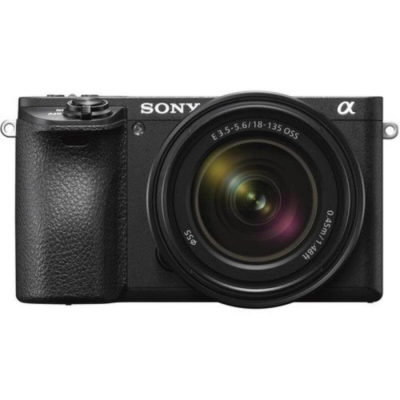
This Sony a6500 review is really a used-camera question in 2026. The Sony Alpha a6500, or Sony α6500 in Sony’s own styling, was once the premium APS-C body in the a6000 family. Today, it sits in a more awkward but still interesting place: older than the a6400 in autofocus behavior, older than the a6600 in battery life, but still attractive if you want in-body stabilization in a small Sony body.
My short verdict: the Sony a6500 is still worth considering used if the price is right and you specifically want IBIS in a compact APS-C camera. I would not overpay for it. If autofocus value matters more, read our Sony a6400 review or the direct Sony a6400 vs a6500 comparison. If battery life and grip comfort matter more, read our Sony a6600 review. For the full family context, start with our Sony A6000 series guide.

Contents
- Sony a6500 review verdict: who should buy it?
- Why the Sony a6500 still has a case
- Image quality in real photography
- Autofocus and burst shooting
- Video strengths and limits
- Handling, battery life, and daily use
- Sony a6500 vs a6400
- Sony a6500 vs a6600
- Where the a6500 fits in the Sony A6000 series
- Best lenses for the Sony a6500
- Pros and cons
- Final verdict
- Frequently asked questions
Sony a6500 review verdict: who should buy it?
The Sony a6500 makes the most sense for photographers who want a small Sony APS-C body with in-body image stabilization and do not need the newest autofocus system. It is not the obvious default pick anymore, but it can be a clever used buy when the price lands below a clean a6600 and close to an a6400.
I would buy the Sony a6500 if:
- You want IBIS for unstabilized primes, adapted lenses, or handheld video.
- You mostly shoot stills, travel, family, street, portraits, or casual video.
- You find a clean used or renewed body at a strong price.
- You like the compact a6000-style body and do not want a larger kit.
I would skip it if:
- The price is too close to a Sony a6600.
- You care more about autofocus tracking than stabilization.
- You shoot long video sessions and want better battery life.
- You want the most modern Sony APS-C body, in which case the Sony a6700 is the better target.
Why the Sony a6500 still has a case
The a6500 was important because it brought 5-axis in-body stabilization to Sony’s APS-C line. That was a big deal then, and it is still the feature that keeps the camera relevant now. Stabilization helps with slower shutter speeds, unstabilized lenses, adapted manual lenses, and handheld video.
The 24MP APS-C sensor is still capable. In good light, it delivers sharp files with enough resolution for travel, portraits, web work, and moderate prints. The camera also shoots 4K video, has a built-in viewfinder, and offers fast burst shooting. On paper, that is still a lot of camera.
The catch is that Sony has moved on. The a6400 has better autofocus behavior for many subjects. The a6600 has the larger Z battery and a better grip. The a6700 is a much more modern hybrid camera. So the a6500 is no longer about being the best. It is about being the right used deal.
Image quality in real photography
The Sony a6500 image quality remains strong for an older APS-C camera. The 24MP sensor has plenty of detail, especially with good E-mount lenses. RAW files are flexible enough for normal editing, and JPEGs are usable if you prefer a faster workflow.
In daylight and good indoor light, I have no concern about the files. The camera can still produce clean travel photos, portraits, street images, and family shots. Dynamic range is good enough to recover shadows in typical scenes, though newer bodies handle color and noise a little better.
Low light is where expectations matter. ISO 1600 is comfortable, ISO 3200 is usable, and ISO 6400 can work when the moment matters more than clean pixels. The real advantage over an a6400 is not sensor quality; it is IBIS. With a non-moving subject and a steady hand, stabilization can let you use a slower shutter speed and keep ISO lower.
Autofocus and burst shooting
The a6500 autofocus is good, but it is not modern Sony good. It has 425 phase-detect points and can track action well enough for many real-world situations, but it does not have the smarter real-time tracking behavior that makes newer Sony bodies feel so easy.
For portraits, travel, casual sports, and family use, the camera is still responsive. For fast pets, erratic children, birds, and unpredictable action, the a6400, a6600, and a6700 are easier to trust. This is one reason I would not buy the a6500 just because it has IBIS. Stabilization helps camera shake; it does not replace better subject tracking.
The 11 fps burst rate is still useful. The buffer was one of the a6500’s upgrades over the a6300, and it remains helpful for short action sequences. Just remember that the keeper rate depends more on focus behavior than frame rate alone.
Video strengths and limits
The Sony a6500 can still shoot attractive 4K footage, and the in-body stabilization is useful for handheld clips. If you want a cheap Sony APS-C body for simple video, it is not a bad option.
But I would not call it a modern creator camera. Battery life is modest, there is no fully articulating screen, heat can become a concern in longer sessions, and the autofocus is not as confident as newer bodies. There is also no headphone jack, which matters if you record serious audio.
For occasional clips, travel video, and casual hybrid use, the a6500 is fine. For YouTube, paid video, interviews, or long-form hybrid work, I would look at the a6400, a6600, a6700, or a video-first Sony body instead.
Handling, battery life, and daily use
The a6500 body is compact and solid, with a deeper grip than the a6300 and a useful touchscreen for focus placement. It is still a very portable camera, especially with small APS-C primes. That is the charm of this system: you can carry real image quality without full-frame bulk.
The handling also shows its age. The menus are older Sony, the touchscreen is limited, and the small body can feel cramped with larger lenses. Battery life is the biggest day-to-day irritation. The older NP-FW50 battery means you should carry spares, especially if shooting 4K video or traveling all day.
This is where the a6600 feels like a much more mature camera. If you value comfort and battery life, the a6600 is the better used pick when prices are close.
Sony a6500 vs a6400
The Sony a6500 vs a6400 choice comes down to stabilization versus newer autofocus. The a6500 has IBIS. The a6400 has better real-time autofocus behavior, a more modern feel, and is often easier to recommend for moving subjects.
If you use unstabilized primes or adapted lenses, the a6500 has a real advantage. If you photograph people, pets, street action, travel moments, or family life, the a6400’s autofocus can matter more than IBIS. For most buyers, I would choose based on price and shooting style, not on which spec sounds more impressive.
Sony a6500 vs a6600
The Sony a6600 is the cleaner upgrade from the a6500. You still get IBIS, but you also get the larger Z battery, a better grip, and a more comfortable all-day shooting experience.
If the a6500 is much cheaper, it can still be a smart used buy. If the prices are close, I would choose the a6600. Battery life is not glamorous, but it changes how much you enjoy using a camera.
Where the a6500 fits in the Sony A6000 series
In the broader Sony APS-C lineup, the a6500 is the older used IBIS pick. It is not the cheapest model, not the best value for autofocus, and not the best current hybrid body. Its role is narrower: a compact stabilized body for photographers who understand its limits.
- Sony a6000: cheapest stills-focused entry.
- Sony a6100: better beginner autofocus and 4K.
- Sony a6400: stronger value for autofocus and stills.
- Sony a6500: older IBIS body, best only at the right used price.
- Sony a6600: IBIS plus better battery and grip.
- Sony a6700: best current Sony APS-C hybrid.
That is why the a6500 should be cross-shopped carefully rather than bought on name alone.
Best lenses for the Sony a6500
The a6500 works best with lenses that keep the system compact. Its IBIS makes unstabilized primes more appealing, but you still want glass that matches the small body.
Good pairings include:
- Sigma 30mm f/1.4 DC DN: excellent everyday prime for portraits, low light, and travel.
- Sony 35mm f/1.8 OSS: stabilized, compact, and easy to use as a walkaround lens.
- Sigma 56mm f/1.4 DC DN: sharp portrait option with strong background blur.
- Sony 18-135mm OSS: practical travel zoom for one-lens days.
- Sony 70-350mm G: useful for wildlife and sports if you accept a larger lens.
For more lens detail, the existing Sony a6500 lens guide is the natural next read.
Pros and cons
- Pros: in-body stabilization, good 24MP stills, compact body, 4K video, useful burst shooting, strong E-mount lens access.
- Cons: older autofocus tracking, weak battery life, dated menus, limited touchscreen, no headphone jack, no longer the obvious value pick.
Final verdict
The Sony a6500 is still a good camera, but it is no longer an easy blind recommendation. Its strongest reason to exist in 2026 is simple: affordable used IBIS in a compact Sony APS-C body.
If you find one at the right price, it can be a capable travel, portrait, family, and casual video camera. If the price is close to an a6600, buy the a6600. If you care more about autofocus than stabilization, look at the a6400. If you want the best current Sony APS-C body, the a6700 is the better camera.
Frequently asked questions
Is the Sony a6500 still worth buying in 2026?
Yes, but mainly as a used buy. It is worth considering if you want IBIS in a small Sony APS-C body and the price is clearly below newer alternatives.
Is the Sony a6500 better than the a6400?
The a6500 has IBIS, but the a6400 has newer autofocus behavior and is often the better value for stills and moving subjects. The better choice depends on price and what you shoot.
Is the Sony a6500 better than the a6600?
No. The a6600 is the better camera overall because it keeps IBIS and adds a much better battery and grip. The a6500 only wins if it is much cheaper.
Does the Sony a6500 have in-body stabilization?
Yes. The Sony a6500 has 5-axis in-body image stabilization, which is its most important advantage over the a6400.
Does the Sony a6500 shoot 4K video?
Yes. The Sony a6500 shoots 4K video, but its battery life, heat behavior, and screen design make it less appealing than newer Sony bodies for serious creator work.
Last update on 2026-06-15 / Affiliate links / Images from Amazon Product Advertising API


