



Contents
- Who the Sony ZV-1F is really for
- Design, handling, and everyday usability
- Lens and image quality in real shooting
- Video performance for vlogging and social content
- Autofocus, face tracking, and creator features
- Built-in audio, ports, and workflow options
- Battery life, storage, and reliability on the go
- Sony ZV-1F vs its closest alternatives
- Pros, cons, and final verdict
- Frequently asked questions
Who the Sony ZV-1F is really for
Why beginners may enjoy its simple approach
If you are just starting with vlogging or content creation, the Sony ZV-1F is designed to make your life easier. Many cameras aimed at creators can feel intimidating, with deep menus and advanced controls that overwhelm new users. The ZV-1F, on the other hand, takes a streamlined approach. Its interface and button layout are friendly for those who have never used a dedicated camera before. You can power it on, hit record, and start talking to the lens with minimal setup.
That beginner-friendly approach is the ZV-1F’s biggest strength, but it also raises the question of what you might gain by choosing a different compact creator camera. If you want a useful point of comparison before deciding, this Canon PowerShot V1 review looks at another travel-friendly option aimed at simple video shooting.
This simplicity is not just about fewer buttons. The ZV-1F is built around the idea that you should focus on your story or message, not get lost in technical settings. The camera’s automatic exposure and focus modes do a solid job in most conditions, so you rarely have to worry about missed shots or blurry faces. For beginners, especially those coming from smartphones, this is a huge confidence booster. You do not need to know about aperture or ISO to get a decent-looking clip.
Moreover, the ZV-1F’s fixed wide lens (which I’ll discuss in detail below) means you do not have to think about changing lenses or zoom settings. If you want to record yourself at arm’s length, the camera is ready out of the box. In my experience, this “point and shoot” feel is exactly what gets new creators filming more often, which is the most important thing when you are learning.
Where it fits among compact creator cameras
The Sony ZV-1F sits in an interesting spot in the compact camera market. In recent years, many creators have moved to mirrorless systems or simply stuck with their smartphones. However, compact digital cameras are making a comeback in 2026, driven by a desire for better video quality and more control than phones can offer, but without the bulk or complexity of interchangeable lens cameras.
The ZV-1F is clearly aimed at vloggers, travel enthusiasts, and everyday creators who want a dedicated tool for video. It is less about professional filmmaking and more about making your daily recording process quick and reliable. Compared to its sibling, the ZV-1, the ZV-1F removes the zoom lens in favor of a fixed, wider field of view, making it more specialized for self-recording and group shots. It competes well with other compact vlogging cameras from Canon and Panasonic, focusing on ease of use and portability.
If you are a creator who wants to level up from smartphone video, or if you need a backup camera that slips into your bag, the ZV-1F is a practical choice. It will not replace a high-end camera for cinematic work, but it outperforms most phones in sound quality, color handling, and the overall “look” of your footage.
Design, handling, and everyday usability
How the body feels for handheld shooting
The design of the Sony ZV-1F is unapologetically practical. In hand, the camera feels light but not flimsy. The compact body weighs about 256 grams, including the battery and memory card, so it never becomes a burden during a long day of shooting. The grip, while small, is shaped to give you just enough purchase for secure one-handed use. I have used it for extended vlogging sessions, and never felt like it would slip or strain my wrist.
This compactness is key for creators who are always on the move. Whether you are filming on a city street, in a café, or while hiking, the ZV-1F fits into pockets or a small pouch. There is no need to carry a camera bag or worry about heavy gear. For solo shooters, the record button is placed right where your thumb naturally rests, and the lens is positioned to make framing yourself at arm’s length feel natural.
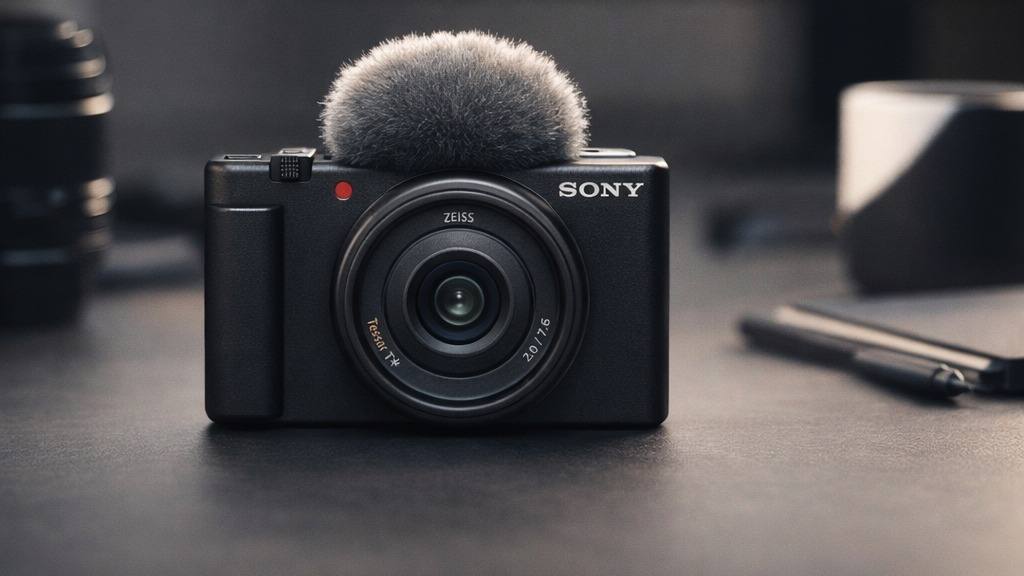
The body is mostly made of plastic, but it does not feel cheap. Buttons are responsive, and the flip-out touchscreen is sturdy enough to rotate without wobbling. The built-in three-capsule microphone sits on top, nicely positioned to pick up your voice even in noisy environments. A small tally light on the front lets you know when you are recording, which is a helpful touch for vloggers.
The ZV-1F’s rear touchscreen is a real highlight for usability. It flips out to the side and rotates forward, so you can easily see yourself while vlogging. The screen is bright and clear, making it usable outdoors in daylight. Touch controls allow you to quickly set focus by tapping on your subject, which is much faster than fiddling with physical buttons.
Menu navigation is straightforward. Sony has stripped back the deep, sometimes confusing menus found on its higher-end cameras. The “Fn” (function) menu gives you quick access to essential settings like background defocus, product showcase mode, or face priority exposure. You do not have to dig through layers of options to change key features.
Physical controls are minimal but well-chosen. The record button is large and easy to find even if you are not looking at the camera. There is a dedicated button for switching between photo and video modes, and a customizable C1 button for toggling the background blur effect. The power button is recessed enough to avoid accidental presses. If you have ever missed a shot because your camera turned on in your bag, you will appreciate this detail.
If you are used to a smartphone, the transition to the ZV-1F’s controls is smooth. There are fewer icons and gestures to learn, and most functions are clearly labeled. For creators who value simplicity, this is a big plus.
Lens and image quality in real shooting
How the fixed wide lens shapes your shots
At the heart of the ZV-1F’s shooting experience is its fixed 20mm-equivalent f/2.0 lens. Unlike zoom lenses or interchangeable systems, this fixed wide lens encourages a particular style of shooting. You get a broad field of view, which is ideal for holding the camera at arm’s length and capturing both your face and the background. It creates a sense of presence and immediacy in travel vlogs or group shots.
The wide angle can take some getting used to if you are accustomed to tighter framing. However, it makes the ZV-1F especially effective for walk-and-talk videos, street interviews, or sharing your environment with your audience. There is no zoom, so you must physically move closer or further from your subject to adjust framing, but this limitation can actually help you focus on your story rather than fiddling with settings.
Lens sharpness is surprisingly good for a compact camera at this price. Edges stay crisp, and distortion is well-controlled. The bright f/2.0 maximum aperture lets you get that sought-after background blur in close-up shots, especially when using the “background defocus” function. This gives your videos a more polished, professional look than most smartphones can achieve.
Photo quality in good light and low light
In daylight or well-lit indoor scenes, the ZV-1F produces vibrant, detailed images. Colors are accurate and natural, with Sony’s reliable color science giving skin tones a pleasant, lifelike appearance. For casual photography, social media snaps, or thumbnails, the photo quality is more than enough.
Low light is where the ZV-1F shows its compact camera roots. The 1-inch sensor is larger than most phones, so you get less noise and better detail retention in dim conditions. However, do not expect miracles. In very dark scenes, you will notice some grain and a drop in sharpness. The bright lens helps, but without optical image stabilization, you need a steady hand or a tripod to avoid blur.
For creators who film mostly during the day or in well-lit rooms, the ZV-1F’s image quality impresses. If you rely on night shooting or want to capture crisp photos in challenging lighting, you may run up against the limits of its sensor. Still, for a compact vlogging camera, it strikes a good balance between portability and performance, making it a smart upgrade from most smartphones.
In summary, the Sony ZV-1F offers a fuss-free shooting experience with image quality that stands out among compact creator cameras. For those who want to focus on content, not camera settings, it is a compelling choice.
4K detail, color, and overall video look
If you are considering the Sony ZV-1F as your main camera for vlogging or social media, video quality is the first thing you will notice. The camera offers 4K recording at up to 30p, and the results are impressive for a sensor of this size. Colors have that familiar Sony pop – skin tones look natural, and the look is generally flattering right out of the camera. This is important because many creators want to skip heavy color grading and get solid clips straight onto their timeline.
Sharpness in 4K mode is quite good, especially in well-lit scenes. The fixed 20mm equivalent lens helps keep everything sharp from arm’s length selfie shots to wider street scenes. There is minimal rolling shutter, so even when you pan quickly, the video does not bend or warp badly. This is an area where the ZV-1F feels above most smartphones, which often struggle with wobbly footage when moving.
Dynamic range is decent for a compact camera. Highlights are rarely blown out unless you are shooting in harsh sunlight, and shadow detail holds up well for casual vlogs. Compared to Sony’s more expensive models, there is a bit less headroom to recover lost highlights, but for Instagram reels, TikTok, and YouTube vlogs, it is more than enough.
When recording indoors or in dim conditions, 4K detail does take a small hit. Noise does appear, though it is not overly distracting unless you push the ISO beyond 1600. For best results, try to stay near a window or add a small LED light. Overall, the Sony ZV-1F video quality is strong for its class, especially if you prefer a “grab and go” workflow with little post-production.
Stabilization and handheld walking footage
One of the biggest practical tests for any vlogging camera is how smooth your handheld footage looks. The Sony ZV-1F stabilization comes in two main flavors: standard electronic stabilization for 4K and an “Active” mode for Full HD. In practice, the standard stabilization works well enough for static shots or slow walking, though you will see some shake if you are moving quickly or filming while walking with the camera in front of you.
If you drop the resolution to 1080p and switch on Active SteadyShot, the camera crops in slightly but does a noticeably better job smoothing out steps. For talking-to-camera while walking, your viewers will see a steady frame rather than distracting shakes. It does not quite match the gimbal-like smoothness of action cameras, but for a pocket-sized device, it is very usable.
I find that pairing the ZV-1F with a small tripod grip or selfie stick helps further reduce shake. If you often shoot solo, you can hold the camera at arm’s length and get a wide enough field of view for two people, even with stabilization active. For creators who want something simple and lightweight, the stabilization is adequate for most travel, walk-and-talk, and urban vlogging scenarios. If your style relies on very dynamic movement, though, you might want to consider a dedicated gimbal or action camera for those specific shots.
Autofocus, face tracking, and creator features
How reliable autofocus feels on camera
For creators who film themselves, reliable autofocus is not just a convenience – it is essential. The Sony ZV-1F autofocus is based on contrast detection rather than phase detection, which is a step down from the flagship ZV-1 and ZV-E10. That said, in typical vlogging situations, the autofocus is fast enough and rarely loses track of a face when you are in good light.
Face tracking is the real hero here. The camera’s eye detection works well for solo filming at arm’s length, and it keeps your face sharp even as you move around the frame. It is not as sticky as Sony’s higher-end models, so with rapid movement or in very low light, you might see occasional focus hunting. However, for most casual vlogs or talking-head content, focus transitions are smooth and confidence-inspiring.
One area where you need to be mindful is with fast-moving scenes or if you quickly bring objects close to the lens. The focus can take a moment to adjust, and sometimes you need to tap the screen to help it along. For stationary sit-down videos or gentle movement, though, the autofocus and Sony ZV-1F face tracking are more than capable.
Product showcase mode and background defocus
Sony has included several thoughtful features for creators, and two of the most useful are Product Showcase Mode and Background Defocus. Product Showcase Mode is perfect if you do product reviews or want to show something up close to the camera. With one button press, the camera will quickly shift focus from your face to any object you hold near the lens, then snap back to your face when you move the object away. This eliminates the usual “hand behind the product” trick and feels much more professional.
Background Defocus is another simple but effective tool. With the touch of a button, the camera widens its aperture to create a softer background behind you. The effect is subtle but helps separate you from busy backgrounds in cafes, parks, or city streets. It is not as pronounced as you would get from a larger sensor and fast lens, but for a compact camera, it adds a nice touch of polish to your vlogs.
These Sony creator features are what make the ZV-1F stand out for beginners and solo shooters. You do not need to dive into menus or fiddle with manual focus – just press a button and keep filming. As someone who often films travel diaries and quick reviews, I appreciate how these features remove technical friction and let me focus on the story.
Built-in audio, ports, and workflow options
Microphone quality for solo creators
Audio is often overlooked, but it makes or breaks a vlog. The Sony ZV-1F microphone is one of its best features for solo creators. The built-in three-capsule mic is designed to pick up voices clearly from in front of the camera, which is exactly what most vloggers need. In quiet environments, voice clarity is excellent, and there is a natural presence that is a step above what you would get from a typical smartphone.
Sony also includes a small windscreen (a “deadcat”) that attaches to the hot shoe, and this makes a big difference outdoors. Wind noise is kept to a minimum, so you can film in parks or on busy streets without your audio being ruined. For quick updates, interviews, or talking-head segments, you can rely on the onboard mic without needing to pack extra gear.
If you want even better audio or plan to record interviews, the ZV-1F has a 3.5mm microphone input. This allows you to plug in a lavalier or shotgun mic for more professional results. There is no headphone jack for real-time monitoring, but for most social content, the built-in audio setup is more than sufficient.
Connectivity, streaming, and file transfer
When it comes to workflow, the ZV-1F keeps things simple but effective. The camera has a USB-C port for charging and data transfer, a micro HDMI output for external monitors or recorders, and a microSD card slot for storage. With the USB-C connection, you can use the camera as a high-quality webcam for streaming on platforms like Zoom, Twitch, or YouTube Live – no extra drivers needed. Just plug it in, select “USB streaming,” and your computer recognizes it as a video source.
Transferring files is straightforward. You can move photos and videos to your phone using Sony’s Imaging Edge Mobile app, which works over Wi-Fi or Bluetooth. This is great for creators who want to edit and post clips directly from their phone, bypassing the need for a laptop. The app connection is reasonably fast and reliable for 4K video files, though for larger projects, plugging the camera into your computer via USB is quicker.
The Sony ZV-1F ports are not extensive, but they cover all the essentials for solo creators. You get microphone input, USB-C, HDMI out, and Wi-Fi/Bluetooth connectivity. For most users in 2026, this means you can film, edit, and publish on the go without getting bogged down by technical setup.
Whether you are live streaming, recording social clips, or producing a travel vlog, the ZV-1F’s streamlined workflow helps you stay focused on your content. In a world where compact digital cameras are making a comeback, these features help the ZV-1F stand out as a practical, creator-friendly tool.
Battery life, storage, and reliability on the go
A compact camera should be as dependable as it is portable, especially if you plan to shoot on location or travel. The Sony ZV-1F’s battery life, storage options, and overall reliability play a huge role in how practical it feels as a daily camera.
Let’s start with battery performance. The ZV-1F uses Sony’s NP-BX1 battery, the same type found in several of their other compact cameras. In real-world use, you can expect about 45-60 minutes of continuous 4K video recording, or around 90-120 minutes if you’re shooting clips and photos more sporadically. For stills, you might manage about 250-300 shots on a full charge, but this drops quickly if you rely on the LCD for framing or do a lot of video.
If you treat the ZV-1F as a dedicated travel camera, this battery life is average, not exceptional. Most creators will want a spare battery or a USB powerbank for longer outings. The good news is that you can power and charge the camera via USB-C, even while shooting, as long as you use a compatible battery bank. This makes it pretty adaptable for run-and-gun vlogging or capturing long events. However, if you forget your charging cable or an outlet is unavailable, you’ll quickly hit the battery’s limits.
On the storage side, the ZV-1F uses standard SD cards (UHS-I). It’s not picky about brands, but for 4K video, a fast card (V30 or better) is recommended. The single slot is easy to access next to the battery, though you do need to pop the battery door open to swap cards. For extended trips, carrying a couple of SD cards is wise, especially since 4K files can add up quickly.
Reliability is a mixed bag. The camera is not weather-sealed, so I avoid using it in heavy rain, strong dust, or extreme cold. That said, the ZV-1F has survived jostling in backpacks and the occasional knock without issue. Buttons and the touchscreen feel robust for a camera at this price. Firmware stability is good; I haven’t experienced crashes or lockups. The only hiccup is occasional overheating if you shoot 4K video for long stretches in hot weather – the camera will warn you, and sometimes shut down to cool off. This is typical for most compact cameras, but it’s something to keep in mind if you’re shooting in direct sun.
For creators hopping between locations, the compact size and light weight help make up for any battery or weather limitations. As long as you pack a spare battery and don’t push it in harsh conditions, the ZV-1F is a reliable travel camera for vlogging and everyday use.
Sony ZV-1F vs its closest alternatives
Compact digital cameras are making a comeback in 2026, so it’s worth comparing the Sony ZV-1F to its main competitors. Two common questions come up: how does it stack up against Sony’s own ZV-1, and is it really better than a modern smartphone for video content?
Sony ZV-1F vs Sony ZV-1
The most direct comparison is with the Sony ZV-1. Both cameras target vloggers, but there are some critical differences. The ZV-1 offers a brighter, longer zoom lens (24-70mm equivalent, f/1.8-2.8), while the ZV-1F sticks with a fixed 20mm f/2 lens. If you want flexibility for portraits or shooting distant details, the ZV-1 is better. For wide selfie vlogs and group shots, the ZV-1F’s fixed lens is easier to handle.
Autofocus is more advanced on the ZV-1, with phase-detect AF for faster, more reliable tracking. The ZV-1F relies on contrast-detect AF, which works well for static vlogs but can hunt a bit more with moving subjects. Both cameras offer similar video quality, but the ZV-1 gives you more control with built-in ND filters and a slightly brighter lens for low light.
Price is where the ZV-1F wins – it’s usually more affordable and less intimidating for beginners. For creators who just want to point, shoot, and share, the ZV-1F is simpler. But if you plan to grow your skills or want more creative options, the ZV-1 is the stronger all-rounder.
Sony ZV-1F vs smartphone video
The real competition for the ZV-1F in 2026 is not just other cameras, but your phone. Flagship smartphones have incredible video capabilities, with large sensors, computational tricks, and built-in stabilization. So is the ZV-1F still relevant?
In my testing, the ZV-1F’s biggest advantage is its lens. The fixed 20mm lens gives a natural, flattering perspective for vlogs and talking-head shots – wider than most phones, with no need for an awkward arm stretch. Colors and skin tones are consistent, and the built-in microphone is noticeably better than most phone mics, especially outdoors with the windscreen.
However, smartphones win for convenience, quick sharing, and stabilization. Many phones now offer better low-light performance and more creative effects. If you already own a high-end phone, the ZV-1F has a tough case to make unless you want better audio, lens perspective, or the feel of a “real” camera.
Between the two, the ZV-1F is the best compact camera for creators who want to step up from a phone, but don’t need advanced controls or interchangeable lenses. It fills a specific gap – simple, reliable, and purpose-built for video.
Pros, cons, and final verdict
After several weeks of use, the Sony ZV-1F’s strengths and weaknesses are clear. Here’s a breakdown to help you decide if it’s the right fit for your workflow.
- Pros:
- Wide-angle lens is perfect for handheld vlogging and group shots
- Easy-to-use menus, touchscreen controls, and creator-focused features
- Compact, lightweight, and genuinely pocketable
- Good built-in microphone with windscreen for clear audio
- USB-C charging and power for flexibility on the go
- Affordable compared to many other creator cameras
- Cons:
- Battery life is only average, so bring a spare or powerbank
- Fixed lens limits creative options and close-up flexibility
- No weather sealing, so not ideal for harsh outdoor conditions
- Autofocus is reliable, but slower than the ZV-1’s hybrid system
- Low-light performance is just okay – not a strong point
So, is the Sony ZV-1F worth it? If you’re a beginner, casual vlogger, or someone who values simplicity and portability, it delivers where it matters most. The camera’s user-friendly design, wide lens, and solid video quality make it a strong choice for travel, daily life, and talking-head content. If you need more creative control, or plan to shoot in tough conditions, you might want to look higher up the camera ladder. But for the price and size, the ZV-1F is a reliable tool that invites you to create.
Frequently asked questions
Is the Sony ZV-1F good for beginners?
Absolutely. Its simplified controls, helpful guided menus, and built-in features make it easy for anyone to pick up and start shooting. You don’t need to know camera jargon to get good results, and the wide lens makes self-recording a breeze.
Does the Sony ZV-1F shoot good 4K video?
Yes. For a compact camera at this price, the 4K video is crisp, colorful, and ready for social sharing. It doesn’t have the dynamic range or low-light power of a larger sensor, but for vlogs and travel clips, the quality is more than enough.
How good is the Sony ZV-1F in low light?
Low-light performance is decent, but not outstanding. The f/2 lens helps, but the small sensor means noise appears as the light drops. For indoor and dusk shots, it’s fine, but if you plan to film at night often, a camera with a larger sensor is better.
Is the Sony ZV-1F better than using a smartphone for vlogging?
If you want better audio, a wide lens for face-to-camera shots, and a camera that feels purpose-built for creators, the ZV-1F beats most smartphones. However, if you already own a flagship phone, you may prefer its convenience and stabilization. The ZV-1F is best as a camera to grow with, not a direct phone replacement for everyone.
Can you use an external microphone with the Sony ZV-1F?
Yes, you can. The camera has a 3.5mm mic input, so you can add a shotgun or lavalier mic for even better sound. For most casual vlogging, the built-in mic with windscreen is already a step above what most phones can offer.


