




View full specs
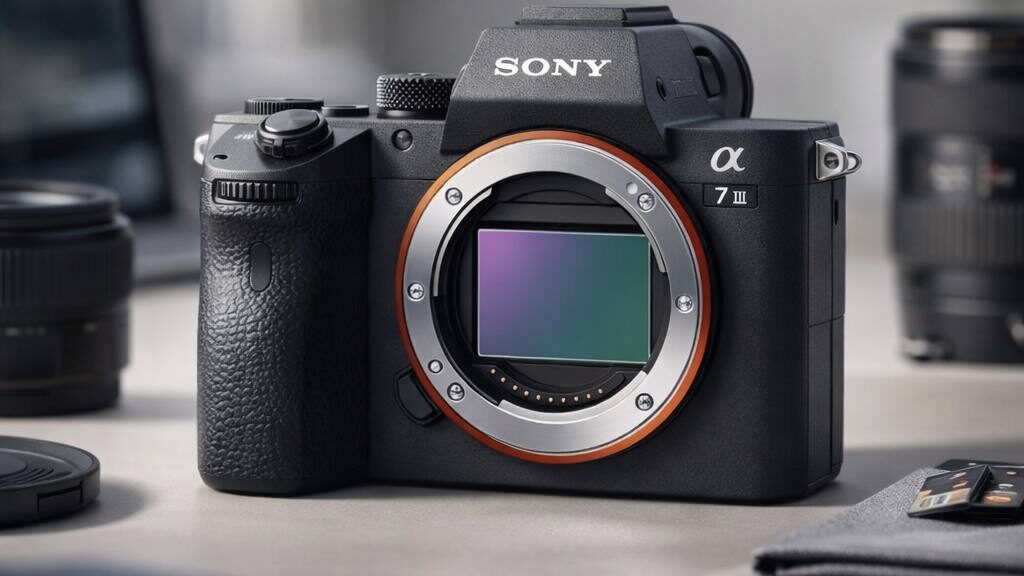
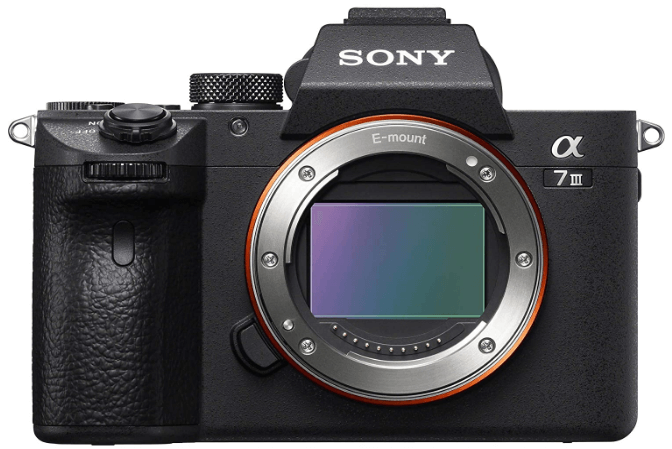
Quick verdict: the Sony a7 III, also searched as the Sony a7III, is still a very capable full-frame camera in 2026 if you buy it for the right reason: value. It is no longer the modern hybrid benchmark. The a7 IV and a7 V have moved the system forward. But for stills-first photographers who want strong files, dependable autofocus, dual card slots, and excellent battery life, the a7 III remains a smart used-market buy.
This Sony a7 III review is not nostalgia. It is a practical look at whether an older body still belongs in a working kit today. In many cases, it does. In others, spending more on a newer Sony body will save frustration.
Contents
- Sony a7 III review verdict in 2026
- Who the Sony a7 III is really for
- Design, handling, and everyday usability
- Image quality in real shooting conditions
- Autofocus and burst performance
- Video quality and modern limitations
- Best lenses for the Sony a7 III
- Sony a7 III vs a7 IV, a7 V, and a7C II
- Pros and cons
- Final verdict
- Frequently asked questions
Sony a7 III review verdict in 2026
I would buy the a7 III for portraits, weddings, travel, family work, events, documentary shooting, and general full-frame photography. The 24.2MP sensor is still flexible, the autofocus is still trustworthy, and the NP-FZ100 battery solved one of the biggest problems of early mirrorless cameras.
I would skip it for serious video-first work, fast sports, wildlife, or creators who need a modern screen and interface. The a7 III can shoot good video, but 8-bit recording, no 4K 60p, and older menus are real limitations now.
| Buy it if… | Skip it if… |
|---|---|
| You want affordable full-frame image quality. | You need 10-bit video or 4K 60p. |
| You shoot portraits, weddings, events, or travel. | You want the newest Sony autofocus and menus. |
| You already own FE lenses. | You mostly shoot fast wildlife or sports. |
| You would rather buy better glass than a newer body. | A used a7 IV or a7C II is close in price. |
Who the Sony a7 III is really for
The a7 III is for photographers who care more about results than owning the newest body. It suits someone stepping into full-frame for the first time, a wedding photographer building a second body, or a serious hobbyist who wants a proven camera with a huge lens ecosystem.
If you are comparing it with newer Sony bodies, start by deciding whether you are stills-first or hybrid-first. A stills-first shooter can live happily with the a7 III. A hybrid creator will feel the age more quickly. Our Sony a7 IV review is the natural next step if video, screen design, and newer color science matter.
For compact full-frame travel, the Sony a7C II review is also relevant. It gives you newer autofocus and a smaller body, but it does not feel like the same all-day workhorse in the hand.
Design, handling, and everyday usability

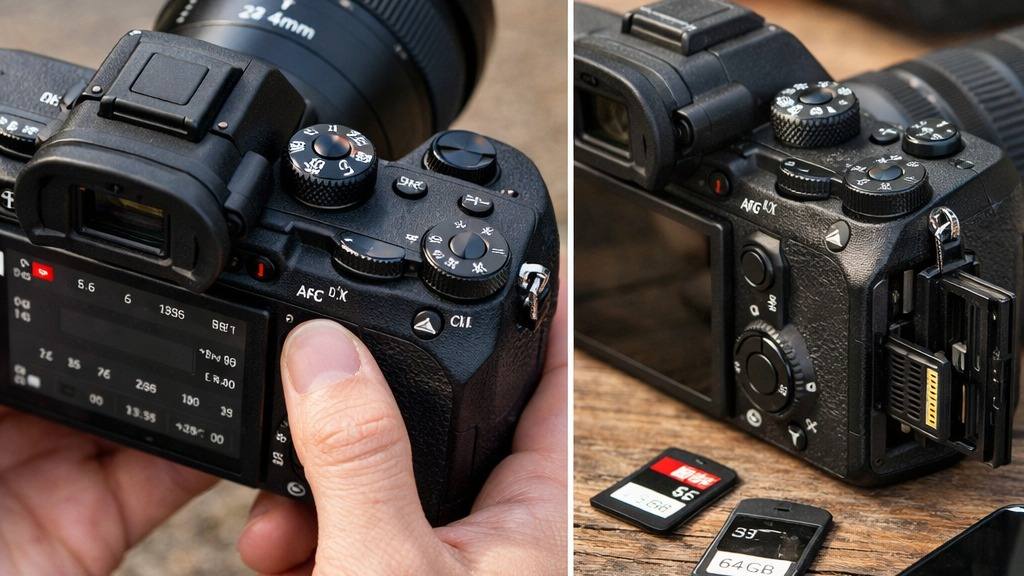
The a7 III body is compact for full-frame, but still substantial enough for paid work. At about 650 g with battery and card, it balances well with small primes, standard zooms, and moderate telephotos. The grip is comfortable, the AF-ON button is useful, and the exposure compensation dial is easy to find by feel.
The weak point is the older Sony interface. The menus are dense, the touchscreen is limited, and the rear LCD looks dated beside current cameras. Set up My Menu and the custom buttons early. Once customized, the camera becomes much faster and less frustrating.
Dual card slots remain a major strength. Slot 1 supports UHS-II SD cards, while slot 2 is slower UHS-I, but the ability to record backups still matters for weddings and client work. Battery life is another reason the camera still feels professional. Sony rates it around 610 shots with the EVF or 710 with the LCD, and in real event use it often lasts longer than expected.
Image quality in real shooting conditions
The 24.2MP full-frame sensor is the core reason the a7 III has aged well. The files are detailed without being oversized, dynamic range is strong, and RAW recovery is still excellent for weddings, landscapes, travel, and portraits.
At base ISO, shadows can be lifted cleanly if exposure is reasonable. At higher ISO, the a7 III remains very usable. ISO 3200 and 6400 are normal working settings for events, and ISO 12800 can still be acceptable with careful exposure and modern noise reduction.
Color is not as refined as Sony’s newest bodies straight out of camera, but the RAW files are flexible. For portraits, weddings, and mixed lighting, I would still shoot RAW and build a consistent profile rather than rely entirely on JPEGs.
Autofocus and burst performance
The a7 III uses 693 phase-detection AF points and 425 contrast-detection points. That was a huge step when it launched, and it still performs well for people, events, and moderate action. Eye AF is a major advantage for portraits and weddings because it improves the keeper rate when shooting fast primes wide open.
The camera shoots up to 10 fps, with a buffer that is fine for weddings, family movement, street moments, and casual sports. It is not an A9 or A1 style action body. If you regularly photograph birds, field sports, or erratic wildlife, newer Sony bodies give you faster readout, stronger subject recognition, and a cleaner viewfinder experience.
Video quality and modern limitations
The a7 III still produces crisp 4K footage. In NTSC mode it records 4K 24p and 30p, with 30p using a crop. It also supports useful picture profiles including S-Log2, S-Log3, and HLG. For interviews, wedding films, travel clips, and YouTube talking-head work, it can still deliver professional-looking footage.
The problem is headroom. Internal recording is 8-bit, there is no 4K 60p, and the old screen is not ideal for solo video. If you grade aggressively, shoot high-motion work, or need modern hybrid workflow, the a7 III feels dated quickly.
This is where the a7 IV and a7 V matter. The a7 IV brought 10-bit video and better ergonomics; the a7 V moves further with faster readout, newer processing, and much stronger hybrid performance. The a7 III is still good at video, but it is no longer the body I would buy primarily for video.
Best lenses for the Sony a7 III
The best reason to buy an older a7 III is to spend more of the budget on lenses. A strong lens will change your images more than moving from a7 III to a7 IV in many stills situations.
- Portraits: Sony FE 85mm f/1.8, Sony 85mm f/1.4 GM, Sigma 85mm f/1.4 DG DN.
- Travel: Sony Zeiss 55mm f/1.8, Sony 35mm f/1.8, Tamron 28-75mm f/2.8.
- Events: Sony 24-70mm f/2.8 GM or GM II, Tamron 35-150mm f/2-2.8, Sony 70-200mm options.
- Budget full-frame kit: Sony 35mm f/1.8 plus Sony 85mm f/1.8 is still a very strong two-prime setup.
Native Sony lenses give the smoothest autofocus experience, but modern Sigma, Tamron, and Samyang E-mount lenses are also very usable. Before buying a used body, I would rather choose a clean a7 III with excellent glass than stretch into a newer body with a weak kit lens.
Sony a7 III vs a7 IV, a7 V, and a7C II
The a7 III’s value depends entirely on price gap.
- Against the a7 IV: the a7 IV is the safer hybrid camera, with a 33MP sensor, 10-bit video, better screen, and newer menus. The a7 III is the better value if you mostly shoot stills.
- Against the a7 V: the a7 V is a major modern upgrade with faster shooting, newer autofocus, and much stronger video. It is also a much more expensive body. The a7 III only wins on cost.
- Against the a7C II: the a7C II is smaller and newer, with better subject recognition. The a7 III has a more traditional workhorse body and dual slots.
If you are tempted by higher resolution, our Sony a7R V review shows the other side of Sony full-frame: more detail, more demanding files, and a different kind of camera.
Pros and cons
- Pros: excellent full-frame image quality, strong dynamic range, reliable Eye AF, long battery life, dual card slots, compact body, huge FE lens ecosystem, strong used-market value.
- Cons: old menus, weak rear screen, limited touchscreen, 8-bit video, no 4K 60p, 4K 30p crop, slower buffer clearing than newer bodies, older subject tracking.
Final verdict
The Sony a7 III is still worth buying in 2026 if it is priced like an older camera and you are buying it for still photography. It remains a dependable full-frame tool for portraits, weddings, travel, events, and everyday serious photography.
It is not the best Sony hybrid anymore. If the used price gets too close to an a7 IV, a7C II, or discounted newer model, I would move up. But when the savings are real, the a7 III still makes a lot of sense because it leaves room in the budget for the lenses that actually define the system.
Frequently asked questions
Is the Sony a7 III still worth buying in 2026?
Yes, if you prioritize still photography and can buy it at a clear discount. It is less attractive for video-first work because newer Sony bodies are much stronger hybrids.
Is the Sony a7III good for beginners?
It can be, but it is not the simplest beginner camera. The image quality and autofocus are excellent, but the menus require patience. Beginners who are serious about learning full-frame photography can grow with it.
Does the Sony a7 III shoot 4K 60p?
No. It records 4K up to 30p. If 4K 60p matters, look at newer bodies such as the a7 IV, a7 V, or video-focused Sony models.
What is the biggest weakness of the Sony a7 III?
The biggest weakness today is the old hybrid workflow: 8-bit video, older menus, limited touchscreen controls, and a dated rear LCD.
What lenses should I buy first for the Sony a7 III?
For value, start with the Sony FE 35mm f/1.8 and FE 85mm f/1.8, or choose a Tamron 28-75mm f/2.8 if you prefer one flexible zoom.
Portrait, wedding, travel, event, and general full-frame photography on a sensible budget.
You need modern 10-bit video, 4K 60p, a fully articulating screen, or the newest autofocus tracking.
Medium; the camera is capable but older Sony menus need setup time.
Strong FE lens ecosystem; logical body upgrades are a7 IV, a7 V, a7C II, or specialist Alpha bodies.
Still good for 4K 24/30p, but 8-bit files and no 4K 60p feel dated.
Yes, if bought at a clear discount and stills are the priority.
Last update on 2026-06-21 / Affiliate links / Images from Amazon Product Advertising API


