




View full specs
Contents
What the Kodak Pixpro AZ255 is and who it suits
A bridge camera built around reach and simplicity
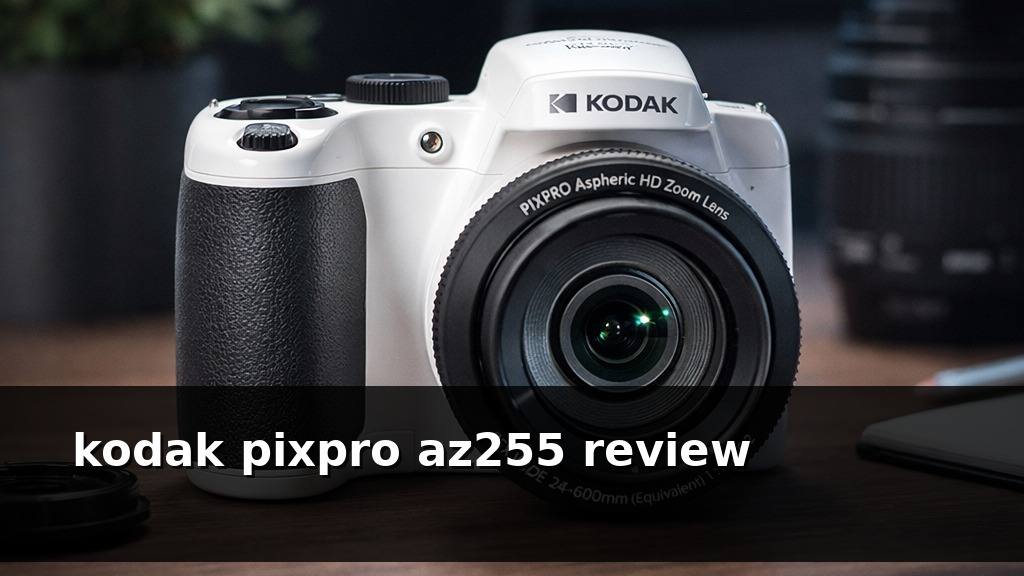
The Kodak Pixpro AZ255 sits in the classic bridge camera category. That means it aims to bridge the gap between a basic point-and-shoot and a more advanced interchangeable-lens camera. You get a deeper grip, a built-in long zoom lens, and direct access to key shooting modes without the cost or bulk of a full camera system.
That approach still makes sense in 2026. While phones dominate casual photography, compact digital cameras are making a quiet comeback among buyers who want optical reach and more tactile controls. In that context, this kodak pixpro az255 review starts with the camera’s clearest pitch, it tries to offer a lot of zoom for a very modest price.
Why the 24mm to 600mm equivalent lens matters
The lens is the heart of the AZ255. Kodak lists a 25x optical zoom with a 24mm to 600mm equivalent range, and that span is what gives the camera its appeal. At the wide end, 24mm works for travel views, indoor groups, and everyday family scenes. At the long end, 600mm equivalent reaches much farther than a typical phone camera.
Because of that, the AZ255 suits users who often photograph subjects that are physically far away. Think school events, wildlife in the yard, sightseeing from a distance, or outdoor action where walking closer is not possible. A phone can crop, of course, but optical zoom usually gives a more useful starting point for distant subjects.
Who should consider it in 2026
The AZ255 looks best for buyers with simple priorities:
- They want a long zoom without buying extra lenses.
- They prefer camera-style handling over touchscreen shooting.
- They want Auto mode now, but P, S, A, and M modes later.
- They care more about reach and price than premium speed.
It may also appeal to parents, travelers, and beginners moving beyond a phone. If someone wants a straightforward superzoom camera for daylight use and casual video, the AZ255 fits that brief better than many similarly priced gadgets that promise more than they deliver.
Who may want to skip it
However, not every buyer is the right match. Anyone expecting flagship-phone processing, strong low-light performance, or creator-focused video tools should look elsewhere. Likewise, shoppers who need a tilting screen, advanced autofocus claims, or pocketable size may find this model too basic.
For those users, a newer phone or a step-up camera could make more sense. If you are comparing categories, our guide to bridge camera vs phone helps frame the trade-offs clearly.
Kodak Pixpro AZ255 specs at a glance
Source note: core specifications in this article are based on the official Kodak PIXPRO AZ255 product page and Kodak user manual, checked on May 8, 2026.
16MP CMOS sensor and core imaging hardware
The core kodak pixpro az255 specs are straightforward. Kodak lists a 16MP CMOS sensor, which is a familiar entry-level setup for a budget superzoom. On paper, that should be enough for everyday prints, social sharing, school events, and general family photography in decent light.
Just as important, the camera includes the expected manual and semi-manual exposure modes. Auto, P, S, A, and M give beginners room to grow, which matters more than raw speed in this class.
25x optical zoom with a 24mm to 600mm equivalent range
The headline feature remains the 25x optical zoom. A 24mm to 600mm equivalent lens gives the AZ255 much broader framing flexibility than a phone. One moment it can cover a landscape, and the next it can isolate a distant subject from the same spot.
Optical image stabilization and what it helps with
Kodak also includes optical image stabilization. That matters most at longer focal lengths, where small hand movements become more obvious. It will not change the camera’s class, but it should make handheld telephoto shots and casual video more manageable.
3-inch LCD, storage support, and video basics
Elsewhere, Kodak lists a fixed 3-inch LCD with 460K dots, Full HD 1080p video, and support for SD, SDHC, and SDXC cards up to 512GB. Power comes from four AA batteries, with Kodak quoting about 300 shots on alkaline cells under CIPA standards. Those practical details shape ownership just as much as the zoom, and they will matter even more in the next sections.
Lens range and real-world shooting potential
Wide-angle coverage for travel and family scenes
One reason the Kodak Pixpro AZ255 makes sense as a superzoom camera is its flexible 24mm to 600mm equivalent lens. At the wide end, 24mm coverage is useful for travel views, group photos, family gatherings, and everyday snapshots in tighter spaces. That matters because many budget cameras start less wide, which can feel limiting indoors or when you want more of the scene.
For casual users, this wide setting also keeps the camera approachable. You can frame a room, a street scene, or a vacation landmark without backing up too far. Therefore, the AZ255 does more than just chase distant subjects. It also covers the kind of simple photography most buyers actually do every week.
Telephoto reach for wildlife, sports, and distant subjects
The bigger selling point, however, is the long end of the lens. A 600mm equivalent view gives the Kodak Pixpro AZ255 far more reach than a phone, and that is the core appeal in any serious kodak pixpro az255 review. If your child is on a school field, if birds sit across a pond, or if you want detail on distant buildings, optical zoom still matters.
Of course, reach alone does not guarantee perfect results. Budget bridge cameras usually ask more from the photographer as focal length increases. Hand shake becomes more visible, light demands rise, and subject movement gets harder to manage. Still, for buyers who simply want to get closer without spending much, this lens range is the strongest argument for the AZ255.
Where optical stabilization helps most
Kodak lists optical image stabilization, and that is especially important on a camera with a long zoom. In practical terms, stabilization helps reduce blur from small hand movements, particularly when you shoot at the telephoto end. It will not freeze a running child or a flying bird, but it can improve handheld shots of slower subjects.
This feature also helps casual video use and travel photography. For example, if you zoom in on a statue across a square or a performer on a small stage, stabilization can make framing easier and results more usable. You can read more about similar zoom-focused models in our best budget bridge cameras guide.
What to expect from a budget superzoom class camera
Buyers should keep expectations realistic. A low-cost bridge model with a long lens gives convenience and reach first. It does not promise premium sharpness at every focal length or advanced tracking performance. That said, the AZ255 still fills a real gap in 2026, especially now that compact digital cameras are making a comeback and many shoppers want a dedicated device again.
- Best fit for daylight travel, family outings, and distant subjects
- Less ideal for fast action in poor light
- Much more flexible than a basic phone camera for true optical reach
Image quality expectations from the AZ255
What a 16MP CMOS sensor typically delivers
Based on Kodak official information, the camera uses a 16MP CMOS sensor. In this price class, that usually means enough resolution for social sharing, small prints, casual travel albums, and general home use. The kodak pixpro az255 specs suggest a camera designed for practical photography rather than pixel-level perfection.
Strengths in good light and casual photography
In good light, a camera like this should deliver the most satisfying results. Outdoor trips, holiday snapshots, zoo visits, and daytime events are where the AZ255 is likely to feel most comfortable. The combination of a familiar grip, long zoom, and simple shooting modes can make photography easier for people moving up from a phone.
Likely trade-offs in low light and at long zoom
However, budget camera performance always comes with trade-offs. Small-sensor superzoom models often struggle more in dim scenes, and long zoom settings can make those limits easier to notice. As a result, users should expect the best image quality in bright conditions, with more modest results indoors or late in the day.
How expectations should match the price class
The smart way to judge this model is by value, not by comparing it to far more expensive cameras. If you want affordable reach, straightforward controls, and a dedicated shooting experience, the AZ255 remains appealing. If you care more about night photography, instant sharing, and heavy computational processing, the later bridge camera vs phone camera discussion will matter even more.
Kodak Astro Zoom comparison: AZ255 vs AZ528 vs AZ653
If you are considering the AZ255, the nearest Kodak alternatives are the AZ528 and AZ653. The AZ255 is the lowest-commitment zoom pick; the others make more sense when you want stronger reach and a larger bridge-camera body.
| Model | Best reason to buy it | Full review |
|---|---|---|
| AZ255 | Best budget Kodak zoom camera for casual buyers. | Kodak Pixpro AZ255 review |
| AZ528 | Best middle-ground bridge option with stronger reach. | Kodak Pixpro AZ528 review |
| AZ653 | Best Kodak Pixpro pick when maximum zoom is the priority. | Kodak Pixpro AZ653 review |
For the full lineup context, use the Kodak Pixpro cameras guide.
Pros, cons, and final verdict
The strongest reasons to buy the AZ255
The clearest appeal in this kodak pixpro az255 review is simple, a long 25x optical zoom at a very low entry price. Kodak positions it as a bridge camera for buyers who want reach without stepping into interchangeable lenses, and that remains a practical idea in 2026.
On paper, the AZ255 gives budget shoppers several useful basics:
- 16MP CMOS sensor
- 24mm to 600mm equivalent lens
- Optical image stabilization
- P, S, A, and M exposure modes
- 1080p Full HD video
- AA battery power
That mix matters because interest in simple dedicated cameras remains strong in 2026, especially among buyers who still want real optical zoom. Therefore, the AZ255 fits people who care more about framing distant subjects than chasing premium specs.
The main limitations to understand before ordering
However, buyers should keep expectations in line with the class and price. The fixed 3-inch 460K-dot LCD is basic, the body is larger than a pocket camera, and the 16MP sensor is still a small-sensor design. In other words, this is not the camera to buy for advanced low-light work or polished creator video.
The AA battery system will split opinion too. Some users like the convenience of finding batteries anywhere, while others will prefer a modern rechargeable pack. Kodak lists approximate kodak pixpro az255 battery life at 300 shots with alkaline batteries by CIPA standards, which is workable, but not exceptional.
A balanced pros and cons summary
If you want the short version, the Kodak Pixpro AZ255 pros and cons are easy to frame.
Pros
- Very affordable $229.99 launch price
- Useful 24mm to 600mm equivalent zoom range
- Optical stabilization helps at longer focal lengths
- Simple controls for beginners
- AA batteries can be convenient for travel
Cons
- Image quality limits are typical of budget superzooms
- Low-light performance will not match stronger phones or larger-sensor cameras
- Fixed LCD with no tilt or flip function
- Video features are basic rather than creator focused
- Size advantage over a phone is minimal
Final verdict for Lens and Shutter readers
For the right buyer, the AZ255 still makes sense. If your priority is zoom reach on a tight budget, Kodak’s official spec sheet gives this model a clear purpose. If your priority is night shooting, app sharing, or advanced processing, a newer phone may be the smarter tool.
My verdict is straightforward. This kodak pixpro az255 review points to a camera that is easy to understand, sensibly priced, and best suited to casual travel, family use, and daylight telephoto shooting. It is not exciting, but it is focused, and that focus is its value.
FAQ
What are the main Kodak Pixpro AZ255 specs?
According to Kodak product information checked on May 8, 2026, the main kodak pixpro az255 specs include a 16MP CMOS sensor, 25x optical zoom, 24mm to 600mm equivalent lens, optical image stabilization, a fixed 3-inch 460K-dot LCD, and 1080p Full HD video.
How good is Kodak Pixpro AZ255 battery life?
Kodak states approximate kodak pixpro az255 battery life at around 300 shots with alkaline AA batteries under CIPA standards. Real results will vary with flash use, zooming, and video recording. Rechargeable AAs may be the more practical long-term option.
What is the Kodak Pixpro AZ255 price in 2026?
The official kodak pixpro az255 price listed on Kodak’s product page is 229.99 USD. However, retailer discounts, regional taxes, and local availability can change the actual street price in 2026.
Is the Kodak Pixpro AZ255 better than a smartphone for zoom?
For distant subjects, yes, that is the strongest case in the kodak pixpro az255 vs smartphone debate. A true 25x optical zoom gives framing options that most phones still cannot match cleanly. However, smartphones often win for low-light processing, instant sharing, and everyday convenience.
Does the Kodak Pixpro AZ255 shoot Full HD video?
Yes. Kodak lists 1080p Full HD recording, and it gives an approximate 120-minute video figure at 1080/30. That makes it fine for casual clips, travel moments, and family recordings, but not a first choice for serious video creators.
What memory cards work with the Kodak Pixpro AZ255?
The camera supports SD, SDHC, and SDXC cards up to 512GB. As always, buying from a reliable card brand is wise, especially if you plan to record lots of video or travel with only one card.
Budget buyers who want a real grip, AA batteries, and more reach than a pocket compact.
You need an EVF, Wi-Fi, 4K video, fast autofocus, or the longest possible bridge-camera zoom.
Low in Auto mode, with useful P/S/A/M room to learn later.
Kodak AZ405 for more reach, or AZ528/AZ653 if superzoom range matters most.
1080p only, mono audio, and basic handling keep it casual.
Yes at a discount; no if the AZ405 or AZ528 costs only slightly more.
Last update on 2026-06-24 / Affiliate links / Images from Amazon Product Advertising API


