



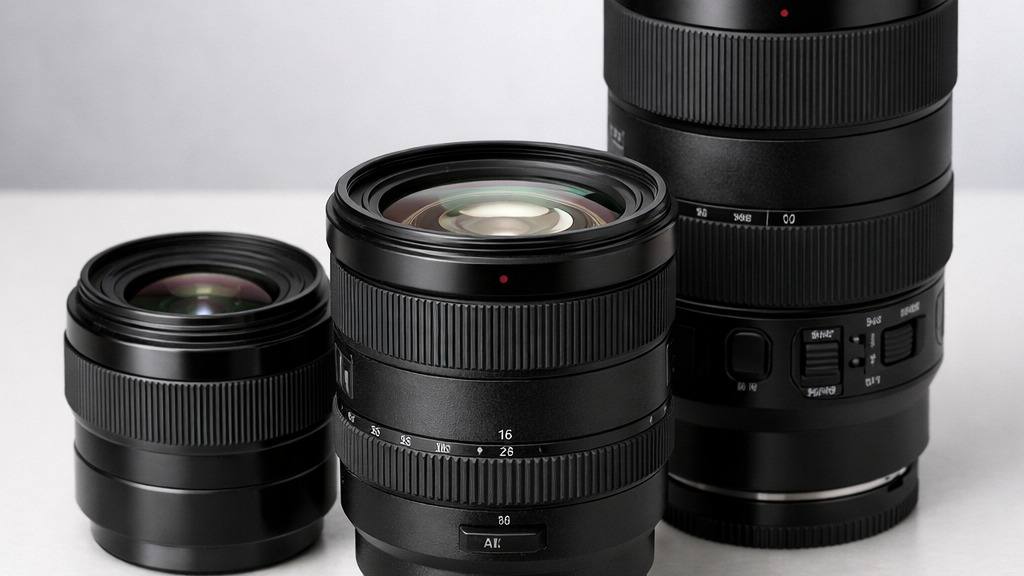
Choosing the best Sony E APS-C lenses is easier when you match focal length, size, and autofocus to the way you actually shoot. I’ve built this guide for photographers who want practical picks, clear trade-offs, and real-world advice for Sony crop-sensor bodies.
Contents
- How to choose the right lens for your Sony APS-C camera
- Best everyday zoom lenses for most photographers
- Best prime lenses for portraits low light and subject isolation
- Best wide angle lenses for landscapes architecture and vlogging
- Best telephoto lenses for wildlife sports and reach
- Best budget lenses that still deliver strong image quality
- Sony first party vs Sigma Tamron and other third party options
- My final recommendations by shooting style and budget
- Frequently asked questions
How to choose the right lens for your Sony APS-C camera


What focal lengths feel most useful on APS-C
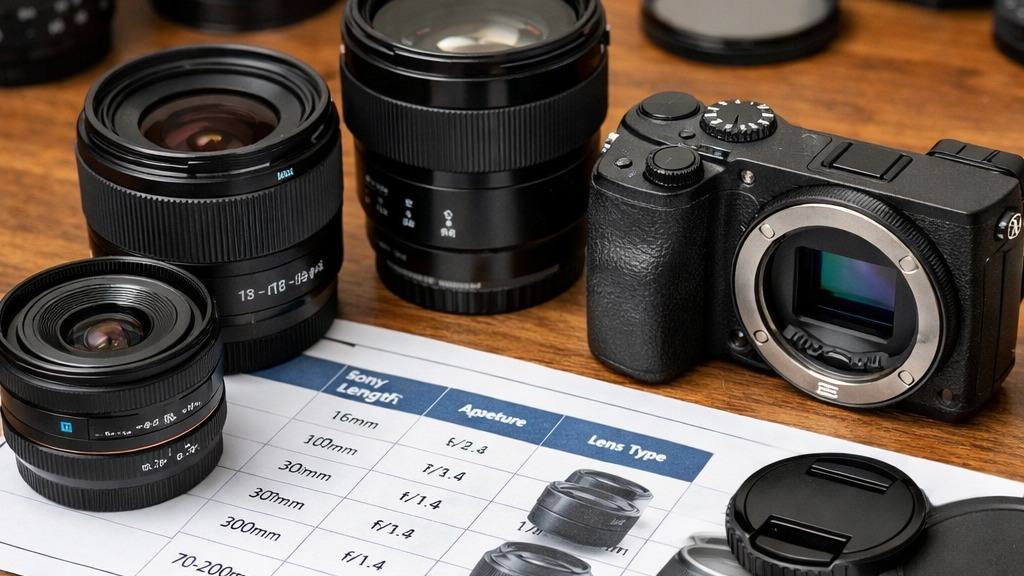
If you have used full frame cameras, the first surprise with Sony APS-C bodies is how focal lengths behave. A 35mm lens on a Sony E mount APS-C camera gives a field of view like a 50mm lens on full frame. This “crop factor” of 1.5x applies to all focal lengths, so a 16mm lens works like a 24mm, and a 50mm acts more like a short telephoto.
Before you buy, ask yourself what you shoot most. For travel and general photography, I find the 16-50mm or 18-55mm zooms cover wide to short-telephoto, but a fast 35mm or 50mm prime gives more subject isolation and low light ability. For portraits, 50mm to 75mm equivalent is the sweet spot. For landscapes or vlogging, you want something around 10-16mm (15-24mm equivalent).
It helps to try the kit lens at different focal lengths, then note which views you return to most. That will guide whether you want a wide zoom for scenery, a fast normal prime for street and people, or a telephoto for reach.
When aperture matters more than zoom range
While zoom range is tempting, especially for travel, aperture often makes the bigger difference. A lens with a wide maximum aperture (low f-number, like f/1.8 or f/2.8) lets in more light. This is critical for indoor shooting, low light, and creating blurred backgrounds for portraits.
Most Sony APS-C kit zooms have maximum apertures around f/3.5-5.6. These are fine outdoors, but you’ll quickly notice their limits in dim rooms or creative portrait setups. A prime lens, while fixed in focal length, often gives you f/1.8 or better. That can mean lower ISO, faster shutter speeds, and much nicer bokeh.
If you shoot a lot in low light or want dreamy background blur, prioritize aperture over zoom range. For general use, a fast zoom (like an f/2.8) balances both, but these are usually larger and pricier.
Best everyday zoom lenses for most photographers
The best walkaround zoom for travel and family photography
For most photographers, a good standard zoom is the workhorse of the kit. You want something light, with a practical range that covers landscapes, street scenes, group shots, and even the occasional portrait.
The Sony 16-55mm f/2.8 G is my top choice if you value sharpness, fast autofocus, and excellent build quality. Its constant f/2.8 aperture is a huge upgrade for low light and background blur compared to kit lenses. If you shoot events, kids, or travel, this lens rarely lets you down. The trade-off is price and size – it’s not as discreet as the kit zoom, but you gain real creative flexibility.
For a more budget-friendly option, the Sony 18-135mm f/3.5-5.6 OSS is incredibly versatile. It’s sharp through most of the range, focuses quickly, and its optical image stabilization helps with handheld photos and video. While it’s not as bright as the 16-55mm, its reach is a bonus for distant subjects, and it remains compact enough for travel.
If you want something even lighter, the Sony 16-50mm f/3.5-5.6 PZ OSS (the typical kit lens) is pocketable and decent for casual snapshots. Its power zoom is handy for video, but optical quality is noticeably less than the 16-55mm G or 18-135mm. Still, for compact digital cameras seeing a resurgence in 2026, it’s in line with that lightweight, always-ready ethos.
In summary, for the best Sony E APS-C standard zoom, the 16-55mm f/2.8 G is the professional’s pick, while the 18-135mm OSS is an excellent all-rounder for travel and family life.
Best prime lenses for portraits low light and subject isolation
The most useful portrait focal lengths on Sony crop bodies
When you want standout portraits, creamy bokeh, or need to shoot in tricky light, a fast prime lens is the answer. The best Sony APS-C portrait lens is usually between 50mm and 75mm equivalent. On APS-C, that means lenses around 35mm to 50mm.
The Sony 50mm f/1.8 OSS is a classic choice. It gives about a 75mm equivalent field of view, perfect for headshots and mid-length portraits. The wide f/1.8 aperture helps isolate your subject and works well in dim light. Image stabilization is a bonus for handheld shooting. Autofocus is reliable, though not blazing fast by today’s standards.
If you want a slightly wider look or more flexibility for environmental portraits, the Sigma 30mm f/1.4 DC DN is a favorite. It’s sharper than the Sony 35mm f/1.8 and delivers lovely background blur. On APS-C, it’s a natural lens for both portraits and street photography. Autofocus is quick and accurate, and the price is hard to beat for the quality.
For those who shoot a lot of people photos, adding a fast prime like these to your kit can be transformative. You get more light, more creative control, and a look that zooms rarely match.
Best wide angle lenses for landscapes architecture and vlogging
What to look for in an ultra wide lens for stills and video
Wide angle lenses open up dramatic perspectives, let you fit more in the frame, and are essential for landscapes, architecture, and vlogging. On Sony APS-C cameras, you want a lens in the 10-16mm range for real impact.
The Sony 10-18mm f/4 OSS is a proven choice. It’s compact, stabilized, and delivers sharp images across the zoom range. For travelers, hikers, or vloggers using a handheld camera, its light weight and stabilization make it a go-to. The f/4 aperture is fine for daytime and most video, though not ideal for night sky shots.
If you want a brighter option, the Sigma 16mm f/1.4 DC DN is outstanding. It’s a prime rather than a zoom, but the f/1.4 aperture makes a huge difference for low light and subject separation – even with a wide lens. Video shooters appreciate its quiet autofocus and sharpness. It’s bulkier than the Sony 10-18mm, but well worth it for creative shooting.
When choosing a wide lens for Sony APS-C, check for distortion and edge sharpness. Some lenses, especially cheaper ones, can be soft or warped at the corners. Good autofocus is also important for video and fast-moving scenes.
In conclusion, for the best Sony APS-C wide angle lens, the Sony 10-18mm f/4 is the most versatile zoom, while the Sigma 16mm f/1.4 is a brilliant choice for low light and creative video.
This guide continues with telephoto, budget, and specialty lens picks, but these everyday, portrait, and wide angle options will cover 90% of what most photographers need. If you want to avoid confusion, remember that Sony full-frame FE lenses mount on APS-C bodies too, but they are usually larger and more expensive than dedicated APS-C options.
Best telephoto lenses for wildlife sports and reach
Getting close to distant subjects is a real challenge with APS-C cameras, but the right telephoto lens unlocks a new world for wildlife, sports, and even casual birding. The crop factor of Sony APS-C bodies works in your favor here, turning a 350mm lens into a 525mm equivalent for extra reach. The main considerations are autofocus reliability, sharpness at long focal lengths, and manageable size for field use.
For most users, the best Sony APS-C telephoto lens is the Sony E 70-350mm F4.5-6.3 G OSS. This lens delivers excellent reach, solid sharpness throughout the zoom range, and fast enough autofocus for tracking birds or field sports. While its maximum aperture is modest, modern Sony bodies handle higher ISOs well, so you rarely find yourself limited except in deep shade or late dusk.
Lens choice also makes more sense when you consider the body you use, since handling, autofocus behavior, and portability can shape which focal lengths feel best day to day. If you are pairing lenses with one of Sony’s smaller crop-sensor bodies, this Sony a6000 series guide helps add that camera-side context before you decide.
- Sony 70-350mm F4.5-6.3 G OSS: Outstanding reach, surprisingly light for its range, with built-in stabilization. The autofocus is quick and accurate, making it an ideal Sony E mount wildlife lens APS-C shooters can rely on for everything from backyard birds to distant deer.
- Sony 55-210mm F4.5-6.3 OSS: A much more affordable option with less reach and softer corners but very compact and lightweight. This lens shines for casual sports or family outings when you do not want to carry a heavy kit.
- Sigma 100-400mm F5-6.3 DG DN OS: While technically a full-frame lens, it works very well on APS-C, giving even more reach (150-600mm equivalent). It is heavier than the Sony 70-350mm but delivers great results for birders who want maximum distance.
If you shoot fast-moving subjects, autofocus speed is critical. The Sony 70-350mm is tuned for the latest AF algorithms, tracking erratic subjects with ease. For older or budget Sony bodies, it is still among the most reliable options. Sports shooters looking for brighter apertures may consider the Sony 70-200mm F2.8 GM II, but it is heavier and far more expensive, and most APS-C users will prefer the lighter, longer 70-350mm or Sigma 100-400mm.
Telephoto zooms are rarely compact, but the 70-350mm balances range and portability well. Wildlife photographers who hike long distances will appreciate this, while those mostly working from hides or vehicles can opt for heavier options.
Best budget lenses that still deliver strong image quality
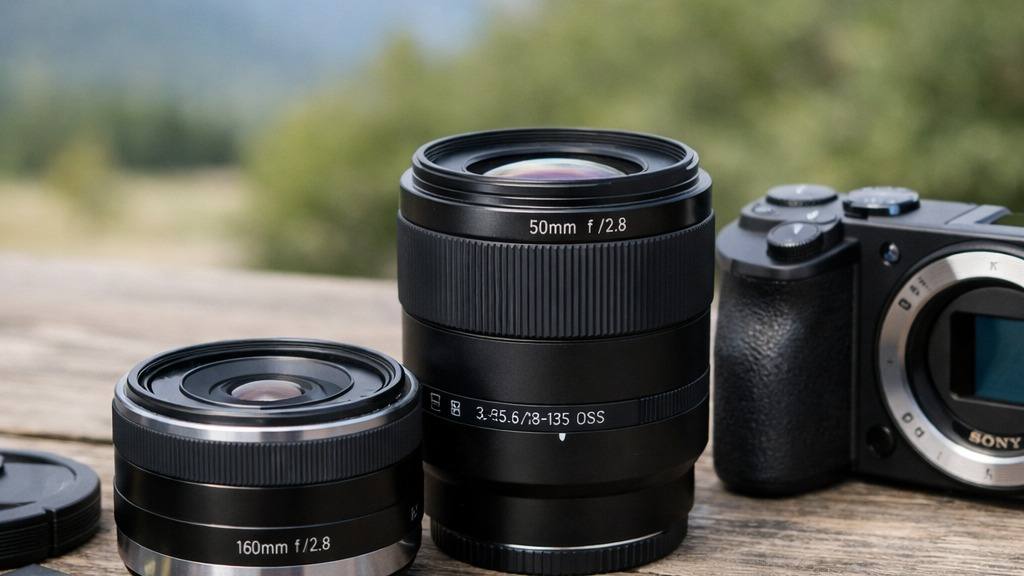
Not everyone wants to spend flagship money on lenses. Thankfully, there are several best budget Sony APS-C lens choices that deliver reliable performance, sharpness, and creative flexibility. Affordable Sony E mount lenses have improved a lot in recent years, especially from third-party brands like Sigma and Tamron.
- Sony E 35mm F1.8 OSS: This is one of the best value primes for everyday shooting. It is light, sharp, fast to focus, and works for street, portraits, and low light. The built-in stabilization is a real bonus for video and handheld work.
- Sigma 30mm F1.4 DC DN Contemporary: For the price, this lens offers exceptional sharpness and a beautiful shallow depth of field. It is a bit larger than Sony’s 35mm but brighter and great for portraits, food, and indoor scenes.
- Sony E PZ 16-50mm F3.5-5.6 OSS: This kit zoom is often underestimated. It is not the sharpest, but it is incredibly compact and covers a versatile range for travel and snapshots. For backpackers or vloggers who want the lightest kit, it is hard to beat for the price.
- Viltrox 56mm F1.4: This is an affordable medium telephoto prime with surprisingly good sharpness and bokeh for the cost. It is a great option for portrait shooters on a budget.
What these affordable Sony E mount lenses share is a balance of optical performance and price. They are not perfect wide open, but stopped down a little, the results rival much more expensive glass. Autofocus is usually slightly slower than Sony’s top-tier lenses, but for most still photography and casual video, it is more than adequate.
If you are starting out or building a lightweight kit, pairing one fast prime with the kit zoom will cover most needs. For dedicated wildlife or action, you may need to stretch the budget for a reach lens, but for everything else, these options deliver excellent value.
Sony first party vs Sigma Tamron and other third party options
Sony’s own lenses are designed for perfect integration with their cameras, but third-party manufacturers like Sigma, Tamron, and Viltrox have made huge strides in the E-mount ecosystem. The difference between Sony vs Sigma APS-C lenses is less about optical quality these days and more about feature set, size, and price.
Sony lenses offer seamless autofocus, reliable eye tracking, and full compatibility with every new body feature. Their weather sealing and build quality are usually a notch above. However, you do pay a noticeable premium for these advantages.
Sigma and Tamron have filled gaps in the lineup, especially with fast primes and compact zooms. Sigma’s DC DN line, for instance, delivers excellent sharpness and fast apertures at a much lower cost than Sony’s G or G Master lenses. Tamron’s 17-70mm F2.8 is another standout, offering constant aperture and image quality that rivals much pricier Sony zooms.
When third party lenses offer better value
If your priority is best-in-class autofocus and weather sealing, Sony first-party lenses still lead. But for most photographers, especially those working with a tighter budget or wanting lighter lenses, third-party options are hard to ignore. Tamron and Sigma provide unique focal lengths and apertures that Sony does not, often at half the price.
- Travel and street: Sigma 16mm F1.4 and 30mm F1.4 are sharper and faster than Sony’s 16mm and 35mm offerings, at a lower cost.
- Zoom versatility: Tamron 17-70mm F2.8 hits a sweet spot for those wanting better low-light performance without the weight of full-frame glass.
- Portraits: Viltrox and Sigma 56mm F1.4 deliver beautiful background blur and strong sharpness for a fraction of Sony’s 50mm F1.2 GM price.
Autofocus on Sigma and Tamron lenses is nearly indistinguishable from Sony’s for stills and basic video. Only the most advanced tracking modes or extreme weather scenarios reveal differences.
Reliability and lens firmware updates are now easy with USB docks or in-camera updates, so long-term support has improved. For most users, third-party Sony E mount lenses are a smart way to build a versatile kit without breaking the bank.
My final recommendations by shooting style and budget
Choosing the best Sony E APS-C lenses always comes down to your most common subjects, portability needs, and how much you are comfortable spending. Here are my tailored Sony APS-C lens recommendations based on real-world scenarios:
- Everyday and travel: Start with the Sony 16-55mm F2.8 G for quality, or the Tamron 17-70mm F2.8 for value. Add a fast prime like the Sigma 30mm F1.4 for creative depth of field and low-light shooting.
- Portraits: The Sigma 56mm F1.4 is hard to beat for sharpness and bokeh. If you want Sony native, the Sony 50mm F1.8 OSS is affordable and lightweight.
- Wildlife and sports: The Sony 70-350mm F4.5-6.3 G OSS is the most versatile, with the Sigma 100-400mm as the best option when you want maximum distance at a reasonable price.
- Budget kit: Combine the kit 16-50mm with a Sigma 30mm F1.4 or Viltrox 56mm F1.4. This setup covers wide, standard, and portrait needs while staying affordable.
- Video and vlogging: The Sony 10-18mm F4 OSS is the easiest wide zoom to use handheld. For talking-head video, a Sigma 16mm F1.4 is brighter and delivers a cinematic look.
As compact digital cameras make a comeback in 2026, APS-C lens kits remain relevant for those who want more control, interchangeable glass, and higher quality than a point-and-shoot can deliver. Building a thoughtful kit around your main style and budget is always more rewarding than chasing every new release. The options from Sony, Sigma, Tamron, and even Viltrox mean there is no single best lens – just the lens best suited to you.
Frequently asked questions
What is the best all around lens for a Sony APS-C camera?
The Sony 16-55mm F2.8 G is the top choice for all-around use, offering excellent sharpness, fast autofocus, and a versatile range. For a more affordable option, the Tamron 17-70mm F2.8 delivers similar performance at a lower price.
Are full frame Sony E mount lenses worth buying for APS-C bodies?
Full frame lenses work perfectly on APS-C bodies, but they tend to be larger, heavier, and more expensive. Unless you plan to upgrade to full frame soon, APS-C optimized lenses are usually a better fit for size and price.
Which Sony APS-C lens is best for portraits?
The Sigma 56mm F1.4 DC DN is the top pick for portraits on APS-C. It offers sharp results, beautiful background blur, and a fast aperture for low light. Sony’s own 50mm F1.8 OSS is a good lighter alternative.
What focal length is best for travel on Sony APS-C?
For travel, a standard zoom covering 16-70mm (24-105mm full frame equivalent) is ideal. The Sony 18-135mm offers even more reach for landscapes, city scenes, and portraits while staying lightweight.