



Few cameras have stood the test of time quite like the Sony RX100 VII. Even in 2026, its blend of compact design and pro-level features keeps it at the top of many photographers’ wish lists. In this sony rx100 vii review, I’ll share my hands-on insights and reveal why this model remains a favorite for both beginners and experienced shooters. You’ll discover how its build, image quality, speed, and video capabilities stack up in real-world scenarios, plus practical advice for getting the most value from your investment. Let’s dive in and see if the RX100 VII still deserves a spot in your camera bag.

Contents
Design, build quality, and handling
The Sony RX100 VII review consistently highlights the camera’s impressive design, build quality, and handling. As someone who values both performance and portability, I find the RX100 VII stands out with its engineering. Let us break down what makes this camera a favorite for photographers on the go.

Compact engineering and portability
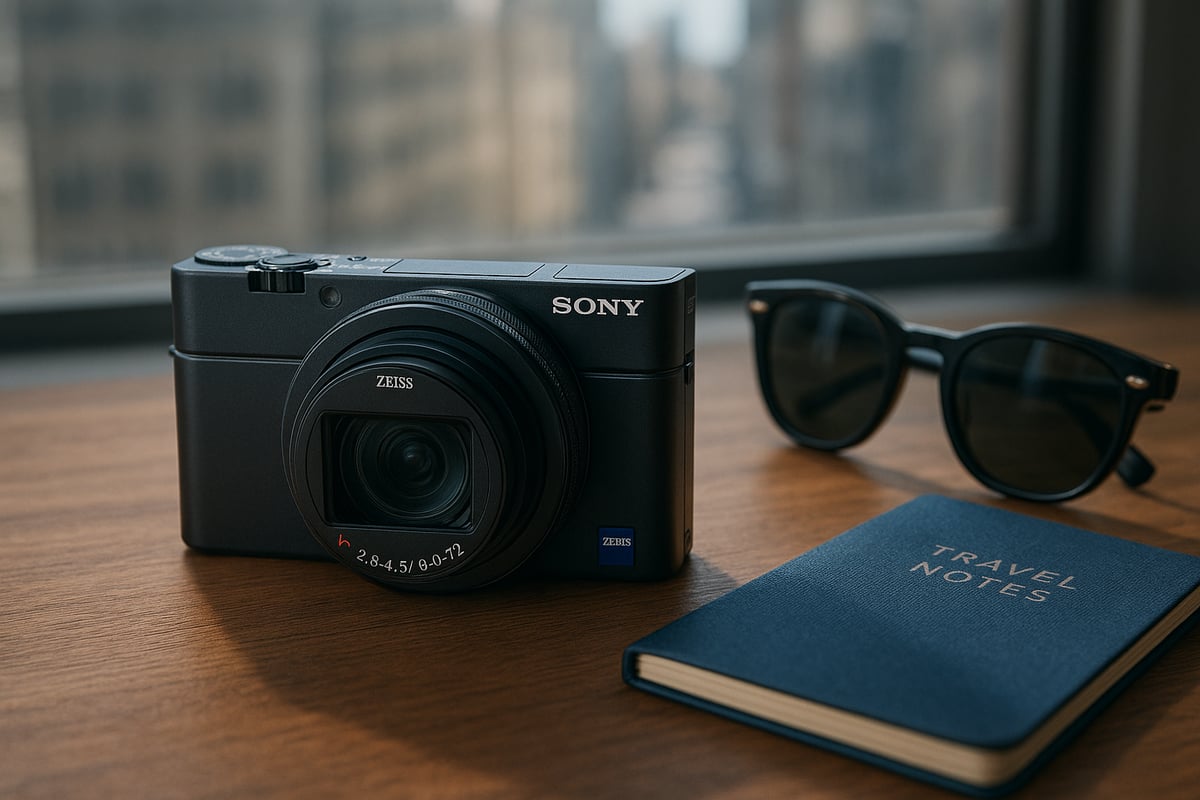
The RX100 VII is a marvel of compact engineering. Its magnesium alloy body feels solid yet remains impressively lightweight. The pocketable design means you can slip it into a jacket or even jeans, perfect for spontaneous street or travel shots. Compared to bulkier mirrorless or DSLR options, this camera is the definition of unobtrusive.
For travel photographers, portability is everything. On a recent city trip, I carried the RX100 VII everywhere without a second thought. It never weighed me down, and I could shoot discreetly in crowded markets or on busy streets. If you want to see how it stacks up against other travel-friendly cameras, check out this best travel camera guide. The sony rx100 vii review always praises this camera’s blend of power and size.
Ergonomics and user interface
Handling the RX100 VII is intuitive, even for those with larger hands. The button layout is logical, and the control ring around the lens offers quick access to settings like aperture or zoom. The menu system is classic Sony, which means a learning curve for some, but it is highly customizable.
The tilting LCD touchscreen makes shooting from high or low angles effortless. I often use it for candid street shots, keeping a low profile. One-handed operation is genuinely possible, and you can assign custom functions to buttons for faster shooting. In every sony rx100 vii review, this flexibility is a recurring highlight.
Viewfinder and display
A standout feature is the pop-up electronic viewfinder (EVF). The resolution is crisp, and brightness is ample even in harsh midday sun. I rely on the EVF for composing shots when reflections make the LCD hard to see. The LCD itself has excellent color accuracy, and its articulation lets you frame from creative perspectives.
In practice, switching between the EVF and LCD is seamless. For those who shoot outdoors often, the visibility and versatility of both displays are invaluable. The sony rx100 vii review often notes that the EVF gives this compact an edge over many rivals.
Build durability and weather resistance
Despite its small size, the RX100 VII feels robust. The magnesium alloy construction inspires confidence, and after years of use, mine shows minimal wear. However, it is important to note the camera is not fully weather-sealed. I recommend caution in heavy rain or dusty environments.
Long-term users report excellent durability for everyday shooting, though always keep a microfiber cloth handy for the lens and screen. For most scenarios, the build is more than adequate, which is often echoed in any thorough sony rx100 vii review.
Connectivity and storage
Sony includes practical connectivity options: micro HDMI, USB, and a microphone input for video creators. Dual Wi-Fi and Bluetooth make sharing images or remote controlling the camera from your phone quick and easy.
For storage, the RX100 VII supports SD cards (UHS-I), which are fast enough for burst shooting and 4K video. I suggest a high-speed card to avoid bottlenecks. These details are crucial in a sony rx100 vii review, especially for those who shoot and share on the move.
Image quality and sensor performance
Getting hands-on with the Sony RX100 VII, it’s clear why this camera still earns high marks for image quality. Whether you’re a seasoned photographer or new to compacts, the sensor and lens combo bring pro-level results in a pocket-sized package. This section of the sony rx100 vii review dives deep into the elements that define its imaging excellence for 2026.
Sensor technology and resolution
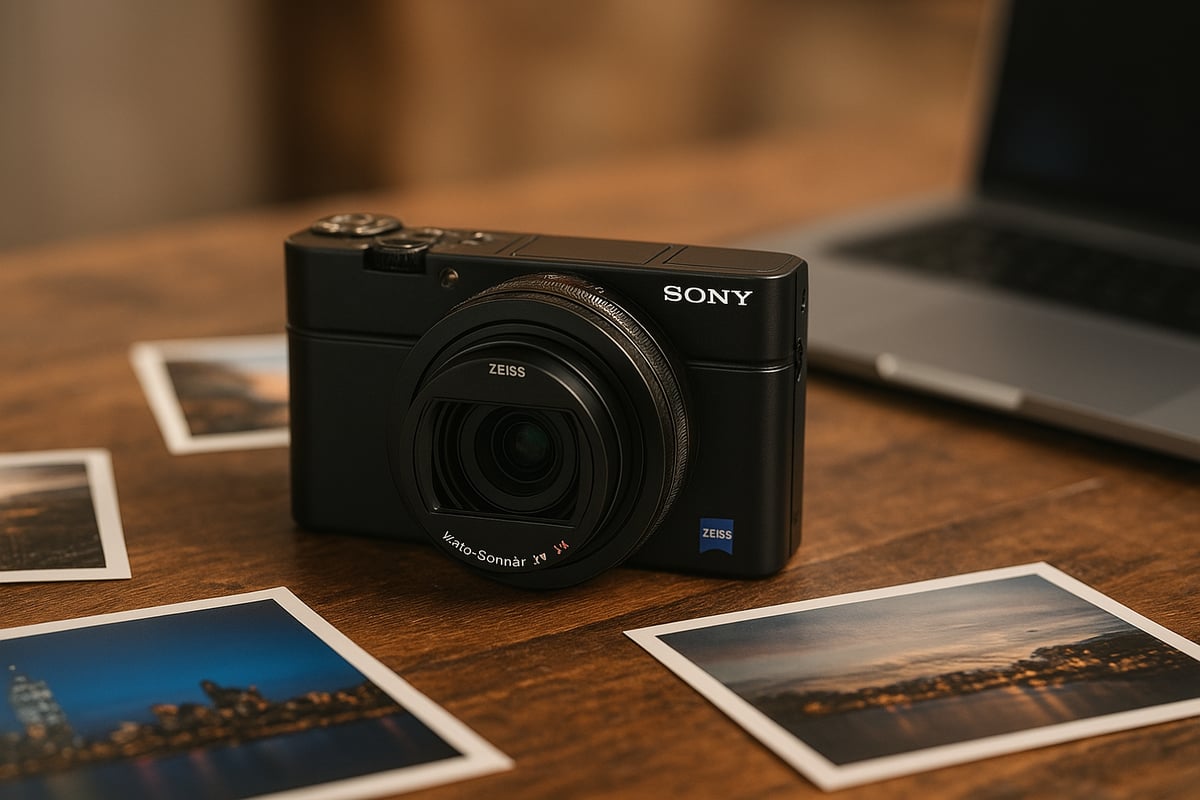
At the heart of any sony rx100 vii review is its sensor. Sony’s 1-inch stacked CMOS sensor, with 20.1 megapixels, offers a sweet spot between high resolution and manageable file sizes. This allows photographers to crop in on wildlife or travel scenes without sacrificing detail, making the camera versatile for both print and digital sharing.
The stacked sensor architecture means faster readout and less rolling shutter, especially useful for moving subjects. In practical terms, you get sharp, vibrant images even in challenging lighting. According to the Sony RX100 VII Review – RTINGS.com, the sensor’s dynamic range and low noise at base ISO are competitive with larger-sensor rivals.
For those who prioritize flexibility, the high resolution supports tight crops and large prints. The sensor’s performance remains reliable for a wide range of genres, from street to landscape.
Lens quality and versatility
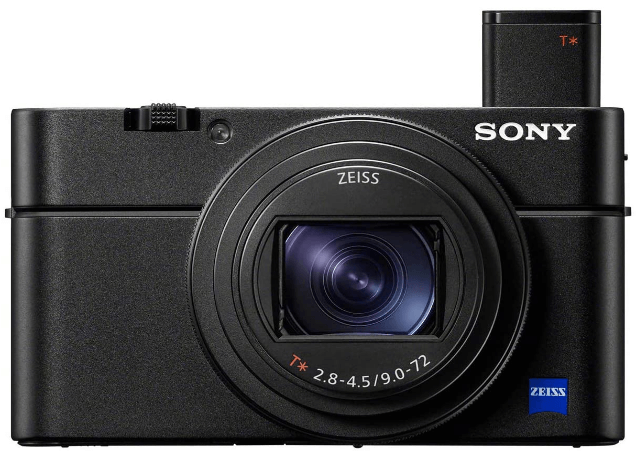
A major highlight of every sony rx100 vii review is the Zeiss Vario-Sonnar T* 24-200mm equivalent lens. Covering such a broad zoom range in a compact body is a technical marvel. The f/2.8-4.5 aperture offers a good balance between low-light capability and depth of field control, while the Zeiss optics deliver crisp, punchy images across the frame.
Sharpness holds up well from wide to telephoto, with only minor softening at the extreme ends. Optical stabilization is effective for handheld shooting, letting you travel light and leave the tripod at home for most situations.
Compared to fixed-lens rivals, the RX100 VII’s zoom makes it far more flexible for capturing landscapes, portraits, and close-ups. For travel photographers, this lens means you’re always ready, whether shooting cityscapes or distant wildlife.
Low-light and ISO performance
Low-light capability is a key part of any honest sony rx100 vii review. The camera’s native ISO range of 100 to 12800 (expandable to 25600) gives you the freedom to shoot indoors, at night, or in dimly lit venues. Noise remains well-controlled up to ISO 1600, and even at higher settings, images retain usable detail for social media or small prints.
For best results, I recommend using the built-in ND filter in bright conditions, or stabilizing the camera on a tripod for longer exposures. In practice, I’ve found the RX100 VII’s sensor holds up surprisingly well for a compact, making it possible to capture city lights or night markets with confidence.
When shooting handheld at night, expect some visible noise at ISO 3200 and above, but the results are still impressive for a camera of this size.
Autofocus and subject tracking
The autofocus system is where the sony rx100 vii review really shines. With 357 phase-detection points and real-time tracking, this camera locks onto subjects with remarkable speed and accuracy. Eye AF for both humans and animals is a standout, making portraits and pet photography far easier.
In fast action scenarios, like sports events or energetic kids, the camera’s tracking keeps up admirably. Even in low-light, autofocus performance remains strong, rarely hunting or missing focus. For group shots, face detection ensures everyone is sharp, adding confidence to street and event photography.
If you’re coming from an older RX100 model, you’ll notice a significant leap in reliability and speed, especially when shooting unpredictable subjects.
Color science and dynamic range
Sony’s color science has matured, and any modern sony rx100 vii review will note improvements in skin tones and overall rendering. The RX100 VII produces natural, pleasing colors straight out of camera, with in-camera profiles for those who want to tweak their look.
Dynamic range is another strong suit, allowing recovery of highlights and shadows when editing RAW files. This flexibility is invaluable for challenging scenes, such as backlit portraits or high-contrast landscapes.
For creators who share images online, the color output is vibrant and punchy, while for print, you can dial back saturation for a more classic look. The camera’s dynamic range rivals some entry-level mirrorless models, making it an excellent choice for those who want post-processing headroom.
RAW and JPEG output
For workflow flexibility, the sony rx100 vii review must highlight both RAW and JPEG capabilities. RAW files offer extensive latitude for editing, letting you adjust exposure, white balance, and color with minimal loss of quality. JPEGs straight out of camera are detailed and well-processed, perfect for quick sharing or when you want to skip post-processing.
Buffer depth is respectable, especially in JPEG mode, supporting burst shooting for action or candid moments. In RAW, the buffer fills faster, but the camera clears it quickly, so you’re rarely left waiting.
Enthusiasts benefit from the option to shoot both formats simultaneously, streamlining the editing process. Professionals will appreciate the consistency and reliability the RX100 VII brings to their workflow, whether shooting for clients or personal projects.
Autofocus, speed, and performance
Photographers expect speed, precision, and reliability from a compact camera, and the sony rx100 vii review consistently highlights these strengths. In this section, I will share hands-on insights into autofocus, burst shooting, responsiveness, battery life, and heat management. Whether you shoot street, travel, or action, understanding these performance details will help you get the most from your RX100 VII.

Autofocus system and real-time tracking
The autofocus system is one of the standout features in any sony rx100 vii review. With 357 phase-detection AF points and 425 contrast-detection points, the RX100 VII delivers rapid and accurate focusing across nearly the entire frame. Real-time tracking is especially impressive, locking onto moving subjects with minimal hunting, even in challenging light.
Eye AF for both humans and animals is a game changer if you photograph portraits or pets. Face detection in group shots is reliable, making the camera suitable for family events or street scenes. Compared to earlier RX100 models, the AF feels significantly faster and more intelligent. For more technical comparisons and in-depth performance analysis, the Sony RX100 VII Review | Digital Trends offers additional perspective.
Burst shooting and buffer capacity
One area where the sony rx100 vii review shines is continuous shooting. The camera achieves 20 fps blackout-free burst mode, allowing you to track fast-moving subjects without losing sight of them in the viewfinder. This is ideal for sports, wildlife, or energetic kids.
Buffer capacity remains a limitation if you shoot in RAW, as the buffer fills after about 80 JPEGs or 32 RAW frames before slowing down. For most travel and street scenarios, this is more than sufficient, but if you often shoot long bursts, consider fast UHS-I SD cards to optimize performance.
Startup and shot-to-shot times
Responsiveness is crucial for candid and street photography. The sony rx100 vii review reports a quick power-on time, letting you capture fleeting moments with minimal delay. Shot-to-shot times are also swift, with almost instant readiness between exposures.
These fast response times mean you can keep the camera in your pocket, power it up, and start shooting in seconds. For those who value spontaneity, this level of agility is a major advantage over bulkier systems.
Battery life and power management
Battery life is often a concern with compact cameras, and the sony rx100 vii review rates the RX100 VII at around 260 shots per charge (CIPA standard). In real-world use, you may get slightly more if you avoid heavy LCD or EVF usage. USB charging is supported, which is invaluable for travel: simply top up with a power bank between shoots.
To maximize battery life, reduce screen brightness, use airplane mode, and carry a spare NP-BX1 battery. On a busy day exploring a city, I typically get through two batteries, so planning ahead is essential for uninterrupted shooting.
Heat management and reliability
Extended shooting sessions, especially video, can generate heat in compact bodies. The sony rx100 vii review notes that the RX100 VII manages heat well for its size, rarely shutting down except during very long 4K recordings or in hot environments.
Compared to many competitors, the RX100 VII is less prone to overheating, which is reassuring if you plan to use it for events or travel vlogs. For most photographers, reliability is excellent, with consistent performance even after years of regular use.
Video features and vlogging capabilities
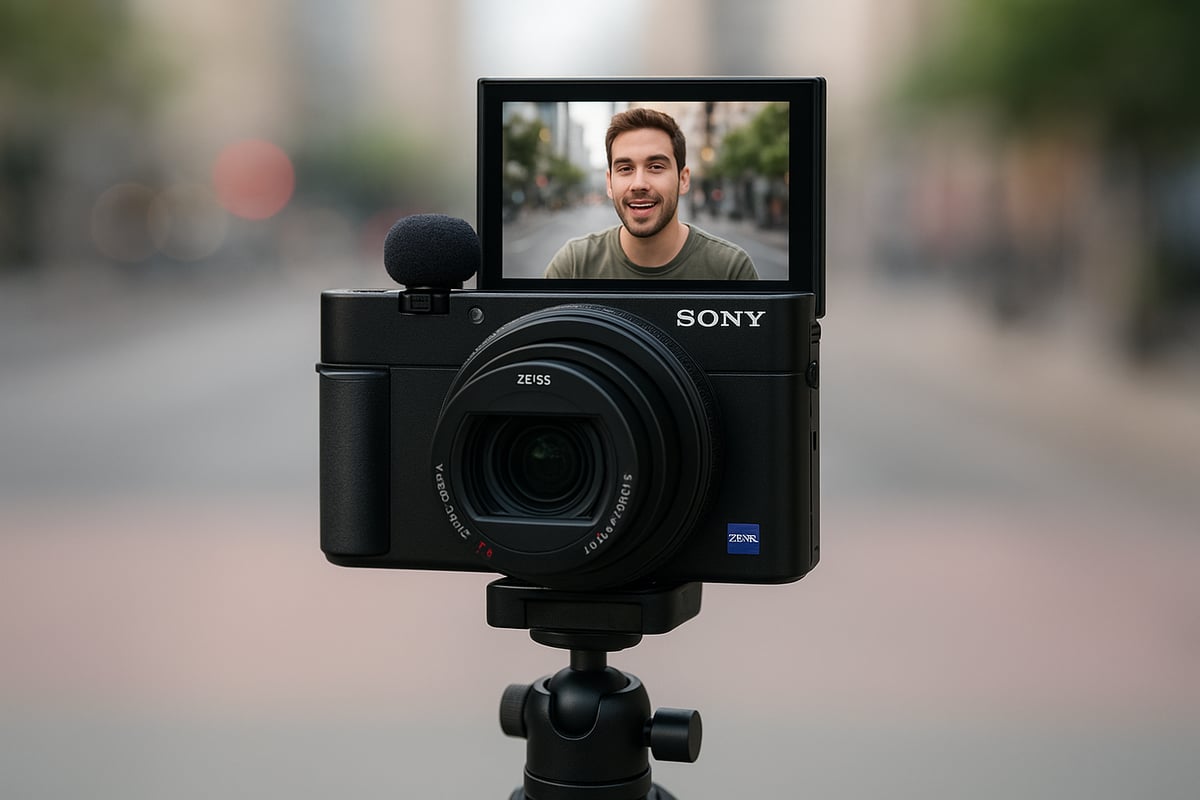
For anyone looking into the sony RX100 VII review, video quality is often at the top of the checklist. In my years of testing compact cameras, the RX100 VII stands out for its blend of professional-level features in a truly pocketable body. Whether you are a travel vlogger, filmmaker, or hobbyist, this camera offers a toolkit that genuinely expands your creative options.
4K video recording and frame rates
The sony RX100 VII review consistently highlights its ability to record 4K video at 30p with full pixel readout. This means your footage is crisp, detailed, and free from the rolling shutter issues that plague many compacts. The oversampled 4K produces results that rival larger mirrorless systems, especially in good light.
Full HD at up to 120p opens doors for slow motion and smooth action sequences. Recording limits are generous for a camera of this size, so you can shoot longer segments, perfect for travel vlogs or events. I have used it for cinematic B-roll and was genuinely impressed by the sharpness and color accuracy straight out of camera.
Autofocus and stabilization in video
One area where the sony rx100 vii review shines is autofocus. Real-time tracking and Eye AF are available during video, locking onto subjects with precision, even if they are moving unpredictably. This is invaluable for self-shooters and anyone capturing dynamic scenes.
Active SteadyShot electronic stabilization helps minimize shake when filming handheld. While not as smooth as gimbal-level stabilization, it works well for walk-and-talk vlogs. In my field tests, I found it reliable for casual use, though for fast movement or rough terrain, a small tripod or grip adds extra stability.
Audio input and sound quality
The addition of a microphone input is a game changer in the sony rx100 vii review landscape. You can now plug in your favorite lavalier or shotgun mic for superior audio, a must for interviews or professional vlogging. The in-camera mic is decent for ambient sound but picks up wind and handling noise.
For best results, I recommend monitoring audio with quick test recordings and using foam windshields when shooting outdoors. Simple accessories like a lightweight external mic elevate production quality, making this camera a solid choice for creators who value clean, clear sound.
S-Log, HLG, and advanced profiles
Advanced videographers will appreciate the S-Log2, S-Log3, and HLG profiles found in the sony rx100 vii review. These modes offer wide dynamic range and flexibility for color grading, letting you match RX100 VII footage with larger Sony cameras in post-production.
Shooting in S-Log does require careful exposure, but the rewards are worth it for cinematic results. For HDR workflows, HLG is supported, making it easier to future-proof your content for newer displays. I have successfully matched RX100 VII footage with full-frame Sony bodies using these profiles.
Slow motion and creative modes
If you want to get creative, the sony rx100 vii review points to its impressive High Frame Rate (HFR) modes. These unlock up to 960 fps for ultra slow-motion clips, perfect for sports, pets, or artistic shots. The effect is dramatic, though resolution drops at the highest speeds.
Beyond slow motion, built-in creative filters and picture effects let you experiment with unique looks without post-processing. I found these features handy for on-the-go content creation, especially when sharing directly to social media.
Practical vlogging experience
In practical terms, the RX100 VII is one of the most versatile vlogging cameras available. The flip-up LCD makes framing yourself easy, and its compact size means you can shoot discreetly in public or tight spaces. Battery life is respectable for video, but I always carry a spare for peace of mind.
If you are seeking a camera for vlogging, it is worth browsing the Best vlogging camera picks to see how the RX100 VII stacks up against rivals. In my experience, it offers a rare mix of portability, image quality, and pro-level features, making it a favorite for daily vlogging and travel.
Real-world comparisons and user experiences
Real-world feedback is where the sony rx100 vii review truly comes alive. In this section, I will share personal insights, peer experiences, and direct comparisons that highlight what sets the RX100 VII apart in 2026. If you are considering this camera, these honest reflections will help you decide if it fits your needs.
RX100 VII vs previous RX100 models
Having shot with several RX100 generations, I can confidently say the VII is a major leap. Autofocus is vastly improved, especially with real-time tracking and Eye AF that outperform the VI and earlier versions. The extended zoom range, faster burst rates, and inclusion of a mic input make a noticeable difference for both stills and video. If you are reading a sony rx100 vii review to see if an upgrade is worthwhile, the answer is clear for action, travel, or hybrid shooters. The VII feels like a refined tool, not just a minor refresh.
Stacking the RX100 VII against rivals like the Canon G7X Mark III, Panasonic LX100 II, and Ricoh GR III, the differences become clear. The RX100 VII offers the broadest zoom range and the fastest, most reliable autofocus in this class. While the Canon excels in color and the Ricoh in street simplicity, neither can match the RX100 VII’s blend of speed and versatility. You can explore more in the Best point and shoot cameras guide, which is helpful for anyone reading a sony rx100 vii review and considering alternatives.
| Camera Model | Zoom Range | Autofocus | Video Features |
|---|---|---|---|
| RX100 VII | 24-200mm | Excellent | 4K, mic input |
| G7X Mark III | 24-100mm | Good | 4K, mic input |
| LX100 II | 24-75mm | Fair | 4K |
| Ricoh GR III | 28mm fixed | Good | 1080p |
RX100 VII vs entry-level mirrorless cameras
Many readers wonder if a compact like this can replace a mirrorless setup. In my fieldwork, the RX100 VII holds its own for minimalist travel where weight and space matter. Image quality is impressive, and the zoom covers most needs. However, mirrorless cameras still win in lens flexibility and creative control. I recommend the RX100 VII for those who want a pocketable, no-fuss kit without sacrificing much performance. If you prioritize compactness and instant readiness, this sony rx100 vii review confirms its unique value.
User testimonials and long-term reliability
Photographers who have used the RX100 VII for over two years report solid reliability. The magnesium alloy body resists dings and scratches, and buttons hold up well. Some users mention the lack of full weather sealing as a minor limitation, so care is advised in tough conditions. Battery life is as expected for a compact, so carrying a spare is wise. Firmware updates have addressed small quirks. In my experience and from community feedback, the sony rx100 vii review has earned a reputation for dependable performance with minimal surprises.
Use cases: travel, street, family, and content creation
The RX100 VII adapts seamlessly across genres. For travel, it slips into any bag or pocket, ready for candid street moments or sweeping landscapes. Family photographers appreciate its quick autofocus for capturing kids in motion and the tilting screen for creative angles. Content creators value the mic input and reliable video. Personally, I have used it for everything from quiet city walks to energetic family gatherings, and this sony rx100 vii review reflects its flexibility in real-world scenarios.
Value for money and resale prospects
Since its launch, the RX100 VII has held its value better than most compacts. In 2026, prices are stable, especially for well-maintained units. The feature set remains competitive, making it a smart investment for those seeking quality and longevity. Resale demand is strong because of its reputation among enthusiasts. If you are reading a sony rx100 vii review to assess long-term worth, you will find it stands out for both initial satisfaction and future resale.
Community and support resources
Support for the RX100 VII is excellent. Online forums, user groups, and dedicated YouTube channels offer troubleshooting, creative tips, and accessory recommendations. Firmware updates continue to enhance performance and fix minor bugs. Accessories are widely available, from grips to cases. In my experience, the community around this camera is knowledgeable and welcoming. For anyone diving into a sony rx100 vii review, these resources make ownership even more rewarding.
Buying advice, accessories, and expert tips
Who should buy the RX100 VII in 2026
The sony rx100 vii review consistently highlights its appeal for photographers who need power and flexibility in a compact camera. If you travel often, value portability, or create content on the go, the RX100 VII remains a strong contender in 2026.
Frequent travelers will appreciate the pocket-sized build, while vloggers benefit from video features and reliable autofocus. Advanced enthusiasts and professionals find it a dependable backup or a discreet street camera. If you want more control than a smartphone offers, but less bulk than a DSLR or mirrorless kit, this camera fits neatly into your workflow. Consider your shooting style, need for manual controls, and whether you often shoot in dynamic or low-light environments.
Essential accessories for maximizing performance
To get the most from your RX100 VII, invest in a few key accessories. High-speed SD cards (UHS-I, 90MB/s or faster) ensure seamless burst shooting and 4K video recording. A slim, form-fitting case protects the magnesium alloy body without adding bulk.
Grips or thumb rests improve handling, especially for one-handed shooting. Extra NP-BX1 batteries are a must for long days, as battery life is moderate. For video, a compact external microphone and a mini tripod greatly enhance audio and stability. If you shoot outdoors, a screw-on ND filter helps manage bright light for video and creative effects. Building a compact vlogging kit is easy, and these accessories extend both creative and practical possibilities within the sony rx100 vii review context.
Firmware updates and feature enhancements
Sony has a strong track record of supporting the RX100 VII with firmware updates. These updates can improve autofocus speed, add new video profiles, or fix minor bugs. Always check for the latest firmware before a big trip or project.
Updating is straightforward: download the update from Sony’s support site, connect the camera via USB, and follow the step-by-step instructions. If you encounter issues, a quick reset or reformatting your SD card can help. Firmware enhancements have kept the RX100 VII competitive with newer models, and staying up to date ensures you get the best performance possible from your investment. This proactive approach is a key point in any comprehensive sony rx100 vii review.
Tips for getting the best results
Personalizing your RX100 VII unlocks its full potential. Assign custom functions to the control ring and buttons for quick access to your favorite settings. The Fn menu can be tailored to your shooting style, letting you adjust ISO, white balance, or focus modes in seconds.
Experiment with creative shooting modes like panorama or built-in ND filter for long exposures. For unique looks, try the Picture Effect modes. When shooting video, use the flip-up LCD for self-recording and monitor audio levels with headphones if possible. These practical tips, often mentioned in a thorough sony rx100 vii review, help you move quickly from setup to shooting so you never miss a moment.
Maintenance and care for longevity
Keeping your RX100 VII in top condition is straightforward with regular care. Use a microfiber cloth to clean the lens and LCD screen after each session. A small air blower removes dust from crevices and the sensor area. Store the camera in a padded case when not in use, and avoid exposing it to moisture or sand.
While the build is robust, the camera is not fully weather-sealed, so consider a rain cover for outdoor shoots. Regularly check for firmware updates and inspect your SD cards for wear. With mindful handling and storage, the RX100 VII remains reliable for years, a point echoed in every long-term sony rx100 vii review.
Alternatives to consider in 2026
By 2026, several new compacts and entry-level mirrorless cameras have entered the market. If you prioritize a larger sensor or interchangeable lenses, options like the Canon G7X Mark IV or Panasonic LX200 might catch your eye. For fixed-lens fans, the Ricoh GR IV offers a different shooting experience with its APS-C sensor.
Here’s a quick comparison:
| Model | Sensor Size | Zoom Range | Key Feature |
|---|---|---|---|
| Sony RX100 VII | 1-inch | 24-200mm | Fast AF, 4K video |
| Canon G7X Mark IV | 1-inch | 24-100mm | Improved low-light |
| Ricoh GR IV | APS-C | Fixed 28mm | Street photography |
If you want more details, the Sony RX100 VII Review | T3 covers how it compares to contemporary competitors and what to consider when choosing your next camera. In every sony rx100 vii review, the RX100 VII holds its ground for versatility and performance.
Expert insights for future-proofing your purchase
A smart purchase balances features, portability, and long-term value. The RX100 VII’s proven track record, regular firmware support, and wide accessory ecosystem make it a future-proof choice for most photographers.
If you expect your needs to evolve, the RX100 VII adapts well, handling travel, family events, and creative projects with ease. The sony rx100 vii review consensus is clear: this camera still shines in 2026, offering a rare mix of convenience and capability that few rivals can match.
Last update on 2026-03-30 / Affiliate links / Images from Amazon Product Advertising API


