




Camera technology is advancing at a breathtaking pace, and in 2026, knowing how to get the best from your sony alpha camera lens is more important than ever. As features evolve, lens mastery becomes the key to unlocking both image quality and creative expression for Sony Alpha users. In this article, I’ll share seven essential tips that will help you maximize performance, whether you are shooting portraits, landscapes, or something in between. From understanding compatibility to mastering autofocus and exploring creative effects, you’ll find practical insights to elevate your photography. Let’s dive in and future-proof your skills.
Contents
- Essential lens fundamentals for Sony Alpha cameras
- 7 must-know Sony Alpha camera lens tips for 2026
- 1. Tip: Master lens selection for your shooting style
- 2. Tip: Leverage advanced autofocus and stabilization features
- 3. Tip: Take advantage of new lens technologies and coatings
- 4. Tip: Optimize aperture and depth of field for creative control
- 5. Tip: Maintain and clean your lenses for peak performance
- 6. Tip: Explore creative lens effects and specialty optics
- 7. Tip: Make the most of lens firmware and customization options
- Building the ideal Sony Alpha lens kit for your needs
- Maximizing longevity and value from your lens collection
Essential lens fundamentals for Sony Alpha cameras
Mastering the fundamentals of lenses is the key to unlocking the full potential of your sony alpha camera lens kit. Whether you are just starting or refining your craft, understanding the basics will help you make informed choices and elevate every shot.

Understanding lens compatibility and mount systems
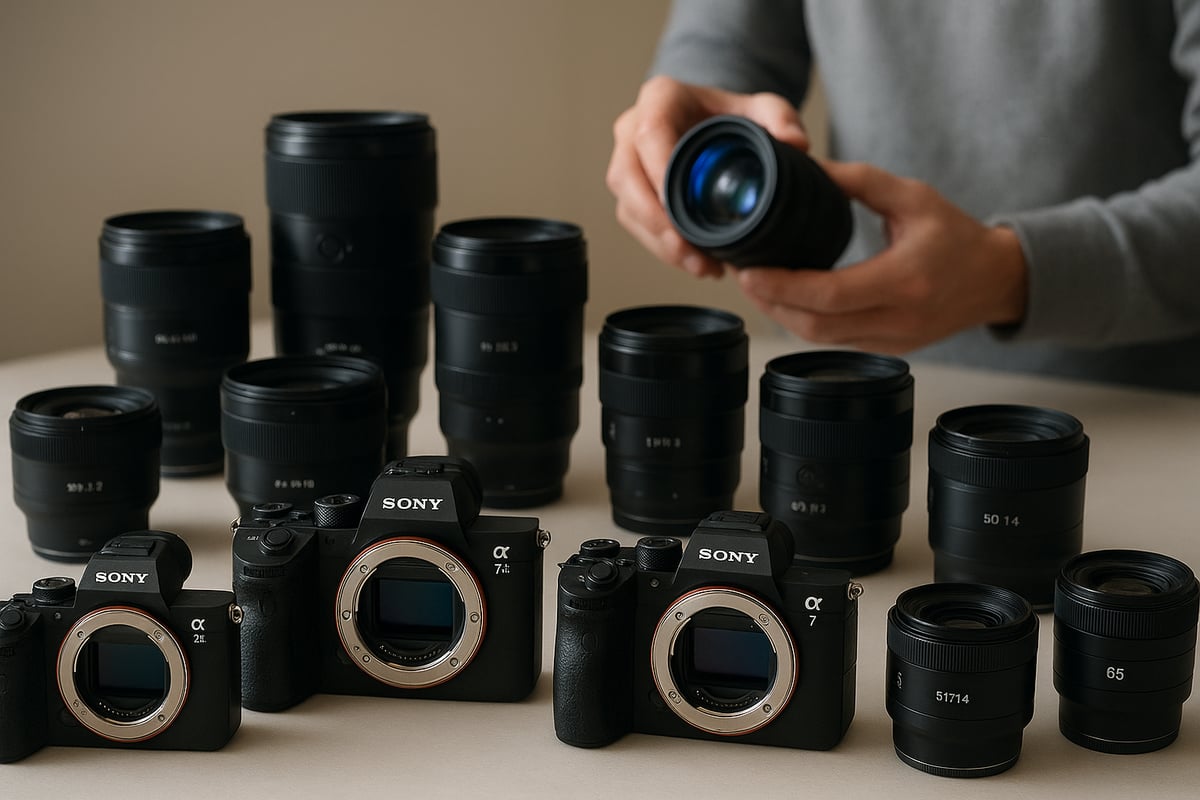
Sony Alpha cameras use the E-mount system, which has evolved to support a wide range of sony alpha camera lens options. While most recent Alpha models feature full compatibility with E-mount lenses, some older or adapted lenses may not deliver optimal performance. Using adapters for A-mount or third-party lenses can introduce issues like slower autofocus and reduced stabilization.
Firmware updates often improve compatibility, but sometimes introduce unexpected quirks. Before investing in a new lens, always check both the camera and lens firmware versions, and confirm compatibility through resources like the Sony photo lenses overview. When exploring adapters, be cautious, as not all features will transfer seamlessly. Taking these steps ensures your sony alpha camera lens will perform as expected for years to come.
Key lens specifications that matter in 2026
Choosing the right sony alpha camera lens in 2026 means understanding core specs such as focal length, maximum aperture, and image stabilization. Focal length determines your field of view, while aperture controls light and depth of field. The sensor size of your Alpha camera also impacts how a lens behaves, affecting both reach and bokeh.
Recent advances in lens technology have brought improvements in weather-sealing, build quality, and optical performance. Lightweight materials now allow for better portability without sacrificing sharpness. When selecting a lens, balance weight, size, and optical quality for your shooting style. Weather-sealed lenses are a wise investment, especially for outdoor or travel photographers. Always check if a sony alpha camera lens supports the latest stabilization tech for the sharpest results.
Decoding lens terminology and abbreviations
Reading a sony alpha camera lens barrel can feel like deciphering a code. Markings such as FE, OSS, G, or GM tell you about lens format, stabilization, and performance grade. “FE” means full-frame E-mount, while “OSS” refers to Optical SteadyShot stabilization. “G” and “GM” indicate Sony’s premium glass.
Understanding technical specs like maximum aperture (e.g., f/1.8), focal length (e.g., 24-70mm), and minimum focus distance helps you match a lens to your needs. Lenses are often categorized as standard, telephoto, macro, or specialty. Look for coatings like Nano AR, which reduce flare and ghosting, ensuring your sony alpha camera lens delivers clean, vibrant images. Knowing these terms empowers you to choose the right gear for every situation.
The impact of lens choice on creative outcomes
Your sony alpha camera lens is more than a technical tool, it is a creative partner that shapes every image. Wide-angle lenses emphasize depth and perspective, while telephotos flatten space and isolate subjects. Aperture and focal length together control depth of field and bokeh, letting you guide the viewer’s eye.
Prime lenses often provide superior sharpness and creative control, while zooms offer flexibility for fast-changing scenes. Specialty lenses unlock new genres, from dreamy macro close-ups to dramatic architectural shots. Thoughtful lens selection is essential for visual storytelling, helping you express mood, focus, and narrative in every frame. The right sony alpha camera lens will inspire new ideas and elevate your photography journey.
7 must-know Sony Alpha camera lens tips for 2026
Choosing the right sony alpha camera lens can transform your images from ordinary to extraordinary. Over the years, I have refined my approach and want to share practical tips that will help you unlock the full potential of your gear. Whether you are new to photography or a seasoned Alpha shooter, these insights will guide you through the evolving landscape of lens technology and technique.
1. Tip: Master lens selection for your shooting style
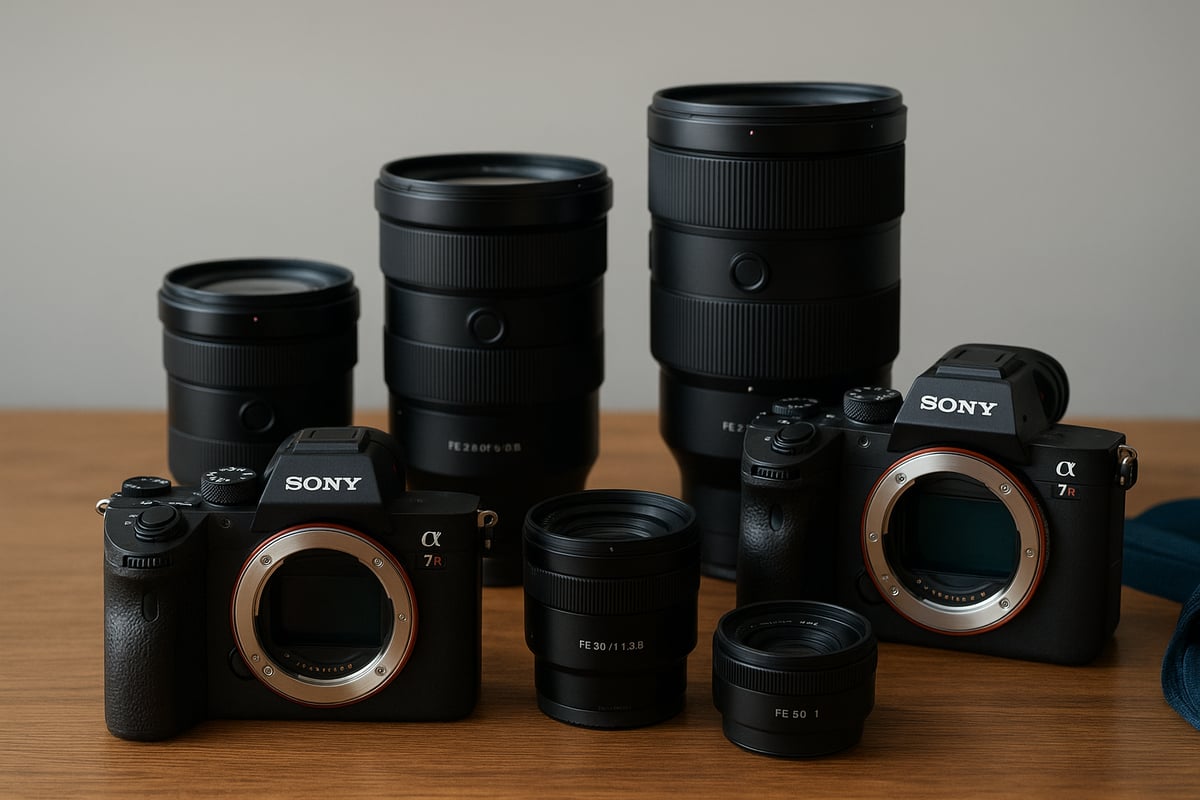
Understanding your creative priorities is the foundation for building your sony alpha camera lens kit. Are you drawn to sweeping landscapes, intimate portraits, or fast-paced street scenes? Each genre has its own demands.
For landscapes, wide-angle lenses (like a 16-35mm) capture grandeur and depth. Portrait photographers often favor an 85mm or 50mm prime for flattering compression and creamy bokeh. Wildlife or sports call for telephoto options, such as a 70-200mm, to bring distant subjects closer. Do not overlook the versatility of a standard zoom, which adapts to a variety of situations.
It is wise to start with one or two lenses that suit your main interests, then expand thoughtfully. Avoid buying too many lenses at once. Instead, use each one extensively before investing in the next. Over time, you will recognize gaps in your kit and can prioritize upgrades that add true value.
Modular lens systems are a smart way to future-proof your collection. They allow you to adapt as your style evolves. For those considering APS-C bodies, resources like the Best lens for Sony a6500 offer tailored recommendations for specific models.
When choosing your first or next sony alpha camera lens, consider weight, size, and compatibility alongside optical quality. Making informed choices now ensures your kit grows with your vision.
2. Tip: Leverage advanced autofocus and stabilization features
Modern sony alpha camera lens designs offer incredible autofocus and stabilization capabilities. These features are crucial for sharp results, especially in dynamic or low-light scenarios.
Many lenses include linear or XD motors, delivering rapid and silent autofocus. When paired with Sony Alpha bodies, the synergy between lens and camera can track moving subjects with impressive accuracy. If you shoot action, wildlife, or events, experiment with different autofocus modes like Real-time Tracking and Eye AF. Each mode is optimized for specific situations.
Stabilization is another game-changer. Some lenses include built-in optical stabilization, while many Sony bodies offer in-body image stabilization (IBIS). Combining both systems can yield steady shots at slower shutter speeds, reducing blur even when handholding longer lenses.
Firmware updates in 2026 have further refined AF performance and lens compatibility. Always check for the latest updates to keep your gear at its best. If autofocus seems sluggish or inconsistent, try resetting both camera and lens, and ensure everything is up to date.
Troubleshooting tip: Certain third-party lenses may not support every autofocus feature. Test thoroughly before critical shoots. With the right sony alpha camera lens, you will capture fleeting moments with precision.
3. Tip: Take advantage of new lens technologies and coatings
In 2026, sony alpha camera lens technology has reached new heights. Advanced optical designs and state-of-the-art coatings are now standard in many models, delivering images that are sharper and cleaner than ever before.
Nano-coatings reduce flare and ghosting, a common challenge in backlit scenes or night photography. High-quality glass elements minimize chromatic aberration, ensuring colors remain true and edges crisp. Weather-sealing is another must-have, protecting your investment from dust and moisture during outdoor shoots.
Recent lens generations use lightweight composites, making large-aperture primes and zooms more portable. This is a real benefit during long sessions or travel photography. When comparing older and newer lenses, pay attention to build quality, focusing speed, and the presence of new coatings or elements.
If you are shopping for your next sony alpha camera lens, research how recent innovations affect real-world performance. Hands-on reviews and sample images can reveal differences that specs alone do not show. Investing in the latest technology pays off in reliability and image quality.
4. Tip: Optimize aperture and depth of field for creative control
Aperture is a powerful creative tool in any sony alpha camera lens. Mastering its use unlocks everything from dreamy backgrounds to razor-sharp landscapes.
Wide apertures (like f/1.4 or f/1.8) create beautiful background blur, perfect for portraits or close-ups where subject isolation matters. In low light, a bright lens lets you shoot handheld without boosting ISO too far, preserving detail and color. On the other hand, stopping down to f/8 or f/11 ensures front-to-back sharpness for landscapes or architecture.
Each lens has a “sweet spot” aperture, usually two or three stops from wide open, where sharpness peaks. Learning this for your lenses will help you get the best results. Be aware of diffraction at very small apertures, as it can soften your images.
Experiment with depth of field across different genres. For street photography, a moderate aperture balances subject separation and context. Macro shooters often use focus stacking to overcome shallow depth of field. With every sony alpha camera lens, practice and review your results to refine your aperture choices.
5. Tip: Maintain and clean your lenses for peak performance
A clean sony alpha camera lens is essential for sharp, artifact-free images. Dust, fingerprints, or smudges can degrade contrast and introduce flare, especially when shooting into the light.
Start with a gentle air blower to remove loose particles. Use a soft microfiber cloth and lens cleaning fluid for stubborn spots. Avoid circular motions that could grind grit into the glass. Always clean from the center outward.
Regular maintenance prevents issues like fungus or internal haze, which can develop in humid climates. Store your lenses in a dry, padded case with silica gel packs to absorb moisture. Inspect your gear before and after shoots for any signs of damage or buildup.
If you notice persistent haze, focusing problems, or rattling sounds, it may be time for professional servicing. Clean lenses also help keep your camera sensor free from dust during changes.
For field cleaning, carry pre-moistened lens wipes and a compact brush. Treat every sony alpha camera lens with care and it will reward you with years of reliable performance.
6. Tip: Explore creative lens effects and specialty optics
Sometimes, the most memorable images come from stepping outside the norm with your sony alpha camera lens choices. Specialty optics like macro, tilt-shift, and fisheye lenses open up new perspectives and creative avenues.
Macro lenses reveal intricate details in flowers, insects, or everyday objects, transforming the mundane into the extraordinary. Tilt-shift lenses correct perspective distortion for architecture or create miniature effects. Fisheye lenses exaggerate space and curvature, adding drama to action or landscape shots.
Manual focus lenses and creative adapters let you experiment with selective blur, swirly bokeh, or vintage rendering. Lens filters, such as polarizers or ND filters, further expand your creative toolkit.
Combining specialty lenses with in-camera features like focus bracketing or creative modes can produce unique results. Do not hesitate to try unconventional combinations. Every sony alpha camera lens you add for creative use brings a new storytelling tool to your kit.
7. Tip: Make the most of lens firmware and customization options
In 2026, firmware updates are not just for cameras, but also for your sony alpha camera lens. Manufacturers regularly release updates that enhance autofocus, improve compatibility, or introduce new features.
Check your lens and camera manuals for guidance on updating firmware. On many Sony Alpha bodies, you can update lens firmware directly through the camera menu using a memory card. Always back up your settings before starting.
Customizing lens buttons or focus hold functions streamlines your workflow. Assign frequently used settings, like Eye AF or focus magnifier, to dedicated controls. This saves time and helps you react quickly in the field.
Stay informed about new firmware releases by subscribing to manufacturer newsletters or visiting official support pages. If you encounter compatibility issues, updating both your camera and sony alpha camera lens firmware often resolves them.
Keeping your gear current ensures you benefit from the latest advancements, giving you an edge as technology evolves.
Building the ideal Sony Alpha lens kit for your needs
Building a reliable sony alpha camera lens kit can feel overwhelming, especially with so many choices in 2026. I have spent years refining my setup, and can tell you that a thoughtful approach pays off. Let us break down the process into manageable steps, so you get the most out of your Sony Alpha system for years to come.
Assessing your current gear and identifying gaps
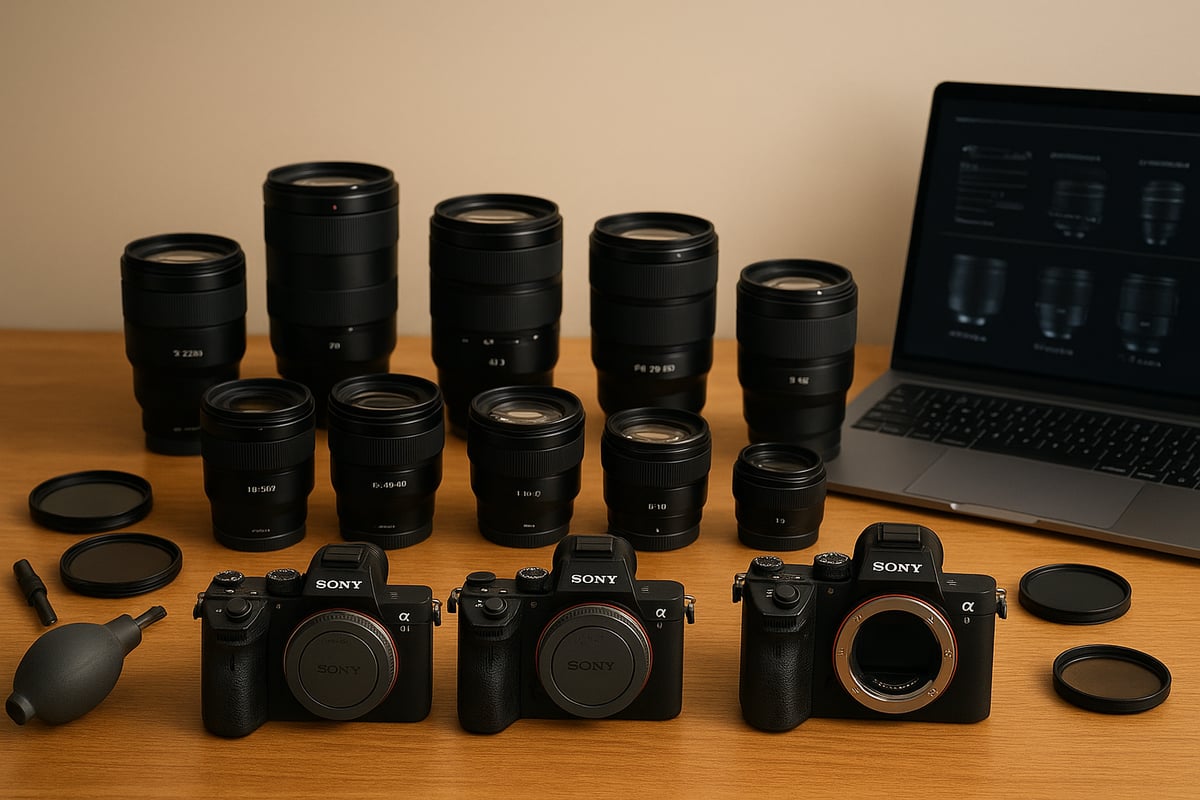
Start by laying out your existing sony alpha camera lens collection. Analyze what focal lengths you have and note any overlap. Do you already own a standard zoom, a fast prime, or a telephoto lens? Use a simple table to visualize your coverage:
| Focal Length | Lens Type | Usage |
|---|---|---|
| 16-35mm | Wide Zoom | Landscapes |
| 50mm | Prime | Portraits |
| 70-200mm | Telephoto | Wildlife/Sports |
Identify if you are missing any lenses that could open up new creative avenues, such as a macro or an ultra-wide. Also, think about whether you have both general-purpose and niche options. This assessment ensures your sony alpha camera lens kit is ready for any scenario.
Strategies for smart lens investment in 2026
Smart investment is about balancing quality, versatility, and budget. Consider buying used or refurbished sony alpha camera lens models, especially if you want to try a new style without breaking the bank. Prioritize upgrades that make the biggest difference to your photography, whether that means a faster aperture or better stabilization.
Always check the resale value for lenses, as some high-quality glass holds its worth over time. Future-proofing is possible if you choose lenses that adapt well to evolving camera bodies. For example, the Sony Alpha 7 IV review offers insights on pairing lenses with newer bodies, helping you make wise investment choices.
Lens accessories that enhance performance and creativity
The right accessories can elevate your sony alpha camera lens performance. Filters such as circular polarizers or ND filters expand your creative options, while lens hoods help prevent flare and protect the front element. Quality adapters can allow you to use specialty lenses, but always verify compatibility.
A sturdy tripod or monopod is also critical for maximizing sharpness, especially with longer focal lengths. Do not overlook cleaning kits, which keep your glass in top shape. Accessories round out your kit and let you push creative boundaries with your sony alpha camera lens system.
Staying updated with lens trends and new releases
Keeping up with the latest sony alpha camera lens releases ensures your kit remains relevant. Follow trusted review sites, attend workshops, and engage with online communities to stay informed. Major announcements, such as the Sony Alpha 7 V and FE 28-70mm f/3.5-5.6 OSS II Launch, signal new technology and performance improvements you might want to consider.
Continuous learning is key. By tracking updates and seeking expert advice, you can make confident decisions about expanding or refining your sony alpha camera lens collection.
Maximizing longevity and value from your lens collection
Caring for your sony alpha camera lens collection is more than a routine, it is an investment in your creative journey. A well-maintained lens kit not only delivers peak performance but also holds its value for future upgrades or resale. In this section, I will share practical tips to help you keep your gear in top shape, make smart upgrade decisions, and ensure your collection stands the test of time.
Best practices for lens storage and protection
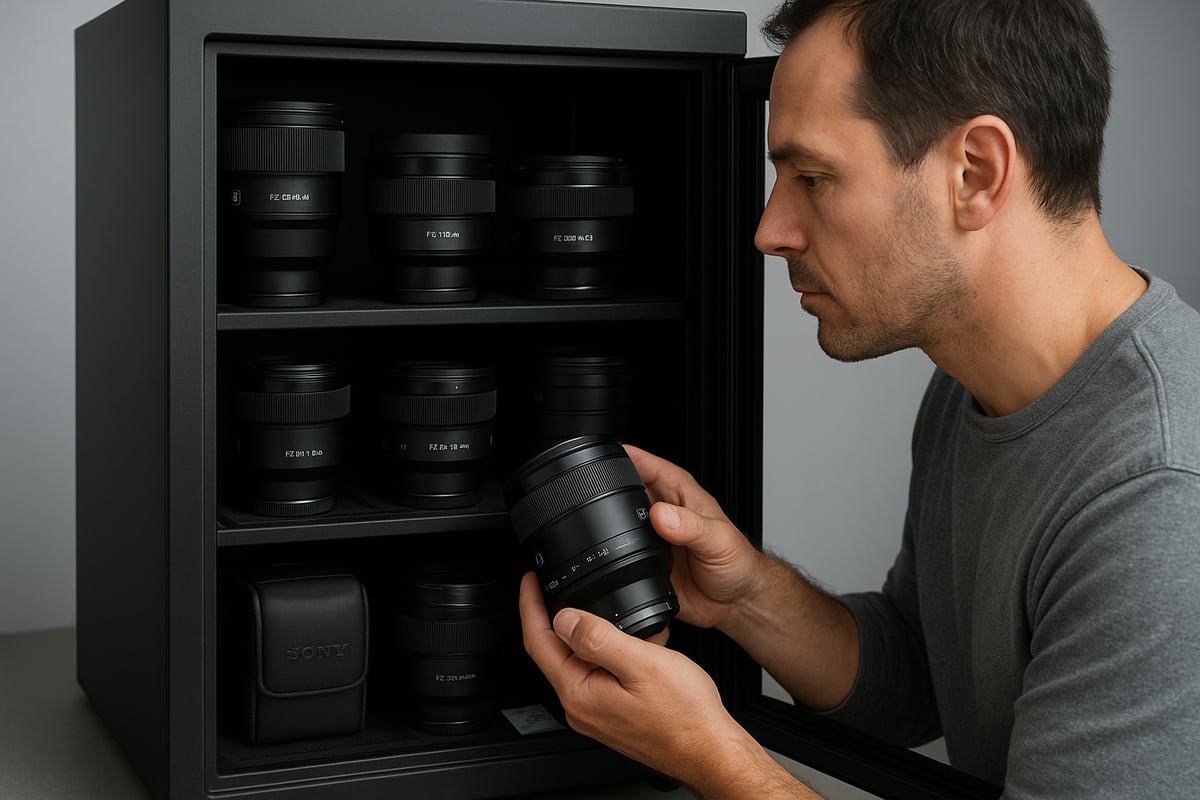
Proper storage is the first step to longevity for any sony alpha camera lens. Always keep your lenses in a dry, dust-free environment. A dedicated lens cabinet or airtight case with silica gel packets helps prevent moisture buildup and fungus. When traveling, use padded lens pouches to guard against impacts.
For collectors or those with higher-value gear, investing in insurance can provide peace of mind against loss or damage. Regularly inspect lens mounts and contacts for debris. Labeling your cases and keeping an inventory will make it easier to track your collection and spot any missing pieces. These small habits go a long way in protecting your investment.
When and how to service or upgrade your lenses
Even the best sony alpha camera lens needs occasional professional attention. Look for warning signs such as sluggish autofocus, unusual noises, or visible dust inside the elements. Routine servicing can address these issues before they affect image quality.
If you are unsure about cleaning methods, consult the Alpha Camera and Lens Maintenance Tips from Sony for detailed guidance. Regular maintenance not only extends lifespan but also preserves resale value. When deciding whether to repair or upgrade, factor in the age, performance, and current technology of your lens. Sometimes, a simple firmware update can breathe new life into older glass.
Resale and recycling options for older lenses
When it is time to part with a sony alpha camera lens, consider the thriving pre-owned market. Assess your lens for cosmetic wear, functionality, and original packaging to determine its value. Many photographers are eager to buy gently used lenses, especially if you provide clear photos and honest descriptions.
Eco-conscious disposal is also gaining traction. Some manufacturers and specialty shops offer recycling programs for older or damaged lenses, minimizing environmental impact. By recycling or reselling, you not only recover value but also support a circular, sustainable photography community.
Building a sustainable and future-proof lens kit
A future-proof sony alpha camera lens kit adapts as your creative needs evolve. Modular lens systems and E-mount compatibility make it easier to add or swap lenses as technology advances. Keeping an eye on award-winning innovations, like those highlighted in the Sony Achieves Six Wins at 2025 EISA Awards, can guide your upgrade path.
Choose lenses with durable construction and long-term relevance, such as weather-sealed zooms or high-quality primes. Minimize environmental impact by selecting versatile optics and recycling older gear responsibly. Through thoughtful curation, your lens kit will remain a valuable creative asset for years to come.


