




View full specs
Contents
- Sony a7CR Review 2026: Compact 61MP Full-Frame Power
- Quick Verdict
- Sony a7CR Specs That Matter
- Who Should Buy the Sony a7CR?
- Image Quality: The Main Reason to Buy It
- Handling: Compact Body, Real Compromises
- Autofocus and Stabilization
- Video Quality and Limits
- Sony a7CR vs a7R V, a7C II, and a7 IV
- Buying Advice in 2026
- Final Verdict
- FAQ
Sony a7CR Review 2026: Compact 61MP Full-Frame Power
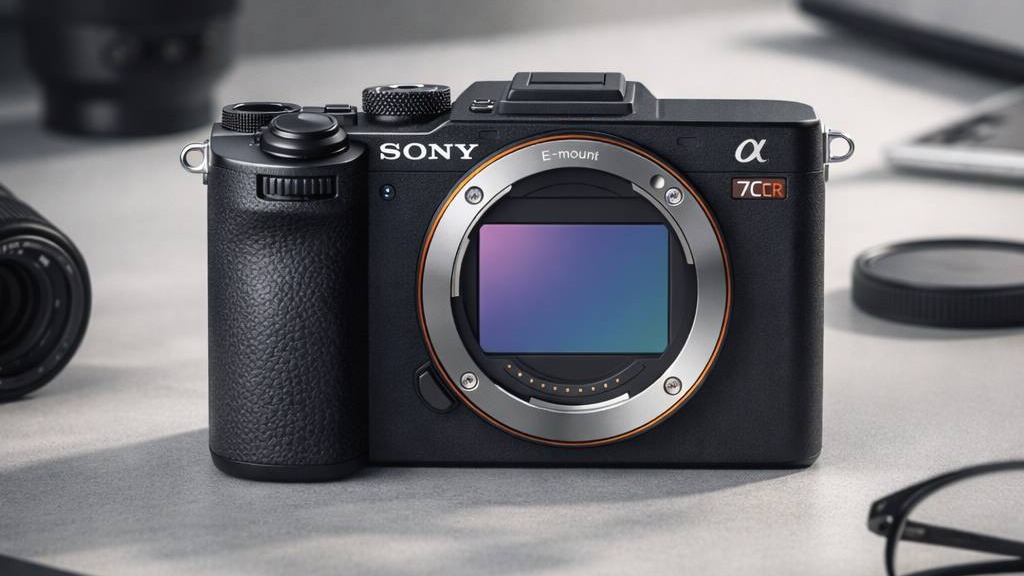
The Sony a7CR is the kind of camera that looks slightly unrealistic on paper: a 61MP full-frame sensor in a body closer in spirit to Sony’s compact a7C line than to the larger a7R V.
This Sony a7CR review is really about priorities. If you want maximum detail in the smallest full-frame Sony body possible, the a7CR is compelling. If you want the most comfortable grip, best viewfinder, dual card slots, or a body built around heavy professional lenses, the compromise becomes obvious.
That is not a flaw. It is the whole point of the camera. The Sony α7CR is for photographers who would rather carry a smaller high-resolution body more often than carry a larger flagship body only when they feel motivated.
Quick Verdict
The Sony a7CR is worth buying if you want 61MP full-frame image quality in a compact travel-friendly body. It is especially strong for landscape, travel, documentary, street, architecture, and detail-heavy still photography.
I would not choose it for sports, wildlife with large lenses, heavy event work, or video-first production. The single card slot, smaller EVF, compact grip, and cropped high-frame-rate video are real tradeoffs.
The simple version: the a7CR gives you much of the Sony a7R V file quality in a smaller package, but it does not give you the same body, viewfinder, controls, or professional redundancy.
Sony a7CR Specs That Matter
- Sensor: 61MP full-frame Exmor R CMOS
- Lens mount: Sony E mount
- Autofocus: AI-based Real-time Recognition AF
- Stabilization: 5-axis in-body stabilization, rated up to 7 stops
- Video: 4K up to 60p; 4K 60p uses a crop
- Screen: 3.0-inch vari-angle touchscreen
- Viewfinder: 2.36M-dot OLED EVF
- Storage: single SD card slot
- Continuous shooting: up to 8 fps
- Battery: NP-FZ100
- Weight: about 515g with battery and card
- Weather resistance: dust/moisture-resistant design, not waterproof
Who Should Buy the Sony a7CR?
The a7CR is for photographers who care deeply about image quality but hate carrying large bodies. It makes the most sense when paired with compact primes, small zooms, and a lightweight travel kit.
Landscape shooters get huge files for cropping and printing. Travel photographers get full-frame dynamic range without a large body. Street and documentary photographers get a discreet camera that can still produce serious client-quality files.
The camera is less convincing with large f/2.8 zooms or long telephoto lenses. It can use them, but the balance starts to feel wrong. If that is your normal kit, the a7R V or a larger hybrid body will probably feel better.
Image Quality: The Main Reason to Buy It
The 61MP sensor is the headline, and it deserves to be. At base ISO, the a7CR produces detailed, flexible RAW files with enough resolution for large prints, heavy cropping, and careful landscape work.
This much resolution also changes how you shoot. You can travel with fewer lenses, crop creatively, and still keep enough pixels for serious output. For photographers who hike, fly, or walk all day, that matters more than it sounds.
The tradeoff is technique. High resolution reveals missed focus, motion blur, weak lenses, and sloppy shutter speeds. The a7CR rewards careful shooting. It is small, but it is not casual in the way it exposes mistakes.
Handling: Compact Body, Real Compromises
The a7CR uses Sony’s rangefinder-style compact body design. With a small prime, it feels excellent: discreet, light, and easy to keep with you all day. With a larger zoom, the grip feels shallower and the body becomes the small part of a front-heavy system.
The optional grip extension helps more than expected. If you have larger hands or plan to use heavier lenses, treat it as part of the camera rather than a luxury accessory.
The viewfinder is usable but not luxurious. This is one of the clearest differences from the a7R V. If you spend hours composing through an EVF, you may prefer the larger body. If you often use the rear screen or shoot casually while traveling, the smaller finder is easier to accept.
Autofocus and Stabilization
Autofocus is one of the reasons the a7CR feels modern rather than like a miniaturized spec experiment. Sony’s AI-based subject recognition is useful for people, animals, birds, vehicles, and general tracking situations. For travel and documentary work, it makes the camera feel quicker than its high-resolution files suggest.
The 5-axis in-body stabilization is also important. A 61MP sensor punishes shake, so stabilization is not just a convenience. It helps with handheld landscapes, museum interiors, night streets, and slow shutter speeds when a tripod is not practical.
For action, the a7CR is competent but not the first body I would choose. The 8 fps burst rate, single card slot, and compact ergonomics point more toward deliberate stills than high-volume sports coverage.
Video Quality and Limits
The a7CR can shoot attractive video, but it is not a video-first camera. 4K 30p is useful, 4K 60p is available with a crop, and Sony’s color and autofocus are strong. For travel clips, hybrid creator work, and occasional client video, it is capable.
The limitations are clear. Rolling shutter, heat planning, cropped 4K 60p, one card slot, and the high-resolution sensor’s readout all matter if video is your primary work. If motion is the job, a camera like the Sony FX30 or Sony FX3 makes more sense.
Think of the a7CR as a superb stills camera that can also shoot good video, not as a compact cinema body.
Sony a7CR vs a7R V, a7C II, and a7 IV
| Camera | Best Reason to Choose It | Main Tradeoff |
|---|---|---|
| Sony a7CR | 61MP files in the smallest body | Smaller EVF, one card slot, compact grip |
| Sony a7R V | Best high-resolution Sony body experience | Larger and more expensive |
| Sony a7C II | Smaller files, better general-purpose balance | Less resolution for cropping and large prints |
| Sony a7 IV | Hybrid stills/video value | Larger body, lower resolution |
If you want the smallest possible high-resolution full-frame Sony, choose the a7CR. If you want the best high-resolution shooting experience, choose the a7R V. If 33MP is enough, the a7C II or a7 IV may be easier everyday cameras.
Buying Advice in 2026
The a7CR is still new enough that used pricing may not always be attractive. Watch for discounts, open-box bodies, and kits that include the grip extension. Because the body is compact and premium, condition matters: check the screen hinge, EVF, card slot, mount, and whether the camera has been used heavily for travel.
Do not buy it just because it is small. Buy it because you specifically want high-resolution full-frame files in a small Sony E-mount body. If that sentence does not describe you, a less expensive Sony may be more enjoyable.
Final Verdict
The Sony a7CR is a specialist camera disguised as a travel body. It gives you huge files, modern autofocus, strong stabilization, and a compact shape, but it asks you to accept a smaller EVF, one card slot, and less comfortable handling with large lenses.
For landscape, travel, architecture, documentary, and high-resolution everyday photography, it is one of Sony’s most interesting cameras. For action, pro event redundancy, or video-first work, choose something else.
FAQ
Is the Sony a7CR worth buying?
Yes, if you want 61MP full-frame image quality in a compact body. It is less ideal if you need dual card slots, a large EVF, or heavy-lens comfort.
Is the Sony a7CR better than the a7R V?
It is smaller and lighter, but the a7R V has the better body, viewfinder, handling, and professional shooting experience.
Does the Sony a7CR shoot 4K 60p?
Yes, but 4K 60p uses a crop. For video-first work, a dedicated video body may be a better choice.
What is the best use for the Sony a7CR?
Travel, landscape, street, architecture, documentary, and high-resolution still photography are its strongest use cases.
Travel, landscape, architecture, documentary, and high-resolution still photographers who want a compact full-frame Sony body.
You need dual card slots, a large EVF, heavy-lens comfort, sports speed, or video-first ergonomics.
Medium; the camera is small, but 61MP files demand good technique and storage planning.
Strong within Sony E mount; a7R V is the larger high-resolution step-up.
Good occasional video, but cropped 4K 60p and readout limits keep it behind video-first bodies.
Yes if compact 61MP full-frame is the point; no if 33MP is enough.
Last update on 2026-06-19 / Affiliate links / Images from Amazon Product Advertising API


