



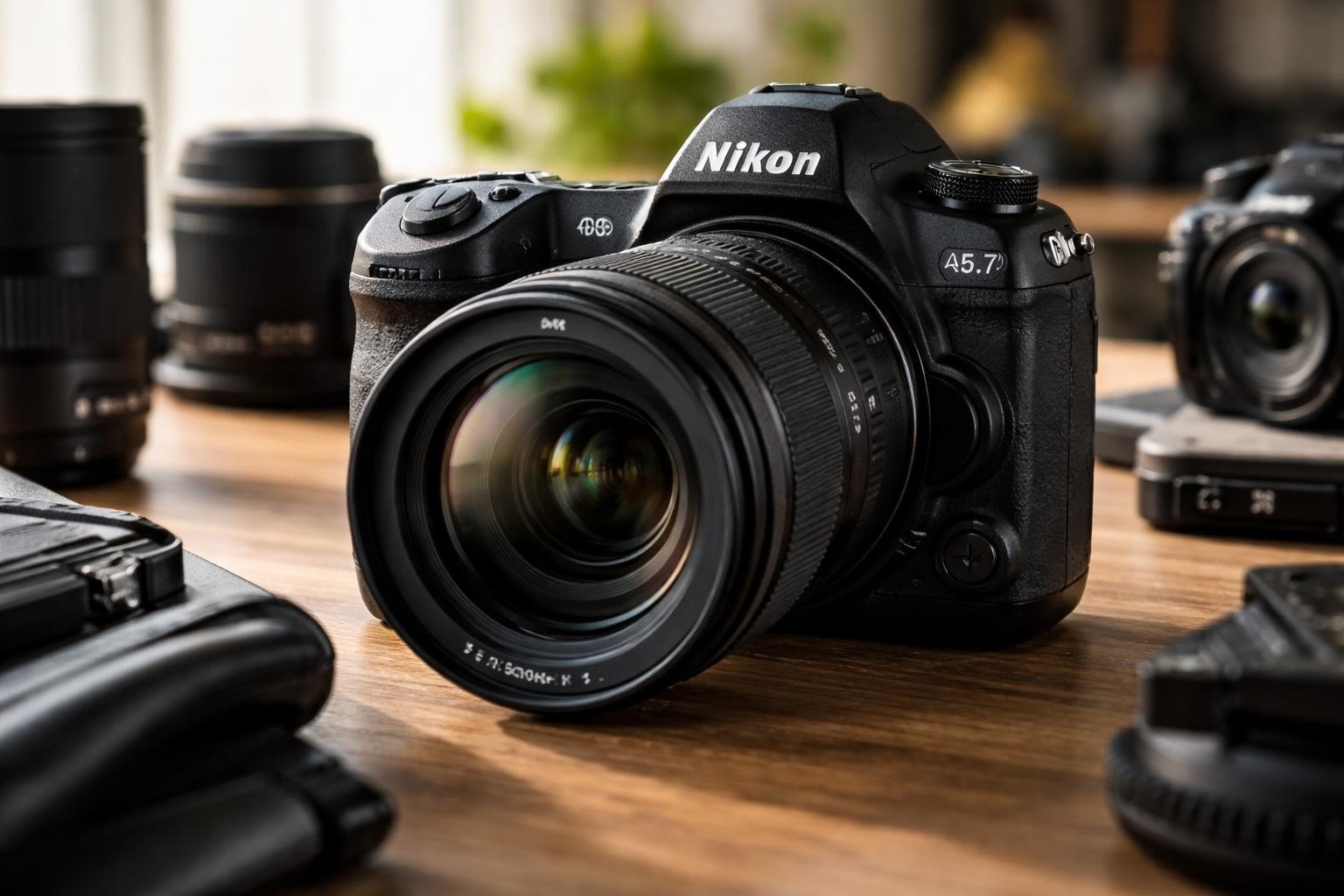
The Nikon Z8 has been making waves in the photography world since its release, and for good reason. After spending several months with this camera across various shooting scenarios, from fast-paced sports events to controlled studio environments, I’ve developed a thorough understanding of what it truly offers. This Nikon Z8 review will dive deep into the real-world performance, strengths, and limitations that you won’t always find in spec sheets or marketing materials. Whether you’re considering an upgrade from a DSLR or evaluating your next mirrorless investment, this comprehensive look at Nikon’s hybrid powerhouse will help you make an informed decision.
Contents
- Understanding the Z8’s position in Nikon’s lineup
- Build quality and handling
- Autofocus performance in real-world shooting
- Image quality across ISO ranges
- Video capabilities and hybrid workflow
- Battery life and power management
- Memory card configuration and workflow
- Lens compatibility and the Z-mount ecosystem
- Firmware updates and future-proofing
- Comparison with competing cameras
- Who should consider the Z8
- Storage and workflow considerations
- Value proposition and pricing
- The learning curve and adaptation period
- Long-term reliability considerations
- Accessories worth considering
- Final thoughts on the Z8 experience
Understanding the Z8’s position in Nikon’s lineup
Nikon positioned the Z8 strategically between their flagship Z9 and the more consumer-oriented Z6 series. What makes this placement interesting is that the Z8 essentially delivers Z9 performance in a more compact body. The sensor, processor, and autofocus system are virtually identical to the flagship model, which means you’re getting professional-grade technology without the bulk or the higher price tag.
The camera features a 45.7-megapixel stacked CMOS sensor paired with Nikon’s EXPEED 7 processor. This combination isn’t just about resolution. The stacked sensor design allows for incredibly fast readout speeds, which translates to better autofocus performance, reduced rolling shutter, and the ability to shoot continuously at impressive frame rates.
Key specifications breakdown
Let me break down the core specifications that define the Z8’s capabilities:
| Feature | Specification |
|---|---|
| Sensor | 45.7MP Full-Frame Stacked CMOS |
| Processor | EXPEED 7 |
| Continuous Shooting | Up to 120 fps (JPEG), 20 fps RAW |
| Video | 8K 60p, 4K 120p internal recording |
| Autofocus Points | 493-point hybrid AF system |
| Viewfinder | 3.69M-dot Quad-VGA EVF |
| In-Body Stabilization | 5-axis, up to 6.0 stops |
| Weight | 910g (body only) |
What these numbers don’t tell you is how the camera feels in actual shooting situations. The weight distribution, for instance, balances beautifully with heavier telephoto lenses, something I noticed immediately when shooting wildlife.
Build quality and handling
The Z8 body feels substantial without being cumbersome. At 910 grams, it sits comfortably in that sweet spot where you know you’re holding professional equipment, but you’re not dreading a full day of shooting. The magnesium alloy construction inspires confidence, and the weather sealing has proven reliable in light rain and dusty conditions.


One aspect that deserves attention is the button layout. Nikon has refined their control scheme over several iterations, and it shows. The placement of the AF-ON button, the ISO button, and the exposure compensation dial all fall naturally under your fingers. After a week of regular use, muscle memory takes over completely.
The electronic viewfinder experience
The 3.69-million-dot electronic viewfinder represents a significant upgrade for anyone coming from older mirrorless cameras or DSLRs. The refresh rate options go up to 120 fps, which creates an incredibly smooth viewing experience when tracking fast-moving subjects. This becomes particularly valuable when shooting sports or wildlife, where anticipating movement is crucial.
However, there’s a learning curve if you’re transitioning from optical viewfinders. The EVF shows you the actual exposure in real-time, which is tremendously helpful, but it can feel different from the optical viewfinder experience some photographers are accustomed to.
Autofocus performance in real-world shooting
The autofocus system is where the Z8 truly shines, and it’s one of the main reasons this Nikon Z8 review leans positive. The 493-point hybrid system covers approximately 90% of the frame, which gives you flexibility in composition without worrying about focus point placement.
Subject detection has been implemented thoughtfully. The camera recognizes people, animals (including birds), vehicles, and airplanes. In practice, the bird detection works remarkably well. I’ve shot various species, from large raptors to small songbirds, and the camera consistently locks onto and tracks the eye, even when the bird is moving erratically.
Autofocus modes and customization
The customization options for autofocus deserve their own discussion:
- Wide-area AF modes: Large, small, and auto options give you control over how much of the frame the camera considers
- 3D-tracking: Inherited from Nikon’s DSLR heritage, this mode excels at following subjects across the frame
- Subject detection: Can be toggled on or off, and you can specify which subjects to prioritize
- Custom AF settings: Save different configurations for different shooting scenarios
What I appreciate most is the ability to quickly switch between AF area modes using customizable buttons. This flexibility means you can adapt to changing situations without diving into menus.
The transition from DSLR to mirrorless with the Z8 has proven worthwhile for many wildlife photographers, particularly those who rely on fast and accurate autofocus for unpredictable subjects.
Image quality across ISO ranges
The 45.7-megapixel sensor delivers exceptional image quality, but resolution alone doesn’t tell the complete story. The dynamic range is impressive, with the ability to recover significant detail from shadows and highlights during post-processing. This latitude is particularly valuable for landscape photographers who often shoot in challenging lighting conditions.
Base ISO performance is pristine, as you’d expect. The files are clean, detailed, and provide excellent color rendition straight out of camera. Nikon’s color science has always been a strength, and the Z8 continues this tradition with natural skin tones and pleasing color transitions.
High ISO capabilities
ISO performance remains strong well beyond the base range:
- ISO 100-800: Virtually noise-free, excellent for all applications
- ISO 1600-3200: Very usable with minimal noise reduction needed
- ISO 6400-12800: Acceptable noise levels, detail retention remains good
- ISO 25600+: Usable in emergency situations, noise becomes more apparent
I’ve shot events at ISO 6400 and produced images that clients have printed at substantial sizes without issue. The noise that does appear has a film-like quality that’s less objectionable than the pattern noise from some competing sensors.
Video capabilities and hybrid workflow
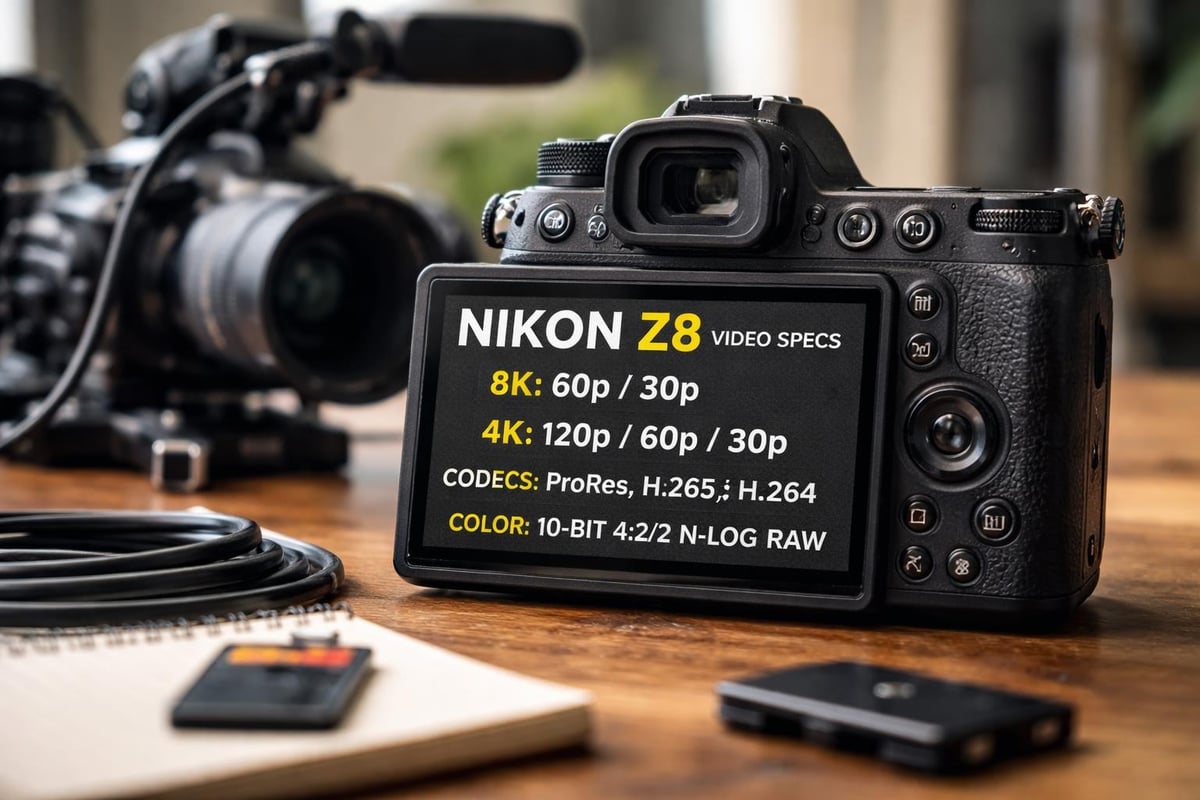
The Z8 positions itself as a serious hybrid camera, and the video specifications support this claim. Internal 8K recording at 60p is available, though most users will likely stick with 4K for practical reasons. The 4K 120p capability provides beautiful slow-motion footage, and the full-width 4K recording means you’re using the entire sensor without crop.
The professional camera market has increasingly demanded strong video capabilities, and Nikon has clearly been listening. The inclusion of N-RAW and ProRes RAW recording options gives videographers significant flexibility in post-production.
Practical video considerations
Heat management during extended recording sessions has been handled well. The camera does warm up during 8K recording, but I haven’t experienced unexpected shutdowns even during longer takes. The inclusion of a cooling fan accessory option shows Nikon anticipated professional video use.
Audio inputs are comprehensive with both 3.5mm microphone and headphone jacks. The ability to use USB-C for power delivery during recording sessions eliminates battery anxiety for studio work or extended interviews.
Battery life and power management
The EN-EL15c battery provides decent longevity, though mirrorless cameras inherently consume more power than DSLRs. In real-world mixed shooting (stills and video), you can expect 400-500 shots per charge. Heavy video users should plan on carrying multiple batteries.
The USB-C charging capability is convenient for travel. You can charge the battery in-camera using a standard USB-C power delivery charger, which reduces the number of specialized chargers you need to pack.
Memory card configuration and workflow
The dual CFexpress Type B card slots offer several workflow advantages. The write speeds are substantially faster than older SD cards, which becomes critical when shooting 120 fps bursts or high-bitrate video. You can configure the cards for overflow, backup, or separation of RAW and JPEG files.
| Card Slot Configuration | Best Use Case |
|---|---|
| Overflow | Maximum storage capacity |
| Backup | Critical events, weddings |
| RAW to Slot 1, JPEG to Slot 2 | Streamlined workflow, quick client previews |
| Separate by file type | Video to one slot, stills to another |
The downside is that CFexpress cards remain expensive compared to SD cards. Budget accordingly when planning your purchase.
Lens compatibility and the Z-mount ecosystem
The Z-mount system has matured significantly since its introduction. Native Z-mount lenses offer excellent optical quality and integrate seamlessly with the Z8’s capabilities. The wider mount diameter allows for lens designs that weren’t possible with F-mount, resulting in sharper corners and better light transmission.
However, the lens selection, while growing, still lags behind more established systems. The FTZ II adapter provides compatibility with F-mount lenses, which gives you access to decades of Nikon glass. Autofocus performance with adapted lenses is generally good, though some older lenses may not perform optimally.
Recommended lenses for the Z8
Based on extensive use, these lenses pair particularly well with the Z8:
- NIKKOR Z 24-70mm f/2.8 S: Versatile standard zoom, excellent sharpness
- NIKKOR Z 70-200mm f/2.8 VR S: Professional telephoto, superb for events and sports
- NIKKOR Z 14-30mm f/4 S: Compact wide-angle, great for landscapes
- NIKKOR Z 85mm f/1.8 S: Sharp portrait lens with beautiful bokeh
- NIKKOR Z 100-400mm f/4.5-5.6 VR S: Excellent wildlife lens, relatively affordable
For photographers working within tighter budgets, exploring options like the best cameras under 700$ might be worthwhile before investing in a premium body and lens combination.
Firmware updates and future-proofing
Nikon has consistently released firmware updates that add meaningful functionality. The Z8 benefits from this approach, with updates adding features like improved subject detection algorithms and enhanced video capabilities. The Wikipedia entry for the Nikon Z8 documents the firmware evolution, showing Nikon’s commitment to improving the camera post-release.
This ongoing development provides confidence that your investment won’t become obsolete quickly. The hardware foundation is strong enough to support additional features through software updates.
Comparison with competing cameras
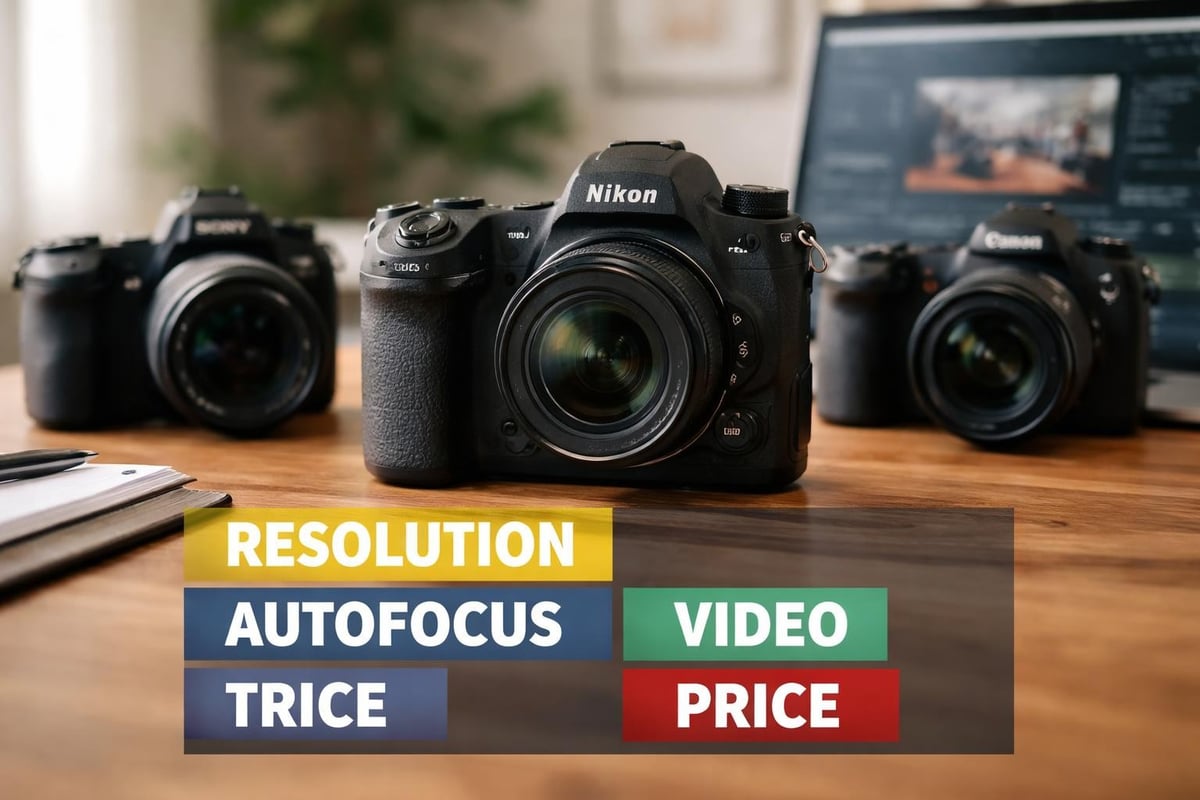
In the competitive landscape of professional mirrorless cameras, the Z8 holds its own admirably. Compared to Sony’s A1 or Canon’s R5, the Z8 offers comparable performance at a more accessible price point. The TechRadar review positions it as a top choice for professionals, highlighting the value proposition.
Strengths compared to competitors
- Superior ergonomics for photographers with larger hands
- Excellent battery life relative to some competitors
- Robust build quality and weather sealing
- Strong value proposition given the feature set
Areas where competitors excel
- Sony offers more native lens options
- Canon’s color science may appeal more to some photographers
- Some competitors offer in-body focus stacking
Who should consider the Z8
This camera serves specific photographer profiles particularly well. Professional wedding photographers will appreciate the reliability, autofocus performance, and dual card slots. Wildlife and sports photographers benefit from the high-speed shooting capabilities and subject tracking. Commercial photographers working in studios will value the high resolution and tethering capabilities.
The Z8 might be overkill for casual enthusiasts or those just starting in photography. The learning curve is steeper than entry-level cameras, and the investment is substantial when you factor in appropriate lenses.
Storage and workflow considerations
Working with 45.7-megapixel RAW files demands robust computer hardware and ample storage. A single day of heavy shooting can easily generate 100GB or more of data. Plan your workflow accordingly with fast memory cards, sufficient hard drive space, and a computer capable of handling large files efficiently.
Cloud backup solutions become more expensive with this volume of data. Many professional photographers implement a 3-2-1 backup strategy: three copies of data, on two different media types, with one copy off-site.
Value proposition and pricing
The Z8 typically retails around $3,999 for the body only, positioning it in the professional category. This pricing reflects the capabilities but also represents a significant investment. According to Engadget’s analysis, the camera delivers phenomenal value at this price point, especially considering it matches the Z9’s performance.
Periodic sales and promotions can reduce the cost. Watching for deals during major shopping events might save several hundred dollars on the purchase.
The learning curve and adaptation period
Transitioning to the Z8 requires an adjustment period, particularly if you’re coming from a DSLR system. The electronic viewfinder, menu system, and autofocus behavior all differ from traditional cameras. Give yourself several weeks to truly adapt and customize the camera to your shooting style.
The customization options are extensive, which is both a strength and a challenge. You can tailor nearly every aspect of the camera’s operation, but this requires time investment to understand and configure properly.
Long-term reliability considerations
Professional photographers need cameras they can depend on for years. While the Z8 is relatively new, early indicators suggest strong reliability. The electronic shutter eliminates mechanical shutter wear for many shooting scenarios, potentially extending the camera’s usable life.
Nikon’s professional service infrastructure provides peace of mind for working photographers. The company’s track record with professional camera support has been solid, though experiences vary by region.
Accessories worth considering
Several accessories enhance the Z8 experience:
- Extra EN-EL15c batteries: Essential for full-day shooting
- Battery grip: Improves handling with large lenses, extends shooting time
- Peak Design camera strap: Comfortable for extended carrying
- Screen protector: Protects the LCD from scratches
- CFexpress card reader: Faster transfers than in-camera USB connection
The Live Science review emphasizes the camera’s design suitability across various photography genres, which these accessories can further optimize.
Final thoughts on the Z8 experience
After months of use across diverse shooting scenarios, this Nikon Z8 review comes to a clear conclusion. The camera delivers professional-grade performance in a package that balances size, weight, and capability better than most competitors. The autofocus system rarely misses, the image quality is exceptional, and the build quality inspires confidence.
The investment is substantial, both in the camera body and the necessary supporting ecosystem of lenses, cards, and accessories. However, for photographers whose work demands reliable, high-performance equipment, the Z8 justifies its cost through consistent results and operational efficiency.
The camera isn’t perfect. The menu system could be more intuitive, native lens selection continues to expand but remains limited compared to mature systems, and the CFexpress card requirement adds to the overall cost. These limitations, while worth noting, don’t significantly diminish the overall value proposition for serious photographers.
The Nikon Z8 represents a compelling option for professionals and serious enthusiasts seeking flagship performance without the bulk or expense of Nikon’s top-tier offering. Its combination of resolution, speed, and video capabilities positions it well for the demands of modern hybrid photography workflows. Whether you’re upgrading from an older system or expanding your kit, understanding how the Z8 fits your specific needs is crucial. For comprehensive reviews, expert recommendations, and guidance on cameras and accessories across all budgets and skill levels, Lens and Shutter provides the insights you need to make confident purchasing decisions.


