



Contents
- Quick verdict for different types of photographers
- Sensor resolution and image quality differences
- Autofocus, speed, and shooting performance
- Video features and hybrid shooting limitations
- Body design, viewfinder, and handling in the field
- Lens pairing and system value on lensandshutter.com
- Price, long-term value, and who should buy each one
- Key takeaways
- Frequently asked questions
Quick verdict for different types of photographers
If you are torn between the Nikon Z7 vs Z5, the best choice depends on what you photograph most and what you expect from your gear. After spending extended time with both cameras, I can say that the Z7 feels like a premium tool for those who demand every ounce of image quality and flexibility, while the Z5 is a reliable workhorse that delivers solid results for a much lower price.
For landscape shooters, printmakers, and anyone who crops heavily, the Z7’s 45.7MP sensor is a real advantage. The extra resolution lets you extract fine details and make huge prints. In contrast, the Z5’s 24MP sensor holds up very well for most uses, but if your workflow involves lots of post-processing or large-format output, you may notice the difference.
Event photographers, wedding shooters, and those who value dependable autofocus will appreciate that both cameras perform well, but the Z7’s faster burst rate and deeper buffer give it a slight edge for action. However, both bodies lag behind Nikon’s Z6 II or Z8 for pure speed.
If you are on a tighter budget or you want to allocate more funds to Z-mount lenses, the Z5 is the more accessible entry into Nikon full-frame. It is also a smart backup body for professionals who already own a higher-end Z-series camera. For casual video, travel, and everyday use, the Z5 covers all the basics without a steep learning curve or intimidating price tag. If you want the deeper hands-on breakdown of the cheaper body, see this Nikon Z5 review.
- Z7: Best for detail-obsessed shooters, landscape, studio, and commercial work, or anyone who needs maximum cropping flexibility.
- Z5: Best for hobbyists, travel, family, events, and those who want dependable full-frame quality without paying a premium.
If you are still unsure which Nikon camera to buy, think about what matters most: image quality headroom, or stretching your budget for better lenses and accessories.
Sensor resolution and image quality differences
How much 45.7MP really changes your files
The headline difference in the Nikon Z7 vs Z5 debate is the sensor. The Z7 uses a 45.7MP backside-illuminated (BSI) full-frame sensor, while the Z5 uses a 24.3MP sensor. On paper, this seems like a huge gap, but the real-world impact depends on your needs.
With the Z7, you get files that can be printed billboard-large or cropped aggressively for wildlife and macro work. Fine textures, like leaves in a landscape or the weave of fabric in fashion photography, come through with extra clarity. You notice this most when pixel-peeping or making A2/A1 prints. The Z7 also has a slight edge in dynamic range at base ISO, which helps retain highlights and shadow detail in challenging light.
The Z5’s 24MP files are certainly no slouch. They hold up beautifully for prints up to 16×24 inches and even larger for most practical viewing distances. For web, social, and editorial use, you are unlikely to see a difference. In fact, the lower-resolution files are easier to process and store, and noise performance at high ISO is very competitive, thanks to the newer sensor design.
If you routinely crop images, the Z7 offers more room to recompose after the fact. For example, shooting birds with a 300mm lens, you can crop in much tighter and still have enough resolution for a crisp print. If you shoot straight-on portraits or wide scenes and rarely crop, the Z5 is more than capable.
- Nikon Z7 image quality: Maximum detail, dynamic range, and cropping flexibility.
- Nikon Z5 image quality: Excellent for most needs, with smaller files and better workflow speed.
- Resolution comparison: Z7 offers about double the megapixels, but only you can decide if you truly need that much file size in your routine work.
One important note: as of 2026, compact digital cameras are making a comeback, but neither Z7 nor Z5 can match their pocket-ability. If you want the best possible image quality and are willing to carry a full-frame body, both of these cameras deliver, but the Z7 is for the pixel peepers and large-format printers among us.
Autofocus, speed, and shooting performance
Burst shooting and buffer in everyday use
Autofocus performance is a big concern for many photographers. Both the Z7 and Z5 use Nikon’s hybrid phase/contrast-detect AF system, covering about 90% of the frame. In good light, both cameras lock focus quickly and accurately, with reliable eye and face detection for portraits.
The Z7 is slightly faster overall. It offers up to 9 frames per second (fps), compared to the Z5’s 4.5 fps. In practice, this means the Z7 can capture faster sequences of action, which is useful for sports, wildlife, or unpredictable moments at events. The Z5’s slower burst rate can be limiting if you rely on spray-and-pray shooting, but it is more than enough for most situations, including family events and posed portraits.
Buffer depth is where the Z7 also pulls ahead. With its faster processor and faster cards, it can shoot longer bursts of RAW files before slowing down. The Z5’s buffer fills up more quickly, especially with RAW shooting, which can cause missed moments if you try to shoot continuous bursts. For most single-shot or short bursts, this is not a deal-breaker, but it is worth considering for action-heavy work.
- Nikon Z7 autofocus: Fast, precise, slightly better tracking and buffer for action shooters.
- Nikon Z5 autofocus: Reliable for everyday photography, but not built for high-speed continuous shooting.
- Continuous shooting: Z7’s higher fps and buffer are noticeable for fast subjects, while Z5 is best for more deliberate shooting styles.
In low light, both cameras slow down a bit, but with fast Z-mount lenses, autofocus remains usable for indoor events and night scenes. If you are a sports or wildlife specialist, the Z7 is the obvious choice between these two, but for most users, the Z5’s AF is entirely sufficient.
Video features and hybrid shooting limitations
4K crop, frame rates, and practical video use
If you are considering either camera for video, there are a few important differences to note. The Z7 records 4K video using the full width of the sensor with minimal crop, delivering sharp, detailed footage that looks professional even by 2026 standards. It offers flat and N-Log profiles for color grading, which is a bonus for those who want to match footage from other pro Nikon bodies.
The Z5 can also record 4K, but with a 1.7x crop. This means your wide-angle lenses behave more like telephotos, and you lose some of the full-frame look. The cropped 4K is noticeably tighter, which can be a dealbreaker if you shoot in small spaces or want those wide scenic shots. The Z5’s 4K footage is still sharp and usable for YouTube, travel, or talking head work, but if you value flexibility, the Z7 is the clear winner.
Neither camera offers advanced video tools like 4K 60p, high frame rates for slow motion, or pro-level audio features. For hybrid shooters who want to switch between stills and video, both are adequate but not class-leading. If video is a major part of your workflow, you might prefer the Z6 II or Z8 for their better frame rates and codecs.
- Nikon Z7 video: Full-width 4K, flat/N-Log profiles, sharper results, more flexible for serious video work.
- Nikon Z5 video: 4K with 1.7x crop, less flexible for wide shots, but fine for home and travel video.
- 4K crop: Z7 uses the whole sensor for video, Z5 crops in significantly.
For readers who want the closest related in-house upgrade path, the site also has a Nikon Z7 II review that helps show how Nikon’s higher-resolution full-frame line evolved. For more detailed user impressions, including hybrid shooting experiences, you can also check out the Nikon Z7 rental discussion on Cameraderie.
Body design, viewfinder, and handling in the field
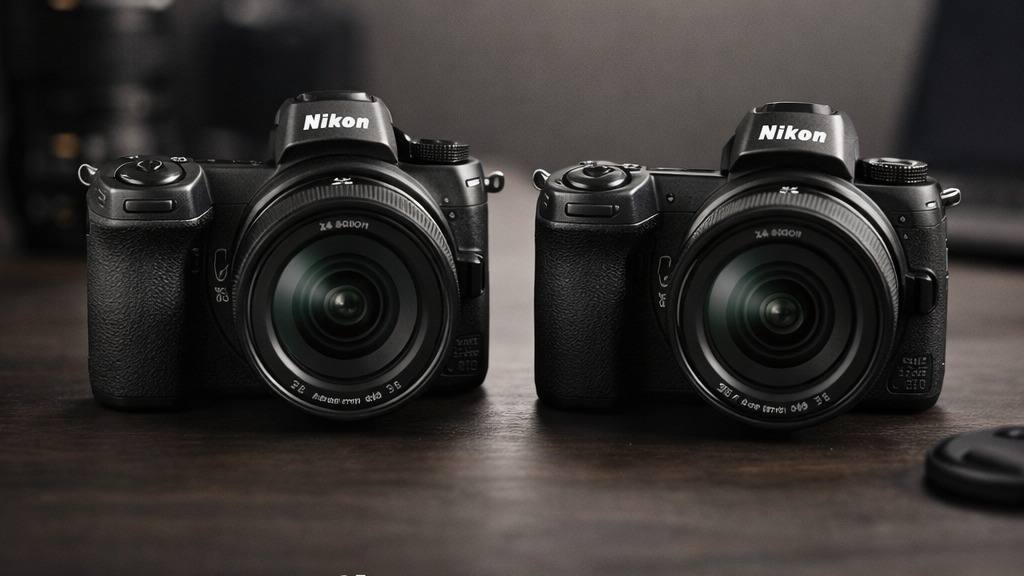
One of the first things you notice when picking up the Nikon Z7 and Z5 side by side is how familiar both feel, yet subtle details set them apart in the field. The Z7’s magnesium alloy body feels just a touch more premium, offering a slightly firmer grip and more tactile response from its buttons and dials. Both cameras are weather-sealed and robust enough for outdoor shoots, but the Z7’s construction is a shade more confidence-inspiring in rough weather or dusty environments.
The control layout is nearly identical, so muscle memory carries over instantly between the two. However, the Z7 adds a top-panel LCD, letting you check your settings at a glance, which is invaluable for tripod work or when shooting discreetly at events. The Z5 omits this feature, relying on its rear screen and EVF for all information. While not a dealbreaker, this is the first hint that the Z7 is aimed at those who want every convenience at their fingertips.
When it comes to the viewfinder, the Z7 wins decisively. Its 3.69-million-dot EVF is crisp, bright, and lag-free, making manual focus and critical composition easier. The Z5’s 3.69-million-dot EVF is also quite good, but the Z7’s refresh rate and clarity feel slightly more refined, especially in low light. For photographers who depend on the EVF for precise work – think landscapes or studio portraits – the Z7 is more satisfying. Both cameras share the same rear touchscreen, which is sharp, responsive, and useful for menu navigation and image review.
Card slots, battery life, and travel-friendly usability
Both the Nikon Z7 and Z5 use the EN-EL15 series batteries, but efficiency varies in real use. The Z5 edges out the Z7 slightly for battery life, partly due to its lower-resolution sensor and slightly less power-hungry processor. With a single battery, the Z5 can manage a full day of casual shooting or a solid half-day of intense work. The Z7, when pushing high-res captures or continuous shooting, drains a bit faster, so carrying a spare is wise for demanding assignments.
One of the most practical upgrades in the Z5 is its dual SD card slots, both supporting UHS-II. This setup is a huge win for wedding photographers and anyone who values instant backup or overflow. The Z7, by contrast, uses a single XQD or CFexpress card slot. While these cards are incredibly fast and reliable, the lack of a second slot may be a sticking point for some pros who require redundancy. If you often shoot critical events or travel for work, the Z5’s SD card flexibility is hard to dismiss.
In terms of size and weight, both cameras are nearly equal, making them easy to carry for long walks or travel. The Z5 is a hair lighter, but not enough to make a real difference on your shoulder. Both slip into a medium-sized bag with a compact lens attached, and neither feels out of place at a casual shoot or a professional gig. For travel photographers, either body pairs well with compact Z-mount primes or the 24-70mm f/4 zoom, keeping your kit nimble and discreet.
Overall, while both cameras are well-designed, the Z7’s extra refinement and EVF quality tilt the scales for those who shoot demanding genres. However, the Z5’s dual card slots and better battery life make it more practical for all-day outings or backup-critical scenarios.
Lens pairing and system value on lensandshutter.com
Choosing the right body is just the beginning – lenses define your creative possibilities. Both the Nikon Z7 and Z5 use the Nikon Z mount, which has quickly grown into one of the most versatile full-frame mirrorless ecosystems available. As of 2026, compact digital cameras are making a comeback, but for interchangeable lens flexibility, the Z system remains a top pick.
For the Z7, pairing it with high-performance Z-mount lenses lets you truly exploit its 45.7MP sensor. My favorite matches for the Z7 include:
- Nikon Z 24-70mm f/2.8 S: Ideal for studio, event, and portraiture – razor-sharp across the frame, and the Z7’s resolution brings out every detail.
- Nikon Z 14-30mm f/4 S: Perfect for landscapes. The Z7’s dynamic range and pixel count reveal every nuance in wide vistas.
- Nikon Z 85mm f/1.8 S: A superb portrait optic, especially if you crop heavily or print large.
The Z5, while compatible with all Z-mount glass, is a better match for more affordable primes and zooms. You still get excellent image quality, but you can invest in lenses like:
- Nikon Z 24-50mm f/4-6.3: Lightweight and compact, ideal for travel or street photography.
- Nikon Z 35mm f/1.8 S: Versatile, fast, and sharp – pairs perfectly with the Z5 for everyday shooting.
- Nikon Z 24-200mm f/4-6.3 VR: A do-it-all zoom for those who want flexibility in one lens.
Both bodies support legacy F-mount glass via the FTZ adapter, so you can use existing Nikon lenses with full autofocus and metering. This adds massive value, especially for upgraders coming from a DSLR background.
Lensandshutter.com often highlights the system’s future-proofing. Nikon’s commitment to Z-mount means new lenses arrive regularly, keeping both the Z7 and Z5 relevant for years. If you want to maximize your investment, consider cross-shopping lenses and bodies together; sometimes, spending less on the body frees up budget for a premium lens, improving your results more than a high-spec sensor ever could.
Price, long-term value, and who should buy each one
When you compare the Nikon Z7 vs Z5 price, the gap remains significant even as both bodies age. The Z7, with its high-resolution sensor and premium features, commands a higher new and used market value. The Z5 is consistently the more affordable entry point to full-frame, and its street price often includes a kit lens, making it a great deal for new full-frame shooters.
From a long-term value perspective, the Z5 stands out for most hobbyists, travel photographers, and anyone wanting to put more money toward lenses. You get reliable autofocus, very good image quality, and all-day usability for a lower outlay. The Z5 also benefits from lower depreciation, making it less risky if you plan to upgrade again in a few years.
The Z7 is the right buy if you regularly print large, crop aggressively, or shoot genres where every pixel counts. Its value lies in its uncompromising files and slightly more robust build. However, it makes sense only if you already own, or plan to buy, lenses that can do justice to its sensor. For working professionals, especially in landscape, studio, or fine art, the Z7’s upfront cost pays off over time.
When the cheaper body is the smarter investment
There are plenty of cases where the Z5 is the better choice. If you mostly share images online, print A3 or smaller, or want a lightweight kit for travel, the Z5’s savings can go toward better lenses or even a second body. For family, street, or event photography, the Z5 rarely feels like a compromise. It also means you can keep up with the fast pace of new lens releases – something the Z system excels at. Unless you specifically need the Z7’s resolution, the Z5 often gives you more enjoyment per dollar spent.
Key takeaways
- The Nikon Z7 is the stronger choice for photographers who need high resolution, better EVF detail, and more room for cropping.
- The Nikon Z5 offers a more budget-friendly path into Nikon full-frame with solid image quality and dependable everyday performance.
- For many lensandshutter.com readers, the smarter buy depends on whether you value premium files more than saving money for better Z-mount lenses.
Frequently asked questions
- Is the Nikon Z7 worth it over the Z5 for photography?
If you demand the highest resolution, plan to crop heavily, or print large, the Z7 is worth it. For most everyday photographers, the Z5’s quality is more than enough, and the savings can go toward better lenses. - Does the Nikon Z5 have better value than the Z7?
For most users, yes. The Z5 delivers full-frame performance at a lower price, with dual card slots and good battery life. Unless you need ultra-high resolution, it’s the better value choice. - Which is better for landscapes, the Nikon Z7 or Z5?
The Z7 is better for landscapes if you want maximum detail and dynamic range. If you’re not printing very large or don’t need extreme cropping, the Z5 is more than capable for scenic work. - Is the Nikon Z7 or Z5 better for video?
Both cameras shoot 4K video, but the Z7 has slightly better quality and more advanced video controls. However, neither is a dedicated video powerhouse. For hybrid shooters, either will suffice, but the Z7’s files are a step ahead for advanced editing.


