



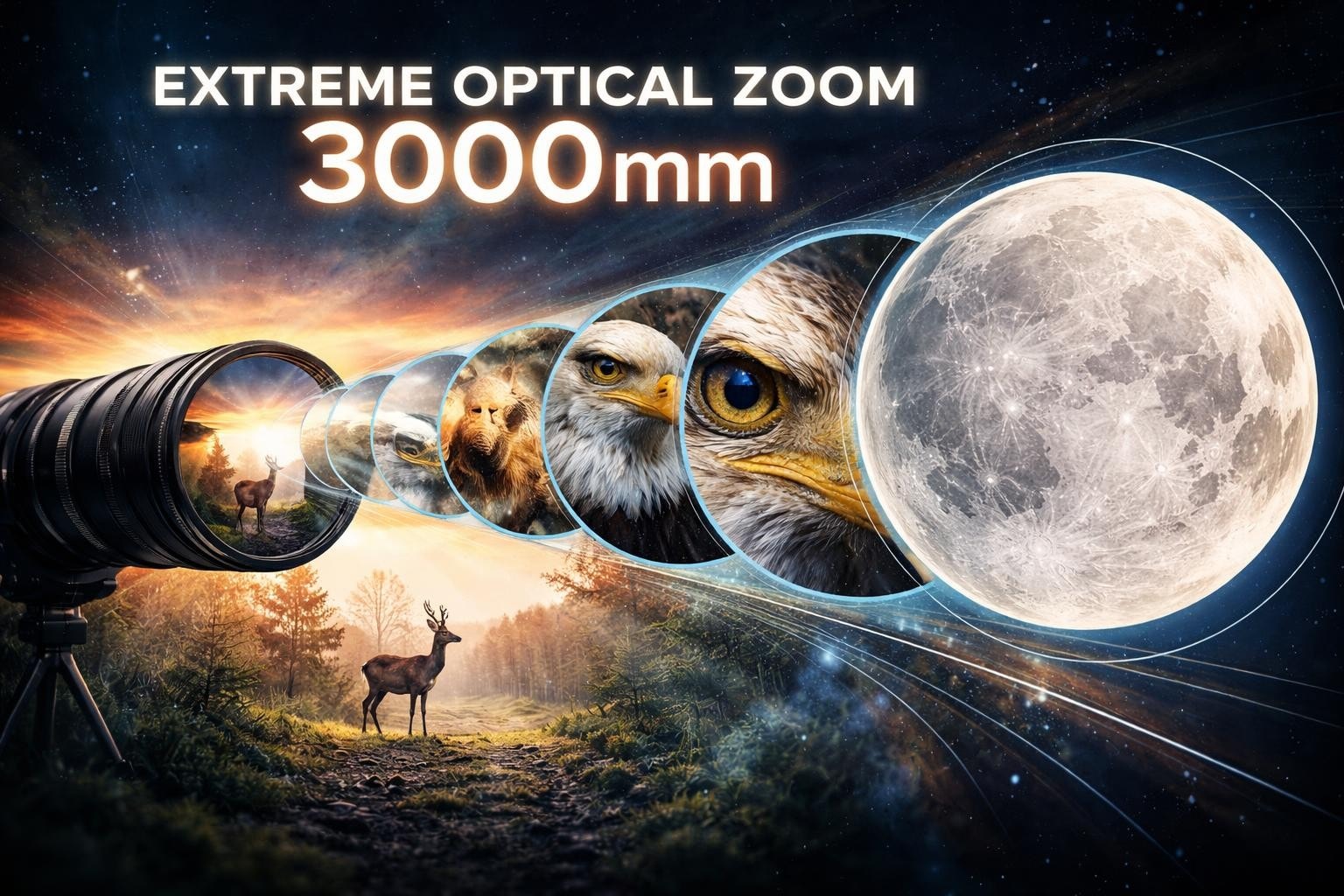

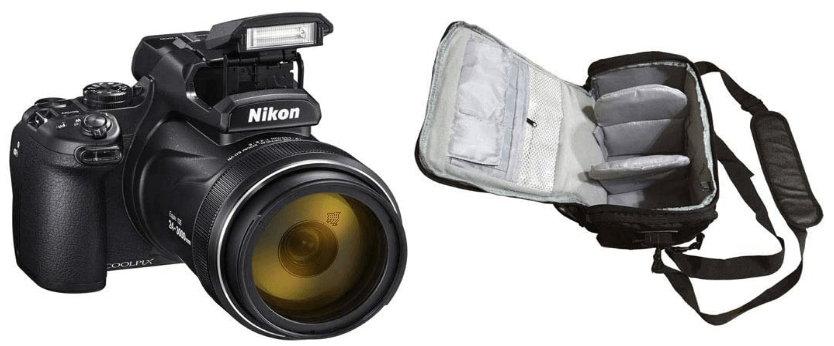
The Nikon Coolpix P1000 sits in a category almost entirely by itself. When this camera launched, it redefined what bridge cameras could accomplish with its staggering 125x optical zoom. That translates to a 24-3000mm equivalent focal length, which sounds more like science fiction than photography gear. After spending considerable time with this camera, I can tell you the experience is unlike anything else in the consumer camera market. This nikon coolpix p1000 review aims to cut through the marketing hype and examine what this extreme zoom range actually means for photographers in practical shooting situations.
Contents
- Understanding the P1000’s core proposition
- Zoom capabilities in real-world shooting
- Build quality and handling characteristics
- Video capabilities and features
- Comparing alternatives and value proposition
- Practical applications and ideal users
- Long-term ownership considerations
- Software and connectivity features
- Accessories and essential additions
- Final perspective on this nikon coolpix p1000 review
Understanding the P1000’s core proposition
The entire design philosophy of the P1000 centers on one principle: bringing distant subjects impossibly close. Nikon didn’t try to create a balanced all-around camera. They engineered a specialized tool for specific photographic challenges.
The 24-3000mm zoom range provides reach that typically requires dedicated super-telephoto lenses costing tens of thousands of dollars. For reference, professional wildlife photographers often use 600mm or 800mm prime lenses that demand significant investment and physical strength to operate. The P1000 packages this capability into a single fixed-lens camera body.
This specialization comes with trade-offs that every potential buyer needs to understand before making a purchase decision. The camera weighs approximately 3.1 pounds, making it one of the heavier bridge cameras available. The lens barrel extends substantially when zooming, changing the camera’s center of gravity and handling characteristics.
The sensor and image quality reality
Inside the P1000 sits a 1/2.3-inch sensor with 16 megapixels of resolution. This small sensor size immediately tells experienced photographers where image quality will land compared to larger sensor cameras. The physics of photography dictate that smaller sensors struggle more with noise, dynamic range, and low-light performance.
In good lighting conditions between ISO 100-400, the P1000 produces acceptable images with decent detail and color reproduction. The JPEG processing applies moderate noise reduction that keeps files clean but sometimes sacrifices fine texture detail. RAW shooting provides more flexibility for post-processing, though the fundamental sensor limitations remain.
Once lighting conditions deteriorate or you push into higher ISO settings, the image quality degrades noticeably. ISO 800 shows visible noise, and anything beyond ISO 1600 becomes challenging for critical applications. This represents the primary limitation in this nikon coolpix p1000 review: the sensor simply cannot match the performance of APS-C or full-frame alternatives.
| ISO Setting | Image Quality | Recommended Use |
|---|---|---|
| 100-400 | Good detail, minimal noise | Bright outdoor photography |
| 800-1600 | Moderate noise, usable | Overcast conditions, casual shooting |
| 3200-6400 | Heavy noise, limited detail | Emergency situations only |
Zoom capabilities in real-world shooting
The headline feature deserves careful examination because the 3000mm equivalent zoom creates both opportunities and challenges. At maximum telephoto, you can photograph subjects that appear completely invisible to the naked eye. The moon photography capabilities demonstrate this dramatically, bringing lunar surface details into clear view.
For wildlife observation and photography, this zoom range changes what’s possible without expensive equipment. Birds, distant mammals, and shy creatures become accessible subjects. However, several practical considerations emerge at extreme focal lengths.
Atmospheric conditions impact image quality significantly. Heat shimmer, humidity, and air pollution all degrade sharpness when shooting across long distances. What appears as soft focus might actually be atmospheric interference rather than lens performance issues. Early morning and late evening typically provide the clearest air for long-distance photography.


Camera shake becomes magnified exponentially. Even with the impressive vibration reduction system, handholding at full zoom requires excellent technique. Shutter speeds need to be quite fast, which then demands more light or higher ISO settings. This creates a challenging balance between motion blur and noise.
The VR system deserves recognition for its effectiveness. Nikon engineered dual detection vibration reduction that compensates for both angular and shift movements. This technology makes handheld shooting possible at focal lengths that would normally demand tripod support. Still, serious work at maximum zoom benefits tremendously from sturdy tripod mounting.
Autofocus performance and limitations
The contrast-detection autofocus system works adequately in good light with stationary subjects. The camera takes a moment to hunt for focus, especially at longer zoom ranges. This lag makes action photography challenging and creates frustration when trying to capture fleeting wildlife moments.
Tracking moving subjects pushes the autofocus beyond its comfort zone. The system struggles to maintain lock on erratically moving targets, and the overall focus speed cannot compete with phase-detection systems found in interchangeable lens cameras. Birds in flight present particular difficulties unless they’re moving predictably against clear backgrounds.
Manual focus becomes necessary in certain situations, and Nikon provides focus peaking and magnification tools to assist. The control ring around the lens barrel offers precise focus adjustment, though achieving critical sharpness at 3000mm requires patience and practice.
Build quality and handling characteristics
The P1000 feels substantial in hand with a deep grip that accommodates larger hands comfortably. The construction uses quality plastics rather than metal, keeping weight manageable while maintaining durability for regular use. Weather sealing would have been welcome for outdoor photography, but the camera lacks this protection.
Button placement follows logical ergonomics with frequently used controls falling naturally under fingers and thumb. The zoom control offers two speeds: a rocker on top for quick adjustments and a side-mounted switch for precise framing. This dual-zoom control system proves useful when trying to track subjects through different focal lengths.
The electronic viewfinder provides 2.36 million dots of resolution, which delivers adequate clarity for composition and focus checking. It’s not the sharpest EVF available in 2026, but it functions reliably in bright sunlight when the rear LCD becomes difficult to view. The articulating LCD screen tilts up and down, enabling more flexible shooting angles for low or high perspectives.
Battery life rates at approximately 250 shots per charge according to CIPA standards. Real-world usage varies dramatically based on zoom usage, video recording, and LCD versus EVF operation. Carrying spare batteries becomes essential for extended shooting sessions, particularly when photographing wildlife where opportunities arrive unpredictably.
Video capabilities and features
The P1000 records 4K UHD video at 30 frames per second with stereo sound. The video quality mirrors the still image characteristics, with good results in proper lighting but struggling in challenging conditions. The extreme zoom range creates unique possibilities for video work, allowing dramatic push-ins that would require dolly moves with conventional equipment.
Video-specific considerations include:
- Electronic vibration reduction helps smooth footage but crops the frame slightly
- Continuous autofocus during video works but hunts noticeably with complex scenes
- Manual focus control during recording requires steady hands
- 4K recording creates large file sizes that fill memory cards quickly
- No external microphone input limits audio quality options
Time-lapse and interval shooting features expand creative possibilities. The camera can capture sequences automatically, useful for documenting long-duration events or creating motion-based content. The moon mode optimizes settings specifically for lunar photography, though manual control often produces better results with experience.

Comparing alternatives and value proposition
When evaluating the P1000, comparison with other cameras becomes complex because few alternatives offer equivalent zoom reach. The closest competitor historically was the Canon PowerShot SX70 HS with 65x zoom, but that provides roughly half the telephoto reach. For photographers seeking maximum zoom in a bridge camera format, the P1000’s specifications stand essentially unmatched.
The value equation depends entirely on individual needs. Photographers requiring extreme reach for specific applications like bird watching, sports from distant positions, or celestial observation find the P1000 fills a unique niche. Those prioritizing image quality, low-light performance, or action photography would benefit more from interchangeable lens systems.
Price-wise, the P1000 typically costs less than a professional telephoto lens alone, making it accessible for enthusiasts who want serious reach without professional-level investment. However, those exploring photography more broadly might find better versatility in cameras under different budgets, and you can explore various options in reviews of cameras under 700 dollars that might better suit diverse shooting needs.
| Camera Aspect | P1000 Strength | P1000 Limitation |
|---|---|---|
| Zoom Range | 24-3000mm equivalent | Slow aperture at telephoto |
| Portability | All-in-one solution | Heavy and bulky |
| Cost | Lower than equivalent lens | Fixed lens limits upgrades |
| Image Quality | Good in bright light | Poor in low light |
Practical applications and ideal users
The P1000 excels in specific photographic disciplines where its strengths align with the requirements. Wildlife observation and documentation benefit tremendously from the extreme reach, particularly when photographing subjects that cannot be approached closely. Birding enthusiasts find the camera invaluable for species identification and behavioral documentation.
Astronomy and astrophotography represent another strong use case. The camera captures detailed moon photos showing craters and surface features clearly. With proper technique and tripod support, planetary photography becomes accessible to amateur astronomers. The manual controls allow precise adjustments for challenging celestial subjects.
Sports photography from fixed positions works well when you cannot move closer to the action. High school sports, amateur events, and situations where photographer access is restricted benefit from the zoom capability. The extensive zoom range allows tight framing of distant players or performers.
Situations where the P1000 struggles
Understanding limitations prevents disappointment and helps photographers make informed decisions. Indoor sports and events challenge the camera due to the small sensor and slow maximum aperture. At full zoom, the lens opens only to f/8, requiring substantial light for adequate shutter speeds.
Professional applications demanding consistent image quality across varied conditions exceed the P1000’s capabilities. Publication requirements, commercial work, or situations where enlargement and cropping are necessary push beyond the sensor’s resolution and quality thresholds.
Fast-moving subjects in unpredictable patterns test the autofocus system beyond its capabilities. While the camera manages with practice and technique, modern interchangeable lens cameras with advanced autofocus systems provide more reliable results for action photography.
Long-term ownership considerations
After extensive use, certain aspects of the P1000 become apparent that aren’t obvious in brief testing. The zoom mechanism remains smooth and reliable across thousands of actuations, showing solid mechanical engineering. The lens extends and retracts consistently without developing play or looseness over time.
The image stabilization performance continues functioning effectively, though extreme telephoto shooting still demands proper technique for sharp results. Learning to support the camera properly, controlling breathing, and using adequate shutter speeds becomes essential for consistent quality.
Menu navigation and customization improve with familiarity. The P1000 offers substantial control for photographers willing to explore settings and adapt the camera to their preferences. Quick access to frequently adjusted parameters streamlines shooting once you establish comfortable configurations.
Firmware updates have addressed some initial quirks and improved performance, demonstrating Nikon’s ongoing support. Keeping the camera updated ensures optimal functionality and access to refinements developed after initial release.
Software and connectivity features
The P1000 includes SnapBridge for wireless connectivity to smart devices. This Bluetooth and Wi-Fi combination allows image transfer and remote camera control from phones or tablets. The implementation works reliably once configured, though initial setup sometimes requires patience.
Remote shooting from a mobile device proves valuable for wildlife photography where human presence disturbs subjects. Setting the camera near a feeder or known animal path and controlling it remotely eliminates disturbance while maintaining the extreme zoom advantage.
GPS functionality tags images with location data, useful for documenting wildlife sightings or travel photography. Battery drain increases with GPS enabled, so selective activation based on needs balances functionality with runtime.
The included software for computer-based image management and RAW processing provides basic functionality. Most serious photographers will prefer third-party solutions like Adobe Lightroom or Capture One for more sophisticated editing capabilities.
Accessories and essential additions
Maximizing the P1000’s potential requires thoughtful accessory selection. A sturdy tripod becomes essential for serious telephoto work, particularly anything approaching the maximum zoom range. The tripod mount positioned forward of the camera body helps balance the extended lens weight.
Essential accessories include:
- Quality tripod with fluid head for smooth panning
- Multiple spare batteries for extended shooting sessions
- Fast memory cards (UHS-I minimum) for buffer clearing and 4K video
- Protective lens hood to minimize flare and protect front element
- Camera bag designed for bridge camera dimensions
Additional batteries represent the most important accessory investment. Wildlife photography often involves long periods of waiting where the camera remains powered on, draining batteries faster than typical shooting. Having three or four batteries ensures full-day shooting capability without anxiety about power.
Memory card selection impacts shooting experience significantly. The camera supports UHS-I cards, and using quality high-speed options ensures the buffer clears quickly during burst shooting and 4K video records without interruption. Cards slower than Class 10 create frustration with longer wait times between shots.
Final perspective on this nikon coolpix p1000 review
The Nikon Coolpix P1000 represents an engineering achievement in optical design, packaging extreme focal length into a relatively compact bridge camera format. Its primary strength is also its defining characteristic: the ability to photograph subjects at distances impossible for most consumer photography equipment.
This specialization means the camera serves specific needs excellently while disappointing photographers expecting well-rounded performance across all situations. Image quality reflects the small sensor reality, with acceptable results in good light but struggling as conditions deteriorate. The autofocus system and overall responsiveness lag behind contemporary standards for action photography.
For wildlife observers, birding enthusiasts, and photographers fascinated by distant subjects, the P1000 provides unique capabilities at accessible pricing compared to professional alternatives. The zoom range practicality raises valid questions about handling and usability, but careful technique and realistic expectations yield remarkable results.
The camera demands that photographers work within its strengths and accept its limitations. Learning to maximize the vibration reduction, understanding optimal ISO ranges, and developing proper support techniques separate disappointing results from impressive captures. Patience becomes essential, both in technique and in waiting for ideal lighting and atmospheric conditions.
Budget-conscious photographers wanting maximum reach without interchangeable lens system complexity find compelling value in the P1000. The all-in-one design eliminates lens changes and simplifies carrying equipment for travel or outdoor adventures. Understanding what the camera does well and avoiding situations that expose its weaknesses creates satisfaction rather than frustration.
The P1000 continues serving a niche market in 2026 despite advancing technology in other camera categories. Its unique positioning means that for specific applications, no practical alternative exists at comparable cost. Photographers knowing they need extreme zoom range and accepting the accompanying trade-offs will find the camera delivers on its core promise.
This nikon coolpix p1000 review ultimately reveals a camera that succeeds brilliantly at its intended purpose while remaining unsuitable for general-purpose photography. Your needs determine whether this specialization represents a perfect solution or a frustrating limitation. Honest assessment of shooting priorities guides the decision better than specifications or zoom range numbers alone.
The Nikon Coolpix P1000 delivers unmatched zoom capability with clear limitations in image quality and handling that photographers must understand before purchasing. Whether you’re researching this specialized bridge camera or exploring other options for your photography needs, Lens and Shutter provides comprehensive reviews and expert guidance to help you make informed equipment decisions that match your creative vision and budget.
Last update on 2026-04-06 / Affiliate links / Images from Amazon Product Advertising API


