



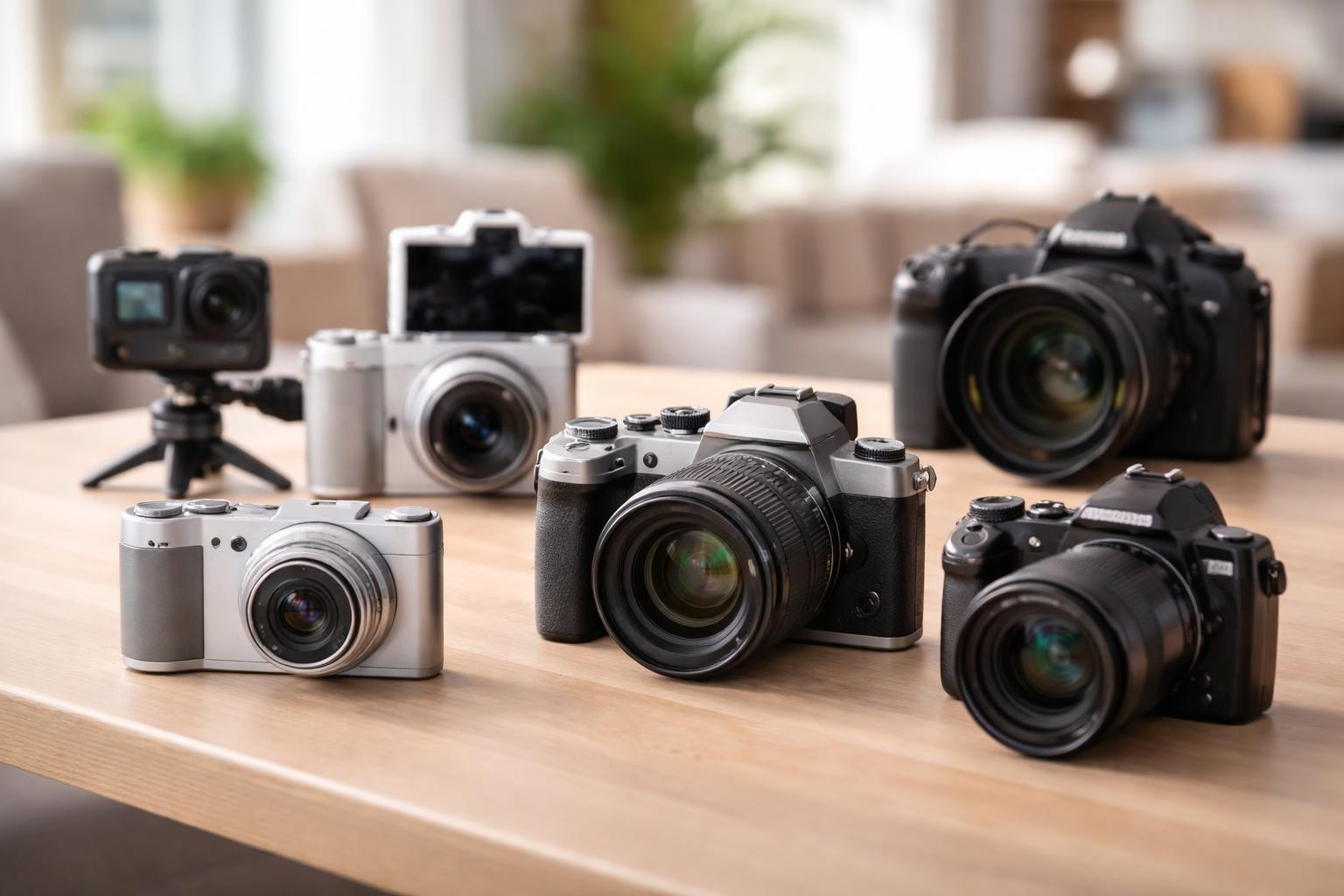
If you are searching for the latest digital cameras, the more useful question in 2026 is which cameras are actually innovative enough to change how you shoot. A long launch list does not help much on its own. What matters is whether a camera solves a real problem better than the gear that came before it, whether that means dramatically faster readout, autofocus that finally keeps up with erratic subjects, travel-friendly zooms that are worth carrying, or hybrid features that let one body handle both stills and video without compromise.
From what I have seen, the most innovative digital cameras right now are not defined by megapixels alone. They stand out because they make hard shots easier, shrink the amount of kit you need, or remove annoying workflow friction after the shoot. That is the lens I would use if I were shopping today.
Contents
- Quick answer: what makes a digital camera innovative in 2026?
- The most innovative digital cameras solve specific shooting problems
- Medium format is becoming more accessible
- Video capabilities blur the line between cameras and cinema
- Connectivity and workflow integration
- Battery life and power management
- Image stabilization has reached new levels
- The used camera market offers exceptional value
- Emerging technologies worth watching
- Making the right choice for your photography
- How to shop for innovative digital cameras without overspending
- FAQ: new camera technology that is actually worth caring about
Quick answer: what makes a digital camera innovative in 2026?
An innovative digital camera is one that gives you a clear practical advantage, not just a newer spec sheet. The strongest improvements right now fall into four groups:
- Faster sensors that cut rolling shutter, improve blackout-free shooting, and make action work more reliable
- Smarter subject-detection autofocus that tracks people, birds, animals, and vehicles with far fewer missed frames
- Better compact designs that make dedicated cameras realistic for travel, street, and everyday carry again
- Creator-friendly video features like dependable autofocus, 10-bit recording, and stronger heat management
If a new camera does not improve one of those areas in a way you will actually notice, it may be new, but it is not especially innovative.
The most innovative digital cameras solve specific shooting problems
The camera market is crowded, but the strongest products tend to cluster around a few real-world jobs. That makes this page easier to use if we organize it by the innovation itself rather than by release date.
1. Stacked-sensor cameras for action and blackout-free shooting
If you photograph sports, wildlife, or fast-moving events, stacked-sensor bodies are one of the clearest examples of meaningful new camera technology. Their faster sensor readout reduces rolling shutter, improves electronic shutter performance, and makes high burst rates much easier to trust in the field.
This is the kind of innovation that changes how you shoot, not just how you compare specs. You can follow motion more confidently, rely on the electronic shutter in more situations, and spend less time working around camera lag. For photographers who live on timing, that is a real upgrade.


2. Subject-detection autofocus that saves more keepers
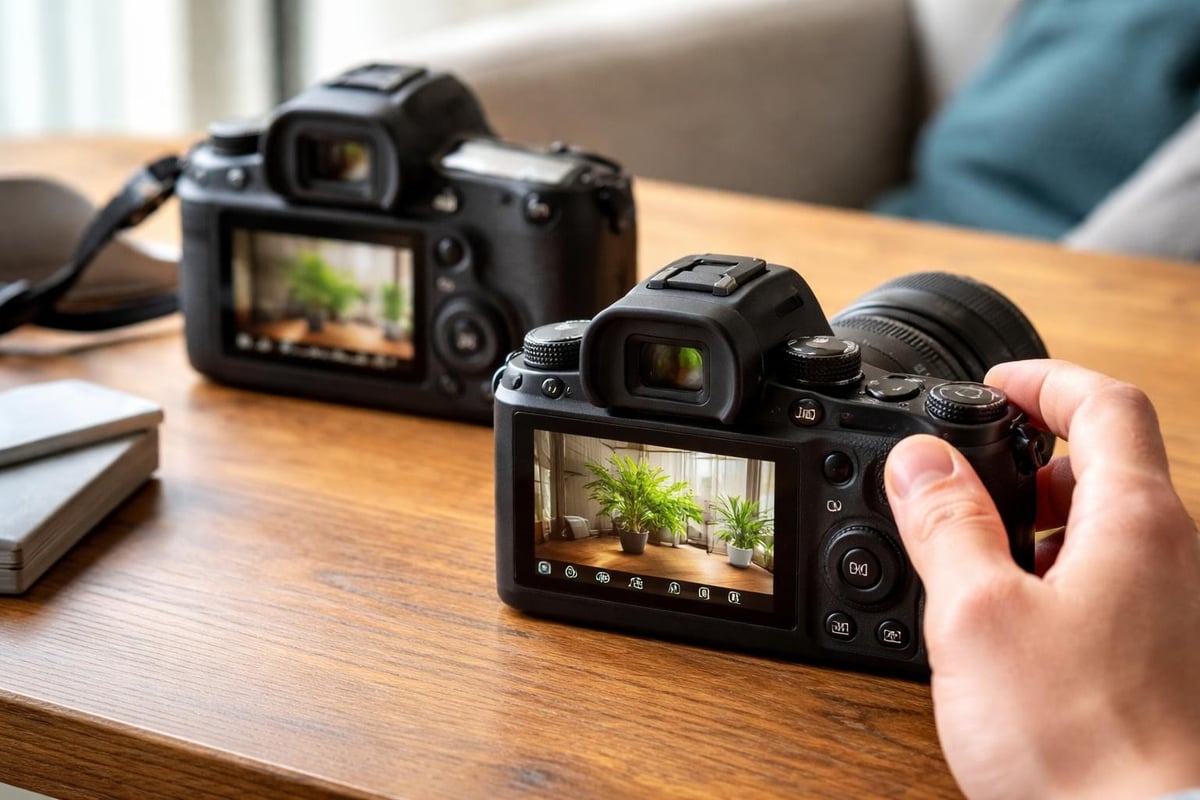
Modern autofocus is one of the biggest reasons recent cameras feel genuinely different. The best systems now recognize eyes, faces, birds, animals, and vehicles well enough that you can pay more attention to framing and timing instead of constantly checking whether the camera drifted to the background.
For portrait photographers, this means eye AF that is dependable even when a subject turns, wears glasses, or moves unpredictably. For bird and wildlife shooters, it means fewer lost frames when the subject is small, fast, or briefly obstructed. For anyone shooting video, it means focus transitions that no longer look amateurish by default.
What actually matters in the newest autofocus systems:
- Recognition accuracy so the camera locks onto the right subject quickly
- Tracking persistence so focus stays sticky when the subject moves across the frame
- Low-light performance so the system remains usable indoors, at dusk, or in poor weather
- Video behavior so focus changes look smooth instead of nervous
If your current camera misses focus on the shots that matter most, autofocus alone can be a compelling reason to upgrade.
3. Premium compacts and travel zooms that beat the phone in all the right ways
One of the more surprising recent camera brand improvements is the return of serious compact cameras. Not every photographer wants to carry interchangeable lenses, and manufacturers finally seem willing to build dedicated cameras for people who value portability without giving up control.
This is where innovative digital cameras feel different from the generic release cycle. A good compact or travel zoom is not trying to replace a full-frame kit. It is trying to be the camera you will actually bring. Better lenses, stronger ergonomics, physical controls, and larger sensors than a phone still add up to a very real photography advantage.
The Canon PowerShot Elph 360 HS is a reminder that convenience still matters, especially for casual travel and everyday use. On the premium end, newer compact designs are interesting because they treat portability as a feature, not a compromise.
4. Hybrid creator cameras that finally handle stills and video well
Another place where I see real innovation is in cameras built for photographers who also need to shoot serious video. A few years ago, hybrid bodies often forced obvious trade-offs: unreliable autofocus in video, weak internal codecs, short recording limits, or overheating that made the headline specs feel theoretical.
That has improved. The newest camera technology is less about chasing 8K for bragging rights and more about giving you a body that can shoot strong stills, clean 4K, dependable autofocus, and long recording times without drama. If you are a solo creator, small business owner, or working photographer delivering both photos and clips, that matters a lot more than spec-sheet theater.

Beyond those four areas, a few additional innovations are still worth watching if your work leans toward ultra-high resolution, handheld low-light shooting, or faster delivery to clients.
Medium format is becoming more accessible
Medium format cameras have traditionally been reserved for studio photographers and landscape specialists with substantial budgets. The latest digital cameras in this category have changed that equation somewhat, though they still represent a significant investment.
Who actually benefits from medium format
The Fujifilm GFX100S II exemplifies the current medium format approach. With a 102-megapixel sensor and improved autofocus, it delivers medium format image quality in a body that handles more like a full-frame camera. The images from these sensors have a quality that’s difficult to describe but immediately visible.
Medium format makes sense when:
- You’re shooting commercial work where clients expect maximum resolution
- Landscape photography is your primary focus and you regularly print large
- Studio portraiture benefits from the unique rendering and depth
- You’ve already maximized what you can do with full-frame systems
For most photographers, full-frame sensors provide more than enough resolution and image quality. The difference between 45 megapixels and 102 megapixels matters less than lens quality, lighting, and composition. Medium format is specialized equipment for specialized needs.
Video capabilities blur the line between cameras and cinema
Nearly every camera released in the past two years includes serious video features. What constitutes adequate video specs has shifted dramatically, with 4K recording now considered baseline and 8K appearing in mid-range models.
What video specs actually matter
Resolution gets the attention, but frame rate options and color depth matter more for serious video work. Internal 10-bit recording preserves color information for grading. High frame rates enable smooth slow-motion footage. Professional codecs reduce file sizes while maintaining quality.
| Video Feature | Practical Benefit | Who Needs It |
|---|---|---|
| 4K 60fps | Smooth motion, slow-mo options | General video work |
| 10-bit color | Better grading latitude | Color-critical projects |
| Log profiles | Maximum dynamic range | Professional production |
| Internal recording | No external recorder needed | Run-and-gun shooting |
| Unlimited recording | Long events, interviews | Documentary, event coverage |
The latest digital cameras often include video features that exceed what most photographers will ever use. Understanding which features actually benefit your work prevents paying for capabilities you don’t need.
Overheating has largely been solved
Early mirrorless cameras with 4K video suffered from overheating that limited recording times. Current models have addressed this through better heat dissipation and more efficient processors. Many cameras now record continuously without time limits, making them viable for long interviews, events, and streaming applications.
Connectivity and workflow integration
Modern cameras need to fit into digital workflows that extend beyond the camera itself. The latest digital cameras include connectivity options that streamline getting images from camera to computer to client or social media.
Wireless transfer finally works properly
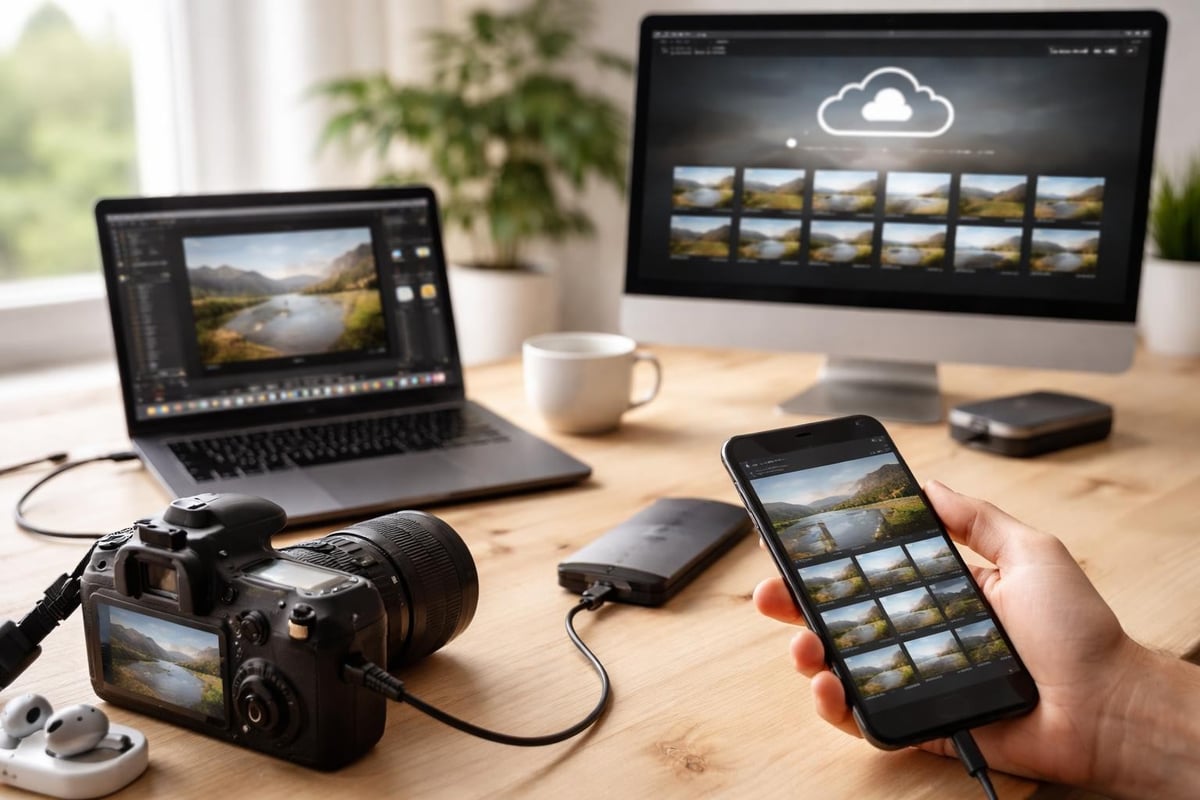
Built-in WiFi and Bluetooth have become standard, but more importantly, they now function reliably. Transferring images to smartphones for quick editing and sharing no longer requires frustrating apps and connection failures. Many cameras automatically sync JPEGs to your phone while shooting, making it easy to share work-in-progress shots with clients or post to social media.
Cloud-based workflows are emerging where cameras can upload images directly to cloud storage when connected to WiFi. This creates automatic backups and allows remote teams to access images without physical card handling.
USB-C charging and power delivery
The shift to USB-C for charging and data transfer might seem minor but significantly impacts how cameras integrate into modern tech ecosystems. You can charge your camera with the same battery pack that charges your phone and laptop. Power delivery standards allow some cameras to run indefinitely on external power, useful for studio work and streaming.
Battery life and power management
Battery performance determines whether a camera can actually handle the shooting you do. The latest digital cameras have made significant strides in power efficiency, though individual results vary widely based on shooting style and feature usage.
Real-world battery performance
Manufacturers quote battery life under standardized testing conditions that rarely match actual shooting. A camera rated for 600 shots might deliver 400 frames when you’re reviewing images frequently, using the EVF extensively, or shooting in cold weather. Understanding your actual needs prevents getting caught without power.
Factors that significantly impact battery life:
- Electronic viewfinder usage versus rear screen
- Temperature (cold weather dramatically reduces capacity)
- Continuous shooting versus single frames
- Video recording versus stills
- WiFi and Bluetooth connectivity
- Image stabilization activation
Carrying spare batteries remains essential for serious shooting. The advantage of newer cameras is that their batteries last long enough that two or three batteries handle a full day of intensive shooting, where older models might require five or six.
Power management features
Better power management systems allow cameras to wake instantly from sleep mode while conserving battery between shots. This balances responsiveness with battery conservation. Some cameras now include power-saving modes that disable specific features to extend battery life when needed.
Image stabilization has reached new levels
In-body image stabilization has become expected in new camera releases, and the latest systems deliver performance that changes what’s possible with handheld shooting. Eight stops of stabilization, as claimed by some manufacturers, allows sharp images at shutter speeds that would have required tripods just a few years ago.
How much stabilization do you actually need
The practical benefit of advanced stabilization depends entirely on what you shoot. For landscape photographers who typically use tripods, in-body stabilization matters less than for event photographers working in low light. Video shooters benefit tremendously from stabilization, particularly when combined with stabilized lenses.
Stabilization works best within certain parameters. It cannot freeze subject motion, only compensate for camera shake. This means it helps with slower shutter speeds but doesn’t replace fast shutter speeds for moving subjects. Understanding this distinction prevents disappointment when stabilization doesn’t deliver the results you expected.
The used camera market offers exceptional value
With the rapid pace of camera releases, the used market has never been better for photographers looking to maximize value. Cameras from 2020 to 2022 deliver image quality that’s nearly indistinguishable from current models for most purposes, but they sell for 40 to 60 percent less than their original prices.
What to look for in used cameras
Previous-generation flagship models often outperform current mid-range options while selling for similar prices. A three-year-old professional body typically offers better build quality, weather sealing, and controls than a new entry-level camera, even if some specifications are lower on paper.
Shutter count matters less than you might think for mirrorless cameras, which have fewer mechanical parts than DSLRs. Electronic shutters in many cameras enable completely silent shooting with zero mechanical wear. A mirrorless camera with 50,000 actuations likely has many years of reliable use remaining.
Emerging technologies worth watching
Several technologies currently appearing in high-end cameras will likely filter down to mainstream models over the next few years. Understanding what’s coming helps make informed decisions about when to upgrade.
Computational photography beyond smartphones
Cameras are beginning to incorporate computational techniques that smartphones pioneered. Multi-shot noise reduction, focus stacking, and HDR merging are moving from post-processing software into camera firmware. Research into ultra-high-speed imaging technology suggests future cameras might capture images 1,000 times faster than current systems, opening possibilities for new types of photography.
Computational features appearing in latest cameras:
- In-camera focus stacking for macro and landscape work
- Automatic HDR merging for high-contrast scenes
- Multi-shot high-resolution modes that increase effective resolution
- AI-based noise reduction superior to traditional algorithms
- Automated sky replacement and other editing functions
Global shutters eliminate rolling shutter
High-end cameras are introducing global shutter sensors that eliminate rolling shutter distortion. This technology, previously limited to specialized industrial cameras, allows capturing fast-moving subjects without the skewing and wobbling effects that plague CMOS sensors. As costs decrease, global shutters will become standard features.
Making the right choice for your photography
The abundance of excellent options in the current camera market makes choosing difficult. The latest digital cameras span enormous price ranges and capability levels, all delivering image quality that exceeds what most photographers need technically.
Match the camera to your actual shooting
The best camera is the one that matches how you actually photograph, not the one with the most impressive specifications. A lighter camera that you carry everywhere produces more meaningful photographs than a heavier, more capable camera that stays home. Weather sealing matters tremendously if you shoot outdoors in varied conditions but adds nothing for studio photographers.
Consider these questions before buying:
- What subjects do you photograph most frequently?
- How often do you shoot in challenging light?
- Do you need professional-level durability and weather sealing?
- How important is portability versus maximum image quality?
- Will you primarily use the camera for stills or video?
If you’re working within a limited budget, our guide to the best cameras under 700 dollars provides detailed recommendations that balance image quality with affordability. Sometimes the smartest choice is investing in excellent lenses rather than the most expensive camera body.
Consider the system, not just the body
A camera body represents only part of the investment. Lens selection, accessory availability, and future upgrade paths matter just as much. Some manufacturers offer extensive lens lineups with options from budget to professional, while others have gaps in their ranges.
Third-party lens support varies by camera mount. Popular systems like Sony E-mount and Canon RF-mount have excellent third-party options from manufacturers like Sigma and Tamron, potentially saving thousands of dollars over native lenses with minimal quality compromise.
How to shop for innovative digital cameras without overspending
The smartest buying move is usually to pay for the innovation that affects your actual photography and ignore the rest. If you shoot wildlife, action, or fast events, a faster sensor and better subject tracking can justify an upgrade immediately. If you mostly travel, walk cities, or want a camera you will keep with you, compact size and lens convenience may matter more than ultimate image quality.
It is also worth remembering that yesterday’s flagship often becomes today’s best value. Once a camera generation proves its autofocus, heat management, and battery behavior in the real world, you can often buy with more confidence than you can during launch week.
FAQ: new camera technology that is actually worth caring about
What is the most useful new camera technology right now?
For most photographers, the biggest practical upgrade is better autofocus. Faster sensors and stronger video features matter too, but subject-detection AF improves your keeper rate immediately whether you shoot portraits, sports, wildlife, or family moments.
Yes, if you want a dedicated camera that is small enough to carry regularly. A strong compact or travel zoom still gives you better controls, more intentional handling, and optical advantages that phones cannot fully replace.
Should you wait for the next camera release?
Usually not. If a current model already solves the problem that is frustrating you now, that is the better signal than waiting for rumors or incremental refreshes. Camera technology is improving, but the gains are rarely uniform across every type of photography.
The most innovative digital cameras in 2026 are the ones that make photography easier, faster, or more enjoyable in ways you will actually notice. Shop for the innovation that fits your subjects and workflow, and you will make a better decision than if you simply chase the newest release.